Don’t Let Rejection Get the Best of You (Mark 6:1-13)

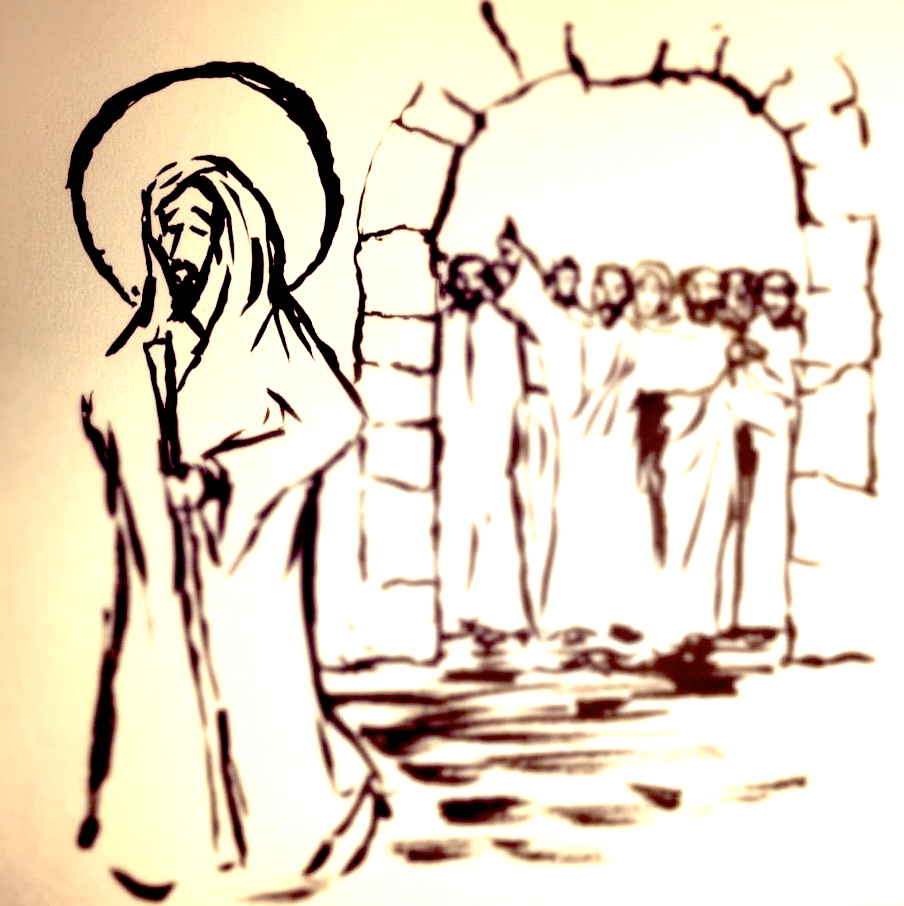
He left that place and came to his hometown, and his disciples followed him. On the Sabbath he began to teach in the synagogue, and many who heard him were astounded. They said, “Where did this man get all this? What is this wisdom that has been given to him? What deeds of power are being done by his hands! Is not this the carpenter, the son of Mary and brother of James and Joses and Judas and Simon, and are not his sisters here with us?” And they took offense at him. 

Then Jesus said to them, “Prophets are not without honor, except in their hometown and among their own kin and in their own house.” And he could do no deed of power there, except that he laid his hands on a few sick people and cured them. And he was amazed at their unbelief.

Then he went about among the villages teaching. He called the twelve and began to send them out two by two and gave them authority over the unclean spirits. He ordered them to take nothing for their journey except a staff: no bread, no bag, no money in their belts, but to wear sandals and not to put on two tunics. 

He said to them, “Wherever you enter a house, stay there until you leave the place. If any place will not welcome you and they refuse to hear you, as you leave, shake off the dust that is on your feet as a testimony against them.” So they went out and proclaimed that all should repent. They cast out many demons and anointed with oil many who were sick and cured them. (New Revised Standard Version)

Homecooked Rejection

Jesus was well into his ministry, with the disciples in tow, and had made quite a splash around Judea. Eventually, he made it back to the region of Galilee and to his hometown. Having grown up in a small town myself, I can testify how any sort of celebrity status from one of their own is a really big deal. Anticipation was high amongst the townsfolk.

Knowing Jesus as they did, the people were downright slack-jawed at his wisdom and the way he taught – which is also a typical response of the hometown boy made popular. The town knew Jesus differently – as simply another nice, but normal, Jewish kid from a nice but scandalous family.

The homecoming turned sour as the crowd believed they knew more than Jesus. After all, they knew him as a little kid. And they knew where he came from. He’s the carpenter, the son of Mary. They remembered what was up with Jesus. Mary and Joseph weren’t yet together and she ended up pregnant. This guy is no Son of God, but son of who knows?

They took offense at Jesus. He was the one with the curious conception and birth. And now he was trying to teach them, the ones who “really knew” his origins – or so they thought.

Jesus was just too uppity for the hometown folks. He considered himself more than the people he grew up with would concede. By providing the self-reference of “prophet,” Jesus was placing himself in the company of many revered men of God who went against the grain of their own contemporary cultures. And the folks in Galilee most certainly did not think they needed a prophet, especially one with illegitimate origins.

For the townsfolk, Jesus was claiming more honor and status for himself than was warranted in the old hometown. It meant that others got knocked down to size. So the people in the town were not having it. They took offense.

Ironically, the people who ought to know better, don’t. Jesus was amazed at their lack of faith, their unbelief. So little could be done in such a place as this. After all, you cannot heal someone if they believe they don’t need healing.

Heaven-sent Mission

Rejection didn’t stop Christ’s mission on this earth. Jesus prepared his disciples for their initial ministry, sending them in pairs. Up to this point, he taught them about God’s kingdom, handled a good deal of one-on-one instruction, and demonstrated for them what healing is like and why he did it. And they also needed to understand that rejection from others is part of the ministry.

Jesus instructed the disciples to take only a few essentials; the hospitality of others would be a significant aspect of their ministry – especially since much of their work would take place from household to household. Synagogues were not always receptive places to a new kind of ministry. So, the grassroots efforts of the disciple pairs were important.

Rejection and judgment tend to go hand-in-hand. Those who spurned the disciples were judging the veracity of their work. And also, that same rejection was a sign for the disciples to not spin their wheels trying to persuade the already convinced. Instead, the disciples were to do their own action of shaking the dust off their feet, letting the stubborn people know they were not carrying the bad judgments with them.

All in all, Christ’s disciples had an effective ministry and a positive experience. They were able to bring their message and healing to many.

We can observe through this story that rejection from others and a failure to make inroads with some is not necessarily a reflection on us. Some people are going to misunderstand us and make judgments about us, regardless of how well we go about our work.

After all, if Jesus experienced it, how much more will we? Don’t let rejection get the best of you.

To never face rejection and judgment may be a sign that little to no action is actually taking place – or maybe that the avoidance of conflict is assigned a value much too high than Jesus would give it.

If you are working toward loving both God and neighbor, showing justice and mercy in all you do, then any sort of rejection isn’t worth getting upset about.

Gracious God, I release my grip on needing to be understood by everyone, and instead choose to hold onto you and your grace. Therefore:

  • I lay down my need to understand why things happen the way they do.
  • I lay down my fears about others judging me.
  • I lay down my desire to prove my worth.
  • I lay down my resistance to suffering.

I take up my cross daily, and seek to walk according to your ways, and to live into your words; through Jesus Christ my Lord, in the enablement of the Holy Spirit. Amen.

In Need of Integrity (John 7:19-24)

Pharisees, by German painter Karl Schmidt-Rottluff, 1912

It was Moses, wasn’t it, who gave you God’s Law? But none of you are living it. So why are you trying to kill me?”

The crowd said, “You’re crazy! Who’s trying to kill you? You’re demon-possessed.”

Jesus said, “I did one miraculous thing a few months ago, and you’re still standing around getting all upset, wondering what I’m up to. Moses prescribed circumcision—originally it came not from Moses but from his ancestors—and so you circumcise a man, dealing with one part of his body, even if it’s the Sabbath. You do this in order to preserve one item in the Law of Moses. So why are you upset with me because I made a man’s whole body well on the Sabbath? Don’t be hypercritical; use your head—and heart!—to discern what is right, to test what is authentically right.” (The Message)

One of my ardent desires for every person on planet earth, is that they will experience an integration of themselves – that they will know their true selves. And with this awareness, their head, heart, and gut will all be in alignment with each other. Every part of oneself will be acknowledged and work in harmony with the other parts.

I’m talking about wholeness. This is what produces peace, unity, harmony, joy, and strength of spirit. For me, this is the consummate Christian path of discipleship to walk. Jesus has gone before us to clear the way as the pioneer of our salvation. He makes it possible to realize wholeness. Christ has the ability to make us well and to live well. To know Jesus is to be whole.

People who are a bundle of disparate parts – with some of those parts suppressed and unacknowledged – are disturbed. They always seem to be upset with something because the parts of themselves are unable to communicate with each other. With them, there is no peace or wholeness. There is only a myopic view, usually coming from only using the head, only thinking.

But to have thoughts of God, to think about God’s law, and to police how God is thought of and how God’s law is implemented – without the heart or the gut involved – leads to fragmentation and disruption.

To only think, and withhold feelings and intuition, is to sin.

It’s impossible to know God and live God’s commands without involving your entire self. A head without a heart cannot affect humanity with the good that it so desperately needs.

A heart without a head cannot effectively steer the rudder into accomplishing sustained goodness.

And a head and a heart without a gut cannot sense the danger around the corner and loses its good plans and intentions.

Jesus was addressing religious leaders and a large chunk of fragmented people. Many of those persons were unable to discern who Christ actually is, because only the person of integrity and wholeness can do that. So, each one came at Jesus from their own limited place of disintegration. And none of them were able to truly see themselves as they actually are – blind to the reality that they were not keeping God’s law.

Christ and Pharisee, by Russian artist Ivan Filichev, 1993

A fragmented person’s perspective comes at things like this: “I’m obeying the law, although there are some laws I’m not really holding to.” Yet, Jesus understood that to break just one law makes us lawbreakers and in need of healing and wholeness.

Jesus healed a man on the Sabbath. The disintegrated person only saw Jesus working on the Sabbath, which in his head is a no-no. It requires work to heal someone. Therefore, it can wait until tomorrow. Thus, this Jesus fellow sinned against God and disobeyed God’s law. In fact, it only stands to reason that he is in league with a demon, the fragmented person reasons.

But that is to make a poor discernment of the situation. It is, however, only what the fragmented person can do. However, a wise understanding of the man’s healing by Jesus is to observe that Love has come among you – that Sabbath was made for humanity, not humanity for the Sabbath – and that this bringing of wholeness to a person, in restoring not only his health but his ability to connect with society, family, and community, is a knowable good thing. This is most certainly not what any sort of demon would do.

Perhaps one ought to test the spirits and make a good, right, and just discernment. Just maybe, Jesus is the one who can guide us to wholeness, goodness, and integrity. It could be that God is among us, and we didn’t even know it.

Constant criticism of others only deflects from paying attention to our own spirit; and always living in your head keeps you from experiencing the heartache of love.

Merely giving-in to the heart without engaging the head creates a caregiver who has no idea how to care for themselves; eventually they become bitter and gain a critical spirit that no one is caring for them as they care for others.

Blurting-out gut-reaction judgment at another may be truthful, but it will be taken as a severe and discouraging criticism because there was no thought or heart behind it.

There are a lot of upset people in this world. Yet, there are precious few persons with the wholeness to speak from the head, heart, and gut as a unified whole, bringing words and actions of life to others.

The persecuted person is one who has become wonderfully whole, namely because there are far too many fragmented people who view them as a threat, and see them as demonic. Fragmented folk believe they need to put the integrated person in their place, if not done away with altogether.

And that is exactly why Jesus was arrested, tortured, and killed. But fragmentation, disintegration, oppression, and sin do not have the last word. They are not the judge. There is resurrection, new life, and abundant joy because the grace of God in Christ always has the last word.

Christ’s Sermon on the Mount, by Argentine artist Jorge Cocco Santángelo

There’s trouble ahead when you live only for the approval of others, saying what flatters them, doing what indulges them. That’s the way of the fragmented ones; they will find themselves cursed. However, the blessings of God’s rule and reign recognize and affirm the whole person. Jesus said:

You’re blessed when you’re at the end of your rope. With less of you there is more of God and his rule.

You’re blessed when you feel you’ve lost what is most dear to you. Only then can you be embraced by the One most dear to you.

You’re blessed when you’re content with just who you are—no more, no less. That’s the moment you find yourselves proud owners of everything that can’t be bought.

You’re blessed when you’ve worked up a good appetite for God. He’s food and drink in the best meal you’ll ever eat.

You’re blessed when you care. At the moment of being ‘care-full,’ you find yourselves cared for.

You’re blessed when you get your inside world—your mind and heart—put right. Then you can see God in the outside world.

You’re blessed when you can show people how to cooperate instead of competing or fighting. That’s when you discover who you really are, and your place in God’s family.

You’re blessed when your commitment to God provokes persecution. The persecution drives you even deeper into God’s kingdom. (Matthew 5:3-10, MSG)

May you live into who you are, and avoid who you are not, to the glory of God. Amen.

Stop Passing Judgment on Each Other (Romans 14:13-5:2)

Therefore let us stop passing judgment on one another. Instead, make up your mind not to put any stumbling block or obstacle in the way of a brother or sister. I am convinced, being fully persuaded in the Lord Jesus, that nothing is unclean in itself. But if anyone regards something as unclean, then for that person it is unclean. If your brother or sister is distressed because of what you eat, you are no longer acting in love. Do not by your eating destroy someone for whom Christ died. Therefore do not let what you know is good be spoken of as evil. For the kingdom of God is not a matter of eating and drinking, but of righteousness, peace and joy in the Holy Spirit, because anyone who serves Christ in this way is pleasing to God and receives human approval.

Let us therefore make every effort to do what leads to peace and to mutual edification. Do not destroy the work of God for the sake of food. All food is clean, but it is wrong for a person to eat anything that causes someone else to stumble. It is better not to eat meat or drink wine or to do anything else that will cause your brother or sister to fall.

So whatever you believe about these things keep between yourself and God. Blessed is the one who does not condemn himself by what he approves. But whoever has doubts is condemned if they eat, because their eating is not from faith; and everything that does not come from faith is sin.

We who are strong ought to bear with the failings of the weak and not to please ourselves. Each of us should please our neighbors for their good, to build them up. (New International Version)

It’s one thing to have opposing views with each other; it’s another thing altogether to pass judgment on the person(s) for whom you have a difference of opinion, practice, or theology.

I once had a man come to me about his daughter. She was getting married, and this father told me he was not going to her wedding. The issue? The father had raised his daughter a Christian, yet she had become a Wiccan and was going to have a pagan ceremony.

What would you do if you were the father? What would you say to him if you were the pastor?

I’m confident what most of my fellow Christian pastors would say – they would affirm the man’s position. Me, however, sensed some judgmentalism emanating from my parishioner. So, I asked him some questions:

What do you know about Wicca?

Why did your daughter convert to being a Wiccan?

Do you have a decent relationship with her?

How much do you love your daughter?

Do you think you could find a way of being with her when she gets married that doesn’t compromise your convictions?

As I asked the questions to the father, it quickly became evident that he was condemning her without a shred of evidence or accurate information to support such a judgment.

He believed that Wiccans were blatant devil worshipers (which they are not). So, I simply invited him to learn some basics of Wicca. I pointed him to some resources that might be helpful for him – ones that I believed he could be okay with reading. (Note: The resources were not written by Christians. If one wants to know what a particular group or individual believes, then you must go to the source)

The man had no idea why his daughter turned Wiccan. It turns out, he had never even asked her, or was at all curious as to why she would make such a different religious decision from her upbringing. I simply suggested that he just ask her, then not talk, and listen to the answer.

This father had an estranged relationship with his daughter because he had pulled away from her. She had actually continued to try and remain connected to her dad. But the man thought he was doing the right thing by ostracizing her and refusing to go to her wedding. He believed he needed a separation, to both teach her a lesson and to keep away from evil.

My parishioner, whom I had never seen cry, did so when I asked if he loved his daughter. The problem was that she didn’t know that.

There was a lot of internal struggle with the man in the next weeks and months. To his credit, he took me up on learning about his daughter and connecting with her, rather than cutting her off. And he ended up attending her wedding, albeit in the very back of the gathering.

The father discovered a lot of things he didn’t know, things which he made assumptions about in the past which were untrue and unfounded. He and his daughter’s relationship didn’t change overnight, but they were in a much better position than when the man first came to see me.

So, here is my question for you, my friend: If a Christian and a Wiccan can find a way to be together and love one another, despite their religious views and practices, then how much more can we, as Christians together, find ways to connect with each other, love one another, and stop passing judgment on the other?

It’s time for us to make up our minds and settle in our hearts whether we are going to create separations with other people, or whether we are going do what we can to foster relational connections with others.

Perhaps if we seek to embody today’s New Testament lesson, the ripple effect might just change the world.

O Holy God, we know we have fallen short.
We turn our backs when we could embrace.
We remain silent when we could speak.
We speak when we could listen.
We judge when we could seek understanding.
We cling when we could give.
Forgive us, O God, for focusing solely on ourselves and help us to continue to grow into the people you created us to be, through Christ our Lord. Amen.

Dealing with Opposing Views (Romans 14:1-12)

Accept the one whose faith is weak, without quarreling over disputable matters. One person’s faith allows them to eat anything, but another, whose faith is weak, eats only vegetables. The one who eats everything must not treat with contempt the one who does not, and the one who does not eat everything must not judge the one who does, for God has accepted them. Who are you to judge someone else’s servant? To their own master, servants stand or fall. And they will stand, for the Lord is able to make them stand.

One person considers one day more sacred than another; another considers every day alike. Each of them should be fully convinced in their own mind. Whoever regards one day as special does so to the Lord. Whoever eats meat does so to the Lord, for they give thanks to God; and whoever abstains does so to the Lord and gives thanks to God. For none of us lives for ourselves alone, and none of us dies for ourselves alone. If we live, we live for the Lord; and if we die, we die for the Lord. So, whether we live or die, we belong to the Lord. For this very reason, Christ died and returned to life so that he might be the Lord of both the dead and the living.

You, then, why do you judge your brother or sister? Or why do you treat them with contempt? For we will all stand before God’s judgment seat. It is written:

“‘As surely as I live,’ says the Lord,
‘every knee will bow before me;
    every tongue will acknowledge God.’”

So then, each of us will give an account of ourselves to God. (New International Version)

Within the church at Rome were Jewish believers who had come to faith in Christ from their background steeped in the Old Testament. They had a rich two-thousand year history of a covenant with God that included ritual food laws, the keeping of certain feast days, and observing a calendar of events, especially the Sabbath.

Also within the Roman church were Gentiles (non-Jewish people) having come to faith in Christ from a background of paganism. They had no history with the God of the Bible. There were no previous generations of faithful believers in God. They were first generation Christians and basked in their newfound freedom.

The Apostle Paul’s vision was for one church, unified together around Jesus. And this unity would need to be worked on. Jew and Gentile were very different from one another; and here they were in the same church together, not understanding each other. 

The Jewish believers were appalled at Gentile thinking and behavior. Even though the Jewish Christians had come to embrace Jesus, they did not abandon their two-thousand year history of being with God. They still held to their food laws and special days. The Jewish members believed the Gentiles should be like them; the Jews wanted the Gentiles to embrace the same ritualistic behavior that they had done for centuries.

But the Gentiles did not comply. So, the Jewish believers passed judgment and condemnation on them for not being sensitive to the things of God.

On the other hand, the Gentile believers felt no compulsion to have such rules and regulations concerning their Christian lives. They ate what they pleased and saw no need to hold to special days. They could not understand why the Jewish Christians were so stuck in their traditions. So the Gentiles looked down on the Jews as hopelessly misguided. This was a potentially explosive situation that Paul was deeply concerned about.

The Apostle Paul’s message was to accept the person whose faith is weak without passing judgment on disputable matters. Sounds like easy counsel to follow. But the problem was that the people did not distinguish between what is a non-negotiable matter and what was a disputable matter. 

The guiding principle is that Christ died and returned to life so that he might be the Lord of both the dead and the living. The non-negotiable matter is Jesus Christ, his person and work.  Jesus is our core belief. Nothing else is to be in the center except him.

Therefore, we are to celebrate our unity around Jesus, our center. Anything outside of that center is a “disputable matter” and not worthy of Christians condemning each other or looking down on one another.

The root problem of any church conflict is the de-throning of Jesus and setting up our particular views as the center of Christianity.

The church has struggled with this teaching for its long two-thousand year history. Every church I have served had their particular issues that they felt so strongly about that it crowded Jesus out of the center. 

In one church, education was the big issue. Some believed in Christian schools as the only way to educate their kids. Others felt that home-schooling was the way to go because of the culture. Yet others thought public education needed the light of Christians participating in it, and sent their kids to public schools. The problem was that each group sincerely believed they were right and everyone else was wrong.

In another church I served, there were hard feelings about the place of men and women in the church who had been divorced and remarried. In yet another church, the issue was about whether church members could drink alcohol or not. And yet another church’s issue dealt with how we dress and what our attire is at church. 

I still remember one lady in that church talking with a woman who had recently given her life to Christ out of a life of prostitution. The woman was wearing jeans and a t-shirt. The church lady was giving her a lecture about how she should be “dressing up for Jesus.” As I heard this, I thought to myself, “Lady, I’m not sure you are going to like the woman’s idea of dressing up for Jesus….”

Whenever we want to place disputable matters on people’s “must-do” list, then there will be trouble. We will judge others who do not think as we think, and do as we do, because of the mistaken notion that our way is equal to the death and resurrection of Christ. If it isn’t done my way, the church will be lost.

We do not necessarily need to change our views on disputable matters; but we do need to change our attitude and our behavior toward those we disagree with.

Intolerance of others’ views and behaviors causes a lack of dialogue, to create special interest groups and cabals against others, to stereotype others, and to seek to get their way no matter what. Such intolerance moves church members from a concern for the Great Commission of Jesus to the Great Commode of Satan’s bathroom.

For the Apostle Paul, the issues that divide Christians are very important, not because he championed one over the other, but because the church’s identity was at stake. Paul was concerned for two questions:

  1. Will the church be, at its core, a community of redeemed persons by the grace of God who center all their lives around the person and work of Jesus?
  2. Or will the church be a community of opinionated individuals and groups all jockeying for position to have their way on how they believe things should go?

This is really a heart issue: humility versus pride, and gentleness versus stubbornness. You can tell what a person’s identity is by their “identity markers.”

For the Jewish Christians, Sabbath-keeping, circumcision, food laws, and holding to certain days on the calendar marked their identity as God’s people. Those issues were so important that if you took them away, there would be an identity crisis; the people felt totally lost without their traditions.

For Gentile Christians, their identity was built around being more free-thinking. So, if you take away their freedom and ability to choose, the Gentiles will go nuts and have an identity meltdown. 

Paul’s answer was for both Jew and Gentile to accept each other and build their unity around Jesus, period. They needed to be sensitive to one another and focus on their shared identity of Jesus as the center of the Christian life.

Both the church and the society need some civility. In a nation where we feel free to say whatever we want, we do. In doing so, we elevate self-expression and our opinions over self-control and the mission of the church.

We need some generous spaciousness which allows room for us to discuss issues and disputable matters in an atmosphere of generosity, hospitality, and acceptance, seeking to first listen and understand, before responding. 

The goal of the Christian is not to win an argument or have our way, but to uphold Jesus as Lord of everything and maintain our center in him. On that basis alone, we will be held accountable by God. So, let us live wisely and well, knowing and pursuing Jesus with heart, soul, mind, and strength.

Gracious God, it’s both settling and centering to focus on the assurance of your acceptance. You know everything about us, and despite our failures, fickleness, foolishness, and faithlessness, yet still we are fully and eternally accepted. As you have accepted us, help us to accept others. Grant us grace to love those whom we disagree with.

Merciful and mighty God, enlarge our hearts. Enable us to show kindness without compromising our convictions. Teach us the difference between essential and non-essential matters. Free us from the limitations of our individual perspectives, the prejudices of our heritage, the insecurities of our comfort zone, insincere niceness,and the need to be right. 

Blessed Holy Spirit, burn your holy Word indelibly into us so that we accept all things and everyone you give us, through Jesus Christ our Lord. Amen.