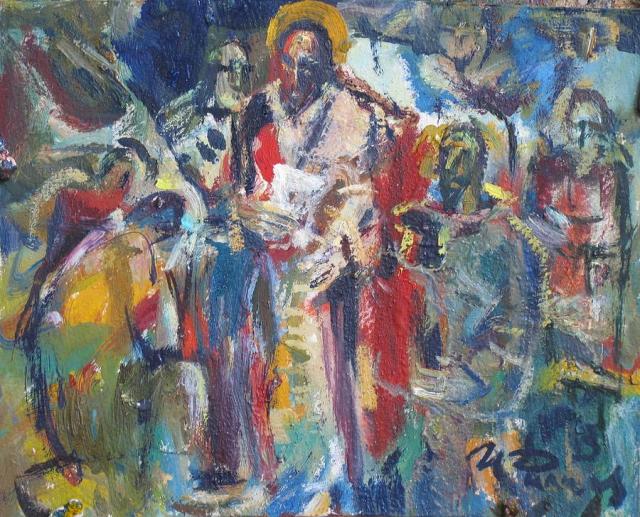
The Restorative Powers of Grace (Jeremiah 31:10-14)

Listen to the Lord’s word, you nations,
    and announce it to the distant islands:
The one who scattered Israel will gather them
    and keep them safe, as a shepherd his flock.
The Lord will rescue the people of Jacob
    and deliver them from the power of those stronger than they are.
They will come shouting for joy on the hills of Zion,
    jubilant over the Lord’s gifts:
        grain, wine, oil, flocks, and herds.
Their lives will be like a lush garden;
    they will grieve no more.
Then the young women will dance for joy;
    the young and old men will join in.
I will turn their mourning into laughter
    and their sadness into joy;
        I will comfort them.
I will lavish the priests with abundance
    and shower my people with my gifts,
        declares the Lord. (Common English Bible)

In the seasons of our lives, when we go through those times of difficulty, it feels like a hard slog uphill that never seems to end. But it will not always be this way. Suffering will eventually give way to rejoicing; sickness will turn to health; estranged relationships will reconcile; and broken spirits will be made whole again.

God is the expert in restoration. Dilapidated communities, broken individuals, and peoples in diaspora can find fresh hope amid challenging circumstances. The initiative, interventions, and actions of God are what make the difference in turning sorrow to joy.

The Lord gathers scattered people together, as well as making the disparate parts of people into a unified whole again. And in this gathering action of God, no one is left behind. Attention is given to the stragglers, to those unable on their own strength or ability to journey on the road back to the Lord.

With the Lord’s movements of mercy, those with unfortunate circumstances are turned into the fortunate ones. The underprivileged become privileged. Grief, lament, and mourning give way to joy and a new lease on life. A great reversal occurs with God’s intervention. Sorrow is transformed into praise. Goodness is found in abundance because the Lord is a good God.

God calls people to action, to a response of experiencing the restorative powers of grace. The Lord encourages such behavior because it helps us never forget that no one and no circumstance is ever beyond the renewing grace of God. The effect of God’s merciful activity in the lives of people is singing, shouting, listening, and proclaiming.

With spiritual renewal, there is no mumbling of words, no timidity about being off tune when lifting a song of praise and thanksgiving. The lonely person, fragmented group, depressed community, polarized neighborhood, or scattered nation who becomes restored by God’s merciful grace is a newly minted exuberant people. Singing organically arises from them.

God’s restorative work causes shouts of joy to emanate deep within the soul. In fact, the Lord’s activity is so wonderful that even the rocks will cry out if the people don’t. A last second win in the sports stadium amongst thousands of fans doesn’t even hold a candle to the celebrative shouts of believers gathered and restored.

Whenever a people hear God’s voice and respond, it results in restoration. The desire to listen is then heightened, and obedience to God’s will becomes the norm, instead of the exception. Increased proclamation of good news happens, as a joyous and privileged response to God’s amazing grace. More and more people are included within the community, and hope rises beyond what anyone thought was possible.

Rescue and redemption are at the heart of God toward lost and wayward humanity. Divine intervention leads to restoration of individuals, neighborhoods, faith communities, even nations. Like a faithful shepherd over a flock of sheep, the Lord actively seeks the lost, brings them home, and continues to stand watch over them as a compassionate guardian.

And just as God redeemed the people out of Egyptian slavery and took them to a good land of abundance, so the Lord shall return those persons exiled from that abundant place and restore them to the peace of settled rest. The restoring action of God gathers the scattered. The lost are found. That which is fragmented is made whole. Those previously disabled become able. The weak become strong, the sick healed, the hungry fed, and the prisoner freed.

In times of famine, disease, poverty, hardship, confusion, and scant resources, there is hope. The Lord knows how to restore fortunes and bring untold abundance amid the most difficult of situations.

True joy comes through hard suffering. The pains of childbirth give way to unspeakable joy.

Christians are about to enter the season of Advent, after the long months of ordinary time. God, in Jesus Christ, is about to enter the world through a woman, in the flesh. The gracious work is about to begin, of ransoming, redeeming, and restoring a sinful world that had exiled itself from peace and abundance. In Christ, our lives are about to become full of blessing.

Praise the God and Father of our Lord Jesus Christ for the spiritual blessings that Christ has brought us from heaven! (Ephesians 1:3, CEV)

“I am the gate. Those who come in by me will be saved; they will come in and go out and find pasture. The thief comes only in order to steal, kill, and destroy. I have come in order that you might have life—life in all its fullness. I am the good shepherd, who is willing to die for the sheep.” (John 10:9-11, GNT)

May you know and experience the restorative grace of God in Christ today and every day. And may this upcoming season bring you fresh hope and a renewed faith. Amen.


Real Life (1 Thessalonians 3:6-13)

But Timothy has just now come to us from you and has brought good news about your faith and love. He has told us that you always have pleasant memories of us and that you long to see us, just as we also long to see you. Therefore, brothers and sisters, in all our distress and persecution we were encouraged about you because of your faith. 

For now we really live since you are standing firm in the Lord. How can we thank God enough for you in return for all the joy we have in the presence of our God because of you? Night and day we pray most earnestly that we may see you again and supply what is lacking in your faith.

Now may our God and Father himself and our Lord Jesus clear the way for us to come to you. May the Lord make your love increase and overflow for each other and for everyone else, just as ours does for you. May he strengthen your hearts so that you will be blameless and holy in the presence of our God and Father when our Lord Jesus comes with all his holy ones. (New International Version)

What does it mean to really live? Everyone has their own conceptions of what the good life is. But to live life to the full, to really live in sync with how life actually is (and is supposed to be) brings us true satisfaction, contentment, and meaning.

In the radical individualism of the West, it may seem foreign or strange to us that the Apostle Paul’s life was very much bound up in the lives of others – in the churches he established and with the believers who had come to faith in Christ. For Paul, to really live was to see spiritual growth and development in the places where he ministered.

The thing that really got Paul excited, what really melted his butter, was leading others to Christ, forming them into churches, and watching them carry out their missional mandate by doing the same things that he did with them. I can relate to Paul’s joy and satisfaction over Christian discipleship.

There’s nothing quite like mentoring others in the faith, helping them mature in that faith, and sending them out to live according to the model of faith that you’ve demonstrated for them. To see the Word of God take root in individuals and communities of people is like no other sort of joy and contentment.

In the midst of discouraging circumstances of persecution and distressing situations of opposition, it was gratifying, encouraging, and motivating for Paul to hear a good spiritual report from his protégé Timothy about the Thessalonian church’s faith.

Whether we acknowledge it or not, or like it or not, every one of us is inextricably connected to the other. And that is especially true in families, and in the family of God. The Thessalonian believers’ steadfast commitment to Christ and the Christian faith was a crucial and important dimension of Paul’s own persevering faith.

The Apostle had been on the front lines of faith – taking the good news of grace and forgiveness in Christ to the nations. To have his churches endure through all their own troubles and challenges is a great boon to Paul. They each derive confidence and inspiration from the other. Everyone’s faith is confirmed and strengthened when everyone is striving to live for Christ.

All the believers in Christ were really living because they stood firm in the Lord and were immovable in their faith commitments. Assurance and reassurance comes not in isolation, but through the interdependence and interaction with others who share the same values.

Parents don’t really live, unless they see their children living a life of abundant joy and satisfaction. And it’s the same with spiritual mothers and fathers; they truly live when their spiritual children are walking in faith and patience with the Lord.

This is why Paul was grateful and could not thank God enough for the Thessalonians’ life of faith. God’s powerful and gracious work in the church brought out all kinds of thanksgiving. With that sort of dynamic happening, Paul could face any tribulation with the confidence and trust needed to keep going.

Prayer is the logical response to a healthy spiritual and relational dynamic of faith. The greater the good relations, the greater the desire to come and keep imparting needed teaching and encouragement for the Christian life. In other words, spiritual growth begets spiritual growth.

The best way the Thessalonian converts and all the churches become rooted in faith is by God helping them to have their love increase and overflow for each other, and for everyone else. What’s more, God intends that the love Christians have for one another be a model and a witness to and for the world.

Christian community is the place we learn to love. As we practice again and again how to love one another in the church, we then take this love into the world in loving even our enemies. For if we are to follow our model and leader, Jesus Christ, then we will infuse each word and every action with the love of God in Christ – which is the light that draws others into a healthy spiritual and relational dynamic.

We must pray, as Paul did, for love to increase amongst us, so that our hearts are strengthened with genuine purity and holiness of life. For unless love grows and flowers, selfish desires will increase and turn our love inward to the point of taking love away from God and the world.

It is imperative that we have a genuinely loving stance toward each other as believers, and toward others in the world. Apart from this love – given graciously to us through the cross and resurrection of Christ – there is little hope for anything bad in this old fallen world to ever be better.

The bottom line is that churches wither and die because they lose sight of love; Christians lose faith and go their own way because they forget about love; and believers throughout the world continue on because loving prayers, loving ways, and loving words come their way, despite difficulty and hardship they face.

So, let us love one another as Christ loved us. For this is the way our faith is strengthened and our hope is kindled to keep enduring until Jesus returns to this earth and makes all things new and right. This is real life.

May almighty God give you grace to persevere with joy, so that the work of love begun in you may be completed, through Jesus Christ our Lord. Amen.

Grateful to God (1 Thessalonians 2:13-20)

Apostle Paul, by Ivan Filichev

And we also thank God continually because, when you received the word of God, which you heard from us, you accepted it not as a human word, but as it actually is, the word of God, which is indeed at work in you who believe. For you, brothers and sisters, became imitators of God’s churches in Judea, which are in Christ Jesus: You suffered from your own people the same things those churches suffered from the Jews who killed the Lord Jesus and the prophets and also drove us out. They displease God and are hostile to everyone in their effort to keep us from speaking to the Gentiles so that they may be saved. In this way they always heap up their sins to the limit. The wrath of God has come upon them at last.

But, brothers and sisters, when we were orphaned by being separated from you for a short time (in person, not in thought), out of our intense longing we made every effort to see you. For we wanted to come to you—certainly I, Paul, did, again and again—but Satan blocked our way.For what is our hope, our joy, or the crown in which we will glory in the presence of our Lord Jesus when he comes? Is it not you? Indeed, you are our glory and joy. (New International Version)

Reception and Acceptance of God’s Word

The Apostle Paul, in all of his letters to the churches, was attentive to affirming those things which are good amongst the believers; and not only the aspects of church life that needed change and/or repentance.

For the Thessalonians, Paul was profoundly grateful to God for the people’s receiving of the Word and their accepting it as from God. Perhaps there is no greater affirmation than this for the Christian.

In order to receive and accept God’s Word, people must know it. And people cannot know God’s Word unless they take the time and effort to read it and discover it for themselves.

Scripture reading is a foundational spiritual practice for Christians everywhere, and for all of Christ’s Church throughout the earth. Church worship liturgies, as well as individual Christians’ daily disciplines of faith, ought to be thoroughly saturated with Holy Scripture. Yet, many churches are believers, sadly, are not.

I am specifically calling out the conservative evangelical church on this. Although they claim to be Bible-centered, with an extended time for the sermon, there is a paucity of actual Scripture contained within those gathered times.

Too much of the preaching fails to truly explain Scripture, and there are virtually no Scripture readings or references outside the sermon and in the worship service. This is a travesty, and also a testament to the biblical ignorance of so many evangelicals.

What’s more, the evangelical impulse for a “personal quiet time with the Lord” is, in reality, practiced by precious few believers – and usually consists of little more than a daily crumb of the Bible.

I perhaps sound cranky and crotchety. Yet in a previous life, I was an evangelical Pastor for many years, and know the frustrations and challenges of attempting to bring biblical literacy to such churches and Christians. There’s a better way, but alas, that is a topic for another time and another post.

Imitators and Sufferers with God’s Churches

The true muster of a Christian and any Christian Church is the desire, speech, and action of actually following the words and ways of Jesus. It was the Lord Jesus himself who said:

“Remember what I told you: ‘A servant is not greater than his master.’ If they persecuted me, they will persecute you also.” (John 15:20, NIV)

“In this world you will have trouble. But take heart! I have overcome the world.”

Jesus (John 16:33, NIV)

Paul was thankful for the Thessalonians because of their solidarity with the other churches; and their willingness to suffer as Jesus did. What’s more, they did not try to reinvent the wheel, but affirmed the sound practices they saw in the original churches of Judea and imitated those good things.

This was not a matter of pragmatism, that is, just doing something that worked somewhere else and adopting it for yourself. Instead, Paul was talking about following the example of the first and earliest of churches. Those churches were made up of Jewish Christians who received a lot of persecution from their fellow Jews.

The Thessalonians, too, received grief and belligerence from the same sort of people, trying to bully them around and tell them what to do. But the believers held fast to the pattern of teaching and living they observed from both Paul and the churches who endured suffering in Judea.

It’s one thing to express belief. It’s quite another thing to suffer for those beliefs and experience persecution for them. God will handle the persecutors on Judgment Day, not us. It’s our job to remain faithful and persevere in the Christian life until that Day comes.

Glory and Joy in God’s Presence

For the Apostle Paul, glory and joy was not found in his great intellect and persuading many people, or his many accomplishments of planting churches and defending the faith. Paul’s highest joy was found in people coming to know Christ and living for Jesus.

His glory was in the hundreds of relationships established with people, and all the believers he mentored. In other words, Paul’s glory and joy was the real names and faces of people he encountered and gathered into the one Church, for whom Christ died and sacrificed himself.

It wasn’t even a thought in the Apostle’s big old head to gain glory for himself, or to pursue joy for it’s own sake. Rather, Paul discovered that real joy and glory comes in fulfilling the mission give to him by Christ:

To make disciples of all nations, baptizing them in the name of the Father, and of the Son, and of the Holy Spirit; teaching them to receive and accept God’s Word, to become imitators and sufferers with God, and to glory and joy in God’s presence.

Almighty God, Father of all mercies, we your unworthy servants give you humble thanks for all your goodness and loving-kindness to us and to all whom you have made.

We bless you for our creation, preservation, and all the blessings of this life; but above all for your immeasurable love in the redemption of the world by our Lord Jesus Christ; for the means of grace, and for the hope of glory.

And, we pray, give us such an awareness of your mercies, that with truly thankful hearts we may show forth your praise, not only with our lips, but in our lives, by giving up ourselves to your service, and by walking before you in holiness and righteousness all our days, through Jesus Christ our Lord, to whom, with you and the Holy Spirit, be honor and glory throughout all ages. Amen.

Rejoice instead of Complain (Philippians 2:14-18, 3:1-4a)

Do everything without grumbling or arguing, so that you may become blameless and pure, “children of God without fault in a warped and crooked generation.” Then you will shine among them like stars in the sky as you hold firmly to the word of life. And then I will be able to boast on the day of Christ that I did not run or labor in vain. But even if I am being poured out like a drink offering on the sacrifice and service coming from your faith, I am glad and rejoice with all of you. So you too should be glad and rejoice with me…

Further, my brothers and sisters, rejoice in the Lord! It is no trouble for me to write the same things to you again, and it is a safeguard for you. Watch out for those dogs, those evildoers, those mutilators of the flesh. For it is we who are the circumcision, we who serve God by his Spirit, who boast in Christ Jesus, and who put no confidence in the flesh—though I myself have reasons for such confidence. (New International Version)

Here is a simple observation: Complaining and rejoicing cannot come out of the same mouth at the same time. The two of them mix about as well as toasters and bathtubs.

Everything is to be done without grumbling or arguing. Sheer willpower is insufficient for the task. Instead, you and I need to replace words of complaint with words of joy. Rejoicing is the antidote to murmuring. The world already has more than enough curmudgeons who crank on about everything from politics and religion to the weather and social media. Grumblers seem to always find the negative in just about everything.

Any fool can complain. It’s easy. Complaining takes little effort, and even less brains. Joy, however, takes some work. The sage person practices gratitude and joy so that it becomes the default response to most situations. We need a lot more folks with joy in this sad world.

Yesterday I visited a dear woman who was just diagnosed with cancer, and is expected to have only months to live. She had many tears, yet she also had lots of smiles. In fact, she was either crying or smiling most of the time. And her smile was genuine, not forced.

Whenever I encounter folks like this, who do not complain but rather rejoice, I ask them, “What gives you such joy in the midst of such sorrow?” This particular woman answered, “I have a simple faith. I trust God. I believe the Lord is good. I am blessed with many friends, a supportive family, and a God who loves me.” May her tribe increase.

On this same day, I visited another woman. She also had just been diagnosed with cancer and was facing a shortened lifespan. She yelled at the doctor and argued with the nurse, screamed at and quarreled with her family, and cried without any joy in my presence. Eventually, she left the hospital against medical advice because all she did was complain about everything and everyone.

Although I believe it is quite appropriate to have anger against disease, it’s inappropriate to rage against other people. The woman was miserable and had no smiles. I couldn’t help but see the incredible contrast between the two women in a single day of visits.

For all the talk we hear about how important it is to be positive, it is, unfortunately, negativity that sells, wins elections, and moves people. The irony of it all is that a large chunk of people continually grumbles, complains, and argues about all the negativity in the world. *Sigh*

Complaining and arguing are nasty practices; they breed disunity and division within groups and families. Murmuring only warps the ones who do it and infects others with spiritual disease.

Grumbling is always the first building block of a crooked and depraved generation. Conversely, being blameless and pure is winsomely attractive and unites folks together as a cohesive force for the world. Joy inoculates people from divisive pathogens. A people who rejoice together produce generations of individuals who impact their culture with delight and satisfaction.

Not even suffering and hard circumstances can curtail the comfort and cheer of the joyful. Rejoicing is a way of life – a path which no one and nothing can take away from us. Unwanted situations can be imposed on us, yet a person’s joy cannot be dislodged.

Eleanor Porter’s 1913 storybook character, Pollyanna, learned to take such a look upon life from her parents. Even after losing them to an accident and being orphaned, she honored their memory by saying, “… there is something about everything that you can be glad about, if you keep hunting long enough to find it.” Pollyanna went on to teach an entire community about her way of life:

“What people need is encouragement. Their natural resisting powers should be strengthened, not weakened…. Instead of always harping on a person’s faults, tell them of their virtues. Try to pull them out of their rut of bad habits. Hold up to them their better self, the real self that can dare and do and win out! … The influence of a beautiful, helpful, hopeful character is contagious, and may revolutionize a whole town…. People radiate what is in their minds and in their hearts. If a person feels kindly and obliging, their neighbors will feel that way, too. But if a person scolds and scowls and criticizes—their neighbors will return scowl for scowl and add interest! … When you look for the bad, expecting it, you will get it. When you know you will find the good—you will get that…”

Pollyanna, by Eleanor H. Porter, 1913

I wonder what our world would look like if we all took such an approach of finding joy in our lives. We are meant to guard ourselves from those who boast and brag, who belligerently bully others with their bellicose blustering and bellyaching.

We are designed by our Creator for better things. Joy is more than the spice of life; it is life itself. Moving mindfully and without rush through our days, setting aside times for contemplation and rest, offering gratitude to God and encouragement to others, and exploring our own heart’s desire are all ways we can tap into the large hidden reservoir of joy within each of us.

Complaining is cheap and easy. Joy is rich, full, satisfying, and takes practice to master. Rejoice in the Lord, take joy in the presence of the Spirit, and exult in Christ our Savior. In doing so, we shoo the devil away and create a better society.

God is good all the time. And all the time God is good.

O Lord, you have searched me out and known me; you know my sitting down and my rising up; you discern my thoughts from afar. You mark out my journeys and my resting place and are acquainted with all my ways. Lord of creation, whose glory is around and within us: Open our eyes to your wonders so that we may serve you with reverence and know your peace and joy in our lives, through Jesus Christ our Lord. Amen.