John 21:1-14 – Breakfast in the Liminal Space

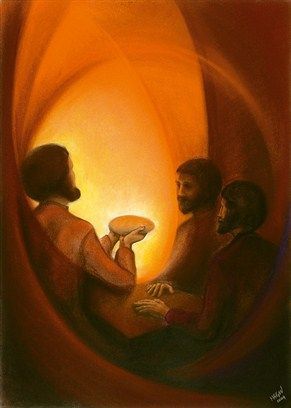
BreakfastAtDawn MikeMoyers
“Breakfast at Dawn” by Mike Moyers

Later, Jesus himself appeared again to his disciples at the Sea of Tiberias. This is how it happened: Simon Peter, Thomas (called Didymus), Nathanael from Cana in Galilee, Zebedee’s sons, and two other disciples were together. Simon Peter told them, “I’m going fishing.”

They said, “We’ll go with you.” They set out in a boat, but throughout the night they caught nothing. Early in the morning, Jesus stood on the shore, but the disciples didn’t realize it was Jesus.

Jesus called to them, “Children, have you caught anything to eat?”

They answered him, “No.”

He said, “Cast your net on the right side of the boat and you will find some.”

So, they did, and there were so many fish that they couldn’t haul in the net. Then the disciple whom Jesus loved said to Peter, “It’s the Lord!” When Simon Peter heard it was the Lord, he wrapped his coat around himself (for he was naked) and jumped into the water. The other disciples followed in the boat, dragging the net full of fish, for they weren’t far from shore, only about one hundred yards.

When they landed, they saw a fire there, with fish on it, and some bread. Jesus said to them, “Bring some of the fish that you’ve just caught.” Simon Peter got up and pulled the net to shore. It was full of large fish, one hundred fifty-three of them. Yet the net hadn’t torn, even with so many fish. Jesus said to them, “Come and have breakfast.” None of the disciples could bring themselves to ask him, “Who are you?” They knew it was the Lord. Jesus came, took the bread, and gave it to them. He did the same with the fish. This was now the third time Jesus appeared to his disciples after he was raised from the dead. (CEB)

Sometimes, maybe oftentimes, it takes a bit of time to wrap our heads and our hearts around a new reality. After all, if you’ve been used to operating a particular way for a long time, it can be hard to come around to embracing difference – even if that change is really good.

Good ol’ Peter, you’ve got to love him. Bless his heart, the Lord Jesus is risen from death and he, along with some of the other disciple fishermen, are not quite up to speed on resurrection. Christ is alive, the disciples have already seen him on two separate occasions, yet they seem like a dog who has chased a rabbit and now don’t know what to do with it once they’ve surprisingly gotten it.

So, Peter goes fishing. Yep, when all else seems upside-down and topsy-turvy, just go fishing. The problem is: Peter and the boys are going back to a life that doesn’t exist anymore. And that’s pretty much what we all tend to do when we are stuck in a liminal space, caught in a situation of uncertainty without much of a clue what to do. We simply go back to what we’ve always done and hope we catch some fish.

But we can’t catch fish. It isn’t the same anymore. The resurrection of Jesus has completely upended the world. There’s no going back to any sort of pre-resurrection days. All has changed. I’m not sure if the disciples believed they were going to catch any fish, or not. Seems they just had to go do something familiar.

Unknown to them, the rules changed. The old way of fishing won’t work. While they’re off trying to live from the old life, Jesus shows up on shore. The disciples don’t realize its him. So, they don’t anticipate that when Jesus calls out and encourages them that they’ll end up with a nice haul of fish. While the old life yields nothing, the new life with Christ brings abundance, blessing, and fellowship. After the big catch of fish, here are the disciples now eating breakfast with the King of Kings, yet they’re still scratching their heads. What’s going on? Who is it? Well, of course, it’s Jesus, but is it? What’s the plan? I’m so confused.

In the passage and the journey from one reality to another, from a place of familiarity to a place of a future we’ve never seen, from an old life to a new life, there is both the shadow of doubt which makes everything feel so uncertain and the confidence of faith which keeps us going forward. In this middle space there is a continual vacillating between doubt and faith. Rarely is there ever a black-and-white existence. No, instead its wise to become friends with the gray because most lessons we learn come while inhabiting this weird in-between space.

When the disciples encountered Jesus in today’s Gospel story, it was an experience of Jesus in the middle – a six-week time between resurrection and ascension. It was also an experience of the disciples in the middle. There was no going back to a pre-resurrection time of walking and talking with Jesus as they had done before. And there is also no future where they can live in the past or pick up the fishing business just like before.

Although we have the advantage of knowing how the story shakes-out with Christ’s ascension, the giving of the Spirit, and a robustly bold group of disciples going out to change the world – the disciples cannot picture that future in their liminal space on the beach.

We, too, inhabit a middle space. We are in-between the two advents of Christ. This truly is an awkward time in which we, along with disciples, experience a mix of belief and doubt because we aren’t at the end of the story. So, a combination of worship and wondering exists in the here-and-now. Jesus doesn’t chide the disciples for sometimes believing and sometimes not; and, our Lord isn’t exasperated with us because one of the certainties for the Christian is that grace overcomes everything. Sitting down with Word and Meal creates a new space where we can begin to make sense of our sometimes very nonsensical lives.

Great God of Resurrection, help me to embrace both the meaning and the mystery of faith as I negotiate and interpret every situation in my life through the light of Jesus Christ, your Son, my Lord, who lives and reigns with you and the Holy Spirit, one God, now and forever. Amen.

Click There Is a Hope by Stuart Townsend for encouragement through your liminal space.

Luke 24:13-35 – A Conversation with Jesus

Welcome, friends!  It is a joy to be with you today! Click the video below and we will worship together.

You can also view this video at TimEhrhardtYouTube

We all have our own liturgical rhythms. Here are two links with very different versions of the same hymn, “He Lives”….

Click He Lives (I Serve a Risen Savior) for the melodious twang of country singer Alan Jackson.

Click He Lives for the lively declaration of gospel singer Beverly Crawford.

May your conversations with Jesus this week be rich and full.

A Conversation with Jesus

JesusEmmausFriends

If we want to know what worship truly looks like, the story of the two men talking with Jesus along the Emmaus road shows us (Luke 24:13-35). Worship is not just us talking, praying, and singing to God. Worship is meant to be a conversation between us and God – a dialogue in which we hear from God and reply to him. Worship, then, is both God’s revelation and the people of God’s response. 

The term “liturgy” describes what we do in worship.  Liturgy is a Greek term that means “the work of the people.”  Every church has a liturgy.  All gatherings of believers have some sort of prescribed ways of moving through their worship. Liturgy is not only a reference to more traditional forms of worship.  Contemporary styled worship may have less liturgical elements to it, but it still has a liturgy of several praise and worship choruses (in which the people know when to stand and sit), and an extended time of preaching. 

After Christ’s resurrection, it was Jesus who approached the men.  In this divine movement of liturgy, God is always the initiator of salvation and worship.  If it were not for God approaching us, most fully expressed in Christ’s incarnation of coming to this earth, then we have no hope.  Humanity in the vice grip of sin needs someone to help. So, when we begin worship, it is God himself who starts the conversation.  

Liturgy bumper sticker

As the two men continued with their conversation, Jesus engaged them in the Scriptures. He went to the Old Testament and explained to them what it had to say about the Christ. They heard from God. To understand Holy Scripture, we too, need to walk with Jesus and converse with him. Liturgy exists to encourage a relationship between us and God. It is designed to create space whereby God and God’s people can be in a meaningful dialogue with each other. 

Maybe it goes without saying, this means we must listen well. We cannot listen well if we our minds are wandering, and our hearts are somewhere else. Sometimes we intentionally make our lives overwhelmingly busy so that we either cannot or do not have time to listen to God. We might create noise and keep moving because we are much too uncomfortable with silence. We may not want to hear what is in our hearts. Getting to the place of relaxing enough to listen can seem, for some, like a daunting task. This is not a plea for you to do more (i.e. “hear more, listen better!”). It is really giving you permission to do less so that you can enjoy a conversation with Jesus.  A good place to begin is to practice the Sabbath, and use the day, not just the morning, to connect with God. 

Jesus became known to the two Emmaus friends through table fellowship.  It was at the table that the two men’s eyes were opened to who Jesus really was.  This would not have happened unless they were in meaningful conversation with Jesus.  Then, after Jesus left them, the two men were inspired in their going.  They went out as witnesses telling others of what they had seen and heard from their conversation with Jesus. 

Road to Emmaus by He Qi
“Road to Emmaus” by He Qi

In this liturgical rhythm, this conversation between us and God, the good news of Jesus is presented.  God first acts by seeking and desiring fellowship with us; God sent his Son, the living Word, to restore the fractured relationship – Jesus is the divine Word who has accomplished the restoration between us and God.  This revelation, this realization of what God has done for us in Christ begs a response from us. We praise him for wanting fellowship with us. Having glimpsed how holy God is, we realize how sinful we are, and, so we confess our sins to him. God, in his grace, forgives us our sin and assures us of our pardon. In our gratitude for that grace, we joyfully listen and live according to his Word. And, so, back-and-forth we go, with the liturgy proclaiming the gospel to us in a divine dialogue that blesses both us and God. 

Now, if you think about it, all of life is liturgical. We each have routines, habits, and life patterns that shape how we get things done. For example, in the first year of marriage, my wife and I experienced a clash of liturgies.  Her family had their ways of doing things, and my family had theirs.  I quickly learned what a proper liturgy was for folding towels. 

A worship liturgy is neither only for Sunday morning nor to be always within a church building. We can deliberately build spiritual rhythms and spiritual conversation throughout each day in our homes, at our jobs, and throughout our daily lives. For example, our daily call to worship is when we wake up, realizing that we have been called into wakefulness to enter praise for a new day. My own personal daily prayer when I get out of bed is:  

“Almighty God, thank you for bringing me in safety to this new day. Preserve me with your mighty power that I may not fall into sin, nor be overcome by adversity. In all I do today direct me to the fulfilling of your purposes through Jesus Christ my Lord.”   

Morning Bible

As we go through our day, we can recognize sin when it happens, and be quick to confess it and accept God’s forgiveness. We can be intentional about hearing from God, by creating space and setting aside time for reading Scripture. When our heads hit the pillow at night, we receive the blessing of God in sleep, until a new day begins. 

Whatever way we go about it, we have the privilege of developing spiritual rhythms and habits of approaching God, listening to God, and responding to God. And, we need to acknowledge that something can trip us up in this attempt to live a godly life. There are other secular liturgies that vie for our attention and our hearts. We just might be influenced as much or more by a different competing liturgy. For example, the shopping mall’s version of liturgy is to gather shoppers and develop practices of buying in us.  If we shop because we feel that we would have a better life with new clothes, or more stuff, we might have a competing liturgy working in our lives. If we feel we need to shop because there is something we lack in our personhood, as if we are not enough, then we just might have another liturgy that wants our loyalty over God. 

The point is not to avoid shopping malls (you have to anyway!); the point is to realize that there are competing loyalties to God’s kingdom, and that we are to be shaped as followers of Jesus as our primary commitment in life.  Our lives are to revolve around the person and work of Jesus, and so we must intentionally cultivate liturgical practices in our daily lives and train ourselves to be godly. 

Christianity is not merely a system of beliefs; it is a way of life.  The kind of habits that we develop in that life will determine what kind of disciples we will be.  So, we must choose well the kinds of routines that we need in order to walk well with Jesus and carry on a delightful conversation with him. 

Matthew 12:38-42 – A Changed Life

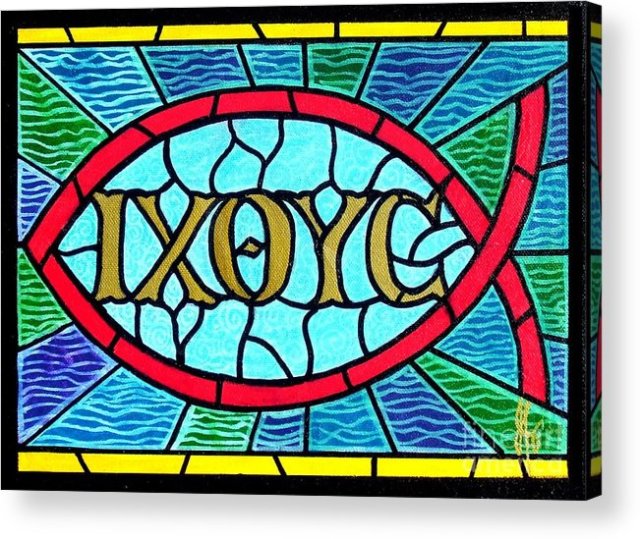
Ichthys
The ichthys (pronounced ick-thoos) is an early Christian symbol of new life in Jesus Christ.

Then some of the Pharisees and teachers of the law said to him, “Teacher, we want to see a sign from you.”

He answered, “A wicked and adulterous generation asks for a sign! But none will be given it except the sign of the prophet Jonah. For as Jonah was three days and three nights in the belly of a huge fish, so the Son of Man will be three days and three nights in the heart of the earth. The men of Nineveh will stand up at the judgment with this generation and condemn it; for they repented at the preaching of Jonah, and now something greater than Jonah is here. The Queen of the South will rise at the judgment with this generation and condemn it; for she came from the ends of the earth to listen to Solomon’s wisdom, and now something greater than Solomon is here. (NIV)

I say at the outset:

The greatest miracle, the best evidence of God’s work in the world, is a changed life.

Yes, both personal and corporate transformation – not a rearranging or a tweeking of habits – but a wholesale change of heart. New life is new life, and not a reconstituted life.

For many folks, when it comes to any discussion of change and transformation, it is a focus on others changing. Other people need to see things rightly; others who must bend their lives and organizations to how I believe things need to be. As you can tell, putting it in writing and laying it bear sounds an awful lot like pride and hubris. And, it is.

The need for repentance is for everyone, not just a select few or others for whom we believe need to change.

Jesus made waves with many people by hob-nobbing with the least, the lost, and the lowly. Christ actively sought such people out, and healed many of them from sickness, disease, and sin so that they would be united with God and no longer remain on the fringes of society.

Some within the religious establishment of the day did not take the healing ministry of Jesus into consideration because they were not in the transformation business. So, healing miracles which created new life did nothing for them. Jesus was not flexing any real Messiah muscle for them and improving their designs to see Gentiles get beat up and kicked out of Palestine. They even went so far as to ascribe Jesus’ healings as the work of the devil. They wanted a sign from heaven that would authenticate proper Messiah credentials.

Jesus responded by essentially saying there is already a sign that exists, the sign of Jonah. As Jonah was three days and three nights in the belly of a whale, so Jesus would be in the earth for three days and nights. The death and resurrection of Jesus is needed, and when faced with this information, the only appropriate response is repentance, a complete U-turn, to a changed life. Jesus brought up the Queen of the South to make the same point: When the ancient Ninevites, who were a sinful people, encountered the person of Jonah, they repented; when the Queen encountered the person of Solomon, she changed.

Therefore, how much more should we change when encountering the person of Christ?

Jesus himself is the sign. Jonah was in the belly of a whale. He was all but dead. But God caused the whale to belch up Jonah, and he went out as a changed man. The experience of having stomach fluids work on a person for three days and nights, some scholars point out that Jonah would have been both spiritually and physically different – bleached completely white and an incredible sight to see!

The whole point of bringing up this sign of Jonah was to communicate the great need for repentance when faced with Jesus, his life, his teaching, his ministry. The appropriate response to Jesus is a changed life.

Jesus was looking for status quo malcontents, and a desire for transformation and new life.

The process of change is hardwired into all creation – from seasons of the year to the seasons of people’s lives – all are designed for a sustained process of time to revolutionize us.

Jesus modeled this for us. He switched his address of heaven and moved into our neighborhood in order to bring us new life. As the Master of conversion, Jesus always extends the invitation to change. All he asks is to let God do the work of change within us, be patient with the construction of the soul he is doing and persist with daily routines of faith individually and with one another.

It pleases Jesus and it is the heart of God to realize new life. Change for change’s sake is not the point. Change that reflects the values of God is the point. And in order to know that, we must hear the Scriptures, and we must pray to seek the mind and heart of God.

God Almighty, we desire to be transformed by you and allow the life of Jesus to be expressed through us. We desire to walk in the light of your spirit. Reveal to us those things in our life that need to be made anew. Allow us to discern between flesh and spirit so that we can choose a healthy holy path. Continue to give us spiritual awareness. Transform us into something new altogether. May our old life and way disappear, and our new life emerge for the blessing of the world, through Jesus Christ our Lord in the power of the Holy Spirit. Amen.

Click I Will Rise by Chris Tomlin as we continue in this season of Eastertide with its focus on new life.