Matthew 19:16-22 – An Intervention by Jesus

Armenian Orthodox depiction of Jesus and the rich young man.

Just then a man came up to Jesus and asked, “Teacher, what good thing must I do to get eternal life?”

“Why do you ask me about what is good?” Jesus replied. “There is only One who is good. If you want to enter life, keep the commandments.”

“Which ones?” he inquired.

Jesus replied, “‘You shall not murder, you shall not commit adultery, you shall not steal, you shall not give false testimony, honor your father and mother,’ and ‘love your neighbor as yourself.’”

“All these I have kept,” the young man said. “What do I still lack?”

Jesus answered, “If you want to be perfect, go, sell your possessions and give to the poor, and you will have treasure in heaven. Then come, follow me.”

When the young man heard this, he went away sad, because he had great wealth. (NIV)

Sin is addictive. Since we are all sinners, we are therefore all addicts. We do not all struggle with the same sin but we all have some besetting sin(s) we must be weaned off of, whether it is what we typically think of as addiction (alcohol, substance abuse, smoking, pornography, gambling) or things we don’t readily notice as addictive (gossip, food, shopping, social media, Netflix). The most pervasive and addictive sin found in Holy Scripture is the addiction to wealth and money.

It would be easy to think of others rather than we ourselves when it comes to the topic of money. “I don’t have as much money as…” or, “So and so really has a problem with this…” perhaps betrays our own denial of having an inordinate concern with wealth. The truth be told, it is likely that all of us are in some sort of denial about how much we really trust in paychecks, bank accounts, and stuff. Even people who truly have little money and few resources can compulsively think about wealth and wish for riches to an unhealthy degree, as if possessing more is the thing that will make them happy.

Persons in denial rarely realize how much they are hurting others, themselves, and God. In fact, the consistent witness of the early church fathers is that the sheer accumulation of stuff is the same as stealing from the poor. The great preacher from antiquity, St. John Chrysostom, plainly declared:

“Not to share our own wealth with the poor is theft from the poor and deprivation of their means of life; we do not possess our own wealth, but theirs.”

Sometimes, because of denial, people need an intervention – to be jolted back to their senses. Intervention is a gift.  Someone cares enough to intervene. Yet, interventions do not always work. The person may walk away and refuse to see themselves as they are.

Jesus performed an intervention with a rich young man (literally, a twenty-something). The man was addicted to wealth and money, but he failed to see it. In fact, he thought of himself as godly and spiritual. It is a sad story because the man walked away untransformed by his encounter with Jesus and did not follow him.

Because of his riches, the young man did not see himself as hopeless and desperately needing to change, and so, held to his denial.

Today’s Gospel lesson is not merely an ancient story. It is our story, as well. Whereas I would get all excited about being asked a question like, “What good thing must I do to get eternal life?” and launch into proclaiming the good news, Jesus, however, immediately picked up on the attitude and thought behind the question. 
What must I do to get?  It is almost as if the man wants to acquire eternal life like he would acquire wealth.  “I am a successful businessman, and respected citizen,” the young man might have reasoned, “and now I want to be a success with God, as well.” However sincere the question may have been, it is misguided. Eternal life is not spiritual real estate for an upwardly mobile twenty-something to acquire and possess. It seems he believed he could purchase eternal life, as if everyone has their price, even God.

Jesus questioned the question by going after the underlying assumption that the man could do something good to obtain eternal life. He could not because only God is good. So, Jesus changed the action from getting to entering; and changed the language from a market acquisition to entering a journey. In short, Jesus was inviting the man to walk with him.

Eternal life is a journey of faith in the God who is good, and not a transaction to leverage obtaining what I want.

We must be careful to avoid the topic of eternal life as if it were a contractual arrangement, as if getting a person to sign on the dotted line through a “sinner’s prayer” or some other formula will seal the deal. Because life with God is a walk of obedience to divine commands.

The rich guy wanted to know which commands to obey. Jesus then quoted the second table of the Ten Commandments, the ones which focus on human relationships. Jesus wanted him to see that the entrance to God’s kingdom goes through and not around how we treat our fellow human beings.

Simple straightforward observance of commands has its limits; it cannot provide genuine life. The rich man seemed to be looking for some extraordinary command. After all, he could do it, no matter what the price was.  The man, in his materialistic worldview, was confused. “What resources could I possibly lack?” he wondered.  So, Jesus straight up told him: Sell everything. Give to the poor. Then, come, follow me.

The young twenty-something needed to shift how he thought about being godly. Jesus is a person, not a commodity one can simply add to a portfolio.

Jesus mercifully offered the man a new way of being, not doing.

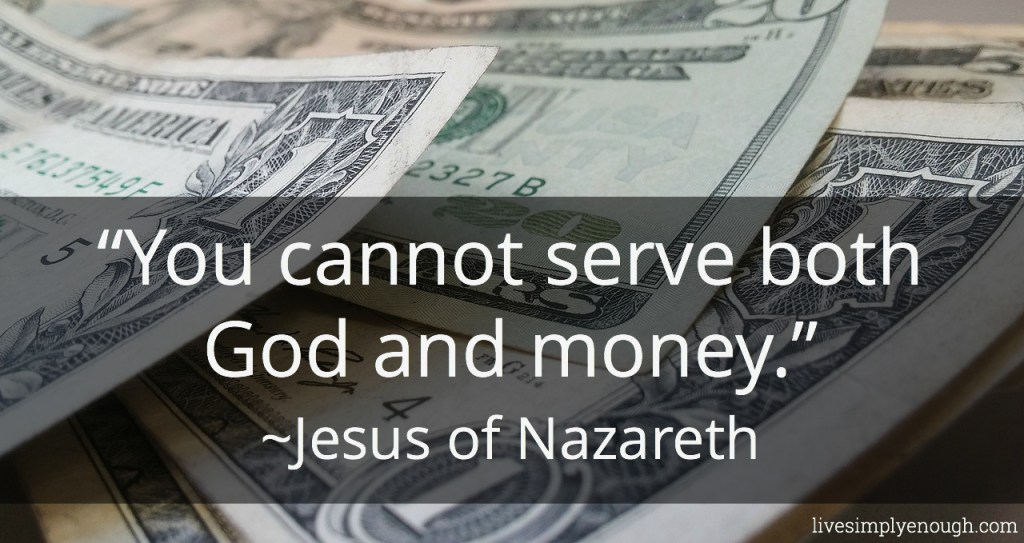
Through the conversational back and forth, Jesus exposed the rich man’s divided loyalties of trying to serve both God and money. He would have to choose between the two. And, I will add, this is our choice, as well. The issue is not whether we are completely devoted to money, or not. The question is: Are we trying to serve God while maintaining a moonlighting job with the world? 

God wants an undivided heart with complete allegiance. Jesus is scouting for the poor in spirit, who recognize their great need for God – spiritual beggars who understand their desperate situation and do not sugar-coat their spiritual state.

Like an alcoholic who needs sobriety, or a sex addict who needs purity, or a workaholic who needs to stop and go home, the rich young man needed to give up his inordinate love for money and possessions. So, Jesus did an intervention. Keep in mind that Jesus did not ask every rich person to do exactly as he called this young man to do, i.e. Zacchaeus to give everything away, or for Peter to sell his fishing business.

We must face our own compulsions, obsessions, and addictions surrounding money and wealth. Perhaps the best way to grow our faith is to tell a trusted person that you compulsively work in order to feel better, or that you are afraid to give because you worry about the future, or that you love to buy things you don’t really need.

I also want to do a check-in with you right now. With your self-awareness regarding money and stuff, do you feel horrible about yourself?  Do you beat yourself up for screwing up and succumbing to the money master? Grace is the final word on everything. God has unlimited patience with us and never tires of inviting us to follow him. Praise the Lord that divine love and acceptance is not based on our screw-ups but on the cross of Christ.

Camels cannot pass through the eye of a needle through dieting, concentrating harder, or getting lucky. Yet, it can happen, not because the camel can squeeze through the narrowness of the needle’s eye but because there is a wideness in God’s mercy.

Grace will pull you through. And unlike the rich young man, once you hear and understand that piece of delightful news, you do not walk away sad. You bound away with eternal joy.

O Lord, giver of life and source of freedom, I know that all I have received is from your hand. You call us to be stewards of your abundance, the caretakers of all you have entrusted to us. Help us to always use your gifts wisely and teach us to share them generously. May our faithful stewardship bear witness to the love of Jesus Christ in our lives. Amen.

Love the Lord Your God

Jesus replied: “Love the Lord your God with all your heart and with all your soul and with all your mind. This is the first and greatest commandment.” (Matthew 22:37-40, NIV) 

One of the teachers of the law asked Jesus, “Of all the commandments, which is most important?” “The most important one,” answered Jesus, “is this: ‘Hear, O Israel: The Lord our God, the Lord is one. Love the Lord your God with all your heart and with all your soul and with all your mind and with all your strength.’” (Mark 12:28-30, NIV) 

I love my three daughters. I think God made them beautiful to compensate for all the ornery things they did as kids so I would not go crazy. Once the oldest was at the top of the stairs with the youngest (who was two years old at the time). She put her in a laundry basket and pushed her down with the middle kid at the bottom to catch her.   

I love my wife with all my heart and soul. Yet, she always thought it would be a good idea to have an open-door policy for the girls to come into our bed at night whenever they needed us. I have been puked on, peed on, kicked on and pushed out of bed. Sometimes it was like living with a bunch of drunks. Raising this girl version of “Malcom in the Middle” was often stressful. However, I gladly dealt with it all because I love my girls with all my heart, soul, mind, and strength.  

Love God with all your heart. 

God has children across planet earth, and he loves them all. To love God with all our heart is to begin seeing God’s big expansive heart for people all around the world. God’s compassionate heart is close to the broken-hearted, near to those in need. In fact, God’s wrath is a response of love to make things right in this fallen world. As early as the book of Genesis, just a few chapters in, it says: 

The Lord saw that the human beings on the earth were very wicked and that everything they thought about was evil. He was sorry he had made human beings on the earth, and his heart was filled with pain. (Genesis 6:5-6, NCV) 

God is disturbed with violent and evil hearts. God is heartbroken about the dark places within the human heart. God is deeply concerned for suffering, injustice, oppression, and death. Every year fifteen-million children die of starvation. Human trafficking of women and girls has increased six-fold over the past five years resulting in forty-million victims of forced sex worldwide. We recently hit a grim milestone of one-million deaths across the world to COVID-19. Hundreds of millions are locked in grinding poverty, have no clean water to drink, and face a lifetime of illiteracy and poor wages. On and on it goes…. 

This is just a small glimpse of what God sees every day. And God knows each one of their names. For us, people need to move from being numbers to being names. God wants us to champion vital causes and aim our collective love toward people in need of Christ’s compassion and deliverance. 

Love is a deliberate decision to meet a need in another person. One who fails to see the needs of others will suffer a shrinking heart. But the one close to God’s heart and aware of another’s need will gain an expansive heart. God also sees the good and the beautiful: every obedient act done in secret, each prayer uttered in the privacy of our closet, and all the places of selfless love toward another.  

Love God with all your soul. 

We need a newfound sense of God’s wonder and beauty to reclaim the soul of Christianity. If loving God with all my heart means my heart breaks for the things that break God’s heart, then loving God with all my soul has my life flooded with God’s glory – awed by Divine majesty, mystery, and beauty. Loving God with all my soul is to perceive the glory and wonder of God all around me. It is to be profoundly grateful for everything – even and especially for the lessons learned from personal hardship and suffering.  

Without a divine perspective, we only see the world as we are and not as it is. The ways to cultivate a beautiful love for God with all my soul is to meditate on Scripture and creation. Literally take time to smell the roses. If we walk or drive the same route every day, be mindful to observe one thing you have never seen before. Then, praise God for it. Each time Holy Scripture is read, do it slowly and carefully, noticing one thing you have never seen before. Then, praise God for that perception. 

Love God with all your mind. 

True love has an insatiable desire to know more and more about the object of its affection. To love God with all our minds is a desire to learn and experientially know more about the Lord. It is to have a constant curiosity about God.  

We must love God with full faculties and not with half a brain. Left-brain dominant people rely on the logical, analytical, practical, and think chiefly in concrete ways. Right-brain dominant folks are artistic, intuitive, creative, imaginative, humorous, even sarcastic, often speaking poetically and with satire or metaphor. Loving God with all our minds means we will use all our brains, both the right and the left hemispheres. 

One obstacle to loving God with our brains is that the mind of sinful humanity is death (Romans 8:6). A sinful mind is a small brain; it is not interested in genuine critical thinking – only in stubbornly expressing opinions. Such individuals are merely using a ridiculously small part of their brains. God, however, wants to sanctify our whole brains, to transform us by the renewing of our minds (Romans 12:2).   

We are to use our full cognitive capacities to love God – meaning we will value the left brain orientation of  embracing order and discipline, using all the tools of reason and logic, learning critical thinking skills, and pursuing the life of the mind. We will also value the right brain orientation of embracing mystery, paradox, and gray areas, enjoying the process of discovery, and probing the deepest issues of divinity and humanity – being comfortable with asking questions and not always having the answers. 

Love God with all your strength. 

God loves the smell of your sweat. You might stink to high heaven from hard work but for God it is a sweet aroma and sacred incense. Love is measured not only by words spoken but by calories burned. Using our hands and our effort is as valuable to God as using our brains.   

Feel free to go hard after God with all your strength – being mindful that we all have a finite amount of energy. Because of this, we need to ensure we do not inordinately waste our energy pursuing power and control. Pride, anger, and selfishness saps our strength. Guilt, shame, and regret follow it up by draining our spiritual stamina. So, we need to keep busy doing the right things. 

Loving God with all our strength requires respecting boundaries and implementing healthy rhythms of life. We might believe (wrongly) that the answer to most things is to work harder. Try doing that with your car when a red light comes on the dashboard and you will soon not have a car to drive.

Many persons are hellbent on working themselves into the ground. Feeling the pressure of responsibility, the fear of failure, the obsessive need for perfectionism, and the stress of dealing with difficult situations cause some folks to ignore their better judgment. Some individuals find the shame of failure too unbearable to let up on the gas pedal, and so keep going day after day worried that they might be letting someone down.    

Loving God with our strength means we will observe the Sabbath. God rested; therefore, we rest. Sabbath observance avoids loading up a day of “rest” with all kinds of work. We are to use our time to restfully connect with God, take leisurely walks with family, enjoy good friends over a meal, and, of course, delight in a well-deserved nap. Wise and rightly ordered priorities come from well-rested people.  

Summary 

Love God from a large heart because God has a big heart. Love God with your soul through deep feelings because God created us as emotional creatures. Love God cerebrally with a curiosity to know humanity and divinity because God is infinitely interested in us. And love God through hard work done for the things God cares about, just as Christ loved us and gave himself for us.   

John 5:39-47 – Against Vainglory

Christ and Pharisee by Russian artist Ivan Filichev, 1993

“You have your heads in your Bibles constantly because you think you’ll find eternal life there. But you miss the forest for the trees. These Scriptures are all about me! And here I am, standing right before you, and you aren’t willing to receive from me the life you say you want.

“I’m not interested in crowd approval. And do you know why? Because I know you and your crowds. I know that love, especially God’s love, is not on your working agenda. I came with the authority of my Father, and you either dismiss me or avoid me. If another came, acting self-important, you would welcome him with open arms. How do you expect to get anywhere with God when you spend all your time jockeying for position with each other, ranking your rivals and ignoring God?

“But don’t think I’m going to accuse you before my Father. Moses, in whom you put so much stock, is your accuser. If you believed, really believed, what Moses said, you would believe me. He wrote of me. If you won’t take seriously what he wrote, how can I expect you to take seriously what I speak?” (MSG)

I like kids, even Junior High kids. They have not yet learned how to mask their honesty (like Senior High kids). Have a conversation with any early adolescent (other than your own kid) and you will likely get an unfiltered and unvarnished take on whatever topic you are discussing together. If the subject of celebrities comes up, they can quickly rattle off their favorites. There is a reason for that; they are very much in touch with wanting to be impressive, to stand out, even to be famous someday.

I have long contended that if you want to gauge a society’s true values, talk to a young adolescent. They just happen to have an emerging awareness of the world but not yet the sophistication to hide their true thoughts from others. Junior High age kids pretty much reflect what most adults are thinking but would never dare say out loud. After all, why lose prestige in the eyes of others who think I am wonderful? Better not to rock the boat, we reason.

“Vainglory” is an old out-of-style word which few people use anymore, yet perfectly captures exactly what Jesus was talking about when it came to people being unable to discern his divinity. Wherever and whenever you find an inordinate focus on wanting attention, seeking to impress others, and desiring celebrity status, there you will see vainglory digging its talons into a society.

Vainglory is just what it sounds like: an almost narcissistic self-absorption into one’s need for importance and attention so that the personal vanity blocks being able to see others right in front of them. In placing so much energy into becoming a celebrity among peers, the vainglorious person’s vanity fogs them from reality and the truth of another.

Conversely, we are to seek the glory which comes from God. Since so many are programmed to seek honor from others, it can be quite the undertaking to turn the hunt into finding our identity and fame as persons in the image of God. Our Gospel lesson today says our reorientation program begins with faith in Jesus Christ. It is the first step toward the unmasking of egomania and soliciting God’s favor.

The sixteenth-century Reformer, John Calvin, said that “a person is only prepared to obey the heavenly teaching when he is convinced that the chief thing to be sought in all of life is God’s approval.”

Thus, the appropriate response to vainglory is to fly like a bat of hell to the heavenly mercy of God. There is no shame in wanting honor; its just a matter of where we go looking for it. Faith is crippled when we keep trying to discern which way the wind is blowing. Both our identity and our sanity will eventually blow away. However, if we cease prioritizing worldly recognition and cancel our membership in the mutual admiration club, then our conscience clears enough to let divine grace fill our souls with the love of God in Christ.

Give me Jesus and that will be enough, thank you very much. As for recognition and attention, to be adored by the Savior is all I really need. Because at the end of the day, after the hurt of being ignored, overlooked, and forgotten, Jesus is standing at the door knocking, eager to come into the house and grace me with the gift of acceptance, approval, and admiration.

O Lord, in the name of Jesus Christ your Son our God, give me the love which never ceases, that will light my soul with divine grace so that I might be satisfied in you and lessen the darkness of the world. Lord Jesus, I seek your presence and glory. May I see you, desire you, look on you in love, and long after you, for your sake. Amen.

Titus 2:7-8, 11-15 – “Yes” to Grace

Grow in the grace and knowledge of our Lord and Savior Jesus Christ. (2 Peter 3:18)

In everything set them an example by doing what is good. In your teaching show integrity, seriousness and soundness of speech that cannot be condemned, so that those who oppose you may be ashamed because they have nothing bad to say about us.

For the grace of God has appeared that offers salvation to all people. It teaches us to say “No” to ungodliness and worldly passions, and to live self-controlled, upright and godly lives in this present age, while we wait for the blessed hope—the appearing of the glory of our great God and Savior, Jesus Christ, who gave himself for us to redeem us from all wickedness and to purify for himself a people that are his very own, eager to do what is good.

These, then, are the things you should teach. Encourage and rebuke with all authority. Do not let anyone despise you. (NIV)

It is grace which teaches us, enabling and ennobling us to forsake ungodliness and embrace hope. Grace is the scandalous and radical blessing of mercy, forgiveness, and love to those undeserving of it. Judgment is no teacher; it only condemns with criticism leading to self-contempt. Grace inoculates us from the self-despising words of the inner critic, whereas the judgmental voice heaps derision upon the soul and agrees with anyone who comes along and ridicules, despises, or scorns us.

God’s grace in Christ is redemptive. It challenges the notion we are not enough in comparison to others. Grace makes us better instead of telling us we should be better. The redeemed person, made over with abundant grace, accepts herself as a precious child of God, and so, becomes impervious to the critical rejection of others. After all, she has been received and adopted by the Lord of all. Grace enables us to advocate for ourselves and others, since we have an Advocate alongside us continually.

The shame of our past, the struggles of the present, and the stress of a perceived future all begin to melt next to the warm and purifying fire of grace. Jesus has snatched us back. We belong to God. Eager to be upright and holy in all things, and patiently waiting for the return of Christ, every good thing Christians are and do is because of grace.

The grace of God empowers us to choose the good and eschew the bad. It lifts us with encouraging love and support while simultaneously strengthening our faith to chuck the ungodliness. It is imperative we get interested in the truth of grace as it pertains to self. In fact, the Apostle Paul began his letter to Titus with an emphasis on what is true:

Paul, a servant of God and an apostle of Jesus Christ to further the faith of God’s elect and their knowledge of the truth that leads to godliness— in the hope of eternal life, which God, who does not lie, promised before the beginning of time. (Titus 1:1-2, NIV)

God is gracious. God is true. Therefore, grace is truth. The believer leans into and relies upon the unmerited and undeserved mercy and kindness of God, who does not merely speak truth but is truth itself. “I am the truth,” Jesus said to his disciples, as the very embodiment of honesty and veracity. (John 14:6)

There is a significant difference between doing good because of arm-twisting and living a godly life because of grace. Being cajoled into living the straight-and-narrow is accomplished typically through shaming another to the point of conformity. This is not the way of Christ. Grace bestows renegade love to extravagant sinners. Such a gift is so incredibly overwhelming that gratitude with delightful duty is the typical response.

Furthermore, grace is to be the example given to others. The Christian’s life is to be a model of saying “no” to unconscionable behavior and “yes” to a mindful righteousness which has awareness of the ways of grace. Like changing a filthy set of clothes, we are to put off self-condemning lies and put on the grace of the Lord Jesus. We are to put off the old ratty garments of judgmentalism and put on the new clean raiment given by Christ which is worthy of a royal child of God. Well, of course, we do not deserve this – which is why it is grace.

God is shaping and forming a people of grace in faith communities, distinct from and in stark contrast to judgmental persons in unjust structures of the world – a holy people, a special and treasured possession of the Lord, committed to observing divine ways of grace. (Deuteronomy 26:16-19)

Grace is one-way love. Watch other people you respect as examples and consider their happiness. You will see it over and over: one-way love lifts-up. One-way love cures. One-way love transforms. It is the change agent of life.

Almighty God and ever-present Lord of grace, you have brought me in safety to this new day. Preserve me with your mighty power, that I may not fall into sin, nor be overcome by adversity. And in all I do today, direct me to the fulfilling of your gracious purposes through Jesus Christ my Lord. Amen.