“Follow Me” (John 21:19b-24)

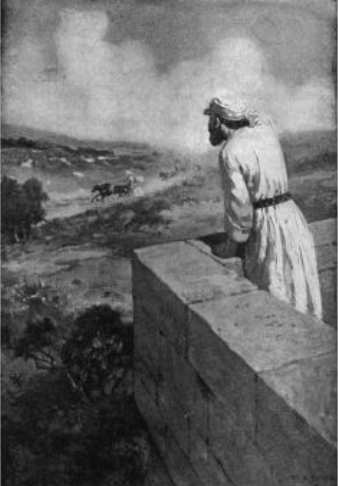
By Unknown Artist

Then he [Jesus] said to him [Peter], “Follow me!”

Peter turned and saw that the disciple whom Jesus loved [John] was following them. (This was the one who had leaned back against Jesus at the supper and had said, “Lord, who is going to betray you?”) When Peter saw him, he asked, “Lord, what about him?”

Jesus answered, “If I want him to remain alive until I return, what is that to you? You must follow me.” Because of this, the rumor spread among the believers that this disciple would not die. But Jesus did not say that he would not die; he only said, “If I want him to remain alive until I return, what is that to you?”

This is the disciple who testifies to these things and who wrote them down. We know that his testimony is true. (New International Version)

To actually follow Jesus around during his earthly ministry on this planet was amazing; yet singular, for just a few years of time. But to be called to follow Jesus in a post-resurrection world is, obviously, going to look different. It’s not the same.

It seems to me that the command from Jesus to “follow me” in such a world would take anyone a bit of time to wrap their head around. After all, Jesus had risen from death, and was about to ascend to heaven. How do you follow someone who is here, but not here?

Maybe Peter needed some space to try and make sense of it all by deflecting the command onto what’s going to happen with his fellow disciple John, who was hanging around following the two of them.

Jesus, undeterred by Peter trying to get Jesus on another subject, kept his focus on Peter. Again, Christ reiterated the command to Peter: “You follow me.”

It’s far too easy to look at others and wonder about their following, and to be overly concerned about somebody else’s Christian discipleship. If we are honest, oftentimes by doing that approach, we don’t have to deal with our own relationship with Jesus, and what he is saying specifically to me.

The beginning of Christ’s earthly ministry involved the command to “follow me.” And here, at the end of that phase of his ministry, he came back to the disciples, and to Peter, saying the very same thing: “Follow me.”

Even though so much had changed from the first time the disciples were called to follow Jesus, the basic nature of Christian discipleship had not really changed at all. In fact, even today, it still hasn’t much changed. The call still remains from the Lord Jesus to “follow me.”

“Whoever wants to be my disciple must deny themselves and take up their cross and follow me. For whoever wants to save their life will lose it, but whoever loses their life for me will find it.” (Matthew 16:24-25, NIV)

“I am the light of the world. Whoever follows me will never walk in darkness, but will have the light of life.” (John 8:12, NIV)

Anyone who loves their life will lose it, while anyone who hates their life in this world will keep it for eternal life. Whoever serves me must follow me; and where I am, my servant also will be. My Father will honor the one who serves me.” (John 12:25-27, NIV)

Unlike Christ’s earthly ministry, in this post-resurrection world, the call of discipleship and apprenticeship to Jesus, goes out into all the world. It’s for everyone, and not just a select few persons to follow Jesus physically as their rabbi and teacher.

Yet, what is similar, concerning the call to follow Christ, is that we can still today get sidetracked by rumors about other followers. Believers can become enamored with what is happening, or going to happen, with particular Christians and about whether Jesus is going to return today or tomorrow.

But our singular focus, as Christians, as people who embrace the name of Christ, is to follow Jesus. “Follow me” is just as relevant now as it was two millennia ago.

What is important for each of us is to actually focus on our own part in following Jesus. The Good Shepherd is perfectly capable of properly sorting the sheep and the goats. That’s not our job.

We have quite enough on our spiritual plate in dealing with our own Christian discipleship, without sticking our nose in another’s Christian walk with Jesus. There is a fine line between holding another accountable, and just plain old being a no-good spiritual busybody.

So, when it comes to Christian discipleship and following Jesus, we are to mind our own business. Butt out of other people’s walk of faith, and concentrate on your own special calling from God.

We are not to compare our discipleship with others, namely because we each have our place and particular set of spiritual gifts to edify the community. And if we will put our focus on our own specific call to follow, then the Body of Christ is healthy and works together in unity, harmony, and love. (1 Corinthians 12:4-11)

If we concentrate on Jesus, we will be fine. If we choose, however, to be a spiritual busybody, or the self-appointed spiritual police, then we are going to have Judge Jesus to contend with in a way you probably won’t like.

So, what is you calling? How will you relate to Jesus? Will you take up the command from Jesus to “follow me?”

Merciful Lord, give me the courage to take up my cross and follow you, even if it means sacrificing my own comfort and desires. Help me to be obedient to your commandments, to live a life of love, and to serve others with humility.

Thank you, Lord, for your faithfulness and your endless grace. Help me to follow you with all my heart and to live out your teachings in my daily life. Amen.

Christmas Day (John 1:1-14)

Art by Lourry Legarde

The Word was first,
    the Word present to God,
    God present to the Word.
The Word was God,
    in readiness for God from day one.

Everything was created through him;
    nothing—not one thing!—
    came into being without him.
What came into existence was Life,
    and the Life was Light to live by.
The Life-Light blazed out of the darkness;
    the darkness couldn’t put it out.

There once was a man, his name John, sent by God to point out the way to the Life-Light. He came to show everyone where to look, who to believe in. John was not himself the Light; he was there to show the way to the Light.

The Life-Light was the real thing:
    Every person entering Life
    he brings into Light.
He was in the world,
    the world was there through him,
    and yet the world didn’t even notice.
He came to his own people,
    but they didn’t want him.
But whoever did want him,
    who believed he was who he claimed
    and would do what he said,
He made to be their true selves,
    their child-of-God selves.
These are the God-begotten,
    not blood-begotten,
    not flesh-begotten,
    not sex-begotten.

The Word became flesh and blood,
    and moved into the neighborhood.
We saw the glory with our own eyes,
    the one-of-a-kind glory,
    like Father, like Son,
Generous inside and out,
    true from start to finish. (The Message)

Art by Linnaea Mallette

Joy to the world! Merry Christmas to you, my friend. On this day, and for the next twelve days, we remember and celebrate the nativity of Christ, and the mystery of his incarnation.

We acknowledge with Christians, both past and present, all around the world, in proclaiming together:

“Glory to God in heaven, and on earth peace among those whom he favors.” (Luke 2:14, CEB)

We relate to the shepherds, out in their fields, caring for the flocks of sheep at night, who were terrified, yet went and offered their worship to the newborn king, listening to the angelic message:

Then the angel said to them, “Do not be afraid, for behold, I bring you good tidings of great joy which will be to all people. For there is born to you this day in the city of David a Savior, who is Christ the Lord.” (Luke 2:10-11, NKJV)

We identify with Mary, the mother of Jesus, who pondered the meaning of the nativity in her heart. (Luke 2:19)

This Christmas season extends from December 25 through January 5. Celebrating throughout these days helps us enter into the profound meaning and mystery of Christ’s incarnation – rather than just observing one day.

Today’s Gospel lesson moves us to do just that, to acknowledge and affirm the identity of Jesus Christ as fully human, and at the same time, all the time, fully divine.

Christ was both born into this world, and pre-existed from the very beginning. Indeed, Jesus has always existed, without any sort of preconditions to his eternal being. He is a person, a persona of God. In other words, Jesus is God.

The Lord Jesus is the pre-existent light-bearer who is designated to come as the light-giver, whose light is unquenchable and never goes out. He is the Light of the world.

John is a witness to that light. And although this light should have been expected, there were (and are) many who reject the Light, who is the Word for the world.

Yet, any sort of rejection cannot possibly hinder the light’s ability to illumine the hearts of many people.

This Word, this Light, this pre-existing Christ, has actually enfleshed himself, becoming present with us in this world. And this is precisely what the faithful are celebrating this day, and in this season. God has come among us!

The giving of the Son, this person of God, this incredible light and life, is a grace well beyond the divine giving of the Law – because the Law has been incarnated in the person of Jesus the Christ.

There is much to ponder, and much to celebrate, on this day, and for the upcoming days of this season.

We were all physically born of the flesh. We may all also become spiritually born of God through the Word of God, Jesus, the Savior whom we acknowledge and adore today and every day.

“The Word of God, our Lord Jesus Christ, through his transcendent love, became what we are, so that he might bring us to what he is himself.”

St. Irenaeus

By means of the incarnation, in Christ, and through the Spirit, we have the chance, the ability, made possible by God’s grace, to participate in the divine nature; and in the divine dance of unhindered and unending unity, harmony, peace, and love which continually exists within the Holy Trinity – Father, Son, and Spirit.

This is a spiritual reality worth a robust celebration today – and all the days which God gives us on this earth. To God be the glory.

God, you spoke, and your Word became flesh, breathing a new song of joy and praise into the world. Grant that we may bear the good news of your salvation, proclaiming your promise of peace to the ends of the earth. Amen.

Delivery and Deliverance (Isaiah 66:7-11)

Before she was in labor
    she gave birth;
before her pain came upon her
    she delivered a son.
Who has heard of such a thing?
    Who has seen such things?
Shall a land be born in one day?
    Shall a nation be delivered in one moment?
Yet as soon as Zion was in labor
    she delivered her children.
Shall I open the womb and not deliver?
    says the Lord;
shall I, the one who delivers, shut the womb?
    says your God.

Rejoice with Jerusalem, and be glad for her,
    all you who love her;
rejoice with her in joy,
    all you who mourn over her—
that you may nurse and be satisfied
    from her consoling breast,
that you may drink deeply with delight
    from her glorious bosom. (New Revised Standard Version)

Conception. Happiness. Wondering. Uncomfortable. Preparation. Pain. More pain. Delivery. Exhaustion. Joy. Celebration. New life. Bringing children into this world is a process. And its hard work.

Feeding. Pooping. Sleeping. Exhaustion. More feeding. Lots more pooping. Thank God, more sleeping. Still exhausted. So, when does the mother ever get to eat, go to the bathroom by herself, and sleep? Maybe tomorrow, or maybe in another life….

Despite all of this, there are still words which keep mothers (and fathers) going: Satisfaction. Delight. Awe. Praise. Love. Hope. Faith. Yes, faith. Lots of faith. So much faith that it’s as if the parent puts all their weight on it, and leans into it, perhaps more out of sheer necessity than anything else.

The Christian season of Advent has been growing over the past weeks. It is now large and very ready for Christmas Day and the celebration of the Christmas season (the 12 days from December 25 to the Day of Epiphany on January 6).

But we aren’t quite there yet. There is still the anticipation of birth. The Christ child is coming.

It’s quite something to imagine that God would be so humble as to become humiliated. What a wonder it is, that there is such a thing as an incarnation, that Jesus entered this world as both a human baby and a divine king.

God came to this world for us, on our behalf, to redeem, renew, and restore lost humanity. That’s a lot of love. If you think about it, the mother’s incredible love had to come from somewhere.

Love is what sustains the world. So, love must be nurtured. The feelings of it are not always there within us.

Yet, if we will continually seek to maintain the godliness which is love inside of us, we can find ourselves being little incarnations of Jesus walking about this earth providing succor, without any withholding or hatred.

To love is to love. Without conditions. To love a friend but hate an enemy is to cancel out the love. It must be all love, or it isn’t love, at all.

The person, group, organization, institution, community, or church in a miserable and wretched state is in need of restoration. That is, they are in a great need of receiving love and giving love.

If they have responsibilities toward others, and have been neglectful, they must come to the breast of God. And those who did not receive their due justice and fair recompense must also come.

Advent is more than a season in the year to recognize. And Christ’s incarnation is much more than a doctrine to believe. Advent and incarnation are powerful realities which we must live into.

The good news of this season is that God intervenes effectively to do good for those who are faithful. It’s a newness as sudden and as wonderful as the birth of a baby. The Lord does away with barrenness and hopelessness, and brings new life.

It is this good news that brings out joy. Where once there was mourning and sadness, there is now satisfaction, comfort, and consolation. God is the One who brings it about.

Therefore, it is helpful to remember and recall the words of Jesus to his disciples:

Very truly, I tell you, you will weep and mourn, but the world will rejoice; you will have pain, but your pain will turn into joy. When a woman is in labor, she has pain because her hour has come. But when her child is born, she no longer remembers the anguish because of the joy of having brought a human being into the world. So you have pain now, but I will see you again, and your hearts will rejoice, and no one will take your joy from you. (John 16:20-22, NRSV)

The joy and celebration of this first advent will lead to a second advent, the return of Christ. The peace and satisfaction we may enjoy now is only here in part. The fullness of peace will be ushered in at the end of time.

This is the sort of tension that we must continually maintain, holding together in both hands our sorrow and joy, disappointment and hope, hardship and love, at the same time, all the time, until that day when there is not only a delivery, but a deliverance from all evil.

Lord God, we adore you because you have come to us in the past.
You have spoken to us in the Law of Israel.
You have challenged us in the words of the prophets.
You have shown us in Jesus what you are really like.

Lord God, we adore you because you still come to us now.
You come to us through other people and their love and concern for us.
You come to us through people who need our help.
You come to us as we worship you with others.

Lord God, we adore you because you will come to us at the end.
You will be with us at the hour of death.
You will still reign supreme when all human institutions fail.
You will still be God when our history has run its course.

We welcome you, the God who comes.
Come to us now in the power of Jesus Christ our Lord. Amen.

Christ Is Effective (Hebrews 10:10-18)

Orthodox icon of Jesus Christ

Day after day every priest stands and performs his religious duties; again and again he offers the same sacrifices, which can never take away sins. But when this priest had offered for all time one sacrifice for sins, he sat down at the right hand of God, and since that time he waits for his enemies to be made his footstool. For by one sacrifice he has made perfect forever those who are being made holy.

The Holy Spirit also testifies to us about this. First he says:

“This is the covenant I will make with them
    after that time, says the Lord.
I will put my laws in their hearts,
    and I will write them on their minds.”

Then he adds:

“Their sins and lawless acts
    I will remember no more.”

And where these have been forgiven, sacrifice for sin is no longer necessary. (New International Version)

We are reminded in this Advent season of the Christian Year, that the coming of Christ had a purpose: Offering himself for all of the guilt and shame of the world.

Through the incarnation of Christ, God entered the world in order to deliver all creation from the power of evil, to give freedom from sin, death, and hell, so that people could come to God.

The old sacrificial system of Levitical priests offering sacrifices was good, but it was not effective. Jesus, as both priest and offering, is infinitely better. Christ’s offering was so superior that it was the sacrifice to end all sacrifices.

Jesus Christ was willing to do the work of offering himself, and was the perfect person to do it. No other could have done it.

In the Christian religious tradition, Jesus is the logical, reasonable, and promised way of reversing the curse upon humanity and doing away with sin forever.

The person and work of Christ is both a simple project to understand, as well as so complex that we will spend an eternity exploring Jesus and his ministry.

So, let’s make sure to maintain the tension of a message everyone can understand, as well as a message so deep and wide that we need to keep discovering how it continues to unfold, even up to this day and beyond.

The priest in the old covenant made daily offerings. The sacrifices were a reminder of guilt; none of them could take away sins. But Christ made one offering that potently took care of the sin issue once and for all.

The offerings of the Levitical priests in the old system were repeated because they were insufficient to take away human shame. But Jesus “endured the cross, scorning its shame, and sat down at the right hand of the throne of God.” (Hebrews 12:2)

The author of Hebrews tells us that the once-for-all offering of Jesus made the worshiper perfect. It makes sense that a perfect Savior offered a perfect sacrifice, with the effect of making perfect those who are coming to God.

“Perfect” does not mean that the worshiper is now completely without sin, as if an instant moral and ethical perfection occurred. The author was not communicating that Christians are completely unblemished, pure, and never error in their ways.

Rather, the Book of Hebrews has the message that we can come to God without any obstacles. Worshipers are now in a situation where they can engage in the project of Christian maturity without any hindrances to access with God.

Even death will not stop the believer from coming to God. Death, hell, and sin have been conquered by Christ’s offering of himself. We can now spiritually grow, instead of spiritually wither. The way is open to God.

For we do not have a high priest who is unable to empathize with our weaknesses, but we have one who has been tempted in every way, just as we are—yet he did not sin. Let us then approach God’s throne of grace with confidence, so that we may receive mercy and find grace to help us in our time of need. (Hebrews 4:15-16, NIV)

In Christ, we have shed our human weakness and have obtained an indestructible life. (Hebrews 7:16)

The “perfection” or maturity and full realization of God’s promises in Christ will culminate at the end of the age. So, it is theologically (doctrine of God) and anthropologically (doctrine of humanity) appropriate to say that we are perfect and not yet perfect.

Put a different way, in the context of soteriology (doctrine of salvation), we have been saved, are being saved, and will be saved. The Cross of Christ has secured perfect deliverance for us.

Yet, we must live into that deliverance, which is what we call “sanctification” or the process of being made holy, pure, and mature as Christians.

And we will not be completely free of the world’s evil machinations, our own sinful proclivities, and the devil’s stratagems against us until the second advent when Christ returns to judge the living and the dead.

For now, we are in the process of being made perfect. We struggle daily with the tension between good and bad, right and wrong, justice and injustice.

Its as if the offering of Jesus, the Cross of Christ, made the largest splash in history, with ripples still extending out in all directions into the past and the future that keep making significant waves.

Thank you, Jesus. Praise the Lord.

Heavenly Father, in you we live and move and have our being: We humbly pray you so to guide and govern us by your Holy Spirit, that in all the cares and occupations of our life we may not forget you, but may remember that we are ever walking in your sight; through Jesus Christ our Lord. Amen.