Jesus Is Better (Hebrews 8:1-7)

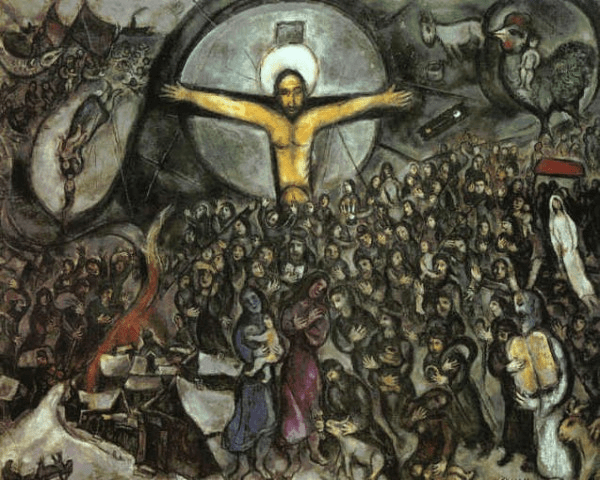
Exodus by Marc Chagall, 1952

Now the main point of what we are saying is this: We do have such a high priest, who sat down at the right hand of the throne of the Majesty in heaven, and who serves in the sanctuary, the true tabernacle set up by the Lord, not by a mere human being.

Every high priest is appointed to offer both gifts and sacrifices, and so it was necessary for this one also to have something to offer. If he were on earth, he would not be a priest, for there are already priests who offer the gifts prescribed by the law. They serve at a sanctuary that is a copy and shadow of what is in heaven. This is why Moses was warned when he was about to build the tabernacle: “See to it that you make everything according to the pattern shown you on the mountain.” But in fact the ministry Jesus has received is as superior to theirs as the covenant of which he is mediator is superior to the old one, since the new covenant is established on better promises.

For if there had been nothing wrong with that first covenant, no place would have been sought for another. (New International Version)

Jesus Christ is superior to everyone and everything – that is the overarching theme of the New Testament book of Hebrews. Jesus is above the angels, over Moses, and the great high priest of a new covenant. In Christ, the sin issue has been taken care of, once and for all.

Through Jesus, every good promise of God is fulfilled. Christ’s priesthood and intercessory ministry is permanent. His sacrifice for sin is thorough and complete. Jesus lives forever. He saves completely. Christ meets our need. He has been made perfect forever. (Hebrews 7:23-28). 

Frankly, these bold statements from the author of Hebrews are some audacious claims. In fact, they’re downright radical. And yet, say any of those statements in the typical church, and hardly an eyebrow gets raised – they almost seem ho-hum. Our blank affect testifies that we have lost a great deal of the original force and impact of Christianity.

In the first century, to have one sacrifice to end all sacrifices was unthinkable. Every ancient person understood that sacrifices were temporary; you had to keep offering them over and over again. 

Christianity, however, asked the world to have a new understanding of sacrifice. No longer would there be any sacrifice – no grain sacrifice; no offerings of first fruits; no animal sacrifices; no sacrifices, period. There was no longer any need for them because Jesus himself is the sacrifice to end all sacrifices. 
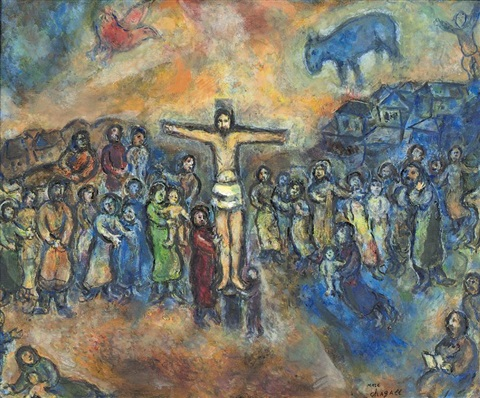
Crucifixion by Marc Chagall, 1966

This was such a ridiculous notion for so many people that they mocked Christians for it. Both Jews and pagans could barely wrap their minds around such a progressive idea. It would be like saying to us today that there is no longer any need for money because somebody just became the underwriter for everything everybody does.

Despite this incredible spiritual reality, we in the contemporary church sometimes go back to the old sacrificial system, not by physically offering animal sacrifices, but treating Christ’s finished work as if it were just too good to be true. 

We reason that we need to do something to help save ourselves. However, Jesus has not just saved us partially, but fully. Grace has always been scandalous, and so, we try to tone it down a bit, mitigate it’s actual force:

  • Church attendance can subtly be looked upon as a sacrifice to appease God, as if he needed to be soothed into not becoming angry at us. 
  • Giving can become a non-bloody sacrifice that is meant to satisfy God’s furrowed brow against us. 
  • Service can degenerate into a sacrifice to assuage our guilty conscience. 

In all these kinds of instances, and more, we go back to an old sacrificial system that is obsolete. Nonetheless, the biblical and theological truth is that Jesus has thoroughly saved us from our sin, and, so, has cleansed us from all guilt, including a guilty conscience. 

Jesus meets our need and has completely satisfied God’s wrath against the power and deceit of sin. 

Jesus is our mediator and intercedes for us as we come to God’s throne of grace. That means we do not need to try and get God’s attention with performing spiritual cartwheels or some incredible sacrifice that will somehow obligate him to take notice of us. That’s because there is never a time in which we lack attention from God.

Since we have been justified by faith in Jesus, we need not worry anymore about being good enough. Since Jesus is perfect, his work is made complete in us. A constant anxiety of feeling like we don’t measure-up does not come from God. Jesus is sufficient and has taken our place so that we can live in the freedom and joy of a complete deliverance from sin, death, and hell. There is no longer any necessary sacrifice to make!

“Well,” I have been told by some, “if everybody in the church believed that then nobody would ever do anything!” No, it is just the opposite. When we feel like we don’t measure up, we do less, not more. A low level discouragement sets in and we do nothing because we intuitively know it will never be enough. We do just enough to squeak by, never quite knowing if it is doing anything. 

In such a state, we may consider giving up because Christianity doesn’t work for us (which was the state of the believers in the book of Hebrews). But when we grasp the New Covenant of Christ’s sacrifice to end all sacrifices, and are overwhelmed by grace, then everything we do in the Christian life is a “thank you” with our life and our lips. 

It is the grace, and not the wrath, of God that teaches us to say “no” to ungodliness and worldly passions and to live upright and godly lives (Titus 2:11-12).

We are justified and made right by faith in Jesus Christ, and not by our own accomplishments, pedigree, or effort.  Trusting in our heritage, relying on our family’s faith, or believing our hard work gives us a leg-up toward heaven will only end in despair. 

But if we trust in Christ’s perfect sacrifice, then a whole new world of mercy opens before us. Because the grace of God in Christ is superior to everything.

Soli Deo Gloria

On Divorce (Matthew 19:1-12)

When Jesus had finished saying these things, he left Galilee and went into the region of Judea to the other side of the Jordan. Large crowds followed him, and he healed them there.

Some Pharisees came to him to test him. They asked, “Is it lawful for a man to divorce his wife for any and every reason?”

“Haven’t you read,” he replied, “that at the beginning the Creator ‘made them male and female,’and said, ‘For this reason a man will leave his father and mother and be united to his wife, and the two will become one flesh’? So they are no longer two, but one flesh. Therefore what God has joined together, let no one separate.”

“Why then,” they asked, “did Moses command that a man give his wife a certificate of divorce and send her away?”

Jesus replied, “Moses permitted you to divorce your wives because your hearts were hard. But it was not this way from the beginning. I tell you that anyone who divorces his wife, except for sexual immorality, and marries another woman commits adultery.”

The disciples said to him, “If this is the situation between a husband and wife, it is better not to marry.”

Jesus replied, “Not everyone can accept this word, but only those to whom it has been given. For there are eunuchs who were born that way, and there are eunuchs who have been made eunuchs by others—and there are those who choose to live like eunuchs for the sake of the kingdom of heaven. The one who can accept this should accept it.” (New International Version)

It’s interesting that the compilers of the Revised Common Lectionary chose this Gospel lesson the day after Valentine’s Day. Not sure I would do that, but here we are, so let’s deal with it….

I grew up in an era in which not many couples divorced. Frankly, that probably was a bad thing, because there was plenty of hanky-panky going on, and far too much domestic violence that didn’t get dealt with. Women, mostly, tended to put up with an awful lot from abusive men.

Today, of course, divorce is common. And that’s probably a bad thing, too. A whole lot of couples aren’t working through their communication issues – and that’s because many individual persons have done precious little in addressing their own background experiences of trauma and/or abuse.

In short, divorce is not the ideal – but it’s necessary. And Jesus understood this more than most people of his day. It isn’t supposed to be this way, all this interpersonal crud, heartache, and pain. Yet here we are, having to navigate broken relationships, busted marriages, and bewildered children.

No married couple, on their wedding day, anticipates a divorce in their future. Nobody anticipates having a debilitating illness or to be locked into poverty. Instead, we are optimistic, believing that we’ll fall more on the side of better than worse, richer than poorer, healthier than sick, and cherishing the other more than irked by them.

As of this writing, my dear wife and I have been married nearly 38 years. A lot of blood, sweat, and tears have gone into being together for all that time. We have weathered many experiences with one another. Yet, I’m under no illusions; there’s nothing particularly special about me or my spouse. There are plenty of couples who have put in as much work as we have, and their marriages still dissolved in an ocean of disappointment.

I’d like to think I am not speaking as one above others, but as a fellow guy just trying to do his best with what he currently knows – and grateful that I have a partner and friend who sticks with me and lives life alongside me.

The last thing any divorced folks need is a bunch of condescending gobbledygook from a pious simpleton who likely doesn’t have a clue about what’s going on.

God heals the brokenhearted
    and bandages their wounds.

Psalm 147:3, CEB

The truth is that we all need to continually come back to what Jesus encouraged us to do: Avoid hardness of heart, embrace humility, and seek oneness and unity above all else. A marriage that has two people living under the same roof like roommates, isn’t really a marriage, at all; they may have the legal document to prove it, but they don’t have the relational practices to back it up.

Divorce is a major change of life. Put that together with the reality that life is always progressing and never stays the same, we all undergo many new beginnings throughout the course of our lives. 

Thankfully, there is another reality that will forever stay the same: You were created in the image of God, both male and female, and that divine likeness can never be taken from you. Wherever you go, whatever you do, God is with us. One is never outside the Lord’s reach.

The self-righteous person who belittles any and all divorcees is unaware that even God has experienced divorce and knows precisely what it feels like:

I [God] gave faithless Israel her certificate of divorce and sent her away because of all her adulteries. Yet I saw that her unfaithful sister Judah had no fear; she also went out and committed adultery. Because Israel’s immorality mattered so little to her, she defiled the land and committed adultery with stone and wood. (Jeremiah 3:8-9, NIV)

Perhaps your frame of mind right now is that you can barely see beyond today and cannot even imagine what will happen tomorrow. No matter the circumstance, regardless of who you are, where you have been, or where you are going, there is a God who exists on heaven and earth who completely knows and understands your situation. 

And the Lord stands ready to help you begin again and start something new.

Where hearts are broken, grant your healing.
Where trust is eroded, restore good faith.
Where bitterness has taken root, plant seeds of forgiveness.
Do not let anger destroy us, O God,
but teach us to love as Christ loved us. Amen.

Lynching, Lusting, Liquidating, and Lying (Matthew 5:21-37)

A Bengali depiction of Christ’s Sermon on the Mount

“You have heard that it was said to the people long ago, ‘You shall not murder, and anyone who murders will be subject to judgment.’ But I tell you that anyone who is angry with a brother or sister will be subject to judgment. Again, anyone who says to a brother or sister, ‘Raca,’ is answerable to the court. And anyone who says, ‘You fool!’ will be in danger of the fire of hell.

“Therefore, if you are offering your gift at the altar and there remember that your brother or sister has something against you, leave your gift there in front of the altar. First go and be reconciled to them; then come and offer your gift.

“Settle matters quickly with your adversary who is taking you to court. Do it while you are still together on the way, or your adversary may hand you over to the judge, and the judge may hand you over to the officer, and you may be thrown into prison. Truly I tell you; you will not get out until you have paid the last penny.

“You have heard that it was said, ‘You shall not commit adultery.’ But I tell you that anyone who looks at a woman lustfully has already committed adultery with her in his heart. If your right eye causes you to stumble, gouge it out and throw it away. It is better for you to lose one part of your body than for your whole body to be thrown into hell. And if your right hand causes you to stumble, cut it off and throw it away. It is better for you to lose one part of your body than for your whole body to go into hell.

“It has been said, ‘Anyone who divorces his wife must give her a certificate of divorce.’ But I tell you that anyone who divorces his wife, except for sexual immorality, makes her the victim of adultery, and anyone who marries a divorced woman commits adultery.

“Again, you have heard that it was said to the people long ago, ‘Do not break your oath, but fulfill to the Lord the vows you have made.’ But I tell you, do not swear an oath at all: either by heaven, for it is God’s throne; or by the earth, for it is his footstool; or by Jerusalem, for it is the city of the Great King. And do not swear by your head, for you cannot make even one hair white or black. All you need to say is simply ‘Yes’ or ‘No’; anything beyond this comes from the evil one. (New International Version)

Christ’s Sermon on the Mount by Joseph Matar

Relationships are important to God (and us!); we need one another because we are created in the image of a relational God. So, God wants us to have good relations with each other.

Murder, adultery, divorce, and oaths all have to do with interpersonal relations. These are topics from the Ten Commandments (6, 7, 9, and 10) that Jesus wanted to uphold.

Murder

Just because no blood is spilled doesn’t mean a killing hasn’t taken place. At the heart of the killing is angry contempt – which makes us all mass-murderers. The sort of anger Jesus refers to is nursing a grudge that morphs into hatred. It’s the deliberate decision to let anger sit in the pit of the gut and slow cook into deep resentment. Once that resentment is well done, murder becomes the meal.

Name-calling is the outward expression of resentful grudge bearing. “Raca” is an “airhead.” It means to be empty or stupid. The word “fool” is literally a “moron” – one who lacks both brains and morality. Both names hurt deeply, which is the expressed aim of the name caller. To have our intelligence and character questioned, cuts to the heart.

Jesus insists that harboring internal resentment comes out in external name-calling, verbally lynching people without a trial. Whenever we string a person up, divine judgment is coming to town. 

No one has a right to nurse a grudge. Repaying hatred with hatred is a highway to the grave. If you have ever wished someone dead, hated anyone, or belittled another; then, you have assassinated that person in your heart and are under the judgment of a holy God.

So, what to do in overcoming the resentment? Seek reconciliation immediately. Jesus used two illustrations to illumine the need for reconciliation with others when there are sour relations: an example of worship and an example with the court.

If you are worshiping, and remember that someone else is nursing a grudge against you, it is your responsibility to go and make things right. The Lord does not want to talk to anyone who won’t talk to their sister or brother.

Forgive us our debts, as we also have forgiven our debtors… For if you forgive other people when they sin against you, your heavenly Father will also forgive you. But if you do not forgive others their sins, your Father will not forgive your sins. (Matthew 6:12, 14-15, NIV)

None of this is meant to minimize the hurt or trauma that has taken place. Many people have faced hell in the shape of a human. Yet, because Jesus takes your hurt seriously, he calls for forgiveness and reconciliation. Without it, the pain unnecessarily continues and there is no healing.

In the illustration of court, we are to settle matters quickly and make things right so that judgment won’t happen. Let’s avoid living with the regret of vengeance because of destroying someone’s life. Forgiveness and reconciliation are always options on the table.

See to it that no one falls short of the grace of God and that no bitter root grows up to cause trouble and defile many.

Hebrews 12:15, NIV

Adultery

Adultery has its origins in mental sexual activity with another person. Jesus is not against normal gender attraction, nor sex itself (which is a gift of God). Rather, Jesus condemns the leering upon another with sexual fantasy. All adulterous relationships and inappropriate sexual relations start with the “look.”

“Lust” is to intensely desire something, to seek mastery over another. The reason people stare, and lust, is not because of the other person’s manner or dress; it’s because they already have an adulterous heart.

Managing adultery with a band aid is like trying to contain a nuclear meltdown with some duct tape; it’s an amputation we need. Jesus leaves no room to think it’s okay to lust in the heart because “I’m not hurting anybody.” Mental adultery demeans and degrades women.

Our lustful desires are powerful; yet God’s grace is more powerful. There’s no need to be burdened with shame and guilt when the cross of Christ has already taken care of it. There is a multi-billion dollar industry of pornography because our hearts are black. Now is the time for forgiveness, grace, and healing in Jesus Christ.

Sermon on the Mount by Jorge Cocco Santiago

Divorce

Today in America, more than one-third of all adults have experienced divorce. Jesus condemns the cavalier divorce, the thought of having a better spouse, even though there is no marital unfaithfulness. This is yet another form of mental adultery which believes someone else can better meet my needs. 

Jesus makes provision for divorce to occur in certain circumstances. Yet, he doesn’t bend to liquidating a marriage over unhappiness with what God has joined together. The intent of Old Testament legislation on divorce is to avoid a casual stance toward marriage (Deuteronomy 24:1-4). Over the centuries, people found creative ways of getting around the law. Although a divorce may be legal, it might not be ethical. Jesus wanted divorce practiced with concern for the woman, so that her rights and needs were considered.

For most of human history, if a husband did not like his wife (e.g. for continually burning his supper) he could divorce her. Jesus, however, insisted divorce must not happen because of a hard time getting along; or don’t love your spouse anymore; or that your spouse keeps irritating you. 

Being frustrated or unhappy are not biblical grounds for divorce. The answer to most marital problems does not lie in a new spouse, but in the hard work of identifying the idols of our hearts, overthrowing them, and re-connecting.

Christ sought to defend women who are victims. In biblical times, if a wife was given a certificate of divorce, she had four options: 1) return to her family of origin; 2) become a beggar; 3) become a prostitute to make ends meet; or, 4) marry again, which was extremely difficult to do. 

In reality, divorce is a legal testimony verifying that a separation has already occurred. It’s a recognition that disunity and division is already present, that a terrible break already happened, damaging the people involved.   

If God found it necessary to divorce his own covenant people, then it’s inevitable that divorce will happen among couples (Jeremiah 3:1-8). So, let’s be discerning in how we handle each individual situation of marital difficulty.

Oaths

“I swear on a stack of Bibles I won’t…” “I will, if I get around to it….” These are a few of the caveats we give when making a promise or oath. Oaths communicate our level or ability of getting something done, or not.

That’s fine. What isn’t fine is making excuses or false promises with no intention of doing what you say you will do. Jesus takes all that extraneous language out. Say “yes” or “no” and then follow through; if you don’t, you’re a liar.

We often lie because we don’t want to do something to begin with. “Yes” and “no” are clear boundary words. Boundaries define where I end and someone else begins, leading me to a sense of ownership. Knowing what I am to take and not take responsibility for gives me freedom.

Jesus wants us to clarify our values; make wise decisions; identify what we will accept and reject; and follow through on what we say we will do, period.

Murder, adultery, divorce, and oaths are all related. They have to do with how we relate to others, especially those closest to us and to God. We are to live responsibly by keeping our hearts large and soft.

Don’t Lose Heart (2 Corinthians 4:1-12)

Therefore, since through God’s mercy we have this ministry, we do not lose heart. Rather, we have renounced secret and shameful ways; we do not use deception, nor do we distort the word of God. On the contrary, by setting forth the truth plainly we commend ourselves to everyone’s conscience in the sight of God. And even if our gospel is veiled, it is veiled to those who are perishing. The god of this age has blinded the minds of unbelievers, so that they cannot see the light of the gospel that displays the glory of Christ, who is the image of God. 

For what we preach is not ourselves, but Jesus Christ as Lord, and ourselves as your servants for Jesus’ sake. For God, who said, “Let light shine out of darkness,” made his light shine in our hearts to give us the light of the knowledge of God’s glory displayed in the face of Christ.

But we have this treasure in jars of clay to show that this all-surpassing power is from God and not from us. We are hard pressed on every side, but not crushed; perplexed, but not in despair; persecuted, but not abandoned; struck down, but not destroyed. We always carry around in our body the death of Jesus, so that the life of Jesus may also be revealed in our body. 

For we who are alive are always being given over to death for Jesus’ sake, so that his life may also be revealed in our mortal body. So then, death is at work in us, but life is at work in you. (New International Version)

We all face times of adversity and seasons of life which stretch our faith and press the limits of what we can handle. 

You will find no promise within Holy Scripture that believers will avoid trouble. In fact, it’s just the opposite. Jesus promised that those who follow him will experience trouble. (John 15:18-20; 1 John 3:13; 2 Timothy 2:12) 

The pressures of life can sometimes be so overwhelming that we may lose heart. We might blame ourselves for the adversity we’re experiencing and wish things were different. Or we may blame others for our troubles and believe that if they would just get their act together, all would be well with my soul. 

Yet, no matter the source or nature of the problem, believers need a point of focus to direct their troubled hearts. We all need to be reminded of the grace we possess in Jesus Christ.

The resurrection of Jesus from the dead is both a spiritual and a physical reality. If we believe this truth in our hearts we will be raised both spiritually and physically (Romans 10:9-10). This faith in Christ gives shape to the hope that, although we might be experiencing the effects of mortality and the fall of humanity, we are, at the same time, being spiritually renewed day by day. 

The same afflictions that cause our bodies to degenerate and dispirit us are the means to achieving a glorious, resurrected existence (2 Corinthians 4:13-18). There cannot be the glory of spiritual and bodily resurrection without a shameful death. The way of Jesus was to absorb the shame of the world’s violent ways on the cross so that we might be raised with him in his resurrection. 

However, this victory through Christ’s cross and resurrection does not mean that the church will never experience difficulty in this present life. In fact, daily spiritual renewal can and does happen through adverse circumstances. 

There must be suffering before glory, both for Jesus and for us. Just because we have spiritual deliverance, does not mean we are inoculated from daily stress and pressure. That’s because it’s the troubles of this life that teach us to trust God; it is the adversity which weans us from all that we have previously trusted upon to cope with those troubles. All of this begs several questions for each believer and every church: 

  • Do we give inordinate attention to either the tangibly physical or the intangible spiritual? 
  • How does the gospel impact us today? 
  • How do we interpret our earthly troubles? 
  • What place does faith in God have in our daily decisions? 
  • As we become older, are we being renewed in Christ? 
  • Does the Lord’s Table, as a tangible sign and seal of our intangible faith, shape our hope?

We must learn to embrace our troubles as the means of growing our faith. And the first step to this is by acknowledging those troubles. There is no accepting, coping, and transcending difficult circumstances apart from this awareness. Troubles only have power over us for ill if we ignore them or put up a false front to hide them. 

We do not want you to be uninformed, brothers and sisters, about the troubles we experienced in the province of Asia. We were under great pressure, far beyond our ability to endure, so that we despaired of life itself. Indeed, we felt we had received the sentence of death. But this happened that we might not rely on ourselves but on God, who raises the dead. (2 Corinthians 1:8-9, NIV)

The Apostle Paul wasn’t asking anything of the believers that he himself hadn’t already faced. Paul’s Christian experience sometimes resulted in beatings, stoning and shipwreck, hunger and poverty, danger and trouble, not to mention all the pressures of his concern for all the churches he established. Yet, through it all, Paul was transparent and named his troubles so he could apply the poultice of God’s grace to his afflictions. 

It is our brokenness, and not the pretension of having it all together, that shows the grace of God to others.

Over and over again, Paul described his life and ministry in apparent paradoxes: strength in weakness; glory through shame; life through death; riches through poverty. Although we experience the fallen nature of the world, God bends each situation for divine purposes so that what seems to be our downfall becomes the means to our spiritual renewal. 

Every church is inherently paradoxical, a strange amalgam of victory and defeat, faith and doubt, full of sorrow and joy. So, let us then embrace this reality and allow God to use whatever means to shape believers in Jesus for good and benevolent purposes. 

May it be so, to the glory of God.