The Model Prayer (Matthew 6:7-15)

The Lord’s Prayer, by He Qi

And when you pray, do not use vain repetitions as the heathen do. For they think that they will be heard for their many words.

“Therefore do not be like them. For your Father knows the things you have need of before you ask Him. In this manner, therefore, pray:

Our Father in heaven,
Hallowed be Your name.
Your kingdom come.
Your will be done
On earth as it is in heaven.
Give us this day our daily bread.
And forgive us our debts,
As we forgive our debtors.
And do not lead us into temptation,
But deliver us from the evil one.
For Yours is the kingdom and the power and the glory forever. Amen.

“For if you forgive men their trespasses, your heavenly Father will also forgive you. But if you do not forgive men their trespasses, neither will your Father forgive your trespasses. (New King James Version)

God knows what we need before we even ask, which means the Creator of the universe has the divine ear inclined to listen to us. The Lord desires, even longs for us to pray to him.

Since this is God’s daily disposition, Jesus communicated for us a model way of prayer which exemplifies the values of Christ’s Beatitudes and reflects the priorities of God’s kingdom.

The Lord’s Prayer is meant to be prayed often, mindfully, and with flavor.

Jesus gave us six petitions to guide us in our prayers: The first three petitions are priorities of God that set the tone for the next three petitions, which are centered in our problems of living in this fallen world.

Addressing God

Jesus gave us instruction of how to address God: “Our Father in heaven.” All the pronouns in the Lord’s Prayer are plural, not singular. We are to be concerned for both our own individual issues, and for the needs of the community, and of the problems of the world.

“Father” is an endearing and relational word. “In heaven” balances the closeness and nearness of our heavenly Father with his sovereign and transcendent nature. Our God is both near and far – a close friend as well as a holy king. So, we address our prayers with a proper understanding of who God is.

First Petition: “Hallowed be your name.”

“Hallow” comes from the root word for holiness; it is to sanctify and set apart. God is concerned that we know the distinction between the Creator is holy, and so, the creatures are also to be holy. 

As He who called you is holy, you also be holy in all your conduct, because it is written, “Be holy, for I am holy.” (1 Peter 1:15-16, NKJV)

Notice the use of the verb: not hallowed “is” your name, but hallowed, or holy “be” your name. Jesus guides us to pray that God’s name would be shown as holy through us by the way we live. The world sees a holy God when God’s people walk in holiness, reflecting the Lord’s benevolent nature. 

Second Petition: “Your kingdom come.”

We live in a fallen world that has come under the domain of dark forces. The unfolding drama of Holy Scripture is that God is on a mission to restore creation to a benevolent rule.

Jesus is the King, we are the subjects, and God’s realm exists wherever his subjects go.  And where his subjects go, they are to pierce the darkness by embodying the good news that King Jesus has overcome the demonic realm and brought us into God’s kingdom. The prayer and proclamation of this good news is of utmost priority to God.

Third Petition: “Your will be done on earth as it is in heaven.”

God’s ethical will has been revealed to us by Jesus in the Sermon on the Mount; the Beatitudes are the cornerstone of his teaching (Matthew 5-7). God’s will is that Christ’s followers be humble; grieve over sin in the world; act with gentleness instead of prideful condescension; hunger for true righteousness instead of legalistic self-righteousness; show mercy; be pure in heart; pursue peace; and, rejoice when persecuted. All of this results in being salt and light in this dark world. (Matthew 5:3-16)

Jesus spells out God’s will in his sermon. Christ’s followers are to:

  1. reconcile with others instead of hold grudges
  2. deal with lust through accountability instead of making excuses for mental adultery
  3. cherish our spouse instead of taking the easy way out when problems arise in marriage
  4. tell the truth at all times instead of shading it
  5. love, not retaliate when personally hurt or insulted.

If God’s will seems an impossible task, that’s because we need divine resources to live a Christian ethic; we need to pray!

The first three petitions are priorities for God. They are asking the same thing – that the full manifestation of God’s reign on earth be realized. 

Therefore, our prayers are not primarily to receive goods and services from God, but for us to render service to God. These prioritized petitions are a desire to see God honored on earth as God is already honored in heaven.

Fourth Petition: “Give us today our daily bread.”

Our bodies enable us to do God’s will, and so we must be concerned for them. Daily, we must have the basic necessities of life to carry out God’s priorities for the church and the world.

In the ancient world, people were paid at the end of each day. Folks also shopped every day at the marketplace for their food because there was no refrigeration. Whenever there was a flood or a drought, it meant much more than high grocery prices; people faced starvation and death.

They needed to trust God for today, and not worry about tomorrow. Even though contemporary people may not always readily perceive their great dependence on God, we still are in divine hands and need faith.

Fifth Petition: “Forgive our debts, as we also have forgiven our debtors.”

Sin is pictured as a debt. If someone has sinned (trespassed) against us, we must forgive them, thus releasing them from their debt. To forgive does not mean to forget. Rather, we do not hold the debt (the sin) over someone’s head for the rest of their life. 

The person who is forgiven by God is a forgiving person. Our own forgiveness implies that we have done the hard work of repentance through identifying our sin and renouncing it. So, if we fail to forgive, it demonstrates a lack of change on our part. We cannot be forgiven if we spurn God’s freely offered grace. 

Forgiveness is important to Jesus. Thus, we are to squarely face our bitterness. Simply sweeping our hurt under the rug and not extending forgiveness only gives the darkness a foothold into our lives – which is why we are to pray the final petition:

Sixth Petition: “And lead us not into temptation but deliver us from evil.”

Just as we must trust God for our physical necessities, we also must trust God for our spiritual needs – which hinge on the issue of forgiveness – our forgiveness from God through Christ, and the forgiveness we extend to others who have hurt or offended us. 

An unforgiving heart is a major temptation to hate, seek revenge, and retaliate. If we have spent days, weeks, months, years, or even decades harboring an unforgiving spirit through anger, bitterness, and avoidance of facing our past trauma, we have embraced the dark side and need deliverance from evil. 

Freedom comes through acknowledging the offense, receiving grace and forgiveness from God, and passing that same forgiveness and grace to those who hurt us. This is not about whether they deserve it or not; it’s a matter of what I need to do.

Conclusion

The truth sets us free; telling our secrets brings freedom. Apart from naming our shame, we will remain bound and in need of liberation. Tell your secrets to God in the prayer closet, and then tell them to a trusted friend(s). We pray, and we act on what God tells us in prayer.  

The Lord’s Prayer is a model prayer. That means we use the six petitions of Jesus to frame our prayers in our own words, as well as say the words in our favorite translation of the Bible.

Praying this prayer daily shapes our everyday lives, serves as a guide for how to live, and provides discernment in making life’s many decisions. So, let us daily and in every way make use of our Lord’s Prayer.

Our Father in heaven, the One who is both near and far,

May your Name be shown as holy through us, your people.

May others submit to your lordship and become holy, too.

Help us to know your will and to do it.

We need you God, so provide our necessities for today.

Forgive us of our great and many sins, just as we forgive those who have sinned egregiously against us.

Lead us in paths of righteousness, which shoo the devil away.

For you are the Ruler, the Mighty One, forever full of glory and grace. Amen!

Beautiful Feet (Romans 10:15b-21)

As it is written: “How beautiful are the feet of those who bring good news!”

But not all the Israelites accepted the good news. For Isaiah says, “Lord, who has believed our message?” Consequently, faith comes from hearing the message, and the message is heard through the word about Christ. But I ask: Did they not hear? Of course they did:

“Their voice has gone out into all the earth,
    their words to the ends of the world.”

Again I ask: Did Israel not understand? First, Moses says,

“I will make you envious by those who are not a nation;
    I will make you angry by a nation that has no understanding.”

And Isaiah boldly says,

“I was found by those who did not seek me;
    I revealed myself to those who did not ask for me.”

But concerning Israel he says,

“All day long I have held out my hands
    to a disobedient and obstinate people.” (New International Version)

“Beautiful” is not a typical description of anybody’s feet. That’s because feet are kind of gross. Feet stink. They get dirty and itchy; they’re often calloused and downright nasty looking. And no one comments that their feet feel good. People’s feet rarely feel that way.

It seems to me that feet are an apt metaphor for the bringing of salvation, of good news.

The Christian good news is this: There is salvation – forgiveness of sins – through Jesus Christ; and it is accessed by faith.

“Salvation” is a term which perhaps gets overused by Christians to the point that it becomes misunderstood and/or taken for granted. When that happens, it only becomes “meh” news and is no longer good news. For some, it’s a bit like feet – they’re there, but they hurt too much. We don’t think much about our feet until the corns, the bunions, or the toenails bother us. There’s a “meh” relationship to the foot.

In Christianity, the triune God has conspired within himself to bring us salvation. The good news is that God the Father has mercifully sent God the Son for the rescue of the entire world from sin, death, and hell; and Father and Son have further sent God the Holy Spirit to help us respond and live by faith.

Even back in the Old Testament, with the prophet Isaiah, such a merciful deliverance was predicted. Isaiah’s description of the life and rejection of the Suffering Servant wondered if faith would happen in response to salvation. Would they really see it as “good” news? Can feet really be beautiful?

Who has believed our message
    and to whom has the arm of the Lord been revealed? (Isaiah 53:1, NIV)

The Apostle Paul, knowing a thing or two about suffering, walking a lot of missionary miles with his feet, was confident that, indeed, faith is awakened in the hearing of the message. The message is good news, and it will be received. Good news has to be proclaimed before it can take hold.

So faith comes from what is heard, and what is heard comes through the word of Christ. (Romans 10:17, NRSV)

Good news has to be announced up-close and personal. It takes getting on our two feet, walking across the street, across the room, or across the world to bring it. That’s because salvation is relational. The message of salvation is there amongst people; it has always been deep within them, as those created in the image and likeness of God.

The heavens are telling the glory of God,
    and the firmament proclaims his handiwork.
Day to day pours forth speech,
    and night to night declares knowledge.
There is no speech, nor are there words;
    their voice is not heard;
yet their voice goes out through all the earth
    and their words to the end of the world. (Psalm 19:1-4, NRSV)

In the book of Romans, we see Jewish Christians and Gentile Christians together in one church. Historically, the Jews were God’s people – the insiders – and the Gentiles were not a people, the outsiders. Now the Gentiles are included and are no longer outsiders. Not all the insiders were okay with this situation.

In the Old Testament, Moses predicted insider Israel’s overall response to this situation of feet walking amongst the Gentiles and announcing the good news of salvation.

They have roused my jealousy by worshiping things that are not God;
    they have provoked my anger with their useless idols.
Now I will rouse their jealousy through people who are not even a people;
    I will provoke their anger through the foolish Gentiles. (Deuteronomy 32:21, NLT)

The prophet Isaiah also spoke of Gentile inclusion into God’s saving activity; and the Jewish response to salvation for them:

I was ready to respond to those who didn’t ask.
    I was ready to be found by those who didn’t look for me.
I said, “I’m here! I’m here!” to a nation
    that didn’t call on my name.
I extended my hands all day
    to a rebellious people
        walking in a way that isn’t good,
        following their own plans.” (Isaiah 65:1-2, CEB)

This in no way is meant to be hard on ancient Israelites and the Jewish people. It is really a commentary on including others who are different, what God thinks about it, and the challenge this poses to those holding onto the status quo.

Throughout all of biblical history, into the past two thousand years of church history, and even today, those who consider themselves as God’s people, the insiders, tend to be blinded by the privileges bestowed on them by a gracious God. And they usually think of only one thing: To preserve their status and their spiritual monopoly by excluding others who are different.

It is a hardening of the heart – or maybe the calloused feet – that does not want to recognize that certain persons and people groups can be saved and included as God’s people alongside the rest.

Fortunately, the Apostle Paul, a Jewish Christian, longed for all to be saved and to come to a knowledge of God. He himself wanted to know Christ and “be found in him, not having a righteousness of my own that comes from the law, but that which is through faith in Christ—the righteousness that comes from God on the basis of faith.” (Philippians 3:19)

Salvation is neither attained through strict observance of the rules, nor by being a good or nice person. It is graciously given by the God who came and whose feet walked amongst us. Deliverance comes through an acceptance by faith in the Son of God who loved us and gave himself for us – including people who others might consider as outsiders or unworthy of it.

From my vantage point, the feet that bring a gracious message of good news for all are truly beautiful.

Almighty God, Father of all mercies, we give you humble thanks for your goodness and steadfast love to all kinds of people. We thank you especially for your immeasurable love in the redemption of the world by our Lord Jesus Christ. And, we pray, give us such an awareness of your mercies, that with truly thankful hearts we may show forth your praise, not only with our lips, but in our lives, by giving ourselves to your service, and by walking before you in holiness and righteousness all our days. Amen.

Whoever Is Not with Me Is Against Me (Matthew 12:22-32)

Jesus casts out the devils, by Julius Schnorr von Carolsfeld (1794-1872)

Then they brought him a demon-possessed man who was blind and mute, and Jesus healed him, so that he could both talk and see. All the people were astonished and said, “Could this be the Son of David?”

But when the Pharisees heard this, they said, “It is only by Beelzebul, the prince of demons, that this fellow drives out demons.”

Jesus knew their thoughts and said to them, “Every kingdom divided against itself will be ruined, and every city or household divided against itself will not stand. If Satan drives out Satan, he is divided against himself. How then can his kingdom stand? And if I drive out demons by Beelzebul, by whom do your people drive them out? So then, they will be your judges. But if it is by the Spirit of God that I drive out demons, then the kingdom of God has come upon you.

“Or again, how can anyone enter a strong man’s house and carry off his possessions unless he first ties up the strong man? Then he can plunder his house.

“Whoever is not with me is against me, and whoever does not gather with me scatters. And so I tell you, every kind of sin and slander can be forgiven, but blasphemy against the Spirit will not be forgiven. Anyone who speaks a word against the Son of Man will be forgiven, but anyone who speaks against the Holy Spirit will not be forgiven, either in this age or in the age to come. (New International Version)

Binary thinking is rife in today’s world. It is a simplified mindset in which a person sees issues in one of two opposite and mutually separate ways. In other words, binary thinking reduces complex situations into a simplified either/or view that sees everything from a good versus bad, right versus wrong, and us versus them mentality.

Engaging in binary thinking elicits a tendency towards oversimplification where groups and sides are pitted against each other. And this is precisely what the religious leaders of Christ’s day wanted.

They engaged in a logical fallacy by attributing Christ’s ability to heal and drive out demons as itself demonic. Oversimplification is when someone does not look at a circumstance or situation with any understanding, but instead assigns it either a good or bad label. In this case, the religious leaders were simply saying Jesus was doing bad work because he himself is bad, and in league with the devil.

There is a big difference between the ability to take complex issues and explain them in terms that most people can understand, and refusing to know the complexity by immediately boiling it down to a right or wrong label. The religious leaders did not seek to know and understand Jesus; and in their ignorance, they simply called Christ’s work satanic.

It could be that the religious leaders wanted to create a polarization between Christ and the people. After all, their own authority, power, and hegemony were being threatened by this upstart healer. Jesus was gaining the affection of the people, and so, the leaders perhaps felt they were losing their influence. At the least, they certainly felt jealous.

I am always impressed by the way Jesus responded to people of all kinds. Christ generally entered the world of those in front of him and handled matters according to the way they thought and did things. In the case of the religious leaders, Jesus entered into their binary thinking world and took them on from that point of view.

Christ argued logically from the leaders’ own illogic. If black and white thinking is what they understood, then Jesus gave them that in a way they would grasp it. Jesus counters the accusations by simply stating that Satan undoing his own work is ridiculous. If Satan is wanting more and more control over people (like the religious leaders want!) then there is no way he is going to give Christ the power to set them free from that control.

Therefore, in binary terms the leaders could understand, Jesus declared that whoever is not with him is against him; whoever is not gathering with him is actually scattering. The tables are turned. Jesus is doing good work, of which the religious leaders are calling bad. Thus, they are bad.

And Jesus was not finished with them quite yet. He further stated a grim warning, aimed directly at the leaders. By seeing up close and personal the work of God’s Spirit, then declaring that work to be the devil’s doing, you cannot be forgiven.

What’s more, not only are such people not forgiven, but they also cannot be forgiven – because they have cut themselves off from the very power that could forgive them. Once a person declares in their binary thinking that the only remaining source of life is poisoned, then they just condemned themselves to death.

Cutting off oneself from God altogether cannot possibly bring forgiveness and grace to that same self. If we are mad at God and rage at him, we are still engaging and communicating with him – we are not cut off. Any sort of communication with God is still having some sort of connection with the divine. But if we sever the connection altogether, then there is not a way to receive any grace.

So, if we are concerned about committing the unpardonable sin, we most certainly have not – because we still are seeking connection with God. Hell is the place of separation from God – the very place where people who want nothing to do with God are. It isn’t that God put them there; they put themselves there.

Let us not, therefore, pit people against each other, but instead, foster relational connections, wholeness, integrity, and a just spirit of right relationships. We need not condemn others or assign to them demonic labels. If they truly are condemned, they have already done so to themselves.

O God and Father of our Lord Jesus Christ, we ask that you mercifully hear our prayers and spare all those who confess their sins to you; and may they be absolved by your gracious pardon of their guilty conscience and of any shameful deeds, through Jesus Christ your Son, our Lord, who with you and the Holy Spirit are one God, now and forever. Amen.

Broken and Poured Out (Matthew 26:6-13)

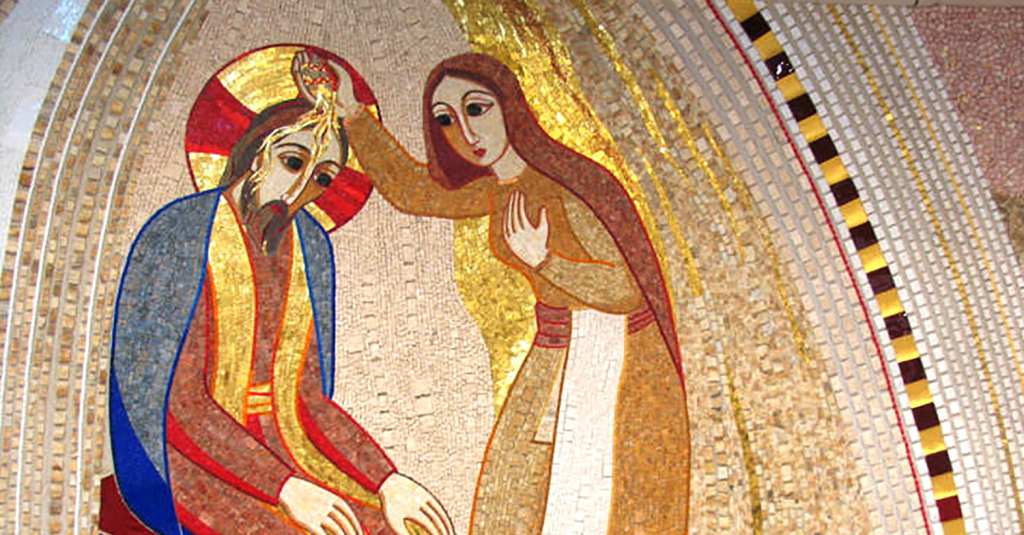
Jesus was in Bethany at the house of Simon the leper. While he was there, a woman came to him. She had an alabaster jar filled with expensive perfume. She poured the perfume on Jesus’ head while he was eating.

The followers saw the woman do this and were upset at her. They said, “Why waste that perfume? It could be sold for a lot of money, and the money could be given to those who are poor.”

But Jesus knew what happened. He said, “Why are you bothering this woman? She did a very good thing for me. You will always have the poor with you. But you will not always have me. This woman poured perfume on my body. She did this to prepare me for burial after I die. The Good News will be told to people all over the world. And I can assure you that everywhere the Good News is told, the story of what this woman did will also be told, and people will remember her.” (Easy-to-Read Version)

It seems that much of the world’s default response to events right in front of their eyes is to be judgmental, binary, and negative – as if everything is a simple sum of right and wrong, good and bad – and all adjudicated by our perceptions and perspectives on it.

The disciples reflexively moralized the actions of the woman and her jar of expensive perfume. What a waste, they believed. They thought they knew better and could do better.

But there was more going on in today’s Gospel lesson than what meets the eye. In the Apostle John’s account, the woman in the story is identified as Mary, a woman with a sordid background who had her life transformed through meeting Jesus. (John 12:1-11)

Near the end of Christ’s life, as he was about to enter Jerusalem and be arrested, tried, tortured, and killed, this woman, Mary, is aware of what is happening when others are not, even the disciples of Jesus. Her own brokenness cracked open to her the true reality of life.

The surface event itself is a touching and tender moment in history. This woman, whom everyone knew was a damaged person, took a high-end perfume and broke the entire thing open. She then proceeded to anoint Christ’s feet with it. You can imagine the aroma which filled the entire house with expensive perfume for all to smell. 

The woman, Mary, was affirmed by Jesus for seeing the situation as a possibility and opportunity of loving her Lord. Mary alone had the vision amongst all the disciples, and the accompanying action, to enter through the door of risk in order to connect intimately and lovingly with Jesus.

Mary’s love, radiating outward for all to see, reflected the genuine love of God for the world – a love so great that Jesus would soon experience death and burial because of that love for humanity.

The disciples were grumping and cursing about the right way to do things; whereas Jesus blessed the woman with no reference whatsoever to morality or ethics. Mary had no concern for playing the numbers game and counting money, but instead focused on the ultimate value before her.

Giving what she had to Jesus, Mary demonstrated the path of true discipleship. She helps open our eyes to the realities which are right in front of us:

  • The broken jar of perfume shows us her brokenness and our need to be broken. (Matthew 5:3-4)
  • An extraordinary and extravagant amount of perfume was used, picturing her overflowing love for Jesus. (John 20:1-18)
  • The perfume was poured on the head of Jesus, and she herself used her hair as the application (according to John); hair is a rich cultural symbol for submission and respect. (1 Corinthians 11:14)
  • The perfume directs us to the death of Jesus. (John 19:38-42)
  • The perfume highlights for us the aroma of Christ to the world. (2 Corinthians 2:15-17)
  • There is more to the disciples’ response than mere words about perfume; the Apostle John specifically names Judas as questioning this action – the one who is not actually concerned for the poor. (Matthew 26:15)
  • The woman and the disciples (specifically, Judas and Mary) serve as spiritual contrasts: Mary opens herself to the sweet aroma of Christ; Judas just plain stinks.
  • The perfume presents a powerful picture of the upcoming death of Christ, for those with eyes to see; he was broken and poured out for our salvation. (Luke 23:26-27:12)

Christianity was never meant to be a surface religion which only runs skin deep. The follower of Christ is meant to be transformed, inside and out, so that there is genuine healing, spiritual wellness, and authentic concern for the poor and needy. 

Keeping up appearances is what the Judas’s of this world do. However, the Mary’s among us dramatically point to Jesus with their tears, their humility, their openness, and their love.

In this contemporary environment of fragmented human ecology, our first step toward wholeness and integrity begins with a posture of giving everything we have – body, soul, and spirit – to the Lord Jesus. In receiving the love of God, we can then freely give that love to a world locked in the shackles of tunnel vision, judgmentalism, and incessant moralizing.

To take the risk of breaking ourselves open and becoming vulnerable, we find love. In finding love, there we see intimacy. And where there is intimacy, there is the relational connection which transforms the dark and the negative to possibility and light.

Loving Lord Jesus, my Savior, and my friend, you have gone before us and pioneered deliverance from an empty way of life and into a life of grace and gratitude. May I, and all of your followers, emulate the path of Mary and realize the true freedom which comes from emptying oneself out for you. Amen.