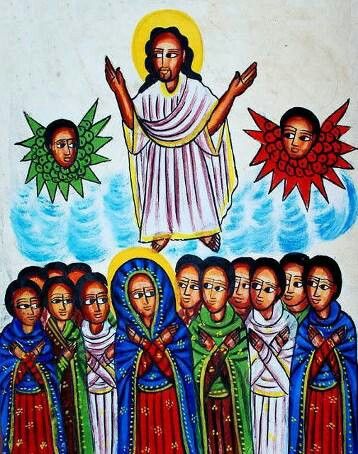
John 14:27-29 – Peace

79240-christian2bcontemplation

Peace I leave with you; my peace I give to you. I do not give to you as the world gives. Do not let your hearts be troubled, and do not let them be afraid. You heard me say to you, ‘I am going away, and I am coming to you.’ If you loved me, you would rejoice that I am going to the Father, because the Father is greater than I. And now I have told you this before it occurs, so that when it does occur, you may believe. (NRSV)

Peace. Personal peace. Family peace. National peace. World peace. We all seem to want peace. And, yet, so many of us lack peace so that we must medicate to sleep at all. Avoiding family seems normal, just to keep the peace. National peace almost sounds oxymoronic. World peace is merely wishful thinking for far too many people. Perhaps we are in such a befuddled conundrum because of this reason:

We already possess what we so desperately want.

The search for peace is really the search within. The simplest of observations about Christ’s words in today’s Gospel lesson is that Jesus has left us his peace. He gave it to us. We have it. Perhaps we have misplaced it? Maybe its lost in that huge stack on the desk?  Most likely, we plain old forgot about it. We need to remember that God’s peace is here with us. Right now. This very minute. We have exactly what we want.

The peace Jesus is talking about is far more than the absence of war, conflict, and/or infighting. The peace of Christ is the settled and restful calm and confidence of being with God, of an intimate union with the divine. Jesus has given himself. He himself is our peace. Peace did not just happen by chance, or magically appear. Peace was bought at a price – the blood of Jesus (Colossians 1:20). The gift of peace needs to be unpacked (Ephesians 4:3).  Practices of peace and peacemaking must be acknowledged and grafted into our lives if we are going to experience it on the daily practical level (Romans 14:13-15:7).

Since Jesus gives in a different way than any other gift, it may have thrown us off. Like the delivery guy who leaves a package in an odd place, we could be searching for the ongoing gift of peace somewhere on our property. It’s there – it just seems so darned elusive. Yet, peace, the authentic peace that is harmony and unity, can neither be found in perfect circumstances nor in idyllic families and faith communities. Divine peace is the security of relationship with God, smack in the middle of life’s crud.

The reason Jesus can exhort his disciples to be untroubled and unafraid is because the life of God is within them. As that life grows within us; as our hearts are healed with that presence; as we receive peace from the gracious hand of God; then, we discover, often by happenstance, that perfect love has driven the fear away. Fear focuses on the hard situation in front of me, whereas love directs attention on Jesus. As the Father has loved the Son, so the Son loves us – and we have peace – without trying to miraculously conjure it with positive thoughts.

It is the glorious, gracious, and mystical union between Jesus and the believer which is peace. All obstacles have been surmounted and tossed into the trash for the garbage guy to haul away. And, no, you did not accidentally throw your peace in the dumpster. There really is no need for any dumpster diving with Jesus around. He has already done that work for you and me through the cross.

Yet, peace still seems a pipe dream for some, even with the understanding of the gift. Like a new product packed so tightly in the plastic, we struggle to open it. Maybe the following thoughts may help to unpack peace for us:

  • Stop and breathe. It is no coincidence that the Holy Spirit of God is likened as wind. Pausing to take deep breaths in through our nose, and full exhales through our mouth can become prayers. The ancient Christian practice of breath-prayers can help us here. Some examples: Inhale saying, “More of you,” and exhale saying, “Less of me.” Inhale, “Holy one,” exhale, “heal me.” Inhale, “Abba Father,” exhale, “let me feel your love.”
  • Listen to peaceful music and words of peace. If we continually are in a state of agitation, it could be that we are listening to talk radio or taking in a steady stream of TV and social media that is anything but peace forming. It leaves us perpetually upset about something. Turn it around through paying close attention to your music and your media intake.
  • Identify trigger words or phrases. That is, when you sense fear or the lack of peace arising, have a “go to” word or phrase that helps bring you back to the peace which is within. For me, it is quoting Psalm 23, Romans 6, John 14, or some other Scripture passage from memory. So, the trigger phrase is sometimes, “The Lord is my shepherd, I have everything I need, or “Trust God, trust also in me.”
  • Smell it. I keep candles around with pleasant odors and light them when feeling stressed. I also have found that, for me, burning sage helps to feel unburdened and, thus, peaceful.
  • I have observed that many of the behavioral health patients I work with have little to no peace in their lives due to either resentment toward others or the inability to forgive themselves. Forgiveness brings peace, even if the other party does not want it.

There are many more ways to unpack peace in our lives. Hopefully, these few suggestions are helpful for you. Finally, one of the best ways to experience peace is to be a peacemaker. I leave you with the Peace Prayer of St. Francis:

Lord, make me an instrument of your peace:
where there is hatred, let me sow love;
where there is injury, pardon;
where there is doubt, faith;
where there is despair, hope;
where there is darkness, light;
where there is sadness, joy.

O divine Master, grant that I may not so much seek
to be consoled as to console,
to be understood as to understand,
to be loved as to love.
For it is in giving that we receive,
it is in pardoning that we are pardoned,
and it is in dying that we are born to eternal life.
Amen.

John 14:1-14 – “I Need Jesus!”

Welcome, friends! Simply click the video below and we will have a time together centered around the Lord Jesus.

You can also view this video at TimEhrhardtYouTube

Mindful of the many wonderful mothers and women which surround me, here are a few links with females leading us in worship of God:

Down to the River virtual choir of women

Amazing Grace (My Chains Are Gone) this version of the Chris Tomlin song produced by BYU Records.

May you experience the way, the truth, and the life of Jesus as present and powerful today and always.

Peace be with you, my friends.

I Need Jesus

Faces of Jesus 2
Cultural depictions of Jesus throughout the world.

Yes, we have many troubles in this old fallen world and in our various families and individual lives. And, yes, there a lot of things we need right now such as wiping the terrible COVID-19 virus off the face of the planet; healing from the ravages of disease and of our damaged emotions; economic stability to make ends meet; and, solutions to the awful human ailments and conditions that beset the world. We need relief, guidance, and wisdom. 

So, I declare with conviction that out of all the great needs which surround us, the greatest need is for Jesus. I do not just need his teaching. I do not just need Christ’s instruction. I do not only need to imitate his model of loving service. I need Jesus himself! 

Jesus was speaking with his disciples in the Upper Room on the night before his crucifixion. He told them he was leaving (dying) and that it must be this way. The disciples were understandably troubled. Thomas was worried about what was going to happen and how he and the others were going to deal with an uncertain future. (John 14:1-14) 

I will tell you how millions of people have dealt with their past difficulties, their present troubles and their worries about the future: Jesus. 

Jesus is the Way 

Jesus is the way to deal with our current concerns and anticipated anxieties. He himself is the way. The way is not through a program of self-improvement. The way is not through a fake-it-till-you-make-it approach. The way is not through an ability to articulate well-crafted words or through being able to answer with certainty every question of faith. The way is not through finding just the right plan or system. 

Jesus is our way – he is the way of rescue, the road to a life of harmonious peace and settled rest even when the world is going to hell around us, as well as the connection with God. To trust Jesus is to give up the personal delusion of control and to walk with him on his terms. 

Jesus is the way for the church everywhere – fellowship, encouragement, acts of loving service, teaching, and strengthening of faith all center around Jesus because he is love incarnate. 

Jesus is the way for the world – serving neighbors and nations, advocating for those who are mistreated and victims of injustice, tackling the dozens of world problems which oppress humanity come through the continuing presence of Jesus here on this earth (the Holy Spirit indwelling God’s people). 

Jesus is the Truth 

Jesus does not only speak truth; he is truth incarnate. Truth is more than abstract ideas and personal perspectives. What is true about God has its ultimate expression and demonstration in the person of Jesus 

“True worshipers will worship the Father in spirit and in truth… God is spirit, and his worshipers must worship in spirit and in truth.” (John 4:23-24, NIV) 

“If you hold to my teaching, you are really my disciples. Then you will know the truth, and the truth will set you free.” (John 8:31-32, NIV) 

To see the face of Jesus is to see the reality of Truth. God’s character and attributes expressed through creating, loving, sustaining, healing, and providing all have their highest expression in Jesus. 

Jesus is our truth. When troubles abound, Jesus is the ballast of truth we can rely upon, the rock of our salvation, and the anchor of our soul. 

Jesus is the truth in the church. All teaching, mentoring, and instruction points to the person and work of Jesus. Guidance and direction, whether in marriage, family, work, school, relationships or interpersonal communication flows from Jesus. To merely dispense homespun advice falls short if there is no Jesus.  

“Since we have a great high priest who has gone through the heavens, Jesus the Son of God, let us hold firmly to the faith we profess. For we do not have a high priest who is unable to sympathize with our weaknesses, but we have one who has been tempted in every way, just as we are – yet was without sin. Let us then approach the throne of grace with confidence, so that we may receive mercy and find grace to help us in our time of need.” (Hebrews 4:14-16, NIV) 

Jesus is the truth for the world. Proclaiming Jesus is more than mere words; it is an embodying of truth. At the beginning of his earthly ministry:  

Jesus “went to Nazareth, where he had been brought up, and on the Sabbath day he went into the synagogue, as was his custom. And he stood up to read. The scroll of the prophet Isaiah was handed to him. Unrolling it, he found the place where it is written [Isaiah 61:1-2] “The Spirit of the Lord is on me, because he has anointed me to preach [to embody] good news to the poor. He has sent me to proclaim freedom for the prisoners and recovery of sight for the blind, to release the oppressed, to proclaim the year of the Lord’s favor.” (Luke 4:16-19, NIV) 

Followers of Jesus embody him, the Truth, through looking for ways to be Jesus to the lost, the least, and the lonely in acts of basic human compassion and advocating for their social justice. 

Jesus is the Life 

“Life” and “death” in Scripture are relational terms, not just physical references. When Adam and Eve fell into disobedience, they spiritually died without being physically dead. They originally enjoyed the connection of life with God; then, after the Fall, experienced a separation from God by being cast out of the Garden. 

Jesus is our life. He is the person in whom Christians have their identity. Instead of connecting myself to a narrowly expected outcome, I tether myself to Jesus because he is my connection, my life. 

Jesus is the life of the church. Christians experience life as their prayers and their praise are directed toward Jesus as both the subject and the object of worship. 

Jesus is the life of the world. The good news of Christ’s redemptive events of incarnation, earthly ministry of teaching and healing, death, resurrection, ascension and glorification is good news for everyone. There is forgiveness of sins and deliverance from the hell of separation through Jesus. 

Jesus is the Way
“I am the way, the truth, and the life.” –Jesus

Our problems, concerns, and troubles on this earth are not be sufficiently addressed by simply acknowledging Jesus and his teaching. I need Jesus himself. For he has the power to give life. 

“Salvation can be found in no one else. Throughout the whole world, no other name has been given among humans through which we must be saved.” (Acts 4:12, CEB) 

“I need Jesus!” is my affirmation and my declaration, my proclamation and my preaching. I need Jesus as the way to live my life instead of trusting in my own power and ability. Jesus is the truth I choose to bank my life upon. Jesus is the life graciously given for which I can say with boldness that I belong to God. 

Jesus is the midpoint of history to which all events point; the center of my life upon which all my devotion is directed; and, the subject and object of Holy Scripture: 

In the Gospel of Matthew, Jesus is the King of Kings with authority to back it up. 

In the Gospel of Mark, Jesus is both the Servant of humanity and all of creation’s Authority. 

In the Gospel of Luke, Jesus is the Son of Man who relates to us and is attentive to humanity. 

In the Gospel of John, Jesus is the Word become flesh, the Good Shepherd, the Bread of Life, and the Light of the World. 

In the Acts of the Apostles, Jesus is the risen and ascended Lord who will come again. 

In Romans, Jesus secures our union with God and justifies us according to his mercy and grace. 

In 1 Corinthians, Jesus is the Wisdom and Power of God, despite the foolishness of the cross. 

In 2 Corinthians, Jesus is the One who has brought forgiveness and reconciliation to the world. 

In the book of Galatians, Jesus is our Substitute for sin. 

In Ephesians, Jesus is the One who has subdued all the dark forces of this world. 

In Philippians, Jesus humbled himself and submitted to death on a cross for our deliverance. 

In Colossians, Jesus is the Creator and Sustainer of the universe. 

In the First letter to the Thessalonians, the coming of Jesus is near and will soon be here! 

In the Second letter to the Thessalonians, we are partakers in God’s glory through Jesus. 

In the book of First Timothy, Jesus saves sinners of whom I am chief. 

In Second Timothy, Jesus is the Righteous One who will come to Judge the living and the dead. 

In Titus, Jesus is the Redeemer, snatching us from the realm of wickedness and godlessness. 

In the little book of Philemon, every good thing we have comes from Jesus. 

In Hebrews, Jesus is our faithful High Priest, the Pioneer of our salvation and our Champion. 

In James, Jesus is the Wise Teacher. 

In First Peter, Jesus is the Lamb of God who takes away the sin of the world. 

In Second Peter, Jesus is the Divine Power that allows me to live a godly life. 

In the Epistles of John, the God of Love is Jesus, who demonstrated love through the cross. 

In Jude, it is Jesus who keeps us from falling and presents us faultless before God. 

Finally, in Revelation, Jesus is the Alpha and Omega, the First and the Last, the Beginning and the End. 

I need Jesus, the Son of God and Son of Man; the Lord and Judge of all, the Redeemer and Savior of humanity, my Healer and my Friend. It’s all about him. 

Matthew 20:17-28 – On Being a Servant

Jesus bronze sculpture washing feet
Bronze statue of Jesus washing Peter’s feet, Pittsburgh, Texas

Now Jesus was going up to Jerusalem. On the way, he took the Twelve aside and said to them, “We are going up to Jerusalem, and the Son of Man will be delivered over to the chief priests and the teachers of the law. They will condemn him to death and will hand him over to the Gentiles to be mocked and flogged and crucified. On the third day he will be raised to life!”

Then the mother of Zebedee’s sons came to Jesus with her sons and, kneeling, asked a favor of him.

“What is it you want?” he asked.

She said, “Grant that one of these two sons of mine may sit at your right and the other at your left in your kingdom.”

 “You don’t know what you are asking,” Jesus said to them. “Can you drink the cup I am going to drink?”

“We can,” they answered.

Jesus said to them, “You will indeed drink from my cup, but to sit at my right or left is not for me to grant. These places belong to those for whom they have been prepared by my Father.”

When the ten heard about this, they were indignant with the two brothers. Jesus called them together and said, “You know that the rulers of the Gentiles lord it over them, and their high officials exercise authority over them. Not so with you. Instead, whoever wants to become great among you must be your servant, and whoever wants to be first must be your slave— just as the Son of Man did not come to be served, but to serve, and to give his life as a ransom for many.” (NIV)

Today’s story from the Gospel of Matthew is the very description of not being on the same page. There were two variant responses from Jesus and from everyone else because there were two different agendas.

Jesus was quite clear about how things were going to shake out. Torture, insults, crucifixion, and death was ahead for him. The disciples and the mother of James and John missed the memo on this. Christ’s words went way over their heads. It could be the disciples simply did not hear what Jesus was saying to them (repeatedly!). It is more likely that the message of Jesus got filtered through an existing agenda of how they believed things ought to go.

The disciples, along with a lot of other Jewish folk in the first century, were looking for a Messiah in the mold of King David – a strong leader who would come and beat up the Romans, exert all kinds of power and influence, and establish an earthly rule over all the people they don’t like. Submission to torture, humility before the very people they detested, and being killed by them were not factors into the disciples understanding of leadership and government.

Much like the powerful Aslan who had a thorough understanding of the world’s deep magic and submitted himself to the White Witch and death in C.S. Lewis’s The Lion, the Witch, and the Wardrobe – Jesus knew what he was doing while everyone else seemed clueless about the true power which exists in the universe.

So, let us be perfectly clear about what that power really is: Grace. Yes, grace. Powerful, resplendent, subversive, scandalous, and radical grace. Mercy was the missing factor in the disciples’ agenda. Jesus is not like other rulers. He does not operate by throwing his weight around to forcefully impose a crushing my-way-or-the-highway kind of rule (even though, ironically, he is The Way). No, Jesus freely and unabashedly uses grace with its merciful tools of humility, gentleness, kindness, goodness, and love to introduce and establish a new kind of rule which is not posturing for selfish power.

Power, authority, and the positions which go with them are to be used for the common good of all persons. To be in any kind of leadership is to be a servant of grace for the benefit of humanity and the world. And, if Christ’s disciples had looked a bit closer into their Old Testament, they might have noticed, for all his power and authority, King David trafficked in grace. When David was at the pinnacle of power his first act as King was to look over the kingdom and see who from the family of his enemy, the former King Saul (who was into the power thing for himself) was around so he could show grace (2 Samuel 9). It was typical of ancient kings to secure their rule and power through killing-off rivals and former family members of previous kings. Not so with David. And not so with Jesus.

Wherever there is posturing for position, preening for power, and a pestering for privilege – there you will find everything grace is not: reliance on making and calling-in favors; overinflated egos; unrealistic expectations; suspicion; judgment, arrogance; an insistence on recognition; compulsive control over everything and everyone; unilateral decision-making; shaming of others; hoarding of resources; coups; in-fighting; hatred; and, a demand of rights. We in the western world may not be in the habit of offing leaders and killing others to consolidate power, yet, we still too often rely on violent speech and language, partisan policies, and good-old-boy systems which are foreign to the way of Christ. In contrast to this, grace exists.

Grace is the deep magic which resides within the universe.

Wherever grace operates, there you will find the heart of a servant: attending to the needs of all persons; freely consulting and collaborating with others; focusing on responsibility; loving discipline; embracing accountability; pursuing truth; sharing power and resources; encouraging others; giving generously; and, looking for ways to show mercy.

In this Christian season of Eastertide, the Church focuses on exploring new life, and new ways of being with one another and the world. The old life is consumed with unmerciful uses of position and power. New life brings a shift to a gracious means of wielding such authority. Yes, it will likely bring some short-term suffering. It will hurt. Grace, however, results in a longevity of righteousness and peace for those who have been trained by it. True service is being a servant of grace.

May it be so, to the glory of God.

Click Make Me a Servant by the Maranatha Singers and allow it to be our prayer today and everyday.