Galatians 5:2-6 – Faith Expressing Itself Through Love

The Sneetches

Mark my words! I, Paul, tell you that if you let yourselves be circumcised, Christ will be of no value to you at all. Again, I declare to every man who lets himself be circumcised that he is obligated to obey the whole law. You who are trying to be justified by the law have been alienated from Christ; you have fallen away from grace. For through the Spirit we eagerly await by faith the righteousness for which we hope. For in Christ Jesus neither circumcision nor uncircumcision has any value. The only thing that counts is faith expressing itself through love. (NIV)

Everyone needs the grace of faith expressing itself through love. I didn’t grow up committed to learning the Bible or following Christ. I pretty much went my own way throughout childhood, and especially the teenage years. I still remember what it felt like to not follow in the way of Christ. My view of the world was jaded, believing that most of humanity were basically uncaring self-absorbed creatures. I also knew the darkness of my own heart. When people, as I did long ago, view the world and self this way, there is a tragic loneliness where no one reaches out to the other, since everyone is guarded. A person and a world devoid of grace and reliant on law is, at best, a harsh place; and, at worst, a sort of dystopian nightmare.

It seems people who have a graceless past and only looked out for themselves often have a temptation to embrace strict rules when they become Christians. They know what it feels like to not have Jesus in their lives, so they sometimes, out of fear of returning to the old life, go beyond Scripture and impose standards on themselves, and then others, to keep on the straight and narrow to avoid sin.

If, or when, that happens, the Apostle Paul has something to say about it.  Embracing certain practices to obtain or maintain righteousness mean diddly-squat in God’s kingdom.  Here is how the Common English Bible version translates Paul’s words to the church who went down the path of strict outward rule-keeping:

“You people who are trying to be made righteous by the Law have been estranged from Christ. You have fallen away from grace! We eagerly wait for the hope of righteousness through the Spirit by faith. Being circumcised or not being circumcised doesn’t matter in Christ Jesus, but faith working through love does matter.” (Galatians 5:4-6, CEB)

A form of Christianity which ignores God’s grace in favor of controlling one’s own faith through certain rules is not Christianity at all, and Paul would have nothing to do with it. His position was clear and pointed:

“You were called to freedom, brothers and sisters; only don’t let this freedom be an opportunity to indulge your selfish impulses but serve each other through love.” (Galatians 5:13, CEB)

Grace is the currency of God’s kingdom, flowing freely through love. God has your back. With him we need not be guarded. God’s grace forgives, and never runs out. God’s love endures and never withdraws. When we get a hold of this essential and beautiful truth about God, the only rule we want to keep is Paul’s admonition to the Roman church:

“Let no debt remain outstanding, except the continuing debt to love one another, for whoever loves others has fulfilled the law.” (Romans 13:8, NIV)

So, are there any practices, rules, beliefs, or doctrines you impose on yourself which are burdensome to you?  Why do you do them? Do you expect others to do them, too? What would change if you threw grace and love in the mix?

It must continually be borne in mind that love does not foster an antinomian spirit of being against the law because love itself is the fulfillment of law. Paul, again, explained his reasoning:

The commandments, “You shall not commit adultery,” “You shall not murder,” “You shall not steal,” “You shall not covet,” and whatever other command there may be, are summed up in this one command: “Love your neighbor as yourself.” Love does no harm to a neighbor. Therefore, love is the fulfillment of the law. (Romans 13:9-10, NIV)

The Apostle Paul’s issue was not so much with circumcision itself as it was why the church wanted to practice it to begin with. Circumcision has always been an outward sign of an invisible reality – for the Jewish people – a truth which seemed lost on the Gentile churches. Paul’s agitation and frustration had to do with the church’s reason for considering circumcision. Much like the star-bellied Sneetches of Dr. Seuss’s classic story, the impetus behind wanting circumcision was to leverage power and superiority over others.

A vision of a new egalitarian society of redeemed persons based in the finished work of Jesus Christ (grace) was at risk, and Paul was going to address any imposed practices of exclusion (law) which would compromise and erode true community. Methinks the Apostle Paul and Dr. Seuss would have gotten along well together:

The day they decided that Sneetches are Sneetches

And no kind of Sneetch is the best on the beaches

That day, all the Sneetches forgot about stars

And whether they had one, or not, upon thars.

The Sneetches, by Dr. Seuss, 1961

Gracious God, your love has extended so far as to give your one and only Son on our behalf.  Through Jesus, I embrace the faith and love gifted to me through his redeeming work.  Help me to daily die to myself and my propensity for outward rule-keeping, and to live the gracious life you died to procure for me in the power of your Holy Spirit.  Amen.

Matthew 10:5-23 – Jesus the Troublemaker

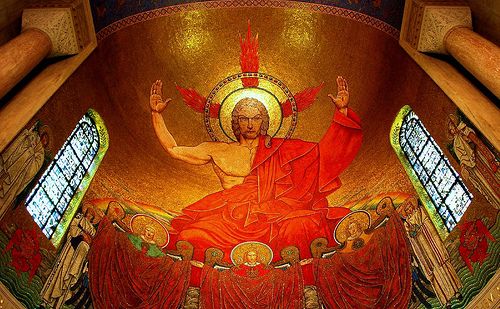
Jesus, 12th century Romanesque
A 12th century Romanesque depiction of Jesus

These twelve Jesus sent out with the following instructions: “Do not go among the Gentiles or enter any town of the Samaritans. Go rather to the lost sheep of Israel. As you go, proclaim this message: ‘The kingdom of heaven has come near.’ Heal the sick, raise the dead, cleanse those who have leprosy, drive out demons. Freely you have received; freely give.

“Do not get any gold or silver or copper to take with you in your belts— no bag for the journey or extra shirt or sandals or a staff, for the worker is worth his keep. Whatever town or village you enter, search there for some worthy person and stay at their house until you leave. As you enter the home, give it your greeting. If the home is deserving, let your peace rest on it; if it is not, let your peace return to you. If anyone will not welcome you or listen to your words, leave that home or town, and shake the dust off your feet. Truly I tell you, it will be more bearable for Sodom and Gomorrah on the day of judgment than for that town.

“I am sending you out like sheep among wolves. Therefore, be as shrewd as snakes and as innocent as doves. Be on your guard; you will be handed over to the local councils and be flogged in the synagogues. On my account you will be brought before governors and kings as witnesses to them and to the Gentiles. But when they arrest you, do not worry about what to say or how to say it. At that time, you will be given what to say, for it will not be you speaking, but the Spirit of your Father speaking through you.

“Brother will betray brother to death, and a father his child; children will rebel against their parents and have them put to death. You will be hated by everyone because of me, but the one who stands firm to the end will be saved. When you are persecuted in one place, flee to another. Truly I tell you, you will not finish going through the towns of Israel before the Son of Man comes. (NIV)

How do you view Jesus? I trust it includes plenty of compassion. I hope your view of Jesus also encompasses taking on the establishment and causing trouble. “I am sending you like lambs into a pack of wolves,” said Jesus to his disciples. Well, my goodness, that sounds unsafe! Sometimes we might lose sight that Jesus is much less concerned about our sense of safety and security than we are. That doesn’t make Jesus uncaring; it just means he sometimes has a different hierarchy of values than we do. Those who follow Jesus will need to take his concerns and ideals into consideration.

Frankly, the Lord Jesus was often a troublemaker who continually agitated for change. And, what is more, he warned us about trouble in the world. It is not that Jesus was intentionally pressing everyone’s buttons; he was just being himself, and that sent a whole lot of people gnashing their teeth at him. Our Lord Christ got all up into people’s grill and confronted them with bold assertions about justice and righteousness taken at God’s terms, not ours.

Therefore, as Christ’s followers, we can expect opposition and trouble. We need to anticipate we are going to sometimes disrupt and upset relatives, co-workers, neighbors, and those around us. Please understand this is not about being intentionally obnoxious or callously abusive. In fact, what personally drives me batty are Christians who take stupidly stubborn stands on the wrong hills of life, thus hurting others and damaging the cause of Christ. We really must be vigilant if someone’s hackles are raised that it is not because of our own foolish words and actions based in notions which Jesus never espoused.

The model of our Lord Jesus is that he was simply himself – advocating for the lost, the least, and the lonely – challenging systems which kept people burdened, oppressed, and lacking justice. This is the kind of stuff God has always done throughout history. Those with power and privilege discern quickly that advocacy and agitation for systemic change is a threat to them. Thus, we find ourselves like little lambs in a den of wolves. By simply loving Jesus and seeking to follow him we are, at times, going to upset people – and that is okay. Facing trouble is not the worst thing to be experienced – to be separated from God is.

It is okay to rock the boat, shake the tree, upset the fruit basket, stir the pot, and make waves if you are doing it because you value the ethics and methods of Jesus. So, count the cost. Give your life away. In doing so, you will find it.

Grant us, Lord God, a vision of your world as your love would have it: a world where the weak are protected, and none go hungry or poor; a world where the riches of creation are shared, and everyone can enjoy them; a world where different races and cultures live in harmony and mutual respect; a world where peace is built with justice, and justice is guided by love. Give us the inspiration and courage to build it.

Grant, O God, that your holy and life-giving Spirit may so move every human heart [and especially the hearts of the people of this land] that barriers which divide us may crumble, suspicions disappear, and hatreds cease; that our divisions being healed, we may live in justice and peace; through Jesus Christ our Lord. Amen.

Revelation 2:8-11 – Persevering to the End

perseverance

“And to the angel of the church in Smyrna write: These are the words of the first and the last, who was dead and came to life:

“I know your affliction and your poverty, even though you are rich. I know the slander on the part of those who say that they are Jews and are not but are a synagogue of Satan. Do not fear what you are about to suffer. Beware, the devil is about to throw some of you into prison so that you may be tested, and for ten days you will have affliction. Be faithful until death, and I will give you the crown of life. Let anyone who has an ear listen to what the Spirit is saying to the churches. Whoever conquers will not be harmed by the second death. (NRSV)

What is unique about chapters two and three of Revelation is that Jesus himself is the speaker to seven different churches. Today’s New Testament lesson is addressed to the church at Smyrna, which was a large and beautiful port city in the ancient world. Jesus was letting the believers in Smyrna know they were about to experience severe persecution. However, they need not be fearful and can remain faithful because their Lord knows all about suffering. The church’s perseverance under such trouble would result in the crown of life, given to them by Jesus himself.  This was surely an encouragement to the believers as they underwent difficulty.

The congregation at Smyrna was facing imprisonment and, for some, even death for their faith. The heart of the message by Jesus is to remain faithful.  There will always be cowards and those with weak faith who will fold when the going gets tough. Yet, persecution and hardship have a way of purging the soul as well as the church of its dross.

Suffering is inevitable; how we handle adversity when it comes is completely under our own control.

Few of us reading this will ever likely face a hardship that could result in martyrdom. Knowing there are brothers and sisters in the faith throughout the world who do face daily hardship for their devotion and beliefs puts our own troubles in a different light. The daily irritations and trials God puts in our way to refine us and shape our faith certainly seem small compared to imprisonment and martyrdom. Yet, no matter who we are and where we are located on this earth, whether facing uncommon hardship or banal difficulty, the afflictions of both body and soul come to us as opportunities to lean into faith and love Jesus to the end.

Our Lord is not looking for perfect people, just faithful followers willing to endure suffering with the truth that our Lord stands with us. 

Whatever our current circumstances may be, Jesus offers us his perspective on it. He knows precisely what is going on and understands the spiritual resources you and I possess for each adverse situation we encounter. In fact, few of us really discern the largess of internal resources are within us because of Christ’s redemptive work and the Spirit’s abiding presence – not to mention the very personality God graciously gave us in the womb before we were even born. Even though it seems, at times, we lack strength, wisdom, and courage for what is ahead – Jesus has supreme confidence in us to maintain faith and endure through our afflictions.

Life is not a sprint. Life is a marathon.

To finish the race we need to be in good spiritual health. The perseverance of the saints will happen as we run step after step with boldness despite fear of the unknown future around the bend. This requires the equipment of risk, vulnerability, accountability, and steadfast love which is both received and given. Perhaps most of all it requires keeping our heads up and running toward the promise of reward at the finish. The crown of life is an image of both congratulation and celebration of a race well-run and the enjoyment of unending fellowship with our Lord for whom we have endured so much.

When all is said and done, and the end of the age has occurred, we will be able to look back in hindsight and see that it was really Jesus who all along was fortifying us to keep standing and keep going. Christ is so vested in us that he continually ensures our ultimate victory through a constant presence of help and encouragement. The heritage of both Reformation and Holy Scripture testify to this truth:

“All our progress and perseverance are from God.” –John Calvin

“I’m sure about this: the one who started a good work in you will stay with you to complete the job by the day of Christ Jesus.” (Philippians 1:6, CEB)

May the grace of Jesus sustain you; the love of God surround you; and, the encouragement of the Spirit surprise you, today and every day. Amen.

Grant, O God, That we may never lose the way through our self-will, and so end up in the far countries of the soul; that we may never abandon the struggle, but that we may endure to the end, and so be saved; that we may never drop out of the race, but that we may ever press forward to the goal of our high calling; that we may never choose the cheap and passing things, and let go the precious things that last forever; that we may never take the easy way, and so leave the right way; that we may never forget that sweat is the price of all things, and that without the cross, there cannot be the crown.

So keep us and strengthen us by your grace that no disobedience and no weakness and no failure may stop us from entering into the blessedness which awaits those who are faithful in all the changes and chances of life down even to the gates of death; through Jesus Christ our Lord. Amen

William Barclay, Prayers for the Christian Year

Luke 11:53-12:3 – Be Careful How You Bake

bad bread

When Jesus went outside, the Pharisees and the teachers of the law began to oppose him fiercely and to besiege him with questions, waiting to catch him in something he might say.

Meanwhile, when a crowd of many thousands had gathered, so that they were trampling on one another, Jesus began to speak first to his disciples, saying: “Be on your guard against the yeast of the Pharisees, which is hypocrisy. There is nothing concealed that will not be disclosed nor hidden that will not be made known. What you have said in the dark will be heard in the daylight, and what you have whispered in the ear in the inner rooms will be proclaimed from the roofs. (NIV)

One Sunday, many years ago when I was a young pastor, I went to a church to fill-in and preach sermons both in the morning and evening. I had believed my morning sermon went quite well, until I walked into the church building for the evening sermon only to have the deacon at the door exclaim to me, “Man, did you stir up the pot!” When I asked him to explain, he said that a lot of people were upset because I walked around and didn’t stay behind the pulpit, thus losing my authority; and, what is more, I did not preach from the King James Version of the Bible. The deacon went on to explain that some complained I talked too much about grace and not enough about God’s law.

Indeed, much like Jesus in our Gospel lesson for today, I ended up getting deluged with questions before the worship service began. Frankly, I had just been myself, and it caused trouble to the point of families in the church being divided over what I did and did not do. So, I decided on the spot to purposely cause more trouble by preaching the Beatitudes of Jesus while walking up and down the aisle. I, of course, never returned to that church.

In biblical times, yeast was a common symbol for evil, which is one reason why the Jews ate unleavened bread.  Jesus was trying to get the point across to his disciples that, like yeast, just a little bit of duplicitous teaching can have the far-reaching effect of distrusting God.

It takes only a pinch of hypocrisy to work through the whole batch of dough.

Not long before this encounter with the religious leaders, Jesus had done the miraculous feeding of the five-thousand people. With only five loaves of bread and two fish, Jesus fed a multitude – and even had leftovers afterwards. The math lesson that Jesus explained to the disciples at the time about the baskets of food they had gathered was that a little bit of Jesus goes an incredibly long way.

A small amount of Christ’s compassion was able to feed thousands of hungry people.

So, the issue really gets down to the ingredients. Are we baking the bread of our lives with compassion or hypocrisy? Speaking from my own experience, dealing with hypocrisy and hypocritical folks is a huge drag. Unless you can be on their page of promoting themselves and their agenda, they can make life downright miserable. Conversely, it feels like the balm of healing to be around compassionate people who are authentic and genuine with no pretense or posturing to get in the way of enjoyable relationship.

Eventually, sooner or later, the little bit of hypocrisy in the bread will get eaten. And it will taste awful. Like Ellie Mae Clampett’s homemade biscuits from the 1960’s show, Beverly Hillbillies, you might not even be able to bite into them because they are so hard and nasty. To avoid this, we need to be vigilant about the preparation process before anything unsavory gets into the oven of our lives. Enjoying a good bite of warm soft compassionate bread happens when we are careful and attentive to Jesus, the real source of mercy and grace. Jesus has the best recipe I know. Hypocritical religious teachers, not so much. Their bread is half-baked, at best, and not fit for consumption.

How do we remain on guard against hypocrisy and attentive to genuine compassion?

  1. Use the cookbook. Becoming familiar with Holy Scripture informs us as to the proper ingredients for baking. A straightforward reading of the Gospels enables us to focus on Christ’s compassionate and finished work, and not hypocrisy and keeping up religious appearances. With the help of the Master Chef we are able to: see the internal pain and hurt behind the outwardly obnoxious behavior of a co-worker; love a relative even though they have offended us; have a spiritual conversation with a neighbor; freely give to others what we have freely received; and, so much more. Jesus prayed, “Sanctify them by the truth; your word is truth.” (John 17:17, NIV)
  2. Avoid condemning other’s methods. Be a champion of grace, not judgment. When in doubt about what to do or say, always default to grace because the world spins on the axis of mercy and love, not hypocritical judgments. Cooking and eating are meant to be enjoyable experiences, not frustrating encounters. Jesus said, “Do not judge, or you too will be judged. For in the same way you judge others, you will be judged, and with the measure you use, it will be measured to you.” (Matthew 7:1-2, NIV)
  3. Trust your nose. If you intuitively sense something does not pass the smell test, then be wary of putting it into your bread. “Follow God’s example, therefore, as dearly loved children and walk in the way of love, just as Christ loved us and gave himself up for us as a fragrant offering and sacrifice to God.” (Ephesians 5:1-2, NIV)
  4. Be vigilant about conversations. The interactions we have with others while making our bread are significant. If you would not say something to someone’s face, then absolutely do not say it behind their back. Secret recipes in the form of hidden agendas are the stuff of hypocrisy. “Don’t let any foul words come out of your mouth. Only say what is helpful when it is needed for building up the community so that it benefits those who hear what you say.” (Ephesians 4:29, CEB)

May the words of our mouths and the meditations of our hearts be pure and pleasing to the Lord our God.

Blessed God forgive me for those times I have been two-faced and hypocritical. I want to honor you with every word that comes from my mouth and every action I take throughout the day. Holy Spirit give me a humble heart that lives to glorify you. Help me to become aware when I am being judgmental of others. Thank you that you have wild and abundant grace for me that will not cease, will not end, and will not let me go. Teach me your ways and help me be receptive to them, so I will not fall through Jesus Christ my Lord. Amen.