Luke 11:14-23 – If You’re Not For Him, You’re Against Him

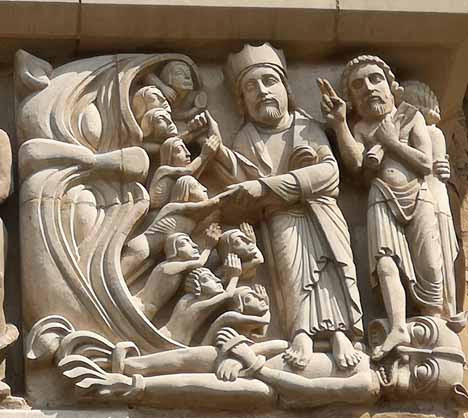
The Plundering of Hell by Jesus, Lincoln Cathedral, England

Jesus was driving out a demon that could not talk; and when the demon went out, the man began to talk. The crowds were amazed, but some of the people said, “It is Beelzebul, the chief of the demons, who gives him the power to drive them out.”

Others wanted to trap Jesus, so they asked him to perform a miracle to show that God approved of him. But Jesus knew what they were thinking, so he said to them, “Any country that divides itself into groups which fight each other will not last very long; a family divided against itself falls apart. So, if Satan’s kingdom has groups fighting each other, how can it last? You say that I drive out demons because Beelzebul gives me the power to do so. If this is how I drive them out, how do your followers drive them out? Your own followers prove that you are wrong! No, it is rather by means of God’s power that I drive out demons, and this proves that the Kingdom of God has already come to you.

“When a strong man, with all his weapons ready, guards his own house, all his belongings are safe. But when a stronger man attacks him and defeats him, he carries away all the weapons the owner was depending on and divides up what he stole.

“Anyone who is not for me is really against me; anyone who does not help me gather is really scattering. (Good News Translation)

Watching the Green Bay Packers on television does not make one a professional football player. Voting in an election doesn’t make somebody a politician. Paddling around on a lake does not make anyone a duck. And just as sitting in a garage doesn’t make someone a car, so sitting in a church worship service does not make someone a Christian. 

Responding to criticism about casting out demons, Jesus summarized his actions and the actions of others by saying that whoever is not with Jesus is against him, and whoever does not gather with Jesus, scatters.

Jesus was all about the kingdom of God breaking-in to this mixed-up fallen world and giving it a thorough transformation. So, that meant Jesus was going to push back hard on the kingdom of darkness. 

Participating with Jesus in his kingdom enterprise is a watershed test of whether someone is genuinely following God, or not. There are a million armchair quarterbacks who will freely give their advice and opinion about how things should have gone and what those playing on the field ought to be doing. Jesus was, and still is, calling people out to get off their butts and follow him. To merely watch him is to be against him, not for him.

Faith is not a checklist of beliefs to affirm and mark off. Rather, believing in Jesus is a dynamic participation with him in his great kingdom influence for the world. Christ calls us to leave the critical spirit, haughty attitude, and selfish expectations in the bleachers. We are to get on the playing field. To simply have our hands in our pockets is to actually work against Jesus. 

Are you willing to gather with Jesus? How does God want to you to serve? Are you only a fan of Jesus? Do you play armchair preacher on Monday morning? 

God is presently working to bring all things under the authority of Jesus Christ, the rightful ruler of the universe. Unlike so many present kingdoms of darkness on this planet, Christ’s reign is a kingdom of light, bringing benevolent grace to all.

Christ is the visible image of the invisible God.
    He existed before anything was created and is supreme over all creation,
for through him God created everything
    in the heavenly realms and on earth.
He made the things we can see
    and the things we can’t see—
such as thrones, kingdoms, rulers, and authorities in the unseen world.
    Everything was created through him and for him.
He existed before anything else,
    and he holds all creation together.
Christ is also the head of the church,
    which is his body.
He is the beginning,
    supreme over all who rise from the dead.
    So he is first in everything.
For God in all his fullness
    was pleased to live in Christ,
and through him God reconciled
    everything to himself.
He made peace with everything in heaven and on earth
    by means of Christ’s blood on the cross. (Colossians 1:15-20, NLT)

The kingdom of God has come upon us. Let us follow Jesus and participate in the renewal of the world so that truth, kindness, grace, mercy, goodness, and peace will shine.

Mighty God, Jesus is the strong man who has bound Satan and is ushering in a new kingdom. Let me be a part of what you are doing in this world so that my faith is confirmed, strengthened, and used for your gracious and benevolent purposes, through the power of your Holy Spirit. Amen.

Luke 11:33-36 – Life Goals

Photo by Taryn Elliott on Pexels.com

“No one lights a lamp and puts it in a place where it will be hidden, or under a bowl. Instead, they put it on its stand, so that those who come in may see the light. Your eye is the lamp of your body. When your eyes are healthy, your whole body also is full of light. But when they are unhealthy, your body also is full of darkness. See to it, then, that the light within you is not darkness. Therefore, if your whole body is full of light, and no part of it dark, it will be just as full of light as when a lamp shines its light on you.” (New International Version)

We don’t typically frame our words in a phrase like, “Your eye is the lamp of the body.” The idea of healthy or unhealthy eyes as determining how well we are doing might seem weird or awkward to us. We need to keep in mind that Jesus the Jew communicated in distinctly Jewish ways. Speech was often expressed in metaphors and word pictures. 

The word “body” serves as a way of saying “life” and the word “eye” represents our contemporary word “goal.” So, then, let’s restate the verse: “Your goals determine the direction of your life. When your goals are good, your entire life is healthy, but when your goals are bad, it messes up your life.”

Our goals, whether stated or unstated, set the focus and direction of our lives. If the orientation of our lives is the pursuit of selfish gain and temporary satisfaction, then we will move in that direction, and it will not end well. However, if our goals are toward God and the accomplishment of God’s will, then we will be light for the world. It’s all a matter of focus and where we set our attention.

But more than anything else, put God’s work first and do what he wants. Then the other things will be yours as well.

Jesus (Matthew 6:33, CEV)

In our goal setting, we are to be careful, deliberate, and sensitive to the ways of Jesus. That means Christians will focus on the kind of people they want to be, that is, like Jesus Christ. Instead of simply making big resolutions, we can implement small decisions, practiced every day, which will help us grow spiritually.

For example, if we have some besetting sin which tends to dog us, we might try to summon the willpower and energy to take it on. On some days, that works. On most days, it doesn’t. That’s because if we maintain the same daily habits that led to being ensnared in sin, we’ll continually be looking for that unusual burst of energy to overcome that sin.

We need a new system of living. If we imagine our lives as a house, and a room in your house needs a complete restoration and makeover, it won’t do to enthusiastically rearrange the furniture. It’s a superficial goal which doesn’t address the systemic change of habits needed to thoroughly reform that area of your life.

And if we try and change our results, our sinful actions, chronic failure is likely in our future. What we really need to change are the systems that cause those results. When we solve problems at the results level, it’s only a temporary fix.

In order to have some permanent improvement, we need to solve problems at the systems level. That’s why problems like racism, poverty, hunger, and a thousand other issues will never be truly solved unless there is a complete transformation of the systems which keep people locked into those tragic situations.

We need some good healthy biblical goals. And we equally need a reformation of habits to actually realize those worthy goals.

Our goals need not be big and audacious; they just need to be consistent with living the Christian life according to the words and ways of Jesus. That means choosing one thing and ruthlessly eliminating everything else. We don’t really need more time to accomplish the will of God; we simply need to decide that we are following Jesus. Spiritual growth and maturity happen not with more but with less.

Jesus said, “I am the true grapevine, and my Father is the gardener. He cuts off every branch of mine that doesn’t produce fruit, and he prunes the branches that do bear fruit so they will produce even more.” (John 15:1-2, NLT)

Proper goals bring us into the light. And when we establish a routine rule of daily life – small practices of faith done every day – then our light can shine in the darkness of the world.

Loving Lord Jesus, help me to set my life’s gaze on the living and doing of your teaching. Enable me to set godly and worthy goals and grant me the power to see them realized through your Holy Spirit.  Amen.

Micah 6:1-8 – What Does the Lord Require of Us?

Jesus the Good Shepherd by Solomon Raj

Listen to what the Lord says:

“Stand up, plead my case before the mountains;
    let the hills hear what you have to say.

“Hear, you mountains, the Lord’s accusation;
    listen, you everlasting foundations of the earth.
For the Lord has a case against his people;
    he is lodging a charge against Israel.

“My people, what have I done to you?
    How have I burdened you? Answer me.
I brought you up out of Egypt
    and redeemed you from the land of slavery.
I sent Moses to lead you,
    also Aaron and Miriam.
My people, remember
    what Balak king of Moab plotted
    and what Balaam son of Beor answered.
Remember your journey from Shittim to Gilgal,
    that you may know the righteous acts of the Lord.”

With what shall I come before the Lord
    and bow down before the exalted God?
Shall I come before him with burnt offerings,
    with calves a year old?
Will the Lord be pleased with thousands of rams,
    with ten thousand rivers of olive oil?
Shall I offer my firstborn for my transgression,
    the fruit of my body for the sin of my soul?
He has shown you, O mortal, what is good.
    And what does the Lord require of you?
To act justly and to love mercy
    and to walk humbly with your God. (New International Version)

We are the people of God, the Church, the Body of Christ, the army of God, a holy temple. Those biblical labels are a picture of who we are and what we are to do. These metaphors all describe a people set apart for service, working in concert together toward a shared purpose.

In the prophet Micah’s day, the Israelites lost sight of the purpose and meaning of being God’s people. They needed to remember that the Lord acts in and through them for the redemption of the world. The kind of sacrifice and service which God wants is not so much a largess of tangible offerings we give. Rather, it is neatly summarized this way: Act justly. Love mercy. Walk humbly with your God.

This Old Testament passage has the feel of a courtroom scene. The defense lawyer is Micah, representing God. The people of Israel are the plaintiffs. The world is the judge. All of creation is the jury.

Israel was complaining about God. It’s an age old complaint from many people through the millennia: Blame God for anything that goes sideways in my life. The reasoning goes something like this: After all, God is powerful and in control. God should fix everything.

In their small-minded and short-sighted ways, the people seem unable to discern that easy fixes rarely help anyone. Like yanking up a big weed next to a small plant, it destroys both of them.

The defendant, Micah, speaks on behalf of God. What have I done to you? How have I burdened you? In fact, God has done just the opposite of failing to act or wronging the people in some way. The Lord actively delivered the Israelites:

  • When the people groaned and grumbled under Egyptian slavery, God delivered them with a series of miraculous deeds.
  • When the Israelites were heading to the Promised Land and vulnerable to their enemies, God protected them from the Moabites. The Lord even used a talking donkey to work on their behalf. God miraculously turned the efforts of Balak to curse the people into a blessing.
  • When the people entered the land, they did so by the powerful act of God to stop the Jordan River from flowing so the Israelites could cross over.

These saving acts of God are the motivation for living a life pleasing to God. Micah sarcastically pressed his argument, essentially asking if there’s anything that can be done to keep the people happy? What extremes need to happen to meet such excessive demands? The response by God is this: Do justice. Love mercy. Walk humbly with God.

Walk Humbly with God

Faith and action are meant to work seamlessly together. Doing justice and loving mercy are possible as we walk with God. Walking everyday with Jesus gives us the power and passion to invest in the healing of the world. God desires that we journey with Jesus and follow his words and ways. Throughout the New Testament, the Christian life is described as a road or a way we walk. In fact, the earliest believers were known as “The Way.” (Acts 9:1-19)

Jesus is the way (John 14:6). Jesus is the way to deal with our current concerns and anticipated anxieties. He himself is the way. The way is not through a program of self-improvement. The way is not through a fake-it-till-you-make-it approach. The way is not through an ability to articulate well-crafted words or through being able to answer with certainty every question of faith. The way is not through finding just the right plan or system.

Jesus is our way – he is the way of rescue, the road to a life of harmonious peace and settled rest even when the world is going to hell around us. Jesus is the way for the church everywhere – fellowship, encouragement, acts of loving service, teaching, and strengthening of faith all center around Jesus because he is love incarnate.

Jesus is the way for the world – serving neighbors and nations, advocating for those who are mistreated and facing injustice, tackling the dozens of world problems which oppress humanity – come through the continuing presence of Jesus here on this earth, that is, through the Holy Spirit and God’s people.

Love Mercy

This phrase (in the NIV) is translated various ways in other Bible versions:

  • “Embrace faithful love” (CEB)
  • “Let mercy be your first concern” (CEV)
  • “Show constant love” (GNT)
  • “Be compassionate and loyal in your love” (MSG)
  • “Love being kind to others” (NCV)
  • “Love kindness” (NRSV).

The reason for the variations is that the phrase in Hebrew carries a lot of meaning – and it’s difficult to capture that meaning in just one or two English words. It has to do with God’s steadfast loyalty to people based in a committed love and determination to do what is good and kind on their behalf – no matter whether they deserve such a grace, or not.

To love mercy comes from a large heart. The Grinch had a small heart. It caused him to be a nasty green curmudgeon who could steal gifts from a sweet little Who-girl. Only when his heart was enlarged did he mercifully return the gifts and then participate with the Whoville folks in their grand celebration.

God was merciful! We were dead because of our sins, but God loved us so much that he made us alive with Christ, and God’s wonderful kindness is what saves you. (Ephesians 2:4-5, CEV)

Love one another as if your lives depended on it.

1 Peter 1:22, MSG

Act Justly

Because many people define justice as a punitive act toward a wrongdoer, they struggle with this admonition to “do justice.” Giving people what they deserve doesn’t primarily mean someone is supposed to go to prison. Some people deserve that. Most don’t.

Instead, to act justly means to create a world in which everyone has what they need to live, thrive, and develop the gifts God has placed within them. Everyone deserves their basic human needs met – to have an equal opportunity in realizing the meeting of their needs. And that is what the heart of biblical justice is. Therefore, justice includes practical things like:

  • Providing tutors so that kids in urban schools have the same opportunities to read and as suburban kids.
  • Supporting an overwhelmed single parent who is struggling to find the time and resources to give adequate time to his or her children.
  • Taking in a foster child who needs the environment of a loving family.
  • Employing a person coming out of prison so that the terrible rates of recidivism don’t keep going.
  • Advocating for an underprivileged person who needs adequate healthcare or good housing.

Doing justice is more than giving away money or resources. It’s helping people to help themselves. It’s providing others the dignity and respect of putting them in a position so that they can take pride in their own efforts, just like we do. It’s not only giving someone a fish but taking the time and effort in teaching them how to fish.

Speak up for people who cannot speak for themselves. Help people who are in trouble. Stand up for what you know is right and judge all people fairly. Protect the rights of the poor and those who need help. (Proverbs 31:8-9, ERV)

Conclusion

What does the Lord require or desire of you?

What gifts and abilities has God given to you to act justly, love mercy, and walk humbly?

How can you and I step outside our comfort zones to other areas the Lord might be desiring for us?

The answers to those questions will determine whether we sink or swim as the people of God.

Father God, you have made all people in your image. It’s your desire and requirement that they be gathered together as one family in yourself. Fill the hearts of humanity with the fire of your love and the desire to ensure justice for all. By sharing the good things, you give us, may we secure equality for all our brothers and sisters throughout the world. May there be a truly human society built on love and peace, through Jesus Christ our Lord. Amen.

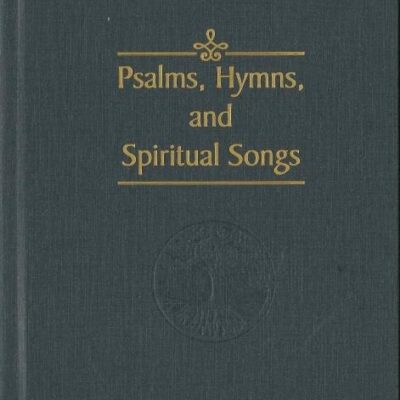
Ephesians 5:15-20 – Speak to One Another with Psalms, Hymns, and Spiritual Songs

Be very careful, then, how you live—not as unwise but as wise, making the most of every opportunity, because the days are evil. Therefore, do not be foolish, but understand what the Lord’s will is. Do not get drunk on wine, which leads to debauchery. Instead, be filled with the Spirit, speaking to one another with psalms, hymns, and songs from the Spirit. Sing and make music from your heart to the Lord, always giving thanks to God the Father for everything, in the name of our Lord Jesus Christ. (New International Version)

As you likely well know, an inebriated person tends to say and do things that they do not typically say or do when they’re sober. The Apostle Paul’s point about being filled with the Spirit is that, instead of doing and saying stupid things, we are so filled with God that we do things and say things that we would not typically do and say if we were not filled with God – that is, good things. 

Apart from being full of God’s Spirit, we tend toward mumbling, not singing; worry, not making music in our hearts; and complaining and arguing, not giving thanks. Half-filled Christians practice a half-hearted Christianity. They’re only half-baked in their service and devotion to Christ.

Why sing? 

Because singing is part of being filled with the Spirit of God. Singing happens when we experience God’s overflowing grace in our lives through the blessings of being chosen, adopted, and redeemed into God’s new community. (Ephesians 1:3-11)

Music is powerful. It’s not only a means of expressing praise and commitment to Christ and each other, it is also a powerful means of being impressed. For example, when we first teach kids the alphabet, we teach it in a song. Trying to teach letters in a rote fashion typically doesn’t work well for pre-school kids. Words set to music is why we still remember words from old TV shows, because those words were set to a catchy tune.  Music is why an Alzheimer’s patient cannot remember her daughter’s name but can flawlessly sing all four verses of Amazing Grace.

Singing is an offering and a sacrifice of praise to God (Hebrews 13:15). And singing is also a vehicle whereby we are taught, encouraged, and built up in the community of believers. We sing to God, one another, and even ourselves.

Church music, then, is to be both a means of praising God and a practice of encouraging each other. We do it through psalms, hymns, and spiritual songs.

Psalms

The word “psalm” helps us rightly think of the biblical book of Psalms. Singing the psalms is an ancient practice, going all the way back to the Israelites singing psalms in the temple and synagogue. The early church maintained this practice, especially as a means of being faithful to praying without ceasing. 

However, over time, medieval congregations began neglecting the practice. In fact, the congregations eventually gave up most singing altogether. Almost all the singing was done by church choirs and professional musicians employed by the state (no separation of church and state) to write, compose, and perform in worship services. 

Five-hundred years ago, with the Reformation, Martin Luther reinstituted congregational singing. He gave music back to the people. One of the results of this change was putting the book of psalms to song – the Psalter.  For many Protestant denominations, the Psalter became the primary means of singing. The Psalter chiefly set prayers to song. It was both a means of expressing prayer to God and learning Scripture.


Hymns

There have always been hymns in the church. Yet, it was not until the Reformation that hymns began to be written and sung by congregations. For the Reformers, hymns were used to teach sound doctrine and theology, as well as a means of confessing the faith together

Spiritual Songs

Spiritual songs are the present day equivalent of praise and worship choruses, or what some refer to as contemporary songs. These are songs purposefully designed to be emotional expressions of praise to God and to give powerful testimony for what God has done or is doing.

So, what?

Quick review:

  • Psalms are used to pray and learn Scripture.
  • Hymns are used to teach us sound doctrine and confess the faith together.  
  • Spiritual songs are an important way of expressing praise to God and being encouraged in the faith. 

Therefore, church music is to serve as both a revelation from God, and as a response from God’s people.

There are two important deductions from this verse:

  1. A variety of songs is inferred and expected.
  2. Paul commanded their use.

The reason worship style is such a hot topic in a lot of churches is because we all have our personal preferences.  And yet, if we are to be faithful to today’s New Testament lesson, we will not just lock in on what I want. 

Truth be told, we are selfish people when it comes to music. We want what we want, and we don’t care what somebody else wants. And we will persist in that self-absorbed spirit until somebody calls us on it. That somebody is the Apostle Paul. The Word of God calls us to encompass psalms, hymns, and spiritual songs – all three of them – in our worship.

I have a good friend who is an accomplished church musician and worship pastor. I once asked him how I can lead a worship service among such a variety of preferences concerning music. He answered my question with a question: “How highly do people, including and especially your musicians, value the unity of the church?  Do they love each other so much that they can allow for a wider range of style, and do so without vocally complaining about it?”

My friend went on to say, “When I arrived at one church as their pastor, some people were in a rather bad habit of saying very openly, ‘Oh I hate that song,’ or, ‘If I hear this song one more time I’m walking out.’ What I tried to do was teach people that this is not the most loving or mature approach and does little to build up the rest of the Body of Christ.”

If a group of people are being faithful to Scripture, and doing their best musically, then – if the music seems lifeless, dull, or strange to us – the real issue isn’t style but our hearts.       

Is that heart filled with the Spirit of God? If it is, then we will speak to one another using the Psalter, using time-honored hymns, and utilizing fresh contemporary praise songs. And the result will be the Body of Christ, the Church, built up in the faith.

Gracious God, give us grace to take to heart the great dangers we are in by our unhappy divisions about music.  Take away all hatred and prejudice, and whatever else may hinder us from godly union and concord; that, as there is but one body and one Spirit, one hope of our calling, one Lord, one faith, one baptism, one God and Father of us all, so we may from this time forward be all of one heart and of one soul, united in one holy bond of peace, and may with one mind and one mouth glorify you, through Jesus Christ our Lord. Amen.