Romans 10:8b-13 – Believe and Confess

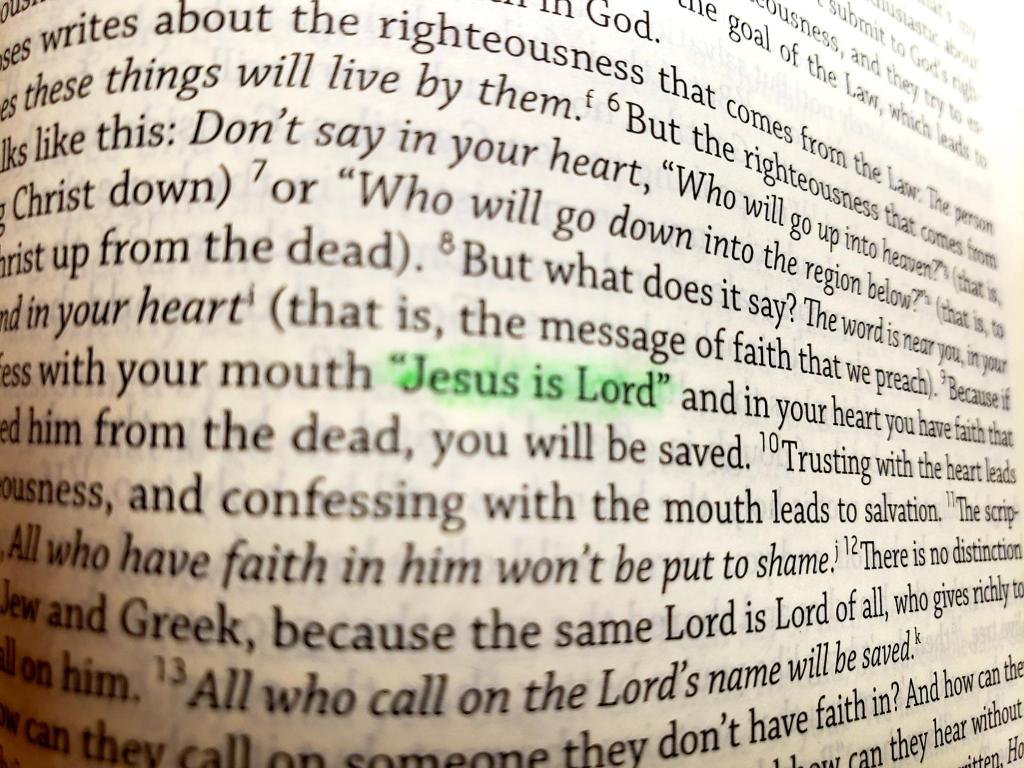
“The word is near you; it is in your mouth and in your heart,” that is, the message concerning faith that we proclaim: If you declare with your mouth, “Jesus is Lord,” and believe in your heart that God raised him from the dead, you will be saved. For it is with your heart that you believe and are justified, and it is with your mouth that you profess your faith and are saved. As Scripture says, “Anyone who believes in him will never be put to shame. ”For there is no difference between Jew and Gentile—the same Lord is Lord of all and richly blesses all who call on him, for, “Everyone who calls on the name of the Lord will be saved.” (New International Version)

Confess with the Mouth

John Wesley (1703-1791) was an Oxford don who became an Anglican priest. He had all the intellectual tools to rightly handle the intricacies of theology and teach the Bible. Yet, when he first started out, there was no heart behind it. 

On a voyage across the Atlantic to America, Wesley spent much of the time on the ship with a group of German pietists – men and women who had a heart behind their practice of Christianity. The Germans deeply impressed Wesley, and he realized there was something important missing from his own religion. 

The ship encountered a storm and Wesley was afraid for his life. But the German believers seemed unfazed, having a heart-faith that John could not explain. He wanted what they had. Wesley was fearful and found little comfort in his religion. So, he confessed to one of them his growing misery and decision to give up the ministry. One of the Pietists advised, “Preach faith till you have it. And then, because you have it, you will preach faith.”

John Wesley acted on the advice. He led a prisoner to Christ by preaching faith in Christ alone for forgiveness of sins. He was astonished. Here was a man transformed instantly. Wesley cried out, “Lord, help my unbelief!” However, he still felt dull inside and little motivation even to pray for his own salvation. 
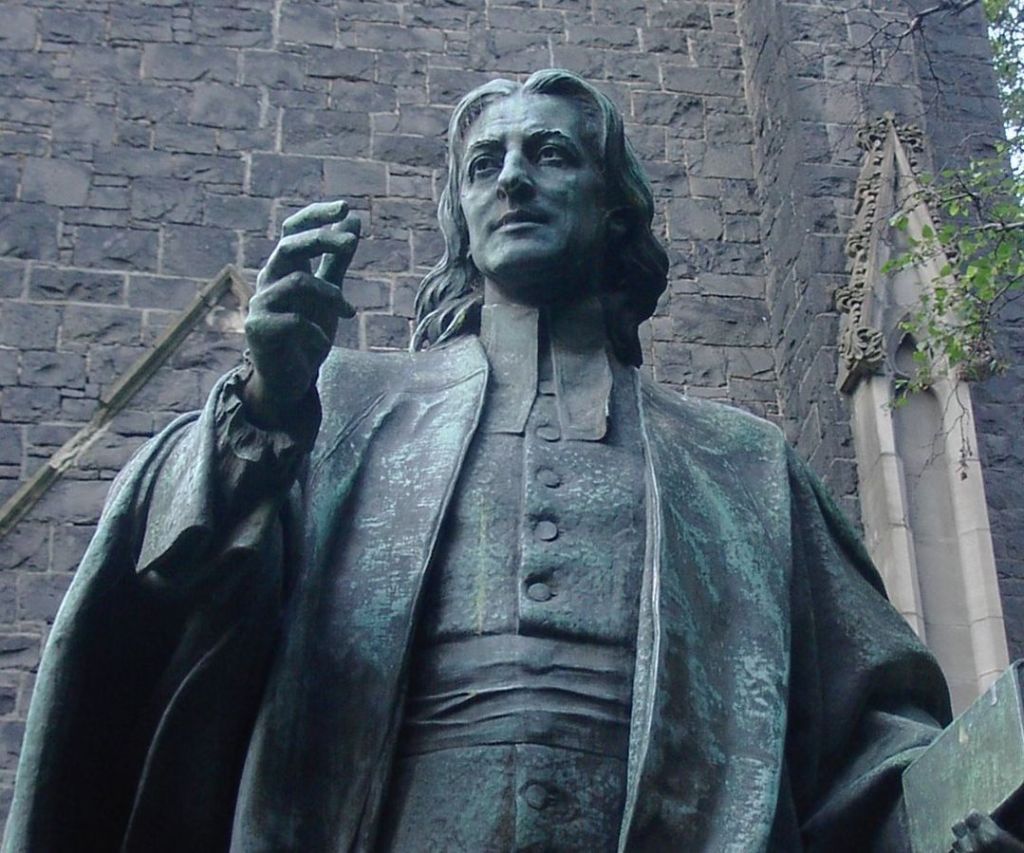
Statue of John Wesley as a young preacher, by Adam Carr, located in Melbourne, Australia

Having returned back to England, Wesley was in a church service listening to Romans expounded by the preacher. He recalled the experience years later: “While he was describing the change which God works in the heart through faith in Christ, I felt my heart strangely warmed. I felt I did trust in Christ, Christ alone for salvation; and an assurance was given me that He had taken away my sins, even mine, and saved me from the law of sin and death.”

Believe with the Heart

Simply uttering the words with our mouths, “Jesus is Lord,” by itself does not create deliverance and salvation. The heart needs to be involved. Yet, we must also consider the reality that only focusing on the heart, without having the mouth involved, is an insufficient faith. Christian belief has a solid objective real historical base from which our hearts can tether themselves. Christian confession affirms that Jesus is, indeed, risen from death and is Lord of all, having secured salvation for us through his shed blood on the cross.

Consider two hypothetical men at the time of the Passover in Egypt: Eleazar Ben Macaroni and Yakov Yarmulke. Eleazar and Yakov are talking together on the night the angel of death is about to pass through Egypt and the firstborn son in every family would be killed – that is, unless the blood from a sacrificial lamb was over the door of the house so that the angel would “pass over” the house and no one would be killed. 

Passover Angel of Death, by Arthur Hacker (1858-1919)

Yakov says to Eleazar, “Can you believe all that has been happening around here?  It’s all very scary!  All of those plagues, the disaster around us, and now this night!”  Eleazar asks, “Well, haven’t you put the blood over the door?”  “Yes, I’ve done all that – but it all is still disturbing.  My heart is troubled.  What do think will happen?” “Will we be okay?” asks Yakov nervously.  Eleazar responds, “I trust in the promises of God; let the angel come!”

So, when the angel of death came, which house do you suppose lost his firstborn son: Eleazar ben Macaroni, or Yakov Yarmulke?  The answer: neither of them. The angel of death did not come to either man’s house because deliverance is determined by the blood of the lamb and not by the quality or intensity of faith of the person. 

“For me His precious blood he shed – for me His life He gave. I need no other argument, I need no other plea; it is enough that Jesus died, and that he died for me.”

My Faith Has Found a Resting Place, hymn by Eliza Edmunds Hewitt (1851-1920)

If we only focus on the heart, our hearts will condemn us. We need to say the words of our faith, to confess them with our mouths, repeatedly, again and again, until we believe them. We are not to wait for our hearts to feel like having faith and living for God, because our hearts can be desperately wicked, and they will keep deceiving us. The heart needs to be informed by God’s Word and accept the words of Holy Scripture by faith:

“If we confess our sins, he is faithful and just to forgive us our sins, and to purify us from all unrighteousness.” (1 John 1:9, NIV)

Have the Heart and Mouth Work Together

We need both a right confession with our mouths and a right confession in our hearts for saving faith. When the heart receives grace, and the mouth expresses the beauty of faith – when heart and mouth work in concert with each other – something beautiful and gracious happens: 

“Everyone who calls on the name of the Lord will be saved.”

Romans 10:13

When Holy Scripture says “everyone,” it means “everyone.” All who cry out to God with their mouths, from a heart desiring God, will be saved. It does not matter whether that call is melodious, sweet, and in tune; or whether the call is a jumbled off-key joyful noise. It makes no difference; both will be saved. 

Only uttering the right words like some magical incantation does not save us. Only sincerity of heart does not save us. One does not achieve salvation through self-effort or trying to be worthy. No one is saved by finding the right combination of words in prayer or having a nice feeling.

Calling on the name of the Lord with both mouth and heart, trusting in the redemptive events of Jesus Christ, is what saves us.

Whether Jew or Gentile, rich or poor, American or Arab, famous or infamous, it is no matter – because salvation isn’t dependent on our looks, our past, or our zeal in doing good works. Salvation is completely from God and freely given to all who call upon the name of the Lord.

Make No Room for Shame

What’s more, all who trust in Jesus Christ will never be put to shame. In ancient Roman society, nearly three-fourths of all the people in the Empire were slaves to the other one-fourth. It was a culture built around the concept of honor and shame. It was shameful to be a slave, and honorable to be privileged, wealthy, and influential with a good Roman pedigree and citizenship. It was beneath such people to interact with those who served them because dealing with shameful people would make them shameful, as well.

Jesus forsook his honorable position in order to hob-nob with us rabble. He became one of us to save us and lift us up with him.

“For you know the grace of our Lord Jesus Christ, that though he was rich, yet for your sakes he became poor, so that you, through his poverty, might become rich.” 

2 Corinthians 8:9, NIV

Jesus embraced the shame of the cross. Therefore, we need never live in a state of shame ever again. Our hearts need not condemn us. Jesus has already taken care of shame, once for all.

“Let us fix our eyes on Jesus, the author and perfecter of our faith, who for the joy set before him endured the cross, scorning its shame, and sat down at the right hand of the throne of God.  Consider him who endured such opposition from sinful men, so that you will not grow weary and lose heart.” (Hebrews 12:2-3, NIV)

Put a Focus on Lent

The season of Lent lets us know we are neither brains-on-a-stick nor walking-headless-hearts. We have both heart and mouth, both deep feeling and real intellectual knowledge. Together, they form belief and confession. Lent is an invitation to prepare our hearts for Christ’s passion and resurrection. It includes an examination of our hearts so that we can deepen our piety and devotion to Jesus. And it incorporates confession of Jesus with the mouth.

The good news is this: Jesus is Savior and Lord; he has risen from death; and there is forgiveness of sins and deliverance from guilt and shame through is cross. When all is said and done, people need the Lord.

“I have not come to call the righteous, but sinners,” said Jesus. (Matthew 9:13)

Repentance involves both heart and mouth. And Lent is just the season for it, to turn from everything we have previously been living for other than Jesus. It’s an opportunity to start afresh with new life in Christ. It’s enough to make old John Wesley smile from the grave.

Have mercy on me, O God, according to your unfailing love; according to your great compassion blot out my transgressions. Wash away all my iniquity and cleanse me from my sin. 

Create in me a pure heart, O God, and renew a steadfast spirit within me. Restore to me the joy of your salvation and grant me a willing spirit, to sustain me.

Save me from guilt and shame and my tongue will sing of your righteousness. Open my lips, and my mouth will declare your praise. You do not delight in sacrifice, or I would bring it; you do not take pleasure in burnt offerings. The sacrifices of God are a broken spirit; a broken a contrite heart, O God, you will not despise. Amen.


Luke 9:28-43 – Transfiguration Sunday: Listen to Jesus

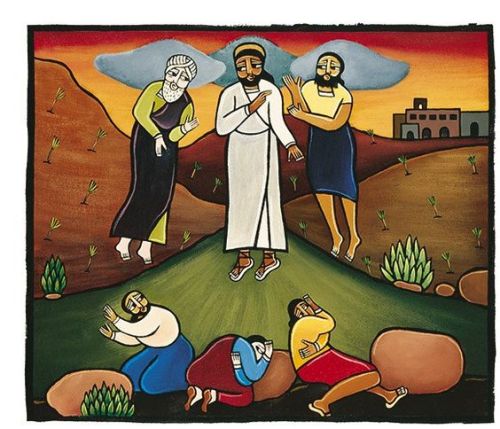
Transfiguration by Laura James

Jesus took Peter, John and James with him and went up onto a mountain to pray. As he was praying, the appearance of his face changed, and his clothes became as bright as a flash of lightning. Two men, Moses and Elijah, appeared in glorious splendor, talking with Jesus. They spoke about his departure, which he was about to bring to fulfillment at Jerusalem. Peter and his companions were very sleepy, but when they became fully awake, they saw his glory and the two men standing with him. As the men were leaving Jesus, Peter said to him, “Master, it is good for us to be here. Let us put up three shelters—one for you, one for Moses and one for Elijah.” (He did not know what he was saying.)

While he was speaking, a cloud appeared and covered them, and they were afraid as they entered the cloud. A voice came from the cloud, saying, “This is my Son, whom I have chosen; listen to him.” When the voice had spoken, they found that Jesus was alone. The disciples kept this to themselves and did not tell anyone at that time what they had seen.

The next day, when they came down from the mountain, a large crowd met him. A man in the crowd called out, “Teacher, I beg you to look at my son, for he is my only child. A spirit seizes him, and he suddenly screams; it throws him into convulsions so that he foams at the mouth. It scarcely ever leaves him and is destroying him. I begged your disciples to drive it out, but they could not.”

“You unbelieving and perverse generation,” Jesus replied, “how long shall I stay with you and put up with you? Bring your son here.”

Even while the boy was coming, the demon threw him to the ground in a convulsion. But Jesus rebuked the impure spirit, healed the boy and gave him back to his father. And they were all amazed at the greatness of God. (New International Version)

When Jesus is around, extraordinary things happen. And yet, sometimes we just don’t perceive it. The three disciples of Jesus – Peter, James, and John – experienced something incredible, yet they were not really aware of what it meant, at the time. The Transfiguration of Jesus on the mountain was unimaginable and awesome. The disciples, however, were confused, sleepy, and walked away silent about the whole affair. 

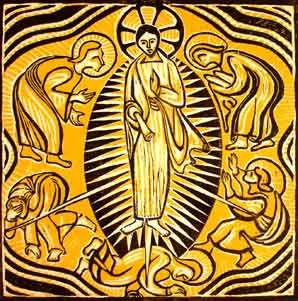
Woodcut of the Transfiguration by Sister Mary Grace Thul

Coming down from the mountain, the other disciples were found scratching their heads about a boy in need of healing. Jesus seemed rather perturbed about the all-around lack of faith. After curing the boy, everyone was amazed, as if they did not expect such a thing to occur.

We are not always told in the Gospels why Christ’s disciples often did not understand or perceive the significance of the miraculous, supernatural, or extraordinary events that took place right in front of them. Maybe their minds were somewhere else.

It could be that Peter had ADD (Attention Deficit Disorder) and was having trouble focusing.

Perhaps James trying to do some sort of ancient multi-tasking. 

Maybe John had some road rage on his way to the meeting on the mountain and was having a hard time thinking straight.

It could be that the three disciples were caught up in the anxiety of wondering where their next shekel was coming from.

Perhaps they were just up too late the night before binge watching the fishermen on the lake. But whatever was going on with the disciples, they were distracted.

So, we actually have God the Father step into the scene at the Transfiguration of Jesus on the mountain and speak. God isn’t typically in the business of exhorting people to listen unless they are not paying attention. The heavenly Father is clear, succinct, and to the point:

“This is my Son, whom I have chosen; listen to him.”

We are to listen to Jesus because he is God’s Son. Everything centers round him. 

Jesus is the full bodily and human representation of God on earth. Jesus is Savior, Lord and Master, Teacher and Healer.

Jesus is the complete fulfillment of all the Old Testament promises, and the one who will come again to judge the living and the dead.

Jesus is the mid-point of history, the hinge upon which all the universe swings. Jesus is the one whom we must listen to when he speaks and acts.

Therefore, our identity is to be fully bent, molded, and shaped in Jesus Christ. This spiritual formation of our lives happens as we intentionally seek to be with Jesus, listen to him, and do what he says. 

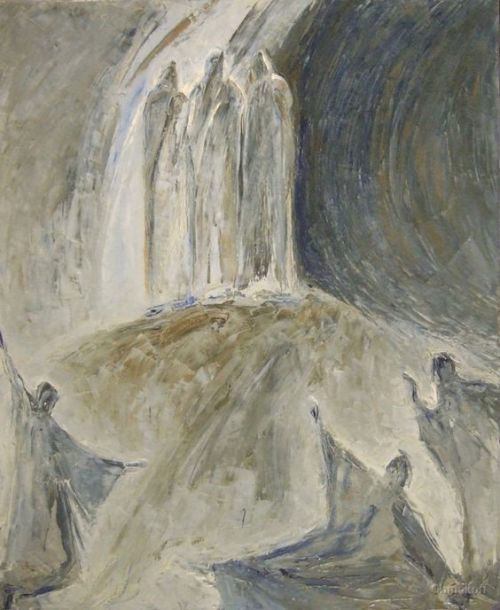
Transfiguration by Macha Chmakoff 

Jesus took Peter, James, and John up the mountain to experience his Transfiguration in a prayer meeting. Extraordinary things happen in prayer meetings. The early church gathered often in prayer meetings, following the example of their Lord Jesus. As the church listened to God and responded (in a rhythm of revelation and response) they saw Peter miraculously delivered from jail; ordinary people delivered from empty lives and demonic influence; and guidance in how to proceed as followers of Christ. 

Prayer is as much or more about listening to God as it is talking to him. It is in listening to God that we are filled with God’s Spirit and empowered to come down from the mountain and engage in God’s mission.

Jesus wanted the disciples to learn and discern something on the mountain. Jesus was changed in front of them. Moses and Elijah showed up and talked with him about his “departure,” that is, his “exodus.”

Moses was the one who listened to God and led the people in a mass exodus from slavery in Egypt to the freedom of the Promised Land.

Elijah was a prophet who listened to God and led the people out of centuries of idol worship and dead religion into the freedom of spiritual and national revival in Israel. 

And Jesus came to lead people in an exodus out of sin, death, and hell so that they can experience a new life of freedom, hope, peace, and joy.

Changed lives are God’s goal for us.  And a changed life will occur when we listen to God’s Son, Jesus, learn from him, and lean into faith in him – all of which takes humility.

Eventually, Jesus and his disciples came down from the mountain. Prayer meetings are great, but there is a time to descend the mountain and engage in God’s mission.

We are to participate with God in seeing changed lives through the work of Jesus.

We must bear witness to the redemptive saving events of Jesus to a world which desperately needs him – his healing work of both body and spirit.

The glory of God is presently here among us. We need to perceive it and be aware of it.  But to do so, we must listen well. 

Erik Weihenmayer is blind, yet on May 25, 2001, he reached the peak of Mount Everest. Suffering from a degenerative eye disease, he lost his sight when he was thirteen years old. But that did not stop him from mountain climbing. On a mountain where 90% of climbers never make it to the top—and 165 have died trying since 1953—Erik succeeded in large measure because he listened well. 

He listened to the little bell tied to the back of the climber in front of him, so he would know what direction to go. He listened to the voice of teammates who would shout back to him, “Death-fall two feet to your right!” so he would know what direction not to go. He listened to the sound of his pick jabbing the ice, so he would know whether the ice was safe to cross. 

When we journey through this life, listening well makes all the difference. So, how might we listen well to Jesus?  Here are some basic principles of active listening:

  1. Stop talking.  It was Mark Twain who said: “If we were supposed to talk more than we listen, we would have two tongues and one ear.” Proverbs 12:15 says, “The way of a fool seems right to him (therefore he has no need to listen) but a wise person listens to advice.”
  2. Prepare yourself to listen to God.  One of the ways I do this is by sitting in a quiet spot, free of distraction, and repeat several times to God, “Speak Lord, for your servant is listening” (1 Samuel 3:10). Then, I am quiet… and listen….  If this practice is way off your radar then I would recommend, at first, being quiet for only a few minutes. Then, after a few weeks, be quiet in longer stretches so that you can go 20-30 minutes or even an hour. We might even consider a silent retreat in which the sole purpose is to listen to what God is saying to us.
  3. Slowly and carefully read God’s Word. Scripture is meant to be digested in small bites and thoroughly savored. Slow down and be quiet enough to hear God speak through the Word. A contemplative and meditative readings of Holy Scripture will always yield spiritual health and vitality.
  4. Pray back to God what you hear him saying to you. This is active listening – a genuine dialogue between us and God. “Come, now, let us reason together,” the Lord has said (Isaiah 1:18). God wants a conversation with us.

God speaks, if we have ears to hear, through so much more than an audible voice.

The Lord’s Supper is a tangible proclamation of the person and work of Jesus Christ. It speaks to us, and, so, we must listen well. The Table proclaims Christ’s identity as God’s Son, the one who came to live a holy life, teaches us the way to live, and how Jesus died a cruel death so that we might be born again and experience new life. 

We Are All One in Jesus Christ by Soichi Watanabe, 2009

The Table proclaims our mission, that as often as we share in communion, we proclaim the Lord’s death until he comes again. That is, we witness to the reality of Christ’s redemption in our own lives. We share our own changed lives with others. We pray for them so that they will experience new life, as well. 

The Table proclaims our spiritual formation in Christ. At the Table, we are lifted and joined with Christ through the Holy Spirit. It is a mysterious joining that defies description, just as the disciples had a mysterious encounter that they could not fully explain. Yet they experienced it, nonetheless.

May we listen well, without distraction, to God’s Son. May we know God’s purpose for our life. And may we encounter Jesus at the Table, and in all of life, so that we experience new life. 

O God, teach us to listen to those nearest to us, our family, our friends, our co-workers. Caring God, teach us to listen to those far from us – the whisper of the hopeless, the plea of the forgotten, and the cry of the anguished. Holy Spirit of God, teach us to listen for your voice — in busyness and in boredom, in certainty and doubt, in noise and in silence. Gracious God, teach us to listen well to the message of your Table. May you change and transform us to be like Jesus. Teach us, Lord, to listen. Amen.

Leviticus 5:1-13 – The Problem of Guilt

“‘If anyone sins because they do not speak up when they hear a public charge to testify regarding something they have seen or learned about, they will be held responsible.

“‘If anyone becomes aware that they are guilty—if they unwittingly touch anything ceremonially unclean (whether the carcass of an unclean animal, wild or domestic, or of any unclean creature that moves along the ground) and they are unaware that they have become unclean, but then they come to realize their guilt;or if they touch human uncleanness (anything that would make them unclean) even though they are unaware of it, but then they learn of it and realize their guilt; or if anyone thoughtlessly takes an oath to do anything, whether good or evil (in any matter one might carelessly swear about) even though they are unaware of it, but then they learn of it and realize their guilt—when anyone becomes aware that they are guilty in any of these matters, they must confess in what way they have sinned. As a penalty for the sin they have committed, they must bring to the Lord a female lamb or goat from the flock as a sin offering; and the priest shall make atonement for them for their sin.

“‘Anyone who cannot afford a lamb is to bring two doves or two young pigeons to the Lord as a penalty for their sin—one for a sin offering and the other for a burnt offering. They are to bring them to the priest, who shall first offer the one for the sin offering. He is to wring its head from its neck, not dividing it completely, and is to splash some of the blood of the sin offering against the side of the altar; the rest of the blood must be drained out at the base of the altar. It is a sin offering. The priest shall then offer the other as a burnt offering in the prescribed way and make atonement for them for the sin they have committed, and they will be forgiven.

“‘If, however, they cannot afford two doves or two young pigeons, they are to bring as an offering for their sin a tenth of an ephah of the finest flour for a sin offering. They must not put olive oil or incense on it, because it is a sin offering. They are to bring it to the priest, who shall take a handful of it as a memorial portion and burn it on the altar on top of the food offerings presented to the Lord. It is a sin offering. In this way the priest will make atonement for them for any of these sins they have committed, and they will be forgiven. The rest of the offering will belong to the priest, as in the case of the grain offering.’” (New International Version)

“Indifference is the sign of sickness, a sickness of the soul more contagious than any other.”

Elie Wiesel

Guilt comes in two forms: overt speech or action which wrongs another person; or the failure to speak or act when it was necessary to do so.

Oftentimes we think of sin as exclusively wrongdoing – an overt act of disobedience or evil. Yet, sin primarily manifests itself through indifference. The sinner is mostly one who doesn’t get involved. He walks on the other side of the road to avoid unwanted entanglements.

What’s more, sins of the tongue are much more common and prolific than sins of the body. Although hurtful words abound in this fallen world, it is also the absence of speaking up and naming falsehood for what it is that is an egregious sin before God.

The Lord will hold responsible those who are silent in the face of observing injustice.

And, if later, someone becomes aware they were complicit with an injustice through a failure to speak up, they are also guilty.

The Old Testament book of Leviticus is all about maintaining the purity and holiness of God’s people. So, the book is filled with detailed prescriptions on how to handle guilt. Going through a specific and laborious process of dealing with guilt, communicated to the people that this is important. It’s a big deal.

We need, however, to ensure we aren’t using the terms guilt and shame interchangeably.

Guilt is a function of our conscience. It lets us know when we have said or done something wrong or hurtful, or failed to provide help. It’s specific to a particular action or lack of action.

Shame, however, is a function of the “inner critic.” It interprets bad words or actions as we ourselves being bad. It focuses not on actions but on our very personhood in the form of judgmentalism leveled at myself.

Whereas guilt says, “I have done something bad,” shame says, “I am bad.” Guilt serves a redemptive purpose through alerting us that we need to deal with a wrong. Shame, however, damages our spirits through telling us we are flawed and unworthy of love and connection with others.

Because guilt and shame are not the same, they need to be dealt with in different ways:

  • Guilt, if not faced and dealt with, becomes gangrene of the soul. Over time it festers and poisons our spirits, leading to significant emotional and sometimes physical problems. Forgiveness is the primary tool in dealing with guilt. It begins with self-forgiveness and then offering an apology to another and asking for forgiveness.
  • Shame is a vampire that lives in the shadows and feeds on secrets. If shame persists, we withdraw from others and experience grinding loneliness. Therefore, the path out of shame is to openly name our shame and tell our stories. This takes power away from shame and gives it to yourself. In other words, the practice of vulnerability erases shame.

For the Christian, Jesus is the once for all sacrificial offering which forever takes away both our guilt and our shame.

Since we have a great High Priest who rules over God’s house, let us go right into the presence of God with sincere hearts fully trusting him. For our guilty consciences have been sprinkled with Christ’s blood to make us clean, and our bodies have been washed with pure water. (Hebrews 10:21-22, NLT)

We must never stop looking to Jesus. He is the leader of our faith, and he is the one who makes our faith complete. He suffered death on a cross. But he accepted the shame of the cross as if it were nothing because of the joy he could see waiting for him. And now he is sitting at the right side of God’s throne. (Hebrews 12:2, ERV)

“See, I lay a stone in Zion,
    a chosen and precious cornerstone,
and the one who trusts in him
    will never be put to shame.” (1 Peter 2:6, NIV)

Guilt and shame are not erased by either ignoring them or by dismissing them as negative emotions. They are handled through the person and work of Jesus Christ. It is grace which grants us amnesty from shortcomings, failures, and sins.

Thanks be to God! Believe this gospel and live in its peace.

Holy and merciful God, in your presence we confess our sinfulness, our shortcomings, and our offenses against you. You alone know how often we have sinned in wandering from your ways, in wasting your gifts, in forgetting your love. Have mercy on us, O Lord, for we are sorry for all we have done to displease you. Forgive our sins, and help us to live in your light and walk in your ways, for the sake of Jesus Christ, our Savior. Amen.

When Will We Engage Our Ministry?

Welcome, friends!

Acts 1:1-11 contains the final words of Christ on this earth. Jesus gave his followers a mandate, not to sit idly and wait for his return, but to embody their identity as witnesses to what they have seen and heard for a world in need of God’s deliverance and love. Click the videos below, and let us embrace our purpose and mission as the people of God….

Pastor Tim Ehrhardt, Acts 1:8

God of hope and courage, you call each of us to bear witness to your abundant love in a frightened world. All around us are signs the world is struggling and the future is unclear. Strengthen our confidence in your unfailing grace and grant us the courage to move onward even when we cannot see the way, knowing that you will guide our every step. Amen.