
Get a Different Perspective (Isaiah 29:1-12)

Woe to you, Ariel, Ariel,
    the city where David settled!
Add year to year
    and let your cycle of festivals go on.
Yet I will besiege Ariel;
    she will mourn and lament,
    she will be to me like an altar hearth.
I will encamp against you on all sides;
    I will encircle you with towers
    and set up my siege works against you.
Brought low, you will speak from the ground;
    your speech will mumble out of the dust.
Your voice will come ghostlike from the earth;
    out of the dust your speech will whisper.

But your many enemies will become like fine dust,
    the ruthless hordes like blown chaff.
Suddenly, in an instant,
    the Lord Almighty will come
with thunder and earthquake and great noise,
    with windstorm and tempest and flames of a devouring fire.
Then the hordes of all the nations that fight against Ariel,
    that attack her and her fortress and besiege her,
will be as it is with a dream,
    with a vision in the night—
as when a hungry person dreams of eating,
    but awakens hungry still;
as when a thirsty person dreams of drinking,
    but awakens faint and thirsty still.
So will it be with the hordes of all the nations
    that fight against Mount Zion.

Be stunned and amazed,
    blind yourselves and be sightless;
be drunk, but not from wine,
    stagger, but not from beer.
The Lord has brought over you a deep sleep:
    He has sealed your eyes (the prophets);
    he has covered your heads (the seers).

For you this whole vision is nothing but words sealed in a scroll. And if you give the scroll to someone who can read, and say, “Read this, please,” they will answer, “I can’t; it is sealed.” Or if you give the scroll to someone who cannot read, and say, “Read this, please,” they will answer, “I don’t know how to read.” (New International Version)

Reading the Bible may sometimes feel like a weird Catch-22. We’re supposed to read, observe, and obey the contents of Holy Scripture; yet there is so much within it that we often just plain don’t understand – and even are not going to understand, at least on this side of heaven.

For many people, this is maddening. It may even cause them to throw up their hands and say that God is some mad scientist who merely tinkers and experiments with people like mice in laboratory.

I understand how some could think that way. The Lord comes along and does a mysterious dance of proclaiming judgment, then pivoting quickly around to assure deliverance. Reading through any prophetic book of the Old Testament is likely to make our heads spin with questions and our hearts to reel. No matter how you slice it, there are a lot of difficult passages in Holy Scripture.

So, I invite you to take a few differing perspectives.

First, if God is a Being who is infinitely higher and greater – the Creator who has made all things – then we are the creatures who are neither privy to all God’s reasonings nor even able to understand such a Being who is other than us.

Second, it seems we rarely even attempt to try and see things from God’s angle. We see our own situations, many of them confusing, and we wonder why the Lord doesn’t just step in and fix all the crud. However, none of us has the full picture, as God does – which is why we are continually invited to pray for wisdom, to see our life, relationships, and circumstances from a divine perspective. (James 1:2-5)

The prophet Isaiah, along with the other prophets, proclaims a double message of judgment and deliverance. Indeed, it appears there is a continual rhythm of identifying guilt and giving grace throughout a large chunk of the Old Testament.

And that is perhaps where we need to pay attention. People have a great predilection for saying and doing things (or failing to say and do things) which bring guilt. Our guilty actions and inactions are not okay; they cannot simply be dismissed as stuff that people do, as if we were just silly folks who don’t know any better.

Maybe we would like to view God as some geriatric grandfather who lets everyone do what they want, but that’s not the God we get in the Bible.

No, our words and actions have real impact and consequences for others. And the Lord is a real force to contend with, for whom we cannot escape nor ignore for long.

In Isaiah’s day, the people were called to account for their abject callousness toward their fellow humanity. God’s commands all have to do with living in harmony with creation. Chaos, disorder, and systemic evil result whenever the creature rebels against the Creator by trying to be a little god of their own making – taking the perspective of using people rather than serving them.

The Lord will have none of it; God will intervene. Hence, the judgment portions of Scripture. Yet, because God is gracious and loving, the judgment doesn’t last forever; mercy takes hold and overwhelms the guilty sinner.

If we could understand everything God does or doesn’t do, then God wouldn’t be God. But the very fact that God is mysterious, and in some ways unknowable, tells us that there is indeed a God.

Our task is not to take over God’s job because the Lord isn’t doing what we want. Our mandate is to reflect the image of God placed within us by loving the Lord and loving our neighbor as ourselves.

Yes, we are all guilty of a great many things. Yet, grace always has the last word, and not judgment. This, then, gives way to a life of gratitude that has learned to sync one’s heart with the heart of God.
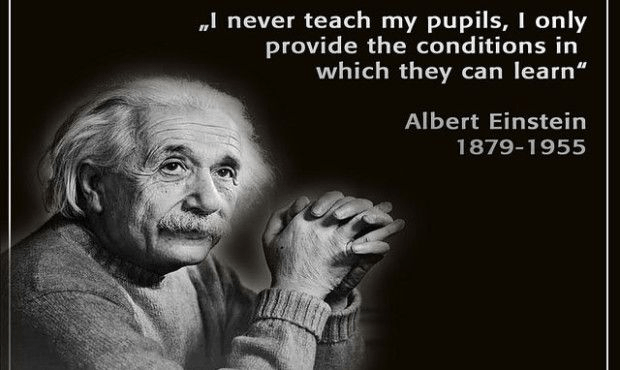
Catch-22’s are certainly maddening… if we are truly in one to begin with. It could be that we just haven’t yet gained a different perspective on our situation, learned to accept it, and made the choice to live in harmony with the world as it is, rather than the world as we think it ought to be.

Most merciful God, we confess that we have sinned against you in thought, word, and deed, by what we have done, and by what we have left undone. We have not loved you with our whole heart; we have not loved our neighbors as ourselves. We are truly sorry and we humbly repent. For the sake of your Son Jesus Christ, have mercy on us and forgive us; that we may delight in your will, and walk in your ways, to the glory of your Name. Amen.

Future Hope (Isaiah 29:17-24)

Soon the forest of Lebanon
will become a field with crops,
    thick as a forest.
The deaf will be able to hear
    whatever is read to them;
the blind will be freed
    from a life of darkness.
The poor and the needy
    will celebrate and shout
because of the Lord,
    the holy God of Israel.

All who are cruel and arrogant
    will be gone forever.
Those who live by crime
    will disappear,
together with everyone
    who tells lies in court
and keeps innocent people
    from getting a fair trial.

The Lord who rescued Abraham
has this to say
    about Jacob’s descendants:
“They will no longer
    be ashamed and disgraced.
When they see how great
    I have made their nation,
they will praise and honor me,
    the holy God of Israel.
Everyone who is confused
    will understand,
and all who have complained
    will obey my teaching.” (Contemporary English Version)

We, who have the first fruits of the Spirit, groan inwardly as we wait eagerly for our adoption to sonship, the redemption of our bodies. For in this hope we were saved. But hope that is seen is no hope at all. Who hopes for what they already have? But if we hope for what we do not yet have, we wait for it patiently.

Romans 8:23-25, NIV

There are better days ahead. And it is this hope which is to help sustain us in present – because the current reality for many people is hard and unforgiving. Malevolent and heartless people exist, and they wreak physical, mental, emotional, and even spiritual havoc on those around them.

When in the throes of difficulty, it is good to be reminded that basic human kindness will once again be exalted and valued. Yet, meanwhile, we must endure the evil of dehumanizing behavior. Until then, we must do our best to connect heaven and earth by rehumanizing every space and place within our sphere on influence. We are to be agents of hope for ourselves and for others.

Every person (and I do mean every person) on planet earth is created in the image and likeness of God. Each individual human being is worthy of basic human kindness and deserving of respect. 

Unfortunately, people do and say terrible things every day. Yet this never means that God’s image has left or has taken a vacation, or that someone deserves a pejorative label which stigmatizes and ostracizes them from the human family. 

For the Christian, the supreme ethic of life is love. We hold to the Great Commandment: Love God and neighbor; all other commands of Holy Scripture hang on these two bedrock commands, upheld by Jesus himself.

Therefore we must all ask ourselves if we are living our lives and loving others in this world as intended by our Creator and Redeemer. Hate speech, unsafe working conditions, political gerrymandering, apathy toward another’s injustice, a lack of empathy, and vilifying particular people groups are just a few examples of dehumanizing behavior.

If ever we move down the path of claiming to know whom God judges or ought to judge, then we have gone the way of extreme hubris and are germinating the seeds of a future holocaust of killing, not a future hope of peace and goodness. 

There is no biblical precedent or place to dehumanize another person or group of people, period. Instead, we must actively build relationships with a broad spectrum of groups and individuals – especially with the ones we least know and understand.

The injustice of dehumanization will not always be with us. Confusion and complaints will give way to clarity, understanding, humility, and obedience. Darkness and deafness, poverty and petulance shall melt away. In its place, love and grace will forever be ensconced upon a new earth, free from crime and shame. Hope will be realized.

Our future hope is a living hope.

We typically use the term “hope” in the wishful thinking sort of way. That’s because we aren’t quite sure if things will shake-out like we want. Biblical hope is not wishful thinking but a confident expectation that knows what is coming. 

Hope is like anticipating the seasons. In the dead of winter when it’s bitter cold with little sunshine, we hopefor Spring. It’s not wishful thinking. We know it’s coming. It might come in early March, maybe in late April. But it’s coming, and you can bet the farm on it. The trees will bud, the grass will turn green, and the temps will warm.

Hope in the Bible is a sure thing. Because of the person and work of Jesus Christ, there is hope, the confident expectation that deliverance from sin, death, and hell will be fully realized.

Hope, inheritance, and salvation are all words that describe nearly the same thing. They all point to Jesus. We are saved from the slavery of sin through the cross and resurrection of Christ. We are delivered into an inheritance which can never perish, spoil, or fade. But an inheritance isn’t activated until death. Someday, when this present life of earthly brokenness is over, we have the hope, the confident expectation, of a permanent inheritance with Jesus forever. (1 Peter 1:3-9)

Outwardly, we suffer in all kinds of earthly grief from others who don’t understand us. Inwardly, we have the silent pain and terrible wrestling of wanting to forgive but desiring revenge; of seeking to be gracious but seething with anger; of looking to express kind words but having hate speech blurt out instead.

But it won’t always be this way. We have a future living hope. In this season of Advent, we are reminded that God shall break into this fallen world with all of its dehumanizing behaviors and hate speech. The hopes and fears of all the years are met in a humble feeding trough, in a little baby.

Hope is as real as anything you’ll ever know this side of heaven. You might not always find what you’re looking for in this life; but in the next life, you can find the life that is truly life. For Jesus Christ is our hope.

God of hope, we seek you. During this holy season of Advent, help us to see you in all whom we encounter. We seek you in the crude manger, a child born to save the world. May your hope be a comfort to all who long for justice; and may that hope overflow in our hearts and grace our lips so that we might reflect your hope for all the world. Amen.