The Irony of Christ’s Followers (Mark 10:32-34, 46-52)

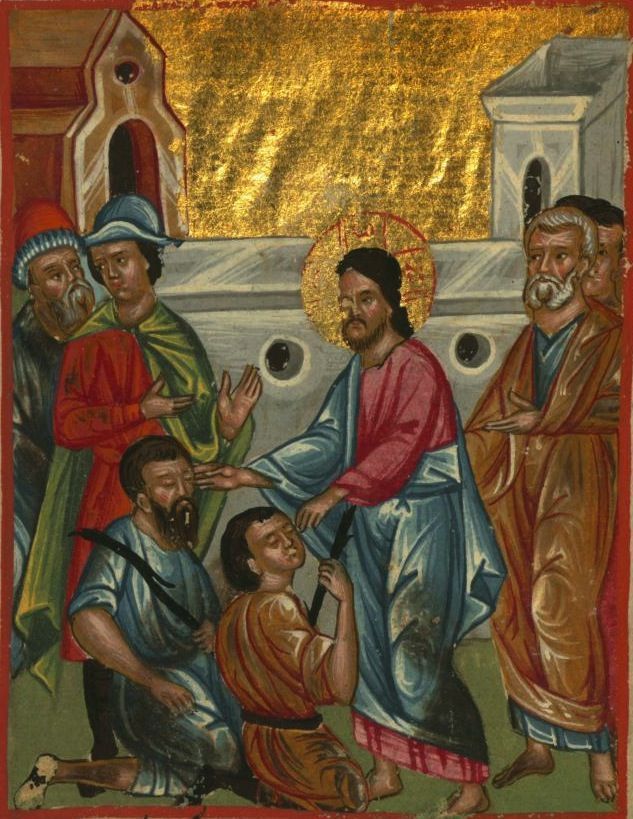
A 10th century depiction of Christ healing a blind man

The disciples were confused as Jesus led them toward Jerusalem, and his other followers were afraid. Once again, Jesus took the twelve disciples aside and told them what was going to happen to him. He said:

We are now on our way to Jerusalem where the Son of Man will be handed over to the chief priests and the teachers of the Law of Moses. They will sentence him to death and hand him over to foreigners, who will make fun of him and spit on him. They will beat him and kill him. But three days later he will rise to life….

Jesus and his disciples went to Jericho. And as they were leaving, they were followed by a large crowd. A blind beggar by the name of Bartimaeus son of Timaeus was sitting beside the road. When he heard that it was Jesus from Nazareth, he shouted, “Jesus, Son of David, have pity on me!” Many people told the man to stop, but he shouted even louder, “Son of David, have pity on me!”

Jesus stopped and said, “Call him over!”

They called out to the blind man and said, “Don’t be afraid! Come on! He is calling for you.” The man threw off his coat as he jumped up and ran to Jesus.

Jesus asked, “What do you want me to do for you?”

The blind man answered, “Master, I want to see!”

Jesus told him, “You may go. Your eyes are healed because of your faith.”

At once the man could see, and he went down the road with Jesus. (Contemporary English Version)

“Irony” and “ironic” are terms describing when an outcome of an event is contrary or different from what would be expected.

Here are a few examples of irony: The firehouse burnt down. The police officer got arrested. When I was a kid, my family physician’s name was Dr. Fail (really!). There is an overarching ironic lesson to our Gospel story today:

The people following Jesus with 20/20 vision were spiritually blind.

Their great need is the same as blind Bartimaeus: To have their eyes opened to Jesus and to what God was doing around them. Bartimaeus was marvelously and miraculously given sight by Jesus – the others, however, remained unchanged and in the dark. 

Irony #1: Many followed Jesus, but only a few were his followers.

All kinds of people physically followed Jesus around for various reasons while he was here on this earth. Some wanted to bask in the latest celebrity buzz that Jesus generated. Others wanted to see the cool stuff Jesus did, like healing people. Some were plain curious. And a few were interested in being like Jesus by showing selfless compassion.

Jesus continually sought to press the crowd following him into spiritual seekers who would learn to follow his teaching.

Many people conform to the group and go with the flow. That’s great if the crowd is good, and not so good if they’re going in a bad direction.

In the Old Testament, a few unruly complainers got the Israelites stirred up. The result was making a golden calf and turning away from God. Sometimes it is right and necessary to go against the crowd.

Irony #2: Out of all Christ’s followers, it is a blind man that sees Jesus for who he is: The Son of David.

Bartimaeus discerned it was Messiah who was walking by him. So, he went against the crowd and shouted to Jesus. Blind Bartimaeus didn’t care how he looked to others; it didn’t matter to him that he stuck out like a sore thumb to all the spiritually blind people.

Jesus often avoided crowds. Most of his earthly life occurred away from the centers of power and influence. Jesus swam upstream of the prevailing notions of righteousness. Christ did not cow-tow to the crowd. Instead, he paid attention to the needy and forgotten.
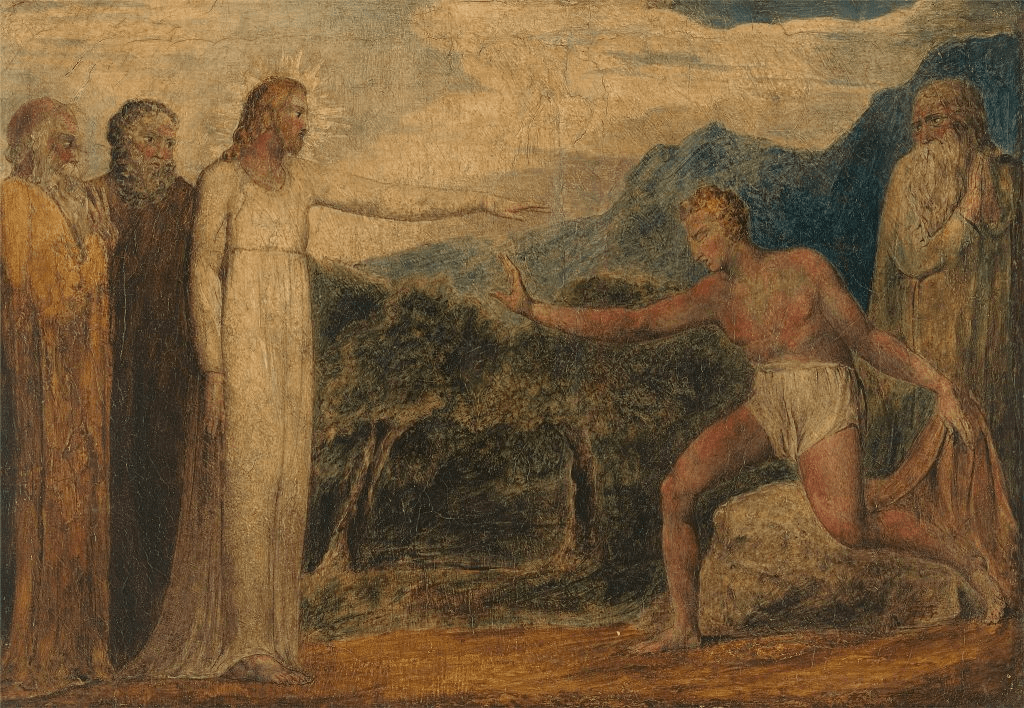
Christ Giving Sight to Bartimaeus, by William Blake (1757-1827)

And while in a large group of people, Jesus did not “work the crowd” to get ahead and further his agenda. He did not cozy-up to the rich and powerful. And Christ deliberately avoided celebrity status. Jesus showed extraordinary love to an overlooked person. He used his immense power for one powerless person.

Irony #3: The ones following Jesus were the ones trying to keep a blind man from Jesus.

One irony of the church is that Christ’s own followers can be the biggest obstacle to others following him.

I can just imagine a group of gossipy church folk shushing Bartimaeus: “Don’t bother Jesus, he is such a busy man! He has important work to do!” I can also picture them standing next to blind Bartimaeus saying, “Just stop, man, you’re embarrassing yourself.” 

But Bartimaeus would not stop. He shouted all the louder. That’s because true and genuine faith is a needy person crying out in desperation for Jesus to help.

Jesus asked a beautiful question: “What do you want me to do for you?”

“I want to see,” Bartimaeus responded. So, Jesus had compassion on him, and gave him his sight. Here we have two men, Jesus and Bartimaeus, ignoring all the people around them, and having a divine encounter.

This encounter raises my curiosity as to why it is so hard for us to simply say what we want.

It could be that we don’t want to buck the crowd, or to look different. Maybe we don’t want to admit our need in front of others. So, we simply stick to superficial conversations and insist that everything is okay, when it isn’t.

Jesus said, concerning the crowd, “Although they see, they don’t really see.” (Matthew 13:13)

If we are concerned about how we are seen by others, we will not be seen by God; we will miss Jesus when he walks by, right in front of us.

Conclusion

How might we raise our ability to see Jesus and truly follow him as he desires us to?

Listen to Jesus

Jesus was headed to Jerusalem and had a lot on his mind and heart with anticipating his passion and death. Christ became attentive to Bartimaeus, out of all the people around him, because he was listening.

If we want to see Jesus and follow him, we must be listeners,  and be attentive to compassion, like Jesus, to the needy and lowly among us. 

I recently read a story from a Christian who lived during Nazi Germany. He said:

“I considered myself a Christian. We heard stories of what was happening to the Jews, but we tried to distance ourselves from it, because what could anyone do to stop it? A railroad track ran behind our small church, and each Sunday morning we could hear the whistle in the distance and then the wheels coming over the tracks.

“We became disturbed when we heard the cries coming from the train as it passed by. We realized it was carrying Jews like cattle in the cars! Week after week the whistle would blow. We dreaded to hear those wheels because we knew we would hear the cries of the Jews in route to a death camp. Their screams tormented us.

“So, when we heard the whistle blow, we began singing hymns. By the time the train came past our church, we were singing at the top of our voices. If we heard the screams, we sang more loudly, and soon we heard them no more.

“Years have passed, and no one talks about it anymore. But I still hear that train whistle in my sleep. God forgive me. Forgive all of us who called ourselves Christians yet did nothing to intervene.” 

Respond to Jesus

Once Jesus listened, he responded by asking a question. Christ took the time to heal Bartimaeus.

Jesus could have simply healed him without even stopping. He could have started a healing factory where everyone with a need just moved through a line and got healed. But Jesus was doing more than giving sight; he was giving a blessing – the blessing of time and relationship.

The gospel is personal, which is why we ought to resist being non-relational in ministry to others.

Christian ministry is about blessing other people with the gift of relationship. It begins with recognizing self as the one who needs Jesus; and it starts with having our own eyes opened to see our own need, and then the great need of people around us.

God of all compassion, I confess that it is natural for me to do things my way. I recognize that I am limited, but that you know all things. I yield my spiritual eyesight to you so that my spiritual vision will be clear. Jesus Christ came to give sight to the blind and to open our eyes. I commit my ways to you so that I can see your ways and not just my own. Amen.

All Who Come and Touch are Made Well (Matthew 14:34-36)

They crossed the lake and came to land at Gennesaret, where the people recognized Jesus. So they sent for the sick people in all the surrounding country and brought them to Jesus. They begged him to let the sick at least touch the edge of his cloak; and all who touched it were made well. (Good News Translation)

Jesus showed up. That’s all it took. The very presence of Christ emboldened people to act. And these were not just the religious folk. They were on the other side of the lake – which for us means the other side of the tracks. In other words, the people of Gennesaret were poor and needy with lots of sick persons, as well as spiritually pagan.

This wasn’t a place that pious people visited. It was far from being a destination vacation spot. But it was just the sort of place that Jesus would visit. It was for people like those at Gennesaret that Christ came.

Jesus Recognized

In the previous story of the disciples on the lake during a storm, Jesus walked out on the water to them. When they saw him, they didn’t recognize him. But here, in today’s story, a bunch of people who weren’t following Jesus around, knew who he was straightaway.

One of the great ironies of the New Testament Gospels is that Jesus often got a cool reception of unbelief amongst the religious insiders in his own homeland, while tending to receive faith from spiritual outsiders in heathen places. Christ initiated a seismic shift and a great transfer of replacing the insiders with the outsiders. This sort of activity was so spiritually scandalous and cataclysmic that it eventually got Jesus killed.

“Many who are first will be last, and many who are last will be first.”

Jesus (Matthew 19:30, NIV)

People Respond

The people of Gennesaret demonstrated their faith by acting on the sight of Jesus amongst them. They sent others out into the surrounding countryside to let them know that Jesus was here. That was all it took for the rural folk to not only come but to bring all their sick friends and family with them. Belief abounded, that this man, Jesus, could do the impossible work of curing and healing.

And this is precisely the sort of mentality and heart attitude Jesus was looking for. In telling his parable of the soils, Christ wanted the response of the fourth soil: To not only hear and acknowledge, but to also take the words and ways of God into one’s life in such a way that growth and development happens, fruit matures, and a harvest of righteousness, justice, and peace occurs.

“The seed falling on good soil refers to someone who hears the word and understands it. This is the one who produces a crop, yielding a hundred, sixty or thirty times what was sown.” (Matthew 13:23, NIV)

Jesus Makes All the People Well

The most “touching” thing to me in this short account of Christ encountering the people of Gennesaret is that every single person who came to Jesus was made well, without exception.

Such was the faith of the people, that they neither needed nor expected Jesus to come and lay his hands on them or to even say anything. They simply believed that if they could but touch the fringe of his cloak, healing and wellness would happen.

And the people weren’t just seeking their own betterment, but were concerned for everyone they knew who needed help. Whether there was superstition mingled with the faith is really of no concern; just a smidgeon of faith in Jesus is potent and powerful enough to effect a complete makeover of a person.

Moreover, there wasn’t simply individual and isolated instances of wholeness and healing; there was a mass level miracle, a giant group touch of healing and health.

Jesus welcomed them all, and allowed all the people to touch. Most of us don’t want a bunch of strangers touching us or our clothes, at all. That’s too weird and creepy, and likely makes us uncomfortable. What’s more, no respectable person would ever think of touching a rabbi – especially women. That sort of thing was religiously and culturally unacceptable.

Another irony we see is that the crossing of purity boundaries and laws which made people ritually impure is turned on it’s head. Instead, this kind of activity of people touching Christ made the impure folks pure. As something of a rule-breaker at heart, I find this reality refreshing. We need a lot more of it.

Jesus and People Today

Today’s Gospel lesson might seem a nice story that happened a very long time ago. We may also believe it doesn’t have much to do with me today. After all, Jesus isn’t bodily roaming the countryside today. We don’t see mass healings of people. In some places, we rarely see any healing at all from a direct result of faith. So, why even talk about this? Why bring it up? Do you just want to get my hopes up, only to dash them? Isn’t all this stuff pie-in-the-sky thinking, anyway?

Those are legitimate questions and concerns. And we ought not to disparage or make light of anyone asking them. All of us have likely encountered reaching out in faith without any healing or change of circumstance. Rather than going to one of two extremes, by either berating ourselves for a supposed failure of faith, or of discounting God altogether as a figment of the unenlightened mind, we can take a different approach.

The very nature of faith is contact, connection, and care. Faith is up close, relational, and involves touch. Faith is free, yet it is not cheap. Faith always involves a cost: vulnerability and intimacy. If we ever look for faith from afar and have no intention of getting up close and personal – so close as to touch the hem of a garment – then that which we seek will forever be elusive to us.

I’m not talking about a process or a plan that you can predictably access to get the result you want. Rather, I’m referring to real human contact and relationship that can only happen with being open about needs and wants, and is willing to expose one’s inner person to the outside world. I’m talking about putting away the false front we put up for others to see, and let the true self come out. Yes, it’s risky. Yes, it most likely will hurt. And yes, it will lead to healing.

When a person goes to a doctor for a pain they cannot get rid of, and get a diagnosis of needing surgery to deal with the hurt, we willingly allow the surgeon to create more pain for us by cutting into our body. We allow it because we understand that more pain leads to less pain.

And the same is true for our soul. Our broken hearts, our damaged emotions, our racing thoughts, and our hurting spirits need to experience the invisible scalpel of God. Divine intervention is often unpleasant – at least at first – but then later results in wellness for all who invite it’s touch.

May you come with vulnerable faith, confident hope, and active love, to the One who can help you realize your most intimate longings. Amen.

Matthew 20:29-34 – The Irony of the Gospel

As Jesus and his disciples were leaving Jericho, a large crowd followed him. Two blind men were sitting by the roadside, and when they heard that Jesus was going by, they shouted, “Lord, Son of David, have mercy on us!”

The crowd rebuked them and told them to be quiet, but they shouted all the louder, “Lord, Son of David, have mercy on us!”

Jesus stopped and called them. “What do you want me to do for you?” he asked.

“Lord,” they answered, “we want our sight.”

Jesus had compassion on them and touched their eyes. Immediately they received their sight and followed him. (New International Version)

“Irony” is a term used to describe when an outcome of an event is contrary or different from what is expected.  Here are a few examples: The firehouse burnt down. The police officer got arrested. When I was a little kid, my family doctor’s name was (and I’m not kidding) Dr. Fail. And he smoked like a chimney in his doctor office.

There is an ironic lesson in today’s Gospel lesson: A crowd of people with 20/20 vision are spiritually blind. 

The great need of the crowd is the same need of the two physically blind men: They both needed their eyes opened to Jesus and to what God was doing around them.

Just so you know, Matthew tends not to use the term “crowd” in a favorable way. He views the crowd as a mass of people who are mostly lost, but the crowd themselves tend to think they are just fine. 

Jesus was on his way to Jerusalem, anticipating his passion and death. And we know that it is the crowd that will be the ones who eventually cry to have him crucified. 

Two blind men are marvelously and miraculously healed by Jesus. Ironically, the crowd remained unchanged and in the dark.

First Irony: A large crowd follows Jesus to Jerusalem, but only a few (2, in fact) are actually his followers. 

Throughout Christ’s earthly ministry, all kinds of people followed Jesus for all kinds of reasons. Some wanted to bask in the latest celebrity buzz that Jesus generated. Others wanted to see all the cool stuff he does, like healing people. Some were just plain curious. And a few were interested in being like Jesus by showing selfless compassion. 

Jesus wants genuine, authentic, real disciples who will follow his teaching, and not follow the crowd.

Many people desire to conform, to not stand out, and go with the flow. That’s great if the crowd is godly. Yet many, if not most, crowds of people are not godly. In the Old Testament, a few unruly complainers got the Israelites all stirred up and the result was the making of a golden calf with a complete turning away from the God of Israel. (Exodus 32:1-35)

Second Irony: Out of the massive crowd, it is two blind men that actually see Jesus for who he is, the Son of David.

Spiritual blindness afflicted the crowd. The blind men, however, discern it is Messiah Jesus coming near them. That’s why they go against the crowd by shouting out to him. They don’t care how they look. It doesn’t matter to them that they stick out like a sore thumb. 

Jesus often avoided big crowds. Most of his earthly life occurred away from the centers of power and influence.  Christ constantly swam upstream of the prevailing notions of righteousness. Jesus didn’t cow-tow to the crowd, but paid attention to the powerless and those without influence. 

The Lord Jesus didn’t “work the crowd” as the means of establishing God’s kingdom. He didn’t cozy-up to the rich and powerful. He wanted to avoid celebrity status. Jesus showed extraordinary love to two lowly overlooked people. He used his immense power for the powerless.

Third Irony 3: The ones following Jesus were the ones trying to keep the two needy blind men from Jesus.

One of the most ironic things about church is that sometimes Christ’s own followers are the greatest obstacle to others following Jesus. 

I can just picture a group of ladies shushing the two blind men: “Don’t bother Jesus, he is such a busy man. He has important work to do.” And I can imagine some men standing next to the two blind men and nudging them for shouting at Jesus saying, “Just stop, man, you’re embarrassing yourselves.” 

But the two men won’t stop. They shout all the louder. True and genuine faith is two blind men crying out in desperation for Jesus to help them. 

And Jesus asks a beautiful question: “What do you want me to do for you?” They answered, “We want our sight.” So, Jesus showed compassion and gave them their sight. It’s all rather simple and straightforward. Not only do the two men not listen to the crowd – Jesus doesn’t either. Christ mercifully heals despite what the crowd is saying.

I wonder: Why is it so hard for us to simply ask for what we want?… 

Maybe because we don’t want to buck the crowd, don’t want to look different, or don’t want to admit our need in front of others, we just stick to superficial conversations and insist everything is okey-dokey when it isn’t. 

A crowd of people may not be able to see others because they don’t even see themselves and their place in this world. Perhaps there is a plank in our own eye hindering us from seeing a speck in another’s eye. (Matthew 7:3-5)

It is the pure in heart who will see God (Matthew 5:8). As for the crowd, though seeing, they do not see (Matthew 13:13). If we are concerned about how we will be seen by others, it is likely we will not be seen by God. And we will miss Jesus when he walks by, right in front of us.

Jesus was attentive to the two blind men out of all the people in the crowd because he was listening for them.

Once Jesus listened, he took the time to heal the two men. Jesus could have simply healed them without even stopping. He could have started a healing factory where everyone with a need just got healed, as if they were on some divine conveyor belt to be fixed.

However, Jesus was doing more than giving sight; he was giving the blessing of time and personal response. The gospel is never impersonal, which is why we ought to resist being non-relational in ministry to others. It isn’t about simply meeting a need; it is about blessing other people. And that takes the time of relating to a person.

Jesus, furthermore, touched the men’s eyes. He didn’t have to do that. Christ could have healed without touching. In fact, it may have been gross. Many people had eye diseases with runny pussy eyes in the ancient world. 

Listening, taking time to be personal, and physically touching is how Jesus blessed people. So, we have the dual privilege and opportunity of receiving blessing from Jesus and giving that same blessing to others.

May the God of hope fill you with joy as you seek to bless others in the name of Jesus. Amen.

Mark 10:32-34, 46-52 – The Irony of Following Jesus

Jesus healing blind Bartimaeus by Johann Heinrich Stöver, 1861. St John’s Church, Hesse, Germany

They were on their way up to Jerusalem, with Jesus leading the way, and the disciples were astonished, while those who followed were afraid. Again, he took the Twelve aside and told them what was going to happen to him. “We are going up to Jerusalem,” he said, “and the Son of Man will be delivered over to the chief priests and the teachers of the law. They will condemn him to death and will hand him over to the Gentiles, who will mock him and spit on him, flog him and kill him. Three days later he will rise….”

Then they came to Jericho. As Jesus and his disciples, together with a large crowd, were leaving the city, a blind man, Bartimaeus (which means “son of Timaeus”), was sitting by the roadside begging. When he heard that it was Jesus of Nazareth, he began to shout, “Jesus, Son of David, have mercy on me!”

Many rebuked him and told him to be quiet, but he shouted even more, “Son of David, have mercy on me!”

Jesus stopped and said, “Call him.”

So, they called to the blind man, “Cheer up! On your feet! He’s calling you.” Throwing his cloak aside, he jumped to his feet and came to Jesus.

“What do you want me to do for you?” Jesus asked him.

The blind man said, “Rabbi, I want to see.”

“Go,” said Jesus, “your faith has healed you.” Immediately he received his sight and followed Jesus along the road. (NIV)

“Irony” and “ironic” are terms describing when an outcome of an event is contrary or different from what would be expected. Here are a few examples of irony: The firehouse burnt down. The police officer got arrested. When I was a kid, my family physician’s name was Dr. Fail (really!).

There is an overarching ironic lesson to our Gospel story today. The people following Jesus with 20/20 vision are spiritually blind. Their great need is the same as blind Bartimaeus: to have their eyes opened to Jesus and to what God was doing around them. Bartimaeus was marvelously and miraculously given sight by Jesus – the others, however, remained unchanged and in the dark. 

Irony #1: Many followed Jesus, but only a few were his followers.

All kinds of people physically followed Jesus around for all kinds of reasons while he was here on this earth.  Some wanted to bask in the latest celebrity buzz that Jesus generated. Others wanted to see all the cool stuff Jesus did, like healing people. Some were plain curious. And a few were interested in being like Jesus by showing selfless compassion. Jesus continually sought to press the crowd following him into authentic disciples who would follow his teaching.

Many people desire to conform and go with the flow. That’s great if the crowd is good, and not so good if the group is going in a bad direction. In the Old Testament, a few unruly complainers got the Israelites all stirred up with the result of making a golden calf and turning away from God. However, sometimes it is right and necessary to go against the crowd, which leads us to the next irony….

Irony #2: Out of all Christ’s followers, it is a blind man that sees Jesus for who he is, the Son of David.

Spiritual blindness afflicted many people, yet Bartimaeus discerned it was Messiah who was walking by him. So, he went against the crowd and shouted to Jesus. Blind Bartimaeus didn’t care how he looked to others, and it didn’t matter to him that he stuck out like a sore thumb. 

Sometimes we might forget that Jesus often avoided crowds, and that most of his life occurred away from the centers of power and influence. Jesus swam upstream of the prevailing notions of righteousness. Christ did not cow-tow to the crowd, but instead, paid attention to those in need and forgotten by others. Jesus did not “work the crowd” to get ahead and further his agenda. He did not cozy-up to the rich and powerful. And he deliberately avoided celebrity status. Jesus showed extraordinary love to an overlooked person. He used his immense power for one powerless person.

Irony #3: The ones following Jesus were the ones trying to keep a blind man from Jesus.

It seems to me one of the ironies about the church is that Christ’s own followers can be the greatest obstacle to others following him. I can imagine a group of gossipy church folk shushing Bartimaeus: “Don’t bother Jesus, he is such a busy man! He has important work to do!” I can also picture them standing next to blind Bartimaeus saying, “Just stop, man, you’re embarrassing yourself.” 

But Bartimaeus would not stop. He shouted all the louder. True and genuine faith is a needy person crying out in desperation for Jesus to help. Jesus asked a beautiful question: “What do you want me to do for you?”  “I want to see,” Bartimaeus responded. So, Jesus had compassion on him and gave him his sight. Here we have two men, Jesus and Bartimaeus, ignoring all the people around them, and having a divine encounter.

This all makes me wonder why it is so hard for us to simply say what we want. It could be that we don’t want to buck the crowd, or to look different. Maybe we don’t want to admit our need in front of others. So, we just stick to superficial conversations and insist that everything is okay, when it isn’t.

Jesus said, concerning the crowd, “Although they see, they don’t really see.” (Matthew 13:13) If we are concerned about how we will be seen by others, we will likely not be seen by God, and will miss Jesus when he walks right in front of us.

Conclusion

How might we raise our ability to see Jesus and truly follow him as he desires us to?

Listen to Jesus. Jesus was headed to Jerusalem and had a lot on his mind and heart with anticipating his passion and death. What made Christ attentive to Bartimaeus out of all the people around him was that he was listening. If we want to see Jesus and follow him, we must be listeners and attentive to compassion, like Jesus, to the needy and lowly among us. 

I recently read a story from a Christian who lived during Nazi Germany. He said, “I considered myself a Christian. We heard stories of what was happening to the Jews, but we tried to distance ourselves from it, because what could anyone do to stop it? A railroad track ran behind our small church, and each Sunday morning we could hear the whistle in the distance and then the wheels coming over the tracks. We became disturbed when we heard the cries coming from the train as it passed by. We realized it was carrying Jews like cattle in the cars! Week after week the whistle would blow. We dreaded to hear those wheels because we knew we would hear the cries of the Jews in route to a death camp. Their screams tormented us. So, when we heard the whistle blow, we began singing hymns. By the time the train came past our church, we were singing at the top of our voices. If we heard the screams, we sang more loudly, and soon we heard them no more. Years have passed, and no one talks about it anymore. But I still hear that train whistle in my sleep. God forgive me. Forgive all of us who called ourselves Christians yet did nothing to intervene.” 

Respond to Jesus. Once Jesus listened, he responded by asking a question. Christ took the time to heal Bartimaeus. Jesus could have simply healed him without even stopping. He could have even started a healing factory where everyone with a need just moved through a line and got healed. Jesus was doing more than giving sight; he was giving a blessing – the blessing of time and relationship.

The gospel is personal, which is why we ought to resist being non-relational in ministry to others. It’s about more than meeting a physical need. It is about blessing other people with the gift of relationship. It begins with recognizing self as the one who needs Jesus. It starts with having our own eyes opened to see our own need and then the great need of people around us.

God of all compassion, I confess that it is natural for me to do things my way. I recognize that I am limited, but that you know all things. I yield my spiritual eyesight to you so that my spiritual vision will be clear. Jesus Christ came to give sight to the blind and to open our eyes. I commit my ways to you so that I can see your ways and not my own. Amen.