Integrity In All Things (Proverbs 11:3-13)

The Narrow Road, by Debbie Clark

Integrity guides the virtuous,
    but dishonesty ruins the treacherous.
Riches don’t help in the day of wrath,
    but righteousness rescues from death.
The righteousness of the innocent makes their path straight,
    but the wicked fall in their wickedness.
Those who do right are saved by their righteousness,
    but the untrustworthy are caught by their own desires.
When the wicked die, their hope perishes.
    Yes, any hope based on money perishes.
The righteous are saved from distress,
    and the wicked take their place.
The godless destroy their neighbors by their words,
    but the righteous are saved by their knowledge.
When the righteous succeed, a city rejoices;
    when the wicked perish, there are shouts of joy.
A city is honored by the blessing of the virtuous;
    it is destroyed by the words of the wicked.
Whoever despises their neighbor lacks sense;
    a sensible person keeps quiet.
A slanderer walks around revealing secrets,
    but a trustworthy person keeps a confidence. (Common English Bible)

Integrity appears to be in short supply these days. No matter whether it’s a church, a corporation, an institution, organization, or governmental administration, it only takes one person in authority who is without integrity to ruin the whole enterprise.

This is why it is so important to never normalize bad behavior and bad speech. It will do no good to simply say, “Well, that’s just the way he is.” Everyone, no matter who they are, must be held accountable for their words and actions. And if we choose to let the unvirtuous person continue in their lack of integrity, then we ourselves become complicit in their unjust activity.

What the unrighteous person fails to realize, is that watching out for number one and taking advantage of others will eventually come back to bite them. The unscrupulous rich person will lose their wealth. The unjust person will come face to face with what their injustice has done. The slanderous person shall be unmasked and seen by all for what they truly are.

The Teacher of Proverbs informs us that evildoers will suffer in their wickedness; whereas the righteous shall be rewarded. Everyone eventually receives what they deserve – whether it’s the righteous or the wicked.

This sort of karmic sense of justice happens both in this life and the life to come. Those who do and say whatever they want, without any integrity, undergo a double-suffering: They’re tormented now in the present, and likely into the future; that is, unless they undergo some Scrooge-like transformation.

The suffering of the wicked is caused by their own stupid foolish choices without any direct intervention by God. God’s law, much like the natural law of gravity, has consequences if you choose to disrespect it. In that sense, the wicked also suffer divine condemnation.

The Lord favors good people,
    but he condemns schemers. (Proverbs 12:2, CEB)

Even though the wicked prosper, by no means is it permanent. And although the righteous are deeply disturbed and troubled by the constant lies and evil machinations of wicked persons, they shall realize a world that is just, right, and good. Injustice and unrighteousness are temporary.

The evil person will surely not go unpunished,
    but the children of the righteous will escape. (Proverbs 11:21, CEB)

It may drive us batty to see that evil is having its way, and that the wicked are doing quite nicely for themselves, but the Teacher seeks to comfort the righteous with the reality that it will not always be this way.

Stolen bread is sweet,
    but afterward the mouth is full of gravel. (Proverbs 20:17, CEB)

We know we’re living in an upside-down messed-up world because the righteous too often suffer and the wicked too often prosper. But it won’t last.

It’s important we remain honest and above board – no matter the circumstances. Whether its in business dealings, leadership, family relations, community involvement, or political activity, its imperative to be a person of integrity without any hint of duplicity.

Dishonesty may get the wicked person where they want to go in the short term, but it has a devastating price to pay. Deals with the devil always do.

Better a little with righteousness
    than great profits without justice. (Proverbs 16:8, CEB)

The Lord is a just God. That means God does more than show justice in all things; justice is a part of God’s very character and makeup. God cannot be unjust because God is Justice with a capital “J.”

Its way above our pay-grade to seek retribution and revenge on another. Exacting judgment belongs to God, and not you nor me.

Don’t say, “I’ll repay the evildoer!”
    Wait for the Lord, and he will save you. (Proverbs 20:22, CEB)

In the past several months, I have largely abandoned social media and electronic conversations with others. There is too much of the godless (cloaked in godly language) destroying their neighbor with their angry words and ignorant misinformation. I don’t want to get sucked into that vortex of ridiculousness. I’ll let the Lord deal with them. I have bigger fish to fry than to get involved in unhelpful and often harmful communication.

I rather choose to focus my time, effort, and words on reminding myself and others of the need for integrity in all things; always remaining prudent; and practicing self-awareness. When Christ returns, I’d like him to find me patiently waiting in quiet trust – instead of spewing a bunch of nasty vitriol that is consistent with Satan, not God.

For me, Proverbs isn’t simply a nice book of the Bible to read. Rather, it is vital knowledge to internalize and learn from. Without the wisdom of Proverbs, I’m undone and adrift. I need these short pity statements of experiential truth to help me understand how to talk and act in this fallen world.

This is why its important to read Proverbs slowly, carefully, prayerfully; to meditate upon these wise statements; and to reflect on putting them into practice. Integrity in everything – both speech and action – will serve us well, now and forever.

Wise God, may divine wisdom shape my thoughts, decisions, and actions each day as I seek to live by the Spirit. Lead me into all truth as I submit wise teaching; and to You as my Counselor and Guide; through Christ my Lord. Amen.


I Concede (Job 42:1-6, 10-17)

By Bible Art

Then Job answered the Lord:

“I know that you can do all things
    and that no purpose of yours can be thwarted.
‘Who is this that hides counsel without knowledge?’
Therefore I have uttered what I did not understand,
    things too wonderful for me that I did not know.
‘Hear, and I will speak;
    I will question you, and you declare to me.’
I had heard of you by the hearing of the ear,
    but now my eye sees you;
therefore I despise myself
    and repent in dust and ashes.”

…And the Lord restored the fortunes of Job when he had prayed for his friends, and the Lord gave Job twice as much as he had before. 

Then all his brothers and sisters came to him, and all who had known him before, and they ate bread with him in his house; they showed him sympathy and comforted him for all the evil that the Lord had brought upon him; and each of them gave him a piece of money and a gold ring. 

The Lord blessed the latter days of Job more than his beginning, and he had fourteen thousand sheep, six thousand camels, a thousand yoke of oxen, and a thousand donkeys. He also had seven sons and three daughters. He named the first Jemimah, the second Keziah, and the third Keren-happuch. In all the land there were no women so beautiful as Job’s daughters, and their father gave them an inheritance along with their brothers. 

After this Job lived one hundred and forty years and saw his children and his children’s children, four generations. And Job died, old and full of days. (New Revised Standard Version)

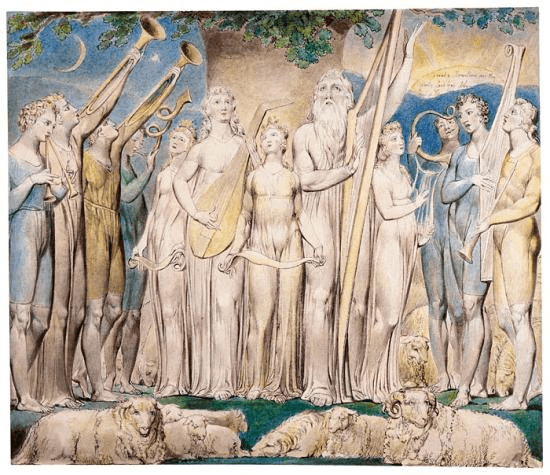
Job is restored, by William Blake (1757-1827)

Job was in awful suffering. He contended with God about it. Job’s friends contended with Job. In the end, God never gave a humanly suitable answer to the problem of suffering. Namely, because we cannot understand the answer, even if it is provided.

Indeed, the gap between God and humanity is quite pronounced. God is the Creator. We are creatures. Yet, God did vindicate Job.

That’s right God affirmed Job – and not Job’s companions. Even though Job did what many a believer in God today believes is wrong, perhaps even sacrilegious or sinful.

Job argued, confronted, grappled with, and even opposed God for the terrible troubles he faced in losing his family, his wealth, and his health. He fully engaged God.

Job’s friends, however, did no such thing. Instead, they argued, confronted, grappled with, and even opposed their friend Job. They fully avoided God.

In the end, Job conceded that he himself knows nothing. Yet, there is still the hint of complaint within him. This is good. Job did not stop engaging God. He remained faithful and devoted.

Let us never believe that faithfulness and devotion to God involves putting up a false front and nice polite piety. Prayer, in truth, is a hard wrestling with God, a struggling and working through all the difficulties of this unfair life.

God is not the least offended by our full, real, and raw engagement of him. But God is offended by avoiding such engagement altogether.

All of us, in reality, speak mostly in ignorance. We talk about things we don’t really understand. The only thing we can be 100% truthful about, however, is ourselves – about how we are really doing, feeling, experiencing, believing, struggling with, etc.

I myself am the true expert on me – and you, the expert on you. And this truth I can bring to God anytime, anywhere. The Book of Job affirms to me that this is the sort of devotion and sacrifice which the Lord is pleased with.

Job gained some knowledge and understanding through personally encountering God. The Lord God almighty, Creator of heaven and earth, actually spoke to Job in a direct revelation of the Divine presence.

This is an affirmation of Job’s integrity. But the godless, disintegrated, and fragmented person cannot see God or expect a personal audience with God.

Through all that Job had been through, he held to his integrity, and held onto God, both at the same time. In the end, he still did not understand why he had to go through such horrible suffering.

English translations of the Hebrew text don’t do it justice. There is always something lost in translation of any language to another. And it seems what is lost here is that Job was perhaps still protesting at the end. Yet, it comes across in English as Job despising and abhorring himself, as if he had done something very wrong.

“I despise myself,” misses the mark. Without getting into some deep grammatical Hebrew waters, I wonder if the phrase might better be rendered, “I protest.” What is meant to be conveyed is that Job still acknowledges what he originally held onto. Namely, that he has done nothing wrong, did not deserve what he went through, yet has never rejected God, nor lost faith in God.

Job did not need to repent of some secret sin, as his friends supposed. Job repenting does not mean because of sin; Job’s repentance was a change of position from mourner and complainer, to accepting the situation as it is, without answers.

So, this brings us back to the beginning of the book. God is God. There are celestial forces and operations in play we know nothing about. Humans are not God. Humans are never going to get most of what is happening in this world. And humans will inevitably experience hard and bad things – and not know why.

No answers given. No change of situation (yet). But Job changed. He changed his mind about how to live with what he was experiencing. He relinquished his complaint, and decided to keep living, even though he did not get answers.

Honestly, this response of Job is more consistent with my own experience of awful suffering, and more faithful to the text of Scripture. Much like Jacob wrestling with the angel, Job had to finally concede and relent, and continue on his life journey, come what may.

Following Job’s intercession for his friends, God restored Job to wealth and family. A significant piece of this restoration was Job’s wider community of friends and family who gathered around him, giving Job the consolation and comfort that the three “friends” in the book did not provide.

The community cared for Job, not through nice theological phrases, but with genuine fellowship. They shared together around the table, the community giving both a meal and contributing monetary gifts for Job’s needs.

The Book of Job ends, perhaps with as many, or more, questions than when it started. Answers, however, are not the point.

Rather, Job’s incredible and awful experience of suffering and redemption becomes an invitation for you and me to have a more expansive view of what a relationship with the living God truly looks like.

May God bless you with discomfort
At easy answers, half-truths, and superficial relationships,
So that you may live deep within your heart.

May God bless you with anger
At injustice, oppression and exploitation of people,
So that you may work for justice, freedom and peace.

May God bless you with tears
To shed for those who suffer pain, rejection, hunger, and war,
So that you may reach out your hand to comfort them
And turn their pain into joy.

And may God bless you with enough foolishness
To believe that you can make a difference in the world,
So that you can do what others claim cannot be done
To bring justice and kindness to all our children and the poor. Amen.

Live with Integrity (Psalm 26)

Vindicate me, O Lord,
    for I have walked in my integrity,
    and I have trusted in the Lord without wavering.
Prove me, O Lord, and try me;
    test my heart and mind.
For your steadfast love is before my eyes,
    and I walk in faithfulness to you.

I do not sit with the worthless,
    nor do I consort with hypocrites;
I hate the company of evildoers
    and will not sit with the wicked.

I wash my hands in innocence
    and go around your altar, O Lord,
singing aloud a song of thanksgiving
    and telling all your wondrous deeds.

O Lord, I love the house in which you dwell
    and the place where your glory abides.
Do not sweep me away with sinners
    nor my life with the bloodthirsty,
those in whose hands are evil devices
    and whose right hands are full of bribes.

But as for me, I walk in my integrity;
    redeem me and be gracious to me.
My foot stands on level ground;
    in the great congregation I will bless the Lord. (New Revised Standard Version)

Those with integrity long for, and pray for, justice and righteousness. They despise evil and desire the community of faith to be full of love.

Today’s psalm, as well as all of the psalms, are solid prayers which are meant to be prayed by any individual person, at any time, in any era. Those desiring the right, the just, and the good, will especially gravitate toward the psalter and prayer.

The faithful seek to live a morally upright life of integrity, peace, and wholeness. Yet, the psalm is also for those who find themselves unfaithful. They can pray and ask God to search their hearts and bring them to innocence. So, no matter who you are, this psalm is for anyone who wants to connect with the Lord

We have the ability to come before God because God encourages it, and makes it possible for us to approach. The Lord isn’t looking for perfection; God wants some honesty and vulnerability, and for us to realize how utterly dependent creatures we are.

The steadfast love of God is everywhere, and the psalmist recognized this. No matter the situation or circumstance, no matter the place or time, God’s love is present. The reason why we can wrap our faith and commitment around God is that God is consistently and constantly loving in everything.

And whenever we discern and know that this world spins on the axis of love, then we have no desire whatsoever to hang out with those who practice wickedness; we want nothing to do with worthless conversations and actions.

When one has been touched by divine love, not only is there a desire to avoid all evil, but there is also a longing to remain in that love, and to have love be the dominant operative force in all things on this earth.

Once we receive love, we want to give love. And having given love, we desire for the entire world to know this love, which is the true ballast and support of the world.

Without love, there is nothing. With love, all things are possible.

The one who loves does not consort with liars or hypocrites, because such persons indulge deception and selfishness, not openness and respect for others. The lover of God and of righteousness is not found in the company of evildoers.

The lovers amongst us are much too busy providing justice and goodness. The haters amongst us just sit around and curmudgeon on about everything that is messed up in this world, and make fun of all the do-gooders who are so enamored with love.

Which group of people would you rather be around? The lovers or the curmudgeons? Would you like to be in the group who acts like they have everything together? Or would you instead like to be in the group who knows how much they are dependent on the force of love, and of the originator of love, the one who is Love incarnate?

I, personally, would rather be in the community of the redeemed, who know they have been rescued by grace and could fall into wickedness if not for God’s sustaining grace. I have no desire to be in community with people who talk one way and live another.

I would like to be in the place characterized by integrity and love, the sort of place described by the Apostle Paul in his letter to the Romans:

Therefore, I urge you, brothers and sisters, in view of God’s mercy, to offer your bodies as a living sacrifice, holy and pleasing to God—this is your true and proper worship. Do not conform to the pattern of this world, but be transformed by the renewing of your mind. Then you will be able to test and approve what God’s will is—his good, pleasing and perfect will.

For by the grace given me I say to every one of you: Do not think of yourself more highly than you ought, but rather think of yourself with sober judgment, in accordance with the faith God has distributed to each of you….

Love must be sincere. Hate what is evil; cling to what is good. Be devoted to one another in love. Honor one another above yourselves. Never be lacking in zeal, but keep your spiritual fervor, serving the Lord. Be joyful in hope, patient in affliction, faithful in prayer. Share with the Lord’s people who are in need. Practice hospitality.

Bless those who persecute you; bless and do not curse. Rejoice with those who rejoice; mourn with those who mourn. Live in harmony with one another. Do not be proud, but be willing to associate with people of low position. Do not be conceited.

Do not repay anyone evil for evil. Be careful to do what is right in the eyes of everyone. If it is possible, as far as it depends on you, live at peace with everyone. (Romans 12:1-3, 9-18, NIV)

The only thing better than blessing the Lord, is blessing the Lord with an entire congregation of redeemed people who possess integrity, righteousness, and sincere love.

The psalmist, along with the Apostle Paul, lets us know that each of us is responsible for our moral and spiritual integrity. We bear the responsibility to give and receive love. Prayer then becomes much easier and desirable whenever we can pray with a longing for God and God’s righteousness. We really can follow God’s ways and serve the common good of all people with some solid integrity.

Our Father in heaven,
Hallowed be Your name.
Your kingdom come.
Your will be done
On earth as it is in heaven.
Give us this day our daily bread.
And forgive us our debts,
As we forgive our debtors.
And do not lead us into temptation,
But deliver us from the evil one.
For Yours is the kingdom and the power and the glory forever. Amen. (Matthew 6:9-13, NKJV)

How To Live When Things Are Bad (Isaiah 33:10-16)

Mural depicting the wars of Israel and Judah with the surrounding nations, Wilshire Boulevard Temple, Los Angles

But the Lord says: “Now I will stand up.
    Now I will show my power and might.
You Assyrians produce nothing but dry grass and stubble.
    Your own breath will turn to fire and consume you.
Your people will be burned up completely,
    like thornbushes cut down and tossed in a fire.
Listen to what I have done, you nations far away!
    And you that are near, acknowledge my might!”

The sinners in Jerusalem shake with fear.
    Terror seizes the godless.
“Who can live with this devouring fire?” they cry.
    “Who can survive this all-consuming fire?”
Those who are honest and fair,
    who refuse to profit by fraud,
    who stay far away from bribes,
who refuse to listen to those who plot murder,
    who shut their eyes to all enticement to do wrong—
these are the ones who will dwell on high.
    The rocks of the mountains will be their fortress.
Food will be supplied to them,
    and they will have water in abundance. (New Living Translation)

The Assyrians were a nasty bunch. So were the people of Jerusalem, at the time of Isaiah’s prophecy. Maybe the folks in Judah played the comparison game and thought they were better than their foe. After all, the Assyrians were experts in war and torture.

Jerusalem was understandably terrified of the Assyrian army. And they trusted God, that is, to a degree. There’s a difference between looking to the Lord because you’re between a rock and a hard place, and placing faith in God because that is the default response of your life.

Easy for me to say. I’ve never stood on a city wall watching a powerful army surrounding me like a bunch of bullies on the playground.

Jerusalem was intimidated to the point of letting the Assyrian ruffians take their gold and silver. Well, actually, it wasn’t their gold; it was God’s. And when the army left, the city was still intact. But for how long?

It was humiliating. Being the victim of a bully always is. And because they’re bullies, it’s never enough. Like feeding the neighbor’s cat, the Assyrians end up going nowhere. They want more. In fact, they never really intended on leaving anyway. It was all a double-cross.

Judah, out of their fear and anxiety, made a bargain with the devil. A bully is a bully because they can be. Give in to them, and it only enables them to keep bullying. The Assyrians were ready for battle. It’s what they always did: fight and conquer.

It was at this point that Jerusalem finally got the clue that they’d been living with God in the background, not the foreground. They did their own thing, much like the hated and dreaded Assyrians.

So, the only recourse the people of Judah had was the mercy of their God. Yet, even though they ought to have petitioned the Lord from the get-go, at least they noticed the Lord is still there.

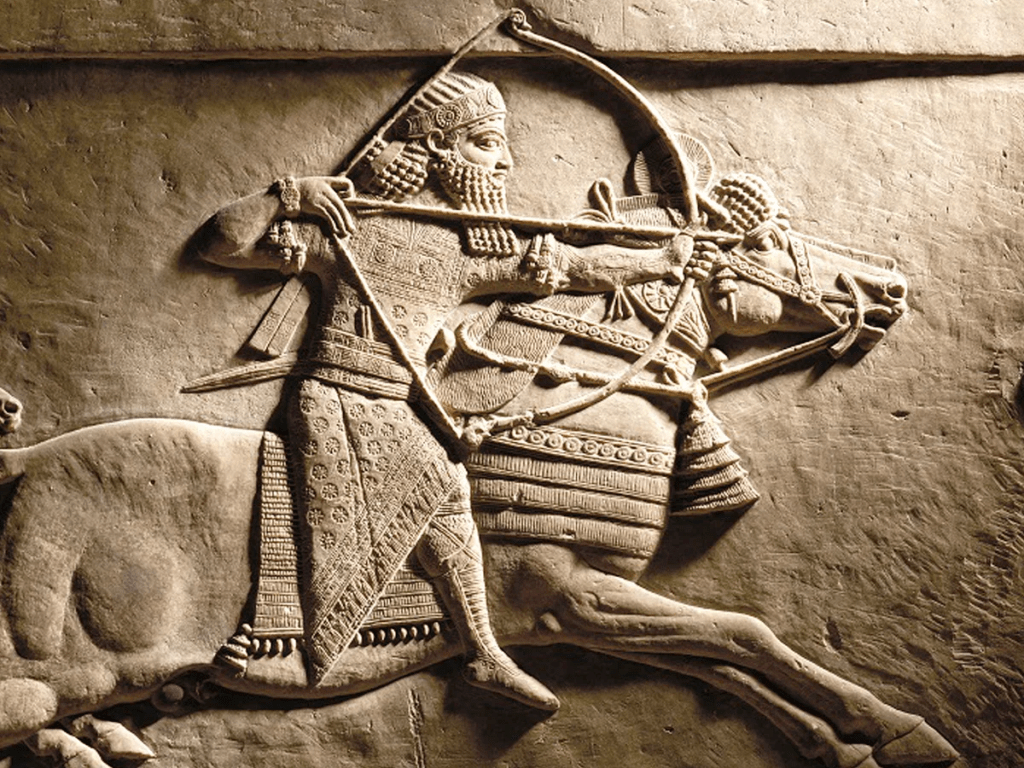
Assyrian king, British Museum

Unfortunately, most of our repentant overtures are way overdue. And yet, because of divine grace, the crazy mess we make of our lives is the very same place where a merciful God meets us.

Any sort of help is surely undeserved. It always is. The Lord, however, avoids making us grovel in our own vomit. God accepts us where we are, and not where we ought to be.

In truth, we all need to make a change, and not just the bullies. The sheer reality of God demands that we pay attention to what is right, just, and good. And the prophet Isaiah informed the people exactly how we must live in a world full of bullies and busted dreams.

We are to have an awareness of ethics and morality, a concern for humanity, and an orientation to help everyone thrive and flourish in this life.

The answer to life’s question of how to exist in this world and do more than just survive comes down to human morality:

  • Live right
  • Speak the truth
  • Despise exploitation
  • Refuse bribes
  • Reject violence
  • Avoid evil pleasures

The safe and stable way to live is to participate in the rhythms of mercy and justice that are woven into the fabric of the universe. The path to a contented and satisfying life is through goodness, not hatred.

Security and satisfaction don’t come through control of all circumstances; it comes by discerning that God has ultimate control, and that this God is good, not evil; just, not unjust; and righteous, not capricious.

According to the prophet, God will determine when the suitable time for assistance will come for us. And the Lord will deal with the ungodly according to the divine timetable, and not when we believe judgments should be rendered.

None of this is in our purview. Sometimes, talking about this sort of theology is a way of taking the focus off of our own need for an ethical and moral life. Sometimes, it is a helpful way of coming to grips with what is happening. Discernment is needed with oneself in these matters.

Trusting God means to exercise patience and perseverance, to focus on faith, to discipline ourselves in prayer, and to express confidence in hope.

We are not necessarily ruined whenever our circumstances are dire. The worse things become, the greater the display of divine power that can come.

By orienting ourselves around God and God’s strength and will, we grow in courage and develop in faith. We learn to trust in the worst of situations. We discover that the Lord knows the score of things, that God understands what’s going on.

And God laughs at the ungodly who believe they can bully the godly around. The most brilliant of military commanders is like a little toddler before the sovereign Lord of the universe. The fiery words they blow will blow back on them and consume their arrogance.

So, let us not harden our own hearts, but exercise a change of heart to let God be God, and to want for nothing but the courts of the Lord.

Let us not be like the bullies of Assyria who lived without a thought to the divine reality in front of them. Let us not become tormented, as if a fire were devouring us with inward anguish of soul, but instead:

  • Walk in right relations with others and with the Lord
  • Maintain truth and integrity in everything
  • Be free from corruption and offending others and God
  • Act with love toward your neighbor and your God
  • Refuse to accept a bribe
  • Restrain evil impulses
  • Open wide the spigot of goodness and justice

God is our refuge and strength, an ever-present help in trouble. Safety and abundance of good things is provided by the Lord. God protects. And God supplies. Rely upon God’s promises, and not the empty bellowing of others.

Be safe. Be strong. Be spiritual. We are all in this life together.

O God, my refuge and strength: In this place of unrelenting light and noise, enfold me in your holy darkness and silence, so that I may rest secure under the shadow of your wings. Amen.