The Idea of Spiritual Separation (2 Corinthians 6:14-7:1)

Do not be yoked together with unbelievers. For what do righteousness and wickedness have in common? Or what fellowship can light have with darkness? What harmony is there between Christ and Belial? Or what does a believer have in common with an unbeliever? What agreement is there between the temple of God and idols? For we are the temple of the living God. As God has said:

“I will live with them
    and walk among them,
and I will be their God,
    and they will be my people.”

Therefore,

“Come out from them
    and be separate,
says the Lord.
Touch no unclean thing,
    and I will receive you.”

And,

“I will be a Father to you,
    and you will be my sons and daughters,
says the Lord Almighty.”

Therefore, since we have these promises, dear friends, let us purify ourselves from everything that contaminates body and spirit, perfecting holiness out of reverence for God. (New International Version)

There are entire Protestant denominations built upon verses such as today’s. They take the admonition to be separate as a cornerstone value. Ever since the Reformation, various Christian groups have struggled to maintain their witness in the world through, essentially, having nothing to do with the world whatsoever.

The dogma of separation inevitably leads to defining precisely what is “worldly” and what isn’t. This is where the idea of creating lists of what’s not acceptable come from. Each group or denomination has it’s own teaching about how to identify oneself as a Christian, and what sorts of behaviors communicate one isn’t a Christian. And the lists often vary quite a bit.

The Puritans had detailed lists and laws of what must be done and not done in order to remain in the community and be pure without spiritually contaminating oneself. For example, here are just a few of the many puritanical laws in Massachusetts in the 1600’s:

Sunday was a holy day. Trade and business were not allowed. No other public meetings could be held (except church services). No travel, except for walking to and from church and for emergencies. No entertainment. Church attendance was required. If a person missed church, they had to go to court (on Monday) and pay a fine.

All the other days were holy, too. Immodest and ostentatious clothes was illegal. Long hair for men was illegal. Smoking was illegal in the street. Courting a girl without her parents’ consent was illegal. Kissing in public was illegal. The following behaviors were illegal: using bad words, drinking too much alcohol, laziness, gluttony, fighting, poorly made products, having a bad attitude, and gossip.

Any violation, in Puritan thought, put the entire community at risk of raising the ire of God – who may punish them with various natural disasters. With all of these laws and lists, there was no opportunity for anyone to ever marry an unbeliever or be in business with a non-Christian, simply because it was illegal to be anything but a Christian!

None of this is meant to pick on the Puritans. It’s commendable that a group of people would want to be holy in all that they do and say. Yet, attempting to legislate every facet of another’s life isn’t so admirable – especially against their own Christian convictions.

Because, the reality of it all is that, in such systems, the few (usually old white guys) make the laws and decisions for everyone else – whether everyone likes it, or not. And worse, the old guys would couch their laws in the pious language of maintaining the common good of all persons (that is, themselves).

That sort of practice is still done today, in every system and every institution; the few call the shots for everyone else. And yes, even in a stated democracy like the United States of America.

So, if that isn’t what the Apostle Paul was getting at with the Corinthian Church, what then did he mean when he talked of separating from unbelievers, not being contaminated, and maintaining purity amongst the community?

Paul was speaking about the reality that the Corinthians – who had been ardent pagan worshipers before their conversion to Christianity – were still making significant accommodations to their surrounding pagan environment. Like a pair of ox yoked together, it just did not work. The two were greatly mismatched; they would not be able to go anywhere or get anything done.

In a series of rhetorical questions, Paul sought to illustrate the incompatibility of being a spiritual square peg trying to fit into a round hole. To be holy means to be set apart for the specific purpose of and devotion to God.

Rather than making holiness be the avoidance of dancing, drinking, playing cards, and dressing up, holiness and purity is to be characterized by righteous humility and gentleness; warm and compelling light; peace and peacemaking, like Christ did; love for fellow believers; and commitment to Christian community.

Put another way, avoiding spiritual contamination means to work on separating from sinful pride; giving into the shadows and the darkness of one’s heart; fostering arguments and division; and being unmerciful.

If the Apostle were to write to us today, on this topic of separation, what would he say to us? Maybe his rhetorical questions would be something like this:

What are you doing, failing to make a distinction between good and bad, right and wrong? How can you partner up with people who have ethics which are opposed to Christ? Can the light of justice ever be best friends with unjust darkness? Do Jesus and Satan ever have a midnight stroll holding hands with each other? Would anyone ever set up a worship altar to the wealthy or powerful in a church building?

Paul may argue, even today, that we contaminate ourselves in rather creative ways by employing illegitimate means to try and accomplish a legitimate need.

The truth is that anything that hinders us from doing God’s will; anyone who draws us away from a good relationship with Jesus; and whatever causes us to put the Christian life on the back burner of life, needs to be jettisoned. It will make us impure, ineffective, and eventually bite us in the backside.

We can always look at other groups of people whom we believe didn’t get things quite right. Yet, we really must deal with ourselves in this moment and for this time. Comparative holiness will get us nowhere (except maybe hell). Instead, let us contend with God and God’s people in ways that are redemptive, life-giving, and helpful for us and for our salvation.

Almighty God,
to whom all hearts are open,
all desires known,
and from whom no secrets are hidden:
cleanse the thoughts of our hearts
by the inspiration of your Holy Spirit,
that we may love you completely,
and rightly magnify your holy name;
through Christ our Lord. Amen.

Advent Is Coming (Zechariah 13:1-9)

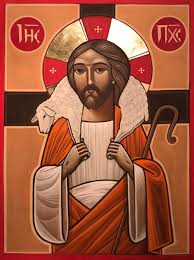
Coptic Church icon of Jesus the Good Shepherd

“On that day a fountain will be opened to the house of David and the inhabitants of Jerusalem, to cleanse them from sin and impurity.

“On that day, I will banish the names of the idols from the land, and they will be remembered no more,” declares the Lord Almighty. “I will remove both the prophets and the spirit of impurity from the land. And if anyone still prophesies, their father and mother, to whom they were born, will say to them, ‘You must die, because you have told lies in the Lord’s name.’ Then their own parents will stab the one who prophesies.

“On that day every prophet will be ashamed of their prophetic vision. They will not put on a prophet’s garment of hair in order to deceive. Each will say, ‘I am not a prophet. I am a farmer; the land has been my livelihood since my youth.’ If someone asks, ‘What are these wounds on your body?’ they will answer, ‘The wounds I was given at the house of my friends.’

“Awake, sword, against my shepherd,
    against the man who is close to me!”
    declares the Lord Almighty.
“Strike the shepherd,
    and the sheep will be scattered,
    and I will turn my hand against the little ones.
In the whole land,” declares the Lord,
    “two-thirds will be struck down and perish;
    yet one-third will be left in it.
This third I will put into the fire;
    I will refine them like silver
    and test them like gold.
They will call on my name
    and I will answer them;
I will say, ‘They are my people,’
    and they will say, ‘The Lord is our God.’” (New International Version)

There’s likely a reason why so many Bible-readers have barely considered, or just never read, the minor prophets of the Old Testament: It’s difficult reading, on several levels.

Yet, the twelve books of the minor prophets, along with the four books of the major prophets, account for a lot of material within Holy Scripture. If we are to understand the whole of the Bible, as well as know God better, we need to contend with what the prophets have to say.

Impurity and cleansing, grace and judgment, idolatry and stabbing, prophets and visions, sheep and shepherds, faith and apostasy, are all part of what seems, on the surface, to be a confusing hodge-podge of verbiage from the prophet Zechariah. Yet, we can still observe the things God cares about.

The Lord promised to rid the land of idols (false gods), (false) prophets, and the spirit of impurity (false righteousness). If God takes out the false prophets, then the people can say good riddance to a false message of leading others toward idolatry and impurity.

The spirit and the message behind false prophets, unholy leaders, and unrighteous teachers, has to do with propagating lies and suppressing truth, so that they can deceive people and manipulate others for their own benefit – leading groups of people away from reality, and into commitments that go nowhere.

This insidious stuff is meant to be taken quite seriously – because it leads to a breakdown in community, a proliferation of injustice, and oppressive spiritual bondage. That’s why we have a rather dramatic picture of parents stabbing a child – not because God likes violence – but to demonstrate that false prophets and their message will damage and destroy a nation, if indulged.

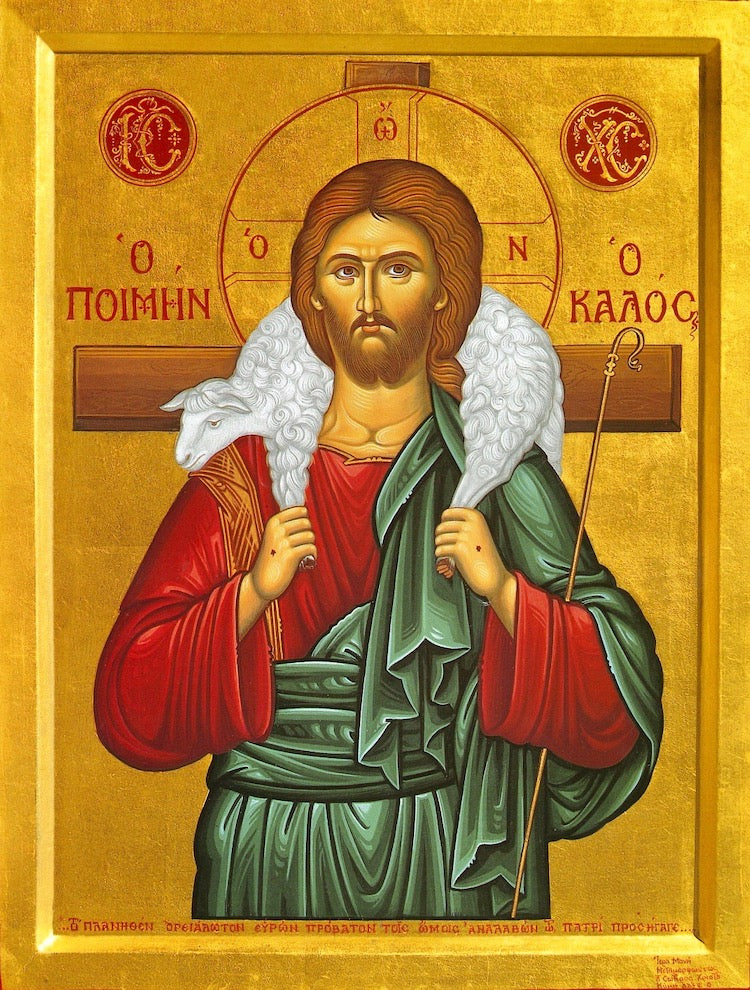
Orthodox icon of Jesus the Good Shepherd

We must always keep in mind and remember that injustice and unrighteousness must always be nipped in the bud (Deuteronomy 13:6-11). Sin, that is, those things which deceive and make false promises that result in a downward spiral toward death, is to be confronted. In the New Testament, Jesus put the matter this way:

If your right eye causes you to stumble, gouge it out and throw it away. It is better for you to lose one part of your body than for your whole body to be thrown into hell. And if your right hand causes you to stumble, cut it off and throw it away. It is better for you to lose one part of your body than for your whole body to go into hell. (Matthew 5:29-30, NIV)

Christ was not advocating a physical maiming of oneself, but rather for us to separate ourself from sin by whatever means necessary. In other words, Jesus was saying that sin isn’t something to be managed, but instead something to eradicate altogether.

Truth matters. Truth brings reality and beauty to light. Falsehood is terrible. To promote that which is false, and perhaps even worse, tolerate it, gives hate and injustice a platform from which to crawl out of the darkness and make the world blind. It would take an awful lot to undo error’s presence.

This is why the shepherd, or maybe, from the Christian perspective, the Christ, is stricken. The Good Shepherd, the one who is truth incarnate, would have to suffer. The injustice and unrighteousness is so foul and degrading that only the pure can undo the impure. And it is all set in motion, not by the forces of darkness, but by God.

God strikes the shepherd, and the sheep scatter. He is not struck because he deserves it – far from it – but because he assumes responsibility for the wrongdoing of others. Father God is the parent who stabs a spear in the side of God the Son.

The ultimate good shepherd of the sheep will die as a heinous offender; and God is the executioner.

In Christ, God put the wrong on him who never did anything wrong, so we could be put right with God.

2 Corinthians 5:21, MSG

This same great shepherd of the sheep, who became the Lamb of God that takes away the sin of the world, is coming again. And he will bring the refining and purifying fire of divine judgment upon the earth.

In this upcoming Advent season, we remember not only that Jesus has come to save the world. We also are reminded that there is yet a second Advent, in which Jesus will come to judge the living and the dead.

Behold, He is coming with clouds, and every eye will see Him, even they who pierced Him. And all the tribes of the earth will mourn because of Him. Even so, Amen.

“I am the Alpha and the Omega, the Beginning and the End,” says the Lord, “who is and who was and who is to come, the Almighty.” (Revelation 1:7-8, NKJV)

Blessed God and Father of our Lord Jesus Christ, preserve us from our own madness. Direct us away from dealing destruction to others; help us to steer clear of paths which lead to the ruin of ourselves and our world.

Protect us. Enable us to hear you. Beloved Jesus, show us your precious face in all others – you in us, and we in each other, from all places. Amen.

Walk in the Way of Love (Ephesians 5:1-6)

Follow God’s example, therefore, as dearly loved children and walk in the way of love, just as Christ loved us and gave himself up for us as a fragrant offering and sacrifice to God.

But among you there must not be even a hint of sexual immorality, or of any kind of impurity, or of greed, because these are improper for God’s holy people. Nor should there be obscenity, foolish talk or coarse joking, which are out of place, but rather thanksgiving. For of this you can be sure: No immoral, impure or greedy person—such a person is an idolater—has any inheritance in the kingdom of Christ and of God. Let no one deceive you with empty words, for because of such things God’s wrath comes on those who are disobedient. (New International Version)

You are loved. There may not be a lot of things I know, and much of life might be a mystery with few answers, yet the one unshakable truth I have absolutely no doubt about is that you and I are loved by a good and loving God.

Humanity is loved and is therefore meant to love one another as the ultimate rule and guide of life.

Just as God loves, so we are to do the same. We are to mimic divine love in our daily lives. The healthiest of relationships are characterized by a continual dynamic of giving love and receiving love.

Whenever love fails to be the basic rule of life, people are exposed to the gravity of God’s wrath – which exists as the extension of God’s love, in order to put a stop to unloving words and actions in the world.

Unfortunately, as a hospital chaplain and church pastor, I daily see the sad effects of individuals who have experienced a paucity of love and, so, have taken on a false self to try and find love in all the wrong places – with damaging consequences.

Three inappropriate unloving ways of acting are mentioned in today’s New Testament lesson:

  • Sexual immorality is the illegitimate attempt to get the legitimate need for erotic love met without any strings attached. It is a misguided belief that one-night stands and clandestine trysts will protect against being too committed to another and getting hurt.
  • Impurity is any other illicit, illegal, or improper kind of behavior toward others which tries to do the same thing as immorality: Seeking to meet legitimate needs in an illegitimate way – to turn a trick for love, trying to avoid emotional, spiritual, or even physical pain.
  • Greed is an insatiable pursuit of addictive behavior meant to numb or stuff all the unwanted emotions which reside deep in the soul because of engaging in the immoral or impure actions.

Three inappropriate unloving words of speaking are mentioned:

  • Obscenity is filthy speech which is a cover for the agonizing unmet needs of love deep within the human heart. Obscene words are nothing more than verbal sexual immorality. They are a twisted attempt at trying to give and get loving words in an illicit manner.
  • Foolish talk, much like impurity, is any other illicit or improper words crafted to manipulate or cajole another. It is the hustle for love. The original Greek word means literally “to talk like a moron,” that is, a person who lacks sound judgment.
  • Coarse joking is crude and addictive speech, much like greed, envy, and coveting, which verbally trolls for love without unveiling any real feelings.

The antidote to all these baseless actions and distasteful words is to realize the true self, created by God, through receiving the love of God and of others with thanksgiving. Within genuine loving relationships, people can express their legitimate needs to each other and satisfy one another. Yet, with the false self, there is secrecy, hiding, and massive amounts of shame.

Love opens us to all that is good and beautiful. Love also opens us to the possibility of devastating hurt and loss. It is when we try to obtain the good and beautiful, while trying to build walls of protection against potential pain, that we get in trouble. The sinister tools we must use to try and get that impossible job done are manipulation and control with both verbal and physical immorality.

There is no true and authentic love apart from openness and vulnerability. Cheap imitations of love will only lead to hopeless despair.

“To love at all is to be vulnerable. Love anything and your heart will be wrung and possibly broken. If you want to make sure of keeping it intact you must give it to no one, not even an animal. Wrap it carefully round with hobbies and little luxuries; avoid all entanglements. Lock it up safe in the casket or coffin of your selfishness. But in that casket, safe, dark, motionless, airless, it will change. It will not be broken; it will become unbreakable, impenetrable, irredeemable. To love is to be vulnerable.”

C.S. Lewis

The way of love is the way of Christ. Imitating his example of a holy life, compassionate service, helpful speech, and healing actions – with a humble heart of gratitude – is to be our guide, rule, and direction in life. It is to realize our true selves and nudge the world just a bit closer back to Eden.

O Lord, in the name of Jesus Christ your Son our God, give us the love which never ceases so that our hearts will be enlightened and always burning with holy passion for the common good of all.

O Christ, our loving Savior, set our souls aflame so that they may shine brightly with the warmth and glow of unquenchable divine love, and lessen the darkness of the world. Lord Jesus, we pray, give us the light of your love so that we might always see you, desire you, look on you in love, and long after you.

Blessed Holy Spirit, send the fire of your love and empower us for loving service so that we may emulate and follow the example of our loving Lord, for the sake of Jesus Christ. Amen.

How Can I Live a Pure Life? (Psalm 119:9-16)

Statue of Saint Valentine in Terni, Umbria, Italy

How can a young person live a pure life?
    By obeying your word.
I try with all my heart to serve you.
    Help me obey your commands.
I study your teachings very carefully
    so that I will not sin against you.
Lord, you are worthy of praise!
    Teach me your laws.
I will repeat the laws we have heard from you.
I enjoy following your rules
    as much as others enjoy great riches.
I will study your instructions.
    I will give thought to your way of life.
I enjoy your laws.
    I will not forget your word. (Easy-To-Read Version)

There was an actual Saint Valentine (c.226-269 C.E.) who lived and served as a Bishop in Rome. The Roman Emperor of the time, Claudius II, was vehemently opposed to Christianity. Claudius forbad Christian marriages from taking place – which was something Bishop Valentine was unwilling to do, and was supposedly jailed for his refusal to stop performing Christian weddings. Hence, one of the reasons for Valentine being the patron saint of lovers.

That’s certainly one way of helping to keep young Christians pure. I, in fact, have more than once advocated on behalf of a young couple in love. Their parents, who wanted a large wedding and plenty of time to prepare for it, simply didn’t realize what they were asking of their kids and how much that put them in an awkward position.

To be pure means to be holy or set apart for a special or specific purpose. Christians are to be completely devoted to their Lord and Savior, Jesus Christ. In order to do that, they will need to pay particular attention to God’s commands and Christ’s teachings.

The Will

The whole person must be involved in obeying the teachings given to us. It begins with our will. Notice that the psalmist sets his resolve toward this great task by stating:

  • I will repeat (out loud) the divine laws I hear
  • I will study God’s instructions
  • I will give thought to my way of life with Yahweh
  • I will not forget the Lord’s words

I have considered my ways
    and have turned my steps to your statutes.
I will hasten and not delay
    to obey your commands. (Psalm 119:59-60, NIV)

We need strong affirmations toward engaging our will toward reading aloud, studying, and remembering biblical commands, so that we will succeed in our quest for purity and holiness.

The Emotions

Our affections also need to be involved. We are emotional creatures, having been formed by a Creator with deep feelings. Therefore, our own emotions are meant to be acknowledged and engaged. The psalmist enjoys God’s Law and is emotionally draw to it’s beauty and light.

Oh, how I love your law!
    I meditate on it all day long.
Your commands are always with me
    and make me wiser than my enemies. (Psalm 119:97-98, NIV)

We need strong feelings toward desiring God’s Word, so that there will be effective action toward a life of purity. Overall, we do what we want. Continually doing something we don’t really want to do ends up being either legalistic or loathsome.

The Body

Our bodies are the vehicles to doing and accomplishing God’s will on this earth. Thus, our physical selves must be animated toward the good, the right, and the just. The psalmist worshiped and praised God.

I, by your great love,
    can come into your house;
in reverence I bow down
    toward your holy temple. (Psalm 5:7, NIV)

Hear my cry for mercy
    as I call to you for help,
as I lift up my hands
    toward your Most Holy Place. (Psalm 28:2, NIV)

Our bodies need to move in physical rhythms of praise and worship to God, so that there will be purity of life. Holiness needs hands and feet to walk into the way of the Lord and obey God’s commands.

Philosophies of Purity

There are some unsound approaches to becoming pure and remaining holy:

  1. It’s up to me. God is too far away, maybe even absent altogether. This is a philosophy which ignores the gut. Yet, if we seek to connect with our innards, we’ll discover quickly that purity is not all on me. I am the vine; you are the branches. If you remain in me and I in you, then you will produce much fruit. Without me, you can’t do anything. (John 15:5, CEB)
  2. Follow your heart. Doing this has significance; however, if that’s the exclusive approach to purity, the mind gets left behind and the heart ends up vulnerable to deceit. The heart is deceitful above all things, and desperately sick; who can understand it? (Jeremiah 17:9, ESV)
  3. Knowledge is power. Yes, of course it is; but by itself, knowledge puffs up. We need the affections, particularly love, or else we become brains-on-a-stick, denigrating the body as superfluous to spirituality. Knowledge puffs up, but love builds up. (1 Corinthians 8:1b, NRSV)
  4. Control everything. There are certainly forces in operation in this world; yet we are never called to try and manipulate them. We may will ourselves to do many things, yet God has control of all things. Humanity is called to self-control, which takes up all our energy because it’s no easy feat. For the grace of God has appeared that offers salvation to all people. It teaches us to say “No” to ungodliness and worldly passions, and to live self-controlled, upright and godly lives in this present age. (Titus 2:11-12, NIV)

A sound philosophy of being holy and pure recognizes that we need divine help in strengthening our faith; the assistance of others who can walk alongside us and provide encouragement; and the engagement of our entire person, utilizing all our faculties in order to live a life of purity. Obedience to God’s Word is vital to a holy life; and to obey requires our entire selves.

There is to be a marriage between God’s commands and human obedience. The world may forbade this, but much like St. Valentine, we’ll let love have its way – and not the ruler of this present evil age.