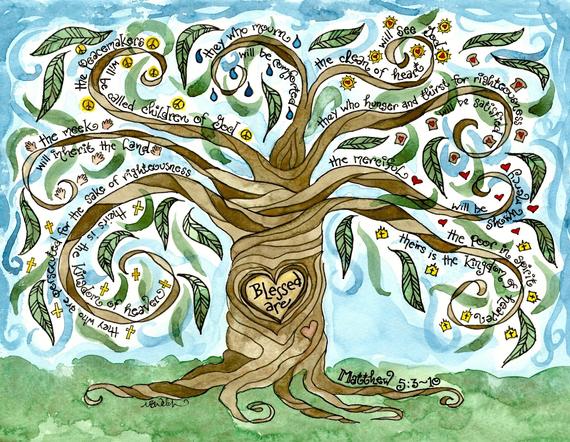
Matthew 5:3 – Blessed are the Poor in Spirit

The Beatitudes of Christ (Matthew 5:1-12) are not a knee-jerk, random collection of pithy phrases from Jesus on what constitutes approval from God.  They intentionally build upon each other.  If the Sermon is the cornerstone of Christ’s teaching, and the Beatitudes are the cornerstone of the Sermon, then poverty of spirit is the cornerstone of the Beatitudes.  This Beatitude is foundational to the Christian life. So, what does it mean to be “poor in spirit”? 

“Poor” comes from the word “beggar.” And why does any beggar beg? Because they are in need. Beggars are desperate and destitute, knowing they need help just to survive another day. A beggar begs because he cannot rely on reciprocity; he has absolutely nothing to give in return.

Jesus was saying to the crowd following him, that true followers have a realization of their spiritual bankruptcy and have no shame in begging God to act on their behalf. The truth is that we are all spiritually destitute before God and stand in stark need of divine resources to help us. 

In reality, we have nothing of worth to give or offer to God. And we can gain nothing apart from God. Therefore, we must realize who we are and take the position of humility, not pride, and look to God.

To understand our poverty of spirit is to see that we are stripped of all self-righteousness, and absolutely need God. Knowing and understanding our spiritual bankruptcy is to see sin for what it really is. So, how do you know when you are poor in spirit?

  • The spiritual beggar makes no deals with God because they have nothing to bargain with. There is no ground from which to leverage anything.
  • The spiritual beggar doesn’t complain because they realize they don’t deserve anything. Instead, there is praise to God for such incredible grace in providing their needs.
  • Spiritual beggars are always begging, that is, praying all the time. Beggars don’t pray because it is an effective strategy to further their agenda. They pray because, if they don’t, they won’t make it!
  • Spiritual beggars take Christ on his terms, not theirs. The beggar will do anything Jesus says because he knows his situation is desperate. He has an inner attitude of total dependence upon God. Without humility before God, the spiritual beggar discerns he is hopeless. There is no room for the pride that tries to posture and position to get what I want, because the spiritual beggar knows he has none of this.
  • Spiritual beggars realize the more you learn, the more you don’t know – that you are dependent on a holy God and Holy Scripture, and not your own ideas, thoughts, convictions, and opinions. So, you willingly take the posture of listening instead of always talking.
  • The spiritual beggar knows no enemies. The late Henri Nouwen said, “Poverty is the inner disposition that allows us to take away our defenses and convert our enemies into friends. We can only perceive the stranger as an enemy as long as we have something to defend.” Those who are poor in spirit are not anxiously clinging to their stuff, their money, or their good name. They have nothing of their own; it all belongs to God for divine purposes.

Only the poor in spirit will enter the kingdom of heaven. The way is narrow and only a few are willing to truly humble themselves before God and take the posture of a beggar. If we think we are above this, then we have gone the broad way of destruction that many will find.

Humility knows that God is God, and I am not. Therefore, we orient our lives around this reality. Just as we need to respect the law of gravity and submit to its presence and reality, so it is most necessary and important to accept God’s rule and reign in this world and submit to its constant force. This is simply the way of wisdom.

We do not presume to come to you, O merciful Lord, trusting in our own righteousness, but in your abundant and great mercies. We are not worthy so much as to gather up the crumbs under your table; but you are the same Lord whose character is always to have mercy. Grant us, therefore, gracious Lord, to be intimately close to your dear Son Jesus Christ, and to identify with him in his death so that our sinful bodies may be made clean by his body, and our souls washed through his most precious blood. May we forever dwell in Christ, and he in us.  Amen.

*Above painting by Hyatt Moore

1 Samuel 17:55-18:5 – True Friendship

As Saul watched David go out to fight the Philistine, he asked Abner, the commander of his army, “Abner, whose son is this young man?”

“I really don’t know,” Abner declared.

“Well, find out who he is!” the king told him.

As soon as David returned from killing Goliath, Abner brought him to Saul with the Philistine’s head still in his hand. “Tell me about your father, young man,” Saul said.

And David replied, “His name is Jesse, and we live in Bethlehem.”

After David had finished talking with Saul, he met Jonathan, the king’s son. There was an immediate bond between them, for Jonathan loved David. From that day on Saul kept David with him and wouldn’t let him return home. And Jonathan made a solemn pact with David because he loved him as he loved himself. Jonathan sealed the pact by taking off his robe and giving it to David, together with his tunic, sword, bow, and belt.

Whatever Saul asked David to do, David did it successfully. So, Saul made him a commander over the men of war, an appointment that was welcomed by the people and Saul’s officers alike. (New Living Translation)

“One of the most beautiful qualities of true friendship is to understand and to be understood.”

Seneca (5 B.C.E.-65 C.E)

We may have numerous acquaintances; social media friends; friends we do activities with; family friends and cousin friends; and even some good close friends. However, there are few, maybe only one or two people, who are so close as to be your best friend and a kindred spirit.

That person is the one whom you know always has your back; is the first person you call in the middle of the night in an emergency; and is the confidant you can say anything to, and they won’t freak out about it. They will always shoot straight with you and are your biggest encourager and fan. There is nothing they would not do for you.

I hope you have such a friend because they are rare gems. Such relationships typically begin by hitting it off well together. Usually, some event or particular place brings two people to a point of discovering they have such commonality of thinking and a commitment to living a certain way that their hearts are immediately drawn to each other. This is exactly what happened to Jonathan and David.

Before Jonathan and David’s friendship emerged, Jonathan (King Saul’s son) took it upon himself to step up and step out in single-handedly taking on the Philistine army. Jonathan faced them with only his armor-bearer behind him, climbed a cliff to other side where the Philistines were, and attacked all by himself. One guy deliberately went against an entire army. 

While six-hundred Israelite soldiers were hiding, too afraid to face the enemy, Jonathan took it upon himself to act. It was not a rash action but a decision of faith:

Jonathan said to his young armor-bearer, “Come on, let’s go over to the fort of these uncircumcised men. Maybe the Lord will act on our behalf. After all, nothing can stop the Lord from saving, whether there are many soldiers or few.” (1 Samuel 14:6, CEB) 

Jonathan passionately believed the Lord was with him and would achieve the victory. Indeed, God sent a panic throughout the Philistine camp when Jonathan acted. The result was a complete rout.

David had his own act of faith with the Philistine giant, Goliath. While everyone in the Israelite camp was fearful of the larger than life enemy, David saw him through the eyes of faith, and stepped up to challenge someone twice his size. 

It just so happens, that on that day, Jonathan had a front row seat to the entire event. It was immediately after David killed Goliath that Jonathan knew this was a guy with remarkably similar sensibilities. David possessed Jonathan’s same passion for God; same zealous faith that takes enormous risk; same heart for God’s people and God’s name. They clicked – and became kindred spirits, as if knowing the one of them was to know the other.

It was true friendship at its absolute best. Jonathan had David’s back. There was nothing he would not do for him, and vice versa. So, he made a covenant with David. And it turned out to be a lasting commitment neither of them ever regretted. 

Jonathan did not make the covenant with David just to buddy-up with the new popular person. No, Jonathan is a timeless example of one who was humbly unselfish. He gave up his robe and his weapons to David. This was a magnanimous gesture. Jonathan believed David was the next true king, so he gave his kingly objects to him.

As the king’s son, Jonathan stood in line to be the next king. In fact, everything we know about Jonathan informs us he would likely be a darn good king. Yet, Jonathan recognized David was a more worthy candidate than himself. So, he gave up his right to the throne and handed over his symbols of potential kingship.

Jonathan delighted in David’s success. He joyfully watched David become a great warrior and successful leader. Jonathan was always the first one to give David a pat on the back and do whatever was needed in supporting him. 

Jonathan didn’t mind that David upped him on the battlefield and commanded ever larger numbers of soldiers.  Jonathan could have pulled rank on David as the king’s son – but he never did, because he honestly believed his friend was the real king.

“If Christ Jesus dwells in a person as his friend and noble leader, that person can endure all things, for Christ helps and strengthens us and never abandons us. He is a true friend.”

St. Teresa of Ávila

In the New Testament, we see a person with the same spirit and devotion as Jonathan. John the Baptist was out in the wilderness being a literal wild man. And he gained quite a following. All kinds of people went out into the desert to be baptized by John and to be his disciples. Yet, John recognized that he himself was not the true king. Concerning Jesus, John said:

“This is the one I told you would come! He is greater than I am because he was alive before I was born.” (John 1:15, CEV)

“I am not the Messiah…. I am the voice of one calling in the wilderness, ‘Make straight the way for the Lord.’” (John 1:20, 23, NIV)

“Though his ministry follows mine, I’m not even worthy to be his slave and untie the straps of his sandal.” (John 1:27, NLT)

“I have seen and testified that this one is God’s Son.” (John 1:34, CEB)

John never became jealous, envious, or concerned that his cousin Jesus was greater than himself. In fact, he celebrated it:

“I am so happy that he is here. He must become more and more important, and I must become less important.” (John 3:29-30, ERV)      

John was focused on God. He therefore was able to respond rightly and humbly to Jesus, the true king. 

Jonathan was focused on God, and so was able to respond rightly and humbly to David, the true king.

Jesus is both king and friend. Jesus can be your kindred spirit, the one who always has your back. You can call, and he will be there. And we can delightfully watch Christ increase while we decrease. His success is our success. 

Divine friendship is possible. God’s people can enjoy incredible unity because Jesus has gone before us – he has won the victory over sin, death, and hell on our behalf. By faith we step out and act with the knowledge God is with us.

Jesus said, “No longer do I call you servants, for a servant does not know what his master is doing; but I have called you friends, for all things that I heard from My Father I have made known to you.” (John 15:15, NKJV)

**Above wood sculpture of Jonathan and David by Olen Bryant (1927-2017)

The Beatitudes of Jesus: An Introduction

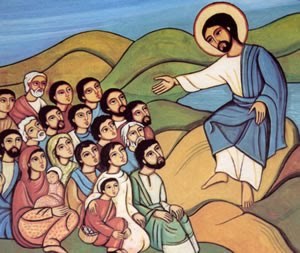
Now when Jesus saw the crowds, he went up on a mountainside and sat down. His disciples came to him, and he began to teach them. He said:

“Blessed are the poor in spirit,
    for theirs is the kingdom of heaven.
Blessed are those who mourn,
    for they will be comforted.
Blessed are the meek,
    for they will inherit the earth.
Blessed are those who hunger and thirst for righteousness,
    for they will be filled.
Blessed are the merciful,
    for they will be shown mercy.
Blessed are the pure in heart,
    for they will see God.
Blessed are the peacemakers,
    for they will be called children of God.
Blessed are those who are persecuted because of righteousness,
    for theirs is the kingdom of heaven.

“Blessed are you when people insult you, persecute you and falsely say all kinds of evil against you because of me. Rejoice and be glad, because great is your reward in heaven, for in the same way they persecuted the prophets who were before you. (Matthew 5:1-12, NIV)

The human brain is hard-wired, in such a way, that it works its best when healthy rhythms of giving and receiving occur. God created us to thrive and flourish when we pay attention to particular ways of being with one another as people.

Jesus used the term “blessed” not in a financial sense, as if having lots of money is what it means to experience blessing. The word “blessed” means to have God’s stamp of approval, his favor, with the emotional and spiritual response of joy or happiness. 

Real and lasting joy comes from a right relationship with God, defined according to what Jesus says – different from the false righteousness of the religious establishment which is based on outward appearance rather than inner attitudes. We need to know how to relate to our God, instead of simply conforming to an outward form of Christianity that everybody is doing.

Our entire selves are blessed when we engage in consistent rhythms of practicing humility before the Lord; sitting with grief; putting ourselves in another’s shoes; seeking right relationships with both God and others; pursuing mercy, purity, and peace-making in all our affairs; and allowing persecution to form us in ways the good times cannot.

Jesus preached the Beatitudes to clarify what it means to be approved by God. He wanted to gain true disciples who follow God for the right reasons. The crowd was following Jesus physically, but not necessarily spiritually. They all followed for different reasons: for healing, curiosity, or a genuine desire to be a disciple. So, Jesus sat them down to communicate what a true follower and disciple is.

Imagine we are part of the crowd originally hearing Christ’s Sermon on the Mount (Matthew 5-7).  The world in which the people lived, and the religious system which they took for granted, was highly restrictive. 

In order to approach God, enter the kingdom, and be a good citizen, one had to be Jewish, male, a faithful Law-keeper, physically whole, healthy, and able; and, if not wealthy, able to make a good living. 

Yes, this reality meant that Gentiles, women, those who struggled to keep the Law, the diseased and disabled, and the poor had no shot whatsoever in the kingdom of God. To be blessed and have God’s stamp of approval on your life meant you were a healthy and wealthy Jewish man who practiced a legalistic form of righteousness. 

Not a single one of us here would have any shot at the kingdom of God. Yet, we have heard something about this guy, Jesus. There seems to be something very compelling about him. We go seek him out, sit down on a mountainside and hear him say the most refreshing and scandalous words we have ever heard…

God approves of the spiritually bankrupt who realize they’ve got no leverage to make any deals. They shall be given the riches of God’s grace.

God approves of those who grieve over personal sin and lament the presence of sin in the world. They are the ones who will experience God’s forgiveness and comfort.

God approves of the powerless and those who use their authority to champion others. They will inherit God’s power and take up authority to command dark forces and put them in their place.

God approves of those who have a voracious appetite for right relationships and doing everything for the right reasons. Their growling spiritual stomachs will be stuffed with God’s righteousness.

God approves of those who liberally extend grace to others, being always considerate of everyone’s needs, showing neither prejudice nor favoritism. They shall receive God’s grace at the end of the age when Christ comes to judge the living and the dead.

God approves of the spiritually clean who have bathed in the waters of divine mercy. They will see Jesus face to face.

God approves of those who facilitate and negotiate peace. Because that is precisely what God’s children do.

God approves of those who are persecuted for living by these counter-cultural Beatitudes. They have an inheritance that will never perish, spoil, or fade.

Grant us, Lord God, a vision of our world as your love would make it: a world where the weak are protected, and none go hungry or poor; a world where the benefits of abundant life are shared, and everyone can enjoy them; a world where different races and cultures live in tolerance and mutual respect; a world where peace is built with justice, and justice is guided by love. And give us the inspiration and courage to build it, through Jesus Christ our Lord. Amen.

Psalm 138 – The Lord Will Defend the Humble

I give thanks to you with all my heart, Lord.
    I sing your praise before all other gods.
I bow toward your holy temple
    and thank your name
    for your loyal love and faithfulness
        because you have made your name and word
        greater than everything else.
On the day I cried out, you answered me.
    You encouraged me with inner strength.

Let all the earth’s rulers give thanks to you, Lord,
    when they hear what you say.
Let them sing about the Lord’s ways
    because the Lord’s glory is so great!
Even though the Lord is high,
    he can still see the lowly,
    but God keeps his distance from the arrogant.

Whenever I am in deep trouble,
    you make me live again;
    you send your power against my enemies’ wrath;
    you save me with your strong hand.
The Lord will do all this for my sake.

Your faithful love lasts forever, Lord!
    Don’t let go of what your hands
    have made.
(Common English Bible)

“God opposes everyone
   who is proud,
but is kind to everyone
    who is humble.”

James 4:6, CEV

God Cares

God consistently cares for lowly and humble folk. The Lord continually draws near to them. God bends down to meet them at their level. Conversely, the Lord hangs out on the margins of proud and arrogant people. God stands straight up and looks down from afar on such persons. They will experience divine distance, mostly because their attitudes and actions put the stiff arm toward God.

One of the most frustrating experiences in life is to have someone in power arrogantly misjudge you. Rather than carefully listening and offering gracious attention, the proud already assume they know what’s going on and what is best. So, like a bull about to enter a china shop, or a timebomb ready to explode, human hubris of the heart violates and blows up another’s life based upon misinformation and faulty egotistic assumptions.

God Sees

Yet, God sees. From a lofty place, clearly observing all creaturely activity, the Lord knows what is truly happening. And God is not okay with injustice perpetrated by cocky and pretentious autocrats. Everyone will experience God’s power. It’s just a matter of what type of power one receives.

Saving and encouraging power will sustain and uphold the humble of heart. However, the power of God’s wrath is the lot of puffed up peacocks who only care about getting their way. Their own puny power will be eventually stripped away and given to those who will wield it with grace.

The difference between the proud and the lowly is evidenced by their prayers. Megalomaniacs are concerned for material acquisitions, high positions, and fame. And their prayers reflect those ambitions. The meek, however, pray for increased spiritual strength to withstand trouble; enlarged hearts to hold more of God; and acceptance of whatever the Lord wants, whether it is for personal good or ill.

God Knows

The haughty might do many things which are good. It’s possible for them to achieve greatness through outstanding work and incredible feats. Yet, God knows the real score. Jesus said:

“Not everyone who calls me Lord will enter God’s kingdom. The only people who will enter are those who do what my Father in heaven wants. On that last Day many will call me Lord. They will say, ‘Lord, Lord, by the power of your name we spoke for God. And by your name we forced out demons and did many miracles.’ Then I will tell those people clearly, ‘Get away from me, you people who do wrong. I never knew you.’” (Matthew 7:21-23, ERV)

Self-absorbed people enjoy their own presence and narcissistically believe everyone else should, too. Yet, ordinary people, being attentive to the common good of all persons, rely on the presence and protection of God for everyone and everything.

God Helps

Whereas the vainglorious person trusts in their own ability to achieve accomplishments and hold power so that they can smugly boast about their superiority, on the contrary, the meek are content to labor for the Lord in relative obscurity, to try and use their skills and aptitude for the benefit of their fellow humanity. God holds them tightly and securely, but not so with the egotistical. They will fall because they were never in God’s hand to begin with.

If the humble are weak, that’s okay. Because God is strong. If they are in trouble, no problem. The Lord has their back. They can let go, knowing there is a God who doesn’t. And that is the irony to the spiritual life – that in releasing and relinquishing we gain and acquire. We shall be vindicated by God from the wicked. For the Lord’s steadfast love will have the day.

Most merciful God, we confess that we have sinned against you in thought, word, and deed, by what we have done, and by what we have left undone. We have not loved you with our whole heart; we have not loved our neighbors as ourselves. We are terribly sorry, and we humbly repent. For the sake of your Son, Jesus Christ, have mercy on us and forgive us so that we may delight in your will, and walk in your ways, to the glory of your Name. Amen.