The Message of Palm Sunday (John 12:12-16)

Christ enters Jerusalem, by Hanna-Cheriyan Varghese

The next day the great crowd that had come to the festival heard that Jesus was coming to Jerusalem. So they took branches of palm trees and went out to meet him, shouting,

“Hosanna!
Blessed is the one who comes in the name of the Lord—
    the King of Israel!”

Jesus found a young donkey and sat on it, as it is written:

“Do not be afraid, daughter of Zion.
Look, your king is coming,
    sitting on a donkey’s colt!”

His disciples did not understand these things at first, but when Jesus was glorified, then they remembered that these things had been written of him and had been done to him. (New Revised Standard Version)

Here are two questions to keep in mind as we consider Palm Sunday, the day we remember Jesus coming into Jerusalem during the Feast of Passover (Holy Week): 

  1. Is Jesus really enough for me, just the way he is? 
  2. Or, do I think he ought to be different than he is?

Many of the people who gathered to give Jesus praise at the beginning of the week, shouted to the Roman authorities to have him crucified at the end of the week. So, what changed? Why the big turn around? 

The change in attitude came because Jesus did not fit the crowd’s expectations of who the Messiah is, and what he should do. Jesus, just as he is, was not enough for them. They did not accept him for who he was. 

Let’s be aware and in touch with our own expectations for God, and for what we believe Jesus ought to be and to do. Because missed expectations create either hurt, anger, or both. 

How we view Jesus determines how we view the Christian life and the Christian Church. If we see Jesus like an earthly king or politician, and emphasize his war chest, while downplaying his meekness, we will then have a triumphalist view of Christianity. We’ll be disappointed when there is no practical victory taking place. 

The crowd wanted assurances that in Christ’s first 40 days in office, he would put the big hurt on the Roman authorities. The people had expectations of strong leadership, making things happen now, and accomplishing big hairy audacious goals of upending the establishment. 

But if we view Jesus as the Gentle King and the Humble Sovereign – viewing him as lowly royalty – giving due emphasis to both his authority and his humility, then we will likely worship Jesus as he truly is, and not as we want him to be. 

Most of the crowd was following Jesus with misguided expectations

Jesus did some incredible miracles, especially the one where he raised Lazarus from the dead. Over a million people came to Jerusalem every year during the week of Passover, and word had spread about a man who just might be the hope of Israel. They heard about his power and authority, and wanted to check him out.

And this is a good thing, not a bad thing. It’s important that people investigate Jesus and see for themselves who he is and what he’s all about. 

Just because there are people who do not respond immediately to Jesus, doesn’t mean they won’t in the future. After all, even the disciples who were closest to Jesus did not fully understand who he was or what he was doing. Only later, after the resurrection and ascension, did they put it all together and “get it.” So, cut others (and yourself) some slack.

Let’s give a lot of latitude to people who seek Jesus. They need the good news of forgiveness and new life in Christ. They don’t need immediate pressure to follow Jesus, or given a set of moral rules to follow, right now, as if clean living brings salvation from sin, death, and hell. 

People need room to investigate Jesus, and plenty of helpful guides along the way to point them in the right direction. So, let’s encourage honest questions and real conversations about Jesus.

However, some of the crowd checking out Jesus already had their minds made up about who they thought he should be. They had no room for a suffering servant and a humble savior, seeing only the sins of others, and not their own faults. 

Those with closed minds believed Jesus should be a political liberator from the Gentile Romans. The crowd was understandably weary of being dominated by non-Jews. But what many wanted was some serious payback and a new establishment with Messiah in charge.

This would be like, in our own day, getting completely jazzed-up about a particular presidential candidate who did some incredible things on the campaign trail and is now entering Washington D.C. to a ticker-tape parade and lots of flag-waving. 
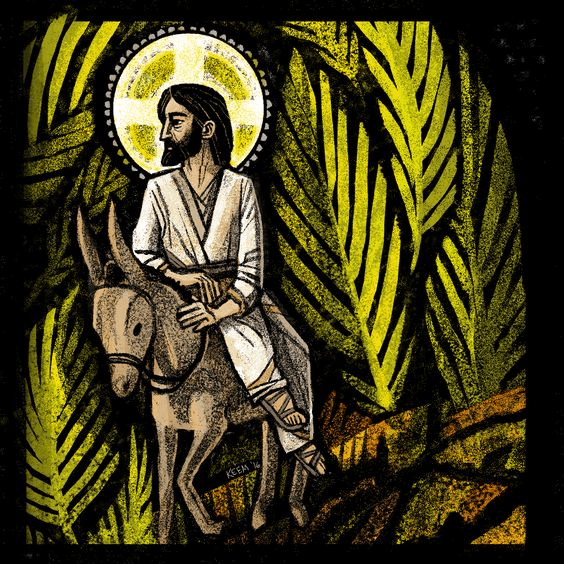
Art by Kris Miller

Palm branches were the national symbol for Israel, like our flag displays. There was no question about what the crowd of people wanted: A strong leader-king who was going to change the establishment and inaugurate a new administration of peace and prosperity that put the Romans in their place and give prominence to the Jews, like King David of old.

But Jesus made it evident he was not going to submit to what the crowd wanted. Christ had a different idea about what needed to take place.

Jesus did not ride into Jerusalem on a war horse, but on a donkey

An enthused crowd. People anticipating Jesus… and then he shows up! “What in the heck is he riding on…?  Is that a donkey!?” It was an anti-climactic moment.

Jesus purposely chose a donkey to ride into Jerusalem – serving notice to everyone that he was not going to capitulate to the crowd’s agenda for him and become the political savior they were looking for. The establishment was not going to be overturned.

Christ was giving balance to the people about who he was. Yes, he actually is a king, and the sovereign Lord of all – but a gentle King, a humble Sovereign, a meek Messiah. Those adjectives were not in most people’s vocabulary for a king. But Jesus is a king on his terms, not anybody else’s.

Because Jesus is a gentle king, we need not be afraid

Sometimes, what we think we need, and what we actually need, are two different things. Jesus uses his royal authority and power to help, not hurt. Although he might not meet all the expectations of the crowd, that doesn’t mean he will avoid giving them what they really need. 

The crowd was too hung up on their hardships and expecting deliverance from a human government. But what they received was something better: salvation from the dark powers of sin, death, and hell. 

Jesus will certainly come and right every wrong, but he will do it in God’s timing, not ours. 

In the meantime, when evil seems to be winning the day, we can be assured that God’s judgment will deal with each and every sin committed against God’s people. Jesus is attentive to his followers; his grace and power combine to give us what we truly need.

Conclusion

Ironically, Jesus ended up not being enough for his own people; they wanted something different than what they got. Here is the timeless point today’s story emphasizes:

We must adjust to who Jesus is, and not the other way around. 

In truth, Jesus came to take on the establishment – just not the Roman one. Jesus came to overturn the ruling establishment of Satan and his wicked spirits; to upend the principalities and powers of this dark world.

Jesus came to take back the people of this earth for God, and he would not do it through a political revolution, but by a spiritual one. Jesus would seize power by becoming a sacrifice for sin, making it possible for people to live a new life without the world, the flesh, and the devil dogging them at every turn.

Jesus is the rightful Ruler of both the church and the world. And he rules in humility, meekness, gentleness, and love. Jesus calls his followers to serve him by living in that same way. Just a few days after the entrance into Jerusalem with palm branches waving, Jesus told his disciples exactly what he wanted from them: 

“Now that I, your Lord and Teacher, have washed your feet, you also should wash one another’s feet. I have set you an example that you should do as I have done for you. I tell you the truth, no servant is greater than the master, nor is a messenger greater than the one who sent him (this is Jesus’ way of saying that they all must adjust to him, and not the other way around). Now that you know these things, you will be blessed if you do them.” (John 13:13-17, NIV)

Jesus went on to give them a clear command:

“Love one another.  As I have loved you, so you must love one another (this is Jesus’ way of emphasizing what is to be the priority of his subjects in the kingdom of God). By this all men will know that you are my disciples if you love one another.” (John 13:34-35, NIV)

Jesus is engaging in a revolution, but not in a worldly sense. Christ sends his followers to spread the message of forgiveness and new life for individuals, families, workplaces, neighborhoods, and nations. It is a revolution that will be ushered in through love, not hate; through the violence of a singular sacrifice, and not through the violence of wars and political coups.

Is Jesus really enough for me, just the way he is? Or, do I believe he ought to be different than he is?  

I daily strive to say, no matter the circumstance, that the grace of Jesus Christ is enough for me. If all were stripped and taken from me, if all the world were against me, if nothing went right and all was upside-down, I would still have the love of God in Jesus Christ. Amen.

Dealing with a Clash of Belief (Acts 3:17-4:4)

“And now, friends, I know you had no idea what you were doing when you killed Jesus, and neither did your leaders. But God, who through the preaching of all the prophets had said all along that his Messiah would be killed, knew exactly what you were doing and used it to fulfill his plans.

“Now it’s time to change your ways! Turn to face God so he can wipe away your sins, pour out showers of blessing to refresh you, and send you the Messiah he prepared for you, namely, Jesus. For the time being he must remain out of sight in heaven until everything is restored to order again just the way God, through the preaching of his holy prophets of old, said it would be. Moses, for instance, said, ‘Your God will raise up for you a prophet just like me from your family. Listen to every word he speaks to you. Every last living soul who refuses to listen to that prophet will be wiped out from the people.’

“All the prophets from Samuel on down said the same thing, said most emphatically that these days would come. These prophets, along with the covenant God made with your ancestors, are your family tree. God’s covenant-word to Abraham provides the text: ‘By your offspring all the families of the earth will be blessed.’ But you are first in line: God, having raised up his Son, sent him to bless you as you turn, one by one, from your evil ways.”

While Peter and John were addressing the people, the priests, the chief of the Temple police, and some Sadducees came up, indignant that these upstart apostles were instructing the people and proclaiming that the resurrection from the dead had taken place in Jesus. They arrested them and threw them in jail until morning, for by now it was late in the evening. But many of those who listened had already believed the Message—in round numbers about five thousand! (The Message)

I believe a lack of self-awareness is at the middle of a great many sins in this world. A lot of folks just simply do not realize how they come across to others; what impact their words and actions have upon others; and their illogical and nonsensical forms of thinking.

It’s frustrating and maddening for those who can see the blind spots in another’s life. And, keep in mind, it’s the same for others concerning some area of thought or dogmatic belief we may hold to, as well.

Recently, I had one of those surreal conversations. I had made a statement, quoting a verse from one of the New Testament Gospels about what Jesus said. Later in the day, a person who heard me say it, approached me and emphatically stated, “Jesus never said that.”

Even though I went directly to the verse and read it, the person then stated, “But that’s not from the King James or New King James Version.” So, I went to the New King James and read it. “You have to go to the King James because that’s the most reliable.” And then, after reading it there, the person dogmatically stated, “Well, that was added by a scribe. Jesus didn’t really say that.”

Even after all this, and pointing the person toward the field of textual criticism and how languages get translated, they still refused to consider the evidence right in front of their face. Yes, indeed, it is maddening! (Note: The person went so far as to begin attacking my biblical hermeneutic and my faith, because well, if you cannot accept the evidence, then you must go the ad hominem route of discrediting the person. *Sigh*)

People generally do not like their beliefs challenged nor upended. And some persons will do just about anything to maintain those beliefs – including verbal attacks against someone’s very personhood.

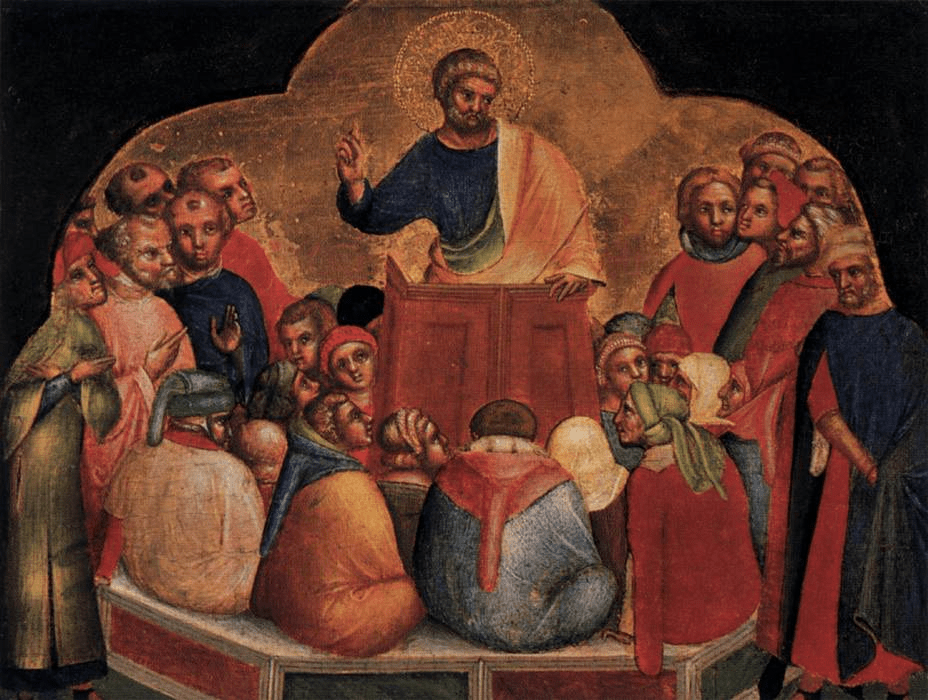
Apostle Peter preaching, by Lorenzo Veneziano, c.1370

And that is exactly what happened with the Apostles Peter and John. Their proclamation of Christ and his resurrection struck a nerve with the Jewish Sadducees who were the keepers of proper worship and liturgy amongst the temple. The Apostles’ teaching was so scandalous and threatening to their own beliefs, that they used their authority to throw Peter and John in jail – just for proclaiming a message the Sadducees didn’t like.

It never feels good getting toasted by those who claim insight and knowledge but are, in reality, a bunch of ignorant simpletons who don’t want to change and will hold onto their sense of power and superiority at all costs.

Yet, the consolation to all of this, is that there are others who are open-minded enough to listen well and adjust their belief systems to match the truthful evidence given to them. And so, despite the efforts of the Sadducees to suppress apostolic preaching, the fledgling group of Christ followers were being added by the thousands.

It turns out that nobody can resist the Holy Spirit of God, no matter how much earthly pull and power they possess.

Today’s New Testament lesson reminds us and teaches us that:

  • Self-awareness of why we hold to our particular beliefs, matters. We ought to hold our dogmatism very loosely.
  • Proclamation of the gospel, that is, the good news of Christ’s crucifixion and resurrection, makes a difference in lot of people’s lives.
  • Opposition is to be expected. There are some who view the good news of grace as the bad news of judgment against themselves; they will oppose it by any means possible.
  • Humility will always serve us well in the spiritual life, whereas condescending arrogance will never help anybody. For God’s sake, please have enough humility to listen and learn, even if (and especially) you don’t like what you’re hearing – no matter which end of the discussion you are on.

If we want the world to be different, then the change begins with you and me. Christians have the opportunity, if they will take up the mantle, of being the most calm, humble, and attentive people in the room. In this time of the year, no other stance and skill can be more important amongst family, friends, and others during the holidays.

O Lord, you have told us what is good, and what you require of us: To do what is right, to love mercy, and to walk humbly. Help us walk together in love and compassion towards the cross, humbly with you and one another. Let your Holy Spirit guide us on the right path to truth and reconciliation with humility; and enable us to hear each other, for we do not want to walk by pride or self-sufficiency, through Jesus Christ our Lord. Amen.

The Redeemed and Responsive Soul (Psalm 107:1-7, 33-37)

O give thanks to the Lord, for he is good,
    for his steadfast love endures forever.
Let the redeemed of the Lord say so,
    those he redeemed from trouble
and gathered in from the lands,
    from the east and from the west,
    from the north and from the south.

Some wandered in desert wastes,
    finding no way to an inhabited town;
hungry and thirsty,
    their soul fainted within them.
Then they cried to the Lord in their trouble,
    and he delivered them from their distress;
he led them by a straight way,
    until they reached an inhabited town…

He turns rivers into a desert,
    springs of water into thirsty ground,
a fruitful land into a salty waste,
    because of the wickedness of its inhabitants.
He turns a desert into pools of water,
    a parched land into springs of water.
And there he lets the hungry live,
    and they establish a town to live in;
they sow fields and plant vineyards
    and get a fruitful yield. (New Revised Standard Version)

The responsive spirit

A soul full of spiritual abundance responds freely and organically to God with offerings of gratitude for divine rescue and redemption.

The spiritually responsive person is at peace, content, and able to love with a sensitivity to God because they have had their needs for safety, satisfaction, and relational connection fulfilled. So, as a result, they are able to:

  • worship joyfully and praise God
  • speak words of thanksgiving
  • be attentive to self-care and personal well-being
  • use their resources wisely, feeling capable and confident of making good decisions that bless both the church and the world
  • know they are secure in the loving hands of God

The reactive spirit

Conversely, a soul that is empty from spiritual deprivation reacts predictably and robotically to others with frustration and fear.

The spiritually reactive person seems perpetually upset and in chronic emotional pain, feeling rattled and worried most of the time. They do not reflexively look to the Lord. Their needs for safety, satisfaction, and relational connection have not been met. So, as a result, they are:

  • hypervigilant, on the lookout for the bad, which they are convinced is coming
  • focused narrowly with tunnel vision, having lost sight of the big picture
  • prone to overgeneralizing their negative experiences as being the only experiences they ever have
  • searching for continual stimulation, just to seem alive and feel something
  • insecure, wanting constant validation from others because they cannot give themselves any encouragement

So, what do you do when always feeling between a rock and a hard place, experiencing racing thoughts, being anxious more than not, feeling like an abandoned town in the Old West with nothing but tumbleweed moving down the street?

A redeemed soul

In your desperation, call out to God. The Lord can:

  • get you out in the nick of time and deliver you soul from trouble so that you can be grateful for divine love
  • put your feet walking on a wonderful road of grace that leads to a good place of transformation
  • meet your needs for freedom, contentment, and loving relational networks, so that your spirit is full of right relationships, purity, mercy, and peace

You can once again, or maybe for the first time, feel like:

  • A flowing river, instead of sunbaked mud
  • A fruitful orchard, instead of dry dead tree
  • A farmer with much grain and many animals, instead of a homeless person sitting on a pile of dung
  • A person loved and valued by God, instead of a waste of space, breathing air that others could have
  • A sheep who knows the shepherd is watching over them, instead of an insect that everyone steps on

Keep in mind, that the experience of blessing, the encounter of abundance, and the feeling of peace, is not like a simple math equation – as if God were a divine genie that you happened to find and got three wishes.

Rather, the fulfilling spiritual life involves a persistent faith, confident hope, and constant love. These come from God, and are accessed through humility. The proud person will not realize a life of faith, hope, and love, because they believe they already know what is best.

The humble admit their ignorance, their failings, their shame, their guilt, and their desperation.

Approaching God with humility doesn’t mean to heap deprecation and curses on oneself. It just means to be honest with where you are spiritually, emotionally, mentally, and physically. And to cry out for help, knowing you have nothing to offer in return.

In God’s economy, the currency is grace – and not some give-and-take, I’ll-scratch-your-back-if-you-scratch-mine sort of mentality. God’s steadfast love endures forever. God’s kingdom spins on the axis of grace.

The Lord is not a reactive God but a responsive God. The Lord responded to Israel’s cry for deliverance not just with food and drink, but with a city. God did not only meet the immediate needs of the ancient Israelites, for whom the psalmist is one, along with the original recipients; the Lord took care of their larger, long term needs. 

The people needed a place where they could settle down, raise their own crops and tend their own livestock, and have a dependable means of making a living. God satisfied this, and more, by giving them a city where they could settle, be safe, secure, and content.

God can do anything, you know—far more than you could ever imagine or guess or request in your wildest dreams. God does it not by pushing us around, but by working within us, the Spirit deeply and gently providing us with our deepest and greatest needs.

Blessed heavenly Father, you have filled the world with divine beauty: Open our eyes to behold your gracious hand in everything you have done, so that, rejoicing in all your creation, we may learn to serve you with gladness; for the sake of him through whom all things were made, your Son Jesus Christ, our Lord, who with you and the Holy Spirit are one God, now and forever. Amen.

God, the Jilted Lover (James 4:4-10)

You’re cheating on God. If all you want is your own way, flirting with the world every chance you get, you end up enemies of God and his way. And do you suppose God doesn’t care? The proverb has it that “he’s a fiercely jealous lover.” And what he gives in love is far better than anything else you’ll find. It’s common knowledge that “God goes against the willful proud; God gives grace to the willing humble.”

So let God work his will in you. Yell a loud no to the Devil and watch him make himself scarce. Say a quiet yes to God and he’ll be there in no time. Quit dabbling in sin. Purify your inner life. Quit playing the field. Hit bottom, and cry your eyes out. The fun and games are over. Get serious, really serious. Get down on your knees before the Master; it’s the only way you’ll get on your feet. (The Message)

Quite apparent is the fact that the Apostle James was not trying to win friends in the world. However, he was trying to influence the people within the churches in his care. Specifically, he was confronting the proud and arrogant.

So, please understand, up front, that James was going after the haughty persons because it takes a hammer to break a hard heart. And so, his approach ought only to be emulated in the unique context of handling persons stuck in their own destructive hubris. Nevertheless, there is much instruction in these verses to help us all.

Throughout Holy Scripture, we find a marriage metaphor, likening the relationship of God to the people, much like a lover. God’s covenant relationship is at the heart of understanding the whole of Scripture. Whenever people stray from divine promises, God is offended and hurt. 

Yes, God feels pain. God is an emotional Being, which is why we have emotions as God’s image-bearers. One way to view the Bible is that it is a book about God, the jilted lover. The Lord set affection and love upon people, yet many people have spurned their Lover’s advance. And this situation pains God. 

When Adam and Eve, decided to find satisfaction outside of God, the Lord was hurt. After them, when people had children and raised them, they did so largely apart from the God who loved them:

The Lord saw that the human beings on the earth were very wicked and that everything they thought about was evil. He was sorry he had made human beings on the earth, and his heart was filled with pain. (Genesis 6:5-6, NCV)

Yet, God was gracious. The Lord took a group of Noah’s descendants, Abraham’s family, and set a covenant of affection on them. God hoped to restore the world to right relationship through the Israelites. However, they too, came to set their affections on others. So, nearly half of the Old Testament is devoted to communicating the Lord’s hurt and disappointment. 

Like a jilted lover, God longed for Israel to remain faithful. For example, the prophet Hosea had an unfaithful wife, Gomer, and their relationship mirrored the relationship between God and Israel. Just as Hosea did not give up on his wife, even though she was brazenly unfaithful, so God looked at Israel as a spouse and could not bear to give her up.

Israel spurned their lover’s grace and kindness and actively sought other lovers, causing God anger and agony. God recounted the history of unfaithfulness:

“At every crossroad you built your platform and degraded your beauty by spreading your legs to all comers. And so, you encouraged even more promiscuity. You prostituted yourself with the Egyptians, your neighbors with the large sexual organs, and as you added to your seductions, you provoked me to anger…. 

Still not satisfied, you prostituted yourself to the Assyrians, but they were not enough for you either. So, you prostituted yourself with the Babylonians, the land of traders, but again you were not satisfied. How sick was your heart that you could do all these things, the deeds of a hardened prostitute?…

You are like an adulterous wife: you take in strangers instead of your husband. Ordinary prostitutes are given gifts, but you gave your gifts to all your lovers. From every direction you even bribed them to come to you for your sexual favors. As a prostitute, you were more perverse than other women. No one approached you for sexual favors, but you yourself gave gifts instead of receiving them.” (Ezekiel 16:25-34, CEB)

Despite Israel’s unfaithfulness, God extended grace to the beloved spouse:

“I am taking you back!
I rejected you for a while,
but with love and tenderness
    I will embrace you again.
For a while, I turned away
    in furious anger.
Now I will have mercy
    and love you forever!
I, your protector and Lord,
    make this promise.” (Isaiah 54:6-8, CEV)

The Old Testament ends with God still longing for return:

The Lord proclaims: “I care passionately about Zion; I burn with passion for her.” (Zechariah 8:2, CEB)

All of this theological awareness was in the heart of the Apostle James when he wrote his letter to the hard-hearted. He knew they were flirting with the world. He wanted them to stop and return to the God who longed to show them grace, if only they would humble themselves.

God yearns, passionately, for us to find our needs met, and enjoyment found, in the loving divine embrace. Spiritual adultery hurts God deeply, like it would any jilted lover. God awaits with loving patience to show grace and compassion to wayward people. 

Only the stance and attitude of humility can receive grace. Sinful pride prevents people from receiving God’s good gift. So, James rattled-off ten quick staccato commands to remain connected in a love relationship with God. They are resolutions to live by. 

Submit to God

Humble folk willingly place themselves under God’s authority because they are convinced God has their best interests at mind. One temptation when facing adversity is to entertain the belief that no one is going to look out for you except yourself. So, to avoid getting hurt too badly, we might become cynical, arrogant, and callous – self-protective strategies designed to keep the hurt away. This only creates hardness of heart. The alternative is faithful submission to God – knowing that God’s Spirit will protect and living with the conviction that nothing can separate us from the love of God in Christ.

Resist the devil

Satan is a bully. The way to deal with bullies is to stand up to them. We face down the temptation by submitting to God and resisting the devil. Don’t be deceived into flipping it around by listening to Satan and avoiding submission to God.

Come near to God

Like a loving parent, the Lord longingly looks out the window waiting for prodigals to return. Coming to God is the first thing we ought to do. When my daughter was young her bike was stolen. So, we sat down together in the backyard and came to God in prayer. I barely finished praying when a police cruiser pulled up in the alley behind our house. The policeman rolled down his window and said, “Hey, are you missing a bike?”  We hopped in and he took us to where someone had ditched the bike. It was a tremendous lesson that when we come to God, God comes to us. I realize life does not always work that way, yet we can be assured that God listens, hears, and will respond.

Wash your hands

We cannot approach God with blood on our hands, but must come squarely facing our sin and disobedience.  We must deal with the wrong we have done without sweeping it under the rug. God wants us to admit our sin, receive grace, and deal with matters of restitution and reconciliation, without trying to save face when found out in a concern for “optics.”

Purify your heart

Whereas the previous resolution is mostly external, this one addresses the inner person, the heart. Not only do our actions need to be cleaned up through washing our hands, but our attitudes must also be purged of pollution. Our hearts cannot handle two masters; we are to be single-minded without mixed motives.

“The man who tries to walk two roads will split his pants.”

African proverb

The next four resolutions describe important emotional responses to sin:

“The Crying Giant,” Wilmington, Delaware

Grieve

Trying to move on without grieving and lamenting is called denial. Grief is not only an event; it is a process which takes time. Grieving is biblical. Sharing our stories with each other, giving testimony to God’s grace, and expressing ourselves is important. A loving God knows there cannot be healing apart from grief and lament.

Mourn

Blessed are those who mourn with an emotional response to the devastation of sin. Mourning sees sin in all its foulness and degradation. People who do not mourn become hard-hearted and need deep spiritual transformation. Jesus offers the remedy: By his wounds we are healed.

Wail

We are to more than cry – we need to wail.  Whereas mourning might be more personal, wailing has a much more public dimension to it. I believe the great tragedy in many modern churches is an inordinate focus on victory and triumphalism. The result: Far too many Christians cry alone. No one should ever have to cry by themselves. We must weep with those who weep. If there ever was an appropriate place for crying, it should be amongst fellow brothers and sisters in Christ.

Change

We cannot turn the clock back to some bygone idyllic era. We are to grasp the type of change which occurs in living for Jesus Christ and above sin – with no casual cavalier attitudes toward sin. I once had a conversation with a young woman about heaven and hell. When we began the discussion, she expressed a desire to be wherever the better party was going on. By the time we finished our conversation she was grieving and crying. I never knew what became of her. But once she got just a glimpse of the gravity of sin, it undid her.

Be humble

Humility sums up all these resolutions. The paradox is that through grieving, mourning, and wailing we become joyful and satisfied; through suffering there is glory; becoming last is to become first; entering the narrow gate leads to the broad open space of God’s eternal life.

Gracious God, our sins are too heavy to carry, too real to hide, and too deep to undo. Forgive what our lips tremble to name, what our hearts can no longer bear, and what has become for us a consuming fire of judgment. Set us free from a past that we cannot change; open to us a future in which we can be changed; and grant us grace to grow more and more in your likeness and image, through Jesus Christ, the light of the world. Amen