The Beatitudes of Christ (Matthew 5:1-12) are not a knee-jerk, random collection of pithy phrases from Jesus on what constitutes approval from God. They intentionally build upon each other. If the Sermon is the cornerstone of Christ’s teaching, and the Beatitudes are the cornerstone of the Sermon, then poverty of spirit is the cornerstone of the Beatitudes. This Beatitude is foundational to the Christian life. So, what does it mean to be “poor in spirit”?
“Poor” comes from the word “beggar.” And why does any beggar beg? Because they are in need. Beggars are desperate and destitute, knowing they need help just to survive another day. A beggar begs because he cannot rely on reciprocity; he has absolutely nothing to give in return.
Jesus was saying to the crowd following him, that true followers have a realization of their spiritual bankruptcy and have no shame in begging God to act on their behalf. The truth is that we are all spiritually destitute before God and stand in stark need of divine resources to help us.
In reality, we have nothing of worth to give or offer to God. And we can gain nothing apart from God. Therefore, we must realize who we are and take the position of humility, not pride, and look to God.
To understand our poverty of spirit is to see that we are stripped of all self-righteousness, and absolutely need God. Knowing and understanding our spiritual bankruptcy is to see sin for what it really is. So, how do you know when you are poor in spirit?
The spiritual beggar makes no deals with God because they have nothing to bargain with. There is no ground from which to leverage anything.
The spiritual beggar doesn’t complain because they realize they don’t deserve anything. Instead, there is praise to God for such incredible grace in providing their needs.
Spiritual beggars are always begging, that is, praying all the time. Beggars don’t pray because it is an effective strategy to further their agenda. They pray because, if they don’t, they won’t make it!
Spiritual beggars take Christ on his terms, not theirs. The beggar will do anything Jesus says because he knows his situation is desperate. He has an inner attitude of total dependence upon God. Without humility before God, the spiritual beggar discerns he is hopeless. There is no room for the pride that tries to posture and position to get what I want, because the spiritual beggar knows he has none of this.
Spiritual beggars realize the more you learn, the more you don’t know – that you are dependent on a holy God and Holy Scripture, and not your own ideas, thoughts, convictions, and opinions. So, you willingly take the posture of listening instead of always talking.
The spiritual beggar knows no enemies. The late Henri Nouwen said, “Poverty is the inner disposition that allows us to take away our defenses and convert our enemies into friends. We can only perceive the stranger as an enemy as long as we have something to defend.” Those who are poor in spirit are not anxiously clinging to their stuff, their money, or their good name. They have nothing of their own; it all belongs to God for divine purposes.
Only the poor in spirit will enter the kingdom of heaven. The way is narrow and only a few are willing to truly humble themselves before God and take the posture of a beggar. If we think we are above this, then we have gone the broad way of destruction that many will find.
Humility knows that God is God, and I am not. Therefore, we orient our lives around this reality. Just as we need to respect the law of gravity and submit to its presence and reality, so it is most necessary and important to accept God’s rule and reign in this world and submit to its constant force. This is simply the way of wisdom.
We do not presume to come to you, O merciful Lord, trusting in our own righteousness, but in your abundant and great mercies. We are not worthy so much as to gather up the crumbs under your table; but you are the same Lord whose character is always to have mercy. Grant us, therefore, gracious Lord, to be intimately close to your dear Son Jesus Christ, and to identify with him in his death so that our sinful bodies may be made clean by his body, and our souls washed through his most precious blood. May we forever dwell in Christ, and he in us. Amen.
I give thanks to you with all my heart, Lord. I sing your praise before all other gods. I bow toward your holy temple and thank your name for your loyal love and faithfulness because you have made your name and word greater than everything else. On the day I cried out, you answered me. You encouraged me with inner strength.
Let all the earth’s rulers give thanks to you, Lord, when they hear what you say. Let them sing about the Lord’s ways because the Lord’s glory is so great! Even though the Lord is high, he can still see the lowly, but God keeps his distance from the arrogant.
Whenever I am in deep trouble, you make me live again; you send your power against my enemies’ wrath; you save me with your strong hand. The Lord will do all this for my sake.
Your faithful love lasts forever, Lord! Don’t let go of what your hands have made. (Common English Bible)
“God opposes everyone who is proud, but is kind to everyone who is humble.”
James 4:6, CEV
God Cares
God consistently cares for lowly and humble folk. The Lord continually draws near to them. God bends down to meet them at their level. Conversely, the Lord hangs out on the margins of proud and arrogant people. God stands straight up and looks down from afar on such persons. They will experience divine distance, mostly because their attitudes and actions put the stiff arm toward God.
One of the most frustrating experiences in life is to have someone in power arrogantly misjudge you. Rather than carefully listening and offering gracious attention, the proud already assume they know what’s going on and what is best. So, like a bull about to enter a china shop, or a timebomb ready to explode, human hubris of the heart violates and blows up another’s life based upon misinformation and faulty egotistic assumptions.
God Sees
Yet, God sees. From a lofty place, clearly observing all creaturely activity, the Lord knows what is truly happening. And God is not okay with injustice perpetrated by cocky and pretentious autocrats. Everyone will experience God’s power. It’s just a matter of what type of power one receives.
Saving and encouraging power will sustain and uphold the humble of heart. However, the power of God’s wrath is the lot of puffed up peacocks who only care about getting their way. Their own puny power will be eventually stripped away and given to those who will wield it with grace.
The difference between the proud and the lowly is evidenced by their prayers. Megalomaniacs are concerned for material acquisitions, high positions, and fame. And their prayers reflect those ambitions. The meek, however, pray for increased spiritual strength to withstand trouble; enlarged hearts to hold more of God; and acceptance of whatever the Lord wants, whether it is for personal good or ill.
God Knows
The haughty might do many things which are good. It’s possible for them to achieve greatness through outstanding work and incredible feats. Yet, God knows the real score. Jesus said:
“Not everyone who calls me Lord will enter God’s kingdom. The only people who will enter are those who do what my Father in heaven wants. On that last Day many will call me Lord. They will say, ‘Lord, Lord, by the power of your name we spoke for God. And by your name we forced out demons and did many miracles.’ Then I will tell those people clearly, ‘Get away from me, you people who do wrong. I never knew you.’” (Matthew 7:21-23, ERV)
Self-absorbed people enjoy their own presence and narcissistically believe everyone else should, too. Yet, ordinary people, being attentive to the common good of all persons, rely on the presence and protection of God for everyone and everything.
God Helps
Whereas the vainglorious person trusts in their own ability to achieve accomplishments and hold power so that they can smugly boast about their superiority, on the contrary, the meek are content to labor for the Lord in relative obscurity, to try and use their skills and aptitude for the benefit of their fellow humanity. God holds them tightly and securely, but not so with the egotistical. They will fall because they were never in God’s hand to begin with.
If the humble are weak, that’s okay. Because God is strong. If they are in trouble, no problem. The Lord has their back. They can let go, knowing there is a God who doesn’t. And that is the irony to the spiritual life – that in releasing and relinquishing we gain and acquire. We shall be vindicated by God from the wicked. For the Lord’s steadfast love will have the day.
Most merciful God, we confess that we have sinned against you in thought, word, and deed, by what we have done, and by what we have left undone. We have not loved you with our whole heart; we have not loved our neighbors as ourselves. We are terribly sorry, and we humbly repent. For the sake of your Son, Jesus Christ, have mercy on us and forgive us so that we may delight in your will, and walk in your ways, to the glory of your Name. Amen.
To the elders among you, I appeal as a fellow elder and a witness of Christ’s sufferings who also will share in the glory to be revealed: Be shepherds of God’s flock that is under your care, watching over them—not because you must, but because you are willing, as God wants you to be; not pursuing dishonest gain, but eager to serve; not lording it over those entrusted to you, but being examples to the flock. And when the Chief Shepherd appears, you will receive the crown of glory that will never fade away.
In the same way, you who are younger, submit yourselves to your elders. All of you, clothe yourselves with humility toward one another, because “God opposes the proud but shows favor to the humble.”(NIV)
Today’s New Testament lesson addresses two groups of people: Leaders and followers, the older and the younger, shepherds and sheep. Both have their distinct roles and places, yet both are to share together in the virtue of humility. Whether pastor or parishioner, mentor or mentee, humble service is to characterize all.
I spent a good chunk of my ministerial life working with college students and twenty-somethings. One of the reasons I like being around young adults is that they have a very well attuned barometer to hogwash coming from older folks. Unlike children and more mature adults, this group of people live in a nexus between an emerging awareness of the world without having yet been crusted over with bitterness or disillusionment. They can spot a disingenuous person across the room like an eagle eyes the difference between a fish and a rock at five-thousand feet in the air.
All of us have likely had the experience of not being able to explain why, but a certain interaction with a person just seems off – it smacks of being a bit too contrived and manipulative. The other person might talk a good line, yet your instincts tell you different. So, for example, if a church pastor or leader seems to be just going through the motions as if the work is a necessary evil, then there might be something behind it. It is always a good idea to stop and listen to your gut speak.
Difficult for many people is that life is not so much about learning a certain skill set, as if we were in a trade school. The skills approach relies upon learning to say certain things, do certain things, and press certain buttons in others, and then get a solid expected outcome. That kind of approach is where the finely attuned baloney meter goes off in others. They sense that this person talking to them is not bringing anything of themselves to the discussion; they’re just talking without listening; they just go on without a sense of dialogue in which they learn from you or reveal anything of themselves to you.
I genuinely believe humility is the cornerstone of all virtues and the foundation to effective personal interactions and group dynamics. Without humility, there is no sense of the majesty and dignity of the other person – there is only competition and a twisted hierarchy of those with power and those without. If humility is absent, life is a trade school in learning to get what I want on the backs of others.
However, with humility, who we are as people matters. I bring my feelings, my thoughts, my beliefs, my experiences, and my questions into the conversation or situation and seek to, in turn, discover what you think and feel. Then, together, we come to a third way of seeing that honors our collective sharing and consulting of one another with fresh collaboration which blesses the world. This is less a skill set, and more of just being a good human being.
Humility is a posture, not a skill to leverage for what we want. A humble disposition pursues learning, growth, and development. It sits with uncertainty and mystery so that genuine relationship has a real go at happening. Humility sits on the floor at Jesus’ feet and discovers something about self, God, and the interaction between each.
The humble emptying of oneself is necessary in awakening to a new awareness of God’s presence. It may not mean that shepherds and leaders have clear assurances and certain plans, yet it will surely involve living in the awkward in-between of assurance and uncertainty, being loved but not knowing where that love will take you, and following Jesus without a pre-negotiated plan.
No one can malarkey their way through the Christian life; everyone needs the posture of humility. Jesus will be our Teacher, yet we will need to bring ourselves to the mix because Christianity is not dispassionately taking notes and then forensically regurgitating it all on an exam. Instead, Christianity is a dynamic spiritual encounter between God and self through the person of Jesus. It begins with humility. And the rewards of such living are permanent and eternal.
Jesus, the Good Shepherd of the sheep, give us the humility which realizes its ignorance, admits its mistakes, recognizes its need, welcomes advice, and accepts rebuke. Help us always to praise rather than to criticize, to sympathize rather than to discourage, to build rather than to destroy, and to think of people at their best rather than at their worst. This we ask for your name’s sake. Amen.
You adulterous people, don’t you know that friendship with the world means enmity against God? Therefore, anyone who chooses to be a friend of the world becomes an enemy of God. Or do you think Scripture says without reason that he jealously longs for the spirit he has caused to dwell in us? But he gives us more grace. That is why Scripture says:
“God opposes the proud but shows favor to the humble.”
Submit yourselves, then, to God. Resist the devil, and he will flee from you. Come near to God and he will come near to you. Wash your hands, you sinners, and purify your hearts, you double-minded. Grieve, mourn, and wail. Change your laughter to mourning and your joy to gloom. Humble yourselves before the Lord, and he will lift you up. (NIV)
Apparently, the Apostle James was not trying to win friends. But he was trying to influence people, specifically those who are proud. So, please understand from the outset that James was going tough after haughty persons because it takes a hammer to break a hard heart. And so, his approach ought only to be emulated in the unique context of handling persons stuck in their own destructive hubris. Nevertheless, there is much instruction in these verses to help us all.
Throughout the Bible, a marriage metaphor is used to liken the relationship of God to the people much like a lover. God’s covenant relationship is at the heart of understanding the whole of Scripture. Whenever people stray from divine promises, God is offended and hurt.
Yes, God feels pain. God is an emotional Being, which is why we have emotions as God’s image-bearers. One way to view the Bible is that it is a book about God, the jilted lover. The Lord set affection and love upon people, yet many people have spurned their lover’s advance. And this situation pains God.
When Adam and Eve, decided to find satisfaction outside of God, the Lord was hurt. When people went on to have children and raise them, they did so largely apart from the God who loved them. People strayed so far from God that it caused pain:
The Lord saw that the human beings on the earth were very wicked and that everything they thought about was evil. He was sorry he had made human beings on the earth, and his heart was filled with pain. (Genesis 6:5-6, NCV).
Yet, God was gracious. The Lord took a group of Noah’s descendants, Abraham’s family, and set a covenant affection on them. God hoped to restore the world to right relationship through the Israelites. However, they too, came to set their affections on others. So, nearly half of the Old Testament is devoted to communicating the Lord’s hurt and disappointment.
Like a jilted lover, God longed for Israel to remain faithful. The prophecy of Hosea is a case in point. Hosea had an unfaithful wife, Gomer, and their relationship mirrored the relationship between God and Israel. Just as Hosea did not give up on his wife, even though she was brazenly unfaithful, so God looked at Israel as a spouse and could not bear to give her up.
Israel spurned their lover’s grace and kindness and actively sought other lovers, causing God anger and agony. Through the prophet Ezekiel, God recounted the history of unfaithfulness:
“At every crossroad you built your platform and degraded your beauty by spreading your legs to all comers. And so, you encouraged even more promiscuity. You prostituted yourself with the Egyptians, your neighbors with the large sexual organs, and as you added to your seductions, you provoked me to anger…. Still not satisfied, you prostituted yourself to the Assyrians, but they were not enough for you either. So, you prostituted yourself with the Babylonians, the land of traders, but again you were not satisfied. How sick was your heart that you could do all these things, the deeds of a hardened prostitute?… You are like an adulterous wife: you take in strangers instead of your husband. Ordinary prostitutes are given gifts, but you gave your gifts to all your lovers. From every direction you even bribed them to come to you for your sexual favors. As a prostitute, you were more perverse than other women. No one approached you for sexual favors, but you yourself gave gifts instead of receiving them.” (Ezekiel 16:25-34, CEB)
Despite Israel’s unfaithfulness, God extended grace to the beloved spouse:
“I am taking you back! I rejected you for a while, but with love and tenderness I will embrace you again. For a while, I turned away in furious anger. Now I will have mercy and love you forever! I, your protector and Lord, make this promise.” (Isaiah 54:6-8, CEV)
The Old Testament ends with God still longing for return:
The Lord proclaims: “I care passionately about Zion; I burn with passion for her.” (Zechariah 8:2, CEB)
All this theological awareness was in the heart of James when he wrote his letter to the hard-hearted. He knew they were flirting with the world and wanted them to stop and return to the God who longed to show them grace, if they only would but humble themselves.
God yearns, passionately, for us to find our needs met, and enjoyment found, in the loving divine embrace. Spiritual adultery hurts God deeply, like it would any jilted lover. God awaits with loving patience to show grace and compassion to wayward people.
Only the stance and attitude of humility can receive grace. Pride and hubris prevent people from receiving God’s good gift. So, the Apostle James rattled-off ten quick staccato commands to remain connected in a love relationship with God. We might frame these as resolutions to live by.
Submit to God.
Humble folk willingly place themselves under God’s authority because they are convinced God has their best interests at mind. One temptation when facing adversity is to entertain the belief that no one is going to look out for you except yourself. So, to avoid getting hurt too badly, we might become cynical, arrogant, and callous – self-protective strategies designed to keep the hurt away. This only creates hardness of heart. The alternative is faithful submission to God – knowing that God’s Spirit will protect and living with the conviction that nothing can separate us from the love of God in Christ.
2. Resist the devil.
Satan is a bully. The way to deal with bullies is to stand up to them. We face down the temptation. Notice that James says we submit to God and resist the devil. We are not to be deceived into flipping it around by listening to Satan and avoiding submission to God.
3. Come near to God.
Like a loving parent, the Lord longingly looks out the window waiting for prodigals to return. Coming to God is the first thing we ought to do. When my daughter was young her bike was stolen. So, we sat down together in the backyard and came to God in prayer. I barely finished praying when a police cruiser pulled up in the alley behind our house. The policeman rolled down his window and said, “Hey, are you missing a bike?” We hopped in and he took us to where someone had ditched the bike. It was a tremendous lesson that when we come to God, God comes to us. I realize life does not always work that way, yet we can be assured that God listens, hears, and will respond.
4. Wash our hands.
We cannot approach God with blood on our hands. We must come to God squarely facing our sin and disobedience. We must deal with the wrong we have done without sweeping it under the rug. God wants us to admit our sin, receive grace, and deal with matters of restitution and reconciliation, without trying to save face when found out in a concern for “optics.”
5. Purify our hearts.
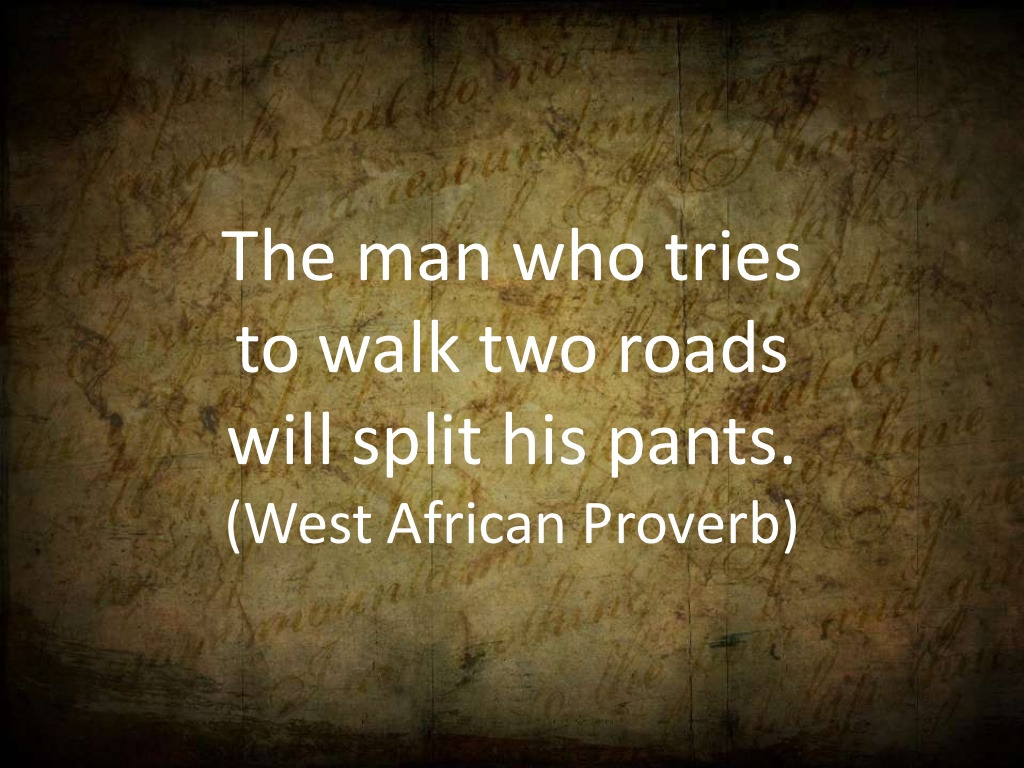
Whereas the previous resolution is mostly external, this one addresses the inner person, the heart. Not only do our actions need to be cleaned up through washing our hands, our attitudes must be purged of pollution. Our hearts cannot handle two masters. We are meant to be single-minded without mixed motives. There is an African proverb which says, “The man who tries to walk two roads will split his pants.”
The next four resolutions describe important emotional responses to sin….
6. Grieve.
Trying to move on without grieving and lamenting is called denial. Grief is not only an event; it is a process which takes time. Grieving is biblical. Sharing our stories with each other, giving testimony to God’s grace, and expressing ourselves is important. A loving God knows there cannot be healing apart from grief and lament.
7. Mourn.
Blessed are those who mourn (Matthew 5:4). Mourning the emotional response to devastation of sin, and how much we need God. It is to see sin in all its foulness and degradation. People who do not mourn are or become hard-hearted and need deep spiritual transformation. Jesus offers the remedy: By his wounds we are healed.
8. Wail.
We are to cry – more than cry – to wail. Whereas mourning might be more private and personal, wailing has a much more public dimension to it. I believe the great tragedy in many modern churches is an inordinate focus on victory and triumphalism. The result: Far too many Christians cry alone. No one should ever have to cry by themselves. We must weep with those who weep. If there ever was an appropriate place for crying, it should be amongst fellow brothers and sisters in Christ.
9. Change.
We cannot turn the clock back to some bygone idyllic era. We are to grasp the type of change which occurs in living for Jesus Christ and above sin. In other words, no casual cavalier attitudes toward sin. I once had a conversation with a young woman about heaven and hell. When we began the discussion, she expressed a desire to be wherever the better party going on. By the time we finished our conversation she was grieving, mourning, and crying. I never knew what became of her – I even forget her name now. But once she got just a glimpse of the gravity of sin, it undid her.
10. Be humble.
Humility sums up all these resolutions. The paradox is that through grieving, mourning, and wailing we become joyful and satisfied; through suffering there is glory; becoming last is to become first; entering the narrow gate leads to the broad open space of God’s eternal life.
Gracious God, our sins are too heavy to carry, too real to hide, and too deep to undo. Forgive what our lips tremble to name, what our hearts can no longer bear, and what has become for us a consuming fire of judgment. Set us free from a past that we cannot change; open to us a future in which we can be changed; and grant us grace to grow more and more in your likeness and image, through Jesus Christ, the light of the world. Amen.









 Rev. Tim Ehrhardt