Genesis 49:1-33 – The Long View

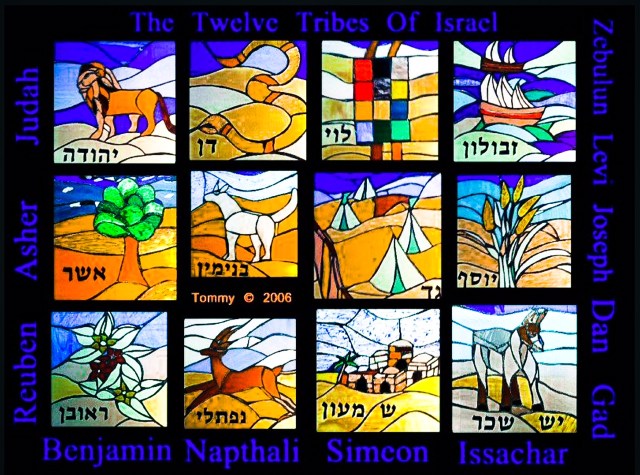
Blessing of the Twelve Tribes

Then Jacob called for his sons and said: “Gather around so I can tell you what will happen to you in days to come.

“Assemble and listen, sons of Jacob;
listen to your father Israel.

“Reuben, you are my firstborn,
my might, the first sign of my strength,
excelling in honor, excelling in power.
Turbulent as the waters, you will no longer excel,
for you went up onto your father’s bed,
onto my couch and defiled it.

“Simeon and Levi are brothers—
their swords are weapons of violence.
Let me not enter their council,
let me not join their assembly,
for they have killed men in their anger
and hamstrung oxen as they pleased.
Cursed be their anger, so fierce,
and their fury, so cruel!
I will scatter them in Jacob
and disperse them in Israel.

“Judah, your brothers will praise you;
your hand will be on the neck of your enemies;
your father’s sons will bow down to you.
You are a lion’s cub, Judah;
you return from the prey, my son.
Like a lion he crouches and lies down,
like a lioness—who dares to rouse him?
The scepter will not depart from Judah,
nor the ruler’s staff from between his feet,
until he to whom it belongs shall come
and the obedience of the nations shall be his.
He will tether his donkey to a vine,
his colt to the choicest branch;
he will wash his garments in wine,
his robes in the blood of grapes.
His eyes will be darker than wine,
his teeth whiter than milk.

“Zebulun will live by the seashore
and become a haven for ships;
his border will extend toward Sidon.

“Issachar is a rawboned donkey
lying down among the sheep pens.
When he sees how good his resting place is
and how pleasant is his land,
he will bend his shoulder to the burden
and submit to forced labor.

“Dan will provide justice for his people
as one of the tribes of Israel.
Dan will be a snake by the roadside,
a viper along the path,
that bites the horse’s heels
so that its rider tumbles backward.

“I look for your deliverance, Lord.

“Gad will be attacked by a band of raiders,
but he will attack them at their heels.

“Asher’s food will be rich;
he will provide delicacies fit for a king.

“Naphtali is a doe set free
that bears beautiful fawns.

“Joseph is a fruitful vine,
a fruitful vine near a spring,
whose branches climb over a wall.
With bitterness archers attacked him;
they shot at him with hostility.
But his bow remained steady,
his strong arms stayed limber,
because of the hand of the Mighty One of Jacob,
because of the Shepherd, the Rock of Israel,
because of your father’s God, who helps you,
because of the Almighty, who blesses you
with blessings of the skies above,
blessings of the deep springs below,
blessings of the breast and womb.
Your father’s blessings are greater
than the blessings of the ancient mountains,
than the bounty of the age-old hills.
Let all these rest on the head of Joseph,
on the brow of the prince among his brothers.

“Benjamin is a ravenous wolf;
in the morning he devours the prey,
in the evening he divides the plunder.”

All these are the twelve tribes of Israel, and this is what their father said to them when he blessed them, giving each the blessing appropriate to him.

Then he gave them these instructions: “I am about to be gathered to my people. Bury me with my fathers in the cave in the field of Ephron the Hittite, the cave in the field of Machpelah, near Mamre in Canaan, which Abraham bought along with the field as a burial place from Ephron the Hittite. There Abraham and his wife Sarah were buried, there Isaac and his wife Rebekah were buried, and there I buried Leah. The field and the cave in it were bought from the Hittites.”

When Jacob had finished giving instructions to his sons, he drew his feet up into the bed, breathed his last and was gathered to his people. (NIV)

The theme of confidence works its way through the patriarch Jacob’s deathbed prophecies and blessings – a resolute conviction in the promises of God, that he will accomplish what he said he would do. Jacob expressed the hope and sure belief that God would bring the Israelites out of Egypt and into the land of Canaan as their inheritance – and, ultimately to the City of God, the eternal inheritance.

The Christian will find much in Judah’s blessing as the promise of the coming Christ, Jesus. Mentioning the implements of “staff” and “scepter” are symbols of authority. And, the reference to a donkey communicated a ruler was coming, as donkeys were the preferred mounts of royalty in ancient times. What is more, the washing of garments in wine, and eyes darker than wine, are allusions to the future blessing and abundance there will be through the tribe of Judah. In fact, the first miracle of Jesus was turning water into wine – a deliberate attempt by the Apostle John to connect Jesus with Old Testament messianic prophecies of abundance and blessing. (John 2:1-12)

long hallway

It is important for us to take the long view of life, keeping in mind that it took eighteen centuries for Jacob’s prophecy of Judah to occur. This long view is what gives us our confidence in life and provides the patience and perseverance we need right now.  Keeping in mind the big picture of God’s work in this world is necessary because if we do not, we will likely become discouraged with the circumstances we face right now.

The reason Jacob makes it into the great Hall of Faith is not because he was squeaky clean and perfect in how he lived his life, but because he took the long view, the big picture, and saw that God was going to fulfill his promises to Israel:

By an act of faith, Jacob on his deathbed blessed each of Joseph’s sons in turn, blessing them with God’s blessing, not his own—as he bowed in worship upon his staff. (Hebrews 11:21, MSG)

Furthermore, when we string the following three verses together across both Testaments, we see the long view of God’s purposes:

It is true that you planned to do something bad to me. But really, God was planning good things. God’s plan was to use me to save the lives of many people. And that is what happened. (Genesis 50:20, ERV)

For I know the plans I have for you,” declares the Lord, “plans to prosper you and not to harm you, plans to give you hope and a future. (Jeremiah 29:11, NIV)  

And we know that all things work together for good to those who love God, to those who are the called according to his purpose. (Romans 8:28, NKJV)

In the Christian faith tradition, all God’s promises come together and are fulfilled in the person and work of Jesus. He is our salvation, our inheritance, and our hope.  To give our lives to him in complete trust of faith is both our challenge and our privilege.

May we live by faith, and not by fear.

Be present, O merciful God, and protect us through anxious times, so that we who are wearied by the changes of this life may rest in your eternal steadiness. Keep watch, dear God, with those who work, or watch, or weep this night, and give your angels charge over those who sleep. Tend the sick, Lord Christ; give rest to the weary, bless the dying, soothe the suffering, pity the afflicted, shield the joyous; and all for your love’s sake. Amen.

Psalm 130 – Waiting in Hope

waiting

Out of the depths I cry to you, Lord;
Lord, hear my voice.
Let your ears be attentive
to my cry for mercy.

If you, Lord, kept a record of sins,
Lord, who could stand?
But with you there is forgiveness,
so that we can, with reverence, serve you.

I wait for the Lord, my whole being waits,
and in his word I put my hope.
I wait for the Lord
more than watchmen wait for the morning,
more than watchmen wait for the morning.

Israel, put your hope in the Lord,
for with the Lord is unfailing love
and with him is full redemption.
He himself will redeem Israel
from all their sins. (NIV)

This psalm is the miserable cry of a nobody from nowhere. Yet, because the Lord is attentive to the righteous, the cry penetrates heaven and is received. The psalmist only wants to serve God with a new beginning and fresh obedience – and he will wait and hope for liberation from his misery.

We typically use the term “hope” in a wishful thinking sort of way. That is because we are not quite sure if things will shake-out like we want.  But biblical hope is not wishful thinking.  Rather, it is a confident expectation of what is to come. Hope is like anticipating the seasons.  In the dead of winter when it is bitter cold with little sunshine, we hope, and not wish, for Spring because we know it is coming.  It might come in early March, maybe in late April. The trees will bud, the grass will turn green, and the temperature will warm – you can bet your britches on it.

This old world might be messed up and broken right now, but it will not always be this way.  Because of the person and work of Jesus Christ, there is hope, the confident expectation that deliverance from sin, death, and hell will be fully realized. We are saved from the bondage of sin through the cross and resurrection of Christ.  We are delivered into an inheritance which can never perish, spoil, or fade – kept in heaven for us until the time is right. Meanwhile, we hope with the confident expectation of Christ’s coming again.

Praise be to the God and Father of our Lord Jesus Christ! In his great mercy he has given us new birth into a living hope through the resurrection of Jesus Christ from the dead, and into an inheritance that can never perish, spoil, or fade. This inheritance is kept in heaven for you, who through faith are shielded by God’s power until the coming of the salvation that is ready to be revealed in the last time. In all this you greatly rejoice, though now for a little while you may have had to suffer grief in all kinds of trials. (1 Peter 1:3-6, NIV)

Until our hope is fully realized, we cry out to God and watch for his deliverance. Regarding our salvation, it is accurate to say that we have been saved (from the realm of sin); we are currently being saved (through being made holy in this life); and, we will be saved (when Jesus returns). Liberation from both our personal struggles and the evil machinations of this world is an ongoing process that will only reach its complete fulfillment at the end of the age.

That is why we experience such a weird existence on this earth, a strange amalgam of good and bad.  We not only get mixed messages from the world, but also internally, within our souls, we experience the struggle between right and wrong.  Outwardly, we suffer in all kinds of earthly grief from others who do not understand us.  Inwardly, we have the silent pain and terrible wrestling of wanting to forgive but desiring revenge; of seeking to be gracious but seething with anger; of looking to express kind words but having hate speech blurt out instead.

It will not always be this way. We have a living hope.  Jesus has risen from death. He is alive. He is coming back to judge the living and the dead.  He will take us to be with him forever.  It is the confident expectation of unhindered relationship, with no obstacles of difficult people, and without any systemic evil from organizational structures giving us a hard time.

MLK hope quote

Hope is real. It is just as real as anything we will ever know this side of heaven. We might not always find what we are looking for in this life, yet, in the next life, we shall find the life that is truly life in Jesus Christ, who is our hope. Until then, we are to wait neither idly nor passively. Instead, it is sage for us to do the following:

Occupy the time. One of the best ways to avoid becoming anxious while waiting is to do what we are on this earth to do: be a blessing to others.

Bless those who persecute you; bless and do not curse. Rejoice with those who rejoice; mourn with those who mourn. Live in harmony with one another. Do not be proud but be willing to associate with people of low position. Do not be conceited…. Do not be overcome by evil but overcome evil with good. (Romans 12:14-16, 21, NIV)

Don’t try too hard. Trying to use willpower to squelch anxiety will only prompt even greater anxiety. Accept that we will have to wait and that we are not privy to God’s timetable.

Give all your worries and cares to God, for he cares about you. (1 Peter 3:7, NLT)

Wait with other people. Waiting with others through talking about our shared hope helps redeem our time in the here and now.

Be still in the presence of the Lord and wait patiently for him to act. Don’t worry about evil people who prosper or fret about their wicked schemes. (Psalm 37:7, NLT)

Think of patience as compassion. Becoming impatient about something in life is entirely normal and happens to all of us. Our impatience is a stress response to a situation. Learning to be more patient is a way of being more compassionate to ourselves and others.

Therefore, as God’s chosen people, holy and dearly loved, clothe yourselves with compassion, kindness, humility, gentleness, and patience. (Colossians 3:12, NIV)

Lord God Almighty, your hope arises with each dawn, pushing back the rubble of our lives. Each new day reminds us of your grace as you paint hope across the sky. Into the deafening cry of hopelessness, you whisper love that catches and holds us. There is no end, just new beginnings. No finish, just new starts. Into your resurrection we follow you into hope. You are alive in the world and in us. So, we carry your hope within our spirits always. Help us to lift our eyes and experience Christ’s resurrection hope arise in our lives through Jesus our Lord. Amen.

Psalm 105:1-6, 16-22, 45 – On Divine Providence

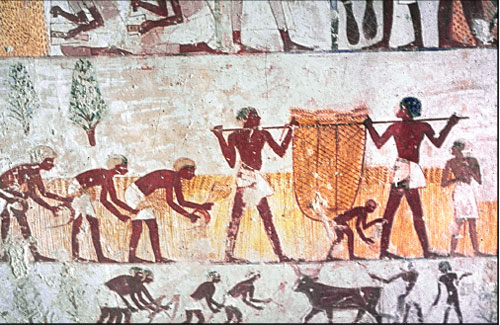
Egyptian workers harvesting grain c1420BCE
Egyptian workers harvesting grain. From the tomb of Mena in Thebes, c.1420 B.C.E.

Give thanks to the Lord and proclaim his greatness.
Let the whole world know what he has done.
Sing to him; yes, sing his praises.
Tell everyone about his wonderful deeds.
Exult in his holy name;
rejoice, you who worship the Lord.
Search for the Lord and for his strength;
continually seek him.
Remember the wonders he has performed,
his miracles, and the rulings he has given,
you children of his servant Abraham,
you descendants of Jacob, his chosen ones….

He called for a famine on the land of Canaan,
cutting off its food supply.
Then he sent someone to Egypt ahead of them—
Joseph, who was sold as a slave.
They bruised his feet with fetters
and placed his neck in an iron collar.
Until the time came to fulfill his dreams,
the Lord tested Joseph’s character.
Then Pharaoh sent for him and set him free;
the ruler of the nation opened his prison door.
Joseph was put in charge of all the king’s household;
he became ruler over all the king’s possessions.
He could instruct the king’s aides as he pleased
and teach the king’s advisers….

All this happened so they would follow his decrees
and obey his instructions.

Praise the Lord! (NLT)

Our spiritual and emotional vision can sometimes be myopic. It is precisely in those times when we have tunnel vision and neither look back to a past in which God acted with justice nor see ahead to a future with hope that we must remember God is supreme over everything, including time.

God’s providence and blessing is the animating force behind all events. The biblical character of Joseph is Exhibit A of God’s sovereign backstage orchestration of personal and world forces. Joseph’s story of brotherly betrayal, bondage, imprisonment, and rise to power include some lessons for us (Genesis 37-41):

  • Joseph is portrayed as a model of wisdom for us to follow.

Respect and obey the Lord! This is the beginning of knowledge. Only a fool rejects wisdom and good advice (Proverbs 1:7, CEV).  

Do not let mercy and truth leave you. Fasten them around your neck. Write them on the tablet of your heart. Then you will find favor and much success in the sight of God and humanity (Proverbs 3:3-4, GW).

  • Joseph did not know the end of the story while he was in the middle of it, languishing in prison. Little did he know that God was testing his character, training him to listen well, and preparing him for his eventual leadership in Egypt – all to save many lives from hunger and starvation.

Now faith is the assurance of things hoped for, the conviction of things not seen. (Hebrews 11:1, NRSV)

  • Joseph successfully negotiated and navigated a world which was vastly different from his own religion and ethics. He was determined not to give in to the seductions of women and power around him; and, he did not become bitter against his brothers, nor against the Egyptians.

Don’t love the world’s ways. Don’t love the world’s goods. Love of the world squeezes out love for the Father. Practically everything that goes on in the world—wanting your own way, wanting everything for yourself, wanting to appear important—has nothing to do with the Father. It just isolates you from him. The world and all its wanting, wanting, wanting is on the way out—but whoever does what God wants is set for eternity. (1 John 2:15-17, MSG)

Four-hundred years later, Moses also had to navigate the situation of being an Israelite in the world of Egypt, and walked in the footsteps of his forebear, Joseph:

By faith Moses, when he had grown up, refused to be known as the son of Pharaoh’s daughter.  He chose to be mistreated along with the people of God rather than to enjoy the pleasures of sin for a short time.  He regarded disgrace for the sake of Christ as of greater value than the treasures of Egypt because he was looking ahead to his reward. (Hebrews 11:24-26, NIV)

We understand, knowing the end of the story, that Joseph was in Egypt (in the world) to be a blessing and that God had him there for a purpose. This is no less true for the people of God. We do not exist merely for ourselves but to be a blessing to the world.  God, as he did for Joseph, shows us mercy while we are smack in the middle of hardship and not by taking us out of our worldly predicament.  Life must sometimes be lived at great risk amid the world and not apart from it.

Seen from a strictly worldly perspective, Joseph’s time in slavery and prison was an unnecessary injustice. However, from God’s vantage point, Joseph was learning to be mindful of God despite his circumstances. For the Lord is much more concerned about the process we undergo in spiritual formation, rather than simply producing a product at the end of the line. Most of life is lived in the mundane, and Joseph was faithful in all the workaday decisions and demands of life. This made him able to handle all the vicissitudes of others in their fickle and feckless ways and see God’s providential working.

Lord God, you hold both heaven and earth in a single peace. Let the design of your great love shine on the waste of our anger and sorrow, and give peace to your Church, peace among nations, peace in our homes, and peace in our hearts through Jesus Christ our Lord who with you and the Holy Spirit benevolently reign as one God, now and forever. Amen.

Luke 10:21-24 – Freedom and Blessing

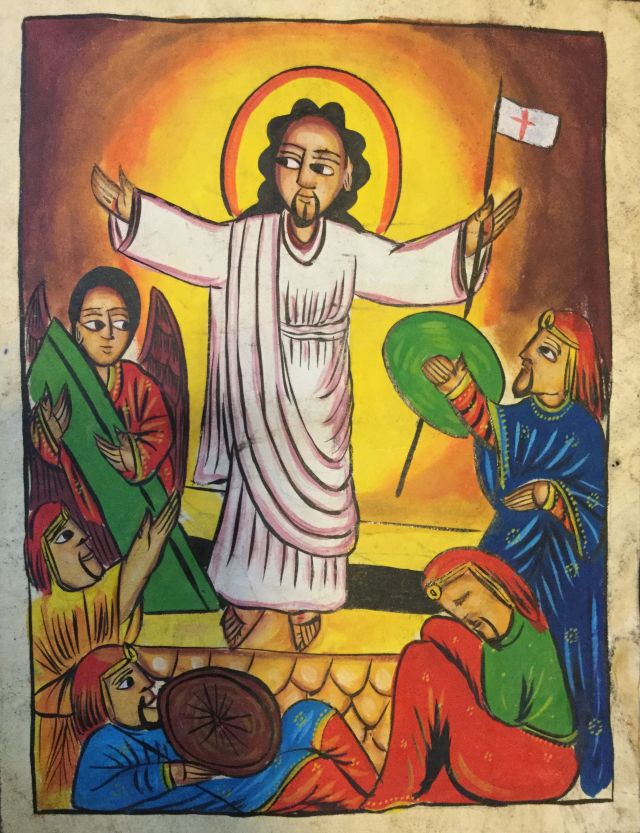
Ethiopian Jesus 2
Ethiopian Orthodox depiction of Jesus teaching

Then Jesus rejoiced in the Holy Spirit and said, “I praise you, Father, Lord of heaven and earth, because you have hidden these things from the people who are wise and smart. But you have shown them to those who are like little children. Yes, Father, this is what you really wanted.

“My Father has given me all things. No one knows who the Son is, except the Father. And no one knows who the Father is, except the Son and those whom the Son chooses to tell.”

Then Jesus turned to his followers and said privately, “You are blessed to see what you now see. I tell you, many prophets and kings wanted to see what you now see, but they did not, and they wanted to hear what you now hear, but they did not.” (NCV)

A healthy view of Holy Scripture is to look at it as an unfolding drama of redemption. Ever since the fall of humanity, God has been on a rescue mission to reclaim, redeem, and restore people. This human project has obviously taken several millennia; and, it still has not reached its fulfillment.

The Christian tradition understands that the climax of victory and final restoration to our true state as humans will occur when Christ returns. By warning us that divine mysteries are hidden to some and revealed to others is Jesus’ way of cautioning us toward triumphalism and self-congratulation. Yes, redemption is a reality; and, it is also not a reality. It is both here and is coming. We are delivered from sin, death, and hell – and, we still labor against the evil machinations of systemic world problems, our own sinful nature, and a demonic realm which is looking for every opportunity to exploit sin’s residue upon the earth.

What this all means on a practical basis is that the good old days for some were the bad old days for others. History is always written by the winners and those in power. The hidden voices are typically squelched. The vision of Jesus is that all kinds of people, not just a certain segment of winners, should enjoy God’s favor.

There were ancient people who longed for spiritual and physical freedom. They looked forward into history and had the hope of Messiah and God’s promises being fulfilled. History is still unfolding. People yet remain locked in personal bondage and large swaths of humanity still experience oppression and a longing to enjoy blessings which others possess and take for granted.

On this Independence Day in the United States it is important that we recognize and hold together both the blessings of realized freedom along with the limits of others’ freedom. And, with this realization, we continue to actively work for all people and keep praying that God’s kingdom come and God’s will be done, here on earth, as it is always done in heaven.

Frederick Douglass
Frederick Douglass, circa 1852

So, today, I am lifting a voice from history which exemplifies the struggle of the black experience in America. The following is a small portion from a speech by the ex-slave Frederick Douglass orated on July 4, 1852, nine years before civil war, with President Millard Fillmore and many congressional politicians in attendance:

“The feeling of the nation must be quickened; the conscience of the nation must be roused; the propriety of the nation must be startled; the hypocrisy of the nation must be exposed; and its crimes against God and man must be proclaimed and denounced. What, to the American slave, is your 4th of July? I answer: a day that reveals to him, more than all other days in the year, the gross injustice and cruelty to which he is the constant victim. To him, your celebration is a sham; your boasted liberty, an unholy license; your national greatness, swelling vanity; your sounds of rejoicing are empty and heartless; your denunciations of tyrants, brass fronted impudence; your shouts of liberty and equality, hollow mockery; your prayers and hymns, your sermons and thanksgivings, with all your religious parade, and solemnity, are, to him, mere bombast, fraud, deception, impiety, and hypocrisy — a thin veil to cover up crimes which would disgrace a nation of savages. There is not a nation on the earth guilty of practices more shocking and bloodier than are the people of these United States, at this very hour.”

Because history is forever unfolding, freedom and blessing develop over time and come more powerfully to some than others. True spiritual discernment, with the awareness to labor on behalf of the common good, does not ultimately come through astute observation and superior intellect; it comes by divine revelation. God will both conceal and reveal according to divine purposes and not human agendas.

Christian spirituality cannot be reduced to praying a sinner’s prayer and then maintaining a holding pattern on earth until heaven. Rather, Jesus remains present in this world through the person of the Holy Spirit and is continually interceding on behalf of those who need freedom and blessing. As Christ’s Body, Christians are to be the hands and feet of Jesus, animated by the Spirit to bring God’s ethical and benevolent regime to those who need it most.

If we are blessed, we are to pass blessing on without prejudice. For the kingdom of God belongs to the poor in spirit.

Dear God, Creator of the universe and all that inhabit it, we come as your Church, and as individuals, in humble submission to your word and your way. God, you are the Alpha and Omega, The Almighty Judge and The Forgiver of All Sins, so we come with humility and contrition on behalf of generations past, present and those yet unborn. We ask that you forgive us and create in us a new spirit. Bind our hearts and send forth the healing power that you and you alone can give to us and this sin-sick world. Bring us into reconciliation with one another and restore us to your righteous and holy path. Amen.