Luke 10:21-24 – Freedom and Blessing

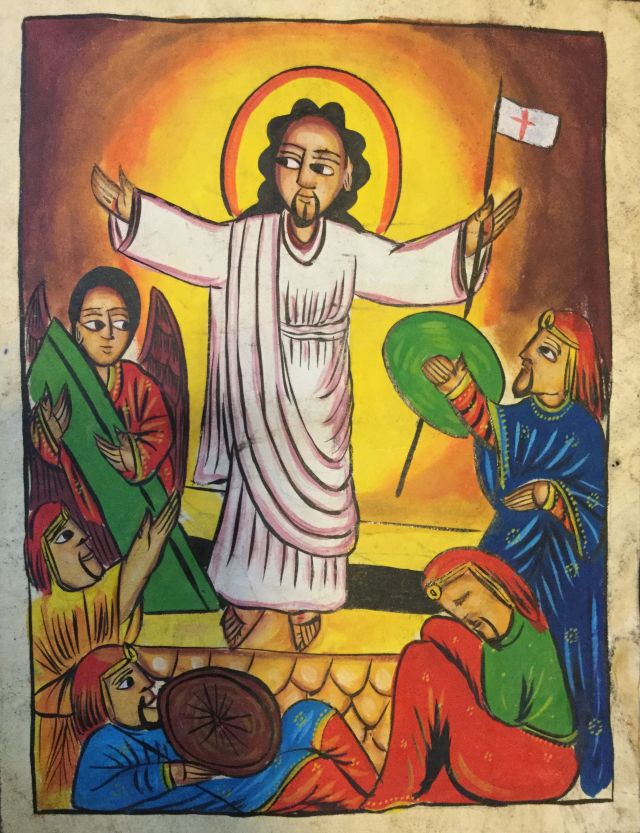
Ethiopian Jesus 2
Ethiopian Orthodox depiction of Jesus teaching

Then Jesus rejoiced in the Holy Spirit and said, “I praise you, Father, Lord of heaven and earth, because you have hidden these things from the people who are wise and smart. But you have shown them to those who are like little children. Yes, Father, this is what you really wanted.

“My Father has given me all things. No one knows who the Son is, except the Father. And no one knows who the Father is, except the Son and those whom the Son chooses to tell.”

Then Jesus turned to his followers and said privately, “You are blessed to see what you now see. I tell you, many prophets and kings wanted to see what you now see, but they did not, and they wanted to hear what you now hear, but they did not.” (NCV)

A healthy view of Holy Scripture is to look at it as an unfolding drama of redemption. Ever since the fall of humanity, God has been on a rescue mission to reclaim, redeem, and restore people. This human project has obviously taken several millennia; and, it still has not reached its fulfillment.

The Christian tradition understands that the climax of victory and final restoration to our true state as humans will occur when Christ returns. By warning us that divine mysteries are hidden to some and revealed to others is Jesus’ way of cautioning us toward triumphalism and self-congratulation. Yes, redemption is a reality; and, it is also not a reality. It is both here and is coming. We are delivered from sin, death, and hell – and, we still labor against the evil machinations of systemic world problems, our own sinful nature, and a demonic realm which is looking for every opportunity to exploit sin’s residue upon the earth.

What this all means on a practical basis is that the good old days for some were the bad old days for others. History is always written by the winners and those in power. The hidden voices are typically squelched. The vision of Jesus is that all kinds of people, not just a certain segment of winners, should enjoy God’s favor.

There were ancient people who longed for spiritual and physical freedom. They looked forward into history and had the hope of Messiah and God’s promises being fulfilled. History is still unfolding. People yet remain locked in personal bondage and large swaths of humanity still experience oppression and a longing to enjoy blessings which others possess and take for granted.

On this Independence Day in the United States it is important that we recognize and hold together both the blessings of realized freedom along with the limits of others’ freedom. And, with this realization, we continue to actively work for all people and keep praying that God’s kingdom come and God’s will be done, here on earth, as it is always done in heaven.

Frederick Douglass
Frederick Douglass, circa 1852

So, today, I am lifting a voice from history which exemplifies the struggle of the black experience in America. The following is a small portion from a speech by the ex-slave Frederick Douglass orated on July 4, 1852, nine years before civil war, with President Millard Fillmore and many congressional politicians in attendance:

“The feeling of the nation must be quickened; the conscience of the nation must be roused; the propriety of the nation must be startled; the hypocrisy of the nation must be exposed; and its crimes against God and man must be proclaimed and denounced. What, to the American slave, is your 4th of July? I answer: a day that reveals to him, more than all other days in the year, the gross injustice and cruelty to which he is the constant victim. To him, your celebration is a sham; your boasted liberty, an unholy license; your national greatness, swelling vanity; your sounds of rejoicing are empty and heartless; your denunciations of tyrants, brass fronted impudence; your shouts of liberty and equality, hollow mockery; your prayers and hymns, your sermons and thanksgivings, with all your religious parade, and solemnity, are, to him, mere bombast, fraud, deception, impiety, and hypocrisy — a thin veil to cover up crimes which would disgrace a nation of savages. There is not a nation on the earth guilty of practices more shocking and bloodier than are the people of these United States, at this very hour.”

Because history is forever unfolding, freedom and blessing develop over time and come more powerfully to some than others. True spiritual discernment, with the awareness to labor on behalf of the common good, does not ultimately come through astute observation and superior intellect; it comes by divine revelation. God will both conceal and reveal according to divine purposes and not human agendas.

Christian spirituality cannot be reduced to praying a sinner’s prayer and then maintaining a holding pattern on earth until heaven. Rather, Jesus remains present in this world through the person of the Holy Spirit and is continually interceding on behalf of those who need freedom and blessing. As Christ’s Body, Christians are to be the hands and feet of Jesus, animated by the Spirit to bring God’s ethical and benevolent regime to those who need it most.

If we are blessed, we are to pass blessing on without prejudice. For the kingdom of God belongs to the poor in spirit.

Dear God, Creator of the universe and all that inhabit it, we come as your Church, and as individuals, in humble submission to your word and your way. God, you are the Alpha and Omega, The Almighty Judge and The Forgiver of All Sins, so we come with humility and contrition on behalf of generations past, present and those yet unborn. We ask that you forgive us and create in us a new spirit. Bind our hearts and send forth the healing power that you and you alone can give to us and this sin-sick world. Bring us into reconciliation with one another and restore us to your righteous and holy path. Amen.

Trinity Sunday – The God of Wholeness

oak tree 2

We live in a fundamentally broken world. Systemic racism, political gridlock, social stratification, hate crimes, alcohol and domestic abuse, ageism, disease, malpractice, terrorism, and xenophobia barely scratch the surface of sad societal ills and we face living in this old fallen world. Indeed, it is all quite distressing. To realize wholeness and integrity will require operating the mechanism of blessing.

“May the grace of the Lord Jesus Christ, the love of God, and the fellowship of the Holy Spirit be with you all.” (2 Corinthians 13:14)

This is the blessing I leave with my congregation each Sunday. A divine blessing involves the wholeness and integrity of the triune God given to us through grace, love, and fellowship. Holding each facet of that blessing together can sometimes be a challenge.

There was a time in my life when I golfed every day. Even though I played a lot of golf, it was rare for me to have an entire round where my driving, approach shots, chipping, and putting all worked nicely together. My typical experience was that when my driving was superb, my chipping and putting was awful; or, that when my putting was amazing, my approach shots were atrocious. Rarely did I have the whole package of a solid golf game put together in one seamless round. Instead, my game, along with most amateur golfers, is typically disjointed with a combination of brilliant shots and ugly shanks.

The Christian life can seem the same way – with the ability to show love and grace, be open and caring on some days, and not so much on other days. We need God – the triune God. Within God there is complete wholeness, a total well-rounded divine Being.  As we connect with this Being, then we can experience God’s wholeness and integrity, which leads to our own consistent daily wholeness, with no divided herky-jerky self.

The Trinity – Father, Son, and Spirit – provides us with a model of wholeness and displays how it all comes together in a solid consistent life of blessing. There is a beautiful connection between the Trinity and our lives.  It is a path to wholeness that involves healing, hope, and spiritual health based in the triune God.

Healing

The grace of Jesus enables us to pull ourselves together. Jesus is the one who has brought reconciliation and restoration – he has made the bridge and connection to God. In response to this grace we aim for perfection (not perfectionism) pull ourselves together” and restore and heal ourselves. Since Jesus is the Reconciler, the one who restores and heals, we are to allow that grace to wash over us and seep deep into our souls so that we experience reconciliation, restoration, and healing.  When we are broken and disjointed, the grace of Jesus sets us back in place again.

Tim Hansel

The late Tim Hansel was a teacher and mountain climber. He wrote a book many years ago entitled, You Gotta Keep Dancin’: In the Midst of Life’s Hurts, You Can Choose Joy! Hansel lived with chronic debilitating pain for thirty-five years after a climbing accident where he literally fell off a mountain and shattered most of the vertebrae in his back. In his long journey of coming to grips with his painful existence, Tim Hansel discovered that wholeness can certainly come through brokenness. Healing can happen with pain still present. Maturity can occur through painful growth of the human spirit. He constantly said to people, “Pain is inevitable; but misery is optional.” He explained to others, “Character is developed through adversity and pain. That adversity can either destroy us or build us up, but it will not leave us the same, depending upon our chosen response to it.  Pain can either make us better or bitter.”

Even if you do not experience the kind of healing and restoration of body or soul you are looking for, maybe, like Tim Hansel, you will receive grace and freedom that the loving triune God gives. God himself lives with observing the terrible pain of humanity’s hurts every day. The more we participate in the life of God, the greater is our ability to deal with pain – our own as well as the pain of others.

Hope

The fellowship of the Holy Spirit enables us to receive comfort. The Spirit is the Paraclete, the one who encourages by coming alongside and helping. The Spirit works with us, intimately participating in our lived everyday experiences. The Spirit is God’s means of experiencing wholeness. The Holy Spirit lovingly appeals to us in ways we can understand and act – speaking words of comfort and exhortation with the commitment to a faithful presence. Since the Spirit is committed to helping us, thus, we are to help others through living in fellowship with them.

John-Wesley

When John Wesley was a young Christian, a seasoned saint advised him, “Do you wish to serve God and go to heaven? Remember you cannot serve him alone. You must therefore find companions or make them. The Bible knows nothing of solitary religion.” Wesley took that advice to heart. Convinced that the pursuit of personal holiness was impossible apart from Christian community, he carefully organized the Methodist movement (a reaction against solitary religion) into societies (congregations), classes (small groups of eight to twelve), and bands (accountability groups of three to five).

We are meant to receive the encouragement of the Spirit. The Holy Spirit does not hold back in providing us with the help we need to live the Christian life in the form of other believers. We are all important. If we are not healed, we hurt and then hurt others. However, with healing comes hope, and hope encourages us that it will not always be this way – there are better days ahead.

Hope helps us to see beyond the immediate pain, hard circumstance, or adversity to what God can do through the help and power of the Holy Spirit. Just as there is complete and whole fellowship within the triune God, so there can be wholeness of fellowship with us. Christianity is not a solitary religion; it involves companions and fellow disciples for the journey.

Health

The love of God the Father is our peace. God’s unconditional love brings spiritual health to the Body of Christ and to the world. Within God there is complete and total love – a wholeness in which everything God does expresses loving-kindness.

Unity and peace happen when there is health in the church and the world. It is the fruit of love. Love for one another brings unity of prayer and purpose. It is love that brings about peace and harmony. It is love which solidifies compassion in circumstances of adversity.

We are meant to receive the Father’s love. Love brings people together and enables them to become conduits of the loving nature of God to others. There is no other path to spiritual health and sanity than the journey of love.  And love most often gets messy because we get into the muck of people’s lives with all their needs and hurts. Sometimes it takes a tragedy before some folks show love. So, live each day with no regrets as if it were your last and Jesus was coming today.

The Trinity

God the Son, Jesus Christ, brings healing because of his grace.

God the Holy Spirit brings hope because of his encouragement.

God the Father brings health because of his love.

Because of the Trinity, our work is clear:

The Body of Christ brings healing to the world because it bestows grace.

The Body of Christ brings hope to the world because of its encouragement.

The Body of Christ brings health to the world because of its love.

May the grace of the Lord Jesus Christ, and the love of God, and the fellowship of the Holy Spirit be with you all, now and forever. Amen.

Psalm 33:12-22 – God Is Watching

sunshine of love

Happy is the nation whose God is the Lord, 
    the people whom he has chosen as his heritage. 

The Lord looks down from heaven; 
    he sees all humankind. 
From where he sits enthroned he watches 
    all the inhabitants of the earth— 
he who fashions the hearts of them all, 
    and observes all their deeds. 
A king is not saved by his great army; 
    a warrior is not delivered by his great strength. 
The war horse is a vain hope for victory, 
    and by its great might it cannot save. 

Truly the eye of the Lord is on those who fear him, 
    on those who hope in his steadfast love, 
to deliver their soul from death, 
    and to keep them alive in famine. 

Our soul waits for the Lord; 
    he is our help and shield. 
Our heart is glad in him, 
    because we trust in his holy name. 
Let your steadfast love, O Lord, be upon us, 
    even as we hope in you. (NRSV) 

God is in control of the world, and I am not. Although the myth of self-sufficiency and self-reliance thoroughly permeates individualist societies, this in no way lessens the transcendence of a big God. In today’s psalm, the scene of God looking down from heaven portrays him as above all, firmly in control, yet, attentive to all that is happening on the earth. Individual human creatures subscribing to a narrative of personal independence will inevitably run into the Creator God. 

Our success may give us the illusion that our own strength, intelligence, and/or ingenuity has brought us the good things we possess – not God. “I worked hard for my money and I will do whatever I want with it,” and the even more crass, “It wasn’t God who put food on my table,” are just a few of the power delusions I have heard from others, as if personal accomplishments are unconnected to any other force in the universe. 

In addition, our lack of success may also cause us to pause and wonder if God is really observing all our deeds, or not. Perhaps he is reclining in his La-z-God chair and watching old baseball game replays of the Angels. More likely, we have become so expectant of satisfactory service and immediate results as consumers in a capitalist culture that we fail to discern the virtue of patience – that God is not slow in keeping his promises as some would understand it. 

The bald fact of the matter is that we need God. What’s more, God feels no compulsion from us to be hurried along in his purposes for humanity. Since God is the divine gravity in this world, the only way of realizing the good life is to conform ourselves to him, and not the other way around.  

When we learn to exercise the inherent gifts of hope and patience which a gracious God has fashioned in our hearts, then we begin to discover persevering trust, enduring happiness, a settled sense of gladness, and steadfast love. We awaken to the true passion of God for us. Rather than a capricious or indifferent deity, the Lord God looks upon us with endearing faithfulness. In short, God’s heart is forever drawn to us. Therefore, we need not attempt to take all matters into our own hands, as if we are alone in the world. If we can see a vision of God high and lifted-up, observing us with a gaze of delight, then our spirits open to mercy and we find grace to help us in our time of need. The prophet Zephaniah allows us a glimpse into God’s feelings for us:  

The Lord your God is in your midst—a warrior bringing victory. He will create calm with his love; he will rejoice over you with singing. (Zephaniah 3:17, CEB)

God labors on our behalf. God has our backs. God establishes a safe environment for us. And, we must never forget: God delights in you so much that – this very minute – he is singing songs of joy over you. For trust and hope cannot be coerced by another or willed into being by the mind; it can only be generated through the deep conviction of God’s broad love for you and me. 

The best self-help program I know of is not self-help at all – it is the self-care of opening to a loving God and allowing God’s joy and delight to fill us. God is watching us, and it is the gaze of adoration, not condemnation. 

Dear God, the One who watches all, love comes from you. Anyone who loves is your child and knows you. And anyone who does not love does not know you, for God is love. Thank you for showing me love by sending your one and only Son into the world so that I might have eternal life through him. Dear God, since you loved me that much, I surely ought to love others. May you live in me and may the love of Jesus be brought to full expression in me through the power of the Spirit. Amen. 

Psalm 102:1-17 – Depressed

69b36-woman2bsilhouette

Hear my prayer, O Lord;
let my cry come to you.
Do not hide your face from me
in the day of my distress.
Incline your ear to me;
answer me speedily in the day when I call.

For my days pass away like smoke,
and my bones burn like a furnace.
My heart is stricken and withered like grass;
I am too wasted to eat my bread.
Because of my loud groaning
my bones cling to my skin.
I am like an owl of the wilderness,
like a little owl of the waste places.
I lie awake;
I am like a lonely bird on the housetop.
All day long my enemies taunt me;
those who deride me use my name for a curse.
For I eat ashes like bread,
and mingle tears with my drink,
because of your indignation and anger;
for you have lifted me up and thrown me aside.
My days are like an evening shadow;
I wither away like grass.

But you, O Lord, are enthroned forever;
your name endures to all generations.
You will rise up and have compassion on Zion,
for it is time to favor it;
the appointed time has come.
For your servants hold its stones dear,
and have pity on its dust.
The nations will fear the name of the Lord,
and all the kings of the earth your glory.
For the Lord will build up Zion;
he will appear in his glory.
He will regard the prayer of the destitute,
and will not despise their prayer. (NRSV)

Author and teacher Marianne Williamson told the story (most likely apocryphal) concerning a study of a group of chimpanzees.  Supposedly, researchers observed primate behavior which correlates to human depression, such as eating at odd times, spending lots of time alone, and staying on the outskirts of the group. This behavior was observed in about 10% of the chimps, which happens to be near to the percentage of Americans who show symptoms of depression.  The scientists removed the depressed chimps for six months, to see how this would affect the behavior of the other 90%.  You might think that in the absence of the depressed individuals, the remaining majority would produce another 10% of depressed chimps. Instead, when scientists returned six months later, all the non-depressed chimps were dead. The interpretation and conclusion of the study is that the depressed chimps had functioned as a kind of early warning system, continually looking out for predators, tropical storms, and other threats to the group. Without that system in place, the group was doomed.

Whether the study can be substantiated, or is a fabrication, for those who attend to the inner person and know there is much more to us than physical pathology, this account of chimpanzees resonates deeply. Rather than being merely a problem to be fixed, depression can serve as an asset to society, providing a critical mass of individuals uniquely suited to guarding against danger. That means there is an upside to depressed persons – they serve an important role.

Reading today’s psalm, especially if you read it aloud, you can feel the expression of deep lament borne from a person going through a major depression. Although there are persons in the church and society who believe depression is a sin, we get no such judgment from Holy Scripture. Depression just is.

hope in the darkness

Consider the following biblical characters: When the prophet Elijah became depressed, it served as a sign and warning that there was something horribly awry in ancient Israel.  Jezebel was the wicked queen, pulling the strings in a nation connected in a web of evil which permeated the land. When Moses became despondent time and again, it pointed to the faithless network of apostasy that kept rearing its golden calf in the life of the Israelite people.

And when we, as contemporary persons, become depressed it can and should serve as a billboard to others that something is terribly askew among us, and not just within the individual.

Please know that I fully believe depression ought to be addressed and treated so that the depressed person can come around again to a sense of happiness and hopefulness. Yet, there are also emotionally “healthy” people who try to push pills, hurry along therapy, and pronounce exhortations to the emotionally ill people around them. It’s almost as if depressed people make others uncomfortable and uneasy.

If depression points to societal ills, not just personal sickness, then it makes sense that non-depressed people want depressed people to get healthy now, because then they don’t have to take a good hard look at the systemic problems of our society and culture.  When we rush to make someone feel better, typically the person we really want to help is ourselves.

Depression and emotional struggles must be deeply felt, examined, and carefully dealt with. Thus, enter the psalmist. The sheer volume of laments in the biblical Psalter ought to clue us in that this is important work. Sadness and grief can get trapped in us like monkeys in a cage. Reciting psalms of lament can help express what is within us and serve as the key which unlocks us to freedom. Dealing with depression is a process. It takes time and therapy, perseverance and patience, to heal.  Learning new ways to accept, cope, and transcend are difficult – they take time. Cheap hope is a switch which can be easily flipped; genuine hope is a medieval gate that needs effort to open.

While the depressed among us learn to hope again, the majority who are depression-free ought to pay attention. We need also to examine ourselves, our families, our organizations, our workplaces, and our churches to determine what is awry and create new systems and new ways of living together on planet earth.  After all, who wants to make a monkey of themselves?

Holy God, please observe all who live with depression and hold them in your good strong hands. Send them your love through therapists, pastors, friends, and family. Grant them assurance of your love in their dark hours. In your mercy, hear my prayer concerning the depressed persons in my life. I feel powerless and inadequate to help. I am frustrated because depression can be so unpredictable. Help me find the resilience and resources I need to be with them during their time of pain. And, teach me what I need to learn in this darkness. Through Jesus Christ, my Savior, I pray. Amen.