Spiritual Confidence (2 Corinthians 3:4-11)

Such confidence we have through Christ before God. Not that we are competent in ourselves to claim anything for ourselves, but our competence comes from God. He has made us competent as ministers of a new covenant—not of the letter but of the Spirit; for the letter kills, but the Spirit gives life.

Now if the ministry that brought death, which was engraved in letters on stone, came with glory, so that the Israelites could not look steadily at the face of Moses because of its glory, transitory though it was, will not the ministry of the Spirit be even more glorious? If the ministry that brought condemnation was glorious, how much more glorious is the ministry that brings righteousness! For what was glorious has no glory now in comparison with the surpassing glory. And if what was transitory came with glory, how much greater is the glory of that which lasts! (New International Version)

The Christian religious tradition holds to the great Three-in-One of God – God is indivisibly One, and at the same time, a Trinity of Father, Son, and Spirit. Christians typically have no problem expressing their prayers and devotion to the Persons of the Father and the Son, as well as connecting their ministry efforts to them. 

However, when it comes to the Spirit, this Person of the Holy Trinity is often referred to as an “it” or a “force.” Yet, the Holy Spirit is as much God and a Person as the heavenly Father and the Savior, Jesus Christ. The Spirit is the One who provides the guidance and energy for Christian ministry – and not the Law.

We very much need the Holy Spirit of God. Without the Spirit’s help, Jesus is merely looked at as one person out of thousands of individuals crucified in history; and only an example of one who was martyred for his faith. But Jesus is infinitely more than that. 

Christ is the Son of God, the Savior of the world. Through Jesus Christ’s life, death, resurrection and ascension, people can be redeemed from empty lives, saved from destructive life-patterns, and given the kind of security and purpose in life that God intended from the beginning for people to possess. 

And the Spirit of God is the One that takes these redemptive events of Jesus and applies them to our lives. Apart from the Holy Spirit, we are lost, because we are unable to see the genuine spiritual truth about the cross of Jesus Christ unless God the Holy Spirit breaks into our lives and does an intervention – showing us our denial about how we are really doing and our delusions about who we really are (1 Corinthians 2:1-16).

This, then, is the basis for spiritual confidence. And this sort of confidence does not and cannot come from obedience to the Law.

Admitting that we absolutely need the Holy Spirit of God means that the power of Christianity does not reside with me or you; power for the Christian life rests upon Jesus Christ and him crucified, with the Spirit witnessing to us of this truth. 

In other words, we are largely powerless. 

Now, I realize this is not a popular message, especially in Western society. That sounds ridiculous to a particularly can-do kind of people, like most Americans. We believe we’ve done fairly well on our own, thank you very much. A couple of cars, a house, a job, and a family. I work hard. I’ve earned my stuff and my accomplishments. 

But the thing is, any worldly success may lead us to the delusion that we have the power to do what we want – as if I am the sole captain of my soul. I did it. And I did it my way.

“Oh, sure,” many a person may reason, “we have problems just like everybody else. After all, I can’t control everything!” Yet, we are not powerless just because we have difficult circumstances and a few problem people in our lives. “God will step in a take-over where I leave off, right?” Wrong. 

It’s all wrong, because it’s based in one’s effort to obey a personal creed, the rules of the game, or even the Law and the Ten Commandments. But if we could really do it on our own, there’s no need for any of this spiritual stuff.

In truth, apart from the Holy Spirit of God, we are unable to be Christians and live the Christian life. If we think we manage our lives just fine, with a bit of help from God, then we are likely in denial. We are probably placing ourselves at the center of the world; and believe we should be able to deal with whatever comes in life. 

Whenever the consistent response to adverse situations, or the realization that we are not handling something well, is to try and fix ourselves, then we are surely living in the delusion that we hold the power to change – independently without anyone or anything helping us.

If our first reaction to adversity or problems is:

  • Searching Google for more knowledge
  • Dealing privately with personal issues
  • Expecting that willpower should be enough

Then, we are feeding the delusion that we do not really need the Holy Spirit of God; we are actually believing that we need more effort, or information, in order to find the power to overcome whatever is in my life that needs overcoming.   

Unfortunately, it typically takes a tragedy or crisis to break our delusions of power. Let me ask: How bad must we hurt before we admit that we are not managing our lives well at all, and that the real power to change resides with the Holy Spirit?

Our spiritual power and confidence resides in the cross of Jesus Christ, with the Holy Spirit testifying to us of God’s great grace. 

The Apostle Paul believed this with all his heart. Although he was a very intelligent and learned person, he did not rely on his abilities, but on God’s. 

The cross of Jesus is not just an historical event, but an ongoing reality for us to experience victory over all the brokenness of this world, and all the mess we have made of things by putting ourselves at the center of the universe. 

We need the Holy Spirit of God to intervene and apply Christ’s finished work to us. 

None of this means that the Law, or that you, are bad. Both you and the Law are good. It’s just that we, by ourselves, and the Law by itself, are inadequate to save, deliver, and overcome. For that, we need God’s Spirit, and to tap into the spiritual reality that exists.

If the Ten Commandments were introduced with glory, and we ourselves were created with glory, then how much more glory and life is there through an intimate relation with the Spirit?

O God of peace, who has taught us that in returning and rest we shall be saved, in quietness and confidence shall be our strength: By the might of your Spirit lift us, we pray, to your presence, where we may be still and know that you are God; through Jesus Christ our Lord. Amen.

Spiritual Blessings (Ephesians 1:7-14)

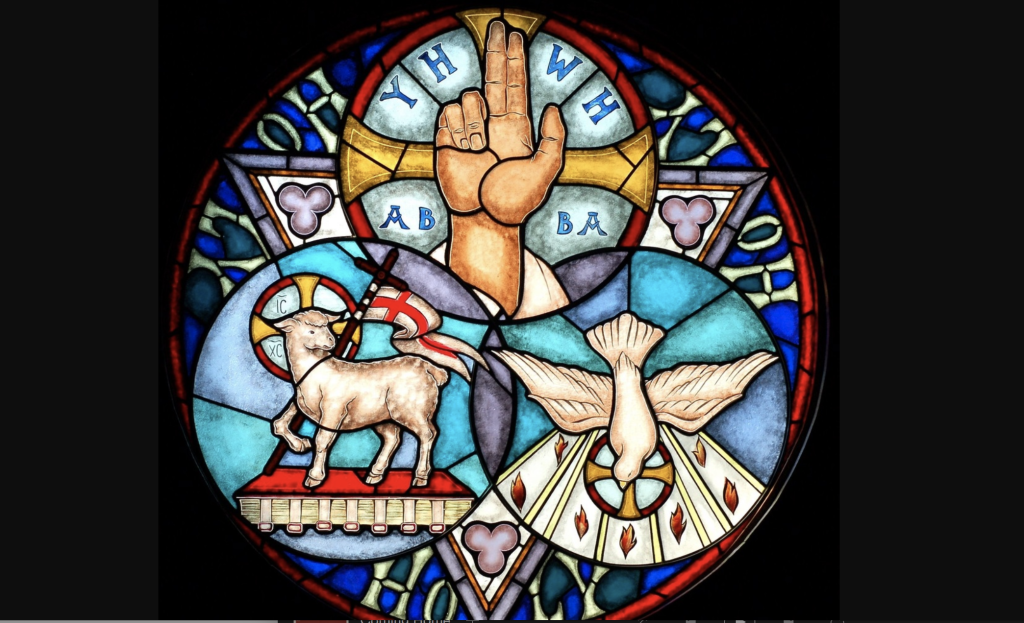
The Trinity, by Ukrainian artist Feodosiy Humeniuk, 1981

In him we have redemption through his blood, the forgiveness of our offenses, according to the riches of his grace that he lavished on us in all wisdom and insight.He did this when he revealed to us the mystery of his will, according to his good pleasure that he set forth in Christ, toward the administration of the fullness of the times, to head up all things in Christ—the things in heaven and the things on earth.

In Christ we too have been claimed as God’s own possession, since we were predestined according to the purpose of him who accomplishes all things according to the counsel of his will so that we, who were the first to set our hope on Christ, would be to the praise of his glory. And when you heard the word of truth (the gospel of your salvation)—when you believed in Christ—you were marked with the seal of the promised Holy Spirit, who is the down payment of our inheritance, until the redemption of God’s own possession, to the praise of his glory. (New English Translation)

The Apostle Paul wrote this letter to the Church at Ephesus. Believe it or not, the first chapter of Ephesians  comprises only two sentences in the Greek language for which he originally wrote. Ephesians 1:3-14 are one sentence, and Ephesians 1:15-23 is the other sentence. Thankfully, understandably, and mercifully, English translators have created multiple sentences for us so that we can better make sense of the text. 

It’s almost as if Paul was so excited to talk with the Ephesian believers about who they are in Jesus Christ and what they possess in him that he blurted out in writing with a flurry of enthusiasm and excited fervor without stopping to take a breath or a break.

Paul stacked word after significant word, on top of each other, in order to communicate the spiritual blessings that believers in Christ enjoy. Redemption, forgiveness, grace, wisdom, insight, predestination, faith, inheritance, and salvation are just some of the blessings given to those in union with Jesus Christ.

And, if that wasn’t enough, God has also graciously given us the Holy Spirit, the Paraclete, the one who comes alongside and helps us to live into the blessings we possess. Because God the Father predestined and elected us, God the Son redeemed us, and God the Spirit took possession of us, we are delivered from sin, death, and hell.

It’s as if we came to Christmas day expecting a package of underwear, and found instead a bunch of big boxes with some of the most lavish and expensive gifts we’ve ever seen!  This says much more about the giver than it says about us.

It was according to God’s good pleasure in Christ through the Spirit that believers in Jesus have such privileges.  Like the parent who sits back and watches the unpackaging of presents happen with great joy, so God delights and is pleased with the gifts given to us. The Lord absolutely delights in watching us unpack them and use them in this life.

These gifts, these blessings, are all lavishly provided because they are extensions of God, as if the Lord meticulously handmade each present with us in mind.

Throughout the entirety of Holy Scripture, all the stories and narratives, teachings and writings, are about God. The Lord of all creation is both the subject and object of each book of the Bible. Every good thing we have in this life is because of God’s gracious presence and power in this world.

Each positive experience we have is a direct result of God’s steadfast love toward people. All good gifts come from a good God who is delighted and pleased to give them.

Not a one of us purchased our own gifts and stuck them under the tree. God bought them all with the precious blood of Jesus and sent the Spirit to deliver them to us. 

Consider setting aside time today or tomorrow in a quiet place, and reflect on just one of the words in today’s New Testament lesson. Think about redemption or forgiveness, salvation, or grace, or any of the words which grab you.

Say the word repeatedly and meditatively, quietly and loudly, thoughtfully and with flavor. Consider what God did to bring you that gift. Contemplate the way(s) in which you have received the gift. 

Plan one way in which you might share your gift with another person. And make sure to give glory and praise to God for the grace lavishly given to you.

May your meditation lead to a deeper appreciation of what God has done for you; and may that revelation result in praise, honor, and glory to the One who accomplished so much on our behalf.

Gracious God, you have revealed and made known the way of deliverance from the power of darkness and brought me into your marvelous light. Help me to better understand all the ways you have acted on my behalf so that my life might reflect your grace and steadfast love to the world, through Jesus Christ, my Savior, in the enablement of the Holy Spirit. Amen.

“I Choose You!” (Ephesians 1:3-6)

Blessed is the God and Father of our Lord Jesus Christ, who has blessed us with every spiritual blessing in the heavenly realms in Christ. For he chose us in Christ before the foundation of the world that we should be holy and blameless before him in love. He did this by predestining us to adoption as his legal heirs through Jesus Christ, according to the pleasure of his will—to the praise of the glory of his grace that he has freely bestowed on us in his dearly loved Son. (New English Translation)

There is perhaps no greater sense of worth, security, and love, than stating with sincerity and conviction to another, “I choose you!”

That is exactly what God has done for us. In fact, the Lord chose us and included us before we were even born into this world. Our identity is secure in belonging to God because it isn’t based in any of the screw-ups I did yesterday or the bad decisions I made years ago. Christian identity is based solely and completely by the choice and action of God, in Christ, through the Spirit.

People tend to live up to how they view themselves, to how they self-identify. So, it is critical to our well-being how we truly understand self, others, and God.

If we see ourselves as never getting ahead and needing to lie, cheat, and steal to obtain anything in this life, then we will view ourselves as common thieves.

If we think the only way to have love and security in this life is to hustle for it – to make ourselves as presentable as we possibly can, then we will view ourselves as basically unlovely and search for love in all the wrong places by trying to keep up appearances.

If we look at ourselves as stupid, then we will tend to make poor decisions even when it’s in our ability to make good choices because we see ourselves as unable to compete with those smarter than us. 

The common theme in all these scenarios are people living apart from God. Without the Lord Jesus, we are like lost street children trying to survive from day to day. What we need, what we search for and long for, is to have a good, blessed life in a loving home, a place to belong in a world of disconnection.

To be “blessed,” to have “blessing” in the Holy Scriptures, is to have God’s stamp of approval on your life. It is to know, experience, and feel Divine favor resting upon you.

The picture being painted at the very beginning of Paul’s letter to the church at Ephesus is of wayward children roaming the streets as orphans. The Ephesians were ensconced in their idol worship of Artemis, the fertility cult goddess. They were going about life without a whim about the true and living God.

Out of sheer grace, God plucked them from their worthless condition and adopted them. God placed blessing upon them because of love and gave them a reason to rejoice and praise.

What’s more, the Ephesians were chosen and predestined for holiness and purity. God set them apart for divine blessing. It’s as if God brought them into the kingly palace, provided lavishly for them, and let them have the run of the place. They get to enjoy every privilege that comes with being children of the king.

The focus and orientation of today’s New Testament lesson is about how tremendously special the believer in Jesus really is. And it has nothing to do with how presentable we are to a holy God. Instead, out of the vast storehouse of blessed grace, God chose and adopted. The Lord looked upon you and me with googly divine eyes and said, “I choose you!”

God chooses from a place of divine pleasure. Yes, that’s right. God chooses, predestines, and adopts with a willing heart because it brings great pleasure and divine joy to do so!

There was no arm-twisting from the Father to the Son in securing redemption for lost humanity. And there was no persuasion necessary for the Father and Son to send the Spirit for our ongoing benefit and help in this life. Each redemptive event of Jesus was done out of the grace and love of God in Christ through the Spirit.

Do you see how God views you? Do you know how special you truly are?  Have you an understanding of the incredible position and majesty you have as a human being in God’s image and likeness?

As a child of the king, you live up to the position you know you possess. Freedom from worry and anxiety don’t come from willpower, but from an understanding that God owns all things, and we will never be in need. 

Deliverance from the power of darkness doesn’t come by trying to do better; it comes through the knowledge that God has redeemed us and chosen us to live in the gracious realm of divine love forever. There is no need to hustle for love with God because you and I already have it.

The believer has every spiritual blessing in Christ. God has your back. We belong to God. And to belong to Jesus Christ is to be blessed. It makes all the difference in the world. It is our reason for gratitude and praise, and for settled peace and glorious rest.

Gracious God, your loving activity has snatched me from the barren streets of sin and brought me into a realm of incredible blessing. Thank you for blessing me and giving me a place to belong forever; through Jesus Christ, my Lord and Savior, who with you and the Holy Spirit reign forever and ever in a celebration of redeeming love.  Amen.

The Truth about Lying (Acts 5:1-11)

Now a man named Ananias, together with his wife Sapphira, also sold a piece of property. With his wife’s full knowledge he kept back part of the money for himself, but brought the rest and put it at the apostles’ feet.

Then Peter said, “Ananias, how is it that Satan has so filled your heart that you have lied to the Holy Spirit and have kept for yourself some of the money you received for the land? Didn’t it belong to you before it was sold? And after it was sold, wasn’t the money at your disposal? What made you think of doing such a thing? You have not lied just to human beings but to God.”

When Ananias heard this, he fell down and died. And great fear seized all who heard what had happened. Then some young men came forward, wrapped up his body, and carried him out and buried him.

About three hours later his wife came in, not knowing what had happened. Peter asked her, “Tell me, is this the price you and Ananias got for the land?”

“Yes,” she said, “that is the price.”

Peter said to her, “How could you conspire to test the Spirit of the Lord? Listen! The feet of the men who buried your husband are at the door, and they will carry you out also.”

At that moment she fell down at his feet and died. Then the young men came in and, finding her dead, carried her out and buried her beside her husband. Great fear seized the whole church and all who heard about these events. (New International Version)

We all know what a deceitful liar is because, well, we have all lied and practiced deceit in our lives. How ubiquitous is lying? According to one Harris poll:

  • The average person tells at least 2 lies every day. (That’s the equivalent of 730 lies per year)
  • 60% of people lie at least once in a 10-minute conversation.
  • 40% of people deceive prospective employers by lying on their resumes.
  • 90% of peoplelie on their online dating profiles.
  • 80% of spouses lieto their partner about their spending habits.
  • 50% of teenagers lieto their parents about their whereabouts.

And those are just lies that have been admitted. So, how many more lies and deceptions are there really out there?…

We also all know why we lie. You will likely find yourself in these top five reasons for lying:

  1. Fear of punishment
  2. Protection from harm
  3. Avoidance of shame or embarrassment
  4. To gain advantage and/or power over others
  5. Out of habit and/or compulsion

However, maybe you aren’t in touch with how lying really impacts you, how powerful deceitfulness truly is on your own psyche and personhood. Lying has major consequences for us including:

  • Loss of trust and damage to relationships
  • Loss of physical health and damage to mental health
  • Loss of job and damage to reputation
  • Loss of resources and experience of damages in lawsuits

In the instance of two people, Ananias and Sapphira, it meant loss of life and damage to the fellowship of new believers in the fledgling church.

The couple’s guilt, in front of the Apostle Peter and the entire church, is that they were counterfeit community members. Ananias and Sapphira were not what they seemed to others. They were not truthful because they were not vulnerable.

By lying in order to achieve an honor and a status they had not earned, Ananias and Sapphira not only dishonored and shamed themselves as patrons; they also unwittingly exposed themselves as outsiders who were pretending to be honest believers. In short, the two of them were imposters.

Their deceit demonstrates that they were still functioning within the existing Roman patronage system. Yet, true followers of Christ in the believing community, purposefully practiced a different system. The Christians had an interpersonal relation of giving and receiving love – which worked out itself in sharing all things in common with one another, without the class distinctions of the patronage system.

The cross of Christ abolished walls of separation and established a truly egalitarian society. To feign equality, but actually still live about in the inequitable world, is tantamount to rejecting the work of Christ’s cross.

The deception of Ananias and Sapphira was an attempt to appear just like Barnabas – who was the real deal, and the consummate steward of resources. Barnabas was an encourager, always thinking of others and the needs of the community (Acts 4:36-37).

Ananias and Sapphira wanted to look generous, but their motives were really to give in order to maintain their class status, and not for the sake of love. What’s more, their lie about it and their lack of honesty and vulnerability was clearly seen by Peter and interpreted by him as nothing less than lying to the Holy Spirit of God.

One of the purposes of the Holy Spirit is to form God’s people into a community that uses resources in accordance with a deep concern for others. It’s not surprising, then, that Ananias and Sapphira’s fakery of generosity is presented as falsifying the work of the Spirit. Their deception was an outright threat to Christian spiritual identity and community.

Like Ananias and Sapphira of old, our contemporary lying is typically to misrepresent who we are and how we are really doing and feeling.

The most common lie of people in the United States is saying “I’m fine” when they are really and truly not okay. Anxiety, depression, and the appearance of negativity is a source of guilt and shame for many Americans – so they lie about how they’re really doing.

It’s better to fake it, they believe, because no one actually cares how I’m doing. There is still very much a cultural stigma around people who admit not feeling well or not being okay. And that, my friends, very much needs to change.

It’s always good to begin with being honest with small things and avoiding white lies. Instead of lying, practice gratitude. Being thankful for all the small things in life is a truthful replacement to a lie. I wonder what Anania and Sapphira would have been like with that sort of healthy spiritual practice. But alas, we can only imagine.

In the case of you and I, we need not have to wonder. We can begin today by observing the good, the beautiful, and the truthful, and express gratitude for all the little ways for the good which is seen.

Grant me today, O God, some new vision of your truth. Inspire me with the spirit of joy and gladness. Make me the cup of strength to suffering souls; in the name of the strong Deliverer, our Lord and Savior, Jesus Christ. Amen.