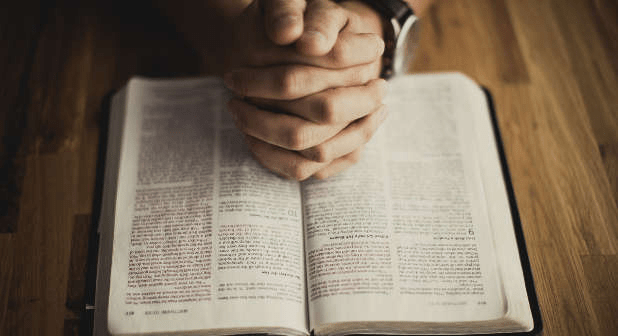
Delight in God’s Word (Psalm 119:41-48)

Lord, give me your unfailing love,
    the salvation that you promised me.
Then I can answer those who taunt me,
    for I trust in your word.
Do not snatch your word of truth from me,
    for your regulations are my only hope.
I will keep on obeying your instructions
    forever and ever.
I will walk in freedom,
    for I have devoted myself to your commandments.
I will speak to kings about your laws,
    and I will not be ashamed.
How I delight in your commands!
    How I love them!
I honor and love your commands.
    I meditate on your decrees. (New Living Translation)

Christians often refer to the Bible as “God’s Word.” By that reference is meant that God has graciously given a self-revelation to us through the Holy Scriptures. 

The Jewish people refer to the first five books of the Old Testament as the Law of the Lord or the Torah. They understand God as a great, high and holy Being, who graciously accommodates and communicates to us on our level by giving the Law. 

Just as a parent coos and babbles and speaks in a very different way to a baby in a crib, so God speaks to us in a manner that we can understand divine care, concern, and love for us. Just as an infant cannot understand an adult conversation taking place, so God is a divine being well above our comprehension. We have no ability to understand anything God says unless the Lord graciously and lovingly bends down to speak to us on our level.

God’s Law, the Torah, was the curriculum for Israel’s religious instruction. The Law of the Lord is meant to be a behavior pattern, to be embodied in the lives of God’s people through both teachers and parents who learn God’s Word and, in turn, pass it along to others. Both those within the faith, such as children, and those outside of the faith, such as aliens or immigrants, can have a guide for how to live in the world.

God’s Law is an extension of God’s grace. And we can gratefully accept the grace of God expressed in God’s Word. We have the opportunity to ingest it, eat it, reflect on it, and dwell with it, in order to know God and be the sort of people God who can bless the world.

There are several Hebrew language words that come from the root word of Law, or Torah.  A teacher is a “moreh.” A parent is a “horeh.” Parents and teachers are to be living guides in the way of God’s Word. What’s more, the Hebrew word for teaching is “yarah.” 

So, in other words, the moreh’s and the horeh’s are to yarah the Torah. Parents and teachers are to point and lead others into the ways of the Lord. And how do they do this?…

Hear, O Israel: The Lord our God, the Lord is one. Love the Lord your God with all your heart and with all your soul and with all your strength. These commandments that I give you today are to be on your hearts. Impress them on your children. Talk about them when you sit at home and when you walk along the road, when you lie down and when you get up. Tie them as symbols on your hands and bind them on your foreheads. Write them on the doorframes of your houses and on your gates. (Deuteronomy 6:4-9, NIV)

God’s Law (God’s Word) is to be as familiar to us as our back door; it is to be in front of us all the time. We might put a modern spin on the Deuteronomy passage to help us understand our privilege when it comes to God’s Word:

Attention, Church! God, our God! God the one and only! Love God, your God, with your whole heart: love God with all that is in you; love God with all you’ve got! 

Write these commandments that I’ve given you today on your hearts. Get them inside of you and then get them inside your children. 

In order to do this, talk about God’s Word at home when you are eating supper together, and when you are working or playing with each other. 

Start your day with God’s Word when you get up, and end your day with God’s Word when you go to bed at night. Put God’s Word on your refrigerator, and your car’s dashboard; have it on your smartphones, and let it be available to you anywhere, anytime. Use every opportunity you have to incessantly chatter about God’s Holy Word.

Someone may say, “That’s pretty radical – I don’t need to do all that!” Then I would say you are missing out on living a blessed life, because people are blessed when they walk according to God’s Word and keep God’s Law in front of them, seeking God with all their heart. 

Eleanor Turnbull, a veteran missionary to Haiti, collected and translated some simple but powerful prayers of the Christians who live in the Haitian mountains. Here are four prayers that they pray every day – and take note of their high view of God, and their longing to know God’s Word: 

  1. “Our Great Physician, Your word is like alcohol. When poured on an infected wound, it burns and stings, but only then can it kill germs. If it doesn’t burn, it doesn’t do any good.” 
  2. “Father, we are all hungry baby birds this morning. Our heart-mouths are gaping wide, waiting for you to fill us.” 
  3. “Father, a cold wind seems to have chilled us. Wrap us in the blanket of your Word and warm us up.” 
  4. “Lord, we find your Word like cabbage. As we pull down the leaves, we get closer to the heart. And as we get closer to the heart, it is sweeter.”

Let’s not be so busy, pre-occupied, or worried that we push God’s Word to the margins of our lives as only something for our discretionary time. 

Instead, let’s commit ourselves, like the psalmist, to learning and loving God’s commands and decrees.

Let’s be intentional about connecting with the God who has so graciously given us a guide for grateful living. 

Let’s lay solid plans to catechize people into the basics of faith and holy living. 

May your efforts both honor God and build up Christ’s Church. Amen.

It’s All About Jesus (Luke 24:44-53)

“Road to Emmaus” by He Qi

Jesus said to them, “These are my words that I spoke to you while I was still with you—that everything written about me in the Law from Moses, the Prophets, and the Psalms must be fulfilled.” Then he opened their minds to understand the scriptures. He said to them: 

“This is what is written: the Christ will suffer and rise from the dead on the third day, and a change of heart and life for the forgiveness of sins must be preached in his name to all nations, beginning from Jerusalem. You are witnesses of these things. Look, I’m sending to you what my Father promised, but you are to stay in the city until you have been furnished with heavenly power.”

He led them out as far as Bethany, where he lifted his hands and blessed them. As he blessed them, he left them and was taken up to heaven. They worshipped him and returned to Jerusalem overwhelmed with joy. And they were continuously in the temple praising God. (Common English Bible)

Perhaps you are feeling lost, maybe overwhelmed. Likely, you have experienced the feeling, even many times in your life, of being ungrounded, lacking a solid foundation under your feet – not quite knowing what’s up or down.

You sense there needs to be a great unifying force in your life – something to orient yourself around and make sense of the world, others, and especially yourself.

From the standpoint of Christianity, all of Holy Scripture – both Old and New Testaments – are focused upon and have their centrality in the person and work of Jesus the Christ. And it is this same Christ who opens us to understanding the scriptures.

My earliest memories of the Bible are in the church in which I grew up. I remember Bible stories from Sunday School and the pastor talking about particular verses from the Bible while I sat in our regular family pew. 

It wasn’t until my late teen years that I took up the task of reading the Scriptures for myself. And, I have to tell you, it absolutely changed my life. I found that many of the stories I heard as a kid were a lot juicier than I realized. I also discovered that there were simply a lot of things in the Bible I didn’t know even existed. 

However, the most profound breakthrough for me was plowing through all four Gospels and seeing the life and ministry of Jesus. My adoration and appreciation of Christ rose exponentially after watching him in action throughout Matthew, Mark, Luke, and John.

Rowan LeCompte (1925–2014) and Irene Matz LeCompte (1926–1970), The Walk to Emmaus. Resurrection Chapel, National Cathedral, Washington, DC. Photo: Victoria Emily Jones

I was so impressed with reading the Gospels that I moved into the rest of the New Testament. Then, I went back to the Old Testament and read the entire thing. In a matter of months I had read the entire Bible. Yet, I had more questions than when I started. There was just far too much I didn’t understand about it. 

So, I read the whole thing again… then again… and again… somewhere along the line, I’ve lost count of how many times I have read the Bible – I estimate around four-hundred times for the New Testament and the Old Testament about two hundred. And I still have so much more to learn and discover!

I’m not telling you this to impress anyone. In fact, many feel as if all that reading of the Bible is over the top. I assure you that it isn’t. 

After all, how could the living Christ ever open my mind to understanding the scriptures if I never bothered to read them?

And, after having read it once, why in the world would I spend so much of my life in plain straightforward reading of the Bible? I offer several reasons for my practice:

I can only lay hold of God’s promises if I know what they are. 

Living from a place of faith and calm in the midst of uncertainty and unrest doesn’t just happen. It comes from knowing the words of Scripture and allowing Christ to permeate my soul. The promises of Scripture are like an asthmatic’s inhaler, enabling us to slow down and take a deep breath.

I can only be like Jesus if I am getting to intimately know him. 

Reading Scripture about Jesus is like eating food. I have to do it regularly. It nourishes me for the day. Bible reading is stored energy, stockpiled emotional and psychological capital.   can speak and act like Jesus throughout the day by making moment-by-moment withdrawals from that vast reservoir of stored Scripture knowledge.

I can only be wise if I am connected to wisdom literature. 

By nature, we are all ignorant, and have to learn what is wise, just, and good through humility and experience. Over time, we can shed folly and become wise. I need help with becoming wise. I need a word from God each and every day to face life’s challenges, its ups-and-downs, as well as its mediocrity and mundane nature. Every day the Bible tweaks my life and prompts fresh mid-course corrections.

I need to see Jesus for who he is, and not what I think he is. 

Everyone has an idea about Jesus. But I believe the Christian Scriptures tell me who Jesus really is in all of his attributes, character, and sovereignty – which then tells me who God actually is. God is pretty big – so big that I can read the Bible for a lifetime and never exhaust knowing the Lord. I read my Bible in order to sharpen my vision of God and to think more accurately about all that matters most in this life.

I need to see the Church for what it is, and not what I think it is. 

Everybody and their dog have an opinion about how church should be and operate. But I must take my cues from the Bible about what is most important about the church and what it should be doing. I read the Bible in order to better know and understand who God’s people really are, and what they ought to be doing in this world. That’s important because the church is Christ’s Body.

I need Jesus. 

Reading the Bible is a personal experience — an actual encounter with the author. Daily Bible reading requires routine and structure, but it’s not mechanical—just as a body requires a bony skeleton, but it’s not the skeleton that gives it life. We do with the Bible what the Psalms guide us in doing—adore God, thank God, complain to God, wrestle with God, express perplexity to God, etc. Without God I am lost. Which is why, apart from Scripture, I am lost.

Reading the Bible is an investment of time, energy, reflection, meditation, and prayer. Struggling through its contents can change your life. It did mine. 

One of the great tasks you could ever do is to read the entire Bible from Genesis to Revelation, because it is God’s Word that reveals to us Jesus, the center of it all, the way, the truth, and the life.  

How To Get Through Difficulty (Psalm 119:105-112)

Your word is a lamp
that gives light
    wherever I walk.
Your laws are fair,
and I have given my word
    to respect them all.
I am in terrible pain!
Save me, Lord,
    as you have promised.
Accept my offerings of praise
    and teach me your laws.
I never forget your teachings,
although my life is always
    in danger.
Some merciless people
    are trying to trap me,
but I never turn my back
    on your teachings.
They will always be
my most prized possession
    and my source of joy.
I have made up my mind
to obey your laws forever,
    no matter what. (Contemporary English Version)

Attitude. Affection. These are the two qualities that stand out to me in today’s Psalm lesson. The psalmist is a person who is determined to hold onto God’s Law because it is his heart’s delight.

Our attitudes and our affections are meant to fit together like a hand in a glove. Our attitudes help us push through suffering to realize better days. And our affections drive us forward, allowing us to experience joy in the present moment as we await our hope of ultimate deliverance.

Commitments are fluid, always moving – so they need to be continually rehearsed and refreshed. We are constantly either fulfilling our promises or reneging on them. There is really no such thing as a one-time vow.

Vows need reinforcement from our attitudes and our affections. Otherwise, they languish on the trash heap of good intentions. This is one reason why the Psalms are designed for constant use.

Spiritually healthy habits must be embedded in our lives, well before any suffering and hard times roll in.

If our normal daily routines involve regular sustenance of God’s Word, then we have a breadth and a depth of robust theology to draw upon when the going gets rough. Furthermore, the sheer force of habit brings us back again and again to the treasure chest of divine instruction, informing our decisions and illuminating the treacherous road ahead.

The psalter is designed to reframe our difficult situations. Especially when a person’s life hangs in the balance, we can view hard and awkward circumstances through the window of the Psalms. Although circumstances change, and we never quite know what to expect, God’s Law remains our ballast and our rock.

Circumstances may change but divine love and morality are unchanging. Jesus Christ is the same yesterday, today, and forever. The Spirit is always with us, through each wave of hardship.

Life is a journey, an exploration into the unknown of the future. The path is shadowy and unclear. We are unsure of what is around the bend. God’s instructions and promises are like a forever energized flashlight, helping us navigate forward. Maybe Jesus had today’s Psalm in mind when he said:

“I am the light of the world. Whoever follows me will never walk in darkness but will have the light of life.” (John 8:12, NRSV)

In Christianity, the Word is embodied in Jesus Christ; he is both the example and fulfillment of all God’s good promises.

A sequence of four metaphors runs through our verses for today:

  1. My feet. With Jesus as Word and Light, we have a constant companion walking alongside us for the journey.
  2. My mouth. There is an intercessor who takes our wordy or malformed prayers and presents them before our heavenly Father
  3. My hands. We do God’s will, despite adverse circumstances, by observing the Master who washed the feet of others.
  4. My heart. In desiring God’s decrees and commands, our hearts find their rest in the One who loved us and gave himself for us.

Our attitudes and affections are transformed into sustainable faith for the long journey.

Our hope is made sure through the promises of God.

Our love finds a resting place in the person of Jesus.

Faith, hope, and love are the shoes enabling us to walk the long uphill road, as well as absorbing the shock as we run with abandon downhill – into the loving arms of God.

I encourage you to find what works best for you in developing helpful spiritual habits. In reading the Bible, I often take the following approach using the acronym S.O.A.P:

Scripture

• Open your Bible and slowly, meditatively, read the portion of Scripture in your reading plan for today.

• Write the reference of what you read in a journal along with the date.

• As you read, ask God’s Spirit to highlight the verse(s) that speak to your life and write it in your journal.

Observation

• Make observations about what you just read and write them in your journal.

• Think about: What is going on? What is the context?  Who are the people being spoken to? What is the background or setting for this verse?

• Paraphrase and write this scripture down in your journal, in your own words.

• What do you think God is saying to you in this scripture?

Application

• Personalize what you have read by asking yourself how it relates to your life right now.

• Ask yourself how you can apply what you just read to your own life and write it in your journal.

• Ask yourself how your life will be different or changed as a result of God speaking to you in this Scripture.

Prayer

• Write out a prayer to God in your journal.

• Your prayer should relate to the verse that you highlighted. It could be asking for help, thanking God, etc. Write down what your heart desires to say to God in response to his Word.

May the words of your mouth, the meditations of your heart, the work of your hands, and the movement of your feet be to the glory of Jesus Christ. Amen.

Be Courageous (Joshua 1:1-9)

After the death of Moses the servant of the Lord, the Lord spoke to Joshua son of Nun, Moses’s assistant, saying: 

“My servant Moses is dead. Now proceed to cross the Jordan, you and all this people, into the land that I am giving to them, to the Israelites. Every place that the sole of your foot will tread upon I have given to you, as I promised to Moses. From the wilderness and the Lebanon as far as the great river, the River Euphrates, all the land of the Hittites, to the Great Sea in the west shall be your territory. 

No one shall be able to stand against you all the days of your life. As I was with Moses, so I will be with you; I will not fail you or forsake you. 

Be strong and courageous, for you shall lead this people to possess the land that I swore to their ancestors to give them. Only be strong and very courageous, being careful to act in accordance with all the law that my servant Moses commanded you; do not turn from it to the right hand or to the left, so that you may be successful wherever you go. 

This book of the law shall not depart out of your mouth; you shall meditate on it day and night, so that you may be careful to act in accordance with all that is written in it. For then you shall make your way prosperous, and then you shall be successful. I hereby command you: Be strong and courageous; do not be frightened or dismayed, for the Lord your God is with you wherever you go.” (New Revised Standard Version)

Freedom came to the ancient Israelites; they were delivered from their cruel Egyptian bondage. Then, they wandered through the desert for forty years; and, after the death of their leader Moses, were poised to enter the Promised Land. 

However, it was going to be no cakewalk. There were pagan peoples entrenched in the land. It would be a huge feat to conquer their territory. Joshua, the young aide-de-camp of Moses, now leader of the people, would be the one to go before them in battle. Understandably, Joshua was likely nervous, maybe even downright scared. 

So, the Lord came to Joshua. God told him to be strong and courageous, to not be afraid to claim the divine promise of the land. 

The path to success for Joshua – as well as all God’s people – is not by the physical sword but by the sword of the Lord, the Word of God. 

The Lord was plainspoken about the need to intimately know the Law given to the people and to continually meditate upon it. Being careful to do everything written within it, Joshua would find both the courage and the wisdom to lead the people to victory.

It still remains true for all God’s people that faithful knowledge, sage wisdom, and careful adherence to Holy Scripture comes through meditation upon its contents. 

There is a great need amongst believers to continually ruminate on God’s Word. We live on a broken planet, filled with all sorts of adversity, hardship, difficulty, and challenge to living a committed spiritual life. And so,

we may sometimes wonder how to address and deal with it all; our problems might seem as large as taking the Promised Land. 

The place to begin is by going to the Word of God – not so much in an anxious, hasty, or impatient question-and-answer sort of way which looks for a quick response; but instead, in a slow, deliberate, contemplative way. 

Lasting and genuine spirituality, as well as a sense of settled success, comes not only through acknowledging the importance and integrity of Scripture; one must know it’s contents, and allow it’s wisdom to saturate the soul through consistent and continual meditation.

Scripture memorization is a discipline worth pursuing. Having large chunks of the Holy Bible in our minds and hearts helps us in the crucible of challenging situations and adverse circumstances. 

What’s more, when doing the everyday pedantic and tedious work, we can engage our minds in the practice of contemplation on those verses we have committed to memory. Meditation on God’s Word is a necessary practice if we want to have success in living a genuinely well-rounded life.

Courage and meditation are a package deal. Bravery and contemplation are meant to be wed together. One rarely comes without the other – which means the realization of our good dreams, for both us and the world, needs the practice of Scripture meditation.

God Almighty, my delight is in your law, and on it I meditate day and night. (Psalm 1:2)

O how I love your law! It is my meditation, my food and drink, all day, every day. (Psalm 119:97)

I will meditate on your precepts and honor your ways in all I do and say. (Psalm 119:15)

I am determined to lift my hands to your commandments, which I love; and I will meditate on your statutes. (Psalm 119:48)

I look forward to the wee hours of the night because it provides me the space and the quiet to meditate on your word. (Psalm 119:148)

In fact, I meditate on all your doings through both day and night; I ponder and consider the works of your hands. (Psalm 143:5)

Amen.