2 Samuel 6:1-15 – Be Careful How You Celebrate

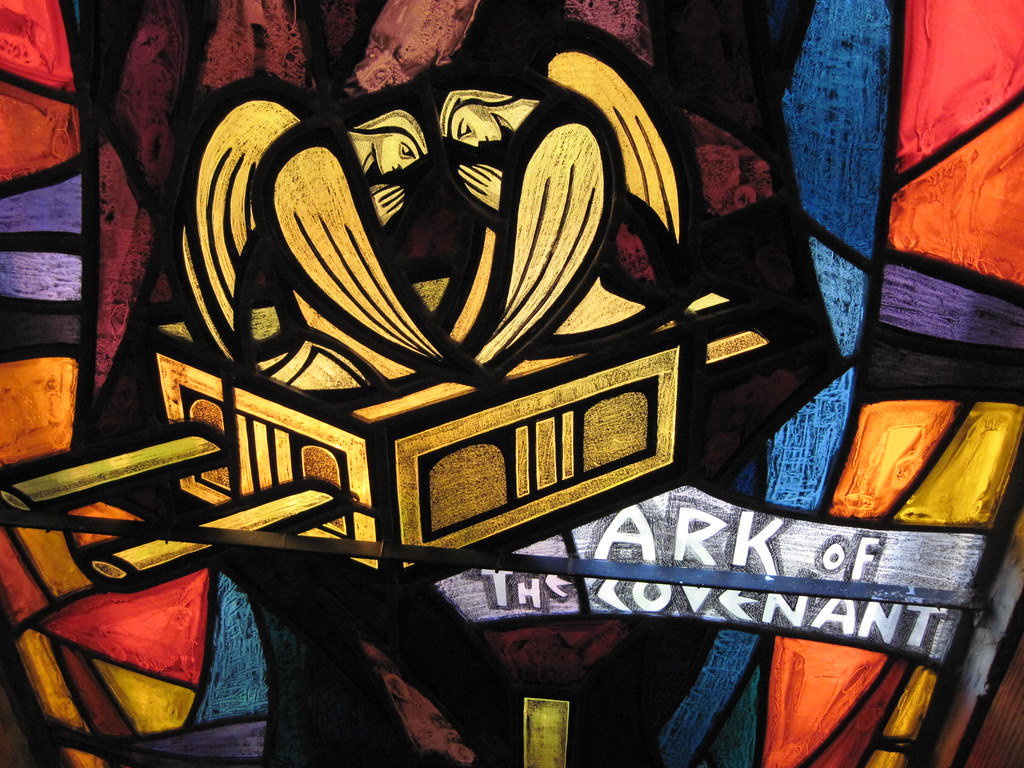
Ark of the Covenant by Isabel Piczek 1982, St. Norbert Catholic Church, Orange, California

David again assembled all the best men in Israel, 30,000 in number. David and all the men who were with him traveled to Baalah in Judah to bring up from there the ark of God which is called by the name of the Lord of Heaven’s Armies, who sits enthroned between the cherubim that are on it. They loaded the ark of God on a new cart and carried it from the house of Abinadab, which was on the hill. Uzzah and Ahio, the sons of Abinadab, were guiding the new cart. They brought it with the ark of God from the house of Abinadab on the hill. Ahio was walking in front of the ark, while David and all Israel were energetically celebrating before the Lord, singing and playing various stringed instruments, tambourines, rattles, and cymbals.

When they arrived at the threshing floor of Nacon, Uzzah reached out and grabbed hold of the ark of God, because the oxen stumbled. The Lord was so furious with Uzzah, he killed him on the spot for his negligence. He died right there beside the ark of God.

David was angry because the Lord attacked Uzzah; so, he called that place Perez Uzzah, which remains its name to this very day. David was afraid of the Lord that day and said, “How will the ark of the Lord ever come to me?” So, David was no longer willing to bring the ark of the Lord to be with him in the City of David. David left it in the house of Obed-Edom the Gittite. The ark of the Lord remained in the house of Obed-Edom the Gittite for three months.

The Lord blessed Obed-Edom and all his family.King David was told, “The Lord has blessed the family of Obed-Edom and everything he owns because of the ark of God.” So, David went and joyfully brought the ark of God from the house of Obed-Edom to the City of David. Those who carried the ark of the Lord took six steps and then David sacrificed an ox and a fatling calf. Now David, wearing a linen ephod, was dancing with all his strength before the Lord. David and all Israel were bringing up the ark of the Lord, shouting and blowing trumpets. (New English Translation)

The Christian season of Eastertide is a grand celebration of Christ’s resurrection and the new life we enjoy in Jesus Christ. Since God is the center of all things, celebrations need to be mindful. Nothing in life is a matter of doing whatever the heck we want to do.

Even celebration has its boundaries and limits.

The narrator who originally compiled, told, and wrote the today’s Old Testament lesson wanted to communicate something significant about God and how to relate to the Lord.

God put the big kibosh on David’s hoedown. At that time in the history of Israel, the ark was the foremost symbol of God’s presence with the people. Within the ark contained the tablets of the Ten Commandments (the symbol of God’s Word); the staff of the first priest, Aaron, (the symbol of God’s choice); and a pot of manna (the symbol of God’s provision). Thus, the ark was a holy object, pointing to a holy God.

The ark of the Lord was built during the time of Moses, when the ritual laws were established concerning offerings and how to approach God in worship. There were detailed prescriptions for how to construct all the sacred articles for worship. (Exodus 35:30-40:33) 

The ark was at the center of worship, representing the presence of God among the people. For nearly five-hundred years before David, the ark had become a familiar object in the life of Israel, always there, continually the symbol of God to the people.

I’ve been a Christian for many decades. One reason I refer to the seasons of the Christian Year in the present tense, is so that it doesn’t become old hat to me. Although I just presided over yet another Easter Sunday in my long tenure as a pastor, I am still in awe of Christ’s resurrection and am eternally grateful and full of joy over new life in Jesus Christ. I always want it to be fresh, as if I’m stepping up to the empty tomb for the first time.

Stained glass in the First Lutheran Church of
Washburn, North Dakota

Yet, we have all likely had the experience of something becoming so familiar, that we begin to lose sight of how important and valuable it really is. Not until we lose it, or something traumatic happens, do we wake up and take stock of its true significance. 

The Israelites had become lethargic and apathetic toward the worship of God, and it led to some disheartening and tragic circumstances. The people of God throughout the ages have always needed to be vigilant against the opiate of familiarity, dulling the senses to the importance of worship.

Moving the ark of the Lord to Jerusalem was one of the first acts David did as the king of Israel and Judah.  God was with David and brought him success against his enemies. David enjoyed a close relationship with God.  Even though David’s heart was in the right place, he made a huge miscalculation, which ended up offending God. 

David had the best of intentions in bringing the ark to Jerusalem and giving it a prominent place in the center of Jewish life. This was an exceptionally good plan. The problem, however, came in the manner the ark was carried from one place to another. 

God’s law laid out in careful detail how the ark was to be transported. Uzzah and Ahio were Levites charged with the ark’s care. Only the Levites could handle the ark and the holy objects of worship that went along with it.

Since it was the job of the Levites for hundreds of years, they knew better than to carry the ark of the Lord on a cart. God clearly told Moses that the ark was to have two long poles of acacia wood overlaid with gold inserted into four gold rings of the ark. The ark was to always be carried on the shoulders of the Levites with the two poles.

We are not told why Uzzah and Ahio were pulling the ark on a cart with oxen instead of carrying it in the prescribed way. Perhaps it was because the ark was incredibly heavy and no easy task to carry.  Maybe they decided it would be easier and more expedient to have the much stronger oxen pull the ark on a nice new cart; it would save a lot of energy transporting it over a long distance.

Or it could be that they were tired of moving the ark in the same old way they had always done it. Maybe it was old hat to them, and they were ready for something different.

For pragmatic people, Uzzah and Ahio’s approach makes a lot of sense. However, God was not okay with this arrangement. When the oxen stumbled and the ark was in danger of falling off the cart, Uzzah reflexively reached out to steady it.  That was the last act Uzzah ever did on this earth. God immediately put him down for his “irreverent act.”

So, here is the not so good idea: Evaluating the worship of God by common sense pragmatism, what we think will work best, and how we feel it ought to be done. Everything about worship is to pay attention to the holiness of God through our obedience. 

Whenever we avoid the prescriptions of Holy Scripture, however best the intentions might be, is not a good thing and people will get hurt. One can never justify an action that goes against God’s Word because people are praising God. Just because the heart is in the right place does not mean what is being done is okay.

David’s first response was anger, then fear. He gave his best effort, and it resulted in God’s disfavor. Perhaps David took for granted that the ark could be moved any old way he wanted to move it. 

Trouble with God happens whenever we value efficiency and expediency over obedience and submission.

The great error of Uzzah, resulting in his death, was trying to manage God. We do not take care of God; God takes care of us. God does not bow to us. The Lord doesn’t allow the creature to manage the Creator.

God wants a pure, unadulterated, and obedient worship celebration from people in the way God wants it to be done, period. It is not up for negotiation.

Holy God, we confess that we have too often forgotten we are yours. Sometimes we carry on our lives as if there was no God and we fall short of being a credible witness to you. For these things we ask your forgiveness and for your strength. Give us clear minds and open hearts so we may bear witness to you in our world. Remind us to be who you would have us to be regardless of what we are doing or who we are with. Hold us close and build our relationship with you and with those you have given us on earth, through Jesus Christ our Lord. Amen.


Deuteronomy 9:15-24 – The Dark Underbelly of Sin

“Golden Calf” by John Bradford

Moses continued: “So, while the mountain was blazing with fire I turned and came down, holding in my hands the two stone tablets inscribed with the terms of the covenant. There below me I could see that you had sinned against the Lord your God. You had melted gold and made a calf idol for yourselves. How quickly you had turned away from the path the Lord had commanded you to follow! So, I took the stone tablets and threw them to the ground, smashing them before your eyes.

“Then, as before, I threw myself down before the Lord for forty days and nights. I ate no bread and drank no water because of the great sin you had committed by doing what the Lord hated, provoking him to anger. I feared that the furious anger of the Lord, which turned him against you, would drive him to destroy you. But again, he listened to me. The Lord was so angry with Aaron that he wanted to destroy him, too. But I prayed for Aaron, and the Lord spared him. I took your sin—the calf you had made—and I melted it down in the fire and ground it into fine dust. Then I threw the dust into the stream that flows down the mountain.

“You also made the Lord angry at Taberah, Massah, and Kibroth-hattaavah. And at Kadesh-barnea the Lord sent you out with this command: ‘Go up and take over the land I have given you.’ But you rebelled against the command of the Lord your God and refused to put your trust in him or obey him. Yes, you have been rebelling against the Lord as long as I have known you. (New Living Translation)

I’m really glad there was no social media back in the day when the Israelites made the golden calf idol. Most people tend to post flattering pictures of happy families and wonderful experiences. Somehow, methinks the ancient Israelites would have tried to make the whole thing at Mount Sinai look like some party we would envy going to.

But there’s always a dark underbelly to all the glitter and photoshopped pics. And God sees and knows it all.

God is full of grace, steadfast love, and covenant commitment. Yet, this does not mean that God is okay with disobedience and people doing whatever the heck they want to do. The Lord has anything but a shoulder-shrugging “meh” attitude toward hedonism. 

In fact, grace only exists because of sin. Where there is boundless grace and compassion there will be found bucket loads of self-absorbed behavior. And, oh my, was there a load of it among the ancient Israelites! They were characterized as stubborn, rebellious, and idolatrous. It’s the kind of stuff that evokes the ire of God.

Genuinely godly people share God’s heart and interests. That is, what upsets God, upsets them; and what makes God pleased, makes them pleased. Moses was in sync with God. So, he was visibly angered by the people’s idolatry. Moses confronted the people with going far astray from the Lord. And, what’s more, Moses showed that his heart reflects God’s heart by immediately engaging in an extended time of fasting and prayer on their behalf – forty days and forty nights.

Lackadaisical attitudes and approaches toward God are a dime-a-dozen with many so called believers. There is little to no sustained, prolonged, and focused times of prayer and fasting among both individuals and groups of people. Many folks are simply too busy indulging in revelry with their idols of money, sex, power, and perfectionist control. 

Until we are cut to the heart with this present darkness of empty souls and vacuous spirits, which run to everything and everyone but God, there will be no entering the Promised Land of peace, love, and joy in the Holy Spirit. 

The dark underbelly of sin needs to be turned over so that it can be exposed to the purifying light of God’s glory. The worms of guilt must be unearthed, spread before the heat of the Son, and destroyed. The heavy load of shame needs to be jettisoned and thrown into the fire of God’s wrath.

The glory of the Lord is almost upon us, and the season of Lent is nearly here. So, let us make a solid spiritual plan for the forty days leading up to Easter for prayer and fasting on behalf of our own wrongdoing and shortcomings, as well as for the sin of the world.

Holy God, idolatry brings about your wrath because you cannot stand the lack of love in the world. I bow before you and bend the knee to your sovereign reign in my life. Please lead me in your way of righteousness and have mercy on those trapped in darkness so that we might see you, through Jesus Christ, our Lord and Savior. Amen.

1 Corinthians 3:10-17 – Being a Holy Temple

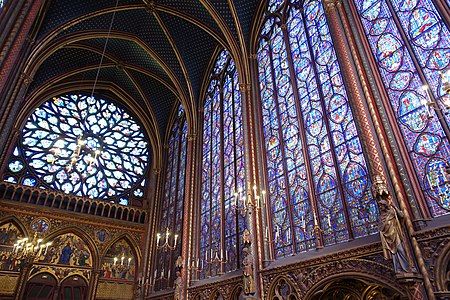
Albi Cathedral in Sainte-Chapelle, France

By the grace God has given me, I laid a foundation as a wise builder, and someone else is building on it. But each one should build with care. For no one can lay any foundation other than the one already laid, which is Jesus Christ. If anyone builds on this foundation using gold, silver, costly stones, wood, hay or straw, their work will be shown for what it is, because the Day will bring it to light. It will be revealed with fire, and the fire will test the quality of each person’s work. If what has been built survives, the builder will receive a reward. If it is burned up, the builder will suffer loss but yet will be saved—even though only as one escaping through the flames.

Don’t you know that you yourselves are God’s temple and that God’s Spirit dwells in your midst? If anyone destroys God’s temple, God will destroy that person; for God’s temple is sacred, and you together are that temple. (New International Version)

God is holy, pure, beautiful, and completely separated from all that is evil. 

However, there is a problem; but it isn’t with God. 

Ever since the fall of humanity into guilt, shame, and impurity, people cannot be near or approach a perfect Being. Just as we will surely go blind by looking directly at the sun – or be totally disintegrated by getting too close to it – so humans cannot be with such a holy God.

In the Old Testament, God graciously devised a system whereby people could approach the divine. A temple was built. It had very detailed and strict prescriptions about how it was to be built. There needed to be curtains, walls, and borders everywhere to shield the people from being destroyed by the sheer holiness of God.

Entering the New Testament, Jesus is the exact representation of God’s holy being and presence. In Christ, God became intimately close to people. Through the redemptive events of Jesus, humanity is delivered from the vexing problem of being far away from God. 

If that were not enough, God the Father and Son sent God the Holy Spirit to be the continuing presence of Jesus on this earth. 

In today’s New Testament lesson, the Apostle Paul tells us that, as the church, we are a holy temple which is graciously, patiently, and with great care being built into a spiritual house that can be the place where God meets with humanity.

The triune God has conspired and gone out of the way to be with us. The Lord has bended the arc of history for good purposes to be with us. Like a lover separated from his beloved, God has pulled out all the stops to make us holy so that we can abide with him in divine holiness.

From the solid foundation of Jesus Christ as the chief cornerstone, we take care to build a spiritual infrastructure worthy of holiness.

As he who called you is holy, be holy yourselves in all your conduct;for it is written, “You shall be holy, for I am holy.” (1 Peter 1:15-16, NRSV)

God’s will is for you to be holy… God has called us to live holy lives, not impure lives. (1 Thessalonians 4:3, 7, NLT)

Some Christians mistakenly believe that holiness means to exclusively separate as far from everything and everyone who is impure. Any hint or smell of unsound dogma or nonconformity with established rules results in separation. Yet, this predilection for separation is really a form of division – which is contrary to the holiness of God. Because the Lord bends over backwards to accommodate the sinner’s ability to approach the divine presence.

Indeed, holiness involves a separation from all that is evil so that we can attach ourselves to God and others. Holiness isn’t simply an end in itself. To be holy means we are prepared and ready to engage in the highest of aims: Love.

Now that you have purified yourselves by obeying the truth so that you have sincere love for each other, love one another deeply, from the heart. For you have been born again, not of perishable seed, but of imperishable, through the living and enduring word of God. (1 Peter 1:22-23, NIV)

Holiness without a clear trajectory toward love is like putting a new collar on a dead dog. It just doesn’t make any sense.

Yet, too many folks have put a leash on that shiny new collar and are dragging the deceased around – much to the chagrin and revulsion of the world – who rightly sees this behavior as both downright crazy and plain stupid.

Paul would say that kind of behavior will be shown for what it is: Building on the wrong spiritual foundation.

It’s really all about Jesus. Christians bear the name of Christ because we (ideally) center our entire existence – past, present, and future – on the redemption provided through Jesus.

And that’s what this Christian season of the year is about: We celebrate the birth of Christ, God’s breaking into this world, to bridge the great divide between divinity and humanity.

The incarnation of Jesus Christ is our foundation.

Being a holy temple means being a sacred space large enough to hold love for all people.

From that strong support, there is no limit to the breadth and height of God’s kingdom. So, may you, along with the Apostle Paul pray:

I’m asking God to give you a gift from the wealth of his glory. I pray that he would give you inner strength and power through his Spirit. Then Christ will live in you through faith. I also pray that love may be the ground into which you sink your roots and on which you have your foundation. This way, with all of God’s people you will be able to understand how wide, long, high, and deep his love is. You will know Christ’s love, which goes far beyond any knowledge. I am praying this so that you may be completely filled with God. (Ephesians 3:16-19, GW)

Amen.

Matthew 5:8 – Blessed Are the Pure in Heart

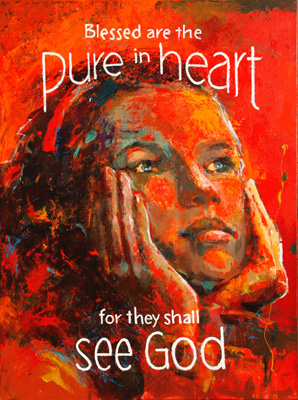
“Blessed are the pure in heart,
    for they will see God.” (NIV)

“You’re blessed when you get your inside world—your mind and heart—put right. Then you can see God in the outside world.” (MSG)

“What bliss you experience when your heart is pure. For then your eyes will open to see more and more of God.(TPT)

“A pure heart means a single heart, a heart in which only one desire lives: love.”

Peter Kreeft

An Impure Scenario

Suppose a young man courts a young woman. They get to know one another, fall in love, and get married. On their wedding day, as they leave the church building and speed away, the young couple reminisce about love and life.

But when the groom begins to speak about a future together, the bride, with a smile on her face says, “Okay, you can pull over now.” The groom, completely smitten with his new bride, does exactly what she asks. The young woman gets out of the car and, blowing a kiss, says, “This was fun. Maybe I’ll see you around sometime.”

“I don’t think this is funny,” says the groom. “Hey, we had a great time, right!?” the perky bride says. “Yes, responds the groom, “and it will last forever.” “Oh, you are such a darling,” the bride says, and with a wry smile, “but I’ll be in touch.”

“Huh, what!?” the confused groom says. “Yeah, I’ll call. We’ll get together,” says the bride without flinching. The groom, now also feeling heartsick says, “I don’t understand. What’s going on?”

“Dear, I just need my space. It’s not like I don’t care! I have other things to do. Other men to see….”

Yes, a ridiculous and improbable scenario. Yet one which is repeated every day, multiple times a day. For the groom is the Lord God almighty; and the bride is the church….

Purity and God

Purity is a big deal to God. The phrase, “pure in heart,” is Christ’s way of upholding the biblical call to holiness. To be pure is to have no mixed motives, no hidden agendas, and no side job of moonlighting with the world while being an upstanding kingdom citizen during the day. It isn’t letting Jesus court us and marry us, only to have us walk away and do whatever the heck we want. It’s not only impure and unholy. It’s plain wrong and messed up.

Through blessing the pure in heart, Jesus was connecting us to the Old Testament ethic of being holy. The book of Leviticus, rarely the focus of any preacher or parishioner alike, is completely given to the topic of holiness. The detailed laws about daily life, including what to wear and not wear, what to eat and not eat, even who to marry and not marry, were given for a reason.

God wanted the ancient Israelites to have daily reminders that they are a holy people. So, there was to be no mixing of fabrics, no meat and cheese together, no impurities introduced into any part of life. Everything about the Jewish lifestyle was to be holy, set apart to God, reminding the people that God is their husband, committed to them with responsibilities on the part of both. It was called a “covenant.”

Leviticus 19 leaves no stone unturned on the activities of life:

The Lord said to Moses, “Speak to the entire assembly of Israel and say to them: ‘Be holy because I, the Lord your God, am holy’….

Do not steal. Do not lie. Do not deceive one another. Do not swear falsely by my name and so profane the name of your God. I am the Lord. Do not defraud or rob your neighbor….

Do not pervert justice; do not show partiality to the poor or favoritism to the great but judge your neighbor fairly….

Do not go about spreading slander among your people. Do not do anything that endangers your neighbor’s life. I am the Lord. Do not hate a fellow Israelite in your heart. Rebuke your neighbor frankly so you will not share in their guilt. Do not seek revenge or bear a grudge against anyone among your people but love your neighbor as yourself. I am the Lord.

Do not mate different kinds of animals. Do not plant your field with two kinds of seed. Do not wear clothing woven of two kinds of material.” (Leviticus 19:1-2, 11-13, 15-19, NIV)

Yes, indeed, purity is a big deal to God. The “Holy” Spirit is the Divine Person completely devoted to doing only the will of the Father and Son – never going rogue. The Spirit is the One who effects sanctification, becoming holy, within the life of the believer. Each year we celebrate “Holy” Week, a stretch of days designed to be different than the rest – devoted to journeying with Jesus and not mixing with the fickle crowd who would scream at the end of the week, “Crucify him! Crucify him!”

Purity and Us

To follow Jesus in true righteousness is to be pure in heart, that is, set apart wholly and completely for him. Purity of heart is a fruit from the trunk of righteousness, which grew up in the soil of God’s grace, with roots of humility and meekness – all watered by the tears of godly mourning.

The pure in heart are those who acknowledge their sin, deal with it, and live with a clear and clean conscience before God and the world. They have an awareness of their wrongs and shortcomings without succumbing to self-criticism because of an equal awareness of God’s grace. They keep short accounts with others concerning what they have done or what they should have done. They are holy. They are sanctified. They are pure in heart.

The pure in heart will see God. They know they cannot make themselves pure, so they keep looking to Jesus for their forgiveness because they hunger for righteousness.

One cannot whitewash a wishy-washy commitment with Jesus and be pure. This blessed Beatitude has to do with our motives and what takes place in our thinking and in our hearts.  What do you think about when your mind slips into neutral?  Is it coveting after things or people, or does thinking go toward what is true, noble, right, pure, lovely, and admirable?  Sometimes we struggle with purity of heart because we are focused not on Jesus, but on our own performance and perfection instead of letting God fill our hungry hearts.

Purity results from true righteousness.  A stalk of corn might look good, but if you shuck it and it’s filled with worms, it isn’t going to be worth much. Legalistic righteousness and empty promises of doing better are concerned to look good, not to mention they are obsessed with performance, perfection, and possessions. 

But the righteousness of God fills our hungry hearts and makes us pure and holy, set apart for divine use and divine purposes. How, then, shall we live? What will we do?

The earth is the Lord’s, and everything in it,
    the world, and all who live in it;
for he founded it on the seas
    and established it on the waters.

Who may ascend the mountain of the Lord?
    Who may stand in his holy place?
The one who has clean hands and a pure heart,
    who does not trust in an idol
    or swear by a false god.

They will receive blessing from the Lord
    and vindication from God their Savior.
Such is the generation of those who seek him,
    who seek your face, God of Jacob. (Psalm 24:1-6, NIV)

The person with integrity shall see God. Those made pure with the cleansing blood of Jesus Christ will someday stand before God at the Last Judgment and there find mercy and acceptance.

So, for now, until that time, we daily have the opportunity to focus on our one true love with loyalty and commitment, enjoying God’s presence continually. Because the Lord will never leave us, nor forsake us, even when we sometimes forsake him.

Almighty God, to you all hearts are open, all desires known, and from you no secrets are hidden. Cleanse the thoughts of our hearts by the inspiration of your Holy Spirit, that we may perfectly love you, and worthily magnify your holy name, through Christ our Lord. Amen.