Jesus Is Better (Hebrews 8:1-7)

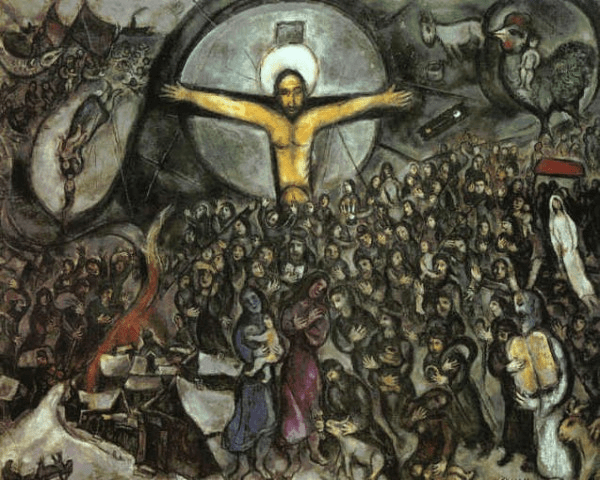
Exodus by Marc Chagall, 1952

Now the main point of what we are saying is this: We do have such a high priest, who sat down at the right hand of the throne of the Majesty in heaven, and who serves in the sanctuary, the true tabernacle set up by the Lord, not by a mere human being.

Every high priest is appointed to offer both gifts and sacrifices, and so it was necessary for this one also to have something to offer. If he were on earth, he would not be a priest, for there are already priests who offer the gifts prescribed by the law. They serve at a sanctuary that is a copy and shadow of what is in heaven. This is why Moses was warned when he was about to build the tabernacle: “See to it that you make everything according to the pattern shown you on the mountain.” But in fact the ministry Jesus has received is as superior to theirs as the covenant of which he is mediator is superior to the old one, since the new covenant is established on better promises.

For if there had been nothing wrong with that first covenant, no place would have been sought for another. (New International Version)

Jesus Christ is superior to everyone and everything – that is the overarching theme of the New Testament book of Hebrews. Jesus is above the angels, over Moses, and the great high priest of a new covenant. In Christ, the sin issue has been taken care of, once and for all.

Through Jesus, every good promise of God is fulfilled. Christ’s priesthood and intercessory ministry is permanent. His sacrifice for sin is thorough and complete. Jesus lives forever. He saves completely. Christ meets our need. He has been made perfect forever. (Hebrews 7:23-28). 

Frankly, these bold statements from the author of Hebrews are some audacious claims. In fact, they’re downright radical. And yet, say any of those statements in the typical church, and hardly an eyebrow gets raised – they almost seem ho-hum. Our blank affect testifies that we have lost a great deal of the original force and impact of Christianity.

In the first century, to have one sacrifice to end all sacrifices was unthinkable. Every ancient person understood that sacrifices were temporary; you had to keep offering them over and over again. 

Christianity, however, asked the world to have a new understanding of sacrifice. No longer would there be any sacrifice – no grain sacrifice; no offerings of first fruits; no animal sacrifices; no sacrifices, period. There was no longer any need for them because Jesus himself is the sacrifice to end all sacrifices. 
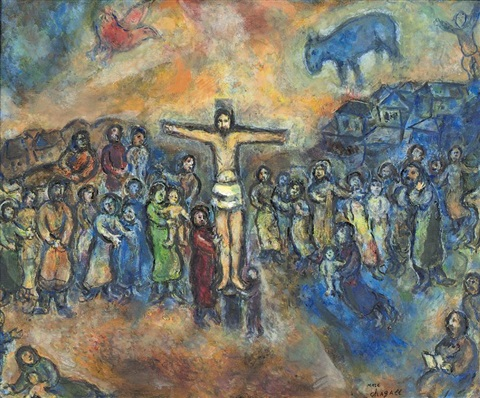
Crucifixion by Marc Chagall, 1966

This was such a ridiculous notion for so many people that they mocked Christians for it. Both Jews and pagans could barely wrap their minds around such a progressive idea. It would be like saying to us today that there is no longer any need for money because somebody just became the underwriter for everything everybody does.

Despite this incredible spiritual reality, we in the contemporary church sometimes go back to the old sacrificial system, not by physically offering animal sacrifices, but treating Christ’s finished work as if it were just too good to be true. 

We reason that we need to do something to help save ourselves. However, Jesus has not just saved us partially, but fully. Grace has always been scandalous, and so, we try to tone it down a bit, mitigate it’s actual force:

  • Church attendance can subtly be looked upon as a sacrifice to appease God, as if he needed to be soothed into not becoming angry at us. 
  • Giving can become a non-bloody sacrifice that is meant to satisfy God’s furrowed brow against us. 
  • Service can degenerate into a sacrifice to assuage our guilty conscience. 

In all these kinds of instances, and more, we go back to an old sacrificial system that is obsolete. Nonetheless, the biblical and theological truth is that Jesus has thoroughly saved us from our sin, and, so, has cleansed us from all guilt, including a guilty conscience. 

Jesus meets our need and has completely satisfied God’s wrath against the power and deceit of sin. 

Jesus is our mediator and intercedes for us as we come to God’s throne of grace. That means we do not need to try and get God’s attention with performing spiritual cartwheels or some incredible sacrifice that will somehow obligate him to take notice of us. That’s because there is never a time in which we lack attention from God.

Since we have been justified by faith in Jesus, we need not worry anymore about being good enough. Since Jesus is perfect, his work is made complete in us. A constant anxiety of feeling like we don’t measure-up does not come from God. Jesus is sufficient and has taken our place so that we can live in the freedom and joy of a complete deliverance from sin, death, and hell. There is no longer any necessary sacrifice to make!

“Well,” I have been told by some, “if everybody in the church believed that then nobody would ever do anything!” No, it is just the opposite. When we feel like we don’t measure up, we do less, not more. A low level discouragement sets in and we do nothing because we intuitively know it will never be enough. We do just enough to squeak by, never quite knowing if it is doing anything. 

In such a state, we may consider giving up because Christianity doesn’t work for us (which was the state of the believers in the book of Hebrews). But when we grasp the New Covenant of Christ’s sacrifice to end all sacrifices, and are overwhelmed by grace, then everything we do in the Christian life is a “thank you” with our life and our lips. 

It is the grace, and not the wrath, of God that teaches us to say “no” to ungodliness and worldly passions and to live upright and godly lives (Titus 2:11-12).

We are justified and made right by faith in Jesus Christ, and not by our own accomplishments, pedigree, or effort.  Trusting in our heritage, relying on our family’s faith, or believing our hard work gives us a leg-up toward heaven will only end in despair. 

But if we trust in Christ’s perfect sacrifice, then a whole new world of mercy opens before us. Because the grace of God in Christ is superior to everything.

Soli Deo Gloria

Hebrews 5:1-10 – Our Great High Priest

Mosaic of Jesus Christ in the Hagia Sophia, Istanbul, Turkey

Every high priest is selected from among the people and is appointed to represent the people in matters related to God, to offer gifts and sacrifices for sins. He is able to deal gently with those who are ignorant and are going astray, since he himself is subject to weakness. This is why he has to offer sacrifices for his own sins, as well as for the sins of the people. And no one takes this honor on himself, but he receives it when called by God, just as Aaron was.

In the same way, Christ did not take on himself the glory of becoming a high priest. But God said to him,

“You are my Son;
    today I have become your Father.”

And he says in another place,

“You are a priest forever,
    in the order of Melchizedek.”

During the days of Jesus’ life on earth, he offered up prayers and petitions with fervent cries and tears to the one who could save him from death, and he was heard because of his reverent submission. Son though he was, he learned obedience from what he suffered and once made perfect, he became the source of eternal salvation for all who obey him and was designated by God to be high priest in the order of Melchizedek. (New International Version)

The New Testament letter of Hebrews is perhaps the most Christ-centered book in all the Bible. If you like Jesus, or are at all intrigued by him, this is the best place to go, outside the four Gospels.

Hebrews deliberately points out and exalts the supremacy of Jesus Christ over the Old Testament prophets, the angelic realm, and even Moses and the Law. And, as today’s New Testament lesson insists, Jesus is superior to the old Levitical priesthood because Christ is our salvation. His priesthood is from a different and better order.

With all this talk in Hebrews about Christ’s superiority over everything, some might expect a focus on his deity. Yet, it is the humanity of Jesus which gets the most attention. The actual lived experience of Jesus on this earth is the highest qualification there is to intercede between God and us.

Jesus, as a true bona fide human person, had to learn obedience just like the rest of us. He went through all the hardships and sufferings of life, too. Jesus was dependent on prayer, just as we are. And he was heard by God the Father because of his reverent submission.

One of the great deceptions which can befall Christians is that Christianity is all about strength, victory, and glory. That, however, is only part of the story. If Jesus needed to learn and grow by means of suffering, then how much more do we need to be spiritually formed through the adversities, challenges, and heartaches of life?

Jesus Christ proved himself through his obedience to God. Even though he himself was God, he submitted himself to being human with all of it’s limitations, weaknesses, and pains. Through it all, Christ maintained perfect submission and obedience to the will of God.

All of this means that Jesus, the pioneer and perfecter of our faith, is eminently qualified to be our great high priest. Jesus can relate to us. Jesus knows us. Jesus understands what it’s like for us. And Jesus has dealt with the endemic issue of guilt and shame once for all through the cross.

So, what does this mean for you and me? Without a realization of who Jesus is, what he did for us, and continues to do for us, we easily take Christ for granted and slip into spiritual lethargy – and perhaps even spiritual self-loathing – and needlessly suffer in loneliness and despair.

The truth is: Jesus Christ loves us. He has become our high priest, the one who is able to intercede for us – constantly taking our prayers and advocating for us to God the Father.

Let Christians everywhere be reminded that we serve a Trinitarian God – Father, Son, and Spirit – who conspires to do what is best for us, at all times. There is a divine community of three persons, the Holy Trinity, who work seamlessly and with perfect unity to provide deliverance from sin, death, and hell. The God whom we serve is both willing and capable to meet our most pressing needs.

Here are 17 ways we can live into being mature Christian believers who are spiritually growing in the grace of God:

  1. Realize God has called you to be holy and righteous and has given you everything you need to do so. (2 Peter 1:3-4)
  2. Be an integral part of a Christian faith community so that you can be encouraged and encourage others. (Hebrews 10:24-25)
  3. Listen to the counsel of others and discern what is good and what is not. (Philippians 1:9-11)
  4. Stick to a consistent regimen of Bible reading and Scripture study. (Hebrews 4:12-13)
  5. Find good books to read and go through them carefully. (2 Timothy 2:15)
  6. Seek to obey Holy Scripture with all your heart. (Psalm 119:89-96)
  7. Persevere and keep growing spiritually. (Hebrews 10:35-36)
  8. Pray continually, realizing your utter dependence on Christ. (1 Thessalonians 5:16-18)
  9. Always look for ways to praise God and serve Christ. (2 Corinthians 1:1-7)
  10. Consider the consequences of your words and actions before you say and do them. (Galatians 6:7-10)
  11. Enjoy God and God’s people. (Philippians 4:4-9)
  12. Understand that the Christian life is not always easy. (Philippians 1:27-30)
  13. Be patient: Spiritual growth and maturity take time. (Hebrews 6:1-3)
  14. Use the spiritual gifts given to you for the benefit of others. (Romans 12:3-8)
  15. Make plans with other like-minded persons to become spiritually self-disciplined. (Proverbs 27:17)
  16. Pursue genuine and intimate spiritual friendships. (2 Corinthians 7:1-4)
  17. Engage in spiritual conversation and prayer around the Bible’s contents and message. (Colossians 4:2-6)

Gracious Father, we pray for Christ’s Church. Fill it with all truth and peace. Where it is corrupt, purify it; where it is in error, direct it; where in anything it is amiss, reform it. Where it is right, strengthen it; where it is in want, provide for it; where it is divided, reunite it; for the sake of Jesus Christ, your Son, our Savior. Amen.

Hebrews 4:12-16 – Jesus Is Our Great High Priest

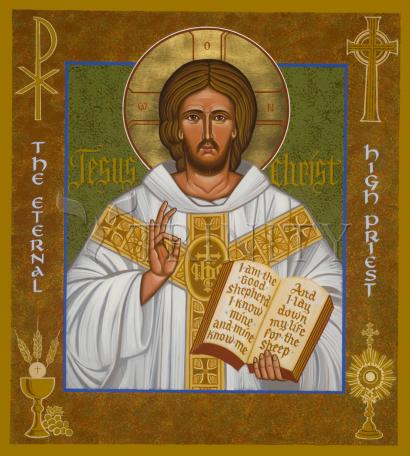
Jesus, the Eternal High Priest, by Joan Cole

For the word of God is alive and active. Sharper than any double-edged sword, it penetrates even to dividing soul and spirit, joints and marrow; it judges the thoughts and attitudes of the heart. Nothing in all creation is hidden from God’s sight. Everything is uncovered and laid bare before the eyes of him to whom we must give account.

Therefore, since we have a great high priest who has ascended into heaven, Jesus the Son of God, let us hold firmly to the faith we profess. For we do not have a high priest who is unable to empathize with our weaknesses, but we have one who has been tempted in every way, just as we are—yet he did not sin. Let us then approach God’s throne of grace with confidence, so that we may receive mercy and find grace to help us in our time of need. (New International Version)

Church Persecution and Christian Suffering

The book of Hebrews was originally a sermon preached to a group of believers who had come to Christ out of Judaism. From the book of Acts, we know there were thousands of Jewish Christians who were dispersed from Jerusalem when Stephen was martyred.  A great persecution broke out, and many believers fled west to places like Galatia, Ephesus, Greece and Rome. 

The Jewish believers were immigrants in a foreign land, looking to practice their faith without harm. Yet, their experience was anything but ideal. These followers of Christ found fellow ethnic Jews in the places where they went, yet those Jews had no use for these people that they believed were in some sort of aberrant cult.

What is more, the surrounding Gentile culture did not understand Christianity, at all, and many of those who held to pagan religions bought into rumors, such as, that Christians were cannibals who ate at what’s called the Lord’s Table.

So, here we have a situation where these displaced Christians had no respect from both Jews and Gentiles. As a result, they had a difficult time carrying out business because no one trusted them. They were essentially alone in the world. 

Losing Their Grip

Initially, they embraced their identity as Christians and held up quite well under the stress. However, over time, their resolve began to slowly erode. The followers of Jesus began to question their adverse situation. 

They began listening to their fellow Jews throw doubts on their faith. The hard life was not improving, maybe even becoming worse.  Eventually, the church came to a point where they began re-considering their whole way of life as Christians, and their faith commitment started slipping. The Christians actually considered leaving the Church and Christianity and going back to their old life in Judaism.

The Message of Hebrews

It was at this point that a vigorous believer in Jesus came to town, saw the situation of the church, and preached a spirited message to them. The preacher called them to hold tight to their commitment – to see Jesus afresh and anew as superior over all the Old Testament, as the fulfillment of all the promises of God. 

So, then, throughout the book of Hebrews we have this wonderful explanation and exposition of how to make sense of Jesus and the Old Testament, and of what Jesus really means to the church. Throughout his sermon, the preacher occasionally paused his teaching and gave the people a stiff warning about falling away from Christ. He called the church to be bold and confident in Christ, to stand up to the suffering, and to confront their temptations so that they would persevere in their commitment to Jesus Christ for the rest of their lives.

God’s Word and Work

We pick up the teaching and the exhortation in chapter four. Hebrews 4:12-16 is composed of two distinct sections that are paired together for a reason.  Verses 12-13 give us a graphic visual of the penetrating work of God’s Word, of the reality that God can get deep inside us. The next section, verses 14-16, lays out God’s response to our being under divine scrutiny – that there is grace and mercy available because of Jesus, our great high priest who is superior to every priest of the Old Testament to the point of being the last and permanent priest forever! 

These verses are bound together because we all need to struggle with the tension between God’s Word to us, and our words to God; between God’s judgment that opens our souls on a spiritual operating table, and God’s grace which jumpstarts our broken hearts. Our most fundamental need is for God’s mercy in Jesus Christ.

The Christian Life

It is important that our outer lives and our inner lives match each other. Whenever the two are out of sync, we come under the judgment of God’s Word. These early Hebrew Christians had slowly drifted from the truth so that their inner and outer lives did not line up well.

Some of them still performed the outward duties of being a Christian yet were inwardly despising their hard situation. A growing vacuum developed on their insides as they slowly started letting go of Jesus as their object of devotion. Their hearts began to harden because of their hard lives. 

On the other hand, there were other Hebrew Christians who began drifting in a different way. Inwardly, they tried to maintain their devotion and commitment to Christ. Yet these believers began compromising their outward life to match the culture around them. In both cases of hardening inwardly, and of compromising outwardly, they each shared the situation of drifting away from their original commitment to Christ.

Even today, it is a real temptation to try and avoid suffering, to grow weary of our present circumstances and look for a way to get out from under the pain and find a quick fix.  Whenever we find ourselves in such a situation, the remedy is to be reminded that we must continue to hold firmly to the faith we profess because of who Jesus is.

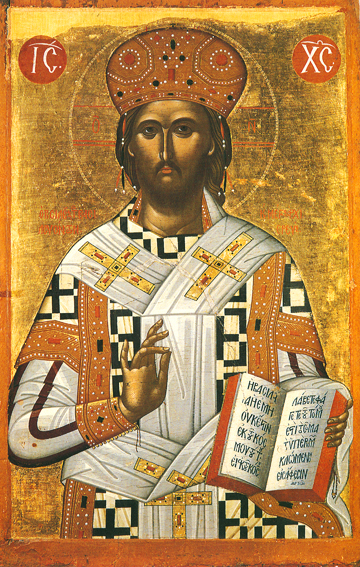
15th Century Orthodox icon of Christ the Great High Priest

Jesus As Permanent High Priest

Jesus is our great high priest. In the Old Testament, among the twelve tribes of the ancient Israelites, the tribe of Levi made up the class of priests. One of those Levites, always a descendent of the original Levite priest, Aaron, had the task of once a year entering a place called the Holy of Holies, which was at the center of the Temple, to offer a bloody sacrifice on behalf of the people, to atone for their sins from the previous year.

Jesus is our great and ultimate high priest. He did not enter the temporary sacrificial system to deal with sins for only a year. Jesus not only took on the role of high priest, but became the sacrifice, as well. As a result, we now have a thorough and permanent forgiveness of sins through Christ. So, the Hebrew Christian who considered going back to an old outdated system needed to be brought back to his senses and embrace again the once-for-all sacrifice of Jesus. 

As they considered Jesus, the believers needed to remember that Christ was not so far removed from them that the church could not relate to Jesus. Rather, Jesus is able to sympathize with each and every trouble, trial, and temptation we face because he faced the very same kind of sufferings. 

The only difference between Christ and his followers is that Jesus did not succumb to the trouble, but persevered and secured for us deliverance from sin, death, and hell. Jesus is the One who deserves every bit of our commitment, allegiance, and devotion. Christ is the One whom we are to worship inside and out.

Approaching God with Boldness

Let us then approach Jesus with confidence, with boldness, knowing that with him there is mercy and grace. Jesus not only suffered for us in the past; he also suffers with us now, in the present. We, as believers, are in union with Jesus. Christ is our great high priest, the One intimately involved in every nook and cranny of our lives. He knows what you and I are going through and is ready to give grace to help right now. 

Approaching Jesus has nothing to do with being good enough to do so. Coming to Jesus is about grace. Whenever we drift from Jesus and are confronted with God’s Word cutting us to the heart, the end result is not wrath or judgment; the result is mercy and grace.

Like the early Hebrew Christians, we all face situations out of our control that wear us down and cause us to become weary. In our tired state, we can be tempted to let our commitment to Christ slide in some small way. Over time, the small compromises of faith can snowball into a big slide away from God. 

Yet, Jesus is not sitting in heaven frustrated or confounded. God is not looking for a reason to punish people. It is just the opposite. Jesus, the Son of God, our great high priest, is looking for a reason to give grace and help us in our time of need. Christ is waiting for us to approach the throne of grace with confidence. Right now, Jesus is alive. He is scanning the world and the church, looking to extend mercy to those who need it. 

Asking for Help

We must avoid a spiritual hardening of heart which estranges us from approaching Jesus. Every one of us needs help. We are not God. We have weaknesses. We have confusion. We have limitations of all kinds. We need help.  And every one of us has something else: guilt and shame. At the bottom of our hearts, we feel undeserving, and so, avoid coming to Jesus. Yet, we need with family, loneliness, work, health, finances.

So, what to do? I can try to deny it all and be a superman who doesn’t need any help. I can try to drown it all with alcohol. I can be obsessive and compulsive about controlling events and/or people. I can simply succumb to discouragement. Here is what God declares: Jesus Christ became a High Priest to shatter despair with hope, to rescue that drowning person and that anxious individual.

God planned for a High Priest, a Savior, a Redeemer, and a gracious Helper. You and I are not trapped. We have Jesus. 

The book of Hebrews is all about a call to commitment – an invitation to come to Jesus.  And it is the most important invitation you will ever receive. Let us approach the throne of grace with confidence….

This is the confidence we have in approaching God: That if we ask anything according to his will, he hears us.  And if we know that he hears us – whatever we ask – we know that we have what we asked of him. Spirit of God, lead us into your will. Help us in all things. Fill our hearts and lives to overflowing with divine mercy and grace so that what comes out of our mouths and the actions we do are compassionate, kind, and good, through our great High Priest, Jesus Christ. Amen.

Hebrews 4:14-5:4 – What is Your View of God?

Photo by Pixabay on Pexels.com

Since we have a great high priest who has ascended into heaven, Jesus the Son of God, let us hold firmly to the faith we profess. For we do not have a high priest who is unable to empathize with our weaknesses, but we have one who has been tempted in every way, just as we are—yet he did not sin. Let us then approach God’s throne of grace with confidence, so that we may receive mercy and find grace to help us in our time of need.

Every high priest is selected from among the people and is appointed to represent the people in matters related to God, to offer gifts and sacrifices for sins. He can deal gently with those who are ignorant and are going astray, since he himself is subject to weakness. That’s why he has to offer sacrifices for his own sins, as well as for the sins of the people. And no one takes this honor on himself, but he receives it when called by God, just as Aaron was. (NIV)

Metaphors matter. How we view, imagine, and picture God influences the way we live.

Recently, I met with a young man who was severely distressed, depressed, and had attempted suicide several times in the past several months. After listening to his story, I asked him a question: “How do you see or picture God?”  Without hesitation, he answered, “God is my CO (Commanding Officer).”  He went on to portray and picture General God who gives commands and of good soldiers who obey what’s expected of them. 

As a soldier, you would never walk up to your CO and vent all your feelings. You wouldn’t have a dialogue.  There would be no extended conversations. In the throes of trying to deal with emotional trauma, General God isn’t a metaphor that’s helpful.

Today’s New Testament lesson reminds and invites us to consider Jesus, the Son of God. Christ is pictured as our great high priest. A priest is a person who intercedes for you with God. He stands in the gap and effectively communicates your needs, desires, and feelings to a gracious and loving God.

When you are too emotionally tired to face another day, Jesus our great high priest, has our back and is graciously present with us.

Soldiers don’t have confidence to approach General God with their abject weakness or their ongoing temptations. There is only the giving and receiving of orders and strategies to be implemented. Far too many Christians have such an understanding of God and think there is something wrong with them when they cannot live up to be the kind of soldier that would make others proud.

Grace and mercy, however, are found through the confidence of approaching our great high priest. It is Jesus who thoroughly, completely, and mercifully has a first-hand understanding of what you are dealing with and is able and desirous to help.

As our permanent high priest, Jesus is uniquely positioned to hear us, empathize with our situation, and care for us in ways which truly aid us.

It’s easy to get discouraged. It takes no effort to find yourself on the outside of happiness and on the inside of a black hole. Living in this broken world can sting and hurt like hell. Yet, we have a Savior who has brought deliverance from hell by taking on hell itself.  Jesus, the pioneer of our salvation, knows better than anyone what brokenness feels like. Christ absorbed all the sin of the world on the cross. 

Jesus is presently, this very moment, sitting at the right hand of the Father in heaven, awaiting your approach with merciful eyes, a compassionate heart, and listening ears. Jesus is our risen and ascended Lord. Christ is so much more than a military officer. Jesus is our ample and able great high priest. He is awaiting you now….

Ascended and living Lord Jesus, you are my colossal high priest. You live to intercede for me. What a privilege!  May you strengthen my nascent faith today and bolster my confidence as I consider your grace and mercy in this messed-up world. Thank you for your kindness, empathy, and ability. Amen.