
Confronting Spiritual and Emotional Pain (Psalm 79)

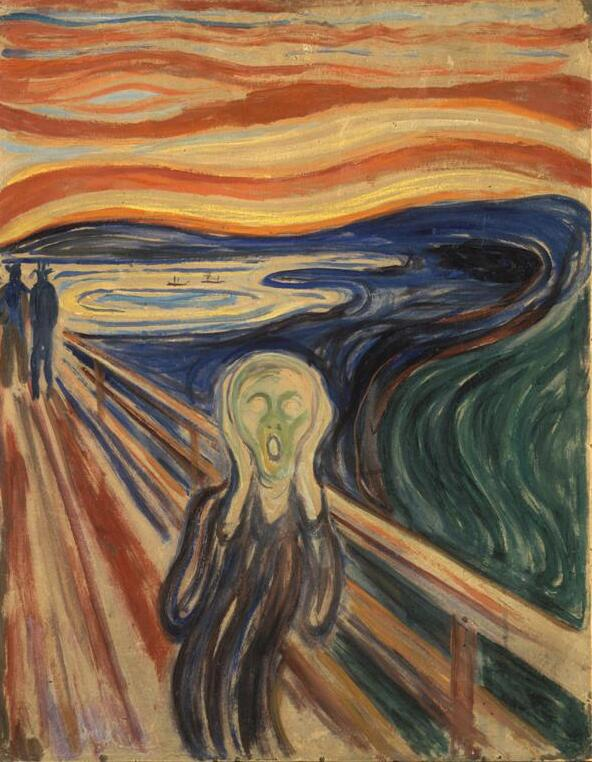
The Scream, by Edvard Munch, (1863-1944)

God! Barbarians have broken into your home,
    violated your holy temple,
    left Jerusalem a pile of rubble!
They’ve served up the corpses of your servants
    as carrion food for birds of prey,
Threw the bones of your holy people
    out to the wild animals to gnaw on.
They dumped out their blood
    like buckets of water.
All around Jerusalem, their bodies
    were left to rot, unburied.
We’re nothing but a joke to our neighbors,
    graffiti scrawled on the city walls.

How long do we have to put up with this, God?
    Do you have it in for us for good?
    Will your smoldering rage never cool down?
If you’re going to be angry, be angry
    with the pagans who care nothing about you,
    or your rival kingdoms who ignore you.
They’re the ones who ruined Jacob,
    who wrecked and looted the place where he lived.

Don’t blame us for the sins of our parents.
    Hurry up and help us; we’re at the end of our rope.
You’re famous for helping; God, give us a break.
    Your reputation is on the line.
Pull us out of this mess, forgive us our sins—
    do what you’re famous for doing!
Don’t let the heathen get by with their sneers:
    “Where’s your God? Is he out to lunch?”
Go public and show the godless world
    that they can’t kill your servants and get by with it.

Give groaning prisoners a hearing;
    pardon those on death row from their doom—you can do it!
Give our jeering neighbors what they’ve got coming to them;
    let their God-taunts boomerang and knock them flat.
Then we, your people, the ones you love and care for,
    will thank you over and over and over.
We’ll tell everyone we meet
    how wonderful you are, how praiseworthy you are! (The Message)

The temple was destroyed. The conquering army gloats over their victory. That’s the context of today’s psalm. It’s a prayer, an angry cry for God to step in and act on behalf of the humiliated people. The prayer is more than a simple plea for help; it’s a deeply passionate appeal, that says in 1960’s terms, “God, stick it to the man!”

In the face of evil, when there is destruction all around and violence everywhere, prayer does not become some sort of polite knock at the side door of God’s house. Instead, prayer is a pounding on the front door with a demand for God to do something about this terrible trouble.

For the psalmist, the incongruence between who God is and what has happened to God’s people is inconceivable and unacceptable. To profane God’s temple is to profane God; and to kill and maim God’s people is to flip the middle finger at God. The psalmist is beside himself and overwhelmed with emotion.

There is something very instructive here that we ought not miss. When we have been brutalized, victimized, and/or demoralized, we just want someone, especially the Lord we serve, to take notice and feel what we are feeling. Never underestimate the power of empathy and solidarity. To feel alone and bereft of help is an awful feeling.

Perhaps the psalmist’s prayer offends some sensibilities. I wonder, for those who find the language difficult, have ever had a daughter raped, or a house destroyed by fire, or seen a person killed without mercy in front of their own eyes. Methinks they have not. The feelings of helpless despair and sheer anger defy human words. These are not casual affronts; they are malicious destructions of property and people.

We need someone to affirm the raw ruthlessness of it all, to have some understanding of the impossible place we are in, with having to deal with such wanton cruelty. When our very support is ripped from our lives, the madness within is too much to bear. Who will rescue us from this body of death?

God is big enough to handle our rage and our hurt. The Lord is available and hears our desperate voice of prayer. Yet, God is not always going to directly and immediately answer on the terms we stipulate. God acts out of God’s own providence and justice, and not from our expectations. And that is a good thing, not a bad thing.

God sees. The Lord knows. And the Sovereign of the universe feels it all with us. The realization of this divine empathy enables us to recenter and reorient ourselves around faith, hope, and love. New life is never a gift in a vacuum; it comes out of agonizing struggle in having to reckon with the existence of evil.

So, when someone goes through a hellish experience, let us exercise our capacity to listen and witness the horrible spiritual pain of the person. Healing hurts: it is not a pleasant affair. So, hang in there and walk alongside another in their hour of need, even when their vitriol seems over the top to us. For only in telling our story to another will any of us find relief and renewed hope.

The biblical psalms permit us to use language appropriate to what has happened. They also allow us to move beyond the venom to the God who restores broken lives.

Lord Jesus Christ, by your patience in suffering you hallowed earthly pain and gave us the example of obedience to your Father’ will: Be near me in my time of weakness and pain; sustain me by your grace, that my strength and courage may not fail; heal me according to you will; and help me always to believe that what happens to me here is of little account if you hold me in eternal life.

My Lord and my God, as Jesus cried out on the cross, I cry out to you in pain, O God my Creator and Sustainer. Do not forsake me. Grant me relief from this suffering and preserve me in peace, through Jesus Christ my Savior, in the power of the Holy Spirit. Amen.

There Are Consequences to Injustice (Exodus 12:29-42)

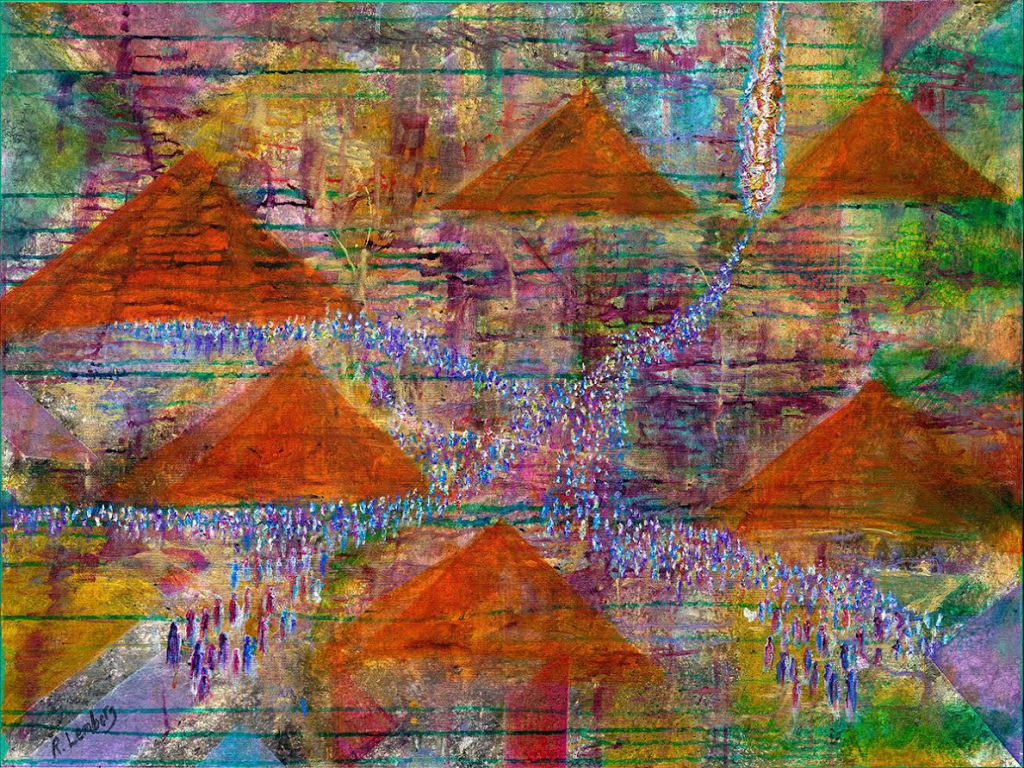
Exodus Out of Egypt, by Rivka Lemberg

At midnight the Lord struck down all the firstborn in Egypt, from the firstborn of Pharaoh, who sat on the throne, to the firstborn of the prisoner, who was in the dungeon, and the firstborn of all the livestock as well. Pharaoh and all his officials and all the Egyptians got up during the night, and there was loud wailing in Egypt, for there was not a house without someone dead.

During the night Pharaoh summoned Moses and Aaron and said, “Up! Leave my people, you and the Israelites! Go, worship the Lord as you have requested. Take your flocks and herds, as you have said, and go. And also bless me.”

The Egyptians urged the people to hurry and leave the country. “For otherwise,” they said, “we will all die!” So the people took their dough before the yeast was added, and carried it on their shoulders in kneading troughs wrapped in clothing. The Israelites did as Moses instructed and asked the Egyptians for articles of silver and gold and for clothing. The Lord had made the Egyptians favorably disposed toward the people, and they gave them what they asked for; so they plundered the Egyptians.

The Israelites journeyed from Rameses to Sukkoth. There were about six hundred thousand men on foot, besides women and children. Many other people went up with them, and also large droves of livestock, both flocks and herds. With the dough the Israelites had brought from Egypt, they baked loaves of unleavened bread. The dough was without yeast because they had been driven out of Egypt and did not have time to prepare food for themselves.

Now the length of time the Israelite people lived in Egypt was 430 years. At the end of the 430 years, to the very day, all the Lord’s divisions left Egypt. Because the Lord kept vigil that night to bring them out of Egypt, on this night all the Israelites are to keep vigil to honor the Lord for the generations to come. (New International Version)

“A horse may run quickly but it cannot escape its tail.”

Russian proverb

The ancient Israelites were in bondage to the Egyptians for hundreds of years. Their oppression finally came to and end with the Lord’s dramatic deliverance of them in the tenth and final plague directed against Egypt.

The actions of the Egyptians eventually and finally caught up with them. Their making slaves of the Israelites was not going to last forever. Even though it took a while, Egypt was held accountable and experienced divine judgment. The empire’s internal moral emptiness would not be able to hold up under the justice of God.

“Empty sacks will never stand upright.”

Italian proverb

Pharaoh was a hard man. The more Moses talked to him the more stubborn Pharaoh got. Eventually, Pharaoh’s heart became like stone; he and his empire fell because they were bent toward the way of injustice. Oppression had been Pharaoh’s proclivity by instructing the Jewish midwifes to kill firstborn sons of Israelite mothers. Now the Egyptians would fall into the very trouble they created for others.

The death of so many on one night, all at once, was too much for Pharaoh and the Egyptians. In such a grief, Pharaoh’s dogged resolve in holding onto Israelite slavery and ostracizing Moses was loosened. He summoned Moses in the middle of the night and commanded the Israelite slaves to be gone – without any conditions or strings attached to it.

The Egyptians wanted them gone, and so, urged them to leave in a hurry – just as God had predicted. All sorts of articles – including silver and gold – were willingly given to the fleeing Israelites by the lamenting Egyptians. No matter how hard and stubborn any earthly ruler is, the plans and purposes of a sovereign God cannot be thwarted.

Finally, the deliverance out of Egyptian bondage happened. The Israelites were free. It was a hasty departure. It was as if the Hebrew people had become so upsetting to the great Egyptian empire, that they vomited them out of their land, projecting the former slaves as far away as they could.

Sometimes people get the notion that if they do something bad, they will be struck by lightning or have some sort of tragedy occur. And when it doesn’t happen, they might reason further in their misguided notions by believing they can get away with bad behavior. So, they keep doing it. But, eventually, this all has a terrible effect.

“Those who lie down with the dogs, rise with the fleas.” English proverb

Actions and inactions have consequences. Those consequences may not happen immediately. However, all of us shall someday harvest the fruit of decisions that were made months, even years or decades, ago.

Make no mistake, God is not mocked. A person will harvest what they plant. Those who plant only for their own benefit will harvest devastation from their selfishness, but those who plant for the benefit of the Spirit will harvest eternal life from the Spirit. Let’s not get tired of doing good, because in time we’ll have a harvest if we don’t give up. (Galatians 6:7-9, CEB)

Almighty God, Creator and Preserver of all humanity, we humbly ask that you make your ways known to people everywhere, and bring saving help to all nations. We pray for Christ’s Church, and all faith communities across the earth, that they be guided and governed by your good, gracious, and benevolent Spirit; and that all who profess and call themselves Christians may be led into truth, and hold the faith in unity, peace, and righteousness.

Blessed Lord, we pray for all who are afflicted or distressed in mind, body, or spirit. May your divine mercy bring them comfort and relief, according to their need. Give them patience through their sufferings, and a joyful outcome from their distress. This we pray through Jesus Christ our Savior and Lord. Amen.

From Where Will Our Help Come? (Psalm 121)

I lift up my eyes to the hills—
    from where will my help come?
My help comes from the Lord,
    who made heaven and earth.

He will not let your foot be moved;
    he who keeps you will not slumber.
He who keeps Israel
    will neither slumber nor sleep.

The Lord is your keeper;
    the Lord is your shade at your right hand.
The sun shall not strike you by day
    nor the moon by night.

The Lord will keep you from all evil;
    he will keep your life.
The Lord will keep
    your going out and your coming in
    from this time on and forevermore. (New Revised Standard Version)

One of the rituals my family does when leaving on a long road trip is to pray. It’s in those special times of traveling, and anticipating the destination, that we can be especially cognizant of both the blessings and the dangers which may lie ahead.

When the Israelites set out together from places all over Israel to go to Jerusalem and ascend the temple mount for a special festival, they also prayed. Specifically, they prayed many of the psalms and sang them together.

One never knows what lies ahead. We trust the Lord to protect us by being our divine keeper and guardian, to help us and watch out for us. This is why today’s psalm reading is alongside the Old Testament lesson of the Passover. (Exodus 12:14-28)

In Exodus, God was readying the people for deliverance from Egypt. The ancient Israelites were about to leave the land of slavery and travel to the Promised Land. They would be vulnerable to all sorts of dangers and obstacles on their way. The people needed Yahweh’s oversight and protection on their long journey.

Will we arrive safely? Can we get where we need to go without an accident or trouble? Those are questions people ask in any age with any significant trip.

Throughout the psalms of ascent (or the pilgrimage psalms) there are some fundamental convictions about God through them all:

  1. The Lord is a mighty God, the Creator and Sustainer of the universe
  2. The Lord is a caring God, the people’s Helper and Deliverer
  3. The Lord is near, an imminent God who is close to us as our Immanuel
  4. The Lord is an attentive God, always watching and never sleeping on the job in order to guard us
  5. The Lord is far above, a transcendent God who is able watch over everything and always see us

If you think about it, life itself is one long extended pilgrimage from birth to death. Life is an earthly sojourn, continually moving about the earth from one place to the next. Even if we stay put and never move, the world itself is continually spinning on it’s axis and furthermore circling in space around the sun. In other words, no matter what we do, life is always risky.

We need the consistent and continual divine presence to go before us, with us, and after us wherever we are and wherever we go. There is a constant need for God’s watching and caring for us. What’s more, we are invited to move and participate in the Lord’s dealings in this world. The call of every Christian is Christ’s call to “follow me.”

The life of the believer is a call to a life of pilgrimage and discipleship. It is to step out in faith and live life to the full, knowing that God has your back. We need not run for the hills whenever there is trouble; we can look beyond the mountains to the God of heaven who is our divine helper.

At the end of the day, we can lay our head on the pillow to sleep with trust that the non-slumbering God keeps watch over us during the dark night hours. Unlike the gods who need to be stirred from their rest, Yahweh is never absent and always alert to whatever is happening.

In the morning, we can rise with confidence knowing that our going out and coming home again will be watched with vigilance and care from the Lord who is our keeper. Nothing escapes the God who is both far and near, able to see the big picture of our lives, as well as notice every little nuance by being up close and personal.

We exist in a day and age where God is looked upon with askance – as if the universe’s Sovereign has neither the ability nor the will to impact our daily lives and positively govern the world’s affairs. This is not the God of the Psalms – a grand Being who knows the score of everything going on, cares about the intimate details of life, and has the power to bring about a good outcome for humanity.

Even though God may at times be silent, and although the Lord rarely acts quickly, we ultimately know down deep in our soul that we matter and that Yahweh is there. The real issue is whether we will take the time and effort to connect with this incredible benevolent Being and take a walk, that is, a pilgrimage of faith and encounter God.

When all is said and done, from where will our help come? It will ultimately come from the Lord, the maker of heaven and earth.

Eternal God, in whose benevolent realm there is no weapon drawn except the sword of righteousness, and there is no strength known but the strength of love: Mightily spread abroad your gracious and powerful Spirit, so that all people everywhere may be gathered under the banner of the Prince of Peace, as children of one God and Father of all, to whom belongs dominion and glory, now and forever. Amen.

Against Apathy (Obadiah 15-21)

The day of the Lord is near
        against all the nations.
    As you have done, so it will be done to you;
        your actions will make you suffer!
Just as you have drunk on my holy mountain,
        so will all the nations around you drink;
    they will drink and swallow quickly,
        and they will be like they’ve never been before.

But on Mount Zion there will be those who escape,
        and it will be holy;
        and the house of Jacob will drive out those who drove them out.
The house of Jacob will be a fire,
        the house of Joseph a flame,
        and the house of Esau straw;
    they will burn them up completely,
        and there will be no one left of the house of Esau,
for the Lord has spoken.
Those of the arid southern plain will possess Mount Esau,
        and those of the western foothills, the land of the Philistines;
    they will possess the land of Ephraim and the land of Samaria,
        and Benjamin will possess Gilead.
Those who remain of the Israelites
            will possess the land of the Canaanites as far as Zarephath;
    and those left from Jerusalem and who are now living in Sepharad
        will possess the cities of the arid southern plain.
The deliverers will go up to Mount Zion
        to rule Mount Esau,
        and the kingdom will be the Lord’s. (Common English Bible)

The prophet Obadiah is a small book in the sea of the Old Testament prophets (a single chapter of twenty-one verses). It’s a prophecy dedicated to the singular focus of delivering a message of divine judgment against the nation of Edom.

Why judgment? Because when people remove themselves from or place themselves in opposition to God (and God’s people) they can expect divine retribution, rather than restoration.

“The day of the Lord” is a phrase used throughout Holy Scripture as a reference to God’s upcoming judgment of the world. Along the way, until that final day, there are many nations which come and go.

Actions

Edom was in an ideal position to help Judah when King Nebuchadnezzar and the Babylonians captured Jerusalem in 586 B.C.E. But they didn’t. They could have given military assistance; but the ancient animosity between Jacob (Israel) and Esau (Edom) prevented this.

They still could have sheltered the Jews fleeing Jerusalem and Judah in order to escape the Babylonian onslaught. Edom’s rocky strongholds would have been extremely difficult for Babylon to maneuver in pursuit of Judah. Yet, the Edomites refused to trouble themselves in offering Judah even the slightest assistance in the day of its great need.

In fact, the situation was worse than refusing to assist. Edom committed violence against Judah at the time of Jerusalem’s fall. The Edomites progressed from being aloof and disinterested observers of Judah’s fate, to gloating over Judah’s trouble, to participating as invaders of Jerusalem. Finally, Edom played the antagonistic enemy who plucked off desperate Jewish fugitives as they tried to escape certain death.

The Edomites were like a bunch buzzards, hovering overhead, waiting for Babylon to smash Judah so that they could swoop down and devour the leftovers.

Accountable

Historically, we don’t really know much Edom was actually involved in Jerusalem’s destruction. Yet, it’s notable that some later Jewish traditions indicate that Edom helped the Babylonians burn the temple in Jerusalem to the ground. Whatever really happened, the Edomites took advantage of Judah and profited from their destruction. What’s more, God held them accountable for their actions and/or inaction.

And that is the very nature of sin. A sinner is one who either acts in breaking God’s penultimate command of love by harming another, or fails to act lovingly with apathetic inaction, when it is in their power to act. Therefore, living rightly and justly is not only refraining from acts of evil; it’s also doing good whenever we see that love and good works are needed.

It is a sin when someone knows the right thing to do and doesn’t do it.

James 4:17, CEB

Edom knew that Judah needed help, but refused to give it. So, the Edomites were guilty before God for failing to offer hospitality, relief, and basic human kindness. As for us, we have a great deal to answer for as idle spectators, whenever we are capable of being active helpers.

Apathy

Today, it appears that society has lost its self-awareness. As a result, there is widespread apathy toward others. We have made a devil’s bargain of trading an interior life of developing spiritual discipline and actionable love for an exterior life of position, power, and prestige.

In our contemporary culture, there is no longer any intentional and systematic spiritual formation happening. Instead, we are regularly fed the unholy porridge that we can do and think whatever we like, as long we aren’t hurting anybody.

Therefore, we don’t see the connection between our current political and religious acrimony and our spiritual apathy. We have relegated practices such as centering and contemplative prayer as mere optional extras for the eccentric few. “Why struggle with all this scriptural, religious, and spiritual stuff?” we say. “Meh, it’s not worth the effort.” From such a stance, we are only a stone’s throw away from not caring about our neighbor.

This all makes me wonder if the ancient Edomites, over time, created a culture of spiritual carelessness that neglected the disciplined life of the soul. I’m curious if they ever said things like, “I don’t have time for all that God stuff.”

It is this sort of apathy which underlies so much of Western society. Even the word “apathy” barely gets used anymore – along with a lot of other words like “avarice.” They have become relics of another era. But they’re still among us. And they come out in a phrase such as, “Yeah, whatever. It is what it is.”

We are largely an unhappy people these days. And we cannot seem to put our finger on why that is. Maybe we need to rediscover the prophets – and the ones who never seem to get a hearing – like the prophet Obadiah. Or are we too indifferent to give him an honest reading?

All too often, Lord, we turn away from the world’s many problems, which seem too big, too complex, or too far away. Forgive us our indifference.

It is easier, Lord, to see only what is around us: our lives, our homes, our challenges. Forgive us our isolation.

Help us to see with your eyes: eyes which notice one another and help us understand.

Help us to dream your dream: of communities that reach out and dialogue and where diverse people creatively cooperate.

Help us to be people of solidarity and action, so moved by prayer, encounter, and understanding that peace can become a reality. Amen.