Hebrews 2:1-9 – Paying Attention

Calvin and Hobbes - paying attention

We must pay the most careful attention, therefore, to what we have heard, so that we do not drift away. For since the message spoken through angels was binding, and every violation and disobedience received its just punishment, how shall we escape if we ignore so great a salvation? This salvation, which was first announced by the Lord, was confirmed to us by those who heard him. God also testified to it by signs, wonders, and various miracles, and by gifts of the Holy Spirit distributed according to his will.

It is not to angels that he has subjected the world to come, about which we are speaking. But there is a place where someone has testified:

“What is mankind that you are mindful of them,
a son of man that you care for him?
You made them a little lower than the angels;
you crowned them with glory and honor
     and put everything under their feet.”

In putting everything under them, God left nothing that is not subject to them. Yet at present we do not see everything subject to them. But we do see Jesus, who was made lower than the angels for a little while, now crowned with glory and honor because he suffered death, so that by the grace of God he might taste death for everyone. (NIV)

My wife and three daughters all have attention deficit disorder (A.D.D.). Although many people believe this to be a disadvantage, I have noticed that since their brain chemistry doesn’t have a good filter for filtering all the stimuli they hear each day, each of them are much more intentional about picking out the voice they want to hear and engaging with it.  Whereas you and I might take this for granted, the women in my life know the value of creating the skills to pay attention.

The ability to pay attention and listen is necessary for a sustainable Christian life. The consequence of not developing such competency is that we will drift away – our minds will wander and allow other competing voices to overwhelm the singular voice of Jesus.  Taking salvation for granted may be setting us up for spiritual failure. That is, we think we already know about Christ’s person and work, so we neglect to really pay attention. Bad idea.

Assuming we are paying attention is not the same thing as actually doing it. Assumptions lead to drifting away from truth.  We are meant to have continual reminders of Christ’s redemptive events. We are to avoid the precarious position of being lost in a sea of competing voices. We need an intentional plan for paying attention without assuming we will be focused. Along with paying attention to our physical health and being vigilant about keeping the coronavirus at bay, here are a few ways of daily being mindful of our spiritual health:

  • Read the Scripture each day with a combination of standing and sitting, reading silently and out loud.
  • Hold a cross or other Christian reminder in your hand and feel free to fidget with it.
  • Journal your thoughts in a notebook.
  • Set a consistent time and place for bible reading and prayer.
  • Use different translations and versions of the Bible to read.
  • Go outside occasionally and pray while walking.
  • Focus on your breathing, and consider using breath prayers, i.e. Breathe out: “Speak Lord.” Breathe in: “I am listening.”
  • Drink some coffee, tea, or something soothing, and picture the comfort of Christ coming into your life.
  • Be aware of distractions and acknowledge them without judging yourself.
  • Observe the Christian Year and the Daily Lectionary.

While some might argue that observing Lectionaries, the Church Calendar, Christian seasons, and worship liturgies are vain repetition, I insist otherwise: We are in grave danger of not paying attention to what we have heard, lest we drift away from it.  Like a beach goer on the lake drifting on her flotation device far out from shore, we can be unaware of how far we have strayed from our spiritual moorings.  If the passion and death of Jesus can only get a shoulder shrug and a “meh” out of us, there is a real problem.

Forming habits of worship, fellowship, service, and piety are essential to deliberately maintaining attention to Jesus. Perhaps if we all had spiritual A.D.D. we would be more intentional about grafting reminders and practices into our lives.

Ignorance does not come from a lack of education; it comes from a failure to pay attention to the most important things in life.

God pays attention to us in a special way, different from all other creation. As the only creatures for whom the image and likeness of God resides, we have an innate sense of connection with the divine. Paying attention to things, especially to what Christ has secured for us through the cross, reflects the God who is continually observing humanity.

May your contemplation of Christ and his redemptive events of incarnation, holy life, teaching, death, resurrection, and ascension be always fresh and continually meaningful.

Soli Deo Gloria.

Hebrews 3:1-6 – Fix Your Thoughts on Jesus

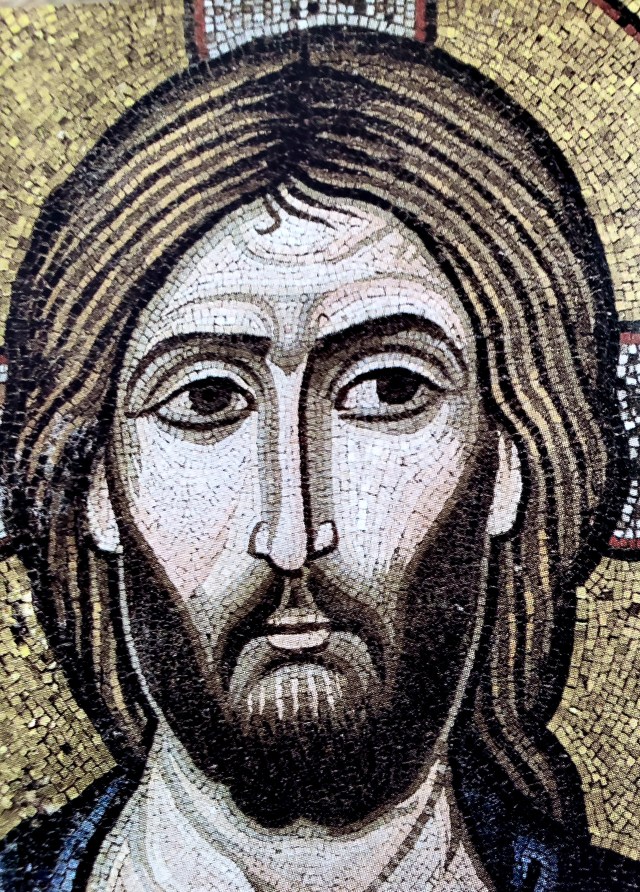
Christ of Mercy
Byzantine Christ of Mercy, circa 1100

Therefore, holy brothers and sisters, who share in the heavenly calling, fix your thoughts on Jesus, whom we acknowledge as our apostle and high priest. He was faithful to the one who appointed him, just as Moses was faithful in all God’s house. Jesus has been found worthy of greater honor than Moses, just as the builder of a house has greater honor than the house itself. For every house is built by someone, but God is the builder of everything. “Moses was faithful as a servant in all God’s house,” bearing witness to what would be spoken by God in the future. But Christ is faithful as the Son over God’s house. And we are his house, if indeed we hold firmly to our confidence and the hope in which we glory. (NIV)

It is hard to be patient. Perseverance is difficult. If the Christian life were all bunny rabbits and rainbows, there would be no need for the strengthening of faith and the development of endurance – it would all be fun and easy. However, we know life is often hard and demanding. It requires effort and faith is the muscle that gets us through adversity. If unused, faith atrophies. Faith needs strenuous exercise to grow, and must be tested in adverse circumstances to mature.

The author of Hebrews wrote his letter to Jewish Christians because they were losing their grip of faith. The hard circumstances of the believers were leading them to entertain the notion of returning to their old ways of life, apart from Christ. They needed to refocus and set their thoughts on Jesus in the present moment.

When in the middle of situations, we neither asked for nor want, it can be tempting to view the past as “the good old days.” Yet, if you stop to think about it, you really know better. Because of your present struggle, the mind conveniently filters out all the crud from the past to make the bygone days look romantically better than they really were.

“Better” is what the book of Hebrews is all about.

The author persistently insists that Jesus is better than anything from the Hebrew Christians’ past. Moses is one of the most revered figures in Old Testament history. The writer of Hebrews acknowledges this basic respect for Moses, and goes beyond the glittery Mosaic-era reminiscing to remind the people that whereas Moses was faithful within God’s house, it is Jesus who is the Master over the house. Reality check, believers: Jesus is better than Moses.

What is more, followers of Jesus are the house. Jesus Christ is Lord – not Moses, or anybody else. Jesus cares for and protects his house. It might be tempting to believe that a previous house we had in another city or town was better. That was then, this is now. Today we live in God’s house. Therefore, we must hold on and not let go of the confidence we have in Jesus and the privilege we have living in God’s house.

When life is tough, daydreaming about a rosy past is easy. For sure, we can find all kinds of things we miss from previous days elsewhere. I have moved dozens of times in my life, and each place I have lived has a unique and special place in my life. Yet, trolling our personal histories, much like time-wasting gallivants on the internet, does nothing for the development of faith and perseverance.

Faith needs strengthening so that it is sustainable through the entire Christian life.

Just as a bodybuilder needs disciplined routines of exercise, so the Christian requires spiritual disciplines for a faith conditioning program which focuses the mind on Jesus. There are many spiritual practices, all which are wonderfully useful. Three of the most basic of those disciplines are: Scripture reading and spiritual reflection; personal and corporate prayer, and worship/fellowship. They are the Christian’s barbells.

  • Since God has revealed himself through Holy Scripture, we have the gracious privilege of reading the Bible to encounter the living Lord. I look at this not so much as reading but as taking a posture of listening to God. So, I read slowly and carefully, being alert to the Spirit’s voice.

For the word of God is alive and active. Sharper than any double-edged sword, it penetrates even to dividing soul and spirit, joints and marrow; it judges the thoughts and attitudes of the heart. (Hebrews 4:12, NIV)

  • Since God desires conversation with us, prayer opens us to a divine dialogue with the Lord. The Russian Orthodox monk, Theophan the Recluse (1815-1894) describes it this way: “To pray is to descend with the mind into the heart, and there stand before the face of the Lord, ever-present, all seeing, within you.” With this kind of description, prayer is sustained much less by duty and much more by a desire to connect with God.

Therefore, since we have a great high priest who has ascended into heaven, Jesus the Son of God, let us hold firmly to the faith we profess. For we do not have a high priest who is unable to empathize with our weaknesses, but we have one who has been tempted in every way, just as we are—yet he did not sin. Let us then approach God’s throne of grace with confidence, so that we may receive mercy and find grace to help us in our time of need. (Hebrews 4:14-16, NIV)

  • Since God exists in the fellowship of three persons, our fellowship with one another spiritually forms us for the sake of blessing the world. As we share in the life of our Triune God in worship, we gain ability to live in healthy community and learn from each other. By opening our lives to both God and others, we discover newfound faith and learn to strengthen one another.

See to it, brothers and sisters, that none of you has a sinful, unbelieving heart that turns away from the living God. But encourage one another daily, as long as it is called “Today,” so that none of you may be hardened by sin’s deceitfulness. We have come to share in Christ, if indeed we hold our original conviction firmly to the very end. (Hebrews 3:12-14, NIV)

In the present moment, right now, today, Jesus has a hold of you. Fix your thoughts on him. Today, Jesus wants to walk with you through your trouble – not transport you to the past. Now is the time to follow Jesus into all the situations that are in front of us. You are not alone. You can do this. We are all in this together.

Lord Jesus, you are sovereign over my past, present, and future.  Today has its situations and problems.  Help me walk into and through them with your gracious protection so that perseverance is developed within me and my faith in you is strengthened for tomorrow.  Amen.

Hebrews 9:11-15 – Monday of Holy Week

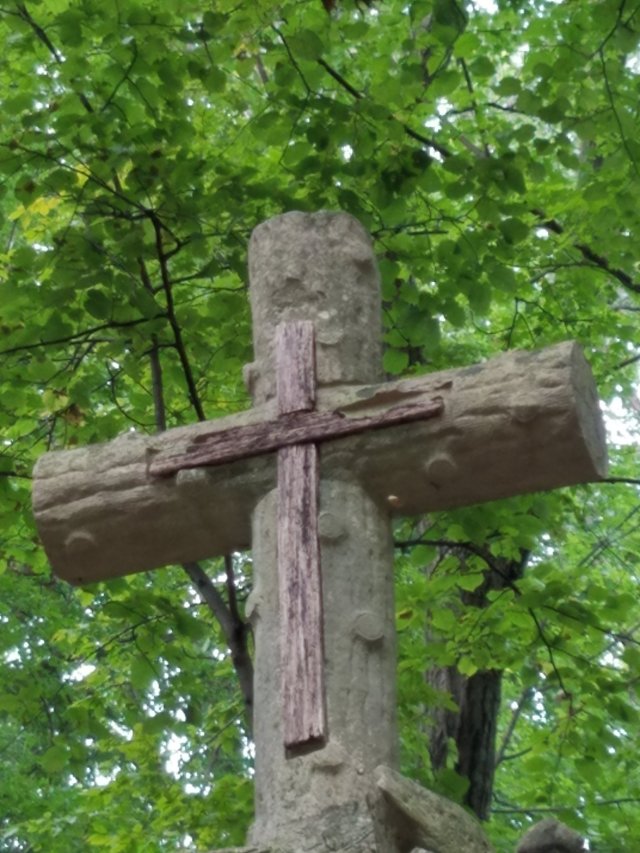
Wood Cross

When the Messiah arrived, high priest of the superior things of this new covenant, he bypassed the old tent and its trappings in this created world and went straight into heaven’s “tent”—the true Holy Place—once and for all. He also bypassed the sacrifices consisting of goat and calf blood, instead using his own blood as the price to set us free once and for all. If that animal blood and the other rituals of purification were effective in cleaning up certain matters of our religion and behavior, think how much more the blood of Christ cleans up our whole lives, inside and out. Through the Spirit, Christ offered himself as an unblemished sacrifice, freeing us from all those dead-end efforts to make ourselves respectable, so that we can live all out for God. (The Message)

The Christian Holy Week is an opportunity to embrace the value and practice of journeying with Jesus.  Just as birthday and anniversary celebrations allows us a different rhythm of life for a time, or as holidays provide us with certain family traditions, so Holy Week can be a special and unique time of contemplation and reflection on the last week of Christ’s earthly life.  As we journey with Jesus, consider the days of this week:

Palm Sunday is a focus on the entry of Christ into Jerusalem to shouts of “Hosanna! Blessed is he who comes in the name of the Lord!”

Monday of Holy Week looks ahead to Christ’s sacrifice with Mary’s anticipatory grief through a heartfelt and beautiful anointing of Jesus’ feet with her hair and her tears.

Tuesday of Holy Week depicts the difficulty of the disciples in wrapping their hearts and minds around what Jesus is telling them about his impending death.

Wednesday of Holy Week is known in some Christian traditions as “Spy Wednesday” because we remember that Jesus was betrayed by Judas, a clandestine spy among the disciples.

Maundy Thursday marks three significant events in Christ’s last week:  his washing of the disciples’ feet; his institution of the Lord’s Supper; and, his new commandment to love one another.

Good Friday marks the death of Jesus Christ.  It is “good” because his death means redemption for the world.  We especially remember why the cross is so very important, that it is the once-for-all sacrifice to end all sacrifices.  There is now eternal forgiveness.

Holy Saturday remembers the death of Jesus and his body in the grave with the Romans securing and keeping guard over it.

Easter Sunday is the culmination of all the expectations of God’s people, and the fulfillment of all God’s promises to them in Christ.  We rejoice, celebrate, and renew our love and commitment to God for raising Jesus from death.  His resurrection means new life for us.  He is risen, indeed!

Observing Holy Week is rather different this year.  Whereas this week typically takes the form of attending special church services, we are presently reliant on virtual community and spiritual presence.  It seems to me that, more than ever, we are reminded of our wonderful privilege in a worldwide community of redeemed persons who together are focusing on the life and death of Jesus.  If ever there was a time to realize our incredible connection with believers across the earth in contemplation and celebration together as Christ’s own Church, now is such a time.

Together with Christ’s Church throughout the globe we have opportunity to read treasured Christian Scriptures over the course of the week and to focus on the passion narratives in the Gospels.  For the follower of Jesus Christ, these are the fundamentals of our faith, the base upon which our eternal lives are constructed.  We return to the redemptive events of Jesus again and again so that for the entirety of the year we can live in careful devotion to the Savior who has brought us salvation from sin and offers new life.

Holy Week is here.  So, we choose to remember and give thanks with both quiet gratitude and loud shouts of praise, with solemn reflection and expressive response.  There is no time like it in the year.

Grant to us, Almighty God, that in our weakness we might be revived and renewed through the Passion of your one and only Son Jesus, our Lord, who lives and reigns with you and the Holy Spirit, one God, now and forever.  Amen.

Hebrews 3:7-19

            Although many people do their outdoor grilling with propane and propane accessories, there are still some who go with the old charcoal grill.  The key to a good hot grill is in the stacking of the briquettes into a neat pile before lighting them.  If this is not done, it is likely the white hot fire will never get going.  At the most, the briquettes will become warm but quickly grow cold and die.
 
            The New Testament lesson for today operates with the same principle.  “Take care, brothers, lest there be in any of you an evil, unbelieving heart, leading you to fall away from the living God.  But exhort one another every day, as long as it is called ‘today,’ that none of you may be hardened by the deceitfulness of sin.”  Just as a pile of charcoal needs all the individual briquettes together in order to become hot and not grow cold, so every Christian needs other Christians to speak into his/her life every day.  If this dynamic does not happen, the heart will grow cold and hard and eventually lead, if unchecked, to a falling away from the faith.
 
            There is much we can learn from the Korean church on this matter.  Every day they have opportunities early in the morning to gather together for prayer and encouragement before going off to their jobs and busy lives.  There is a reason that the Korean church has grown hot for God with many Christians and lots of missionaries going all over the world.  It would be not only wise, but necessary to re-think and re-do our American spiritual practices to better accommodate and reflect an obedience to these very verses in Hebrews.


            Blessed Holy Trinity, I have been made in your image – the image of the triune God.  Help me to reflect that image every day by encouraging my fellow believers and allowing them to exhort me toward love and good deeds in the faith of Jesus Christ.  Amen.