The Real Thing (Hebrews 9:24-28)

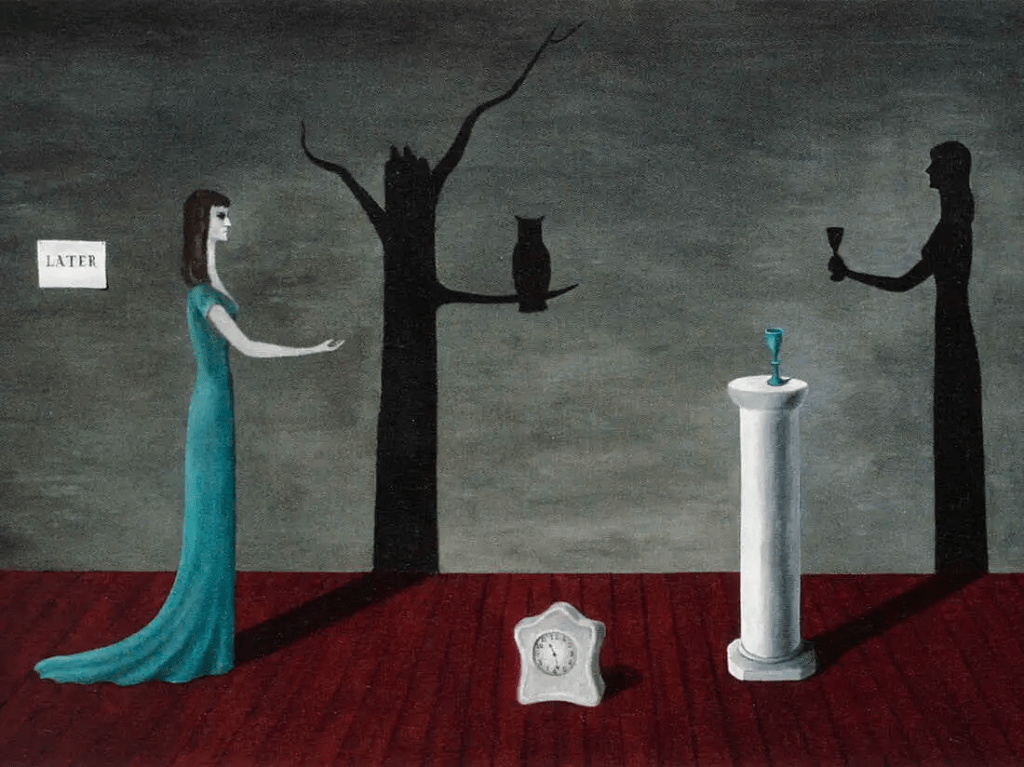
Strange Shadows (Shadows and Substance), by Gertrude Abercrombie, 1950

For Christ did not enter a sanctuary made by human hands, a mere copy of the true one, but he entered into heaven itself, now to appear in the presence of God on our behalf. 

Nor was it to offer himself again and again, as the high priest enters the holy place year after year with blood that is not his own, for then he would have had to suffer again and again since the foundation of the world.

But as it is, he has appeared once for all at the end of the ages to remove sin by the sacrifice of himself. And just as it is appointed for mortals to die once and after that the judgment, so Christ, having been offered once to bear the sins of many, will appear a second time, not to deal with sin but to save those who are eagerly waiting for him. (New Revised Standard Version)

I admit that the Book of Hebrews in the New Testament is one of my favorite books of the Bible. I also recognize that Hebrews is one of the most difficult books to deal with. And specifically, chapter 9 can be quite mind-boggling.

The author of Hebrews, whoever he was actually was, did the intellectually and theologically staggering job of establishing continuity between the two testaments of the Bible.

He compared and contrasted the old (or first) covenant with the new (or second) covenant, examining the Levitical priesthood and its sacrificial system, with Christ as the high priest whose singular sacrifice ended all sacrifices.

The old sacrificial system began on Mount Sinai. Moses sprinkled the sacrificial blood of bulls and goats on both the people and the tabernacle. He was consecrating them, and the sacrificial implements, so that everyone could participate in the worship of Yahweh.

In the new covenantal system, blood is also used to purify. Yet, the heavenly tabernacle could not be cleansed with the blood of animals. It required a better and superior sacrifice. (Hebrews 9:23)
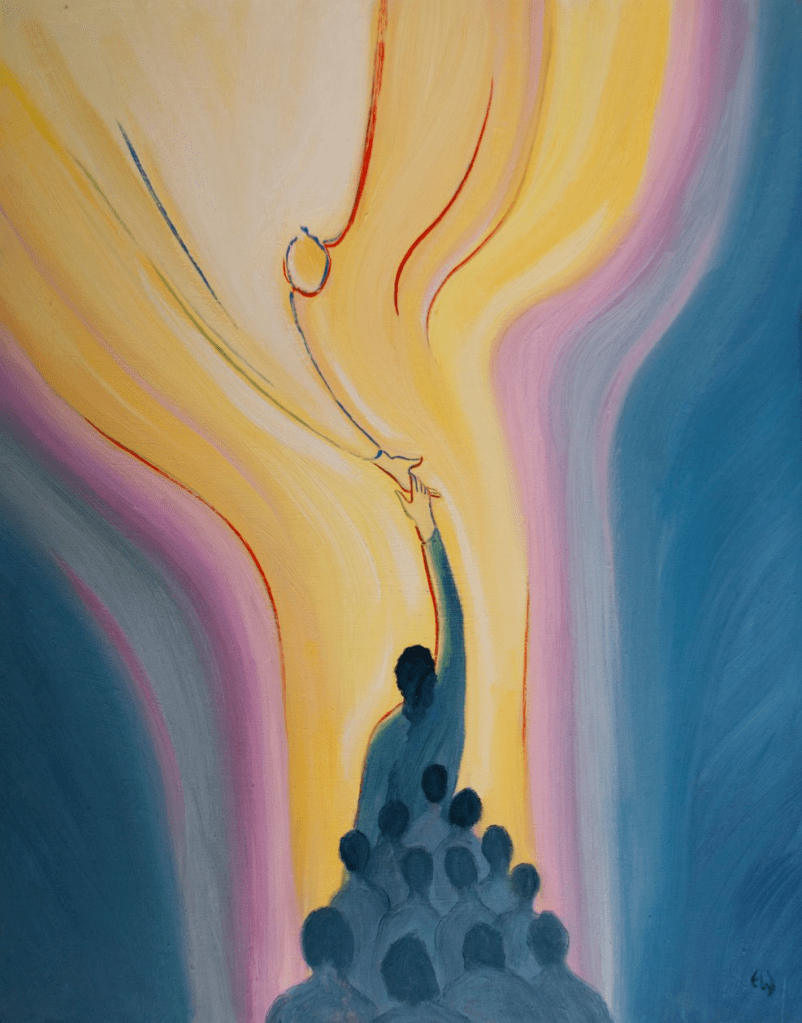
The Sacrifice of Christ, by Elizabeth Wang, 2002

That sacrifice is Jesus. He was both the high priest officiating the ritual, and the actual sacrificial offering. It is the life of Jesus, given in self-sacrificial death, which enables worshipers to come to God without any obstruction whatsoever.

Jesus does not have to keep offering himself. It was a one and done affair. One sacrifice on behalf of everyone. Once for all.

This is, of course, a distinctively Christian view and approach to the problem of guilt, shame, disobedience, and death. It has been a very compelling view for millions of people over the past two millennia.

In whatever way one seeks to understand and make sense of the author’s line of reasoning concerning a Christian approach to sacrifice and dealing with sin, what is apparent to me is that the author talked of a reality that we do not presently see.

The author of Hebrews was lifting up something important that he wanted us to notice. He was pointing out the reality of spiritual forces that have the power to both destroy and give life.

The earthly objects that we can see, touch, feel, hear, and smell are mere representations or shadows of heavenly things.

Many people, if not most people, today would say that invisible things such as our ideas and philosophies of religion are mere mental ways of understanding the objective reality in front of us that we can use our five senses to detect.

But the author of Hebrews insists – and I believe rightly so – that it’s the other way around. Everything we are presently experiencing with our objective senses is a projection of the ultimate invisible reality.

In other words, this entire world will pass away, because it is but a shadow in the history of eternity. The invisible God is the real deal. The heavenly sanctuary is reality. Love is the permanent operating system of eternity, and not your 401(k) or the next political election.

Jesus the Christ has offered himself once for all time, and for all sins. And he did it because the triune God – Father, Son, and Spirit – is a community of unitive love. That is, God is Love. So therefore, God can only do that which is love.

The end of time is not yet here. This present world with all of its inconsistent ways of doing both good and bad is still with us. But Jesus will come again.

The sin issue has been dealt with, once and for all. Christ did that. Jesus will return in order to bring salvation to those who are waiting for him.

If we must wait, let us do it patiently, with all of the faith and endurance it requires. Yet, this is not a passive waiting. We are to be busy proclaiming the good news of God’s invisible realm with both words and sacraments – with the signs and shadows and representations we have that point to the reality of God.

Everything visible and tangible on this earth is mirroring a greater, better, and superior reality which we cannot see with our eyes or touch with our hands.

Christianity is unabashed that all things point to Christ, who is the first and the last, the alpha and omega, the be all and end all of everything.

Come, Lord Jesus, Son of God, Son of Humanity. We long for you to return in glory and set us and this entire sinful world aright with your divine justice.

Be our guest, Lord Jesus, our Savior and Friend. We receive in faith your salvation. We trust that both the physical food and spiritual food you give will sustain us for our work and worship in this world.

May it be so, to the glory of God, and through the enablement of the Holy Spirit. You are one God – Father, Son, and Spirit – in one holy community of Love, now and forevermore. Amen.

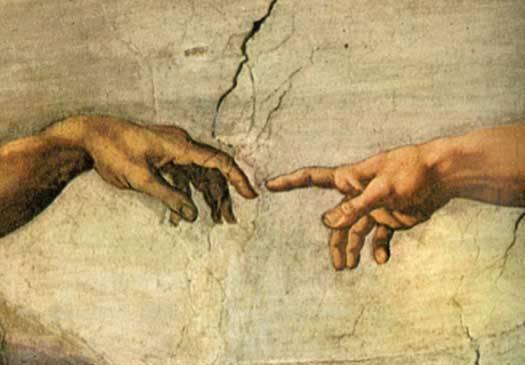
Visible Signs of Invisible Realities (Hebrews 9:15-24)

For this reason Christ is the mediator of a new covenant, that those who are called may receive the promised eternal inheritance—now that he has died as a ransom to set them free from the sins committed under the first covenant.

In the case of a will, it is necessary to prove the death of the one who made it, because a will is in force only when somebody has died; it never takes effect while the one who made it is living. This is why even the first covenant was not put into effect without blood. When Moses had proclaimed every command of the law to all the people, he took the blood of calves, together with water, scarlet wool and branches of hyssop, and sprinkled the scroll and all the people. He said, “This is the blood of the covenant, which God has commanded you to keep.” In the same way, he sprinkled with the blood both the tabernacle and everything used in its ceremonies. In fact, the law requires that nearly everything be cleansed with blood, and without the shedding of blood there is no forgiveness.

It was necessary, then, for the copies of the heavenly things to be purified with these sacrifices, but the heavenly things themselves with better sacrifices than these. For Christ did not enter a sanctuary made with human hands that was only a copy of the true one; he entered heaven itself, now to appear for us in God’s presence. (Hebrews 9:15-24)

The Hebrew Christians were tired. They had faced adverse circumstances, unjust imprisonments, persecution, prejudice, confiscation of their property, and public ridicule.

Most of all, they encountered rejection from their Jewish families of origin. There was precious little support for them, outside of their group.

The suffering went on long enough that the Christians began to experience a weakening of faith. In their distress, they started considering whether to return to Judaism, and renege on their commitment to Christ.

The author of Hebrews saw the struggle and spoke up, encouraging and exhorting the believers to keep going, to exercise faith and perseverance in the face of their ongoing troubles.

The author’s overall message to the discouraged believers was that Jesus Christ is superior over everything and everyone. Christ is better than the angels, Moses, and Aaron. Jesus is the ultimate high priest who offered himself as a sacrifice, once for all.

By means of the cross, Jesus became the mediator of a new and better covenant. There is, therefore, no more need of another high priest. Christ now occupies that office permanently.

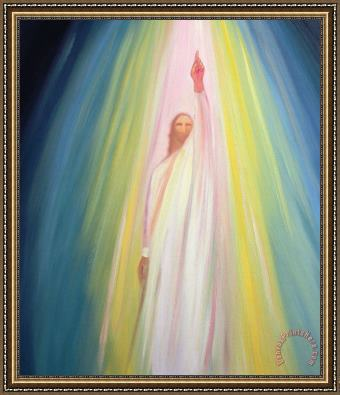
Jesus Christ Points us to God, by Elizabeth Wang

Christ’s death was efficacious for all. The sacrificial system with all of the officiating Levitical priests was the old order of things, meant to point us to Christ.

Offering sacrifices day after day, and engaging in prescribed liturgical rituals in order to access God, are no longer necessary. Perpetual anxiety exists wherever people keep wondering if they have done enough to satisfy their guilt and/or responsibility.

The answer of Christianity is yes, the work is finished; Jesus completed it, once and for all.

There is no longer anything that can distress us. Sin, death, and hell have been conquered through the death of Christ. His singular sacrifice has achieved victory over the sinful powers, and reconciliation and peace with God.

Blessed is the one
    whose sin the Lord does not count against them
    and in whose spirit is no deceit. (Psalm 32:2, NIV)

The covenant code’s sacrificial system was never designed to be a permanent way of doing things. All of the implements used in that system were symbols pointing to the real deal. They were a temporary means of leading people to Christ, who is the once for all sacrifice to end all sacrifices, the one who truly takes away our guilt and shame forever.

The picture is of Christ, as our high priest, who sprinkled us with his own blood and made us clean – not only today or for some temporary period of time – but for all time. We are not only made clean; we are made clean forever by the blood of Christ.

Cleanse me with hyssop, and I will be clean;
    wash me, and I will be whiter than snow. (Psalm 51:7, NIV)

The historical person of Jesus – his life, ministry, crucifixion, death, resurrection, ascension and glorification – was a visible image showing us the great importance of invisible realities.

The Ark of the Covenant was a visible sign of God’s invisible presence, and the need for a restoration of the divine/human connection.

The temple, the worship implements, and the whole sacrificial system was a visible sign of God’s invisible holiness, and the need for purity of heart amongst the people.

Jesus was a real person with a real body and real human needs, a visible reality which showed us the invisible God, and what God truly deems as right and good.

It is Jesus Christ, the Son of God and Son of Humanity, in whom we have redemption the forgiveness of sins. He is the image of the invisible God. (Colossians 1:14-15)

Christ is our Mediator, bridging the gap between heaven and earth.

Christ is our Savior, delivering us from our guilt and shame, our worry and anxiety, and our old enemy, death itself.

Christ is our Advocate, stepping in and acting on our behalf, and sending the Holy Spirit to be his continuing presence on this earth.

Christ is our champion, the pioneer of our salvation, securing redemption for us through his singular death.

Christ is our Intercessor, who even now lives to intercede for us, as we strive and struggle to live in humility, justice, and righteousness, as peacemakers in this world.

What this all means, from the vantage of Christianity, is that we need Jesus.

Without Christ, there is no hope. With Christ, all things are possible.

Jesus is the answer to every question, because Jesus is the center of all things. He is the fertile soil from which all of life sprouts; the first-fruit which provides life; and the continuing sustenance which saves us from a disconnected, fragmented, discouraging existence.

Along with the ancient Hebrew Christians, let us be encouraged with Christ, who is truly our everything.

Accept, O Lord, our thanks and praise for all that you have done for us. We thank you for the disappointments and failures that lead us to acknowledge our dependence on you alone.

Above all, we thank you for your Son Jesus Christ; for the truth of his Word, and the example of his life; for his steadfast obedience, by which he overcame temptation; for his dying, through which he overcame death; and for his rising to life again, in which we are raised to the life of your kingdom.

Grant us the gift of your Spirit; that we may know you and make you known; and through your Spirit, at all times and in all places, may give thanks to you in all things. Amen.

Real Forgiveness (Hebrews 9:23-28)

By Marc Chagall, 1941

It was necessary, then, for the copies of the heavenly things to be purified with these sacrifices, but the heavenly things themselves with better sacrifices than these. For Christ did not enter a sanctuary made with human hands that was only a copy of the true one; he entered heaven itself, now to appear for us in God’s presence. Nor did he enter heaven to offer himself again and again, the way the high priest enters the Most Holy Place every year with blood that is not his own. Otherwise Christ would have had to suffer many times since the creation of the world. 

But he has appeared once for all at the culmination of the ages to do away with sin by the sacrifice of himself. Just as people are destined to die once, and after that to face judgment, so Christ was sacrificed once to take away the sins of many; and he will appear a second time, not to bear sin, but to bring salvation to those who are waiting for him. (New International Version)

In truth, I could preach on the Cross every Sunday and never exhaust the immensely rich implications of Jesus Christ’s death for us. 

Perhaps, for many Christians, today’s New Testament lesson seems like a re-hashing of things we already know. Yet, it is important to keep plumbing the depths of Christ’s once-for-all sacrifice, because, through continual examination of Christ and the Cross:

  • We will know, both intellectually and experientially, that our forgiveness is real. 
  • We will be able, both spiritually and emotionally, to extend real forgiveness to others.

The original recipients of Hebrews were experiencing spiritual fatigue due to their difficult circumstances. The believers were so worn down from swimming upstream of their problems, that they considered throwing in the towel and giving up on Christianity (or at least the Church). 

The author of Hebrews truly believed that the way to combat this tiredness was through a robust understanding of Christ and the Cross. So, he sought to demonstrate that Jesus is superior to the old sacrificial system and has superseded it. 

There are three main distinctions between the old sacrificial system and the new way of Christ so that we will be encouraged to know that our forgiveness is real.

Reality vs. Simulation

The Old Testament sacrificial system, and its worship rituals in dealing with the sin issue, were only a copy and a shadow of the real sacrifice, which is Christ. The Temple sacrifices, in other words, were merely a facsimile of the real thing.

The difference between the old temple sacrifices and the sacrifice of Christ, is like the difference between riding a mechanical horse and an actual horse. Mechanical horses are merely a simulation of real riding.

Since Christ has come as the real sacrifice for sin, we need no longer be content with simulations and copies of the real deal. The Christian’s forgiveness is neither a simulation nor a copy because Christ is the real thing. 

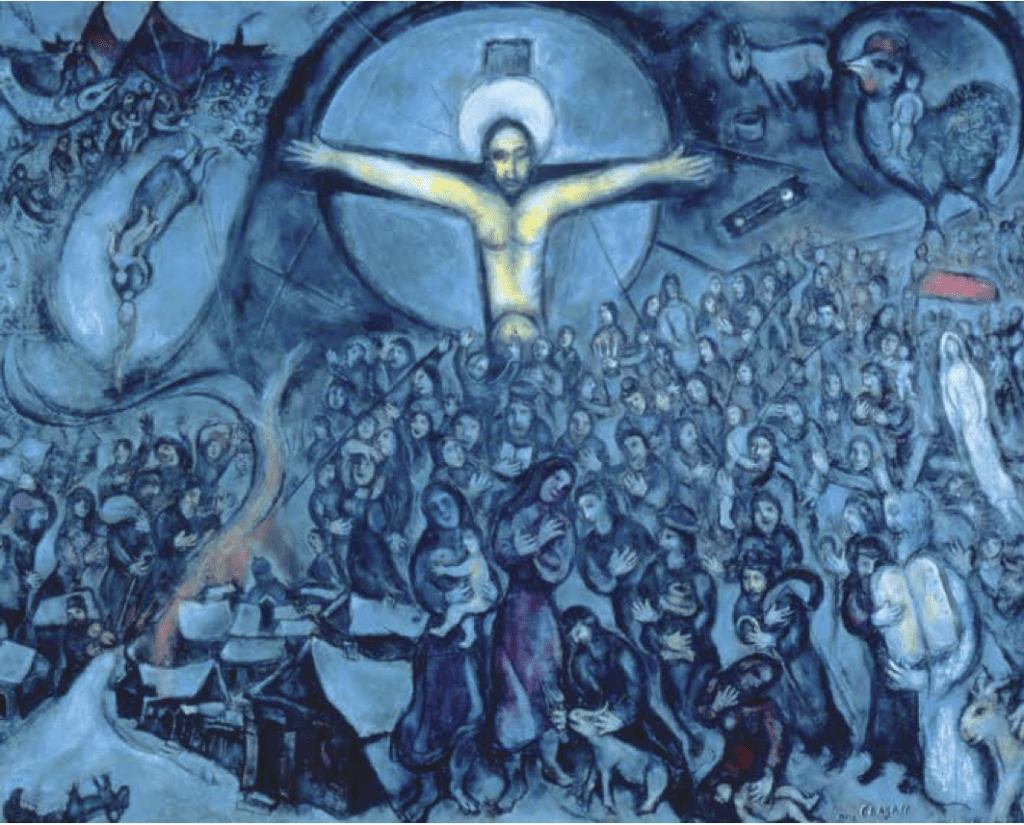
By Marc Chagall, 1952

Jesus did not just mechanically mouth words of forgiveness to us; Christ secured real forgiveness through his death on a cross. This is no cheap imitation of forgiveness. Christ died an actual violent death.

The emphasis in Scripture on blood and sacrifice can be upsetting for many people. Yet, we need to understand that the brokenness of this world is so bad that it requires drastic action. Christ’s death reflects the horrible sin of humanity. Since Jesus has secured forgiveness for us at such a steep price, we are to receive it with great humility and joy, knowing that God loves us that much.

Permanent vs. Temporary

Jesus Christ dealt with the sin issue once and for all through his blood. He came to do away with sin, not just veneer over it. The old sacrificial system was like whitewashing a barn – it took care of the issue for a while, but it would need to be done over and over again.

We are familiar with temporary arrangements. For example, annual fees need to be paid and renewal stickers have to be put on a car’s license plate every year. Christ’s atonement, however, is no temporary arrangement. The forgiveness Jesus offers is permanent.

There is no need to keep offering sacrifices over and over because Christ is the sacrifice to end all sacrifices. The forgiveness we possess is not like paying an annual fee and getting a forgiveness sticker for the year. In Jesus Christ, we are forgiven! And this forgiveness was purchased with Christ’s own blood.

The cross that held Christ’s naked and marred body, exposed the violence and injustice of this world. The Cross revealed what kind of world we have and what kind of God we have: a world of gross unfairness, and a God of sacrificial love. Because Jesus was willing to do this on our behalf, we have a permanent forgiveness, settled once and for all, through his blood.

This old world needs real forgiveness that lasts forever – not a cheap sentimental forgiving that is merely a flash in the pan. 

Salvation vs. Judgment

A lot of religious energy can be spent trying to figure out how to make ourselves acceptable to God.

Part of the good news is that, in Christ, we do not need to fear the future. We have been made right with God through the death of Jesus. Through Christ’s sacrifice, the doors to heaven and earth get flung wide open. The way has been secured, the trail has been blazed, and the road has been made smooth to come to God.

Jesus, unlike any Levitical priest, has entered God’s presence, providing access to the living God. Christ did not need to offer sacrifice for his own sins but offered himself solely on our behalf. Jesus did more than offer the sacrifice; he himself became the sacrifice. It was a sacrifice to bring deliverance to humanity, not judgment.

Either to justify or to judge is God’s business, not ours. Our concern is to believe in the once-for-all sacrifice of Jesus that brings a permanent forgiveness; and, to share that life-giving message with others so that they, too, can experience deliverance from sin, death, and hell.

We can have such a hard time forgiving others because we struggle with experiencing our own forgiveness. The path to extending grace to others is in deepening our knowledge, understanding, and awareness of God’s grace in Christ.

Conclusion

The author of Hebrews meant for the Christian life to be an exciting and abundant adventure of following Jesus, the pioneer of our salvation.

And yet, many Christians do not know anything about this kind of life. They only see the Christian life as a duty and a chore, a kind of cross to bear. We must recognize that it is the Savior, Jesus Christ, the object of our faith, who has delivered us so that we can live a new life of freedom, enjoying our forgiveness and inviting others on the journey.

For he has rescued us from the kingdom of darkness and transferred us into the Kingdom of his dear Son, who purchased our freedom and forgave our sins.

Colossians 1:13-14, NLT

Jesus didn’t die on a cruel cross, then rise from death so that we could live ho-hum Christian lives.

Christ has granted us forgiveness so that we will enjoy the Christian life, appreciate the Word of God; relish in laboring together for the Gospel; and look forward with anticipation to how the Spirit will transform lives through Christ’s forgiveness. 

Real forgiveness opens our minds, hearts, and energies to live for Jesus, the pioneer of our salvation.

Lord Jesus Christ, you stretched out your arms of love on the hard wood of the cross that everyone might come within the reach of your saving embrace. Clothe us in your Spirit that we, reaching forth our hands in love, may bring those who do not know you to the knowledge and love of you; for the honor of your Name. Amen.

Hebrews 9:24-28 – Forgiveness Is Real

Photo by Pixabay on Pexels.com

For Christ did not enter a sanctuary made with human hands that was only a copy of the true one; he entered heaven itself, now to appear for us in God’s presence. Nor did he enter heaven to offer himself again and again, the way the high priest enters the Most Holy Place every year with blood that is not his own. Otherwise Christ would have had to suffer many times since the creation of the world. But he has appeared once for all at the culmination of the ages to do away with sin by the sacrifice of himself. Just as people are destined to die once, and after that to face judgment, so Christ was sacrificed once to take away the sins of many; and he will appear a second time, not to bear sin, but to bring salvation to those who are waiting for him. (New International Version)

Jesus is the central figure of the Bible. I could preach on the finished work of Christ every Sunday and never exhaust the immensely rich implications of his death for us. 

Maybe today’s verses seem like a re-hashing of things we already know. Yet, it is important to keep plumbing the depths of Christ’s once for all sacrifice because it is through continually examining Jesus that we will experientially know our forgiveness is real. Having this reality sink deep into our souls enables us to extend forgiveness to others.

The original recipients of Hebrews were experiencing spiritual fatigue due to their difficult circumstances. The believers were so tired from swimming upstream that they considered quitting and giving up on Christianity (or at least the Church). 

The author of Hebrews truly believed that the way to combat this tiredness was through a robust understanding of Christ.  So, he sought to demonstrate that Jesus is superior to the old sacrificial system and has even superseded it. 

There are three main distinctions between the old sacrificial system and the new way of Christ. They are meant to encourage us so that we will know our forgiveness is real. This awareness will help us persevere and live for Jesus in all we say and do, until he returns.

First Distinction: Reality versus a Simulated Copy

The Old Testament sacrificial system, and its worship rituals in dealing with the sin issue, were only a copy and a shadow of the real sacrifice, which is Christ. The Temple sacrifices, in other words, were merely a facsimile of the real thing.

When my girls were small, they always enjoyed going to our local large grocery store. At that store they had a row of mechanical horses that only cost a penny to ride for one minute.  Riding the horses was always the highlight of shopping for them. Their Aunt once came for a visit and brought a coffee can full of pennies and took them to the grocery store just to ride the horses for an afternoon. 

All three of my girls are now grown adult women. They do not ride mechanical horses anymore. They now ride real live horses. My daughters, as excited as they were to ride mechanical horses as small girls, now have no desire to do so because those horses were only a simulation of the real thing.

As Christians, since Christ has come as the true and real sacrifice for sin, we are no longer to be content with simulations and copies of the real deal.  And we are to know the difference between them. Our forgiveness is neither a simulation nor a copy because Christ is the real thing. 

As my girls were growing up, my wife and I had a certain process we went through with them when they did something wrong toward one another. We would talk about the offense, and then they would need to say the words, “I am sorry.” 

However, the matter was never over until they hugged each other and told each other they loved the other. If they could do that, it was the real deal. You see, they could mouth the words to get us off their backs, but to hug and express love was the reality.

“To be a Christian means to forgive the inexcusable because God has forgiven the inexcusable in you.”

C.S. Lewis

Jesus did not just mouth words of forgiveness to us. He secured it through his death on a cross. It is not a cheap imitation kind of forgiveness. It is real. Christ died a violent death. The emphasis in Scripture on blood and sacrifice can be upsetting for many people.

Yet, we need to understand that the brokenness of this world is so bad that it requires drastic action. Christ’s death reflects the horrible sin of humanity. Since Jesus has secured forgiveness for us at such a steep price, we are to receive it with great humility and joy that God loves us that much.

Second Distinction: Once versus Endless Repetition

Jesus Christ came to deal with the sin issue once for all through his blood. He came to do away with sin, not just veneer over it. The old sacrificial system was like whitewashing a barn – it took care of the issue for a while, but it would need to be done over and over again.

We are familiar with temporary arrangements. For example, annual fees need to be paid and renewal stickers have to be put on a car’s license plate every year. Christ’s atonement, however, is no temporary arrangement. The forgiveness Jesus offers is permanent. 

There is no need to keep offering sacrifices over and over because Christ is the sacrifice to end all sacrifices. The forgiveness we possess is not like paying an annual fee and getting a forgiveness sticker for the year. In Jesus Christ, we are forgiven! And this forgiveness was purchased with Christ’s own blood.

Author Henri Nouwen once told a story of a family he knew in Paraguay. The father, a doctor, spoke out against the military regime there and its human rights abuses. Local police took their revenge on him by arresting his teenage son and torturing him to death. Enraged townsfolk wanted to turn the boy’s funeral into a huge protest march, but the doctor chose another means of protest.

At the funeral, the father displayed his son’s body as he had found it in the jail—naked, scarred from electric shocks and cigarette burns, and beatings. All the villagers filed past the corpse, which lay not in a coffin but on the blood-soaked mattress from the prison. It was the strongest protest imaginable, for it put injustice on grotesque display.

“Forgiveness means that I continually am willing to forgive the other person for not being God.”

Henri Nouwen

The cross that held Christ’s naked and marred body exposed the violence and injustice of this world. The cross revealed what kind of world we have and what kind of God we have: a world of gross unfairness, and a God of sacrificial love. Because Jesus was willing to do this on our behalf, we have forgiveness once and for all through his blood.

This world needs forgiveness – not a cheap sentimental forgiving but a real forgiveness that lasts forever. 

Third Distinction: Salvation versus Judgment

A lot of religious energy can be spent trying to figure out how to make ourselves acceptable to God. Part of the good news is that, in Christ, we do not need to fear the future.  We have been made right with God through the death of Jesus. Through Christ’s sacrifice the doors to heaven and earth get flung wide open. The way has been secured, the trail has been blazed, and the road has been made smooth to come to God.

Jesus, unlike any Levitical priest, has entered God’s presence, providing access to the living God. Christ did not need to offer sacrifice for his own sins but offered himself solely on our behalf. Jesus did more than offer the sacrifice; he himself became the sacrifice. It was a sacrifice to bring deliverance to humanity, not judgment.

Either to justify or to judge is God’s business, not ours. Our concern is to believe in the once for all sacrifice of Jesus that brings a permanent forgiveness; and, to share that life-giving message with others so that they, too, can experience deliverance from sin, death, and hell.

We can have such a hard time forgiving others because we struggle with experiencing our own forgiveness. The path to extending grace to others is in deepening our knowledge, understanding, and awareness of God’s grace in Christ.

Conclusion

The author of Hebrews meant for the Christian life to be an exciting and abundant adventure following Jesus, the pioneer of our salvation. And yet, many Christians do not know anything about this kind of life. They only see the Christian life as a duty and a chore, a kind of cross to bear. 

It is important we recognize it is our Lord and Savior, Jesus Christ, the object of our faith, who has delivered us so that we can live a new life of freedom enjoying our forgiveness and inviting others on the journey.

There was once an immigrant that booked passage on a ship with just enough money to buy a ticket, a block of cheese and some crackers for a long voyage. The first few days at sea the crackers and cheese tasted good, but eventually they became stale.

As he watched the porters carry large steaks, lobsters, chicken, beautiful salads and many other delicious foods to the other guests, he became so hungry that he finally stopped one of the porters. “I’II do anything to get one of those steaks,” he said. “I’II wash dishes, clean rooms, even mop the deck.” The porter replied, “You bought a ticket, didn’t you? The meals come with the ticket.”

Too many people today are cheese and cracker Christians—missing out on all of God’s steak dinners. All the resources of God are available to us, yet far too many of us live in self-imposed spiritual poverty. 

For he has rescued us from the dominion of darkness and brought us into the kingdom of the Son he loves, in whom we have redemption, the forgiveness of sins. (Colossians 1:13-14, NIV)

Jesus did not die on the cross and rise from the dead so that we could live ho-hum Christian lives. He has granted us forgiveness so that we will eagerly enjoy the Word of God; enjoy laboring together in the Gospel; and look forward to how the Spirit will transform lives through Christ’s forgiveness. 

Real forgiveness opens our minds, hearts, and our energies to live for Jesus, the pioneer of our salvation.