1 John 3:11-17 – Love, Not Hate

Cain and Abel by Gunter Tanzerel, 2011

The message you heard from the very beginning is this: we must love one another. We must not be like Cain; he belonged to the Evil One and murdered his own brother Abel. Why did Cain murder him? Because the things he himself did were wrong, and the things his brother did were right.

So do not be surprised, my friends, if the people of the world hate you. We know that we have left death and come over into life; we know it because we love others. Those who do not love are still under the power of death. Those who hate others are murderers, and you know that murderers do not have eternal life in them. This is how we know what love is: Christ gave his life for us. We too, then, ought to give our lives for others! If we are rich and see others in need, yet close our hearts against them, how can we claim that we love God? (Good News Translation)

For the world to be a life-giving place of thriving people, it must spin on the axis of love, grace, and belonging – and not be a death-dealing haunt of murder, hate, and disconnection.

“Death” and “life” are full of meaning in Holy Scripture. Whereas we tend to use death and life as referring chiefly to the body, they are primarily relational terms in the Bible.

Death is a separation from God and others; and life is connection with God and others.

In addition, death and life are biblically understood as forces or realms of being within or without. Whenever someone moves from death to life, they leave the realm of separation with its loneliness, lostness, lethargy, and lack of meaningful and helpful interaction with God and others to a place of connection in which there is love.

There is no love in the realm of death. Death is awful in the sense that it places one outside of love.

Like death and life, love is also a relational term and a force or power which exists. Love, in fact, is such a huge realm of being and such a large domain that it almost defies definition. We are mostly left to describe love because all attempts to nail down love with a precise definition will never do it justice.

Therefore, the Apostle Paul, in his great ode to love, did not even try to define it, but merely attempted to characterize love:

Love is patient. Love is kind. Love isn’t jealous. It doesn’t sing its own praises. It isn’t arrogant. It isn’t rude. It doesn’t think about itself. It isn’t irritable. It doesn’t keep track of wrongs. It isn’t happy when injustice is done, but it is happy with the truth. Love never stops being patient, never stops believing, never stops hoping, never gives up. (1 Corinthians 13:4-7, GW)

Consistent with the force and relational nature of death, life, and love, hate is not primarily a feeling toward another but exists as a stance toward another within the domain of darkness and death. To hate is to deliberately and volitionally separate from another person and/or from God. It is to consider someone as the “other” who is not like me, and so, I will neither associate nor interact with “those” people.

Love, however, thrives in the vast multi-dimensional realm of life. Love seeks connection with another and desires to act mercifully and kindly through discovering needs and meeting them. Although emotions of love are very real, those feelings are the result of calculated actions and words which benefit humanity and the common good of all persons.

It is vital that we make clear decisions to pursue life and love others. And Jesus is our model for this. Christ is the ultimate Connector, bringing vibrant life, even eternal life, through loving actions. Jesus intentionally entered the dark realm of death and absorbed all the hate of the world for you and me. In a great and loving reversal, Jesus Christ’s death – his separation from God and others – brought connection with God and others.

Likewise, followers of Jesus will learn to take on the world’s hatred, not fearing death’s ability to disconnect, and love others as they themselves have been loved by Christ. Christians are known by the way they act toward those in the realm of death; believers love and do not hate; despite being hated by another.

The biblical character Cain is Exhibit A of modeling the way of hatred and death. He separated himself from his brother, Abel, in every way possible – relationally, emotionally, mentally, and finally, physically through outright killing of the body.

The message from the Apostle John is this: Do not be like Cain. Be like Jesus. Love others, and do not hate them. Live for others, die to self.

Murder is also a relational term in Scripture. It is, of course, a tool forged from the flames of hell to be used by the hand of hatred to bring death’s realm of separation. Jesus clearly understood murder in this manner:

You know that our ancestors were told, “Do not murder” and “A murderer must be brought to trial.” But I promise you that if you are angry with someone, you will have to stand trial. If you call someone a fool, you will be taken to court. And if you say that someone is worthless, you will be in danger of the fires of hell. (Matthew 5:21-22, CEB)

Christians are people who put love where love is not – which means they brave death’s door to pull others from the flames.

But you, dear friends, must build each other up in your most holy faith, pray in the power of the Holy Spirit, and await the mercy of our Lord Jesus Christ, who will bring you eternal life. In this way, you will keep yourselves safe in God’s love. And you must show mercy to those whose faith is wavering. Rescue others by snatching them from the flames of judgment. Show mercy to still others, but do so with great caution, hating the sins that contaminate their lives. (Jude 20-23, NLT)

May your soul be blessed with love’s kiss.

May the grace and kindness of love bring life and continue to be life-giving for you.

May the hardness of hatred be far from you.

May death’s destructive power dwindle to nothing in the face of Christ’s love working in and through you to the glory of God. Amen.

1 John 2:7-11 – Love, Not Hate

Dear friends, I am not writing you a new command but an old one, which you have had since the beginning. This old command is the message you have heard. Yet I am writing you a new command; its truth is seen in him and in you, because the darkness is passing, and the true light is already shining.

Anyone who claims to be in the light but hates a brother or sister is still in the darkness. Anyone who loves their brother and sister lives in the light, and there is nothing in them to make them stumble. But anyone who hates a brother or sister is in the darkness and walks around in the darkness. They do not know where they are going, because the darkness has blinded them. (New International Version)

It ought to be abundantly clear that hate has absolutely no place in the Christian’s life. Hate is never justified for any individual or group of people. There are no exceptions.

Love, however, is the consummate Christian virtue. The highest of all truth in Christianity is the grace that is bestowed on us through the love of God in Christ. We, in turn, reflect our Lord’s grace by loving others, no matter their gender, race, creed, or ethnicity.

Yet, we are all familiar with hate. Everyone has hated another, and others have hated us. Unfortunately, hate is ubiquitous throughout the world.

Let’s face it: You and I have people we just don’t like. And maybe for good reason. After all, if you are being gaslighted by someone, or have been abused, mistreated, or oppressed by a person or group, then it takes no effort in disliking them, even to the point of despising them in your heart.

As much as other people need to change, the Apostle John places the burden of change to fall on us who claim the name of Christ. Love must begin somewhere. Let it begin with me.

The bald fact of the matter is that we cannot change another person. We can only control ourselves, and a lot of us don’t do a very good job with that. Christians are to learn to speak and act in the loving ways passed on to us through the gospel. We are to become skilled in the ways of Jesus, which is the way of love.

I fully understand this is not easy. In fact, it is downright hard. Forgiving another, even ourselves, can be a long painful process. Making the choice to love again, or love my enemy, is no small thing. Love must always be our default and de facto response to everyone. Otherwise, our hearts will grow cold and hard. And we will become the very people we despise.

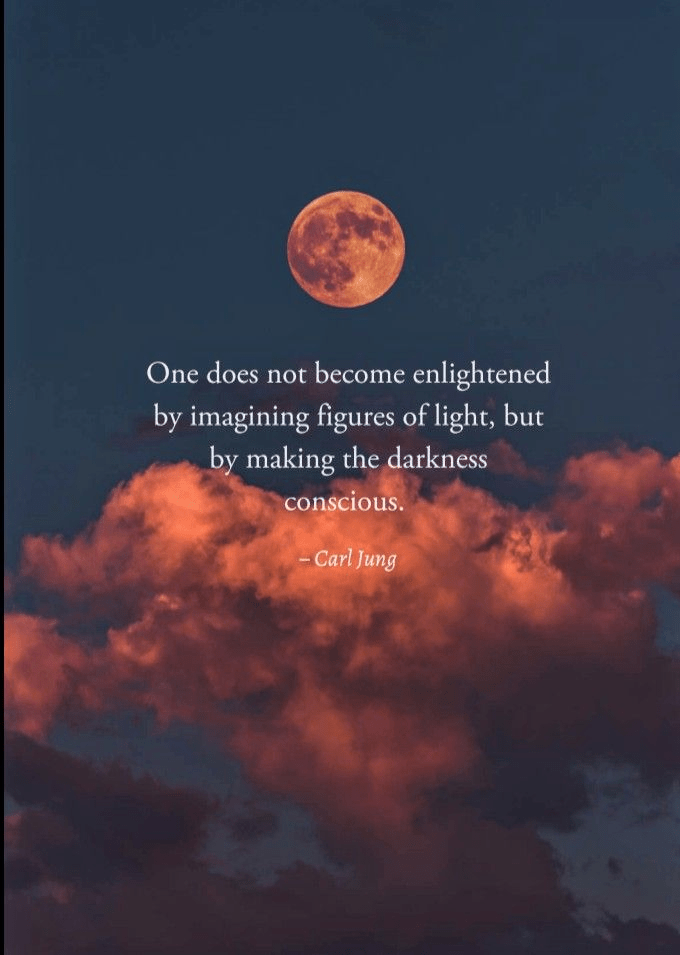
There is a shadow self, dwelling within us all. There are murky places in our hearts where darkness resides. We cannot afford to ignore those places. If we pretend there is no shadow self and keep up appearances, then we actually give the darkness power to come out of us through hateful speech and actions.

The “shadow” is a concept first coined by the Swiss psychiatrist, Carl Jung (1875-1961). Jung describes the shadow self as those aspects of our personality we choose to reject and/or repress. In other words, we all have parts of ourselves we don’t like—or that we think others won’t like—so we stuff those parts down into our unconscious psyche.

So then, the shadow self is a collection of things we toss into the closet of our hearts, lock the door, and forget about them. But they’re still there. And they still exert a great deal of influence from inside that dark closet.

We must be willing to face the shadowy parts of ourselves, to face the dark thoughts and feelings of secretly harming another (or ourselves), nursing a grudge, harboring bitterness, or holding onto an offense, as if it were a security blanket.

Whereas some may believe all our unwanted emotions, thoughts, feelings, and experiences are tightly hidden, they are not. Instead, the telltale sign of the darkness slipping out sideways into the world is hate. And that insidious hate typically takes the following forms:

  • Harshly judging or criticizing others by taking a superior posture over another. The critic, however, doesn’t know they are really castigating themselves.
  • Rebuking others as a common practice. Pointing out another’s “sins” is only a projection of one’s inner darkness onto the other.
  • Having a quick temper. Getting angry and belittling those who cannot fight back or respond is really self-loathing slathered onto someone else.
  • Being the victim in every bad situation. Victimization is a terrible thing. And when someone who isn’t really a victim claims to be one, it diminishes and invalidates the help that true victims need. This is the shadow self’s insecurity coming out – needing attention so that the incessant pounding from the inside of the heart is silenced.
  • Doing whatever is needed to get what you want. If that entails being mean, nasty, and hateful to achieve a desire outcome, then that is what is done.
  • Expressing implicit biases and prejudices. Anyone different is a threat to the shadow self. That other person might expose what’s inside me. So, the other gets treated with subtle digs, demeaning behaviors, and discouraging speech to keep them from getting close.

We need healing from this awful malady of hate.

The good news is that light is also available, and within us. Even in the blackest of hearts, there still remains the little spark of God’s image, way down in there. And it only takes a small Bic lighter to penetrate the darkness.

God’s glory is brighter than the brightest sun. A mere glimpse of such glory is more than enough to lay any heart bare and dispel the darkness.

The love of God in Christ is meant to be received, and then given to others. Fortunately, God has an inexhaustible storehouse of grace, mercy, and love – which means we can keep receiving and keep giving. We’ll never run out.

The shadow self sees only scarcity, so it holds onto resources in the belief there may not be enough. The true self, however, living into the grace and mercy of Christ, rightly discerns that God’s kingdom is a place of abundance. We are enhanced, not diminished, whenever we do the opposite behaviors of the shadow’s propensity to hate:

  • Encouraging and helping others. Pointing out another’s strengths and affirming their good behavior is a liberal practice in God’s kingdom.
  • Showing empathy. Being able to put oneself in another’s shoes, along with the willingness to sit with another’s pain, are common practices of the loving Christian person.
  • Doing whatever is needed to build up the community for the common good of all persons.
  • Including others, especially those who are different than me, by making room for them at the Table and giving them a voice.
  • Forgiving others, just as Christ forgave us.

The believer need not be blinded by hate but can love from a place of healthy self-awareness.

Loving heavenly Father, I thank you for looking beyond my faults and loving me unconditionally. Forgive me when I fail to love others in the same way. Give me eyes to see the needs of the difficult people in my life and show me how to meet those needs in a way that pleases you and glorifies the name of Jesus Christ. Amen. 

Leviticus 19:9-18 – Be a Good Neighbor

When you reap the harvest of your land, do not reap to the very edges of your field or gather the gleanings of your harvest. Do not go over your vineyard a second time or pick up the grapes that have fallen. Leave them for the poor and the foreigner. I am the Lord your God.

Do not steal.

Do not lie.

Do not deceive one another.

Do not swear falsely by my name and so profane the name of your God. I am the Lord.

Do not defraud or rob your neighbor.

Do not hold back the wages of a hired worker overnight.

Do not curse the deaf or put a stumbling block in front of the blind but fear your God. I am the Lord.

Do not pervert justice; do not show partiality to the poor or favoritism to the great but judge your neighbor fairly.

Do not go about spreading slander among your people.

Do not do anything that endangers your neighbor’s life. I am the Lord.

Do not hate a fellow Israelite in your heart. Rebuke your neighbor frankly so you will not share in their guilt.

Do not seek revenge or bear a grudge against anyone among your people but love your neighbor as yourself. I am the Lord. (New International Version)

All of these Old Testaments commands to the ancient Israelites are a development and expansion upon the basic core Ten Commands or Words given by God to Moses.

Those core commands are based in the character of God. That same character is to be the normal daily lived experience of God’s people.

The Levitical instructions are a fleshing-out of God’s basic commands for a specific people in their particular social, economic, and historical situation.

Although we need not, as modern folk, strictly observe the commands, as they are culturally constructed, we very much need to fulfill the ethics and morality which are behind the specific instructions.

Today’s Old Testament lesson has to do with being a good neighbor – a person who conscientiously lives in community with others and pays attention to the collective needs and wants of everyone. It is to live into God’s overarching ethic for the common good of all persons.

A commitment to community life needs good neighbors. They are characterized by the following virtues:

Sacrifice

Israel was chiefly an agrarian society. So, when the season of harvest came, the workers gleaning the fields were to only go over it once. That way, the poor and less fortunate could come behind and pick up what the workers missed or dropped.

Any landowner who instructed the workers to keep working until they got every scrap of grain or fruit was being cruel to the poor. Merciful and generous owners would, conversely, instruct the workers to leave a bit behind and not get everything.

Since God sacrifices on behalf of humanity, so we, too, are to make sacrifices which benefit the common good of all persons in the community.

Live a life filled with love, following the example of Christ. He loved us and offered himself as a sacrifice for us, a pleasing aroma to God. (Ephesians 5:2, NLT)

A sacrificial spirit, not a self-indulgent one, is what God is looking for in a good neighbor.

Honesty

Cheating, lying, stealing, and deceit have absolutely no place in the kingdom of God. Instead, honest dealings with others, always being above board in all matters, is of upmost importance to God.

Witnesses in court are expected to speak the truth without falsehood. Business dealings are to have accurate weights and measures. Integrity and trustworthiness are the building blocks of any good society.

Since God is truth, so we, too, are to live into truth through being honest in all we say and do.

Have nothing to do with a false charge and do not put an innocent or honest person to death, for I will not acquit the guilty. Do not accept a bribe, for a bribe blinds those who see and twists the words of the innocent. (Exodus 23:7-8, NIV)

An honest spirit, not a thieving one, is what God is looking for in a good neighbor.

Fairness

In the ancient world, and still in many parts of the world today, workers were paid at the end of the day for their day’s work. Bosses who withheld expected wages till the next day were quite literally depriving a family of their supper.

For those who are not able to do a solid day’s work, such as the blind and the handicapped, it’s bad enough to simply ignore them, because God is attentive to their plight. That situation is exacerbated exponentially, whenever someone or a group of people, decide to make such persons’ lives even harder than they already are.

Since God is fair in all dealings, so we, too, are to extend fairness to all without any prejudice or favoritism.

The Lord watches to see if we are fair or if we cheat others. (Proverbs 16:11, CEV)

A fair spirit, not an exploitive one, is what God is looking for in a good neighbor.

Justice

Unequal treatment is about as far from God as one can get. Being concerned only about those with similar political views, economic interests, or spiritual inclinations is a gross practice of injustice. It denies the ethic of the common good of all in favor of the common good of some.

Since God is just in all things, so we, too, are to uphold biblical justice for our fellow humanity, no matter who they are or where they come from.

Never deprive foreigners and orphans of justice. And never take widows’ clothes to guarantee a loan. (Deuteronomy 24:17, GW)

A spirit of justice, not injustice, is what God is looking for in a good neighbor.

Love

Hate is the inevitable result of holding onto anger through nursing a grudge and holding onto bitterness. It fails to speak up and speak out.

Love, however, assertively addresses anger and seeks to make things right in a calm and concerned way. Love attacks problems, not people.

Since God is love, so we, too are to love one another.

Dear friends, let us love one another, for love comes from God. (1 John 4:7, NIV)

Don’t let evil get the best of you; get the best of evil by doing good. (Romans 12:21, MSG)

A spirit of love, not a hateful vengeful one, is what God is looking for in a good neighbor.

A good neighbor is one who seeks the common good of all persons because God is good, all the time, and always does what is right, just, and fair.

Gracious God and Father, in a world of fear and suspicion, teach us that love is the only means to conquer fear.

Loving Lord Jesus, Son of God, in a world full of anger and frustration, teach to overturn the tables and tear down the fences which turn away the hungry and homeless; and to practice hospitality without prejudice.

Blessed Holy Spirit of God, in a world of indifference and ignorance, teach us wisdom, to be caring of one another, and to protect one another.

Blessed Holy Trinity, the God whom we serve, help us to know the peace that steals gently in through quiet acts of kindness, just as peace is always within you as one God, now and forever. Amen.

1 John 2:18-28 – Who Is the Real Enemy?

Dear children, this is the last hour; and as you have heard that the antichrist is coming, even now many antichrists have come. This is how we know it is the last hour. They went out from us, but they did not really belong to us. For if they had belonged to us, they would have remained with us; but their going showed that none of them belonged to us.

But you have an anointing from the Holy One, and all of you know the truth.I do not write to you because you do not know the truth, but because you do know it and because no lie comes from the truth. Who is the liar? It is whoever denies that Jesus is the Christ. Such a person is the antichrist—denying the Father and the Son. No one who denies the Son has the Father; whoever acknowledges the Son has the Father also.

As for you, see that what you have heard from the beginning remains in you. If it does, you also will remain in the Son and in the Father. And this is what he promised us—eternal life.

I am writing these things to you about those who are trying to lead you astray. As for you, the anointing you received from him remains in you, and you do not need anyone to teach you. But as his anointing teaches you about all things and as that anointing is real, not counterfeit—just as it has taught you, remain in him. (New International Version)

Identifying the Antichrist is almost a spectator sport amongst some Christians. They seem to enjoy advancing particular persons as the archenemy of Christ and the Church.

Throughout Christian history, bloodthirsty kings and ruthless dictators have typically received the moniker of Antichrist. When the Protestant Reformation came along, five-hundred years ago, the Catholic Church often got labeled as the great enemy of Christianity.

The mudslinging that has gone on between different Christian traditions throughout the centuries can make any contemporary political war look like a powder puff football game.

Although some Christian groups tend to view the antichrist as a single enemy, setting-off a bomb of world-ending trauma, the earliest Church, following the teaching of the Apostle John, understood antichrist not as an individual, but as a class of people who deny Jesus is the Christ. 

It has become much too vogue in some circles of Christianity to identify and label enemies outside their small groups, leading to a xenophobic attitude of distrust and finger-pointing toward all kinds of people.


The fingers, however, must first be directed within our own house. It behooves us all to take up the instruction of John to let what we have heard from the beginning abide in us. If what you heard from the beginning abides in you, then you too will abide in the Son and in the Father. 

We are to embrace basic core cardinal truth given us. Then we will not be deceived by some supposed enlightened teacher who detracts from Trinitarian theology.

It is the last hour – but not because of some politician, tyrant, or religious figure. It is the end-times because Jesus has accomplished redemption for us, and the only event left is the return of Jesus to judge the living and the dead. 

Therefore, we must all live with the possibility and tension that it could be today. We are to be prepared. Proper preparation comes through proclaiming Jesus in all we say and do – not by obnoxiously ginning up fearmongering through pointing fingers at those we don’t like. Rather, we emulate our Lord in the way of loving God and neighbor.

When a person or group gets labeled by us as “enemy” or “antichrist” then our hate for them seems divinely justified and sanctioned. God, however, is the judge; not us. We are to follow the ethical instruction of Jesus to love our enemies, not curse them through declaring certain persons a “monster,” “devil,” “animal,” or some other non-human label.

Weaponizing words in a verbal war, which supposedly defends Christianity, only shifts the focus off Jesus and onto how horrible another is.

One of the great problems in our world, including many corners of Christianity, is that we assume we already know what another believes. So, we fail to listen. We cannot care as we ought because we’ve already formed our judgment.

“The moment someone attaches you to a philosophy or a movement, then they assign all the baggage and all the rest of the philosophy that goes with it to you. And when you want to have a conversation, they will assert that they already know everything important there is to know about you because of that association. And that’s not the way to have a conversation.”

Neil deGrasse Tyson

Within Christianity, there is more we have in common across the various traditions, than that which is different. Yes, spiritual charlatans exist. Let’s just make sure we have done our due diligence in listening to another and being curious before we form our opinions.

Despite the differences, the exchange of ideas and debate among various Christian groups in the early centuries of the church helped to clarify and form a sound Christology. While it may be difficult to avoid labeling individuals in an increasingly complex society, we must act in good faith and make the effort.

Perhaps we have already met the real enemy… us.

Gracious God, you are the Divine Gardener who cares for us with love. You call us to see the beauty of each branch united to the vine, the beauty of each person united to you in Christ through the Holy Spirit.

And yet, too often the differences in others make us afraid. We withdraw into ourselves. Our trust in you is forsaken. Enmity develops between us. Come and direct our hearts. Help us to live from your forgiveness so that we may be together and praise your name.

Lord Jesus, Prince of Peace, light the fire of your love in us so that suspicions, contempt and misunderstanding cease in the church. May the walls that separate us fall. Amen.