Rejected (Luke 4:16-30)

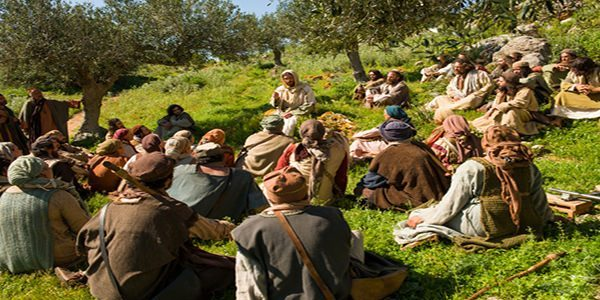
Orthodox depiction of Christ in the synagogue at Nazareth

When he came to Nazareth, where he had been brought up, he went to the synagogue on the Sabbath day, as was his custom. He stood up to read, and the scroll of the prophet Isaiah was given to him. He unrolled the scroll and found the place where it was written:

“The Spirit of the Lord is upon me,
    because he has anointed me
        to bring good news to the poor.
He has sent me to proclaim release to the captives
    and recovery of sight to the blind,
        to set free those who are oppressed,
to proclaim the year of the Lord’s favor.”

And he rolled up the scroll, gave it back to the attendant, and sat down. The eyes of all in the synagogue were fixed on him. Then he began to say to them, “Today this scripture has been fulfilled in your hearing.” 

All spoke well of him and were amazed at the gracious words that came from his mouth. They said, “Is this not Joseph’s son?” 

He said to them, “Doubtless you will quote to me this proverb, ‘Doctor, cure yourself!’ And you will say, ‘Do here also in your hometown the things that we have heard you did at Capernaum.’ ” 

And he said, “Truly I tell you; no prophet is accepted in his hometown. But the truth is, there were many widows in Israel in the time of Elijah, when the heaven was shut up three years and six months and there was a severe famine over all the land, yet Elijah was sent to none of them except to a widow at Zarephath in Sidon. There were also many with a skin disease in Israel in the time of the prophet Elisha, and none of them was cleansed except Naaman the Syrian.” 

When they heard this, all in the synagogue were filled with rage. They got up, drove him out of the town, and led him to the brow of the hill on which their town was built, so that they might hurl him off the cliff. But he passed through the middle of them and went on his way. (New Revised Standard Version)

Reject:

  1. to refuse to have, take, recognize, etc.; to deny
  2. to refuse to grant (a request, a demand, etc.)
  3. to refuse to accept (someone or something); to rebuff, renounce, or repel
  4. to discard as useless or unsatisfactory; to jettison or eliminate
  5. to cast out or eject; vomit
  6. to cast out or off

Rejection can be mutual, and cut both ways. This appears to have been the case with Jesus and the synagogue goers in his hometown of Nazareth.

The townsfolk rejection of Jesus went far enough to want to throw him off a cliff. They were enraged with anger. Christ recognized the people’s rejection of him, long before they realized it themselves. Christ’s rejection of unjust and unbiblical ideas and practices went far enough to rebuke the congregation from the scriptures.

The difference in the two rejections was that the synagogue attenders were denying Jesus himself; whereas Jesus was refusing to accept a longstanding tradition of hate toward a certain group of people.

The nub of the rejection, which went both ways, had to do with non-Jewish persons, that is, Gentiles.

If you think this to be a silly sort of thing, especially of getting so worked up as to try and kill someone, then consider how frothed-up people get concerning contemporary political elections.

Jesus being pro-Gentile was not only unpopular; it was unheard of. So, the people rejected him.

The synagogue being anti-Christ meant that they were anti-Gentile and anti-God, as far as Jesus was concerned. And he wasn’t about to put up with it. So, he rejected not the people, but their entrenched hatred and unscriptural stance.

Jesus took the prophecy of Isaiah about proclaiming liberty to captives, and freedom for the oppressed, and then applied it, not to his fellow Jews who were present, but to, of all people, Gentiles.

Christ pointed out that in the days of Elijah, the prophet was sent to a Gentile woman. In addition, he let everyone know that the prophet Elisha cleansed a Gentile. 

The gathered synagogue worshipers understood exactly what Jesus was saying and doing – he was claiming to be the ultimate prophet, sent for those despised people. 

It was too much for the gathered folk to take. So all hell broke loose as the “worshipers” became so angry and insolent that they drove Jesus out of town and tried to chuck him off a cliff to his death.

Jesus had that kind of effect throughout his earthly ministry by saying and doing the unexpected, and the unwanted.

The people of Nazareth seemed to have always interpreted the message of Isaiah and the prophets as being for themselves, not others. 

This is a probing story for today’s Christian Church. Whenever we lose sight of a biblical message and re-interpret it as being for only us, then we end up like the Nazarenes of old who did not recognize Jesus for who he really is and what he really came to do. 

Perhaps the burning question from today’s Gospel lesson for individual Christians and all churches is this: Are you ready to throw Jesus off a cliff?

Spend some time alone with God today. Consider whether you have made Jesus into the image of what you want him to be, or whether you accept him as he is. 

One clue to this is if you believe some person or people group should not have Jesus – he belongs to people like us. This, by the way, is the very definition of “rejection.”

It could be that some soul-searching repentance is in order, so that Christians will be true worshipers of Jesus, and not just spectator fans of him.

O God, you made us in your own image and redeemed us through Jesus your Son: Look with compassion on the whole human family; take away the arrogance and hatred which infect our hearts; break down the walls that separate us; unite us in bonds of love; and work through our struggle and confusion to accomplish your purposes on earth; that, in your good time, all nations and races may serve you in harmony around your heavenly throne; through Jesus Christ our Lord. Amen.

Absalom’s Conspiracy (2 Samuel 15:1-13)

Absalom propitiating friends, painted 1595, in the National Museum, Warsaw, Poland

In the course of time, Absalom provided himself with a chariot and horses and with fifty men to run ahead of him. He would get up early and stand by the side of the road leading to the city gate. Whenever anyone came with a complaint to be placed before the king for a decision, Absalom would call out to him, “What town are you from?” He would answer, “Your servant is from one of the tribes of Israel.” Then Absalom would say to him, “Look, your claims are valid and proper, but there is no representative of the king to hear you.” And Absalom would add, “If only I were appointed judge in the land! Then everyone who has a complaint or case could come to me and I would see that they receive justice.”

Also, whenever anyone approached him to bow down before him, Absalom would reach out his hand, take hold of him and kiss him. Absalom behaved in this way toward all the Israelites who came to the king asking for justice, and so he stole the hearts of the people of Israel.

At the end of four years, Absalom said to the king, “Let me go to Hebron and fulfill a vow I made to the Lord. While your servant was living at Geshur in Aram, I made this vow: ‘If the Lord takes me back to Jerusalem, I will worship the Lord in Hebron.’”

The king said to him, “Go in peace.” So he went to Hebron.

Then Absalom sent secret messengers throughout the tribes of Israel to say, “As soon as you hear the sound of the trumpets, then say, ‘Absalom is king in Hebron.’” Two hundred men from Jerusalem had accompanied Absalom. They had been invited as guests and went quite innocently, knowing nothing about the matter. While Absalom was offering sacrifices, he also sent for Ahithophel the Gilonite, David’s counselor, to come from Giloh, his hometown. And so the conspiracy gained strength, and Absalom’s following kept on increasing.

A messenger came and told David, “The hearts of the people of Israel are with Absalom.” (New International Version)

Although Absalom, a son of David, began to despise his father, he learned some things from him, namely, the ability to wait and plan. He spent two years preparing to kill his half-brother Amnon, and four years getting ready to kill his father and take his throne.

I’m sure Absalom did not feel like a murderer. He likely looked at the situations and felt justified in doing away with Amnon, then going after David. To be sure, Amnon had committed a heinous crime – one in which Tamar, Absalom’s sister, was left bereft, only to be cared for by her brother. Absalom seems to have believed he was merely dispensing justice, not murder.

David, typically astute and proactive, was anything but that when it came to his family; he did not initiate very much of anything. The king’s inaction was so profound that Absalom began plotting a takeover. As in the case of Amnon, it’s likely that Absalom saw forming a conspiracy as bringing some needed justice.

After all, it appears that King David had become lax in his royal responsibilities. Seemingly, David was no longer himself – deciding cases in favor of the weak, needy, and vulnerable. Absalom was more than happy to fill the void.

Absalom evidenced an oversized ego in believing that if he were the judge in the land, everything would be okay. Whenever a person who feels the smack of injustice begins interacting with others who have not been receiving justice, rarely does that person rely upon the Divine Judge for righteousness. Absalom took matters into his own hands.

Whenever we hear the cry “It’s not fair!” there is often, not far behind, an angry person seeking to become judge, jury, and executioner.

So, Absalom worked the crowd. He spent years refining his image, and presenting the sort of reputation he sought from the people. Absalom was handsome and charming. The country became putty in his hands.

What nobody knew was that Absalom had an axe to grind, that underneath the silver tongue and the careful marketing opportunities was a person who was downright hurt, and mad enough to destroy and kill.

Finally, he began implementing his plot for taking over the kingdom. And he would need all the appearances of royal approval from some people in high positions. A religious banquet with a few hundred people, including David’s trusted counselor, would do the trick. The plan was to gain enough endorsements to gain momentum for others to join the conspiracy.

And it worked. The hearts of the people were with Absalom. They loved the guy.

Yet, the thing about it is, it wasn’t so much that Absalom loved the people, near as much as he hated his father, King David.

For the truly right, just, and good people of the land, they could observe the distinction. They knew better. The good people of the kingdom could discern that Absalom may look good, but something didn’t smell right about him.

No matter how flawed David was, or how much he had slipped in his duties, he was still nevertheless the king, the anointed one whom God had chosen. And the wise people could keep their wits about them, and begin to see what was really going on.

Anyone who comes along and tells us that they can make everything better, and do it quickly, is probably a hack preacher who, like Absalom, has a grievance against someone.

We can do better than leaders like that. And we can do better than to incessantly criticize existing leadership – no matter where it’s found – until we have done our due diligence in spending years in prayer for our leaders, and done what we could do to help them be successful in their positions.

Nurturing bitterness and hate is a one way trip to the grave. The evidence is seen in the constant vitriol we hear on a daily basis. But cultivating wisdom and discernment, along with a healthy spiritual and religious life, brings sanity and compassion where it needs to be.

Which way do you want to go?

Blessed heavenly Father: Forgive me for the things in my life which continue to keep me from the path you have chosen for me. Remove the sins from my life that block me from becoming the person you want me to be. Fill my life with your Holy Spirit that I may be a light unto others, so that they may come to know you. Amen.

The End of the World (Matthew 24:1-14)

The Final Sign

Jesus left the temple and was walking away when his disciples came up to him to call his attention to its buildings. “Do you see all these things?” he asked. “Truly I tell you, not one stone here will be left on another; every one of them will be thrown down.”

As Jesus was sitting on the Mount of Olives, the disciples came to him privately. “Tell us,” they said, “when will this happen, and what will be the sign of your coming and of the end of the age?”

Jesus answered: “Watch out that no one deceives you. For many will come in my name, claiming, ‘I am the Messiah,’ and will deceive many. You will hear of wars and rumors of wars, but see to it that you are not alarmed. Such things must happen, but the end is still to come. Nation will rise against nation, and kingdom against kingdom. There will be famines and earthquakes in various places. All these are the beginning of birth pains.

“Then you will be handed over to be persecuted and put to death, and you will be hated by all nations because of me. At that time many will turn away from the faith and will betray and hate each other, and many false prophets will appear and deceive many people. Because of the increase of wickedness, the love of most will grow cold, but the one who stands firm to the end will be saved. And this gospel of the kingdom will be preached in the whole world as a testimony to all nations, and then the end will come. (New International Version)

I am a suspicious person when it comes to end-time gurus. I find most of them to be false teachers, trying to scare people into their own little group, like a bunch of nuts in a fruitcake.

Yet, Jesus is an end-time preacher, giving an answer to those who asked him about the future and how things will literally shake up and shake out at the end of the world. So, because I trust him when he lays out what will happen, I believe there is a time coming when there shall be a judgment of the living and the dead.

Christ’s disciples had heard Jesus pronounce doom on the Jerusalem temple, and wanted to know about when this was going to happen, along with the signs leading to it. Jesus then went on to tell them about a much bigger picture than what the disciples were asking for; Jesus described not only the end of the temple, but also the end of the world as we know it.

I often find myself warning people about buying into those who constantly and confidently talk of the end, as if they have the inside track on it. Jesus did the same; so I’ll take my cues from him. Notice the warnings he offered his disciples concerning signs of the end time:

Don’t let anybody fool you

Watch out for deceivers. False teachers are those who claim to be Christians and have insider information from all their great study. Stay clear of them. Their sense of superiority, because of their supposed knowledge, will trick many people. Don’t be fooled by them.

Don’t be afraid

Anyone who pays any sort of attention to the news – whether local, national, or international – is likely to be concerned about the state of our world. We may even become terrified. But Jesus wants us to avoid being fearful all the time. And that will only happen if we listen as much or more to him than we do people who whip up a frenzy and get us all upset – much like talk radio hosts do to their audiences; or hack preachers do to spiritually vulnerable Christians.

We can be wise and discerning without being fearmongers and constantly worried. In times of crisis and disaster, Christians really ought to be the calmest people on the planet.

Armies may surround me,
    but I won’t be afraid;
war may break out,
    but I will trust you. (Psalm 27:3, CEV)

Wars, rumors of wars, coups, famines, and earthquakes happen. All these, and more, are signs – just like a woman with labor pains, about to give birth. When we look ahead, we may feel apprehensive, upset, and afraid with pain. But our fear will eventually give way to joy. Before things get better, things will get a lot worse. Disaster and destruction will lead to the renewal of all things.

The world will hate you

Because there is fear and deception, the Church will become an oppressed victim. The world hates those who truly follow Christ. All that has been simmering underground will break out in persecution against believers.

So, it ought not surprise any Christian or any Church when there is intolerance and disdain against them. Anyone following Jesus should expect the same treatment he received in his last days on earth.

Many “Christians” will turn against each other and hate each other. They will drop out and refuse association with Christ or his Church. The outside pressure will become intense enough to force a crumbling of the Church on the inside. Parishioners will tear each other to pieces.

Unfortunately, the world’s hate leads to the church’s apostasy – a turning away from faith. And this situation is a ripe situation for false teachers to rise and have their way. People will glory in their shame.

The ones who stick it out will be saved

The true believer holds onto faith, despite the intense pressure of hatred. This isn’t salvation by works; it’s salvation by a faith that is authentic, genuine, and the real deal. This faith remains as a testimony to all that love still exists and will never be extinguished.

And then the end will come.

There shall always be the good news in the middle of all the terribly bad news. Divine sovereignty will always be above the world’s hate and disorder.

Therefore, let the believer be the herald of good news and give themselves to the mission of faith, grace, hope, and love in Christ. No matter where or when you locate the time of great tribulation, it is always open season on gospel proclamation.

God will make something out of nothing. Trouble, hardship, oppression, persecution, and death are the signs of the end. Now is the time for faith and patience. Now is the opportunity to love with the light that penetrates the darkness of hate.

Eternal God, you are the light of the minds that know you, the joy of the hearts that love you, and the strength of the wills that serve you. Grant us to know you that we may truly love you; to love you so that we may truly serve you, through Jesus Christ our Lord. Amen.

To Be, or Not to Be (Psalm 28)

Only you, Lord,
    are a mighty rock!
Don’t refuse to help me
    when I pray.
If you don’t answer me,
    I will soon be dead.
Please listen to my prayer
    and my cry for help,
as I lift my hands
    toward your holy temple.

Don’t drag me away, Lord,
    with those cruel people,
who speak kind words,
    while planning trouble.
Treat them as they deserve!
    Punish them for their sins.
They don’t pay any attention
    to your wonderful deeds.
Now you will destroy them
    and leave them in ruin.

I praise you, Lord,
    for answering my prayers.
You are my strong shield,
    and I trust you completely.
You have helped me,
and I will celebrate
    and thank you in song.

You give strength
    to your people, Lord,
and you save and protect
    your chosen ones.
Come save us and bless us.
Be our shepherd and always
    carry us in your arms. (Contemporary English Version)

Today’s Psalm, in the Revised Common Lectionary, is alongside the Old Testament story of Joseph and his brothers in the book of Genesis. While out caring for the vast flocks of sheep and goats, Joseph’s brothers hatched a cabal against their younger sibling. They tossed him into an empty cistern (a deep water well) and intended to leave him for dead.

But when a caravan came along, heading to Egypt, the brothers decided on yet another diabolical plan. So, they brought Joseph out of the cistern and sold him into slavery. And, if that weren’t enough, the hateful brothers kept rolling out the devious scheming by making it look like a wild animal killed Joseph, so that they could hide their shameful guilt from Jacob, their father.

So, we are invited to view the psalm from Joseph’s perspective of frustration and agony, crying out to God. Then, praising the Lord for listening and saving his life – even if it meant becoming a servant in a foreign country.

Although becoming a slave was certainly not an ideal situation, Joseph faced a desperate need, even death, and the Lord saved him from it. And Joseph was encouraged and emboldened by the reality that God was with him, no matter where, nor what the situation.

Joseph, along with the original craftsman of the psalm, David, gave praise to God for hearing their prayers. Whereas we may get lost in anger and want retribution, perhaps our orientation is best directed toward offering praise to God for being with us and saving us from certain death.

This raises several questions, at least for me, about being in situations where I experience being heard by God, protected from ultimate harm, yet still left between a-rock-and-hard-place:

  • Can I praise God just for being heard and listened to? 
  • Do I really need to be healed or delivered? Or do I actually need to be delivered from the need for deliverance? 
  • What if I don’t get everything I pray for? Am I expecting to receive something God never promised? 
  • Will I offer praise and thanksgiving, even if God is silent? 
  • Is my joy in a relationship with God either conditional, or unconditional?

William Shakespeare’s Hamlet (c.1601 C.E.) put the question this way: “To be, or not to be, that is the question.” Hamlet’s soliloquy went on to say:

“Whether ’tis nobler in the mind to suffer
The slings and arrows of outrageous fortune,
Or to take arms against a sea of troubles,
And by opposing end them? To die: to sleep;
No more; and by a sleep to say we end
The heartache and the thousand natural shocks
That flesh is heir to, ’tis a consummation
Devoutly to be wish’d. To die, to sleep;
To sleep: perchance, to dream: ay, there’s the rub;
For in that sleep of death what dreams may come
When we have shuffled off this mortal coil,
Must give us pause: there’s the respect
That makes calamity of so long life;
For who would bear the whips and scorns of time,
The oppressor’s wrong, the proud man’s contumely,
The pangs of despised love, the law’s delay,
The insolence of office and the spurns
That patient merit of the unworthy takes,
When he himself might his quietus make
With a bare bodkin [knitting needle]?”

Like Joseph left for dead in an empty cistern, Hamlet was miserable and burdened with a profound lack of power to change his circumstances. So, he reflected on life and death in a morbid and melancholy way. It’s not that Hamlet had suicidal ideation, as much as he meditated on what life truly is, and tried to find some meaning within it.

Unlike Joseph, Hamlet cannot find the courage to deal with his frustration and feels stymied with fear of the unknown. He became lost in the injustice of it all.

If we are blatantly honest with ourselves, we much too often have a particular outcome in mind that we want or expect God to do. 

Our hopes become tethered to God doing something extremely specific so that, if it does not come to pass, or does not come quickly, or doesn’t happen as we want, then discouragement, disillusionment, and even depression may settle down in our souls like a lead weight. 

Like Hamlet, we become lost in the shadows of our thinking and ponder some sort of escape.

So, here is another set of questions I am asking myself: 

  • If my adverse circumstances do not change, can I praise God anyway? 
  • Can I, like David, take joy in simply being heard? 
  • Can I find gratitude in all situations? 
  • Do I only express thanks and praise to God when things are going my way? 
  • Am I open to whatever God wants to do in my life, even if it is not what I would choose? 
  • Do I feel that I am above having to put up with the wickedness of this world? 
  • Am I expecting heaven on earth, or am I willing to suffer as Jesus did? 

I honestly believe the answers to those questions will largely determine the trajectory of our spiritual development, our emotional maturity, our mental thoughts, and our overall religious experience.

I praise you, O God, in the good and the bad, the easy and the difficult, the failures and the victories. You are Lord over all things. You are my strength and shield in every circumstance. When I am weak, then I am strong. I can do all things through Christ who strengthens me. Amen.