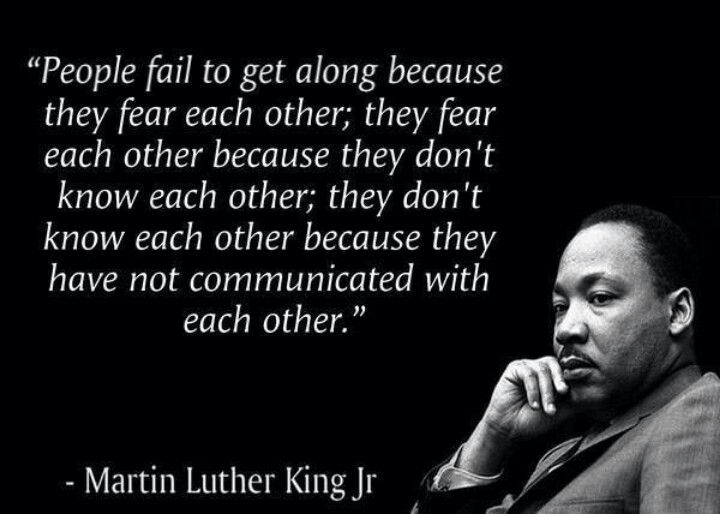
Dealing with Opposing Views (Romans 14:1-12)

Accept the one whose faith is weak, without quarreling over disputable matters. One person’s faith allows them to eat anything, but another, whose faith is weak, eats only vegetables. The one who eats everything must not treat with contempt the one who does not, and the one who does not eat everything must not judge the one who does, for God has accepted them. Who are you to judge someone else’s servant? To their own master, servants stand or fall. And they will stand, for the Lord is able to make them stand.

One person considers one day more sacred than another; another considers every day alike. Each of them should be fully convinced in their own mind. Whoever regards one day as special does so to the Lord. Whoever eats meat does so to the Lord, for they give thanks to God; and whoever abstains does so to the Lord and gives thanks to God. For none of us lives for ourselves alone, and none of us dies for ourselves alone. If we live, we live for the Lord; and if we die, we die for the Lord. So, whether we live or die, we belong to the Lord. For this very reason, Christ died and returned to life so that he might be the Lord of both the dead and the living.

You, then, why do you judge your brother or sister? Or why do you treat them with contempt? For we will all stand before God’s judgment seat. It is written:

“‘As surely as I live,’ says the Lord,
‘every knee will bow before me;
    every tongue will acknowledge God.’”

So then, each of us will give an account of ourselves to God. (New International Version)

Within the church at Rome were Jewish believers who had come to faith in Christ from their background steeped in the Old Testament. They had a rich two-thousand year history of a covenant with God that included ritual food laws, the keeping of certain feast days, and observing a calendar of events, especially the Sabbath.

Also within the Roman church were Gentiles (non-Jewish people) having come to faith in Christ from a background of paganism. They had no history with the God of the Bible. There were no previous generations of faithful believers in God. They were first generation Christians and basked in their newfound freedom.

The Apostle Paul’s vision was for one church, unified together around Jesus. And this unity would need to be worked on. Jew and Gentile were very different from one another; and here they were in the same church together, not understanding each other. 

The Jewish believers were appalled at Gentile thinking and behavior. Even though the Jewish Christians had come to embrace Jesus, they did not abandon their two-thousand year history of being with God. They still held to their food laws and special days. The Jewish members believed the Gentiles should be like them; the Jews wanted the Gentiles to embrace the same ritualistic behavior that they had done for centuries.

But the Gentiles did not comply. So, the Jewish believers passed judgment and condemnation on them for not being sensitive to the things of God.

On the other hand, the Gentile believers felt no compulsion to have such rules and regulations concerning their Christian lives. They ate what they pleased and saw no need to hold to special days. They could not understand why the Jewish Christians were so stuck in their traditions. So the Gentiles looked down on the Jews as hopelessly misguided. This was a potentially explosive situation that Paul was deeply concerned about.
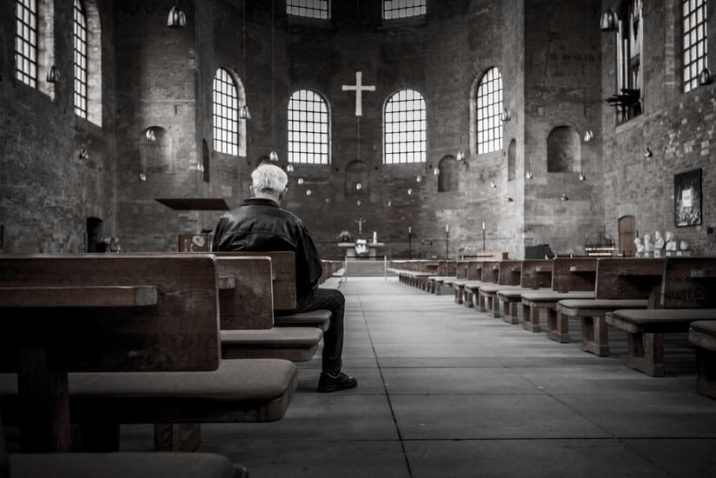
The Apostle Paul’s message was to accept the person whose faith is weak without passing judgment on disputable matters. Sounds like easy counsel to follow. But the problem was that the people did not distinguish between what is a non-negotiable matter and what was a disputable matter. 

The guiding principle is that Christ died and returned to life so that he might be the Lord of both the dead and the living. The non-negotiable matter is Jesus Christ, his person and work.  Jesus is our core belief. Nothing else is to be in the center except him.

Therefore, we are to celebrate our unity around Jesus, our center. Anything outside of that center is a “disputable matter” and not worthy of Christians condemning each other or looking down on one another.

The root problem of any church conflict is the de-throning of Jesus and setting up our particular views as the center of Christianity.

The church has struggled with this teaching for its long two-thousand year history. Every church I have served had their particular issues that they felt so strongly about that it crowded Jesus out of the center. 

In one church, education was the big issue. Some believed in Christian schools as the only way to educate their kids. Others felt that home-schooling was the way to go because of the culture. Yet others thought public education needed the light of Christians participating in it, and sent their kids to public schools. The problem was that each group sincerely believed they were right and everyone else was wrong.

In another church I served, there were hard feelings about the place of men and women in the church who had been divorced and remarried. In yet another church, the issue was about whether church members could drink alcohol or not. And yet another church’s issue dealt with how we dress and what our attire is at church. 

I still remember one lady in that church talking with a woman who had recently given her life to Christ out of a life of prostitution. The woman was wearing jeans and a t-shirt. The church lady was giving her a lecture about how she should be “dressing up for Jesus.” As I heard this, I thought to myself, “Lady, I’m not sure you are going to like the woman’s idea of dressing up for Jesus….”

Whenever we want to place disputable matters on people’s “must-do” list, then there will be trouble. We will judge others who do not think as we think, and do as we do, because of the mistaken notion that our way is equal to the death and resurrection of Christ. If it isn’t done my way, the church will be lost.

We do not necessarily need to change our views on disputable matters; but we do need to change our attitude and our behavior toward those we disagree with.

Intolerance of others’ views and behaviors causes a lack of dialogue, to create special interest groups and cabals against others, to stereotype others, and to seek to get their way no matter what. Such intolerance moves church members from a concern for the Great Commission of Jesus to the Great Commode of Satan’s bathroom.

For the Apostle Paul, the issues that divide Christians are very important, not because he championed one over the other, but because the church’s identity was at stake. Paul was concerned for two questions:

  1. Will the church be, at its core, a community of redeemed persons by the grace of God who center all their lives around the person and work of Jesus?
  2. Or will the church be a community of opinionated individuals and groups all jockeying for position to have their way on how they believe things should go?

This is really a heart issue: humility versus pride, and gentleness versus stubbornness. You can tell what a person’s identity is by their “identity markers.”

For the Jewish Christians, Sabbath-keeping, circumcision, food laws, and holding to certain days on the calendar marked their identity as God’s people. Those issues were so important that if you took them away, there would be an identity crisis; the people felt totally lost without their traditions.

For Gentile Christians, their identity was built around being more free-thinking. So, if you take away their freedom and ability to choose, the Gentiles will go nuts and have an identity meltdown. 

Paul’s answer was for both Jew and Gentile to accept each other and build their unity around Jesus, period. They needed to be sensitive to one another and focus on their shared identity of Jesus as the center of the Christian life.

Both the church and the society need some civility. In a nation where we feel free to say whatever we want, we do. In doing so, we elevate self-expression and our opinions over self-control and the mission of the church.

We need some generous spaciousness which allows room for us to discuss issues and disputable matters in an atmosphere of generosity, hospitality, and acceptance, seeking to first listen and understand, before responding. 

The goal of the Christian is not to win an argument or have our way, but to uphold Jesus as Lord of everything and maintain our center in him. On that basis alone, we will be held accountable by God. So, let us live wisely and well, knowing and pursuing Jesus with heart, soul, mind, and strength.

Gracious God, it’s both settling and centering to focus on the assurance of your acceptance. You know everything about us, and despite our failures, fickleness, foolishness, and faithlessness, yet still we are fully and eternally accepted. As you have accepted us, help us to accept others. Grant us grace to love those whom we disagree with.

Merciful and mighty God, enlarge our hearts. Enable us to show kindness without compromising our convictions. Teach us the difference between essential and non-essential matters. Free us from the limitations of our individual perspectives, the prejudices of our heritage, the insecurities of our comfort zone, insincere niceness,and the need to be right. 

Blessed Holy Spirit, burn your holy Word indelibly into us so that we accept all things and everyone you give us, through Jesus Christ our Lord. Amen.

Go Up the Mountain (Isaiah 2:1-4)

Jerusalem from the Mount of Olives, by William Simpson (1823-1899)

The word that Isaiah, son of Amoz, saw concerning Judah and Jerusalem.

In days to come
    the mountain of the Lord’s house
shall be established as the highest of the mountains
    and shall be raised above the hills;
all the nations shall stream to it.
    Many peoples shall come and say,
“Come, let us go up to the mountain of the Lord,
    to the house of the God of Jacob,
that he may teach us his ways
    and that we may walk in his paths.”
For out of Zion shall go forth instruction
    and the word of the Lord from Jerusalem.
He shall judge between the nations
    and shall arbitrate for many peoples;
they shall beat their swords into plowshares
    and their spears into pruning hooks;
nation shall not lift up sword against nation;
    neither shall they learn war any more. (New Revised Standard Version)

Mountains make up about one-fifth of the world’s landscape and 12% of the world’s population live on them. They are more than imposing and impressive statues of rock. About 80% of our planet’s fresh water originates in the mountains.

It was on a mountain that Noah’s ark settled; Moses was given the law; and Jesus preached and died. Even the beans from my morning coffee were grown on the side of a mountain. I have everything I need in the mountainous God of all.

The most fundamental truths about God are consistency and constancy in the divine nature. God is forever present with people. 

So, it is no coincidence that the temple of God was built on a mountain at the highest point in the city of Jerusalem. Ascending the temple mount reminded every worshiper of the Lord’s ever-present protection and strength. It pointed them to the source of life. With God, every need is met and satisfied, because on the mountain and in the temple, people learn how to live in this world. They are taught the ways of the Lord.

We learn to live in peace and harmony by ascending the mountain, entering the house of God, and adopting a teachable spirit.

Today’s Old Testament lesson is a vision of the future – the way things will be. Now, things are not as they ought to be. Injustice, unrighteousness, indifference, and impurity leave their mark everywhere. It may cause folks to wonder whether the Lord is truly present, or not.

If God seems or feels aloof or unconcerned, it is not that the Lord is avoiding us or is distracted with other important matters of running the universe. It simply means God chooses to reveal the divine character and the divine will when the appropriate time warrants it, for our benefit.

A mountain looks like it never moves. Yet the slow but steady rains, the creeping of tectonic plates, and undiscernible changes within the earth shift mountain ranges over time. The Lord is most certainly responding to us, our movements and changes, in a way we cannot perceive with the naked eye.

Our responsibility in the entire affair is to engage in consistent rhythms of spirituality which place us in a position to receive grace when God decides to give it. If we are still, we can feel the movements of grace developing within us, and enveloping us with life.

Perhaps we need to become adept at being spiritual mountain goats, using our wide cloven hooves of faith to negotiate the immense crags and rocks of God. After all, we will spend an eternity getting to know God and never exhaust the exploration.

Therefore, we must not despair. Rather, we can anticipate meeting with God, just as the Israelites of old looked forward and upward in ascending the temple mountain. The truth is that God surrounds people, even when we do not always perceive it to be so. 

The sturdiness of God is able to handle and bear the weight of our heaviest burdens.

Throw all your anxiety onto him because he cares about you. (1 Peter 5:7, CEB)

If we will but look up, there is abiding help for the most vexing of problems.


I raise my eyes toward the mountains.
    Where will my help come from?
My help comes from the Lord,
    the maker of heaven and earth.
God won’t let your foot slip.
    Your protector won’t fall asleep on the job. (Psalm 121:1-3, CEB)

There is peace and settled rest when we call upon the God who surrounds us.

I call out to the Lord,
    and he answers me from his holy mountain.

I lie down and sleep;
    I wake again because the Lord sustains me. (Psalm 3:4-5, NIV)

It is through trust that we become mountains ourselves – strong in faith and giving life to those around us. And it is also no coincidence that Jesus ascended a mountain in order to deliver his most important teachings.

When Jesus saw the crowds, he went up the mountain, and after he sat down, his disciples came to him. And he began to speak and taught them, saying:

Blessed are the poor in spirit, for theirs is the kingdom of heaven.

Blessed are those who mourn, for they will be comforted.

Blessed are the meek, for they will inherit the earth.

Blessed are those who hunger and thirst for righteousness, for they will be filled.

Blessed are the merciful, for they will receive mercy.

Blessed are the pure in heart, for they will see God.

Blessed are the peacemakers, for they will be called children of God.

Blessed are those who are persecuted for the sake of righteousness, for theirs is the kingdom of heaven. (Matthew 5:1-10, NRSV)

On the mountain we encounter the Lord. In that place, we find that humility, gentleness, mercy, purity, and peacemaking are the sacred pathways of pushing back on the world’s injustice and establishing a more just and right culture.

All sorts of people, from everywhere, from every nation, will stream to receive gracious teaching. They will become aware of how to live in an egalitarian society. Everyone’s needs shall be met.

Great and mountainous God, help me to keep my heart clean and to live honestly and fearlessly, so that no outward failure can dishearten me or take away my joy of conscious integrity. Open wide the eyes of my soul so that I may see good in all things. Grant me today a vision of your truth. Inspire me with the spirit of gladness and make me to be a cup of strength to suffering souls; in the name of the strong Deliverer, our Lord and Savior, Jesus Christ. Amen.

Get Along with Each Other (Romans 2:12-16)

All who have sinned apart from the law will also perish apart from the law, and all who have sinned under the law will be judged in accordance with the law. For it is not the hearers of the law who are righteous in God’s sight but the doers of the law who will be justified. When gentiles, who do not possess the law, by nature do what the law requires, these, though not having the law, are a law to themselves. They show that what the law requires is written on their hearts, as their own conscience also bears witness, and their conflicting thoughts will accuse or perhaps excuse them on the day when, according to my gospel, God through Christ Jesus judges the secret thoughts of all. (New Revised Standard Version)

Every single person on planet earth has been created by a good Creator in the image and likeness of God, without exception.

Because we are all stamped with the Lord’s divine image deep within us, there is a universally inherent sense of justice, rightness, fairness, integrity, morality, and love. Particulars of ethics may differ from culture to culture, yet all persons and societies have a broadly similar innate understanding of right and wrong.

Within the ancient Roman Church were a mix of Jews (the historical people of God who were given the law and the covenant through Moses) and Gentiles (non-Jewish persons). The Apostle Paul wrote his lengthy and probing letter to them because the two groups of Jew and Gentile were at odds with one another.

The Gentile Christians could not understand the Jewish Christian fondness and insistence on ancient rules and particular commands, and so, they looked down on their brothers and sisters in the faith as being hopelessly locked into outdated traditions and practices.

Conversely, the Jewish Christians could not understand the Gentile Christian affinity for a freedom that seemed to not care about the religious importance of food and eating, seasons and holy days, and outward signs of Christianity, and so, they tended to look down on their brothers and sisters in the faith as ignorant, immature, and in need of ritual practices.

The Church back then was almost like putting a group of people with O.C.D. (Obsessive-Compulsive Disorder) with a group of people with A.D.D. (Attention-Deficit Disorder). At the least, it’s going to very interesting to watch them try to live and worship together; at the worst, it’s going to spark an all-out battle for supremacy.

Paul was intervening somewhere in the middle between the interesting situation and the pitched battles so that the Church would not turn into total war. The last thing he wanted was two churches: one Jewish and one Gentile. No, there is one church, just as there is one God. Paul was determined that these knuckleheads are going to have to learn to get along.

For he himself is our peace, who has made the two groups one and has destroyed the barrier, the dividing wall of hostility, by setting aside in his flesh the law with its commands and regulations. His purpose was to create in himself one new humanity out of the two, thus making peace, and in one body to reconcile both of them to God through the cross, by which he put to death their hostility. He came and preached peace to you who were far away and peace to those who were near. For through him we both have access to the Father by one Spirit.

The Apostle Paul (Ephesians 2:14-18, NIV)

Since Paul himself was a Jewish Christian, he tended to get pretty testy with his fellow Jews. Although Paul often went back-and-forth throughout his letter to the Romans, addressing Jews, then Gentiles, he most often had more to say to the Jewish brothers and sisters.

And that is what’s happening in today’s New Testament lesson. The Apostle Paul is directing his words chiefly toward the Jewish believers. He is lifting the Gentile believers and placing them on the same level as the Jews. Although the Gentiles weren’t the ones who received the law, they’ve always had that law deep inside them.

Not only ought the Gentile Christians to be respected because of their inherent sense of God’s law, but this also makes them accountable for their own words and actions. In other words, there’s no excuse for any sinful talk or behavior.

What’s more, the real issue isn’t whether one group has the law, or not. The rub is whether one actually obeys and does the will of God. It doesn’t matter whether one hears the law read aloud in a Jewish synagogue or whether one hears the law spoken in the individual conscience. All are responsible for acting on that voice and engaging in deeds of justice, peace, and love. All must connect with the stamped image of God within us.

I’m not sure what is worse: committing overt sins or observing the sin and saying or doing nothing about it. Indifference is at the core of most sin – both for the perpetrator and the passive spectator seeing it. Each one is living against both their conscience and by what they’ve heard and been taught.

The Word of God has not been truly received until it is put into practice. This is a consistent theme in the New Testament: 

Jesus said, “The people who are really blessed are the ones who hear and obey God’s message!” (Luke 11:28, CEV)

Obey God’s message! Don’t fool yourselves by just listening to it. If you hear the message and don’t obey it, you are like people who stare at themselves in a mirrorand forget what they look like as soon as they leave. But you must never stop looking at the perfect law that sets you free. God will bless you in everything you do, if you listen and obey, and don’t just hear and forget. (James 1:22-25, CEV)

Listening to the Word without obedience is just that – it is mere hearing. Profession of faith in Jesus means nothing without a practice of that faith; learning the Bible is useless without living it; and acceptance of the Word is nothing more than a mental exercise without action to back it up. Profession, knowledge, and acceptance alone does not satisfy God’s plan for our lives. 

The danger is that we have the potential to deceive ourselves into thinking we are okay just because we know the right things and believe the right things. Christianity is a vital love relationship with Jesus, and, so, is not merely a matter of hearing and affirming orthodox truth; it also involves orthopraxy, that is, having right practice, the doing of truth.

Whenever the Gentile Christians in Rome refused to love the Jewish Christians, they were neither hearing God nor obeying God’s law. Whenever the Jewish Christians listened to law and gospel, but then had no intention of changing to accommodate the Gentile Christians, they were being disobedient. And whenever we hear about how God forgives us in Jesus’ name, but then we insist on not forgiving another person, we are not being doers of the Word.

So, let’s take a lesson from the ancient Roman Church: Be attentive to all persons in the Body of Christ. Include them and care for them. Pay attention to God’s Word. Include it and engraft into your life. Because care of the Body and care of the Word go hand-in-hand together.

May the God who created a world of diversity and vibrancy,
Go with us as we embrace life in all its fullness.

May the Son who teaches us to care for stranger and foreigners,
Go with us as we try to be good neighbors in our communities.

May the Spirit who breaks down our barriers and celebrates community,
Go with us as we find the courage to create a place of welcome for all. Amen.

For the Common Good of All (1 Corinthians 12:4-13)

There are different spiritual gifts, but the same Spirit gives them. There are different ways of serving, and yet the same Lord is served. There are different types of work to do, but the same God produces every gift in every person.

The evidence of the Spirit’s presence is given to each person for the common good of everyone. The Spirit gives one person the ability to speak with wisdom. The same Spirit gives another person the ability to speak with knowledge. To another person the same Spirit gives courageous faith. To another person the same Spirit gives the ability to heal. Another can work miracles. Another can speak what God has revealed. Another can tell the difference between spirits. Another can speak in different kinds of languages. Another can interpret languages. There is only one Spirit who does all these things by giving what God wants to give to each person.

For example, the body is one unit and yet has many parts. As all the parts form one body, so it is with Christ. By one Spirit we were all baptized into one body. Whether we are Jewish or Greek, slave or free, God gave all of us one Spirit to drink. (God’s Word Translation)

Being given a gift from someone is rightly associated with joy, celebration, goodness, and the possibility of what the gift is and how it might be used.

Unpacking Our Spiritual Gifts

And this is why we unpack gifts with curiosity and abandon. It would be weird if we were given a gift, then let it sit unopened. Instead, we typically receive the gift, rip it open, and express gratitude for the thoughtfulness. Then, we explore it, enjoy it, and use it.

The Spirit, likewise, has been marvelously given to God’s people. Each individual Christian is specially provided a gift to open, use, and enjoy. Spiritual gifts graciously given to us are meant for the common good of all. And this use for the common good is where the gift is different than Christmas presents or birthday gifts.

Spiritual gifts are designed by God to be acts and words of service, dispersed for the benefit of others. Yes, they are meant for us to enjoy them. Yet, they are not meant solely for personal satisfaction.

Using Our Spiritual Gifts

So, if a person’s spiritual gift is teaching, they do not stand in front of a mirror and talk at themselves. Rather, they jump into the fray of learning and explaining, and do it in such a gracious and loving way that the enablement of the Spirit is evident.

If a person’s gift is faith, they do not merely step out and act with unusual courage for the purpose of personal betterment in a holy belief from God. They also demonstrate faithfulness to God’s people and to God’s world. The gift is for the common good of all persons.

The accumulation of wisdom and knowledge is meant for the strengthening of faith in others. Spiritual gifts are intended by God to be shared freely for the common good of all people so that people are strengthened in faith and supported for the rigors of daily life in the world.

Therefore, we really need to take some initiative in identifying our gift(s), unpacking them, and indiscriminately using them. Spiritual health and wholeness can only truly be realized through everyone’s active participation in distributing their God-given abilities.

Stewarding Our Spiritual Gifts

Spiritual gifts are neither to be hoarded, nor miserly dealt to only people I like or my own little world of groupies and friends. Any and every ability comes from God, and is therefore, given for the benefit of all persons. Underprivileged groups need the giftedness of others, as well as discovering their own resources so that everyone is built up in a society of redeemed persons.

What’s more, spiritual mavericks are not so helpful here. The Lone Ranger is not a good model for us. Christians are the Body of Christ, meant to function as one. Just as the Holy Trinity of divine persons – Father, Son, and Spirit – work together in unity of purpose and harmony of being, so persons of the Church are to unify and act as one in the mission of God.

Diversity of gifts are to be expressed in unity of building up others and extending Christ’s love to the world. When we harmoniously coordinate our joint efforts in utilizing our collective spiritual gifts, the world is turned upside-down with kingdom grace and ethics.

Goodness, joy, and possibility become alive when people unpack their gifts and use them for the common good of everyone.

Spiritual Gift Envy

Sometimes, we might succumb to “gift envy.” We observe the talented gift of another and secretly wish it for ourselves. The proper remedy to such a malady is gratitude. When we give thanks to God for the gift(s) we truly possess, then envy has nowhere to reside and slithers away.

None of God’s gifts are “sexy” in the sense that they come easily without effort and always look appealing. On the contrary, our gifts are meant to be received and developed with lots of daily mundane work so that we live into the special endowment bestowed upon us.

In reality, this takes a lifetime of development. That’s because the Spirit’s gifts are so generously large – much bigger than we originally observe at first glance. Like an engagement ring in a tiny box, receiving the gift and putting it on will involve commitments and challenges we cannot at the time perceive.

Whatever it is you do well, do it to the glory of God. Allow God to activate it and energize it for the prevailing needs of a church and a world which is in want of seeing spiritual fruit manifested in kindness, goodness, and love.

O Lord, you have taught me that without love, whatever I do is worth nothing. Send your Holy Spirit and pour into my heart your greatest gift, which is love, the true bond of peace and of all virtue, without which whoever lives is accounted dead before you. Grant this for the sake of your only Son Jesus Christ, who lives and reigns with you and the Holy Spirit, one God, now and forever. Amen.