Freedom from Sin (Romans 6:12-23)

Therefore do not let sin reign in your mortal body so that you obey its evil desires. Do not offer any part of yourself to sin as an instrument of wickedness, but rather offer yourselves to God as those who have been brought from death to life; and offer every part of yourself to him as an instrument of righteousness. For sin shall no longer be your master because you are not under the law, but under grace.

What then? Shall we sin because we are not under the law but under grace? By no means! Don’t you know that when you offer yourselves to someone as obedient slaves, you are slaves of the one you obey—whether you are slaves to sin, which leads to death, or to obedience, which leads to righteousness? But thanks be to God that, though you used to be slaves to sin, you have come to obey from your heart the pattern of teaching that has now claimed your allegiance. You have been set free from sin and have become slaves to righteousness.

I am using an example from everyday life because of your human limitations. Just as you used to offer yourselves as slaves to impurity and to ever-increasing wickedness, so now offer yourselves as slaves to righteousness leading to holiness. When you were slaves to sin, you were free from the control of righteousness. What benefit did you reap at that time from the things you are now ashamed of? Those things result in death! But now that you have been set free from sin and have become slaves of God, the benefit you reap leads to holiness, and the result is eternal life. For the wages of sin is death, but the gift of God is eternal life in Christ Jesus our Lord. (New International Version)

The word “sin” is mentioned 10 times in these 12 verses of Scripture. It’s an important word, and so, we need to understand something of it. Discerning the concept of sin in the Bible is crucial to our spiritual growth and development as believers in Jesus. A better grasp of sin’s nature and power will help us to better understand and appreciate God’s grace and how to live the Christian life.

Sin Is Everywhere

We see the evidence of living in a broken world every day. Disaster, disease, and death are realities we all must deal with. The presence and power of sin is everywhere – in our hearts, our world, our institutions, and our families. It’s on television, the internet, social media, and moves in-and-out of smartphones. If it takes one to know one, we are all experts on being sinners.

Definitions of Sin

From the Bible’s vantage, sin is things we do (1 John 3:4) as well as things we leave undone (James 4:17). Sin is both actively breaking of God’s commands, and passively avoiding them. 

Christians throughout the ages have generally understood that the Ten Commandments (Exodus 20:1-17) and Christ’s law of love (Luke 10:27) constitute a brief summary of God’s holy and moral instruction for humanity.  These laws are based in the character of God as a holy and loving Being.

Sin, then, may be defined as anything in a person, group of people, an institution or a system, which does not express, or is contrary to, the basic character of God. In short, sin is a pervasive force which exists everywhere, defined in the following acrostics:

Sinful actionsSinful thoughtsSinful inaction
StressStupidSpiritual
InducedInwardInsidious
NarcissismNoodlingNarcolepsy

Sin Is Contrary to God’s Character      

All sin, whether active or passive, is self-centered and lacks self-awareness. Sin exists wherever a person, group, or organization thinks more about itself than of God and God’s love and justice. Sinful attitudes bring consequences such as:

  • Obsession with lust (1 John 8:34; Galatians 5:16) Lust is the stance of having to possess something, instead of appreciating it without ownership.
  • Broken relationships (Romans 3:23; Galatians 5:17) Wanting something without any concern for it’s cost leaves a trail of broken relationships with God and others.
  • Bondage to Satan (1 Timothy 3:6-7; 2 Timothy 2:26) Obtaining the object of our lust brings slavery, not freedom
  • Spiritual death (Romans 6:23; 8:6) Death is separation from God and estrangement from others
  • Hardening of the heart (Hebrews 3:13) A hard heart happens by stubbornly holding on to what we want, irrespective of what God wants
  • Deception (1 Corinthians 3:18; James 1:22, 26) To be deceived is to believe that other people, even God, are the problem whenever things go sideways

This may all sound like a total Debbie-Downer. Actually, it’s total depravity. Being depraved does not mean we are never capable of doing good; it means that sin has profoundly touched everything in our lives, without exception.

Sin Is Not the Last Word

Paradoxically, experiencing true joy and comfort comes through knowing how great our sin is. We live above sin by being set free from it by the grace of God in Jesus Christ. To be redeemed from sin, a provision is needed. In Christianity, sin has been dealt with once and for all through the person and work of Jesus. Christ is our representative, taking our place and delivering us from sin (Galatians 4:4-5; Ephesians 2:5-6; Colossians 2:9-15; Hebrews 2:17-18; 1 John 2:1).

Jesus Christ is our ultimate substitute (Romans 5:8)…

Which resulted in our redemption (Galatians 5:13)…

Leading to a satisfaction of all justice (Romans 3:25)…

Bringing reconciliation with God (Romans 5:10)… 

And putting sin to death, making us complete in Christ (Colossians 2:10).      

Although sin destroys everything it touches and leaves terrible consequences in its wake, sin does not have the last word: grace does.

Words for Sin

There are 33 different words for “sin” in the original Greek language of the New Testament. Only one of them is used in the verses from Romans: ἁμαρτία (“HA-mar-tee-ah”) literally means “to miss the mark,” or to “fall short.” (Romans 5:12-21; 1 John 1:8-10; 2 Corinthians 5:21)

The concept of missing the mark gets to the heart of why persons, groups, institutions, and systems fall short of God’s standard. We fail to see who we truly are and what God has truly done for us in Christ. And so, sin deceives us into believing that our needs can be met outside of God.

Metaphors for Sin

  • Obstacle. Sin obstructs a truly good and beautiful life. It’s like a blockade that prevents us from entering the kingdom of God; or like large hurdles we have to jump to move forward. Sin is like a bear on our back which slows us down to a crawl.

Let us rid ourselves of everything that gets in the way, and of the sin which holds on to us so tightly, and let us run with determination the race that lies before us. (Hebrews 12:1, GNT)

  • Addiction. The word “sin” is an attempt to meet a legitimate need in an illegitimate way. Sin is an energy which we become fixated on in order to meet our needs for love and acceptance. If unchecked, the sinful method for meeting the need becomes the need itself.

We are tempted by our own desires that drag us off and trap us. Our desires make us sin, and when sin is finished with us, it leaves us dead. (James 1:14-15, CEV)

“Seek what you are seeking – but don’t seek it where you are seeking it!”

St. Augustine
  • Marketing scam. Sin is misleading. It’s a scam or a branding which looks good but the product is all wrong. Sin is a deception, and it leads us to deceive others in order to make ourselves look better than we really are.

When you give to the poor, don’t blow a loud horn. That’s what show-offs do in the synagogues and on the street corners because they are always looking for praise. I can assure you that they already have their reward. (Matthew 6:2, CEV)

Overcoming Sin

Victory over sin and the dark force of this world comes through faith. Believe that you have been set free from sin.

For everyone born of God overcomes the world. This is the victory that has overcome the world, even our faith. Who is it that overcomes the world? Only the one who believes that Jesus is the Son of God. (1 John 5:4-5, NIV)

We need our ultimate faith to rest in God, and not in anyone or anything else. The Scripture says:

Trust in the Lord with all your heart,
    and do not rely on your own insight.
In all your ways acknowledge him,
    and he will make straight your paths. (Proverbs 3:5-6, NRSV)

Eternal God, in whom we live and move and have our being, whose face is hidden from us by our sins, and whose mercy we forget in the blindness of our hearts: cleanse us from all our offenses, and deliver us from proud thoughts and vain desires, that with reverent and humble hearts we may draw near to you, confessing our faults, confiding in your grace, and finding in you our refuge and strength; through Jesus Christ your Son. Amen.

Listen (Jeremiah 42:18-22)

This is what the Lord Almighty, the God of Israel, says: ‘As my anger and wrath have been poured out on those who lived in Jerusalem, so will my wrath be poured out on you when you go to Egypt. You will be a curse and an object of horror, a curse and an object of reproach; you will never see this place again.’

“Remnant of Judah, the Lord has told you, ‘Do not go to Egypt.’ Be sure of this: I warn you today that you made a fatal mistake when you sent me to the Lord your God and said, ‘Pray to the Lord our God for us; tell us everything he says and we will do it.’ I have told you today, but you still have not obeyed the Lord your God in all he sent me to tell you. So now, be sure of this: You will die by the sword, famine and plague in the place where you want to go to settle.” (New International Version)

We all find ourselves in trouble at one time or another. The real issue is whether we’re in trouble for no fault of our own, or if we’re in dire straits because of our own stubbornness and stupidity.

God tends to take a lot of flack from us humans, whenever we are in the middle of trouble. Yet, much of the time, it’s our own dang fault for not listening to God in the first place.

Whenever other people are hard-hearted and unjust, we’re ready for some divine judgment to happen. But when it’s me, all I want is some mercy and grace, some understanding and acknowledgment of my predicament. We have got to realize that what’s good for the goose is good for the gander.

Talk can be cheap. The ancient people of Judah verbally affirmed their dedication to doing what God would tell them to do. And then, like some sort of spiritual dementia, they seemed to forget everything they said, and turned around to disobey all they heard from God.

It all came down to an issue of trust. The people looked to Egypt for their deliverance from the Babylonian army, instead of turning their faces toward God and doing exactly what the Lord wanted.

So, the Lord, an ever-present power much like the force of gravity, let the people know that if they’re going to ignore that force, they’ll end up falling and breaking their bodies.

People make mistakes. They do stupid things. And they sin against God and others. It happens. But how we respond to it all is highly important. If we don’t learn from our missteps, and choose to keep living without adjusting our lives to God’s abiding presence in the world, we can expect trouble.

A prudent person foresees danger and takes precautions.
    The simpleton goes blindly on and suffers the consequences. (Proverbs 27:12, NLT)

The ancient people of Judah had already suffered one Babylonian invasion. Now they were faced with yet another. The people wanted to flee. But their looking to Egypt was not a wise avoidance; it was an attempt to stick their heads in the sand, to put their fingers in their ears and shut tight their eyes. Instead, they needed to stay put and face the music.

The prophet Jeremiah reminded the people that, in this situation, there was a dual danger: It’s bad to go to Egypt, so don’t do it; and it’s really bad to disobey God, so listen and do what the Lord says.

Ignorance puts everyone in jeopardy. To follow through with plans that are diametrically opposed to what God has specifically said not to do, puts the entire community in the grip of a death sentence. After all, the Lord already knows what’s up and what’s going to happen if we foolishly amble into a hornet’s nest of trouble on top of trouble.

Whenever people are cursed, it’s typically because they refuse to listen; they don’t heed the warnings and end up doing something out of their anxiety, instead of acting with wisdom.

Unnecessary suffering comes from disobedience. Disobedience is a result of ignorance. And ignorance comes from purposefully not listening to sage advice, divine commands, and the wisdom of the ages.

It all comes down to giving focused attention so that we might hear and heed the voice of God. This is why the spiritual practices of solitude, silence, stillness, and contemplative and centering prayers are so very important. It puts us in a position to listen with open ears and receptive hearts.

The following are four guidelines of centering prayer, offered by one of the masters of this form, Father Thomas Keating, Intimacy with God: An Introduction to Centering Prayer:

  1. Choose a sacred word as the symbol of your intention to consent to God’s presence and action within.
  2. Sitting comfortably and with eyes closed, settle briefly, and silently introduce the sacred word as the symbol of your consent to God’s presence and action within.
  3. When engaged with your thoughts, body sensations, feelings, images, and reflections, return ever-so-gently to the sacred word.
  4. At the end of the prayer period, remain in silence with eyes closed for a couple of minutes.

The best way to avoid unnecessary trouble, heed biblical warnings, and listen to the divine is by aspiring and dedicating oneself to a genuine spiritual life.

St. John of the Cross, a spiritual giant of a prayerful and listening life, wrote in the sixteenth century, “God spoke one word from all eternity and he spoke it in silence, and it is in silence that we hear it.”

The reason God is so often silent, is that silence is God’s first language; all other verbal languages are but poor translations. Centering ourselves in prayer is a needed preparation for the contemplation that enables us to hear and listen well to the language of God.

Perhaps if the people in Jeremiah’s day did so, they would not have found themselves in such a dire predicament.

Almighty and everlasting God, make me ready, when your voice is truly heard, so that I may respond with glad obedience glad and steady devotion, silent and still to follow every word. Speak, Lord, for I am listening. Amen.

It’s Not Over Till It’s Over (Ezekiel 33:10-16)

The Lord said:

Ezekiel, son of man, the people of Israel are complaining that the punishment for their sins is more than they can stand. They have lost all hope for survival, and they blame me. Tell them that as surely as I am the living Lord God, I don’t like to see wicked people die. I enjoy seeing them turn from their sins and live. So if the Israelites want to live, they must stop sinning and turn back to me.

Tell them that when good people start sinning, all the good they did in the past cannot save them from being punished. And remind them that when wicked people stop sinning, their past sins will be completely forgiven, and they won’t be punished.

Suppose I promise good people that they will live, then later they start sinning and believe they will be saved by the good they did in the past. These people will certainly be put to death because of their sins. Their good deeds will be forgotten.

Suppose I warn wicked people that they will die because of their sins, and they stop sinning and start doing right. For example, they need to return anything they have taken as security for a loan and anything they have stolen. Then if they stop doing evil and start obeying my Law, they will live. Their past sins will be forgiven, and they will live because they have done right. (Contemporary English Version)

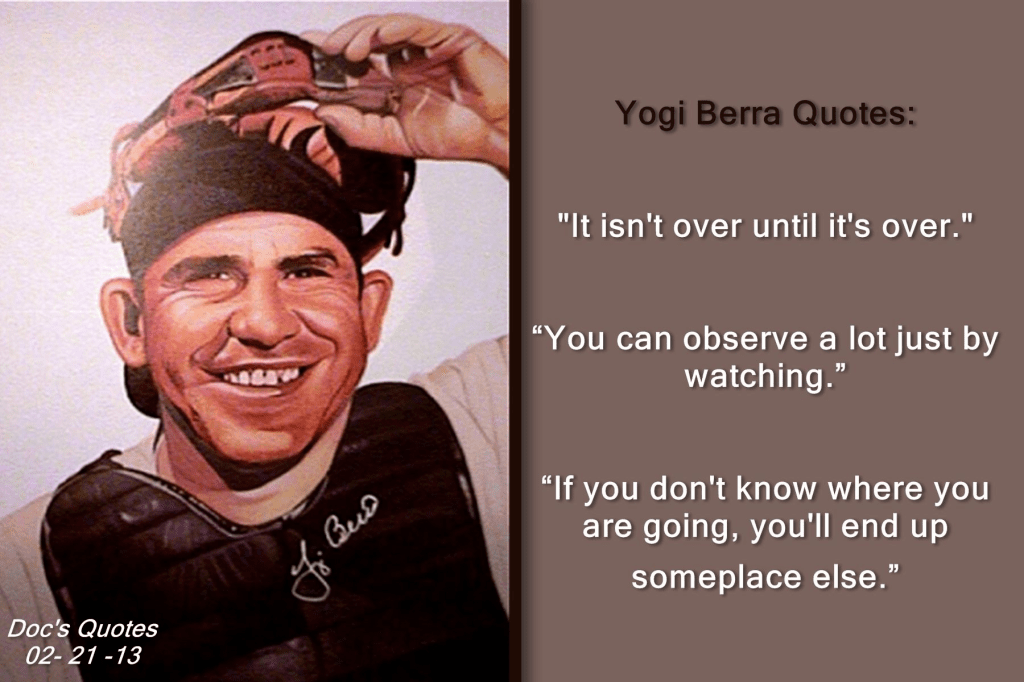
“It ain’t over till the fat lady sings,” is an old adage which means one should not presume to know the outcome of something that’s still in progress. In more contemporary language, we might say, “It’s not over till it’s over.”

Those sorts of proverbs are asking us, “What are you doing today? How are you living your life, right now?”

We need to be present to the time we are inhabiting at this moment. There are two opposite temptations for us in relating to time.

  1. “I did a lot of good things in the past. I worked hard. I was generous. Now it’s time for me to do whatever the heck I want. Nobody is going to tell me what to do or how to live my life.”
  2. “I did a lot of bad things in the past. I partied hard. I took advantage of people. Now it’s time for me to do good. I don’t know, though, whether it will ever be enough.”

In other words, the temptations are either to rely on all the good I’ve done, earning me a license to do what I want; or to believe I can never overcome my bad past. In both cases, it’s to keep thinking our past is the controlling factor.

But it’s not.

Just as there was a flip-flop of living, it could very well happen again. The guy who did good in the past, then didn’t, now responds to overtures to stop living a selfish life. He begins doing the good he used to do. And the guy who had a sordid past, then changed and did good, now goes back to his old life, like a dog returning to its vomit.

It’s never over, till it’s over. As long as we’re still breathing on this earth and walking on it, the outcome of life is still yet to be determined. There is always the opportunity for new life. And it begins with identifying and confessing where we are in this present time.

If we confess our sins, God is faithful and just to forgive us our sins and cleanse us from everything we’ve done wrong. (1 John 1:9, CEB) 

Being right with God means assessing our relationship at all times. Forgiveness and reconciliation are activated by admitting one’s true condition. Secret sins tucked away deep in the soul will only fester and boil. The result of un-confessed sin is spiritual blindness, darkness, and death. 

There cannot be new life and renewal, revival, or revitalization of life and ministry apart from real honest tell-it-like-it-is biblical confession. 

If this scares the hell out of you, it really should. Dealing with sin in a radical straightforward manner is what Jesus talked about in his Sermon on the Mount, in saying we should pluck our eyes out if they offend, and cut our hands off if they cause us to sin; because it’s better to be in God’s kingdom with no eyes and hands than to burn in hell with our parts intact. (Matthew 5:29-30) 

Confession is more than simply mouthing some words about not being perfect and a sinner like everybody else; it is to lead to a complete turn-around and change of how we live our lives. We can change. We are neither fated to be a screw-up forever nor a good person till the end.

Instead, we have to put the work in – mentally, emotionally, and spiritually.

Change is what the biblical word “repentance” means. It happens by dealing squarely with our past thinking, choices, and behavior. This is why some form of a prayer of confession really needs to happen at every church worship service. 

Ignoring such a vital liturgical prayer and practice will, at best, leave people with no guidance for confronting sin; and, at worst, will teach people that confession is not necessary to Christianity and leave them a spiritual mess. 

Yet a carefully constructed prayer of confession can lead believers to unburden the things they have done, and the things they have left undone – which opens us to the advocacy of Jesus Christ who speaks on our behalf because of his once-for-all atoning sacrifice for sins.

Confession, repentance, and change are more than single events; they are a way of life for the believer. As long as you are still able to read this, there’s still the opportunity to live the good life and forsake the wicked life.

Today, if you hear his voice, do not harden your hearts. (Hebrews 4:7, NIV)

It ain’t over till it’s over.

Creator God, you made us in your image: may we discern your goodness in all that we see, and serve you with all goodness in everything we do, through Jesus Christ our Lord. Amen.

On Divorce (Matthew 19:1-12)

When Jesus had finished saying these things, he left Galilee and went into the region of Judea to the other side of the Jordan. Large crowds followed him, and he healed them there.

Some Pharisees came to him to test him. They asked, “Is it lawful for a man to divorce his wife for any and every reason?”

“Haven’t you read,” he replied, “that at the beginning the Creator ‘made them male and female,’and said, ‘For this reason a man will leave his father and mother and be united to his wife, and the two will become one flesh’? So they are no longer two, but one flesh. Therefore what God has joined together, let no one separate.”

“Why then,” they asked, “did Moses command that a man give his wife a certificate of divorce and send her away?”

Jesus replied, “Moses permitted you to divorce your wives because your hearts were hard. But it was not this way from the beginning. I tell you that anyone who divorces his wife, except for sexual immorality, and marries another woman commits adultery.”

The disciples said to him, “If this is the situation between a husband and wife, it is better not to marry.”

Jesus replied, “Not everyone can accept this word, but only those to whom it has been given. For there are eunuchs who were born that way, and there are eunuchs who have been made eunuchs by others—and there are those who choose to live like eunuchs for the sake of the kingdom of heaven. The one who can accept this should accept it.” (New International Version)

It’s interesting that the compilers of the Revised Common Lectionary chose this Gospel lesson the day after Valentine’s Day. Not sure I would do that, but here we are, so let’s deal with it….

I grew up in an era in which not many couples divorced. Frankly, that probably was a bad thing, because there was plenty of hanky-panky going on, and far too much domestic violence that didn’t get dealt with. Women, mostly, tended to put up with an awful lot from abusive men.

Today, of course, divorce is common. And that’s probably a bad thing, too. A whole lot of couples aren’t working through their communication issues – and that’s because many individual persons have done precious little in addressing their own background experiences of trauma and/or abuse.

In short, divorce is not the ideal – but it’s necessary. And Jesus understood this more than most people of his day. It isn’t supposed to be this way, all this interpersonal crud, heartache, and pain. Yet here we are, having to navigate broken relationships, busted marriages, and bewildered children.

No married couple, on their wedding day, anticipates a divorce in their future. Nobody anticipates having a debilitating illness or to be locked into poverty. Instead, we are optimistic, believing that we’ll fall more on the side of better than worse, richer than poorer, healthier than sick, and cherishing the other more than irked by them.

As of this writing, my dear wife and I have been married nearly 38 years. A lot of blood, sweat, and tears have gone into being together for all that time. We have weathered many experiences with one another. Yet, I’m under no illusions; there’s nothing particularly special about me or my spouse. There are plenty of couples who have put in as much work as we have, and their marriages still dissolved in an ocean of disappointment.

I’d like to think I am not speaking as one above others, but as a fellow guy just trying to do his best with what he currently knows – and grateful that I have a partner and friend who sticks with me and lives life alongside me.

The last thing any divorced folks need is a bunch of condescending gobbledygook from a pious simpleton who likely doesn’t have a clue about what’s going on.

God heals the brokenhearted
    and bandages their wounds.

Psalm 147:3, CEB

The truth is that we all need to continually come back to what Jesus encouraged us to do: Avoid hardness of heart, embrace humility, and seek oneness and unity above all else. A marriage that has two people living under the same roof like roommates, isn’t really a marriage, at all; they may have the legal document to prove it, but they don’t have the relational practices to back it up.

Divorce is a major change of life. Put that together with the reality that life is always progressing and never stays the same, we all undergo many new beginnings throughout the course of our lives. 

Thankfully, there is another reality that will forever stay the same: You were created in the image of God, both male and female, and that divine likeness can never be taken from you. Wherever you go, whatever you do, God is with us. One is never outside the Lord’s reach.

The self-righteous person who belittles any and all divorcees is unaware that even God has experienced divorce and knows precisely what it feels like:

I [God] gave faithless Israel her certificate of divorce and sent her away because of all her adulteries. Yet I saw that her unfaithful sister Judah had no fear; she also went out and committed adultery. Because Israel’s immorality mattered so little to her, she defiled the land and committed adultery with stone and wood. (Jeremiah 3:8-9, NIV)

Perhaps your frame of mind right now is that you can barely see beyond today and cannot even imagine what will happen tomorrow. No matter the circumstance, regardless of who you are, where you have been, or where you are going, there is a God who exists on heaven and earth who completely knows and understands your situation. 

And the Lord stands ready to help you begin again and start something new.

Where hearts are broken, grant your healing.
Where trust is eroded, restore good faith.
Where bitterness has taken root, plant seeds of forgiveness.
Do not let anger destroy us, O God,
but teach us to love as Christ loved us. Amen.