Cursed be the day on which I was born! The day when my mother bore me, let it not be blessed! Cursed be the man who brought the news to my father, saying, “A child is born to you, a son,” making him very glad. Let that man be like the cities that the Lord overthrew without pity; let him hear a cry in the morning and an alarm at noon, because he did not kill me in the womb; so my mother would have been my grave and her womb forever pregnant. Why did I come forth from the womb to see toil and sorrow and spend my days in shame? (New Revised Standard Version)
Perhaps you feel as though you must put on a good face, a decent front for others to see. It could be that you don’t like other people seeing you upset or cry because it can be embarrassing. Maybe you believe others don’t need to be burdened with your sadness. The last thing you want is to be a killjoy.
Sometimes you might even put up a front with God. Maybe you think God wants everyone to be perpetually happy and always sing with the birds in blissful joy and gladness, or whistle while you work. However, that would not be an accurate view of God.
One of the most faithful people in Holy Scripture, Jeremiah, freely and unabashedly lamented before God – to the point of wishing he were dead. Jeremiah, the incredible prophet of God, closer to the Lord than anyone of his generation, was so despondent and ashamed that he wished he had never even born. The suffering and the shame were just too overwhelming.
To say that Jeremiah had a difficult ministry is a gross understatement. He literally had the ministry from hell, prophesying to people who neither liked him, nor his message to them. In the middle of it all, Jeremiah threw up his hands and let out his complaint to God. Jeremiah was in such ministerial misery that he wished he had been a stillborn baby.
Lest you think Jeremiah was sinfully depressed or just cuckoo, he is far from alone in the Bible. King David had no scruples about letting God know how he felt about his dire circumstances. Job, likely the most famous sufferer of all, spent time doing nothing but lamenting his terrible losses for months. What all three of them have in common is that they openly grieved with great tears, yet neither cursed God nor forsook the Lord.
Lamentation is the sacred space between intense grieving to God without blaming the Lord for our significant changes and losses in life. I would even argue that lamenting and grieving before God is a necessary spiritual practice which needs full recognition in the Body of Christ. Please sit with that last statement for a bit and consider how it might become a reality in your own life and context.
Grief can and does attach itself to any change or loss. It is the normal emotional, spiritual, physical, and relational reaction to that injury of the heart. There is only one way through grief. We must tell our story to another. It is both biblical and quite necessary.
Bear one another’s burdens, and in this way you will fulfill the law of Christ.
Galatians 6:2, NRSV
We need our own spirituality to support us in such times – not drive us away through a misguided theology of believing you must keep a stiff upper lip. It is critical to have safe and supportive persons in our lives when going through overwhelming circumstances.
“Spirituality is recognizing and celebrating that we are all inextricably connected to each other by a power greater than all of us, and that our connection to that power and to one another is grounded in love and compassion.”
Brené Brown
Our tears are holy. They are not the mark of weakness, but of power. The prophet Jeremiah was doing a very godly thing in expressing his grief. And Jeremiah’s lament is what helped steel him for the several attempts on his life that he faced.
Let the tears do their intended work in your life.
God of all, you feel deeply about a great many things. As your people, we also feel a great depth of emotion when our lives go horribly awry from our dreams and expectations. Hear our lament as we pour out our grief before you, through Jesus, our Savior, with the presence of the Holy Spirit. Amen.
You’re cheating on God. If all you want is your own way, flirting with the world every chance you get, you end up enemies of God and his way. And do you suppose God doesn’t care? The proverb has it that “he’s a fiercely jealous lover.” And what he gives in love is far better than anything else you’ll find. It’s common knowledge that “God goes against the willful proud; God gives grace to the willing humble.”
So let God work his will in you. Yell a loud no to the Devil and watch him make himself scarce. Say a quiet yes to God and he’ll be there in no time. Quit dabbling in sin. Purify your inner life. Quit playing the field. Hit bottom, and cry your eyes out. The fun and games are over. Get serious, really serious. Get down on your knees before the Master; it’s the only way you’ll get on your feet. (The Message)
Quite apparent is the fact that the Apostle James was not trying to win friends in the world. However, he was trying to influence the people within the churches in his care. Specifically, he was confronting the proud and arrogant.
So, please understand, up front, that James was going after the haughty persons because it takes a hammer to break a hard heart. And so, his approach ought only to be emulated in the unique context of handling persons stuck in their own destructive hubris. Nevertheless, there is much instruction in these verses to help us all.
Throughout Holy Scripture, we find a marriage metaphor, likening the relationship of God to the people, much like a lover. God’s covenant relationship is at the heart of understanding the whole of Scripture. Whenever people stray from divine promises, God is offended and hurt.
Yes, God feels pain. God is an emotional Being, which is why we have emotions as God’s image-bearers. One way to view the Bible is that it is a book about God, the jilted lover. The Lord set affection and love upon people, yet many people have spurned their Lover’s advance. And this situation pains God.
When Adam and Eve, decided to find satisfaction outside of God, the Lord was hurt. After them, when people had children and raised them, they did so largely apart from the God who loved them:
The Lord saw that the human beings on the earth were very wicked and that everything they thought about was evil. He was sorry he had made human beings on the earth, and his heart was filled with pain. (Genesis 6:5-6, NCV)
Yet, God was gracious. The Lord took a group of Noah’s descendants, Abraham’s family, and set a covenant of affection on them. God hoped to restore the world to right relationship through the Israelites. However, they too, came to set their affections on others. So, nearly half of the Old Testament is devoted to communicating the Lord’s hurt and disappointment.
Like a jilted lover, God longed for Israel to remain faithful. For example, the prophet Hosea had an unfaithful wife, Gomer, and their relationship mirrored the relationship between God and Israel. Just as Hosea did not give up on his wife, even though she was brazenly unfaithful, so God looked at Israel as a spouse and could not bear to give her up.
Israel spurned their lover’s grace and kindness and actively sought other lovers, causing God anger and agony. God recounted the history of unfaithfulness:
“At every crossroad you built your platform and degraded your beauty by spreading your legs to all comers. And so, you encouraged even more promiscuity. You prostituted yourself with the Egyptians, your neighbors with the large sexual organs, and as you added to your seductions, you provoked me to anger….
Still not satisfied, you prostituted yourself to the Assyrians, but they were not enough for you either. So, you prostituted yourself with the Babylonians, the land of traders, but again you were not satisfied. How sick was your heart that you could do all these things, the deeds of a hardened prostitute?…
You are like an adulterous wife: you take in strangers instead of your husband. Ordinary prostitutes are given gifts, but you gave your gifts to all your lovers. From every direction you even bribed them to come to you for your sexual favors. As a prostitute, you were more perverse than other women. No one approached you for sexual favors, but you yourself gave gifts instead of receiving them.” (Ezekiel 16:25-34, CEB)
Despite Israel’s unfaithfulness, God extended grace to the beloved spouse:
“I am taking you back! I rejected you for a while, but with love and tenderness I will embrace you again. For a while, I turned away in furious anger. Now I will have mercy and love you forever! I, your protector and Lord, make this promise.” (Isaiah 54:6-8, CEV)
The Old Testament ends with God still longing for return:
The Lord proclaims: “I care passionately about Zion; I burn with passion for her.” (Zechariah 8:2, CEB)
All of this theological awareness was in the heart of the Apostle James when he wrote his letter to the hard-hearted. He knew they were flirting with the world. He wanted them to stop and return to the God who longed to show them grace, if only they would humble themselves.
God yearns, passionately, for us to find our needs met, and enjoyment found, in the loving divine embrace. Spiritual adultery hurts God deeply, like it would any jilted lover. God awaits with loving patience to show grace and compassion to wayward people.
Only the stance and attitude of humility can receive grace. Sinful pride prevents people from receiving God’s good gift. So, James rattled-off ten quick staccato commands to remain connected in a love relationship with God. They are resolutions to live by.
Submit to God
Humble folk willingly place themselves under God’s authority because they are convinced God has their best interests at mind. One temptation when facing adversity is to entertain the belief that no one is going to look out for you except yourself. So, to avoid getting hurt too badly, we might become cynical, arrogant, and callous – self-protective strategies designed to keep the hurt away. This only creates hardness of heart. The alternative is faithful submission to God – knowing that God’s Spirit will protect and living with the conviction that nothing can separate us from the love of God in Christ.
Resist the devil
Satan is a bully. The way to deal with bullies is to stand up to them. We face down the temptation by submitting to God and resisting the devil. Don’t be deceived into flipping it around by listening to Satan and avoiding submission to God.
Come near to God
Like a loving parent, the Lord longingly looks out the window waiting for prodigals to return. Coming to God is the first thing we ought to do. When my daughter was young her bike was stolen. So, we sat down together in the backyard and came to God in prayer. I barely finished praying when a police cruiser pulled up in the alley behind our house. The policeman rolled down his window and said, “Hey, are you missing a bike?” We hopped in and he took us to where someone had ditched the bike. It was a tremendous lesson that when we come to God, God comes to us. I realize life does not always work that way, yet we can be assured that God listens, hears, and will respond.
Wash your hands
We cannot approach God with blood on our hands, but must come squarely facing our sin and disobedience. We must deal with the wrong we have done without sweeping it under the rug. God wants us to admit our sin, receive grace, and deal with matters of restitution and reconciliation, without trying to save face when found out in a concern for “optics.”
Purify your heart
Whereas the previous resolution is mostly external, this one addresses the inner person, the heart. Not only do our actions need to be cleaned up through washing our hands, but our attitudes must also be purged of pollution. Our hearts cannot handle two masters; we are to be single-minded without mixed motives.
“The man who tries to walk two roads will split his pants.”
African proverb
The next four resolutions describe important emotional responses to sin:
“The Crying Giant,” Wilmington, Delaware
Grieve
Trying to move on without grieving and lamenting is called denial. Grief is not only an event; it is a process which takes time. Grieving is biblical. Sharing our stories with each other, giving testimony to God’s grace, and expressing ourselves is important. A loving God knows there cannot be healing apart from grief and lament.
Mourn
Blessed are those who mourn with an emotional response to the devastation of sin. Mourning sees sin in all its foulness and degradation. People who do not mourn become hard-hearted and need deep spiritual transformation. Jesus offers the remedy: By his wounds we are healed.
Wail
We are to more than cry – we need to wail. Whereas mourning might be more personal, wailing has a much more public dimension to it. I believe the great tragedy in many modern churches is an inordinate focus on victory and triumphalism. The result: Far too many Christians cry alone. No one should ever have to cry by themselves. We must weep with those who weep. If there ever was an appropriate place for crying, it should be amongst fellow brothers and sisters in Christ.
Change
We cannot turn the clock back to some bygone idyllic era. We are to grasp the type of change which occurs in living for Jesus Christ and above sin – with no casual cavalier attitudes toward sin. I once had a conversation with a young woman about heaven and hell. When we began the discussion, she expressed a desire to be wherever the better party was going on. By the time we finished our conversation she was grieving and crying. I never knew what became of her. But once she got just a glimpse of the gravity of sin, it undid her.
Be humble
Humility sums up all these resolutions. The paradox is that through grieving, mourning, and wailing we become joyful and satisfied; through suffering there is glory; becoming last is to become first; entering the narrow gate leads to the broad open space of God’s eternal life.
Gracious God, our sins are too heavy to carry, too real to hide, and too deep to undo. Forgive what our lips tremble to name, what our hearts can no longer bear, and what has become for us a consuming fire of judgment. Set us free from a past that we cannot change; open to us a future in which we can be changed; and grant us grace to grow more and more in your likeness and image, through Jesus Christ, the light of the world. Amen
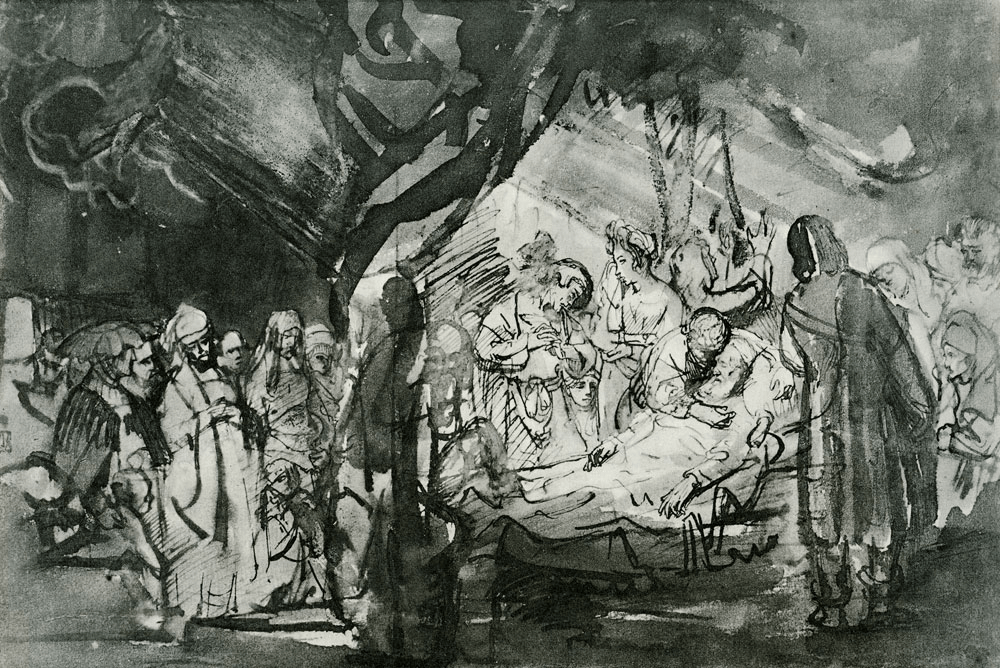
Soon I will die, and I want you to bury me in Machpelah Cave. Abraham bought this cave as a burial place from Ephron the Hittite, and it is near the town of Mamre in Canaan. Abraham and Sarah are buried there, and so are Isaac and Rebekah. I buried Leah there too. Both the cave and the land that goes with it were bought from the Hittites.
When Jacob had finished giving these instructions to his sons, he lay down on his bed and died. Joseph started crying, then leaned over to hug and kiss his father.
Joseph gave orders for Jacob’s body to be embalmed, and it took the usual 40 days.
The Egyptians mourned 70 days for Jacob. When the time of mourning was over, Joseph said to the Egyptian leaders, “If you consider me your friend, please speak to the king for me. Just before my father died, he made me promise to bury him in his burial cave in Canaan. If the king will give me permission to go, I will come back here.”
The king answered, “Go to Canaan and keep your promise to your father.”
When Joseph left Goshen with his brothers, his relatives, and his father’s relatives to bury Jacob, many of the king’s highest officials and even his military chariots and cavalry went along. The Israelites left behind only their children, their cattle, and their sheep and goats.
After crossing the Jordan River, Joseph stopped at Atad’s threshing place, where they all mourned and wept seven days for Jacob. The Canaanites saw this and said, “The Egyptians are in great sorrow.” Then they named the place “Egypt in Sorrow.”
So Jacob’s sons did just as their father had instructed. They took him to Mamre in Canaan and buried him in Machpelah Cave, the burial place Abraham had bought from Ephron the Hittite.
After the funeral, Joseph, his brothers, and everyone else returned to Egypt. (Contemporary English Version)
117 days. That’s how long Jacob’s family, along with the people of Egypt, mourned for him after his death. Yes, he was a patriarch. And yes, Joseph was the administrator of an entire nation. Yet this was not unusual behavior; it was normal.
When my mother-in-law was tragically and suddenly killed in a car accident, 30 years ago, I could not take any bereavement time off, because according to company policy, it was not my mother. So, since she lived a thousand miles from us, I had to use vacation time and take a week away. Then, when I returned to work, I was expected to pick up where I left off, as if nothing had happened.
Although I work under better conditions today, and workplaces are getting better at acknowledging the importance of tragic events in the life of employees, we still have a long way to go in dealing with grief, bereavement, mourning, and lament.
The modern funeral industry is a rather recent phenomenon in history. Beginning with, and then following, the American Civil War, death was a prominent specter, affecting every community and nearly every home. People like my second great grandfather became part of a growing business of handling the dead and providing services for grieving families. He became a coffin maker and a chief supplier for the burgeoning funeral parlor (which later morphed into a furniture business which lasted a hundred years).
Even though families needed help after a devastating war, over time, the unintended effect is that we became detached from death. Others could handle bodies and arrangements. We could choose to see or not see the dead. Folks began losing the ability to grieve and mourn their changes in life.
Grief doesn’t just go away with time. If it isn’t acknowledged, faced, accepted, and dealt with, it slowly begins to sit in the soul and rot. Eventually, it becomes spiritual gangrene; the person becomes bitter, without joy and stuck in unwanted emotions.
The point of all this is that grief and bereavement strikes us all; none of us gets off planet earth without having to deal with the loss of significant people in our lives. And when it happens, it’s imperative that individuals and societal structures allow for the time and space to mourn.
The ancients were on to something which we need to recover. They discerned the importance of allowing grief to run it’s course, instead of us trying to master grief, get over it, and move on. Grief will be dealt with when it is dealt with. Trying to tame it is like attempting to bench press 700 pounds; it’s only going to crush you if you try controlling it.
I’m not agitating for a 117 span of days for everyone’s mourning. But I am insisting that we have conversations about grief and confront it, rather than ignore it. Because grieving doesn’t mean you’re imperfect; it means you’re human.
The way we move through our grief is by telling our story – which requires someone to listen. That only happens if we have created the space for it to occur. Expectations of moving-on will leave grief where it is, poisoning us from the inside-out.
The only way to the mountain is through the valley. The only way to make the pain go away is to move through it – not by avoiding it, pretending it’s not there, or trying to go around it. Pain and suffering are inevitable; misery is optional. And letting bereavement and grief have it’s way for a while is the path away from the misery.
You will heal and you will rebuild yourself around the loss you have suffered. You will be whole again, but you will never be the same. And that’s a good thing. It gives us the ability and empathy to extend blessing to others who will eventually face their own terrible loss. They will need someone to listen. And you will be there for them.
Lord, do not abandon us in our desolation. Keep us safe in the midst of trouble, and complete your purpose for us through your steadfast love and faithfulness, in Jesus Christ our Savior. Amen.
Station 3 of the Stations of the Cross, along the Via Dolorosa in Jerusalem
In you, O Lord, I take refuge; let me never be put to shame. In your righteousness deliver me and rescue me; incline your ear to me and save me. Be to me a rock of refuge, a strong fortress to save me, for you are my rock and my fortress.
Rescue me, O my God, from the hand of the wicked, from the grasp of the unjust and cruel. For you, O Lord, are my hope, my trust, O Lord, from my youth. From my birth I have leaned upon you, my protector since my mother’s womb. My praise is continually of you.
I have been like a portent to many, but you are my strong refuge. My mouth is filled with your praise and with your glory all day long. Do not cast me off in the time of old age; do not forsake me when my strength is spent. For my enemies speak concerning me, and those who watch for my life consult together. They say, “Pursue and seize that person whom God has forsaken, for there is no one to deliver.”
O God do not be far from me; O my God, make haste to help me! Let my accusers be put to shame and consumed; let those who seek to hurt me be covered with scorn and disgrace. But I will hope continually and will praise you yet more and more. (New Revised Standard Version)
Christians take a decided interpretation of seeing Christ in the psalms. For us, we can envision Jesus saying these words of lament in the last days of his earthly life and ministry.
Why lament?
Lament is a significant piece of Lent, and is especially present in these final days of the season, Holy Week. To lament is to offer a public and passionate expression of grief. And it’s not optional but necessary and vital to the Christian experience, not to mention the human condition.
Without lamenting our great losses, our grief comes out sideways, inevitably harming others with our snarky vitriol. Lament gives expression to our deep grief. It enables us to come to grips with what has happened in the past, or happening to us in the present, and within us.
What does it mean to lament?
A lament is an expression of personal grief, due to any significant change or loss; it is the normal emotional, spiritual, physical, and relational reaction to that loss.
Lamenting is an intentional process of letting go. Relationships, dreams, plans, and people all die. We cannot get them back. Lament helps us find and live into a new identity after the loss or change.
Expressing grief through lament is intensely personal; there is no one-size-fits-all. No one else can do our lamentation for us.
How do I lament?
There are many psalms of lament, including our psalm lesson for today. They all have a typical structure to them, including:
Addressing God: Crying out for help. Some psalms of lament expand to include a statement of praise or a recollection of God’s intervention in the past. (Psalm 71:1-3)
Complaint: Telling God (said with some flavor!) about our problem or experience through a range and depth of emotional, relational, and spiritual reactions to the change or loss. (Psalm 71:4)
Confession of Trust: Remaining confident in God despite the circumstances. Beginning to see problems differently. (Psalm 71:5-8)
Petition: Proclaiming confidence in God. Appealing to God for deliverance and intervention. Keep in mind that petitioning is not bargaining with God or a refusal to accept loss. Rather, it is a legitimate seeking of help. (Psalm 71:9-13)
Words of Assurance: Expressing certainty that the petition will be heard by God. (Psalm 71:14a)
Vow of Praise: Vowing to testify in the future to what God will do with praise. (Psalm 71:14b-24)
I encourage and urge you to consider the following spiritual practice in this Holy Week: Set aside some time and craft your own psalm of lament.
Choose an event from your past which created grief for you. It can be recent or from years ago. Using the structure of lament psalms, thoughtfully write out each element as I have outlined it. Then, read it aloud to God. Perhaps even take another step by reading your lament aloud to a trusted family member, friend, or faith leader.
Our grief needs the outlet of lament. Grief which is not expressed ends up sitting heavily in the soul. Eventually, over time, if not acknowledged and spoken aloud, it can easily become putrid and rancid, poisoning our spirit, and compromising our faith.
Sharing your story through lament is biblical, practical, and I insist, necessary. I regularly craft psalms of lament whenever I have events or people who keep sticking with me in my thoughts and in my heart. Here is one example from a few years ago, after a mass shooting in my city:
Lord, in our shock and confusion, we come before you.
In our grief and despair, in the midst of hate,
in our sense of helplessness in the face of violence,
we lean on you. How long, O Lord, must we keep facing this!?
For the families of those who have been killed, we pray.
For the family of the shooter—help us to pray, Lord.
For the communities that have lost members—their anger, grief, fear—we pray.
For the churches striving to be your light in darkness, beyond our comprehension, we pray.
In the face of hatred, may we claim love, Lord.
May we love those far off and those near.
May we love those who are strangers and those who are friends.
May we love those who we agree with and understand,
and even more so, Lord, those who we consider to be our enemies.
Lord, have mercy. Christ, have mercy. Lord, have mercy.
Heal our sin-sick souls, and grant us your peace.
Make these wounds whole, Lord, for you can do it. Amen.









 Rev. Tim Ehrhardt
