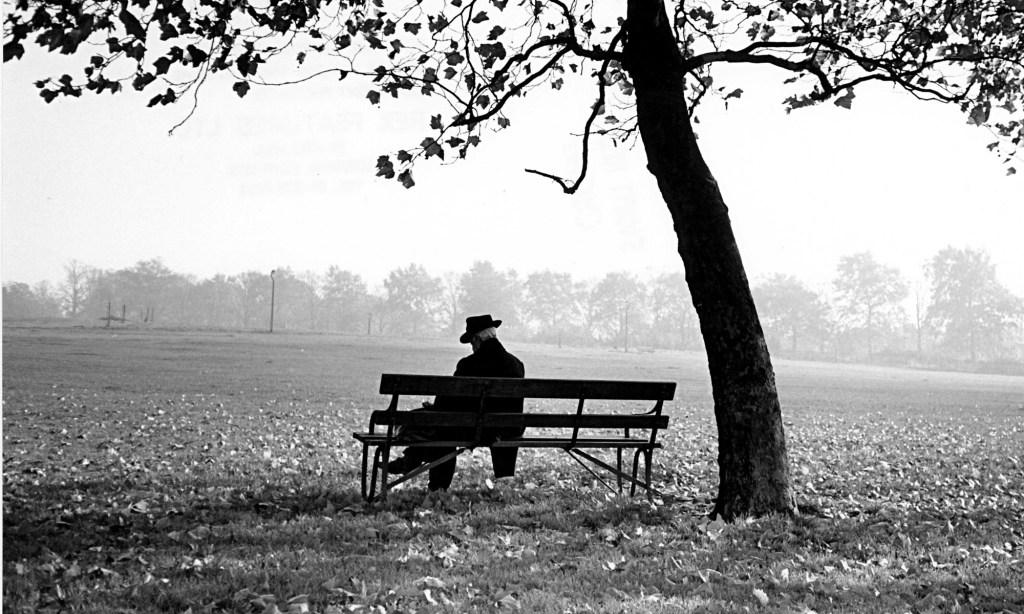
Luke 19:41-44 – Theological Tears

As Jesus approached Jerusalem and saw the city, he wept over it and said, “If you, even you, had only known on this day what would bring you peace—but now it is hidden from your eyes. The days will come upon you when your enemies will build an embankment against you and encircle you and hem you in on every side. They will dash you to the ground, you and the children within your walls. They will not leave one stone on another, because you did not recognize the time of God’s coming to you.” (New International Version)

There are Christians who believe in withdrawing as much from the world as possible, this side of heaven. There are yet others who believe in accommodating to the world, its structures and society. And there are yet others who believe the world and the church are simply two distinct realms which Christians move back and forth within, like doffing one hat and donning another.

For the moment, let’s just leave all that aside. Instead, observe the pathos of Jesus. Christ came to Jerusalem, a city with deep roots in both religion and the world. He stopped and gazed affectionately at the ancient place with a heart full of longing for what she could be, as well as a heart profoundly sad for what she presently is.

And as Jesus stood and looked at the city in all of its religious piety, as well as its worldly pungencies, he wept.

This was not a quiet shedding of a tear. No, the word “wept” means that Jesus openly cried aloud over the city. This is the kind of crying which happens when a person is in the throes of grief and lament. Jesus was expressing great emotional heaves of loud weeping.

The reason Jesus was lamenting with so much feeling was that the city did not recognize they had a gracious visit from God. The Lord looked at the city and saw all the future disaster which was coming. He knew it could be different, and he was completely undone by the city’s inability to see God, right in front of their own face.

That Jesus wept over a city is more than a deep emotional response; it is also a profound theological statement of subversion against the present order of things. Tears and crying are ways of pronouncing that the status quo of human oppression and indifference is not okay – that there is an alternative path, The Way, which leads to peace and life.

Contrary to many contemporary forms of Christian spirituality, theology and tears are not antithetical nor foreign to one another. They are related, and when practiced well, they inform each other in a full-orbed Christianity that is both holistic and holy. We can no more separate the two anymore than we can divide the humanity and divinity of Christ into parts, as if Jesus were some weird schizophrenic God-Man.

A dispassionate follower of Jesus is really no follower, at all.

Now, let’s return to our view of the world and our involvement in it. Taking some cues from our Lord Jesus, the first and foremost posture we are to take toward the worldly city is not separation, accommodation, or dual citizenship – it is, rather, to weep, to grieve and lament, to sit with and feel the immense sadness of a society askew and awry of God.

The longing Jesus had in his heart was to see the city of Jerusalem annexed and incorporated into the kingdom of God. The way of peace, of shalom on this earth, is to bring all things and all the world under the benevolent reign of God. It’s as if there are Twin Cities, like Minneapolis and St. Paul, which exist side-by-side but have different municipal structures. 

The kingdom of this world and the kingdom of God exist next to each other. Jesus wanted to bring the earthly kingdom into the peaceful and gracious realm of God’s kingdom. But the people would have nothing to do with it. Both the religious establishment and the secular authorities of the city wanted their own municipal conceptions of how things should go – and they both rejected the Christ who could bring everyone true harmony.

King Jesus is our rightful benevolent ruler. Yet, there are so many who do not, or will not, acknowledge that grace and mercy is among them if they would but only look and see.

Let us lament this world, which is chocked full of both religious and secular people who do not recognize the time of God’s visitation. May we journey with Jesus and follow him in his Passion for this world and all its inhabitants. May we sit at the feet of Jesus and imbibe his deep love for all who are estranged from God.

Blessed Father, Son, and Holy Spirit, the holy Trinity whom I serve – the world and even sometimes the church is estranged from grace – they have not recognized your gracious coming and presence. I lament such a state of things, and ask you, blessed Spirit, to draw all people to the Savior, Jesus Christ, in whose name I pray.  Amen.

Psalm 71:1-6 – How to Cope with Change and Loss

I run to you, Lord,
for protection.
    Don’t disappoint me.
You do what is right,
    so come to my rescue.
    Listen to my prayer
    and keep me safe.
Be my mighty rock,
    the place
where I can always run
    for protection.
Save me by your command!
    You are my mighty rock
    and my fortress.

Come and save me, Lord God,
    from vicious and cruel
    and brutal enemies!
I depend on you,
    and I have trusted you
    since I was young.
I have relied on you
    from the day I was born.
You brought me safely
through birth,
    and I always praise you. (Contemporary English Version)

No one gets off this planet without experiencing several events of change and loss, resulting in grief and the need to lament. Because of this reality, you would think we all acknowledge this great need of lamenting our significant losses. Yet, we don’t.

Many Christians avoid grief work. The following are just a few of the statements I’ve heard over the decades from parishioners when they experience loss:

  • “Christ is resurrected and alive. There’s victory in Jesus. No need to grieve like unbelievers.”
  • “My loved one is in heaven. No more suffering or pain. It would be selfish of me to be sad.”
  • “It’s a sin to be depressed.”
  • “I can’t let myself cry and fall apart. I need to be strong for my family.”

Those statements are very far from what we find in the biblical psalms and throughout the entirety of Holy Scripture. Consider these realities in the Bible:

  • 62 out of the 150 Psalms in the Old Testament are laments; some are communal, many are individual expressions of grief.
  • God laments. And God grieves with us. (Genesis 6:5-6; Isaiah 53:4; John 11:1-44)
  • An extended time and process of grieving was practiced by biblical characters when loss occurred. It was a normal emotional, spiritual, physical, and relational reaction to that loss. (e.g., Genesis 50:1-3)
  • Lament is an intentional process of letting go of relationships and dreams and discovering how to live into a new identity after the loss or change. There’s even an entire book of the Bible given to lamenting: Lamentations.
  • Everyone’s grief is personal; there is no one size fits all.
  • Avoiding grief, mourning, lament, and loss is totally foreign to the Bible.

Psalms of lament have a characteristic structure, distinct from psalms of praise, trust, or wisdom, like today’s psalm:

  1. Address to God: The address is usually a brief cry for help; and is occasionally expanded to include a statement of praise or a recollection of God’s intervention in the past (Psalm 71:1-3).
  2. Complaint: God is informed about the problem or experience through a range and depth of emotional, relational, and spiritual reactions to change (Psalm 71:4).
  3. Confession of Trust: The psalmist remains confident in God despite the circumstances and begins to see his or her problems differently (Psalm 71:5-8).
  4. Petition: Filled with confidence in God, the psalmist appeals to God for deliverance and intervention.  Petitioning is not bargaining with God or a refusal to accept loss; it is a legitimate seeking of help (Psalm 71:9-13).
  5. Words of Assurance: The psalmist expresses certainty that the petition will be heard by God (Psalm 71:14a).
  6. Vow of Praise: The lament concludes with the psalmist’s vow to testify to what God will do or has done through praise (Psalm 71:14b-24).

The biblical psalms do two wonderful services for us as God’s people: First, a constant stream of reading, quoting, memorizing, and meditating on them actually shapes our faith into a full-orbed, mature, and robust belief. Second, the psalms provide us with a healthy means of expressing the complete range of our human experience. 

So, then, the psalms both reflect our feelings, and, at the same time, form those feelings to know God better, cope with situations, and relate appropriately with others. 

The fourth-century Bishop of Alexandria, Athanasius, had it right about the psalms when he said: 

“Whatever your particular need or trouble, from this same book [the Psalms] you can select a form of words to fit it, so that you not merely hear and pass on, but learn the way to remedy your ill.”

St. Athanasius (297-373 C.E.), Bishop of Alexandria

Today’s psalm of lament is the expression of a person getting along in years and discovering all the limitations and weaknesses that go along with aging. It is a plea for help. Whereas in younger days the psalmist had the vigor to engage problems and enemies, now he has the realization that he must increasingly depend upon God (and others).  

Far too many people hitting the aging process do not deal with it well. The change to their bodies, even their minds, is so unwelcome that they do not cope quickly, or, sometimes, at all. They believe it silly to lament such a natural occurrence, even though those physical changes dog them day after day.

Based upon the psalms, I insist that lament is a powerful and necessary form of coming to grips with change. God has not promised us life-long health and constant energy. Rather, the Lord has promised to be with us as our refuge and help through all the vicissitudes of changing health and altered situations. 

Let praying the psalms, then, be a regimen as familiar and daily as your using your pill planner and taking your meds.

Ever-watchful God, you are a rock of refuge, a never changing reality in a world of constant change. You are my hope, Lord, and my faith has been in you all my life. I lament all the difficult changes I encounter. I can never go back to the way things were. So, please open to me a new reality where fresh hope and life can be found, through Jesus Christ my Savior. Amen.

Isaiah 61:1-7 – Better Days Ahead

The Spirit of the Sovereign Lord is on me,
    because the Lord has anointed me
    to proclaim good news to the poor.
He has sent me to bind up the brokenhearted,
    to proclaim freedom for the captives
    and release from darkness for the prisoners,
to proclaim the year of the Lord’s favor
    and the day of vengeance of our God,
to comfort all who mourn,
    and provide for those who grieve in Zion—
to bestow on them a crown of beauty
    instead of ashes,
the oil of joy
    instead of mourning,
and a garment of praise
    instead of a spirit of despair.
They will be called oaks of righteousness,
    a planting of the Lord
    for the display of his splendor.

They will rebuild the ancient ruins
    and restore the places long devastated;
they will renew the ruined cities
    that have been devastated for generations.
Strangers will shepherd your flocks;
    foreigners will work your fields and vineyards.
And you will be called priests of the Lord,
    you will be named ministers of our God.
You will feed on the wealth of nations,
    and in their riches you will boast.

Instead of your shame
    you will receive a double portion,
and instead of disgrace
    you will rejoice in your inheritance.
And so you will inherit a double portion in your land,
    and everlasting joy will be yours. (New International Version)

The message of better days ahead was a breath of fresh air to a beaten down people.

Just today I was speaking with an intensive care nurse who said, “It’s one thing to have a hard day, or know a few weeks will be difficult. It’s altogether another thing when it seems there’s no end to the hard deaths we experience.” Whenever things have gone sideways for so long, we find our lives needing restoration and renewal.

That was the situation for the ancient Israelites. They needed deliverance from their awful predicament. They longed for healing, freedom, and comfort from their grief. After centuries of a downward spiral into disobedience and going their own way, the people found themselves bereft of resources.

After you have suffered for a little while, the God of all grace, the one who called you into his eternal glory in Christ Jesus, will himself restore, empower, strengthen, and establish you.

1 Peter 5:10, CEB

The people needed the year of the Lord’s favor – the year of Jubilee. The Jubilee was supposed to occur every fiftieth year of Israel’s existence in the Promised Land. For forty-nine years there were individuals and families who either incurred debt, indentured themselves into servitude for survival, landed in prison, or ended up laboring in the fields they once owned.

According to the Law, after the forty-nine years, on the fiftieth year, the debts were erased, slaves were freed, fields allowed to rest, and the land restored back to its original owners. God’s deliverance is meant to be not only spiritual, but also very tangible and real.

Salvation is not just otherworldly – it’s also a transformation of the world we inhabit in the here and now.

The need for good news presupposes there’s been some bad news happening. The Lord deliberately gives attention to the oppressed, the brokenhearted, the captives, the prisoners, those who mourn, and the faint of heart. God is concerned for the lowly and the weak. 

It’s significant to note that Israel found themselves in such need not necessarily because they were always victims of adverse situations, but also because they failed to obey the stipulations of their covenant with God. 

We have no actual evidence the Israelites even practiced the Jubilee. After entering the Promised Land, by the time fifty years came down the pike, they had slid so far down the spiritual drain, it was completely off their radar to practice a Jubilee.

It seems no one had any intention of forgiving debts, freeing their indentured servants, giving back the land to original owners, or providing the land itself with a Sabbath rest. 

To not practice the Jubilee was to rob people of their land and practice injustice. But God loves justice and hates robbery. God pays attention to those who are not receiving very real and tangible needs for their lives. So, God speaks words of hope and deliverance for those in circumstances beyond their ability to cope.

The first few verses of today’s Old Testament lesson were the words Jesus read in the synagogue when he began his earthly ministry. Christianity observes that Jesus Christ is the ultimate fulfillment of this promise for deliverance and provision. He came to establish a Jubilee celebration that would never end.

It might be easy for some folks to overlook these verses as pertaining to them. After all, they are blessed, both materially and spiritually. They can always identify people who are in much more need than they are. But we must recognize that the maladies of our hearts are very real. There are specific conditions in our lives that leave us, not just them,in bondage and in need of restoration, renewal, and revitalization, just like the Israelites of old. 

We must name those maladies which are stuffed away in a closet of our heart, such as: the love of things and money; severed relationships; old grudges; hidden addictions; domestic violence; denial of depression; secret affairs; cutting; fear; anger; greed; and hatred. Outward smiles and small talk may hide the truth from others, but they do nothing to hide from a God for whom everything is laid bare.

It’s okay to be a glowstick, sometimes we need to break before we shine.

The good news is not just something for someone else who has “obvious” needs. The gospel must touch our lives and bring us freedom so that we can pass on that very real good news to the legion of social ills that make our world sick. 

There are people all around us who need spiritual, emotional, and material help. Yet, we will not have eyes to see them, or have hearts to help, if we are stuffing our burdens so deep within that we are blind to others.

On the other hand, we may too easily read today’s lesson in a manner it was not meant to be heard, as if we are more in need than we actually are, hearing it something like this: The Spirit of consumer choices is upon me, because the Lord has anointed me to preach good news to the middle-class. He has sent me to bind up the half-hearted, to proclaim more options for the limited, and release from Black Friday for the buyers, to proclaim the year of the Cyber-Monday. 

Perhaps we may not be so crass as to say that out loud, but we might have the tendency to misinterpret Bible passages so as to avoid our own great poverty of heart.

Whichever lens we tend to look at Isaiah’s prophecy, when we become experts at ignoring our needs and emotions, we fail to see the year of Jubilee. The stark reality is that no matter who we are, we need a biblical Jubilee.

Many people are either one paycheck, one prodigal kid, one mental health diagnosis, one serious illness, one drink, one affair, or one bad decision away from being the people we typically identify as in need – the ones that bad things happen to – the ones we do not want as next door neighbors.

We may not yet be vulnerable enough to admit our situation. So, we keep practicing the denial of our spiritual poverty. But everyone knows what a broken heart is. Everybody has a bondage they don’t want to admit. All people need renewal and restoration.

If we believe that tomorrow will be better, we can bear a hardship today.

How, then, shall we live?

Turn from the things which cause us poverty and bondage and turn toward delighting in the Lord your God. Rejoice, because God will make a sprout come up. God will cause us to grow. God will rebuild our ruined souls. God will restore the places of our lives that have been devastated. God will even renew the places that haven’t seen renewal for generations. It begins with you and me allowing the justice of God to work within us.

God can neither bring comfort to those who don’t mourn, nor turn grief into joy unless there is an acknowledgment of a dire situation. If we want to be an oak of righteousness, then there must be a confession of despair and an allowance of God’s justice through Jesus Christ to work its way in us.

Let us envision Jesus coming into our lives and replacing a tattered hat of grief with a crown of beauty. Picture the Lord placing on us a garment of praise to replace those stinky clothes of grumbling. Allow your life to display the grace of God in Christ, since we have been profoundly touched by the justice of God.

Lord Jesus, Carpenter and King, be merciful to the multitudes who today bear the indignities of injustice everywhere. Raise up leaders in every land dedicated to your righteous standards of order, equity, and justice. Grant to us the grace to fulfill our vocation of being loyal to kingdom ethics. Sharpen our intellects to pierce the pettiness of prejudice; to perceive the beauty of human fellowship. Guide our minds to a meaningful understanding of the problems of the poor, the oppressed, the unemployed, and the needy. Incline our hearts toward them, as is your heart, O Lord. May we hunger and thirst after justice always and do it in the power of the Holy Spirit. Amen.

Luke 2:1-20 – The Sound of Salvation

Host of Angels by Mike Moyers

In those days Caesar Augustus issued a decree that a census should be taken of the entire Roman world. (This was the first census that took place while Quirinius was governor of Syria.) And everyone went to their own town to register.

So, Joseph also went up from the town of Nazareth in Galilee to Judea, to Bethlehem the town of David, because he belonged to the house and line of David. He went there to register with Mary, who was pledged to be married to him and was expecting a child. While they were there, the time came for the baby to be born, and she gave birth to her firstborn, a son. She wrapped him in cloths and placed him in a manger, because there was no guest room available for them.

And there were shepherds living out in the fields nearby, keeping watch over their flocks at night. An angel of the Lord appeared to them, and the glory of the Lord shone around them, and they were terrified. But the angel said to them, “Do not be afraid. I bring you good news that will cause great joy for all the people. Today in the town of David a Savior has been born to you; he is the Messiah, the Lord. This will be a sign to you: You will find a baby wrapped in cloths and lying in a manger.”

Suddenly a great company of the heavenly host appeared with the angel, praising God and saying,

“Glory to God in the highest heaven,
    and on earth peace to those on whom his favor rests.”

When the angels had left them and gone into heaven, the shepherds said to one another, “Let’s go to Bethlehem and see this thing that has happened, which the Lord has told us about.”

So, they hurried off and found Mary and Joseph, and the baby, who was lying in the manger. When they had seen him, they spread the word concerning what had been told them about this child, and all who heard it were amazed at what the shepherds said to them. But Mary treasured up all these things and pondered them in her heart. The shepherds returned, glorifying and praising God for all the things they had heard and seen, which were just as they had been told. (New International Version)

Out of all the sounds of the season, the best of all is the sound of salvation.

The Sound of Activity

The Roman census brought a crowd of people to small village of Bethlehem. Because most were related to one another, it was like one big family reunion. There was lots of noise, with people talking, laughing, and sleeping.

We are a busy society and a busy people. The Christmas season only seems to exacerbate our busy-ness. Jesus can get lost in all the noise. We can miss the point of it all because of our preoccupations with all those seemingly necessary things in our lives. And it can be hard to hear and to listen to God. The sound of activity eventually needs to give way to another sound….

The Sound of Silence

Bethlehem was so busy that no one paid attention to the most cataclysmic event ever to take place. But out in the fields, all was quiet. The shepherds were there, quietly watching over their sheep. In the silence, they were able to experience the sound of good news.

Like a good pot of tea, we must allow the Word of God to seep in us, allowing the heat to do its work so that we might listen well to the divine voice. If we come at the Word with a cold heart, it will likely not do us a lot of good – we need to be hot and receive the Word with humility and respond to the Word with wisdom. As we allow God to seep in us, we become acutely aware of a beautiful sound….

The Sound of Joy

The shepherds heard good news of great joy from the angels. And then they shared their joy and went to worship the newborn Christ. It was a great celebration. After all, how often do a multitude of angels show up with an unsolicited concert of joy!?

We can imagine the sound of the shepherds’ unbounded joy at hearing the good news that the promised Savior has come! They just had to go and see Jesus, and then told everyone about it. And all who heard it were amazed at what the shepherds said to them.

There’s nothing quite like hearing good news, then sharing good news. Sadly, however, the story does not end there because not everyone was happy about Jesus being born as the King….

The Sound of Crying

King Herod saw Jesus as a potential rival, and he callously had every baby boy in Bethlehem killed when he found out the news. (Matthew 2:1-18)

We must keep in mind that not everyone is joyous at Christmas. Past grief associated with the holiday season can make it difficult to participate in the celebration. So, we need to be aware of the lamenting folks around us and hear their sad crying so that we can be agents of comfort and grace.

And let us also not forget, another sound of crying is the baby Jesus. Yes, he really cried. Jesus is truly human with all the sounds and experiences that go with being human. (Hebrews 2:10-17)

Conclusion

The sounds of activity, silence, joy, and crying are all part of Christmas and the birth of Jesus. To truly experience a full-orbed Christian spirituality, we will pay attention to the range of sounds occurring around us at this time of year.

Eternal God, who breathed this world into being, and placed stars into the heavens: You are the God who entrusted Jesus to the care of ordinary people, becoming vulnerable so that we might know the power of Love – a mystery so deep it is impossible to grasp, and so beautiful it is impossible to ignore.

Circle us, Lord, with the light of your presence, bright within this dark world. Enable us to be overcomers of fear and temptation, and victors over sin and despair. Circle this world with the joy of your salvation. Where there is sickness and disease, bring healing. Where there is hunger and despair, bring hope. Where there is bondage, bring freedom. Lord of our salvation, circle this world with the light of your presence. Amen.