Don’t Show Favoritism (James 2:8-13)

Yes indeed, it is good when you obey the royal law as found in the Scriptures: “Love your neighbor as yourself.” But if you favor some people over others, you are committing a sin. You are guilty of breaking the law.

For the person who keeps all of the laws except one is as guilty as a person who has broken all of God’s laws. For the same God who said, “You must not commit adultery,” also said, “You must not murder.” So if you murder someone but do not commit adultery, you have still broken the law.

So whatever you say or whatever you do, remember that you will be judged by the law that sets you free. There will be no mercy for those who have not shown mercy to others. But if you have been merciful, God will be merciful when he judges you. (New Living Translation)

Playing favorites is always a bad thing; you can do great harm in seemingly harmless ways.

Proverbs 28:21, MSG

One of my bedrock foundational unshakable beliefs is that God’s big world spins on the axis of grace. Without grace we would all be living in some nightmarish dystopian novel just trying to survive. Grace is the force which overwhelms and overcomes everything. 

When I was growing up, we had a dog named Sam. Sam loved being on the farm. More than once he tussled with a skunk. In those times, I could barely get close enough to clean him up because he stunk so badly.  Favoritism stinks, and God has a hard time getting close to us when we show partiality to others. God is going to clean us up when smelling the stench of discrimination on us.

Showing favoritism to some over others is evidence the dog is running away from the bath of grace. To develop relationships and interact with people the way God wants us to, we must be free from prejudice.

Favoring the rich over the poor stinks because God cares about those trapped in poverty. When Jesus began his ministry, he lifted-up the importance of poor folk by placing himself in the position of extending grace to them:

The Spirit of the Sovereign Lord is on me, because the Lord has anointed me to proclaim good news to the poor. (Isaiah 61:1; Luke 4:18, NIV)

In the Old Testament, there are seven different words for the “poor” because poverty was a pervasive reality (and still is!). The various reasons for poverty range from being born into poverty, being lazy, or being oppressed and/or in slavery.

The types of poor persons run the gamut from simple beggars to the pious and humble poor. These spiritual poor persons were called in biblical times the anawim” (Hebrew עֲנָוִ֣ים). The anawim are humble and gentle folk caught in grinding poverty with no other option but to put their trust in God.

The mistreatment, exploitation, and inattention to the needs of the poor are a chief reason why Holy Scripture is filled with references about how to treat them. The anawim are dear and near to the heart of God:

“Poor persons will never disappear from the earth. That’s why I’m giving you this command: you must open your hand generously to your fellow Israelites, to the needy among you, and to the poor who live with you in your land.” (Deuteronomy 15:11, CEB)

“If you hire poor people to work for you, don’t hold back their pay whether they are Israelites or foreigners who live in your town. Pay them their wages at the end of each day because they live in poverty and need the money to survive. If you do not pay them on time, they will complain about you to the Lord, and he will punish you.” (Deuteronomy 24:14-15, CEV)

Listen to this, you who rob the poor
    and trample down the needy!
You can’t wait for the Sabbath day to be over
    and the religious festivals to end
    so you can get back to cheating the helpless.
You measure out grain with dishonest measures
    and cheat the buyer with dishonest scales.
And you mix the grain you sell
    with chaff swept from the floor.
Then you enslave poor people
    for one piece of silver or a pair of sandals.

Now the Lord has sworn this oath
    by his own name, the Pride of Israel:
“I will never forget
    the wicked things you have done!” (Amos 8:4-7, NLT)

Nothing gets God’s hackles up more than unjust and unfair favoritism which is devoid of mercy and grace toward the poor. It all stinks to high heaven, and when God smells it, divine egalitarian power is not far behind.

It is the poor in spirit with no trust in physical resources who will enter the kingdom of heaven. The humble person gives grace to another, even though the person cannot offer something in return.

It’s easy to be merciful to people who have a deal with you about scratching each other’s backs. However, it is altogether a different thing to be gracious simply because it’s the right thing to do and pleases the heart of God. 

God cares about the condition of our souls and not the balance of our bank accounts. Inattention to the poor and needy only betrays a heart of unjust favoritism – a materialistic heart full of greed. Does money change you?

“Most people are convinced that gaining a lot of money … wouldn’t change who they are as people. Yet, a mounting body of research is showing, wealth can actually change how we think and behave—and not for the better. Rich people have a harder time connecting with others, showing less empathy to the extent of dehumanizing those who are different from them. They are less charitable and generous. They are less likely to help someone in trouble. And they are more likely to defend an unfair status quo. If you think you would behave differently in their place, meanwhile, you are probably wrong: These are not just inherited traits but developed ones. Money, in other words, changes who you are.”

Boston Globe, 2012

The University of Minnesota’s Carlson School of Management found in their research that even the mere suggestion of getting more money makes people less friendly, less sensitive to others, and more likely to view some groups of people as inferior to others. 

Another series of studies from the University of California at Berkley concluded that wealthier people tend to be less compassionate toward others in a bad situation than people from lower-class backgrounds. Their research concluded:

“If you win the lottery and you want to avoid becoming an insensitive jerk, there is a simple solution: Give at least half the money away.” 

Some poor people, as in the days of the Apostle James, are willing to put up with being treated unfairly so they might get a piece of the rich person’s pie. Favoritism ignores the sin in others to gain something from them. God says that is stinking thinking.

Favoritism is a violation of God’s law. The entire law is summed up in two commands: Love God and love neighbor. Favoritism violates our neighbor, and therefore, is sinful disobedience of God. Any needy human we encounter is our neighbor – no matter their social or economic status, their ethnicity, race, gender, or anything that identifies them as different. They are to be helped when we can do so.

We are to speak and act with mercy because we will eventually have to face the Judge. God is always watching us – every word and every action. Judge Jesus will respond to how we have treated each person we encountered and how we talked about other people when they were not around. We will all appear before Christ at the end of the age and must give an account of ourselves. (2 Corinthians 5:10)

Words are important, so they ought to be full of grace, seasoned with salt. Showing mercy instead of favoritism is the way love expresses itself.  Mercy is best given when we have first received it ourselves from God. A heart touched by the grace of the Lord Jesus is one which will stand in the judgment.

We rid ourselves of favoritism’s stench through the cleansing bath of God’s mercy in Jesus Christ. There is grace available if we receive it. God is the expert in transforming lives, renewing minds, and putting to death the pride of favoritism. The work is done with needed grace and compassionate mercy.

So, make it your goal to be a grace-giver, to have a willing heart that seeks to emulate the mercy of Christ. The bath of mercy and grace takes away the stank of prideful favoritism and leaves us with the sweet aroma of love, justice, peace, and joy in the Holy Spirit.

May it be so to the glory of God. Amen.

Be Real, Not Fake (Titus 1:5-16)

The reason I left you in Crete was that you might put in order what was left unfinished and appoint elders in every town, as I directed you. 

An elder must be blameless, faithful to his wife, a man whose children believe and are not open to the charge of being wild and disobedient.Since an overseer manages God’s household, he must be blameless—not overbearing, not quick-tempered, not given to drunkenness, not violent, not pursuing dishonest gain. 

Rather, he must be hospitable, one who loves what is good, who is self-controlled, upright, holy and disciplined. He must hold firmly to the trustworthy message as it has been taught, so that he can encourage others by sound doctrine and refute those who oppose it.

For there are many rebellious people, full of meaningless talk and deception, especially those of the circumcision group. They must be silenced, because they are disrupting whole households by teaching things they ought not to teach—and that for the sake of dishonest gain. One of Crete’s own prophets has said it: “Cretans are always liars, evil brutes, lazy gluttons.” This saying is true.

Therefore rebuke them sharply, so that they will be sound in the faith and will pay no attention to Jewish myths or to the merely human commands of those who reject the truth. To the pure, all things are pure, but to those who are corrupted and do not believe, nothing is pure. In fact, both their minds and consciences are corrupted. They claim to know God, but by their actions they deny him. They are detestable, disobedient and unfit for doing anything good. (New International Version)

Everything in life needs some decency and order – including the church. The bulk of the Apostle Paul’s letter to Titus gives needed instructions about structuring the life of the church, along with some warnings about those who would attempt to disrupt that good order.

One of the most important aspects of church life and organization is to appoint competent persons with good character and sound doctrine to oversee and serve the congregation. The leaders of the church are to be mature, unselfish, concerned for the common good of all the parishioners, and able to handle Holy Scripture by strengthening the faithful and rebuking the faithless.

It takes solidly worthy leaders to counter people who are opposed to doing and believing things that are inconsistent with apostolic teaching. Paul had neither the tolerance nor the patience for rebellious folk who sought to deceive the faithful. So, he told Titus to silence, rebuke, and put a stop to such persons.

Orthodox icon of St. Titus the Apostle, the first Bishop of Crete

The rebellious persons, however, were not so easy to spot for many in the church – which is why Paul instructed Titus to deal with false teachers forcefully. They were not the real article, but came across as genuine.

Sometimes, you cannot tell a fake by the external appearance. In Christianity, and within the church, a person might give a good outward performance, but actually not be the real deal because they are full of bitterness and death on the inside with a heart far from God.

A sobering reality for devoted believers in God is that the church and Christianity can have people who are religious on the outside but not really Christ followers on the inside. Claiming to know God isn’t the same as actually knowing the Lord. It’s like putting perfume in a vase – it might smell like flowers but the flowers aren’t really there.  

The Apostle was pointed about how to handle those of the “circumcision group” because they were legalists who put heavy spiritual loads on people and were unwilling to help them carry those burdens. Paul, following the example of the Lord Jesus, was always laboring and challenging people into a genuine, real righteousness from the heart that would submit to God’s kingdom. 

And, much like Jesus before him, Paul kept having the Judaizers in the church undermining him, talking behind his back, and stirring up resentment against him. 

The rebellious people of the circumcision group were not helping believers know God better through active service, but only tried to talk a good line. Paul pointed them out to Titus because such persons were not strengthening the faith of others and enabling them to live a sound spiritual life.

The Judaizers did not practice what they preached – and even what they taught was neither gentle, nor had any grace. People need one another in the church to truly live for God; but if there are double standards, then heavy loads aren’t getting carried because some individuals think they are above helping, or think too little of themselves and believe God could not use them. 

In both cases the person declares, “Someone should do something!” Someone should give, someone should pray, someone should visit, someone should tell that person about Christ, someone should help. To which Paul (and Jesus) would say that someone is you.

We may believe we are genuine and think we are being helpful when we really are not. Whenever we plaster on fake smiles, only obey and serve when others are looking, and/or pretend like everything is just peachy keen when we are dying inside, then we are in the same category as the Judaizers. We have become in need of putting aside how we look to others and ask the God of grace to have mercy on us. 

It’s possible to be so obsessed about the right thing to say that we never say what is really on the inside because we think it isn’t spiritual enough and we fear looking bad. We then put up a spiritual façade, live into a false self, thereby and eventually becoming a false teacher.

The rebellious in the church are those who seek power, status, authority, and prestige. Respect and honor from others is everything to them, so they want the positions of prominence and insist on being recognized for whatever they say or do in the church.

But facades will not work for Christianity. The church is about integrity, mission, worship, and service – and not about acting with the spectator in mind, and seeking to elicit praise and respect from others. For such persons, it does not matter what’s on the inside as long as the outside looks good. 

Instead of being a liar (one whose outward actions and inner dispositions don’t match) and an evil brute (not acting with anyone else’s needs in mind or at heart) and a lazy glutton (always receiving but never giving) instead be a servant of others with a good character, a basic understanding of Holy Scripture, and a heart to know and love God. 

If there is a job that no one wants to do, I’ll do that job.

If there’s a lonely person, I’ll be with them.

If there’s a parking space up close, I’ll park in the back of the lot.

If there’s a need is someone’s life, I’ll meet that need.

If there’s a hardship someone has to endure, I’ll help carry that hardship.

If there’s a sacrifice to be made, I’ll make that sacrifice. Amen.

The Parable of the Vineyard Workers (Matthew 20:1-16)

The Workers in the Vineyard, by Rembrandt, 1637

“For the kingdom of heaven is like a landowner who went out early in the morning to hire workers for his vineyard. He agreed to pay them a denarius for the day and sent them into his vineyard.

“About nine in the morning he went out and saw others standing in the marketplace doing nothing. He told them, ‘You also go and work in my vineyard, and I will pay you whatever is right.’So they went.

“He went out again about noon and about three in the afternoon and did the same thing. About five in the afternoon he went out and found still others standing around. He asked them, ‘Why have you been standing here all day long doing nothing?’

“‘Because no one has hired us,’ they answered.

“He said to them, ‘You also go and work in my vineyard.’

“When evening came, the owner of the vineyard said to his foreman, ‘Call the workers and pay them their wages, beginning with the last ones hired and going on to the first.’

“The workers who were hired about five in the afternoon came and each received a denarius. So when those came who were hired first, they expected to receive more. But each one of them also received a denarius.When they received it, they began to grumble against the landowner. ‘These who were hired last worked only one hour,’ they said, ‘and you have made them equal to us who have borne the burden of the work and the heat of the day.’

“But he answered one of them, ‘I am not being unfair to you, friend. Didn’t you agree to work for a denarius? Take your pay and go. I want to give the one who was hired last the same as I gave you. Don’t I have the right to do what I want with my own money? Or are you envious because I am generous?’

“So the last will be first, and the first will be last.” (New International Version)

Fairness

We humans have an innate sense of right and wrong, justice and injustice. We want life to be fair. It disturbs us when there is favoritism, discrimination, and preferential treatment. When things seem off, and others seem more privileged, envy can easily creep in and settle in our bones.

The envy can go even deeper. For example, is it fair that any child should struggle with health issues like cancer, epilepsy, and mental disorders? Is it fair to have healthcare disparities? Is it fair to have a spouse taken from you before their time? Is it fair to lose your job through no fault of your own? Is it ever fair to be treated like a second-class citizen?

Pat answers to people’s genuine struggles will not do, such as “You just need to work hard and hope for the best;” “We have to take what is given us and accept these things;” “Think of all those starving children in India;” or the more crass, “Suck it up buttercup; life was never meant to be a rose garden.”  Those statements are simply unhelpful.      

At the heart of envy is the belief that others are getting something that I deserve. “It isn’t fair!” we cry. Yet, God does not always operate according to our standards of fairness. God’s very nature is to be generous and full of grace. The parable which Jesus told about the vineyard workers is a story not of unfairness, but a story of generosity and grace. It’s all in how you look at it.

A normal workday in the ancient world was ten hours, not counting breaks. The workday began at 6:00am. A denarius was a typical day’s wage for laborers. The landowner went out at the third hour, 9:00am; the sixth hour, noon, etc. He kept returning to hire more workers even up to the last hour of the workday. Laborers were always paid at the end of the day.

In this parable, the last workers were paid first, which prompted the first workers hired to think they would be getting more, even though they had been promised a denarius. So, they grumbled about not getting more. They thought the landowner was not being fair.

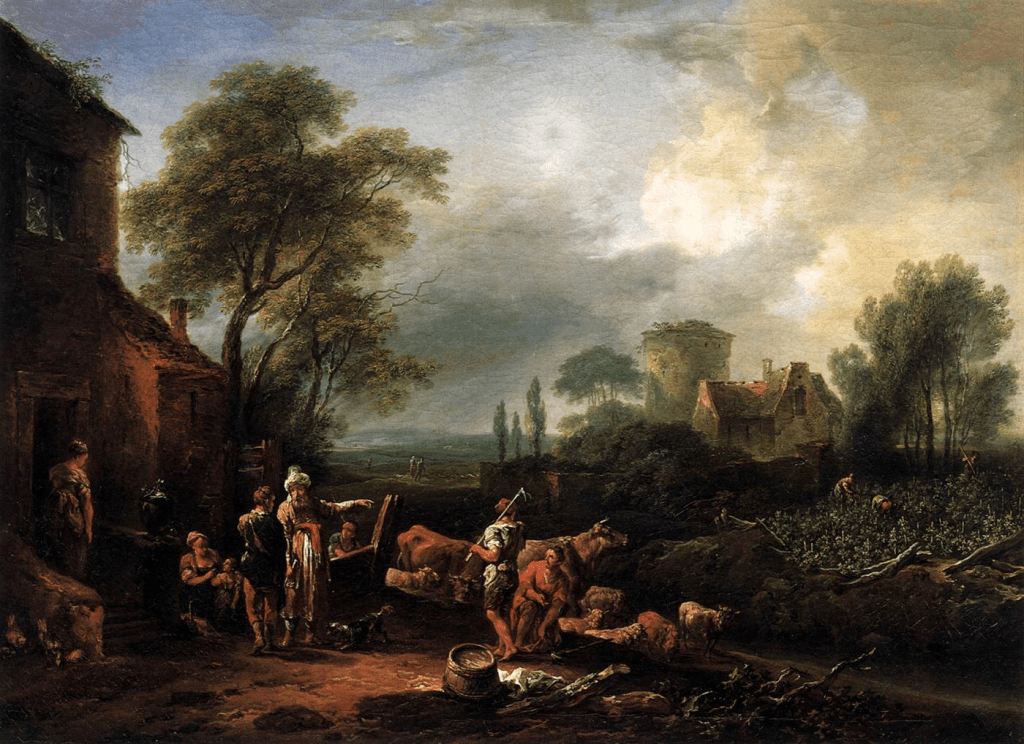
Parable of the Workers in the Vineyard, by Johann Christian Brand, 1769

Complaining

Grumbling. Complaining. Murmuring. It is the bane of our existence. Decades ago, when gas station attendants still filled tanks for customers, I was working at a station and had a lady go berserk on me for not checking her oil and cleaning her windshield, because I did it for the car in front of her. Even though there was a sign right in front of her that said checking oil and cleaning windshields is only done upon request, the lady thought she was getting gypped. 

In truth, the landowner did not cheat nor defraud the workers in any way. He paid the agreed upon wage, just like he promised. Should he want to pay everyone the same even though the amount of work was different was his own business.

The problem was not with the owner, it was with the worker’s envy of the owner’s generosity toward the others. God distributes gifts because God is gracious, not because we have earned anything. Our standard of fairness is not the rule of the kingdom of God – grace is.

Grace

Deep down many believe we control our destiny, and that we save ourselves by what we do. We discern that if we serve God all our lives, in the end, God will reward us. We believe that our pious activities, our acts of service and our work for the Lord, will bring us salvation, or, at least a leg up in the kingdom of God over others who have not worked as hard or as long as we have. After all, we do the right thing.

So, what about those who have not figured out Christianity… those who do not have the correct or proper beliefs… or those who have not straightened out their lives? According to a worldview of human fairness, they are out of luck. They should be in church. They should work harder, faster, and better. Then, they could get their lives in order. If they would only understand fairness, we reason, then all would be well.

But there is a problem, because the parable of the workers told by Jesus seems to be saying that is not how it works at all.  Jesus seems to be saying that grace and grace alone saves, that God’s amazingly naïve and irresponsible grace is available to anyone and everybody. And that troubles the workers to no end. 

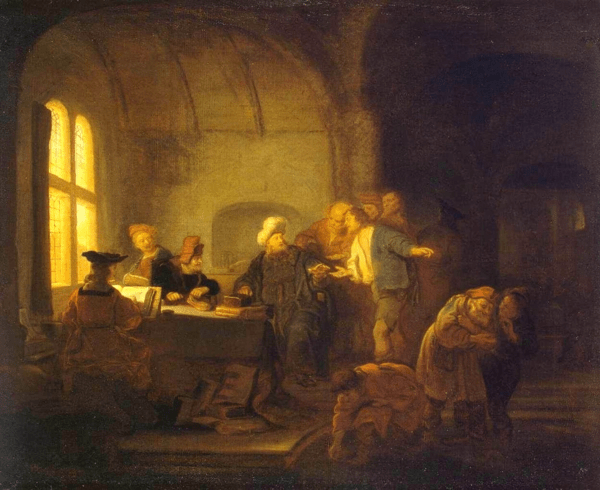
Parable of the Workers in the Vineyard, by Solomon Koninck, c.1648

What’s in it for me?

Whenever we run headlong into God’s unfair grace and see that God’s way of doing things is so far removed from our way, there is bound to be grumbling. After all, if God is going to run a vineyard like the one in the gospel lesson and give everybody the same pay regardless of their actual work hours, then what’s the use of getting up early in the morning to work? 

What is the good of sitting in church, listening to sermons from a crazy preacher who is no better than us, if these outsiders, these Johnny-and Jane-come-lately’s can waltz in at the last minute and receive the same treatment as the rest of us? For many church folks who diligently serve, it’s not fair to pay so much attention to outsiders and build ministry around people who aren’t even here, who don’t yet know Jesus.

The conclusion and point of the parable: The last will be first, and the first will be last. In Luke’s prodigal story, the elder brother grumbles and gripes: “All these years I’ve been slaving for you and never disobeyed your orders.  But when this son of yours who has squandered your property with prostitutes comes home, you kill the fatted calf!”  It is the firstborn son that complains. (Luke 15:11-32)

In both the parable of the prodigal son and the parable in today’s lesson, “good” people are the ones who fail to see the heart of the Father and of the landowner. The “firsts” got off track because, over time, they forgot the kingdom hinges on grace, not effort, on not simply doing the right things over a long period of time.

Who’s in control?

God controls the flow of mercy, not us. 

We might be surprised in heaven with those already sitting at God’s banquet table, and equally surprised with who is not there. Resentment can move us away from the table of mercy God is preparing. The problem comes whenever we think we are above other people.  We might be sinners, but we are not as bad as some other people are!  We commit ordinary sins, not mass murder!

Here is the unvarnished truth: God does not owe you nor I a thing, and God cares about all kinds of people, not just us and people who think and live like we do. Our hearts need to be big enough to center ministry around other people who are different than us.

If our hearts are small, we easily get jealous when God pays attention to prodigals and profligates. Grace becomes too repugnant a doctrine for us.

The gospel of Jesus Christ is about grace. Life is not all about being decent or even moral; and it is certainly not about our own goodness. The gospel is about being steeped in and surrounded by the grace of God in Christ, so that we, in turn, can show others grace. Grace is the way God deals with us beyond what we deserve or feel we have earned. 

Grace is unfair; we get what we do not deserve. 

May we allow God’s grace to so permeate our hearts and lives so that we will give it to others as freely as we have received.

Praise be to you, almighty and everlasting Father of our Lord Jesus Christ. In Christ, you have given us every spiritual blessing in heaven – you chose us before the world was made, and in love, to be your holy people. It pleased you to make us your own children through Jesus Christ. 

So we praise you because of your wonderful grace, given to us freely, in Christ, the one you love. We have forgiveness of sins because of this lavishly rich grace. Amen.

Jesus Intervenes (Matthew 19:23-30)

Orthodox depiction of Jesus and the rich young ruler

Then Jesus said to his disciples, “I assure you that it will be very hard for a rich person to enter the kingdom of heaven. In fact, it’s easier for a camel to squeeze through the eye of a needle than for a rich person to enter God’s kingdom.”

When his disciples heard this, they were stunned. “Then who can be saved?” they asked.

Jesus looked at them carefully and said, “It’s impossible for human beings. But all things are possible for God.”

Then Peter replied, “Look, we’ve left everything and followed you. What will we have?”

Jesus said to them, “I assure you who have followed me that, when everything is made new, when the Human One sits on his magnificent throne, you also will sit on twelve thrones overseeing the twelve tribes of Israel. And all who have left houses, brothers, sisters, father, mother, children, or farms because of my name will receive one hundred times more and will inherit eternal life. But many who are first will be last. And many who are last will be first. (Common English Bible)

We all have a chronic struggle and relapse with some besetting shortcomings. And we compulsively do them even though they harm us.

Whether it’s an addiction (alcohol, illicit drugs, etc.) or things we don’t readily notice as addictive (gossip, food, shopping) we need to be weaned off our damaging obsessions. In Holy Scripture, the most pervasive and compulsive vice is the addiction to wealth and money.

Everyone has their own unique tussle with money. If our initial knee-jerk reactions to money issues is to think of someone else (“I don’t have as much money as…” or, “So-and-so really has a problem with this…”) then this is what we call denial. Truth be told, all of us offer some disclaimer about how our trust is not in paychecks, bank accounts, and material stuff. For me, money buys books, of which my voracious appetite is never satiated.

Even people who truly have little money and scant resources can have an addiction to money. They think about money and wish for it to an unhealthy degree, as if wealth is the thing that will make them happy. Folks in denial rarely have any idea how much they harm others, themselves, and even God. In fact, the consistent witness of the early church fathers is that the sheer accumulation of stuff is the same as stealing from the poor.

Sometimes, because of denial, people need an intervention – and to be jolted back to their senses. Intervention is a gift. Someone cares enough to intervene. Yet, many interventions don’t work because the person can walk away and refuse to change.

Jesus performed an intervention with a rich young man (literally, a twenty-something). The young man was obsessed with wealth and money, but didn’t see it. He thought of himself as godly and spiritual. It’s really a sad story because the rich man walked away unchanged by his encounter with Jesus. He failed to see himself as desperately needing to change. He held to his denial. (Matthew 19:16-22)

Jesus and the Rich Young Man by Chinese artist, 1879

Jesus exposed the rich young man’s divided loyalties of trying to serve both God and money. He would have to choose between the two masters. And this is our choice, as well.

God wants an undivided heart and loyal allegiance. Jesus is looking for those who are poor in spirit and recognize their great need for God, rather than believing they are okay and just need to add a little Jesus to their lives. God wants spiritual beggars who understand their desperate situation and do not practice denial by sugar-coating their actual spiritual state.

Just like an addict who either cannot or will not give up the addiction, the rich young man would not give up his disordered love for money and possessions. So, Jesus intervened. Christ doesn’t ask everybody to do exactly as he called the rich young man to do. For example, Jesus asked neither the wealthy Zacchaeus to do it, nor the disciple Peter to sell his fishing business.

However, Jesus does ask all of us to do what seems impossible and let God meet our needs.

Christ had the original come-to-Jesus-meeting with his disciples in debriefing about his conversation with the rich man. If it is so impossible and so difficult for a rich person to be saved because his wealth gets in the way, who then can be saved, the disciples wondered? We cannot save or redeem ourselves. We need grace. We need help.

So serious is Jesus about this business of genuine discipleship, about what it really takes to follow God, that he repeated himself using a colorful illustration: It’s easier for a camel to go through the eye of a needle than for a rich man to enter the kingdom of God. 

Jesus wants us, who have lots of stuff, bank accounts, and money to see ourselves in the illustration. Only the discouraged, the hopeless, and the helpless will see their absolute need for grace and will seek the miracle of salvation Jesus offers.

Peter, always the big mouthpiece for the disciples, blurts out that they have left everything to follow Jesus. So, what then will there be for the disciples? What’s in it for me?

We may avoid the idol of money only to find ourselves with the idol of pride. Twentieth-century theologian, Reinhold Niebuhr, once said that a person had to achieve a great deal of good to be able to commit the sin of pride.

Yet, grace always has the last word. Jesus gives grace and assures us of reward even when we are stinkers by asking prideful questions. 

“The promise of a hundredfold recompense does not seem to square with experience. Usually those who for the testimony of Christ are deprived of parents or children and other relatives, or their marriage partners, or have lost all their money, do not recover but struggle out their life in lonely and deserted exile and in poverty. But I reply that if anyone rightly assesses God’s grace by which he alleviates the miseries of His children he will confess that is to be preferred to all the riches of this world.”

John Calvin

The first step in facing any harmful compulsion is to be honest about it – without telling our story in a way that makes us look surprisingly good so that others are pleased with us.

Life is about following Jesus. To follow Jesus, we must not be in denial. Perhaps the best way to express our faith is to tell someone about our obsessions to compulsively work in order to feel better and pad our savings; or that we are afraid to charitably give because we worry about the future; or that we love to buy things we don’t really need, so that we’ll feel better.

An honest awareness of our compulsions sometimes causes us to feel awful about ourselves. We may disparage ourselves for always screwing up, never saying “no” to others, or feeling unable to stop the anxiety.

Yet, grace abundantly overwhelms any and all addictions, shortcomings, and pride when it comes money or anything else. God has unlimited patience with people; Jesus never tires of inviting us to follow him. God’s love and acceptance is not based on our screw-ups, but on Christ’s forgiveness through the cross.

Allow the words of Jesus to sink deep into your life so that you ooze the grace of God in your life.

Camels cannot pass through the needle’s eye by means of dieting, positive thoughts, or luck. It happens not because the camel can squeeze through the narrowness of the needle’s eye but because there is a wideness in God’s mercy.

God’s grace will pull you through. Unlike the rich young man, once you hear and understand that piece of delightful news, you do not walk away sad but with boundless joy.

God of wisdom, help me in the mess of my finances; in my fear of taking charge of the resources entrusted to my care; in my preference for ignorance  over honest acknowledgment of the ways I use and fail to use my wealth; in my anxiety over debt, and in all the pressures of my financial life.  

Help me to take one step at a time toward honoring you through my use of money and honoring others from whom I buy and borrow. Make me humble to seek counsel, grateful for my abundance, prudent with my limited means, and patient with myself as I seek to be a better steward of all you have given me. Amen.