Luke 4:14-30 – Why Is Our Ministry Important?

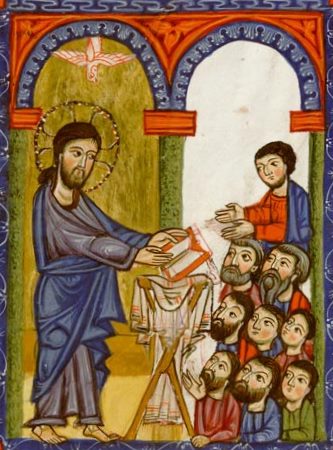
Jesus Unrolls the Scroll in the Synagogue, by French artist James Tissot (1836-1902)

Jesus returned to Galilee in the power of the Spirit, and news about him spread through the whole countryside. He was teaching in their synagogues, and everyone praised him.

 He went to Nazareth, where he had been brought up, and on the Sabbath day he went into the synagogue, as was his custom. He stood up to read, and the scroll of the prophet Isaiah was handed to him. Unrolling it, he found the place where it is written:

 “The Spirit of the Lord is on me,
    because he has anointed me
    to proclaim good news to the poor.
He has sent me to proclaim freedom for the prisoners
    and recovery of sight for the blind,
to set the oppressed free,
     to proclaim the year of the Lord’s favor.”

Then he rolled up the scroll, gave it back to the attendant and sat down. The eyes of everyone in the synagogue were fastened on him. He began by saying to them, “Today this scripture is fulfilled in your hearing.”

All spoke well of him and were amazed at the gracious words that came from his lips. “Isn’t this Joseph’s son?” they asked.

Jesus said to them, “Surely you will quote this proverb to me: ‘Physician, heal yourself!’ And you will tell me, ‘Do here in your hometown what we have heard that you did in Capernaum.’”

“Truly I tell you,” he continued, “no prophet is accepted in his hometown. I assure you that there were many widows in Israel in Elijah’s time, when the sky was shut for three and a half years and there was a severe famine throughout the land. Yet Elijah was not sent to any of them, but to a widow in Zarephath in the region of Sidon. And there were many in Israel with leprosy in the time of Elisha the prophet, yet not one of them was cleansed—only Naaman the Syrian.”

All the people in the synagogue were furious when they heard this. They got up, drove him out of the town, and took him to the brow of the hill on which the town was built, in order to throw him off the cliff. But he walked right through the crowd and went on his way. (New International Version)
Jesus was the hometown boy of Nazareth, the rising star who was putting the small village on the map. He walked into the synagogue on the Sabbath with the people all watching with pride, their chests puffed with delight over one of their own making it to the big time. 

It just so happened that on that day the Old Testament reading was from the prophet Isaiah – a prophecy of grace and healing that fit the budding ministry of Jesus. Here was the hope of Israel. It was all bunnies and butterflies, until Jesus decided to say a few words to them all….

Jesus took the prophecy of Isaiah about proclaiming liberty to captives and the oppressed and then applied it, not to his fellow Jews who were present, but to, of all people, Gentiles! 

Jesus just had to open his mouth and point out that in the days of Elijah, the prophet was sent to a Gentile woman. In addition, Jesus let everyone know the prophet Elisha cleansed a Gentile. The gathered synagogue worshipers understood exactly what Jesus was doing – claiming to be the ultimate prophet, sent for those people. 

It was too much for the people gathered for worship. All hell broke loose as the “worshipers” became so angry and insolent that they drove Jesus out of town and tried to kill him. Jesus had that kind of effect throughout his earthly ministry by saying and doing the unexpected. 

The people of Nazareth seemed to have always interpreted the message of Isaiah and the prophets as being for themselves, not others. Whenever any believer or church loses sight of a biblical message and re-interprets it as being for only us, then we end up like the Nazarenes of old who did not recognize Jesus for who he really is and what he really came to do. 

Some believers and churches need a question asked of them: Are you ready to throw Jesus off a cliff?

Our faith is not merely individual; it is meant to impact the world. In the beginning the earth was created by God and it was good. Yet, it didn’t take long for things to go sideways. The fall of humanity into sin and disobedience brought death and decay to the world. Ever since, the human condition has been dominated by guilt, shame, indifference, violence, taking advantage of others, pride, and selfishness.

However, God did not leave the world to its own demise. The Lord began the process of reconciliation, culminating in the person and work of Jesus Christ. And now, Christians are a new society, the community of the redeemed, the church. As the people of God, we are called to do justice, love mercy, and walk humbly.

Jesus came to save us from our predicament, and to proclaim good news to the poor, freedom for prisoners, recovery of sight for the blind, and freedom for those oppressed by others. The kingdom of God is to extend over every square inch of this earth, every nation, every race and ethnicity, every institution and organization, and every individual. It all belongs to God’s rule and reign in Christ.

Jesus has made us, his disciples, ambassadors of reconciliation. Ever since the fall of humanity, God is reclaiming and redeeming, even now, all of creation back to himself. The Lord is seeking to bring people back into the harmony that existed in the Garden of Eden. Although this will only be fully realized when Christ returns, we presently now have the responsibility to be gracious agents of God’s kingdom, restoring all areas of this world and all people to their rightful place, at peace with God.

There is every reason to hope because a new world began emerging at the resurrection of Jesus Christ from death. As Christians, we accept struggle and hardship in this life and endure all things because, even though disease, destruction, and death claim so many lives, the love of God in Christ will never change nor die.

Because of the risen and ascended Christ, who is the light for all people everywhere, Christ’s disciples are able to respond to the great mass of human suffering with compassion.

This is important since compassion might not be our initial reaction to human suffering. Like the villagers in Christ’s hometown of Nazareth, we can chafe at the thought of compassionately reaching out to the poor, the prisoner, the blind, and the oppressed. We might either resist ministry to the “other” because we believe they caused their own poverty and adverse situation, or because we simply don’t believe we are wired for ministry to them.

If you knew me before I was a Christian, you might not recognize me. I didn’t love anybody. I had no compassion for anyone. It wasn’t until I experienced the love and compassion of Jesus Christ that my life turned upside-down. I began responding to human need with a deep concern. I sought to connect with all kinds of people. I wanted to make a difference in the world.

Back then I was (and to some degree still am) something of an agitator. Maybe that’s one reason I am so drawn to the compassion of Christ. For compassion is actually a radical form of criticism, declaring that our pains and our hurts are to be taken seriously, that they are not to be accepted as natural but abnormal and unacceptable for the human condition. It’s not supposed to be this way!

The compassion of Jesus needs to be understood as a totally subversive action against the kingdom of darkness, a bold and daring affront against all that keeps people locked into systems of oppression and poverty.

The world needs to experience the Church everywhere as a place and a people of good news – expressed in both word and deed – in which they are hospitably invited into the very life of God and experience the fullness of peace and joy in the Holy Spirit. In other words, we are not only in the personal transformation business, but we are also in the business of transforming society so that the common good of all persons is upheld.

As the church proclaims and seeks to establish the kingdom of God, it comes to see that all human need is important – whether it is spiritual, physical, mental, or emotional. We “do justice” by helping others experience the reality of God’s love in Christ and compassionately meet their holistic needs. We “love mercy” by showing hospitality and inviting folks very different from ourselves into our lives. We “walk humbly” with our God by emulating the compassionate ministry of Jesus to all people.

What is your “compassion quotient?” That is, how much compassion do you have in your life right now?

What are some tangible ways we can work on raising our level of compassion and demonstrating compassionate action to those around us and in our city?

It is questions like these that enable us to sync our lives with the heart of Jesus, who still desires to bring good news to the world.

Almighty God, you sent your Son Jesus Christ to reconcile the world to yourself: We praise and bless you for sending your people in the power of the Spirit to preach the Gospel to all nations. We thank you that in all parts of the earth a community of love has been gathered together by many prayers and labors, and that your people share in your mission of restoring all people to unity with yourself and one another in Christ; for the kingdom and the power and the glory are yours forever. Amen.

Matthew 2:1-12 – Epiphany of the Lord

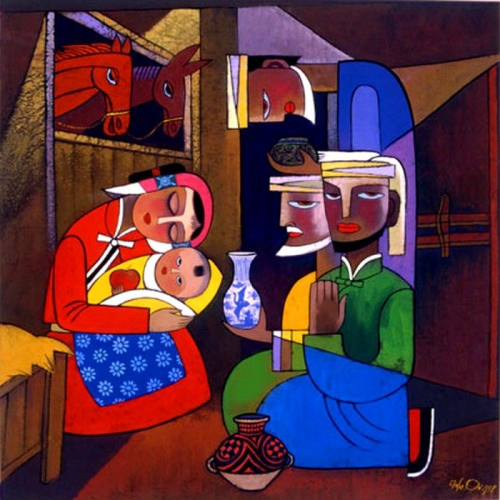
The Three Wise Men by He Qi

In the time of King Herod, after Jesus was born in Bethlehem of Judea, wise men from the East came to Jerusalem, asking, “Where is the child who has been born king of the Jews? For we observed his star at its rising and have come to pay him homage.” When King Herod heard this, he was frightened, and all Jerusalem with him; and calling together all the chief priests and scribes of the people, he inquired of them where the Messiah was to be born. They told him, “In Bethlehem of Judea; for so it has been written by the prophet:

‘And you, Bethlehem, in the land of Judah,
    are by no means least among the rulers of Judah;
for from you shall come a ruler
    who is to shepherd my people Israel.’”

Then Herod secretly called for the wise men and learned from them the exact time when the star had appeared. Then he sent them to Bethlehem, saying, “Go and search diligently for the child; and when you have found him, bring me word so that I may also go and pay him homage.” When they had heard the king, they set out; and there, ahead of them, went the star that they had seen at its rising, until it stopped over the place where the child was. When they saw that the star had stopped, they were overwhelmed with joy. On entering the house, they saw the child with Mary his mother; and they knelt down and paid him homage. Then, opening their treasure chests, they offered him gifts of gold, frankincense, and myrrh. And having been warned in a dream not to return to Herod, they left for their own country by another road. (New Revised Standard Version)

“Truth, by which the world is held together, has sprung from the earth, in order to be carried in a woman’s arms.”

St. Augustine

Each year on January 6 in the Church Calendar, after the twelve days of Christmas, is the celebration of Epiphany. Christ’s coming to this earth as a child and becoming like us is much more than a baby in a manger.  Epiphany helps to bring a vision and understanding of God’s glory to all kinds of people of the world.

Epiphany means “manifestation” or “appearance.”

The event associated with this season is the visit of the Magi to Jesus. The season of Epiphany has a special emphasis on the teaching and healing ministry of Jesus. The great celebration and focus of these weeks is that salvation is not limited to Israel but extends to the Gentiles, as well.

Every season in the Christian Year has its unique angle of grace. With Epiphany, we see that one of the most scandalous truths of Christianity is that God graces common ordinary people who seem far from God with the gift of Jesus. 

God grants repentance that leads to life for all kinds of people no matter their race, ethnicity, gender, class, or background. It is a wondrous and astounding spiritual truth that God’s gracious concern is not limited to a certain type of person or a particular group of people.

Grace is and ought to be the guiding factor in how we interact with people. 

Losing sight of grace leads to being critical and defensive. Like King Herod of old, a graceless person becomes enamored with earthly power and control. But embracing grace leads to the humility of seeing the image of God in people quite different from ourselves. 

Like the Apostle Peter, who learned in a vision to bring the gospel to non-Jews, old legalisms begin to wear away so that people from all walks of life can have access to Jesus and his gracious saving and healing ministry. (Acts 10-11:18)

Grace brings down barriers and causes us to do away with unnecessary distinctions between others. Our appropriate response to such a grace is to glorify God for his marvelous and amazing work.

It is a merciful reality that the Magi, or Wise Men, pagan astrologers, were directed to the Messiah. A light was provided to lead them to Jesus. Apart from God’s care and intervention they would have remained in darkness. 

Adoration of the Magi by He Qi

It is still true for people today. This old broken world is wrapped in darkness. All kinds of people have no light at the end of the tunnel of their lives for hope and new life. The gospel of Jesus Christ brings that light to those unable to see. Jesus, in his teaching ministry, exhorted his followers not to hide their light but to let it shine for all to see. (Matthew 5:14-16)

Sometimes, maybe oftentimes, the best way to bring resolution to our own troubles and problems is through helping others make sense of their lives through the gracious light of Christ. Then, they can see an appearance, an epiphany, of what their lives could be in the gracious rule of the kingdom of God. 

As we celebrate Epiphany and journey with Jesus through his earthly upbringing and into his gracious ministry to people, let us keep vigilance to not let our light grow dim. Instead, let us hunger and thirst after Christ’s righteousness so that our joy is full, and our light is bright.

God of mercy, Lord of all, you have gifted the Church through the goodness of your grace to be your hands and do your work, to be your voice and share your words, to bring healing to broken lives. You have graciously gifted your people with the blessings of your Spirit, the power to transform lives and make all things new.

Now may our hearts receive, our mouths proclaim, our hands prepare for compassionate service so that the love we have may overflow into the hearts of others. May they receive your grace, your renewing Spirit, and your love, through Jesus Christ our Savior. Amen.

Jeremiah 31:7-14 – A Restored People

Now this is what the Lord says:
“Sing with joy for Israel.
    Shout for the greatest of nations!
Shout out with praise and joy:
‘Save your people, O Lord,
    the remnant of Israel!’
For I will bring them from the north
    and from the distant corners of the earth.
I will not forget the blind and lame,
    the expectant mothers and women in labor.
    A great company will return!
Tears of joy will stream down their faces,
    and I will lead them home with great care.
They will walk beside quiet streams
    and on smooth paths where they will not stumble.
For I am Israel’s father,
    and Ephraim is my oldest child.

“Listen to this message from the Lord,
    you nations of the world;
    proclaim it in distant coastlands:
The Lord, who scattered his people,
    will gather them and watch over them
    as a shepherd does his flock.
For the Lord has redeemed Israel
    from those too strong for them.
They will come home and sing songs of joy on the heights of Jerusalem.
    They will be radiant because of the Lord’s good gifts—
the abundant crops of grain, new wine, and olive oil,
    and the healthy flocks and herds.
Their life will be like a watered garden,
    and all their sorrows will be gone.
The young women will dance for joy,
    and the men—old and young—will join in the celebration.
I will turn their mourning into joy.
    I will comfort them and exchange their sorrow for rejoicing.
The priests will enjoy abundance,
    and my people will feast on my good gifts.
    I, the Lord, have spoken!” (New Living Translation)

Experiencing restoration is a beautiful thing. Sick and suffering bodies restored to health brings rejoicing. Estranged relationships brought together again elicits singing. Spirits broken by sin made whole again through restoring grace causes shouts of joy.

God is an expert in restoration. Dilapidated communities, broken individuals, and peoples in diaspora can find fresh hope amid challenging circumstances.

Take a look at the actions of God through the verbs in today’s Old Testament lesson:

  • “I will bring.” The Lord gathers scattered people together, as well as making the disparate parts of people into a unified whole again.
  • “I will not forget.” In the gathering action of God, no one is left behind. Attention is given to the stragglers, to those unable on their own strength or ability to journey on the road back to the Lord.
  • “I will turn.” The unfortunate are turned into the fortunate. The underprivileged become privileged. Grief, lament, and mourning give way to joy and a new lease on life.
  • “I will comfort.” A great reversal occurs with God’s intervention. Sorrow is transformed into praise. Goodness is found in abundance because the Lord is a good God.

God calls the people to action, to a response of experiencing the restorative powers of grace. The Lord encourages such behavior because it helps us never forget that no one and no circumstance is ever beyond the renewing grace of God. Notice the verbs which characterize that response:

  • “Sing.” No mumbling here, my friends. No timidity about being off tune. A lonely person, fragmented group, depressed community, polarized neighborhood, or scattered nation restored by God’s merciful grace becomes an exuberant people. Singing organically arises from them.
  • “Shout.” Even the rocks will cry out if the people don’t. A last second win in the sports stadium amongst thousands of fans doesn’t even hold a candle to celebrative shouts of believers gathered and restored.
  • “Listen.” Whenever hearing God’s voice results in restoration, then the desire and motivation to listen increases exponentially.
  • “Proclaim.” Proclaiming good news is a joy and privilege. And in anticipation of Epiphany, the gospel declared to Gentiles is a gracious message of inclusion and hope.

We are helped to picture the incredible restoration of people coming together and gathered by God with two metaphors:

  1. The Good Shepherd. Like a faithful shepherd over the flock of sheep, the Lord actively seeks the lost, brings them home, and continues to stand watch over them as a compassionate guardian.
  2. The Exodus. Just as God redeemed the people out of Egyptian slavery and took them to a good land of abundance, so the Lord shall return those persons exiled from that abundant place and restore them to the peace of settled rest.

The restoring action of God gathers the scattered. The lost are found. That which is fragmented is made whole. Those previously disabled become able. The weak become strong, the sick healed, the hungry fed, and the prisoner freed.

In times of famine, pandemic, poverty, hardship, and scant resources, there is hope. The Lord knows how to restore fortunes and bring untold abundance amid the most difficult of situations.

True joy comes through hard suffering. The pains of childbirth give way to unspeakable joy.

Today is the final day in the twelve days of the Christmas season. God, entering humanity through a woman, in the flesh, began the gracious work of ransoming, redeeming, and restoring a sinful world that had exiled itself from peace and abundance. In Christ, our lives are full of blessing.

Praise the God and Father of our Lord Jesus Christ for the spiritual blessings that Christ has brought us from heaven! (Ephesians 1:3, CEV)

“I am the gate. Those who come in by me will be saved; they will come in and go out and find pasture. The thief comes only in order to steal, kill, and destroy. I have come in order that you might have life—life in all its fullness. I am the good shepherd, who is willing to die for the sheep.” (John 10:9-11, GNT)

May you know and experience the restorative grace of God in Christ today and every day. Amen.

Luke 2:1-20 – The Sound of Salvation

Host of Angels by Mike Moyers

In those days Caesar Augustus issued a decree that a census should be taken of the entire Roman world. (This was the first census that took place while Quirinius was governor of Syria.) And everyone went to their own town to register.

So, Joseph also went up from the town of Nazareth in Galilee to Judea, to Bethlehem the town of David, because he belonged to the house and line of David. He went there to register with Mary, who was pledged to be married to him and was expecting a child. While they were there, the time came for the baby to be born, and she gave birth to her firstborn, a son. She wrapped him in cloths and placed him in a manger, because there was no guest room available for them.

And there were shepherds living out in the fields nearby, keeping watch over their flocks at night. An angel of the Lord appeared to them, and the glory of the Lord shone around them, and they were terrified. But the angel said to them, “Do not be afraid. I bring you good news that will cause great joy for all the people. Today in the town of David a Savior has been born to you; he is the Messiah, the Lord. This will be a sign to you: You will find a baby wrapped in cloths and lying in a manger.”

Suddenly a great company of the heavenly host appeared with the angel, praising God and saying,

“Glory to God in the highest heaven,
    and on earth peace to those on whom his favor rests.”

When the angels had left them and gone into heaven, the shepherds said to one another, “Let’s go to Bethlehem and see this thing that has happened, which the Lord has told us about.”

So, they hurried off and found Mary and Joseph, and the baby, who was lying in the manger. When they had seen him, they spread the word concerning what had been told them about this child, and all who heard it were amazed at what the shepherds said to them. But Mary treasured up all these things and pondered them in her heart. The shepherds returned, glorifying and praising God for all the things they had heard and seen, which were just as they had been told. (New International Version)

Out of all the sounds of the season, the best of all is the sound of salvation.

The Sound of Activity

The Roman census brought a crowd of people to small village of Bethlehem. Because most were related to one another, it was like one big family reunion. There was lots of noise, with people talking, laughing, and sleeping.

We are a busy society and a busy people. The Christmas season only seems to exacerbate our busy-ness. Jesus can get lost in all the noise. We can miss the point of it all because of our preoccupations with all those seemingly necessary things in our lives. And it can be hard to hear and to listen to God. The sound of activity eventually needs to give way to another sound….

The Sound of Silence

Bethlehem was so busy that no one paid attention to the most cataclysmic event ever to take place. But out in the fields, all was quiet. The shepherds were there, quietly watching over their sheep. In the silence, they were able to experience the sound of good news.

Like a good pot of tea, we must allow the Word of God to seep in us, allowing the heat to do its work so that we might listen well to the divine voice. If we come at the Word with a cold heart, it will likely not do us a lot of good – we need to be hot and receive the Word with humility and respond to the Word with wisdom. As we allow God to seep in us, we become acutely aware of a beautiful sound….

The Sound of Joy

The shepherds heard good news of great joy from the angels. And then they shared their joy and went to worship the newborn Christ. It was a great celebration. After all, how often do a multitude of angels show up with an unsolicited concert of joy!?

We can imagine the sound of the shepherds’ unbounded joy at hearing the good news that the promised Savior has come! They just had to go and see Jesus, and then told everyone about it. And all who heard it were amazed at what the shepherds said to them.

There’s nothing quite like hearing good news, then sharing good news. Sadly, however, the story does not end there because not everyone was happy about Jesus being born as the King….

The Sound of Crying

King Herod saw Jesus as a potential rival, and he callously had every baby boy in Bethlehem killed when he found out the news. (Matthew 2:1-18)

We must keep in mind that not everyone is joyous at Christmas. Past grief associated with the holiday season can make it difficult to participate in the celebration. So, we need to be aware of the lamenting folks around us and hear their sad crying so that we can be agents of comfort and grace.

And let us also not forget, another sound of crying is the baby Jesus. Yes, he really cried. Jesus is truly human with all the sounds and experiences that go with being human. (Hebrews 2:10-17)

Conclusion

The sounds of activity, silence, joy, and crying are all part of Christmas and the birth of Jesus. To truly experience a full-orbed Christian spirituality, we will pay attention to the range of sounds occurring around us at this time of year.

Eternal God, who breathed this world into being, and placed stars into the heavens: You are the God who entrusted Jesus to the care of ordinary people, becoming vulnerable so that we might know the power of Love – a mystery so deep it is impossible to grasp, and so beautiful it is impossible to ignore.

Circle us, Lord, with the light of your presence, bright within this dark world. Enable us to be overcomers of fear and temptation, and victors over sin and despair. Circle this world with the joy of your salvation. Where there is sickness and disease, bring healing. Where there is hunger and despair, bring hope. Where there is bondage, bring freedom. Lord of our salvation, circle this world with the light of your presence. Amen.