1 Peter 5:1-5, 12-14 – Humble Leadership

To the elders among you, I appeal as a fellow elder and a witness of Christ’s sufferings who also will share in the glory to be revealed: Be shepherds of God’s flock that is under your care, watching over them—not because you must, but because you are willing, as God wants you to be; not pursuing dishonest gain, but eager to serve; not lording it over those entrusted to you, but being examples to the flock. And when the Chief Shepherd appears, you will receive the crown of glory that will never fade away.

In the same way, you who are younger, submit yourselves to your elders. All of you, clothe yourselves with humility toward one another, because,

“God opposes the proud
    but shows favor to the humble….”

With the help of Silas, whom I regard as a faithful brother, I have written to you briefly, encouraging you and testifying that this is the true grace of God. Stand fast in it.

She who is in Babylon, chosen together with you, sends you her greetings, and so does my son Mark. Greet one another with a kiss of love.

Peace to all of you who are in Christ. (NIV)

Humility is the consummate virtue of the believer in Jesus. Apart from humility there is only a lack of authenticity and integrity. With humility there is a recognition of our need for God’s grace, guidance, and peace. Humility opens to us the wide vistas of God’s love and mercy. 

A humble spirit:

  • Makes leadership both possible and bearable (God is in control, not us). 
  • Helps relieve the anxious worries that wash over us (God cares for us).
  • Enables us to resist evil and remain strong in faith (God protects us).
  • Fortifies us to remain steady through suffering (God comforts us).

Genuine spiritual humility places us securely in the merciful arms of God. Furthermore, humility and meekness are what this old fallen world needs, as well, and to which we must reinforce in all our church leadership appointments, national and local political elections, and work staff hires. An abundance of smarts and grit cannot compensate for a lack of humility. God is always in control, and so, syncing our lives with divine providence and care will enable us to be better off.

Yet, humility is one of the hardest virtues to practice because it requires that we willingly put aside pride, ego, and personal agendas to embrace God’s agenda:

God blesses those people who depend only on him. They belong to the kingdom of heaven! (Matthew 5:3, CEV)

Jesus said, “The truth is, you must change your thinking and become like little children. If you don’t do this, you will never enter God’s kingdom. (Matthew 18:3, ERV)

Don’t do anything for selfish purposes, but with humility think of others as better than yourselves. (Philippians 2:3, CEB)

To be a humble leader means to have the intention, focus, and action of seeking God’s will and way in everything. Then, to have the courage to lead others in God’s direction despite resistance and opposition from those who want to follow a different path.

Therefore, our task as spiritual leaders is to pursue hard after God’s direction rather than relying solely upon our base instincts, pragmatic desires, and personal views. Humility provides us a radical openness to God. A meek and gentle spirit enables us to develop an ever-deepening awareness of where God is leading. The Lord is up to something and has plans for our world, our locales, and our faith communities.

We also need to recognize that not everyone is open to God. If our focus is primarily on molding a group of people to be what we want them to be, then we may have become closed to what God wants. This closed spirit comes out in a couple of different ways:

  1. Maintaining tradition at all costs. Living with uncertainty and ambiguity is too much for some leaders, so they stick close to the status quo. Like Abraham, however, we are called to move and change without always knowing where we are going. (Genesis 12:1-5)
  • Getting rid of tradition like there is no tomorrow. To get what they want some leaders focus solely on their own needs and desires without considering those they are called to lead. Like Timothy, we are to hold onto the great deposit of doctrine and heritage given to us and not always be looking for the next new thing to turn things around. (1 Timothy 6:20-21; 2 Timothy 1:13-14)

Humility-based leadership continually consults the divine will and others’ wisdom in a concerted effort to be collaboratively open to God. A humble spirit enables and empowers leaders:

  • To lead from a position of faith, not fear.
  • To seek divine help and resources through a posture of listening. 
  • To practice love in all things to all persons.
  • To make prayer and discernment the foundation of planning.
  • To read Holy Scripture as if life depended on it.
  • To consult and collaborate with others who are like-minded.
  • To honor and respect tradition while holding it with open hands, not closed fists.

If we cultivate a humble attitude and a deep openness to God, along with a determined readiness to move people lovingly and graciously in God’s direction, then amazing things can happen. Let our prayer together be this: 

I am yours, wise God, no matter where you call me to go, what you call me to do, and how you call me to be.  I will seek your will and way as I lead others to do the same through Jesus Christ our Lord in the power and guidance of your Holy Spirit. Amen.

James 4:11-16 – On Planning Well

Brothers and sisters do not slander one another. Anyone who speaks against a brother or sister or judges them speaks against the law and judges it. When you judge the law, you are not keeping it, but sitting in judgment on it. There is only one Lawgiver and Judge, the one who can save and destroy. But you—who are you to judge your neighbor?

Now listen, you who say, “Today or tomorrow we will go to this or that city, spend a year there, carry on business and make money.” Why, you do not even know what will happen tomorrow. What is your life? You are a mist that appears for a little while and then vanishes. Instead, you ought to say, “If it is the Lord’s will, we will live and do this or that.” As it is, you boast in your arrogant schemes. All such boasting is evil. (NIV)

Listening is both art and hard work. A few years back I spent a week at a prayer retreat. It was time intentionally set aside to hear God. It was hard work. I stayed in a little one room hermitage in the woods surrounding by God’s creation. On the first morning, I was in bed and at dawn I heard this loud thud on one of the windows. I woke up and heard it again, and then again. Outside there was a big male robin going at the window like there was no tomorrow. He did it about a dozen times before finally flying away. I laid there a bit frustrated with this stupid bird waking me up, and yet also wondered about that robin. Since I was there to connect with God, I started asking the question: “God, what are you trying to teach me through that stupid robin?”

I did not get an answer to my question. Then, the next day it happened again. Mr. Robin came by and took about a dozen hard tries at my window before flying away. However, this time I finally realized what was going on. Mr. Robin was perching just outside the window and looking at his own reflection. All he could see was a big rival robin staring back at him, on his turf, and he was going to tear into that interloper. Little did the birdbrain know that he was fighting a losing battle, against himself. 

“God, what are you trying to teach me through this robin?” Now, I had my answer. I was a Pastor tackling the issues and problems of others in the church and the world. Yet, I came to understand that I was only tackling myself, seeing my own reflection and struggling in a losing battle. I investigated the face of the enemy, and the enemy was me.

We are our own worst enemies. Much of life is determined by whether we plan for and with God. The natural temptation of us all is to view the landscape of human problems, assign enemies, and then fail to see that our greatest enemy is staring at us in the window’s reflection. Another temptation is to believe that when things are going well, it is because of our own doing – as if somehow, we can live and move and have our being independent of God in the equation. So, I ask, is God in our plans?

That is a big question. Here is just a smattering of what Jesus said about living for him: 

“Any of you who does not give up everything he has cannot be my disciple.” (Luke 14:33)

“Anyone who does not carry his cross and follow me cannot be my disciple.” (Luke 14:27)

“If you hold to my teaching, you are really my disciples.” (John 8:31)

“No one who puts his hand to the plow and looks back is fit for service in the kingdom of God.” (Luke 10:62) 

We are not called by God to control other people or events; we are called to practice self-control and listen to God as we determine the course of our lives in both the big and small things of life.

The Apostle James had to deal with some birdbrain robins. They were only looking at themselves and not doing the good they knew they ought to do.

The Actual Situation

Some of the people James addressed were planning and mapping out their lives without consideration of what God wanted. They neither looked to God before beginning their planning process nor intended on including him in their dealings. These certain businesspersons were independent minded. They viewed their time and money as their own. In their minds, they give God an hour on Sunday, and the rest of the time is their own; they make their own money and no one can tell them what to do with it; they make their own plans, and maybe ask God afterward to bless it all.

The actual situation was that people were holding back on God, only giving him a certain portion of their effort.  And this can happen to any of us, with anything we have.  We may not all have money and power, yet we all have time, and how we use our time says a lot about our faith.

One of the many things God taught me at my prayer retreat was through all my business and busy-ness that I was holding back in some ways. Yes, I could compassionately connect with people but was guarded with it. Having my armor up was coming from a fear of not doing something perfect, or at least not doing it really well; and, if I would give myself completely to compassionately connecting with others, I might get hurt (because I’ve been hurt before). I wonder if you can resonate with this.

God just wants us to show up, be present, and not be perfect. We are to do the best with the gifts and abilities given us and leave it all on the playing field so that it cannot be said of us that we did not do the good we knew we should have done.  Furthermore, there is nothing wrong with being afraid.  In fact, true courage involves fear because real bravery is doing what is right when it is scary to do it, no matter what the consequences might be.

The Analysis of the Situation

Life is truly short – like a mist that appears for a little while in the morning, and then vanishes. Thus, the scheming we might do to make money and guard our investments; the posturing to make ourselves look good; the power-plays we engage to get our way; and, the anxiety which prevents us from the things we know we ought to do amounts to nothing at the end of our lives.

I have talked with far too many people over the years who crucify themselves between the two thieves of regret over yesterday’s missed opportunities, and fear of what will happen tomorrow. I have observed far too many people who made lots of money, patented inventions, and won awards, yet had no one at the end of their lives to be with them. They were not there for others, and so others were not there for them. 

Jesus said we cannot serve both God and money (Matthew 6:24). In God’s economy, money is simply a tool to be used to meet needs and bless others. Yet, we tend to make audacious plans with money through accumulating debt and presuming we can pay it off; encouraging our kids to get high paying jobs as their highest objective; and, putting faith in the market economy to provide for us in the end. 

James was not saying money is bad and making plans is wrong; he was saying that the almighty dollar is not to be the motivating factor in our lives, and that God needs to be squarely in the middle of all that we do.

The Alternative to the Situation

The alternative to making plans independent of God is to plan carefully for God to be in everything – to find and do his will without trying to impose our will upon the divine.

This requires listening well. It is easy to rush and keep busy and then are unable to hear what God might be saying. When things are rough, we may work so we do not have to stop long enough to feel what is really going on inside of us. James encourages us to say, “If it is the Lord’s will, we will live and do this or that.”  Listening well enables living well.

The Audacity of the Situation

Some people in James’ day were boasting over their accomplishments.  Like Kings Nebuchadnezzar and Herod of old, they made plans and did what they wanted with delusions of grandeur. They believed they were the ultimate sovereigns of what could and should go on in the world of which they controlled. They had to learn the hard way that they were only masters of small worlds.

Boasting merely sets us up for a higher fall. We need God, and we need each other, and whenever we lose sight of that truth, we are on a one-way road to implosion. Whereas some might call it independence, God calls it evil.

The Awfulness of the Situation

The tragedy of independent planning and acting is that God is left out due to purposeful ignorance. Like the deceitful husband and wife duo, Ananias and Sapphira, there were certain persons who withheld their money and their resources so that they could look good to the rest of the community and influence happenings within the church (Acts 5:1-11).  It did not end so well for them.

Conclusion

Doing more with greater efficiency may help, yet it misses the point. We are to take the time and effort to relate meaningfully with God so that we can plan with confidence and make faith-based decisions on what we believe the Lord wants us to do.

Let us not find ourselves repeatedly flying into a window. Instead, let the Lord shape life in such a way that conforms to his purposes, so that we will then know genuine lasting joy and peace.

One mark of the mature person is that he/she has the same benevolence and character whether they are rich or poor. Since we are all rich in faith, let us continually demonstrate it by living for Jesus Christ, loving one another, and planning to reach a lost and unjust world with the good news of God’s grace.

Matthew 6:7-15 – The Lord’s Prayer

The Lord's Prayer

And when you pray, do not keep on babbling like pagans, for they think they will be heard because of their many words. Do not be like them, for your Father knows what you need before you ask him.

This, then, is how you should pray:

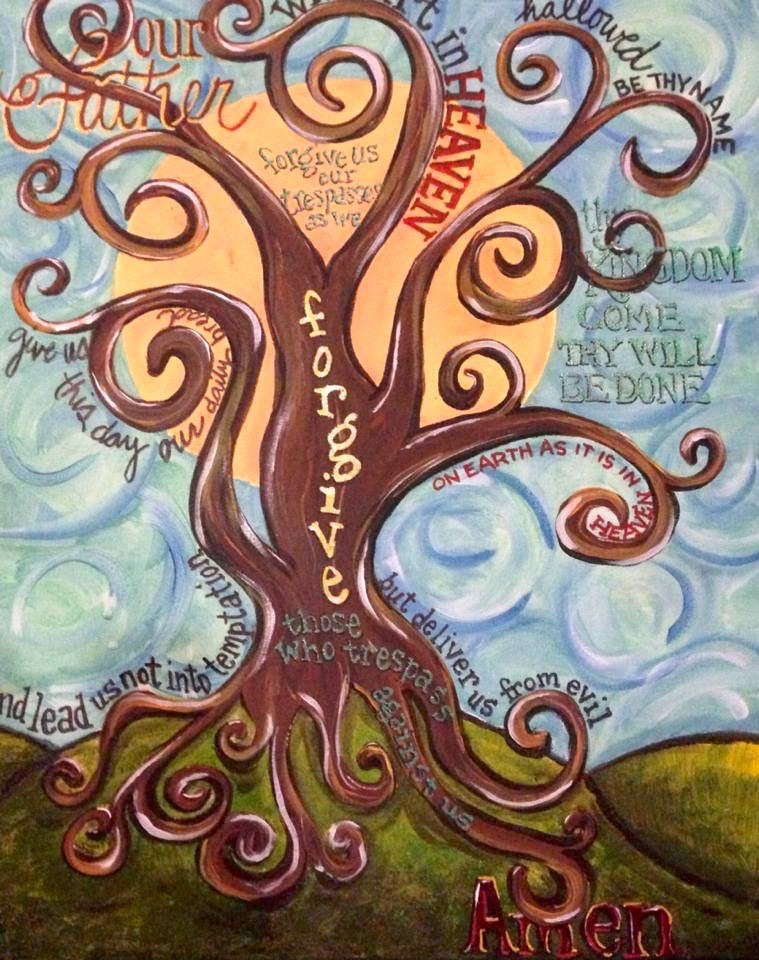
“Our Father in heaven,
hallowed be your name,
your kingdom come,
your will be done,
    on earth as it is in heaven.
Give us today our daily bread.
And forgive us our debts,
    as we also have forgiven our debtors.
And lead us not into temptation, but deliver us from the evil one.”

For if you forgive other people when they sin against you, your heavenly Father will also forgive you. But if you do not forgive others their sins, your Father will not forgive your sins. (NIV)

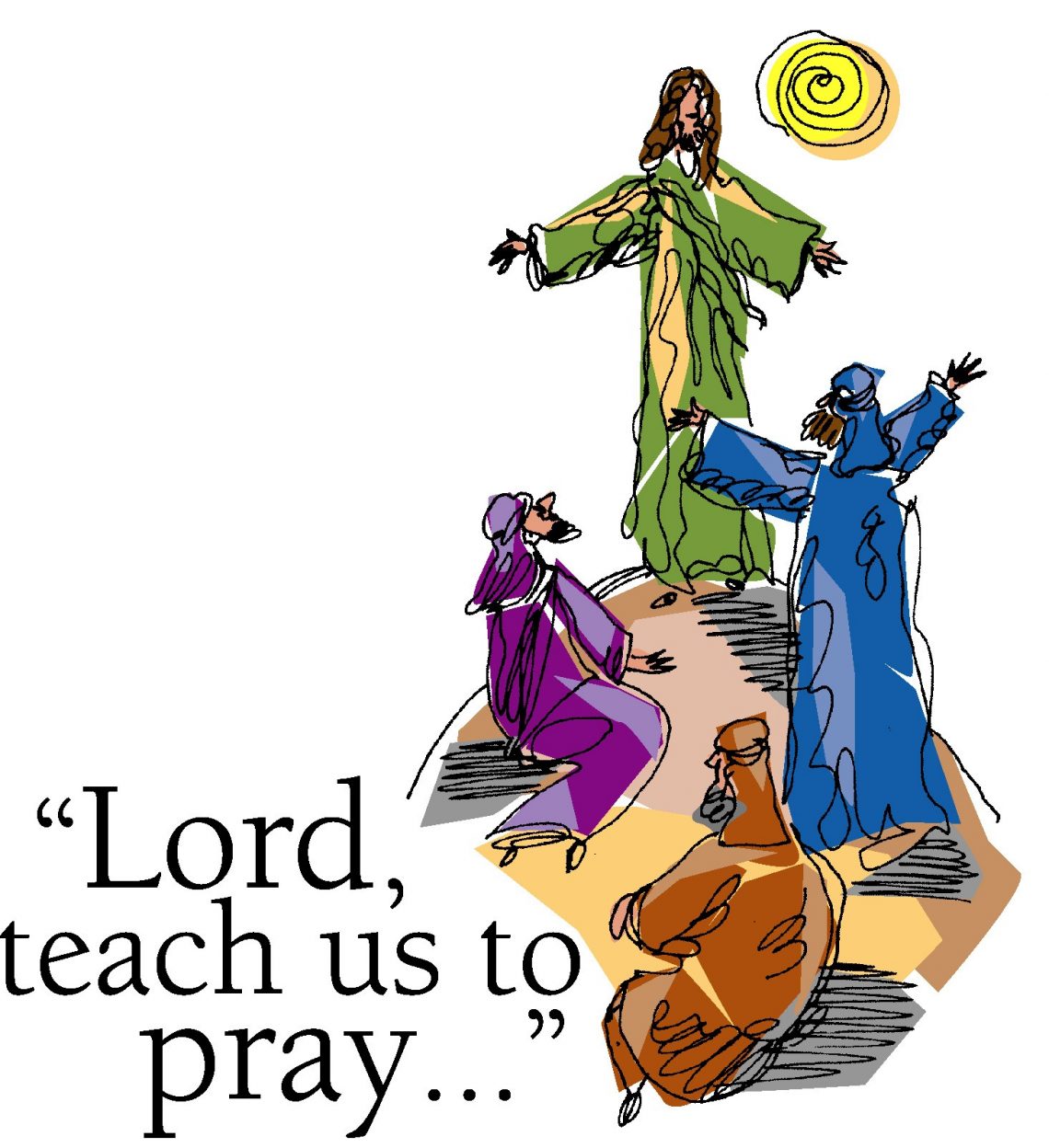
God knows what we need before we even ask him, which means that the Creator of the universe has his ear inclined to listen to us. The Lord desires, even longs for us to pray to him. Since this is God’s disposition every day, Jesus communicated to us a model way of prayer. This prayer exemplifies the values of Christ’s Beatitudes and reflects the priorities of God’s kingdom. The Lord’s Prayer is meant to be prayed often, mindfully, and with flavor.

Jesus gave us six petitions to guide us in our prayers: The first three petitions are priorities of God that set the tone for the next three petitions, which are centered in our problems of living in this fallen world.

Addressing God

Jesus gave us instruction of how to address God: “Our Father in heaven.” All the pronouns in the Lord’s Prayer are plural, not singular. We are to be concerned for both our own individual issues, and for the needs of the community, of the problems and situations of the world.

“Father” is an endearing and relational word. “In heaven” balances the closeness and nearness of our heavenly Father with his sovereign and transcendent nature. Our God is both near and far – a close friend as well as a holy king.  So, we address him with a proper understanding of who he is.

Three Priorities

  1. First Petition: “Hallowed be your name.”

“Hallow” comes from the root word for holiness; it is to sanctify, to set apart. God is concerned that his creatures revere him and treat him as the Holy One.

Notice the use of the verb: not hallowed “is” your name, but hallowed, or holy “be” your name. That is, Jesus guides us to pray that God’s name would be shown as holy through us by the way we live. The world sees a holy God when his people walk in holiness, reflecting his benevolent nature.

After Christ’s resurrection and ascension, the Apostle Peter encouraged a struggling band of young Christians:

So, you must live as God’s obedient children. Don’t slip back into your old ways of living to satisfy your own desires. You didn’t know any better back then. But now you must be holy in everything you do, just as God who chose you is holy. For the Scriptures say, “You must be holy because I am holy.” And remember that the heavenly Father to whom you pray has no favorites. He will judge or reward you according to what you do. So, you must live in reverence of him during your time here as “temporary residents.” (1 Peter 1:14-17, NLT)

  1. Second Petition: “Your kingdom come.”

We live in a fallen world that has come under the domain of dark forces. The unfolding drama of Holy Scripture is that God himself is on a mission to restore his creation to a benevolent rule and gracious reign. Jesus is the King, we are the subjects, and God’s realm exists wherever his subjects go.  And where his subjects go, they are to pierce the darkness by embodying the good news that King Jesus has overcome the demonic realm and brought us into God’s kingdom. The prayer and proclamation of this good news is of utmost priority to God.

  1. Third Petition: “Your will be done on earth as it is in heaven.”

God’s ethical will has been revealed to us by Jesus in the Sermon on the Mount with the Beatitudes as the cornerstone of his teaching (Matthew 5-7). God’s will is that Christ’s followers be humble; grieve over personal and communal sin in the world; act with gentleness instead of prideful condescension toward others; hunger after true righteousness instead of legalistic self-righteousness; show mercy; be pure in heart; pursue peace; and, rejoice when persecuted. All of this results in being salt and light in this dark world.

Furthermore, we are to reconcile with others instead of hold grudges; deal with our lust through accountability instead of making excuses for our mental adultery; cherish our spouse instead of taking the easy way out when problems arise in marriage; tell the truth at all times instead of shading it; and, love, not retaliate when personally hurt or insulted. This is God’s will, and if it seems an impossible task, that is because we need divine resources to live our Christian ethic. In other words, we need to pray!

These three petitions are priorities for God. They are three ways of essentially asking the same thing – that the full manifestation of God’s reign on earth be realized.  Thus, our prayers are not primarily to receive goods and services from God, but for us to render service to God. The priority of prayer given by Jesus centers in the advancement of God’s merciful rule, and the doing of God’s will.  These prioritized prayers are a burning desire to see God honored on earth as he is already honored in heaven.

The Lord's Prayer 2

Three Problems

  1. Fourth Petition: “Give us today our daily bread.”

It is our bodies that enable us to do God’s will, and so we must be concerned for them. We must have the necessities of life and daily sustenance to carry out God’s priorities for the church and the world. This is not a prayer for long-term luxuries, but daily needs.

In the ancient world, people were paid at the end of each day. Folks also shopped every day at the marketplace for their food (no fridge!). When there was a flood or a drought, it did not just mean high grocery prices; people faced starvation and death. They needed to trust God for today, and not worry about tomorrow.  Even though we do not always readily perceive our great dependence on God, we still are in divine hands and need faith.

  1. Fifth Petition: “Forgive our debts, as we also have forgiven our debtors.”

Sin is pictured as a debt. If someone has sinned (trespassed) against us, we must forgive them, thus releasing them from their debt.  To forgive does not mean to forget. Rather, we are not to hold the debt or the sin over someone’s head for the rest of their life.

The simple truth is that the person who is forgiven by God is a forgiving person. Our own forgiveness implies that we have done the hard work of repentance through identifying our sin and renouncing it. So, if we fail to forgive, it demonstrates a lack of change on our part. We cannot, then, be forgiven if we are avail ourselves of the grace which is freely offered.

The practice of forgiveness is of utmost importance to Jesus. Living the Beatitudes of Jesus and being a peacemaker means we are to squarely face our bitterness. Simply sweeping our hurt under the rug and not extending forgiveness only gives the demonic realm a foothold into our lives – which is why we are to pray the final petition….

  1. Sixth Petition: “And lead us not into temptation but deliver us from the evil one.”

Just as we have real physical necessities we must trust God for, we also have genuine spiritual needs which hinge on the issue of forgiveness – our forgiveness from God through Christ, and the forgiveness we extend to others who have hurt or offended us.

An unforgiving heart is the primary reason for the temptation to hate, seek revenge, and retaliate. If we have spent days, weeks, months, years, or even decades harboring an unforgiving spirit through anger, bitterness, and avoidance of facing our past trauma, we have embraced the dark side and need deliverance from evil.

The path to deliverance is through acknowledging the offense, receiving grace and forgiveness from God, and passing that same forgiveness and grace to those who hurt us. This is not about whether they deserve it or not; it is a matter of what I need to do.

Conclusion

A desire to see God’s agenda accomplished through the first three petitions leads us to seek grace and forgiveness, not giving ground to the devil. The truth sets us free; telling our secrets brings freedom. Apart from naming our shame, we will remain bound and in need of liberation. Tell your secrets to God in the prayer closet, and then tell them to a trusted friend(s). We pray, and we act on what God tells us in prayer.

The Lord’s Prayer is a model prayer. That means we use the six petitions of Jesus to frame our prayers in our own words, as well as say the words in our favorite translation of the Bible.

We are to pray this prayer continually, for in doing so it will shape our everyday lives, serve as a guide for how to live, and provide discernment in making life’s many decisions.  To be the church is to pray. To be a Christian is to pray. So, let us daily and in every way make use of our Lord’s Prayer.

Our Father in heaven,

            The One who is both near and far,

May your Name be shown as holy,

            through us, your people.

May others submit to your lordship,

            and become holy, too.

Help us to know your will,

            and to do it.

We need you God,

           so, provide our necessities for today.

Forgive us of our great and many sins,

            just as we forgive those

            who have sinned egregiously against us.

Lead us in paths of righteousness,

            which will shoo the devil away.

For you are the Ruler,

the Mighty One,

full of glory and grace.

Amen!

Matthew 21:18-22 – Faith and Prayer

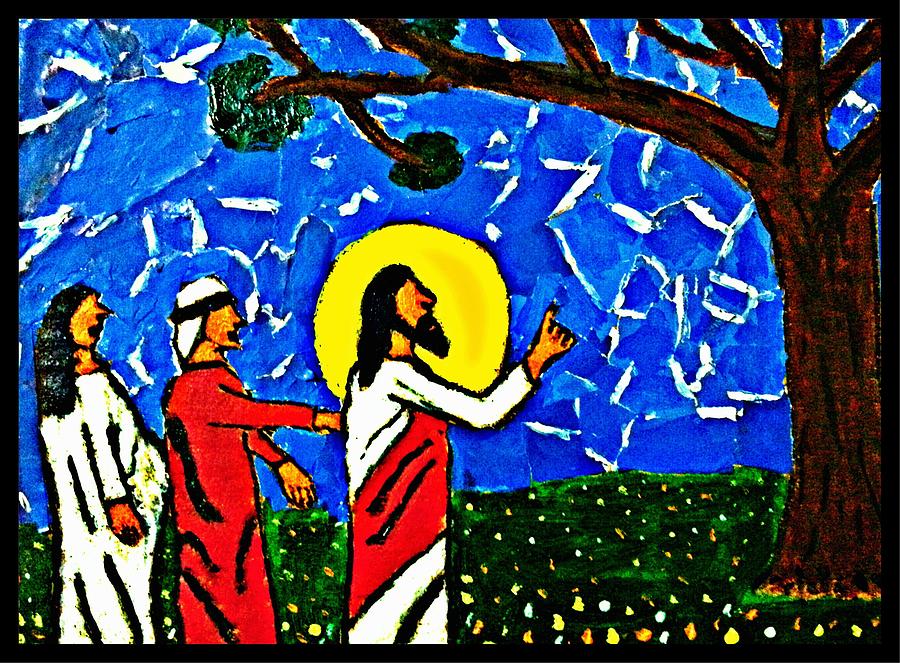
Jesus Cursing the Fig Tree
Jesus Cursing the Fig Tree by Ganosh Kelagina Beedu Shenay, 2016

Early in the morning, as Jesus was on his way back to the city, he was hungry. Seeing a fig tree by the road, he went up to it but found nothing on it except leaves. Then he said to it, “May you never bear fruit again!” Immediately the tree withered.

When the disciples saw this, they were amazed. “How did the fig tree wither so quickly?” they asked.

Jesus replied, “Truly I tell you, if you have faith and do not doubt, not only can you do what was done to the fig tree, but also you can say to this mountain, ‘Go, throw yourself into the sea,’ and it will be done. If you believe, you will receive whatever you ask for in prayer.” (NIV)

God wants us to pray! Prayer happens from a place of faith because to pray, one must believe that God is good and answers prayer. Conversely, prayerlessness is faithlessness.  A person of little faith prays only a little. A person full of faith cannot stop praying.

God’s world revolves more around promise than command – which means that Jesus merely exhorting the disciples to pray would fall flat; they needed a deep change of heart. God calls us all to transformation. Lasting change takes place at the roots of our lives. When there is a drought, pouring lots of water on our backyard trees at the first sign of withering leaves is too late. The tree may look fine on the outside, but on the inside, it is dying from lack of water. Real change comes from the inside-out.  It is the root of a person’s life, below the surface where others do not see, that needs change, and not merely the outward behavior.  Prayer must be directed to the root, to the heart of the issue.

In today’s Gospel story, Jesus was up early and going to Jerusalem. He was hungry and wanted some breakfast, so he approached a fig tree. Figs were known back in Christ’s day as the poor man’s food. Fig trees were everywhere. Approaching a certain fig tree, Jesus found one that looked fine, but no figs. He chose to use the tree as a teachable moment for his disciples. Christ cursed the tree and immediately the entire tree withered.  So, why did Jesus curse the tree?

Jesus cursed the fig tree because it looked good on the outside, but it was already dead on the inside. The tree had everything a tree needed: branches, leaves, and a trunk – except fruit.  The tree served as an illustration for the disciples of believing prayer. The tree looked fine, and had the promise of fruit, yet, none was found.  The point of the tree illustration is this: Jesus is looking for faith in his followers.

In the prophet Jeremiah’s day, the nation of Judah had enjoyed a long stretch of prosperity and good circumstances. By all outward appearances they were doing fine. Temple attendance was at its peak and everyone was offering their sacrifices. But something was wrong….

I will put an end to them,
declares the Lord;
there are no grapes on the vine,
no figs on the tree,
only withered leaves.
They have squandered what I have given them!
(Jeremiah 8:13, CEB)

Although fine on the outside, the people of Judah trusted in themselves, their ability to produce a harvest, and their outward show of how many cattle and sheep they brought to the temple. But what God was looking for was fruit, not nice leaves. He was watching for offerings of believing prayer, born of a faith that is confident in the goodness of God. And the Lord is still looking for people’s faith in God alone – rather than in religiously outward forms of success.

Jesus wants his followers to understand and believe that our words and prayers can have the immediate effect of changing the world.  We can even speak to a mountain and it will have to move if we tell it to. We probably do not go around talking to mountains, but all of us go around talking to ourselves about mountain-like problems. The power that levels mountains is prayer that speaks confidence and boldness.  If you believe, you will receive whatever you ask for in prayer.

Doubt sometimes stands in the way of prayer – not doubt in ourselves because we do not answer our own prayers. The Apostle James said:

“If any of you needs wisdom, you should ask God for it. He is generous to everyone and will give you wisdom without criticizing you. But when you ask God, you must believe and not doubt. Anyone who doubts is like a wave in the sea, blown up and down by the wind. Such doubters are thinking two different things at the same time, and they cannot decide about anything they do. They should not think they will receive anything from the Lord.” (James 1:5-8, NCV)

Both James and his brother Jesus refer to an unshakable faith in the goodness of God. This is faith in the person of God, and not faith in faith itself. If we are honest, every one of us who has made a difficult prayer request, mustering-up all the faith we can, and then being disappointed when it did not happen, has been hurt. The unstable person vacillates when this happens, doubting whether God is good (playing the he-loves-me, he-loves-me-not game). The person of faith believes God answers prayers according to his will, and that if the prayer is not answered, God knows what he is doing and will answer it in his own good timing and purposes.

Maybe you have even indulged your inner-critic, a Job-like friend, telling you that you have a failure of faith, or not enough faith, and that is why your prayer was not answered. Yet, positive thinking is not the same as Christian faith.  It is neither a matter of being optimistic, nor of sending $19.95 to some hack preacher who promises to give you the secret of answered prayer, along with a free gold cross.

God’s will for our lives is sometimes, maybe even oftentimes, a mystery. However, we do know what God’s will is for a lot of things. For example, God is not willing that any should perish but all be brought to eternal life.  So, we can pray with confidence for a person’s deliverance from sin.  We can be bold about trusting in God’s promises – he will do what he says he will do.  Boldness is only as good as the truth it is based upon.

Imposing Mountain View and Lake Glacier National Park
Imposing Mountain View and Lake Glacier National Park. Many Glacier Area. Swiftcurrent Lake.

We have every right, based in our union with Jesus Christ and our redemption in him, to ask God confidently and boldly for the removal of mountains.  We have the authority in Christ to do so.  Therefore, we do not need to offer tepid, milquetoast, mumbling prayers with sighs and hunched shoulders (i.e. “Well, God, if it is your will, could you help me?”).

It is time for men to step out and give God some healthy hairy-chested prayers.  And, this is not the time for women to be worried about what the men do, or not do. Everyone is to be bold in prayer.

“God desires of us nothing more ardently than that we ask many and great things of him, and he is displeased if we do not confidently ask and entreat.” –Martin Luther

Jesus wants faithful and fruitful prayer. He still scans the horizon of our spiritual lives looking for believing prayer. Christ desires from those who follow him bold prayers which curse and wither fruitless and feckless places. When my children were small there was an adult store in our neighborhood. It disturbed my spirit. Each time I passed it I confidently prayed that the pornography and exploitation of women would dry up and cease in Jesus’ name, and that those who worked in that establishment would find more gainful and ethical employment. And that is exactly what happened.

Aggressive prayer against the enemy of our souls is needed, prayer that claims the authority which has been given us in Christ, prayer that is based in solid biblical truth and robust theology. So, let us pray in faith and confidence….

Heavenly Father, we praise you for the grace we possess through the Lord Jesus Christ.  We rejoice in Christ’s teaching and the victory you have provided for us to live above sin and failure.  We come before you in confession and to plead your mercy over our sins, the sins of other believers, and the sins of our world.  We confess the sin of prayerlessness, faithlessness, apathy, complacency, and indifference to those who are lost.  We also acknowledge before you the wickedness of our world through the evil machinations of injustice, oppression, and exploitation of others.

We praise your holy name, O God, that there is plenty of grace through the person and work of the Lord Jesus.  We plead the blood of the cross and the power of the resurrection against the sins and rebellion of people against you.  We pray and wait for you, Holy Spirit, to bring us all to new life in Jesus Christ. 

We recognize that Satan and the kingdom of darkness have plotted and laid strategies against new spiritual life, keeping your people from believing prayer.  So, in the name of the Lord Jesus Christ, we claim our place as children of God. We smash and pull down all the strongholds which Satan has erected against humanity – and pray that the power of Christ’s resurrection would hinder and frustrate the plans formed against us. 

We pull down demonic strongholds of prayerlessness and carelessness with the Word of God. We claim back for the Lord Jesus Christ the ground Satan is claiming as a means of hindering faith, hope, and love; and, we affirm that Satan’s plans were fully defeated through the cross and resurrection of Jesus. We pull down all of Satan’s plans to divert fresh faith when it comes. Blessed Holy Spirit, may you send a renewal to the hearts and souls of all people. May it bring a wondrous season of peace and joy.

We, your people, accept the role of standing in the gap for others in prayer.  You yourself, God, said that we, in Christ, are mighty through God to the pulling down of strongholds.  So, we bring all the work of the Lord Jesus Christ to focus directly against the powers of darkness that blind people and keep them in bondage.  We pray the victory of Christ’s incarnation, crucifixion, resurrection, ascension, and glorification directly against all of Satan’s power in their lives.  We now bind all powers of darkness set to destroying them, and we unbind those demonic bonds and blinders from them in the mighty name of Jesus. 

By faith we claim humanity for fruitful lives of spiritual abundance, social justice, and sanctified relationships in the name of Jesus Christ our Lord, who defeated all powers and principalities of this world.  Amen.