Skilled Work (1 Kings 5:1-12)

King Solomon and King Hiram, by Unknown artist

Because King Hiram of Tyre was loyal to David throughout his rule, Hiram sent his servants to Solomon when he heard that Solomon had become king after his father. Solomon sent the following message to Hiram: 

“You know that my father David wasn’t able to build a temple for the name of the Lord my God. This was because of the enemies that fought him on all sides until the Lord put them under the soles of his feet. Now the Lord my God has given me peace on every side, without enemies or misfortune. So I’m planning to build a temple for the name of the Lord my God, just as the Lord indicated to my father David, ‘I will give you a son to follow you on your throne. He will build the temple for my name.’ Now give the order and have the cedars of Lebanon cut down for me. My servants will work with your servants. I’ll pay your servants whatever price you set, because you know we have no one here who is skilled in cutting wood like the Sidonians.”

Hiram was thrilled when he heard Solomon’s message. He said, “Today the Lord is blessed because he has given David a wise son who is in charge of this great people.” Hiram sent word back to Solomon:

“I have heard your message to me. I will do as you wish with the cedar and pinewood. My servants will bring the wood down the Lebanon Mountains to the sea. I’ll make rafts out of them and float them on the sea to the place you specify. There I’ll dismantle them, and you can carry them away. Now, as for what you must do for me in return, I ask you to provide for my royal house.”

So Hiram gave Solomon all the cedar and pinewood that he wanted. In return, Solomon gave an annual gift to Hiram of twenty thousand kors [2,000 tons] of wheat to eat, and twenty thousand kors [4,000 liters] of pure oil for his palace use. Now the Lord made Solomon wise, just as he had promised. Solomon and Hiram made a covenant and had peace. (Common English Bible)

King Solomon was granted by God all the wisdom necessary to rule over Israel and Judah (1 Kings 3:1-15). Early in his reign, he began the construction of a permanent Temple in Jerusalem – a task that was originally in the heart of his father King David.

Today’s Old Testament lesson is the beginning of the account of Solomon’s grand building project. It focuses on the assistance offered by King Hiram of Tyre.

Skilled Leaders

The city of Tyre was a major port in Lebanon. The cedar trees of Lebanon were renowned in the ancient world as being large and strong. Solomon – always the savvy one in knowing where to find the best of the best – looked to King Hiram for the cedar logs needed for building the Temple.

What’s more, Solomon asked Hiram for the builders to help in construction of God’s Temple. King Solomon not only had a broad knowledge of just about everything in creation, but he also understood human nature. He named the reality that the Sidonians were the best at handling their exceptional lumber.

Furthermore, Solomon was clear about the reason for the ambitious building project of the Temple. He believed that the task of erecting the Temple was divinely given to him. Solomon therefore trusted God to help him complete the job.

As a result, the two kings negotiated a treaty in which Hiram provided the lumber and the lumbermen, with Solomon providing grain and olive oil for Hiram’s court. In recounting this, the editor of Kings emphasized Solomon’s wisdom, and the peaceful relations that Jerusalem and Tyre enjoyed.

Perhaps all of this rehashing of an old agreement between a couple of ancient kings seems irrelevant to the modern and post-modern person. Yet, it is a classic example of the realities concerning communication and theology.

Skilled Communication

Hiram had the resources for building, and the skilled builders; Solomon had the money, goods, and administrative knowledge to make their relationship a mutually beneficial one.

Each king negotiated successfully, namely because there was no disadvantage in their treaty relationship. The two nations balanced one another by offering it’s advantages to the other.

Solomon and Hiram came to a genuine win-win agreement. Each of them stated exactly what they wanted and what they would provide, without apology. Both kings promoted their own interests while showing concern for the other’s interests, as well.

The success of their deal was based on mutual trust, which began years earlier with King David.

Skilled Theology

Today’s narrative is more than an example of how to negotiate a deal. It fits into a larger narrative of what God was doing with the nation of Israel. Central to every biblical story is God, who is both object and subject of Holy Scripture.

The Lord revealed a slow and unfolding drama of redemption for people. The construction of the Temple was a prominent way of God revealing divine mercy to the people. It’s central place at the highest point in Jerusalem communicated that the Lord is in the middle of everything, and high above it all.

And the way in which Solomon went about constructing the Jewish Temple included non-Jewish builders. God, through divine sovereignty and grace, led Gentiles to hob-nob with Jews who worship Yahweh, and to thus experience a glimpse of the Lord through the people and the place.

Indeed, all things work together for good to those who love God. (Romans 8:28)

Gracious God, I ask that your love and goodness will have its way for all those who seek to live according to justice and righteousness. You are full of steadfast in love and abounding in mercy. Help me accept your love and mercy. May it flow powerfully in me, and through me, to your glory and honor. Amen.

Abundant Life (1 Kings 8:1-21)

Solomon dedicates the Temple at Jerusalem, by James Tissot (1836-1902)

Solomon then summoned to Jerusalem the elders of Israel and all the heads of the tribes—the leaders of the ancestral families of the Israelites. They were to bring the Ark of the Lord’s Covenant to the Temple from its location in the City of David, also known as Zion. So all the men of Israel assembled before King Solomon at the annual Festival of Shelters, which is held in early autumn in the month of Ethanim.

When all the elders of Israel arrived, the priests picked up the Ark. The priests and Levites brought up the Ark of the Lord along with the special tent and all the sacred items that had been in it. There, before the Ark, King Solomon and the entire community of Israel sacrificed so many sheep, goats, and cattle that no one could keep count!

Then the priests carried the Ark of the Lord’s Covenant into the inner sanctuary of the Temple—the Most Holy Place—and placed it beneath the wings of the cherubim. The cherubim spread their wings over the Ark, forming a canopy over the Ark and its carrying poles. These poles were so long that their ends could be seen from the Holy Place, which is in front of the Most Holy Place, but not from the outside. They are still there to this day. Nothing was in the Ark except the two stone tablets that Moses had placed in it at Mount Sinai, where the Lord made a covenant with the people of Israel when they left the land of Egypt.

When the priests came out of the Holy Place, a thick cloud filled the Temple of the Lord. The priests could not continue their service because of the cloud, for the glorious presence of the Lord filled the Temple of the Lord.

Then Solomon prayed, “O Lord, you have said that you would live in a thick cloud of darkness. Now I have built a glorious Temple for you, a place where you can live forever!”

Then the king turned around to the entire community of Israel standing before him and gave this blessing: “Praise the Lord, the God of Israel, who has kept the promise he made to my father, David. For he told my father, ‘From the day I brought my people Israel out of Egypt, I have never chosen a city among any of the tribes of Israel as the place where a Temple should be built to honor my name. But I have chosen David to be king over my people Israel.’”

Then Solomon said, “My father, David, wanted to build this Temple to honor the name of the Lord, the God of Israel. But the Lord told him, ‘You wanted to build the Temple to honor my name. Your intention is good, but you are not the one to do it. One of your own sons will build the Temple to honor me.’

“And now the Lord has fulfilled the promise he made, for I have become king in my father’s place, and now I sit on the throne of Israel, just as the Lord promised. I have built this Temple to honor the name of the Lord, the God of Israel. And I have prepared a place there for the Ark, which contains the covenant that the Lord made with our ancestors when he brought them out of Egypt.” (New Living Translation)

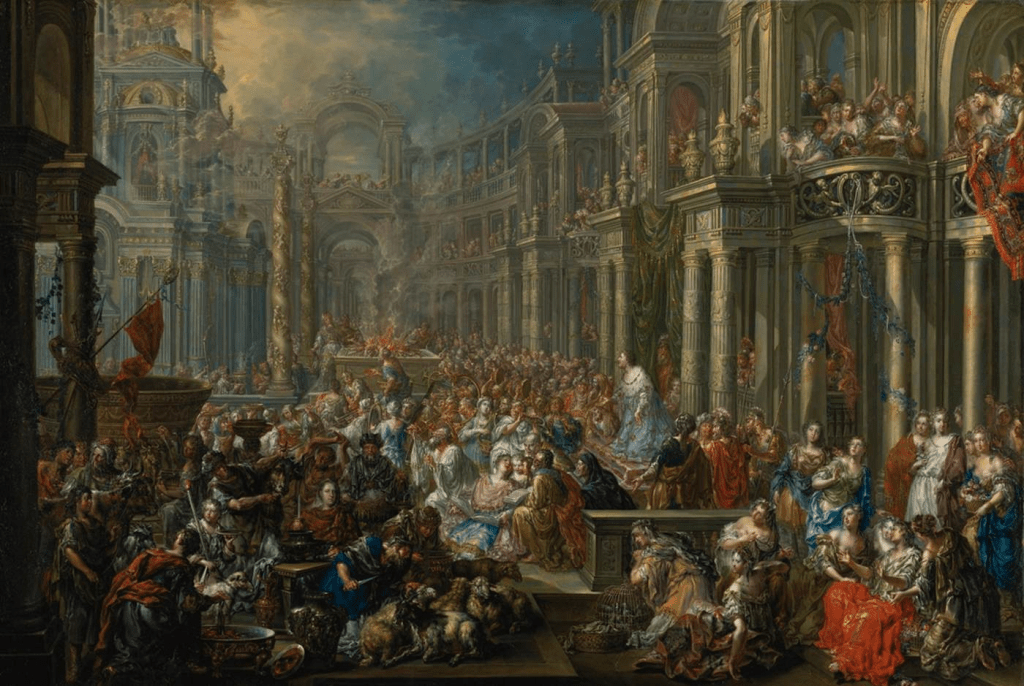
Dedication of Solomon’s Temple in Jerusalem, by Johann Georg Platzer (1704-1761)

I admit, at many times, that I am prone to melancholy. I tend to be quick at accepting blame, and rather slow at owning my good work. Another way of putting this is that it is easier to give than to receive.

Those who have endured a lot of hard circumstances, and persevered through many adversities, can sometimes be reticent to accept the good, the abundant, and the beautiful, whenever it comes to us in this life.

Waiting for the other shoe to drop, far too many people hold back themselves from receiving and enjoying the really good things in life. They worry that the goodness will disappear, or be taken away; and so, they withhold gratitude and blessing, whenever they are in the presence of great abundance.

Just so you know, in case there are those of you who need to hear it spelled out plainly: That’s messed up.

People are meant to be abundantly generous, as well as wildly receptive. It’s likely why there are so many spiritually unhealthy persons in the world.

Bless their hearts, they give a lot, without receiving much, and then their spiritual diarrhea makes it so they can’t give anymore. And they oftentimes give to those who are in such a habit of receiving (and not giving) that the receiver’s spiritual constipation becomes a terrible problem.

Let’s avoid both extremes by letting ourselves both give and receive with equal abandon. No one can be spiritually growing, healthy, and mature without the dynamic of giving and receiving.

Solomon knew how to do both. King Solomon was the king of abundance. He accepted and received big; and he gave and blessed big. Nobody before him or after him received and gave more.

The Temple, in all of its glory and grandeur, with the Ark of the Covenant encrusted with gold as the central object in the building, was all for a God who doesn’t live in houses, a God who is invisible.

In Solomon’s dedication of the Temple, he made it clear that the God of Israel is not, and cannot, be restricted to, or located within, a single place. Thus, the Lord is limitless, and not subject to any human manipulation.

God is free to give with great abandon. And God is also free to take away. Blessed be the name of the Lord God. If we continually try and anticipate or predict what God will do, we will likely be a nervous ball of anxiety all of the time, wondering when the unexpected and/or unwanted will visit us.

It is much better to receive the good things the Lord gives us, and enjoy them while we have them.

“I came that they may have life and have it abundantly.”

Jesus (John 10:10)

Nothing is permanent, with the exception of relationships and love. So, if we can connect the temporal material things of this life in service to the immaterial realities of this universe, then we are in a position to experience peace, joy, and satisfaction.

If and when the material disappears, or is taken away, then it shall neither defeat us, nor destroy us. For our relational connections with God and others exist, and are free flowing, with the energy of gracious receiving and giving as the conduit of abundant life.

Melancholy is important and has its place for us in this present life; yet, so do things like celebration, dedication, joy, exuberance, emotional commitment, and open love. Indeed, to have these in abundance is a reflection of the God of abundance, in whose name we are bold to pray:

God of abundance, you have fed us with the bread of life and cup of salvation; you have united us with Christ and one another; and you have made us one with all your people in heaven and on earth. Now send us forth in the power of your Spirit, that we may proclaim your redeeming love to the world and continue forever in the risen life of Christ our Savior. Amen.

Build It Now! (Haggai 1:1-15a)

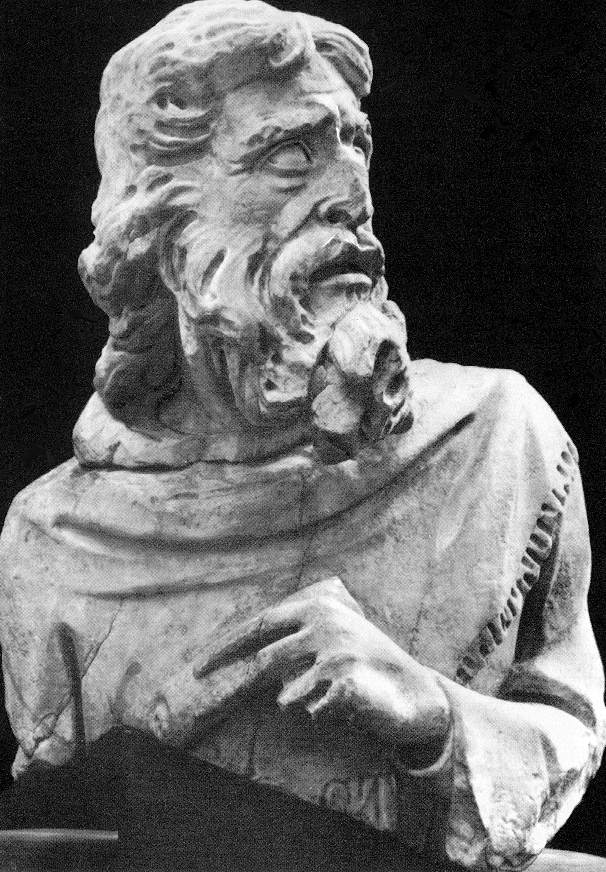
Statue of the prophet Haggai, by Giovanni Pisano, c.1290 C.E., Siena, Italy

In the second year of King Darius, on the first day of the sixth month, the word of the Lord came through the prophet Haggai to Zerubbabel son of Shealtiel, governor of Judah, and to Joshua son of Jozadak, the high priest:

This is what the Lord Almighty says: “These people say, ‘The time has not yet come to rebuild the Lord’s house.’”

Then the word of the Lord came through the prophet Haggai: “Is it a time for you yourselves to be living in your paneled houses, while this house remains a ruin?”

Now this is what the Lord Almighty says: “Give careful thought to your ways. You have planted much but harvested little. You eat, but never have enough. You drink, but never have your fill. You put on clothes but are not warm. You earn wages, only to put them in a purse with holes in it.”

This is what the Lord Almighty says: “Give careful thought to your ways. Go up into the mountains and bring down timber and build my house, so that I may take pleasure in it and be honored,” says the Lord. 

“You expected much, but see, it turned out to be little. What you brought home, I blew away. Why?” declares the Lord Almighty. “Because of my house, which remains a ruin, while each of you is busy with your own house. 

Therefore, because of you the heavens have withheld their dew and the earth its crops. I called for a drought on the fields and the mountains, on the grain, the new wine, the olive oil and everything else the ground produces, on people and livestock, and on all the labor of your hands.”

Then Zerubbabel son of Shealtiel, Joshua son of Jozadak, the high priest, and the whole remnant of the people obeyed the voice of the Lord their God and the message of the prophet Haggai, because the Lord their God had sent him. And the people feared the Lord.

Then Haggai, the Lord’s messenger, gave this message of the Lord to the people: “I am with you,” declares the Lord. So the Lord stirred up the spirit of Zerubbabel son of Shealtiel, governor of Judah, and the spirit of Joshua son of Jozadak, the high priest, and the spirit of the whole remnant of the people. They came and began to work on the house of the Lord Almighty, their God, on the twenty-fourth day of the sixth month. (New International Version)

Timing is everything.

There is a time to ponder and plan and there’s a time to move and act. If the time is ripe for action, then the lack of initiative is plain old procrastination. But how do you know when to act?

If the Lord says it’s time, well then, it’s time!

God’s people wouldn’t have described their inaction in rebuilding God’s house as dragging their feet. They perceived their inertia as a sensible delay.

Yet, the Lord saw the people’s approach as inexcusable enough to send a prophet with a specific message and call to action: Build the house now!

Let’s get a feel for why God’s call for immediacy comes when it does. In the ancient world, it had always been the practice of armies to assimilate conquered peoples into the culture of the conquering king. 

In the eighth century B.C.E., the Assyrian Empire conquered the northern kingdom of Israel. The Assyrians took most of the people into captivity, left the poorest of the people alone, and resettled the land with some of their own Assyrian people. The inevitable intermarriages resulted in their progeny being known as the Samaritans in the New Testament Gospels, as the Samaritans.

Two-hundred years after Assyria conquered Israel, Nebuchadnezzar besieged the southern kingdom of Judah and took over Jerusalem. He carried Daniel and all the other educated and professional people to Babylon. In the course of taking the city, Nebuchadnezzar tore down the wall and destroyed the temple that Solomon had made.

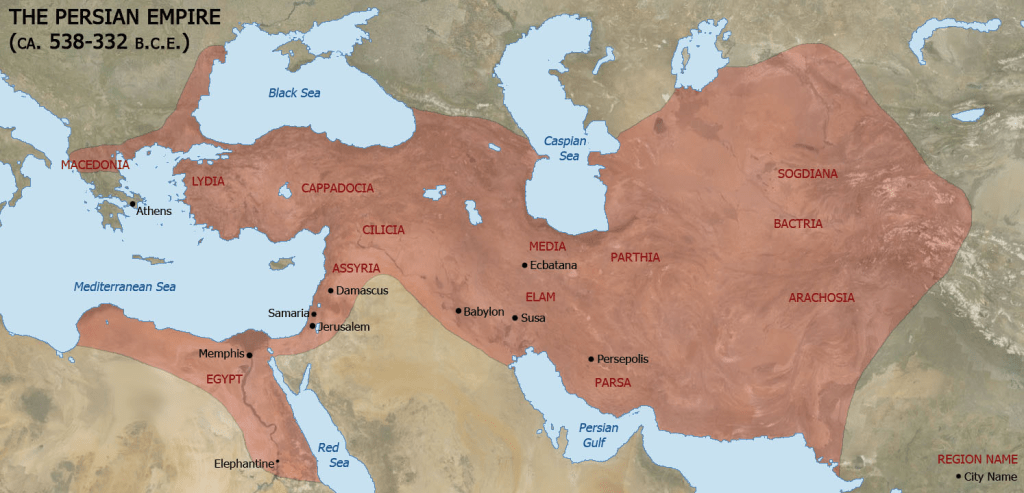
During the Babylonian exile, the Persians conquered Babylon and became rulers of a large geographical empire. Because the massive Persian Empire was in control of so many different kinds of people across such a vast territory, they were not able to operate as previous empires did by assimilation and resettlement. 

Instead, the Persians did something new and different: They encouraged and enabled their conquered peoples to keep their religion and their culture. The only caveat was that they had to give tribute and allegiance to the empire and pray for the king. This is why Nehemiah, Ezra, and Haggai were able to return to Jerusalem and given royal authority to rebuild the wall and the temple. 

But, from the git go, there was opposition to the rebuilding from the old Canaanite inhabitants of the land. After many years, the wall was rebuilt but the temple restoration bogged down. The people slowly became discouraged and lost enthusiasm to do the work. 

Understandably, the people got caught up in taking care of their own homes and just plain neglected working on the temple. Over time, they just forgot about the entire project. But God didn’t.

The prophet Haggai made it clear that the people’s mental distraction and physical neglect was taken as disrespect by the Lord. Haggai insisted that the reason the people were not experiencing blessing on their land was because they simply did not have their priorities straight. 

Thus, God sent the prophet Haggai to preach a sermon entitled: Build the house now! 

To the people’s credit, they responded to the call of God and started rebuilding God’s house. The work was completed. However, there seemed to be a problem. 

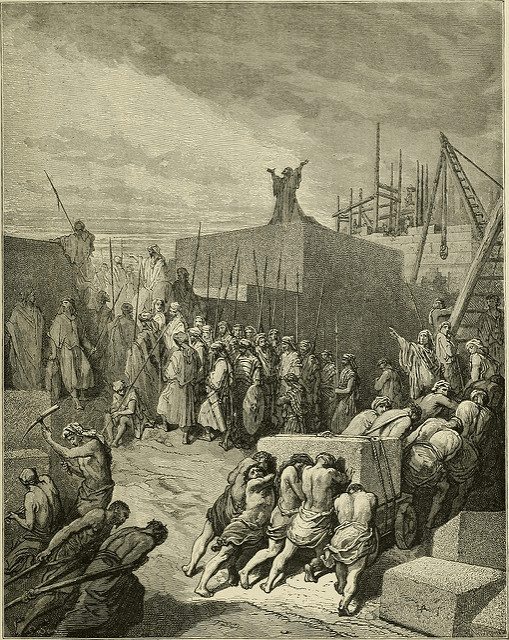
Rebuilding the Temple, by Gustave Doré, 1866

Moving into the rest of Haggai’s prophecy, the newly restored temple didn’t look anything like Solomon’s grand and glorious temple. Many of the older worshipers could still remember Solomon’s temple; to them, the rebuilt temple seemed like a bologna sandwich compared to the T-bone steak of the past. 

So, God sent Haggai again to encourage the people. The Lord will be with them. The restored temple may not look the same, but what makes the temple great is God’s glory.

An important takeaway from the prophecy of Haggai is that the Lord is a jealous God; God’s people are to worship the Lord with all of their heart, soul, mind, and strength. 

We also learn that the Lord is sovereign and supreme over all creation. God owns everything and will use it all to accomplish divine purposes on this earth. 

In addition, we see that God calls people to new work and fresh ministry. The Lord was behind the destruction of the old temple; and when the time was right, God called the people to build a new ministry.

And we learn something about ourselves, as well. God’s people need to hear and respond to God’s call. Haggai put a God-sized vision before the people; he helped them imagine what the new temple would be like – full of God’s glory.

God is doing a new thing. The Lord continues calling people to:

  • Seek first the kingdom of God. (Deuteronomy 4:29; Psalm 63:1; Matthew 6:33; Hebrews 11:6)
  • Love God with whole hearts. (Deuteronomy 6:5, 11:1-22, 19:9, 30:16-20; Matthew 22:37)
  • Love neighbor as we love ourselves. (Leviticus 19:18; Matthew 22:38; Romans 13:9; Galatians 5:14)
  • Make disciples of Christ from all nationalities. (Matthew 28:18-20)
  • Be witnesses to God’s glory in Christ. (Psalm 66:16; Acts 1:8; 2 Timothy 2:2)
  • Obey the Holy Spirit. (Acts 5:31-33; Romans 6:17; Hebrews 5:8-9)

It is good to remember and celebrate past ministries; and it is also good to throw ourselves into the new ministries which God calls us and to build them for God’s glory.

My friends, build it now.

Glory to you, O God, the One who is able to do far beyond all that we could ask or imagine by your divine power at work within us; glory to you, blessed God, in the church and in Christ Jesus for all generations, through the empowering Holy Spirit, forever and always. Amen.

1 Corinthians 3:10-23 – The Ultimate Sacred Space

According to the grace of God given to me, like a skilled master builder I laid a foundation, and someone else is building on it. Each builder must choose with care how to build on it. For no one can lay any foundation other than the one that has been laid; that foundation is Jesus Christ. Now if anyone builds on the foundation with gold, silver, precious stones, wood, hay, straw—the work of each builder will become visible, for the Day will disclose it, because it will be revealed with fire, and the fire will test what sort of work each has done. If what has been built on the foundation survives, the builder will receive a reward. If the work is burned up, the builder will suffer loss; the builder will be saved, but only as through fire.

Do you not know that you are God’s temple and that God’s Spirit dwells in you? If anyone destroys God’s temple, God will destroy that person. For God’s temple is holy, and you are that temple.

Do not deceive yourselves. If you think that you are wise in this age, you should become fools so that you may become wise. For the wisdom of this world is foolishness with God. For it is written, “He catches the wise in their craftiness,” and again, “The Lord knows the thoughts of the wise, that they are futile.”

So, let no one boast about human leaders. For all things are yours, whether Paul or Apollos or Cephas or the world or life or death or the present or the future—all belong to you, and you belong to Christ, and Christ belongs to God. (NRSV)

You have an incredibly special position and status which no one can ever take away.

We were made by and for God. In the beginning, the creative activity of God achieved its pinnacle in the formation of a man and a woman. Only humanity carries within them the image and likeness of God. People are unique, special, and set apart as the creatures who can enjoy a close relational fellowship with their Creator.

However, humanity fell into disobedience, which introduced sin and death into God’s good world. Ever since that time, God has been on a rescue mission. The Holy Scriptures are an unfolding drama of redemption in which a heart-stricken God goes out of the way to make and keep promises to a sinful people. The Israelites, a people set apart from all other people, were meant to be devoted to God in such a way that the world would be drawn to their relationship with the Lord and with the created order.

Yet again, even with an impressive temple where people met God in sacred rituals and activities, the people went astray and followed their ancestors into worshiping other gods. God, ever the gracious Lord who does not forget the divine covenant of love, sent his Son, Jesus, as the ultimate fulfillment of all the good promises made.  Through the redemptive events of Christ’s cross, resurrection, and ascension the deliverance from all that is wrong and broken in this world is reversed. We are blessed with pardon and redemption from the slavery of sin.  We are given a renewed status as God’s people.

If this were not enough, God has given us the Spirit to help us. Christians, followers of Jesus Christ, are never alone. A merciful God makes us a holy people and the temple where the Lord dwells by means of the Spirit. In the Old Testament, the sacred space of worship was a physical building. Approaching the holy God meant entering a holy temple, set apart for connection between the divine and the human. The midpoint of history in which all events hinge is the cross of Christ. His redeeming work has transformed the world. 

Now, we are the temple of God, the sacred place where God meets with us. The glory of God is to be found, once again, in human beings. It is in this rich understanding of God’s activity and humanity’s new status that the Apostle Paul appealed to with a pointed rhetorical question: “Do you not know that you are God’s temple and that God’s Spirit dwells in you?”

“The church is not a religious community of worshippers of Christ but is Christ himself who has taken form among people.”

Dietrich Bonhoeffer

The Corinthian church was in grave danger of doing the thing that all lost humanity had done through the ages.  They were breaking down into divisions and conflicts and were not thinking of others as God’s special people.  Paul named them collectively as God’s temple. They were not individual temples but one holy sacred temple together. This theology and anthropology were meant to teach, persuade, chastise, and encourage the Christians that there was no place for special-interest groups in the church; no room for following pet teachers and preachers; and no reason to ostracize others who didn’t agree exactly as you do.

Believers in Jesus Christ are collectively the people of God, the temple in which God dwells. This makes them a holy people, set apart for the exclusive worship of the triune God. We are to live up, not down, to who we are in Christ, in the Spirit, in the realm of God’s kingdom.

We are meant to return to the foundation of the temple. If the foundational works of this great temple of God are the redemptive events of Jesus, with Christ himself as the chief cornerstone of the structure, then we are meant to return in this great season of Lent to Jesus. With meekness and humility, we are to come to God in Christ by the Spirit and confess our many sins, repent of them all, and return to God as the special, holy, and loved people we are.

For far too long Paul’s letter to the Corinthians has been used to poke at people for smoking or drinking too much or generally not caring for our physical bodies. This was not so much Paul’s understanding. He was thinking much more along the lines of church unity, harmony, mutual love, grace, encouragement, and making decisions which are best for the common good of all. To break down Paul’s instruction to individual habits which harm the body is a woefully truncated view of his teaching. 

Instead, we are to have a high view of one another. We, together, are the people of God. We, together, are meant for holy worship of the triune God. We, together, are the complex expression of God’s creative action – a temple set in the middle of a watching world. 

Therefore, we are to be concerned for one another. We are to act as one holy people of God. We are to reflect the love, unity, and fellowship of the Holy Trinity in our life together. Let us then encourage each other toward love and good deeds; upholding the common good; and extending grace in all circumstances. For this is what temple living looks like.

Holy God, you have set us apart together as your holy people. Help so to live up to our status as your beloved creatures that we are continually mindful of you, one another, and the grace you give for all circumstances.  May our foundation be strong in the person and work of Jesus Christ, your Son, our Savior, as the Spirit dwells in us together. Amen.