Consider Rahab (Joshua 2:15-24)

Rahab the harlot helps the Israelite spies escape from Jericho

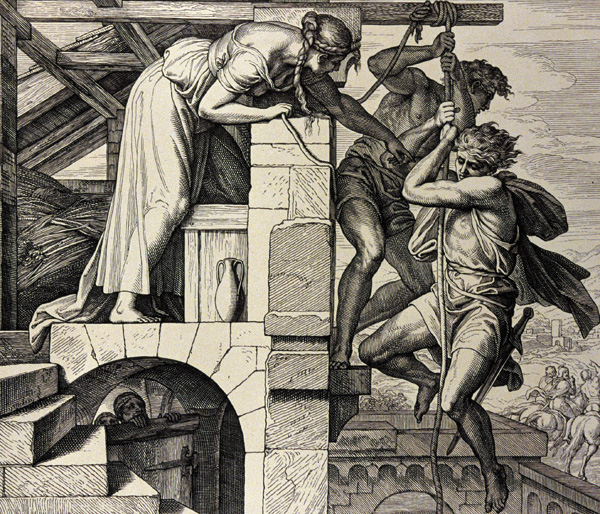
So she [Rahab] let them [the Israelite spies] down by a rope through the window, for the house she lived in was part of the city wall [of Jericho]. She said to them, “Go to the hills so the pursuers will not find you. Hide yourselves there three days until they return, and then go on your way.”

Now the men had said to her, “This oath you made us swear will not be binding on us unless, when we enter the land, you have tied this scarlet cord in the window through which you let us down, and unless you have brought your father and mother, your brothers and all your family into your house. If any of them go outside your house into the street, their blood will be on their own heads; we will not be responsible. As for those who are in the house with you, their blood will be on our head if a hand is laid on them. But if you tell what we are doing, we will be released from the oath you made us swear.”

“Agreed,” she replied. “Let it be as you say.”

So she sent them away, and they departed. And she tied the scarlet cord in the window.

When they left, they went into the hills and stayed there three days, until the pursuers had searched all along the road and returned without finding them. Then the two men started back. They went down out of the hills, forded the river and came to Joshua son of Nun and told him everything that had happened to them. They said to Joshua, “The Lord has surely given the whole land into our hands; all the people are melting in fear because of us.” (New International Version)

A drama unfolded as the Israelites began entering and taking the Promised Land. Joshua, their leader, secretly sent two men as spies to look over the land and check out the prominent city of Jericho. The spies left and ended up in the house of a harlot named Rahab. They hid there because it had been found out they were in the city.

Rahab was able to divert and send away the pursuers who were looking for the spies, telling them that the men left, and that they should leave and go catch them. But she had actually hid them on the roof of her house.

Rahab took the spies into her home because she realized and affirmed that God was giving the land to the Israelites. Everyone in the city had heard the stories of how the Lord brought them out of Egyptian slavery and into the land of Canaan. In an insightful and beautiful confession of faith, Rahab told them:

“I know that God has given you the land. We’re all afraid. Everyone in the country feels hopeless. We heard how God dried up the waters of the Red Sea before you when you left Egypt, and what he did to the two Amorite kings east of the Jordan, Sihon and Og, whom you put under a holy curse and destroyed. We heard it and our hearts sank. We all had the wind knocked out of us. And all because of you, you and God, your God, God of the heavens above and God of the earth below.” (Joshua 2:8-11, MSG)

The men promised to show Rahab and her family mercy when they came to take the city, just as she had shown them grace in the face of trouble. So, today’s Old Testament lesson picks up the story from that point, as she sends the spies safely on their way.

That Rahab, a prostitute, is the heroine of the story is no accident or anomaly. Her profession of faith is central to the drama. She was living in the city wall, which is reflective of her status as being on the margins of society. And having strange men in her home would not have been weird in her neighborhood. It also made it rather easy to get the spies out of the city when trouble was brewing.

Most importantly, however, Rahab – the ultimate outsider in society – becomes the consummate insider. It is astonishing that a Gentile woman of disrepute has a story about her, and even told from her perspective – and not from the point of view of an Israelite man.

Rahab’s bold assertion of faith is both sincere and linked to God’s promise that the Israelites would take the land. Rahab is Exhibit A of the kind of person that inherits the kingdom of God. Rahab’s faith, not her works or reputation, is what spared her life and spared her from judgment.

Please ponder and consider that truth for a bit. Sit with it if you must – the reality that Rahab was judged neither by the spies nor God.

In far too many quarters of the Christian (and broadly religious world) judgment instead of mercy is levied to persons like Rahab. If there is anyone who should have a non-judgmental presence toward “sinners” it is Christians. And, if there is any institution which ought to consistently, both personally and through policy, display unflagging grace and forsake judgment, it is the Church.

Yet, unfortunately, as many have experienced, the Church has often fallen short of the glory of God’s grace in Christ by condemning people of ill repute. Perhaps we all need to rethink what faith truly is: not a checklist of doctrinal beliefs to sign-off on but a confident and bold action based solidly in the promises of God.

Knowing what those promises are, and living our lives appropriately in consideration of them, is the kind of faith that pleases God. Those who attempt to be judge, jury, and executioner need not apply as followers of God.

Genuine righteousness is never earned; it is given by the compassionate grace of God. So, lay hold of God’s promise of grace and mercy with gusto! Let the gracious God, who is full of steadfast love, affect the way we live our lives. Believe with a bold biblical belief that God always does what God has decreed and proclaimed to do.

Lord God, the gracious, almighty, and Holy One of all: I may have not always lived my life well, yet I trust you today that you can and will deliver me from all my troubles because you are with me. May your Holy Spirit give me the gift of faith to believe in such a way that forever impacts how I live my life in service to you and for the common good of all persons – no matter who they are. Amen.


The Redeemed and Responsive Soul (Psalm 107:1-7, 33-37)

O give thanks to the Lord, for he is good,
    for his steadfast love endures forever.
Let the redeemed of the Lord say so,
    those he redeemed from trouble
and gathered in from the lands,
    from the east and from the west,
    from the north and from the south.

Some wandered in desert wastes,
    finding no way to an inhabited town;
hungry and thirsty,
    their soul fainted within them.
Then they cried to the Lord in their trouble,
    and he delivered them from their distress;
he led them by a straight way,
    until they reached an inhabited town…

He turns rivers into a desert,
    springs of water into thirsty ground,
a fruitful land into a salty waste,
    because of the wickedness of its inhabitants.
He turns a desert into pools of water,
    a parched land into springs of water.
And there he lets the hungry live,
    and they establish a town to live in;
they sow fields and plant vineyards
    and get a fruitful yield. (New Revised Standard Version)

The responsive spirit

A soul full of spiritual abundance responds freely and organically to God with offerings of gratitude for divine rescue and redemption.

The spiritually responsive person is at peace, content, and able to love with a sensitivity to God because they have had their needs for safety, satisfaction, and relational connection fulfilled. So, as a result, they are able to:

  • worship joyfully and praise God
  • speak words of thanksgiving
  • be attentive to self-care and personal well-being
  • use their resources wisely, feeling capable and confident of making good decisions that bless both the church and the world
  • know they are secure in the loving hands of God

The reactive spirit

Conversely, a soul that is empty from spiritual deprivation reacts predictably and robotically to others with frustration and fear.

The spiritually reactive person seems perpetually upset and in chronic emotional pain, feeling rattled and worried most of the time. They do not reflexively look to the Lord. Their needs for safety, satisfaction, and relational connection have not been met. So, as a result, they are:

  • hypervigilant, on the lookout for the bad, which they are convinced is coming
  • focused narrowly with tunnel vision, having lost sight of the big picture
  • prone to overgeneralizing their negative experiences as being the only experiences they ever have
  • searching for continual stimulation, just to seem alive and feel something
  • insecure, wanting constant validation from others because they cannot give themselves any encouragement

So, what do you do when always feeling between a rock and a hard place, experiencing racing thoughts, being anxious more than not, feeling like an abandoned town in the Old West with nothing but tumbleweed moving down the street?

A redeemed soul

In your desperation, call out to God. The Lord can:

  • get you out in the nick of time and deliver you soul from trouble so that you can be grateful for divine love
  • put your feet walking on a wonderful road of grace that leads to a good place of transformation
  • meet your needs for freedom, contentment, and loving relational networks, so that your spirit is full of right relationships, purity, mercy, and peace

You can once again, or maybe for the first time, feel like:

  • A flowing river, instead of sunbaked mud
  • A fruitful orchard, instead of dry dead tree
  • A farmer with much grain and many animals, instead of a homeless person sitting on a pile of dung
  • A person loved and valued by God, instead of a waste of space, breathing air that others could have
  • A sheep who knows the shepherd is watching over them, instead of an insect that everyone steps on

Keep in mind, that the experience of blessing, the encounter of abundance, and the feeling of peace, is not like a simple math equation – as if God were a divine genie that you happened to find and got three wishes.

Rather, the fulfilling spiritual life involves a persistent faith, confident hope, and constant love. These come from God, and are accessed through humility. The proud person will not realize a life of faith, hope, and love, because they believe they already know what is best.

The humble admit their ignorance, their failings, their shame, their guilt, and their desperation.

Approaching God with humility doesn’t mean to heap deprecation and curses on oneself. It just means to be honest with where you are spiritually, emotionally, mentally, and physically. And to cry out for help, knowing you have nothing to offer in return.

In God’s economy, the currency is grace – and not some give-and-take, I’ll-scratch-your-back-if-you-scratch-mine sort of mentality. God’s steadfast love endures forever. God’s kingdom spins on the axis of grace.

The Lord is not a reactive God but a responsive God. The Lord responded to Israel’s cry for deliverance not just with food and drink, but with a city. God did not only meet the immediate needs of the ancient Israelites, for whom the psalmist is one, along with the original recipients; the Lord took care of their larger, long term needs. 

The people needed a place where they could settle down, raise their own crops and tend their own livestock, and have a dependable means of making a living. God satisfied this, and more, by giving them a city where they could settle, be safe, secure, and content.

God can do anything, you know—far more than you could ever imagine or guess or request in your wildest dreams. God does it not by pushing us around, but by working within us, the Spirit deeply and gently providing us with our deepest and greatest needs.

Blessed heavenly Father, you have filled the world with divine beauty: Open our eyes to behold your gracious hand in everything you have done, so that, rejoicing in all your creation, we may learn to serve you with gladness; for the sake of him through whom all things were made, your Son Jesus Christ, our Lord, who with you and the Holy Spirit are one God, now and forever. Amen.

Encountering God (Exodus 19:9-25)

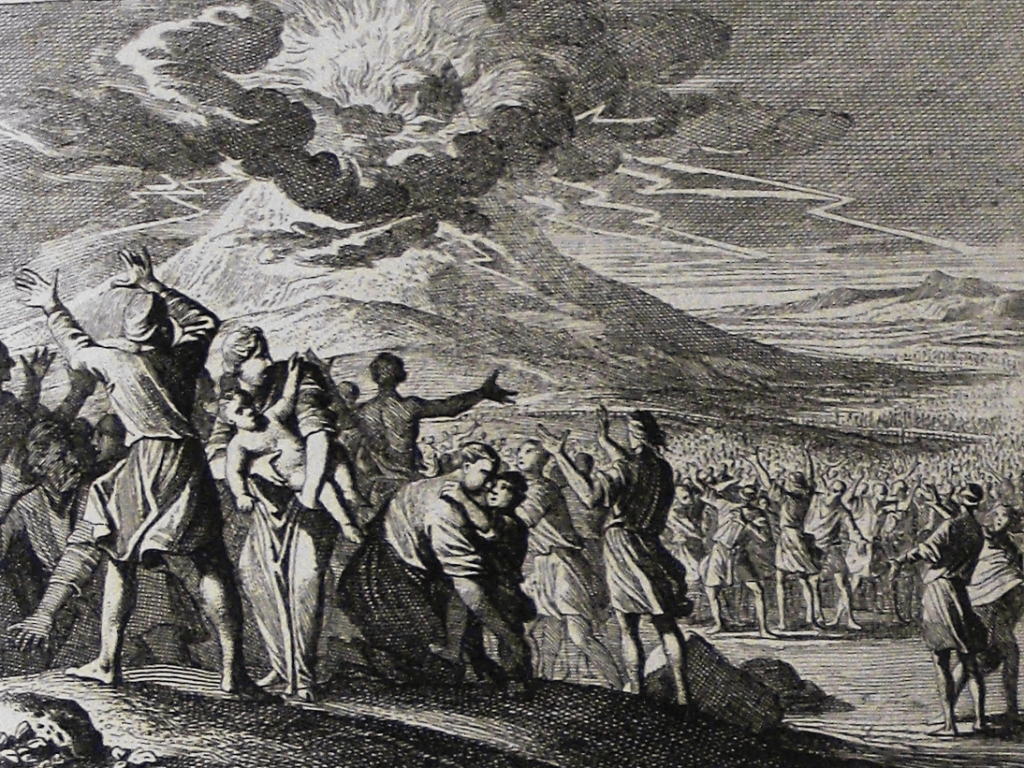
Israel at Mount Sinai, by Jan Luijken (1649–1712)

Then the Lord said to Moses, “I will come to you in a thick cloud, Moses, so the people themselves can hear me when I speak with you. Then they will always trust you.”

Moses told the Lord what the people had said. Then the Lord told Moses, “Go down and prepare the people for my arrival. Consecrate them today and tomorrow, and have them wash their clothing. Be sure they are ready on the third day, for on that day the Lord will come down on Mount Sinai as all the people watch. Mark off a boundary all around the mountain. Warn the people, ‘Be careful! Do not go up on the mountain or even touch its boundaries. Anyone who touches the mountain will certainly be put to death. No hand may touch the person or animal that crosses the boundary; instead, stone them or shoot them with arrows. They must be put to death.’ However, when the ram’s horn sounds a long blast, then the people may go up on the mountain.”

So Moses went down to the people. He consecrated them for worship, and they washed their clothes. He told them, “Get ready for the third day, and until then abstain from having sexual intercourse.”

On the morning of the third day, thunder roared and lightning flashed, and a dense cloud came down on the mountain. There was a long, loud blast from a ram’s horn, and all the people trembled. Moses led them out from the camp to meet with God, and they stood at the foot of the mountain. All of Mount Sinai was covered with smoke because the Lord had descended on it in the form of fire. The smoke billowed into the sky like smoke from a brick kiln, and the whole mountain shook violently. As the blast of the ram’s horn grew louder and louder, Moses spoke, and God thundered his reply. The Lord came down on the top of Mount Sinai and called Moses to the top of the mountain. So Moses climbed the mountain.

Then the Lord told Moses, “Go back down and warn the people not to break through the boundaries to see the Lord, or they will die. Even the priests who regularly come near to the Lord must purify themselves so that the Lord does not break out and destroy them.”

“But Lord,” Moses protested, “the people cannot come up to Mount Sinai. You already warned us. You told me, ‘Mark off a boundary all around the mountain to set it apart as holy.’”

But the Lord said, “Go down and bring Aaron back up with you. In the meantime, do not let the priests or the people break through to approach the Lord, or he will break out and destroy them.”

So Moses went down to the people and told them what the Lord had said. (New Living Translation)

Moses receives the Ten Commandments, by Caspar Luijken (1672-1708)

There’s a lot of drama surrounding today’s Old Testament story. That’s because it’s a big deal when an announcement comes that God is about to show up, speak to the people, and be with them. This is definitely not the stuff of daily mundane life.

The Mount Sinai event is one of the most remembered and talked about events in the Old Testament. This encounter establishes that the presence of the Lord is with Moses, thereby giving him authority over the people. It authenticates the leadership of Moses up to this point – in leading the people out of Egyptian slavery and to the Promised Land.

The presence of God with the people, demonstrated in Moses the leader, assures the Israelites of protection against dangers from other nations and peoples. The divine presence of the Lord will be seen preeminently in the giving of the Law. God’s very Word is encapsulated in the commands and instructions given to Moses on the mountain.

Although the scene on Mount Sinai appears dark, serious, and even scary, it nonetheless is a gift of God’s self-revelation to the people. The Law is a wonderful and gracious provision for Israel. The Lord is providing necessary guidance for living, direction in shaping successful spiritual lives, and the opportunity for obedience to a life-giving system of laws.

If the Israelites hear and obey the Lord, they will be God’s special and treasured people – a nation of priests, a people set apart to be a light for the world.

So, preparations were made for God to enter. The Lord is truly awesome and holy, and so, certain boundaries needed to be established so that the people would be safe and not overcome by such immense light and power. The mountain shakes in anticipation of the divine arrival; the shofar (ram’s horn) is heard, signaling the imminent entrance of God.

The people are assembled by Moses. God descends in the fire, which accompanies the Lord’s presence. Yahweh has come to Israel. The way is now prepared for God’s revelation to be given to Moses in Israel’s hearing. It is an awesome sight and experience.

Perhaps your own days on this earth seem very ho-hum compared to the mountain encounter of Moses and God. You may even feel as if your prayers are puny and don’t get beyond the ceiling of your house. Yet, there is always and continually an opportunity to meet with this very same God, without all the pomp and scariness.

Every single day we have the gracious and wonderful opportunity of opening the book containing a good and merciful God’s self-revelation, and reading gracious words of life to live by. We have guidance for our earthly journey; there is direction for our needy souls.

Your word is a lamp to guide my feet
    and a light for my path. (Psalm 119:105, NLT)

All Scripture is inspired by God and is useful to teach us what is true and to make us realize what is wrong in our lives. It corrects us when we are wrong and teaches us to do what is right. God uses it to prepare and equip his people to do every good work. (2 Timothy 3:16-17, NLT)

Blessed Lord, who caused all Holy Scriptures to be written for our learning: Grant us so to hear them, read, mark, learn and inwardly digest them, so that we may embrace and ever hold fast the blessed hope of everlasting life, which you have given us in our Savior Jesus Christ; who lives and reigns with you and the Holy Spirit, one God, forever and ever. Amen.

Relying on the Presence (Exodus 13:17-22)

When Pharaoh let the people go, God did not lead them on the road through the Philistine country, though that was shorter. For God said, “If they face war, they might change their minds and return to Egypt.” So God led the people around by the desert road toward the Red Sea. The Israelites went up out of Egypt ready for battle.

Moses took the bones of Joseph with him because Joseph had made the Israelites swear an oath. He had said, “God will surely come to your aid, and then you must carry my bones up with you from this place.”

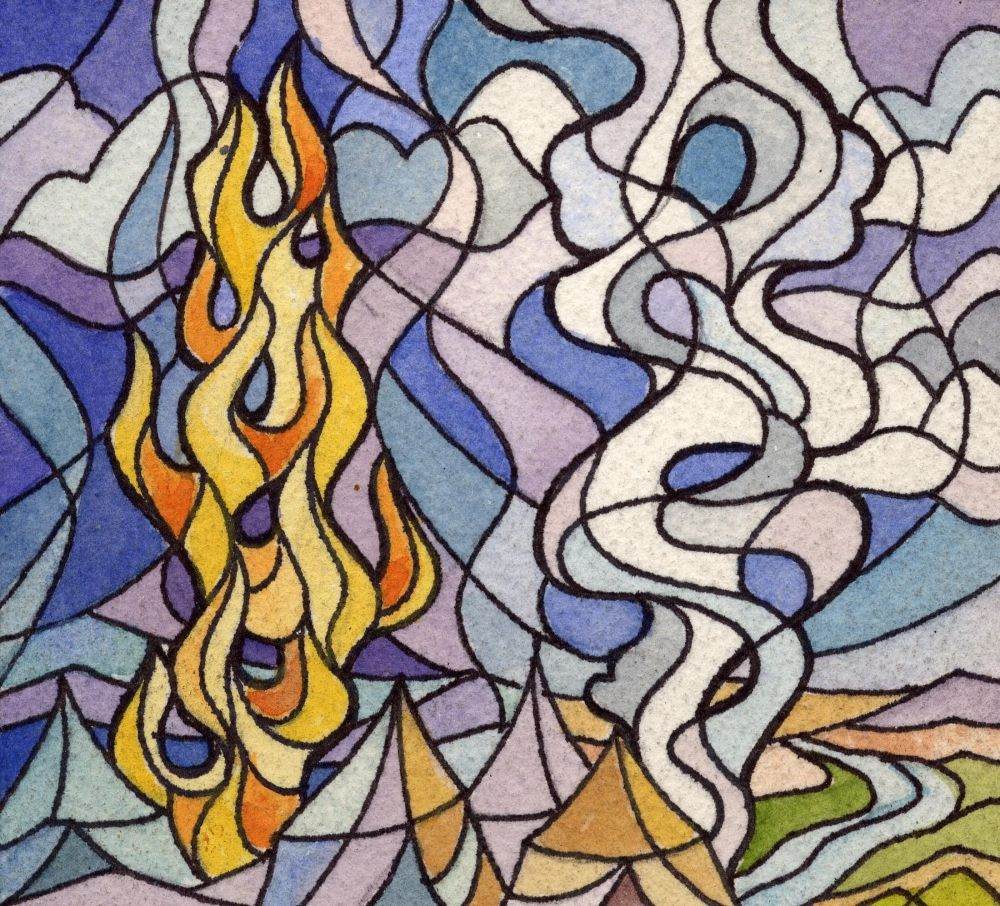
After leaving Sukkoth they camped at Etham on the edge of the desert. By day the Lord went ahead of them in a pillar of cloud to guide them on their way and by night in a pillar of fire to give them light, so that they could travel by day or night. Neither the pillar of cloud by day nor the pillar of fire by night left its place in front of the people. (New International Version)

From a human perspective, God makes some nonsensical decisions in the Bible such as telling Noah to build a big boat in a place with no water; Abraham to leave everything, and later, to sacrifice his son; Moses to stroll into Egypt and tell Pharaoh to let the people go; and, the people to walk through a body of water without getting wet. Indeed, it’s as if God has an odd predilection for making weird requests of people.

Although today’s Old Testament story gives us a glimpse into God’s thinking, the people were not privy to that information. Yes, God’s people were experiencing an unbelievable exodus out of Egypt. Their wildest dreams could not have imagined such a reality as strolling out of slavery having seen not one but a string of miraculous wonders. Yet, God was not done with the miracle thing.

Although many people would really like to see a miracle happen in their lives, rarely do we think about the circumstances we might need to face for that miracle to occur. God typically asks folks to do some outrageous-sounding things to set up the miracle.

An entire nation left Egypt with celebration only to be told to go in a misdirection toward the Promised Land, as if God were somehow geographically challenged. I can imagine that this decision had Moses raising a Spock-like eyebrow and the Israelites wondering if God was off his celestial rocker.

There is, however, a reason why folks like Noah, Abraham, and Moses obeyed instructions that didn’t make sense to them at the time: The Presence of God.

Pillar of Fire, Pillar of Cloud in the Desert, Congregation Beth Emeth, Herndon, VA

It is the personal Presence and power of God which makes all the difference. For God has not promised to create an existence with a zero factor of hardship. God, instead, has created a world that is full, vibrant, and alive with Presence – and a zero tolerance for bullies like Egypt. The uncertainty, doubt, and mystery of the future is thoroughly mitigated with the effusive Presence.

When sitting with patients in the hospital who struggle with the unknown of why they are there and what will become of them (and their families) the last thing I do is try to fabricate reasons so that it makes sense – because it doesn’t, and I’m not going pretend that it does.

Rather, I remind them of what I know: The Presence of God is here. Although God does not go out of the way to give us an easy life, God does, however, go far out of the way to communicate the glorious divine Presence with us.

God kept constant vigil over the ancient Israelites, powerfully seen with the pillar of cloud by day and pillar of fire by night. Nothing was going to happen to the Jewish people without first passing through the mighty hands of God.

Not only do I know God is with us, but I also know the Lord neither slumbers nor sleeps (Psalm 121). When God keeps vigil, God keeps vigil! No smoke or bathroom breaks with God. God’s vigilance is relentless and wondrous, giving assurance to the godly, and terrifying the ungodly.

Once we are out in the wilderness of uncertainty, there is no turning back. And that’s okay – because the Presence of God patrols the area and divinely guards our every move.

For the Christian, the Presence has found its fulfillment in the person of Jesus. Although Christians everywhere serve a risen and ascended Christ, the Divine Presence remains with glorious constancy through the Holy Spirit, the Paraclete, the One who is consistently alongside us, empowering us and advocating on our behalf.

The beautiful theological truth here is that God is both transcendent (far above us) and immanent (intimately close to us) at the same time, all the time. Armed with such a robust theological understanding, trust and confidence come to us without having to resort to ginning up positive thoughts.

Instructions and commands which seem like nonsense? No problem. The Transcendent and Immanent One has the Presence all around it. In between a rock-and-hard-place (or an Egyptian army and a Red Sea)? Not an issue. I willingly place myself there knowing that with the Presence, the miraculous is about to happen.

We need not buck the difficult circumstances. The Presence has got this.

So, then, let us pray for the Church and for the world, and let us thank God for the great Presence: In the power of the Spirit and in union with Christ, we pray to you, Almighty God, and Father. From the rising of the sun to its setting, we pray to you, ever-vigilant Lord, on behalf of those in despair and darkness, that they may find the hope and light of Christ; those in fear of death, that they may find faith through the resurrection of Jesus; prisoners and captives, widows and orphans, and all those who today need a blessed assurance of the Presence; through Jesus Christ, your Son, our Lord, who with you and the Holy Spirit are one God, now and forever. Amen.