Exodus 3:16-25 – A Great Reversal

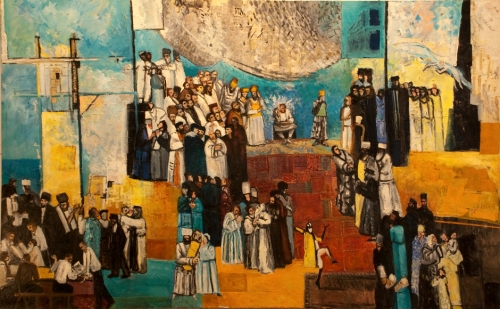
Moses and the Children of Israel by Richard McBee
“Moses and the Children of Israel” by Richard McBee

“Go, assemble the elders of Israel and say to them, ‘The Lord, the God of your fathers—the God of Abraham, Isaac and Jacob—appeared to me and said: I have watched over you and have seen what has been done to you in Egypt. And I have promised to bring you up out of your misery in Egypt into the land of the Canaanites, Hittites, Amorites, Perizzites, Hivites and Jebusites—a land flowing with milk and honey.’ 

“The elders of Israel will listen to you. Then you and the elders are to go to the king of Egypt and say to him, ‘The Lord, the God of the Hebrews, has met with us. Let us take a three-day journey into the wilderness to offer sacrifices to the Lord our God.’ But I know that the king of Egypt will not let you go unless a mighty hand compels him. So, I will stretch out my hand and strike the Egyptians with all the wonders that I will perform among them. After that, he will let you go. 

“And I will make the Egyptians favorably disposed toward this people, so that when you leave you will not go empty-handed. Every woman is to ask her neighbor and any woman living in her house for articles of silver and gold and for clothing, which you will put on your sons and daughters. And so, you will plunder the Egyptians.” (NIV) 

Moses spent forty years in the back side of the desert tending sheep. The first forty years were lived in the most powerful place on earth at the time, Egypt. Although Moses had a privileged position, he forsook his place to be in solidarity with the enslaved Israelites. With a skewed sense of timing and method, he slew a cruel Egyptian, and was forced to flee into the desert. 

The time eventually became ripe, and God was on the move. At eighty years old, God called Moses out of the desert and back to Egypt. The deliverance was going to be accomplished according to God’s designs and purposes, and not from the impetuous actions of a younger Moses. God knew exactly what he was doing and put Moses on a course which would strike at the heart of imperial Egypt and bring freedom to millions of slaves. 

Today’s story is laced thick with divine promises. After all, it is the promises of God which give people hope and a future. Referring to himself as the God of Abraham, Isaac, and Jacob, the Lord connects the generations-long covenant promise to the Israelites and reminded them they are not forgotten. God’s covenant has neither disappeared nor changed; it still exists. While the Jews were languishing in slavery, God was not aloof but watching – carefully inspecting, caring, and paying close attention. 

The inheritance of the Promised Land was coming, and it would be realized. God affirmed the covenant, knowing the plans he has for them – plans to give them abundance and joy. And God knew full well that dislodging the Israelites from Egypt would take some work, since Pharaoh relied so heavily on slave labor to support his massive imperial state. 

You, like me, have likely noticed that God tends to move rather slow by our standards. We might question and wonder about so much injustice going unabated for so long. Yet, that is our perspective of things, not God’s. Whereas we often have our own self-interest at mind, the Lord has the concern of an entire world. God is patient and long-suffering, providing full opportunity for both individual and national repentance. The Lord is on the lookout for people to amend their errant ways and return to their true purpose for living. He only judges at the proper time. 

And when that time comes, look out! Nothing can stand in the way of God’s good plans for the earth. The ancient Egyptians had built an empire on the backs of slavery, and everything went into supporting the power and wealth of the state. God was not okay with this situation. As he had done many times before, the Lord would thoroughly dismantle and destroy the powerful system of oppression. God is the expert at flip-flopping the status of people – the slaves become free, and the free are bound; the hated become favored, and those who enjoyed all the perks of power and privilege become the despised. 

Embracing God’s upside-down kingdom means advocating for justice, righteousness, and holiness for all people, not just a select few whom I like. Jesus, over 1,500 years after Moses and the exodus from Egypt, had this to say: 

“Those who are last now will someday be first, and those who are first now will someday be last.” (Matthew 20:16, NCV) 

“Blessed are you who are poor, 
    for yours is the kingdom of God. 
“Blessed are you who are hungry now, 
    for you will be filled. 
“Blessed are you who weep now, 
    for you will laugh. 

“Blessed are you when people hate you, and when they exclude you, revile you, and defame you on account of the Son of Man. Rejoice in that day and leap for joy, for surely your reward is great in heaven; for that is what their ancestors did to the prophets. 

“But woe to you who are rich, 
    for you have received your consolation. 
“Woe to you who are full now, 
    for you will be hungry. 
“Woe to you who are laughing now, 
    for you will mourn and weep. 

“Woe to you when all speak well of you, for that is what their ancestors did to the false prophets. (Luke 6:20-26, NRSV) 

And the Apostle Paul said to the Church: 

“For our present troubles are small and won’t last very long. Yet they produce for us a glory that vastly outweighs them and will last forever!” (2 Corinthians 4:17, NLT) 

The New Testament references are not meant to sanitize or put a positive spin on the very real suffering that so many people have endured both past and present. It is, however, meant to lift-up the reality that we have a sure and certain hope. Our trust in the promises and presence of God will eventually be realized and gives shape to how we live today in persistent prayers with patience and perseverance. 

So, may the Lord of all creation bless and protect you. May the Lord show you mercy and kindness in your affliction. And, may the Lord be good to you and give you peace. Amen. 

Genesis 49:1-33 – The Long View

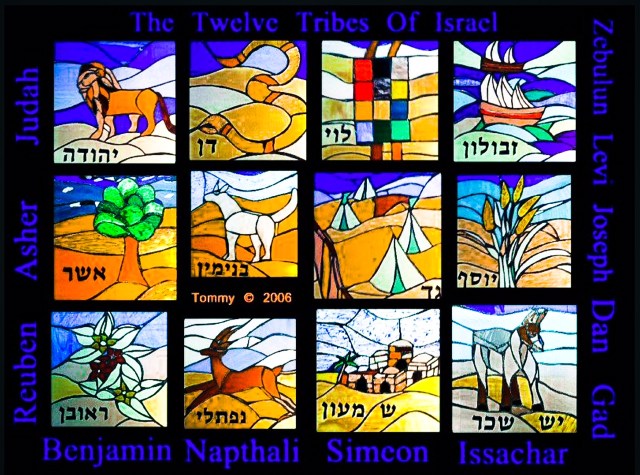
Blessing of the Twelve Tribes

Then Jacob called for his sons and said: “Gather around so I can tell you what will happen to you in days to come.

“Assemble and listen, sons of Jacob;
listen to your father Israel.

“Reuben, you are my firstborn,
my might, the first sign of my strength,
excelling in honor, excelling in power.
Turbulent as the waters, you will no longer excel,
for you went up onto your father’s bed,
onto my couch and defiled it.

“Simeon and Levi are brothers—
their swords are weapons of violence.
Let me not enter their council,
let me not join their assembly,
for they have killed men in their anger
and hamstrung oxen as they pleased.
Cursed be their anger, so fierce,
and their fury, so cruel!
I will scatter them in Jacob
and disperse them in Israel.

“Judah, your brothers will praise you;
your hand will be on the neck of your enemies;
your father’s sons will bow down to you.
You are a lion’s cub, Judah;
you return from the prey, my son.
Like a lion he crouches and lies down,
like a lioness—who dares to rouse him?
The scepter will not depart from Judah,
nor the ruler’s staff from between his feet,
until he to whom it belongs shall come
and the obedience of the nations shall be his.
He will tether his donkey to a vine,
his colt to the choicest branch;
he will wash his garments in wine,
his robes in the blood of grapes.
His eyes will be darker than wine,
his teeth whiter than milk.

“Zebulun will live by the seashore
and become a haven for ships;
his border will extend toward Sidon.

“Issachar is a rawboned donkey
lying down among the sheep pens.
When he sees how good his resting place is
and how pleasant is his land,
he will bend his shoulder to the burden
and submit to forced labor.

“Dan will provide justice for his people
as one of the tribes of Israel.
Dan will be a snake by the roadside,
a viper along the path,
that bites the horse’s heels
so that its rider tumbles backward.

“I look for your deliverance, Lord.

“Gad will be attacked by a band of raiders,
but he will attack them at their heels.

“Asher’s food will be rich;
he will provide delicacies fit for a king.

“Naphtali is a doe set free
that bears beautiful fawns.

“Joseph is a fruitful vine,
a fruitful vine near a spring,
whose branches climb over a wall.
With bitterness archers attacked him;
they shot at him with hostility.
But his bow remained steady,
his strong arms stayed limber,
because of the hand of the Mighty One of Jacob,
because of the Shepherd, the Rock of Israel,
because of your father’s God, who helps you,
because of the Almighty, who blesses you
with blessings of the skies above,
blessings of the deep springs below,
blessings of the breast and womb.
Your father’s blessings are greater
than the blessings of the ancient mountains,
than the bounty of the age-old hills.
Let all these rest on the head of Joseph,
on the brow of the prince among his brothers.

“Benjamin is a ravenous wolf;
in the morning he devours the prey,
in the evening he divides the plunder.”

All these are the twelve tribes of Israel, and this is what their father said to them when he blessed them, giving each the blessing appropriate to him.

Then he gave them these instructions: “I am about to be gathered to my people. Bury me with my fathers in the cave in the field of Ephron the Hittite, the cave in the field of Machpelah, near Mamre in Canaan, which Abraham bought along with the field as a burial place from Ephron the Hittite. There Abraham and his wife Sarah were buried, there Isaac and his wife Rebekah were buried, and there I buried Leah. The field and the cave in it were bought from the Hittites.”

When Jacob had finished giving instructions to his sons, he drew his feet up into the bed, breathed his last and was gathered to his people. (NIV)

The theme of confidence works its way through the patriarch Jacob’s deathbed prophecies and blessings – a resolute conviction in the promises of God, that he will accomplish what he said he would do. Jacob expressed the hope and sure belief that God would bring the Israelites out of Egypt and into the land of Canaan as their inheritance – and, ultimately to the City of God, the eternal inheritance.

The Christian will find much in Judah’s blessing as the promise of the coming Christ, Jesus. Mentioning the implements of “staff” and “scepter” are symbols of authority. And, the reference to a donkey communicated a ruler was coming, as donkeys were the preferred mounts of royalty in ancient times. What is more, the washing of garments in wine, and eyes darker than wine, are allusions to the future blessing and abundance there will be through the tribe of Judah. In fact, the first miracle of Jesus was turning water into wine – a deliberate attempt by the Apostle John to connect Jesus with Old Testament messianic prophecies of abundance and blessing. (John 2:1-12)

long hallway

It is important for us to take the long view of life, keeping in mind that it took eighteen centuries for Jacob’s prophecy of Judah to occur. This long view is what gives us our confidence in life and provides the patience and perseverance we need right now.  Keeping in mind the big picture of God’s work in this world is necessary because if we do not, we will likely become discouraged with the circumstances we face right now.

The reason Jacob makes it into the great Hall of Faith is not because he was squeaky clean and perfect in how he lived his life, but because he took the long view, the big picture, and saw that God was going to fulfill his promises to Israel:

By an act of faith, Jacob on his deathbed blessed each of Joseph’s sons in turn, blessing them with God’s blessing, not his own—as he bowed in worship upon his staff. (Hebrews 11:21, MSG)

Furthermore, when we string the following three verses together across both Testaments, we see the long view of God’s purposes:

It is true that you planned to do something bad to me. But really, God was planning good things. God’s plan was to use me to save the lives of many people. And that is what happened. (Genesis 50:20, ERV)

For I know the plans I have for you,” declares the Lord, “plans to prosper you and not to harm you, plans to give you hope and a future. (Jeremiah 29:11, NIV)  

And we know that all things work together for good to those who love God, to those who are the called according to his purpose. (Romans 8:28, NKJV)

In the Christian faith tradition, all God’s promises come together and are fulfilled in the person and work of Jesus. He is our salvation, our inheritance, and our hope.  To give our lives to him in complete trust of faith is both our challenge and our privilege.

May we live by faith, and not by fear.

Be present, O merciful God, and protect us through anxious times, so that we who are wearied by the changes of this life may rest in your eternal steadiness. Keep watch, dear God, with those who work, or watch, or weep this night, and give your angels charge over those who sleep. Tend the sick, Lord Christ; give rest to the weary, bless the dying, soothe the suffering, pity the afflicted, shield the joyous; and all for your love’s sake. Amen.

Genesis 46:2-47:12 – How to Live in the World

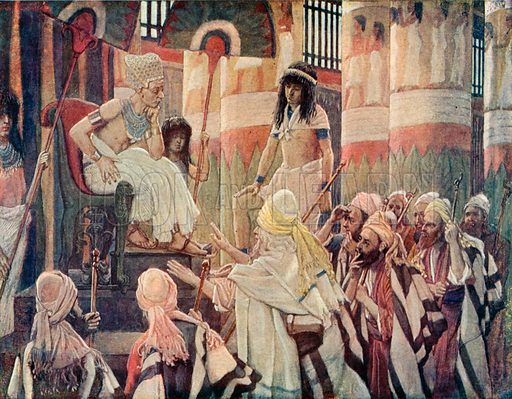
Joseph presents Jacob, his Father, to Pharaoh, Gen xlvii 7 and 8
Joseph presents Jacob and his brothers to Pharaoh by French artist James Jacques Joseph Tissot (1836-1902)

And God spoke to Israel in a vision at night and said, “Jacob! Jacob!”

“Here I am,” he replied.

“I am God, the God of your father,” he said. “Do not be afraid to go down to Egypt, for I will make you into a great nation there. I will go down to Egypt with you, and I will surely bring you back again. And Joseph’s own hand will close your eyes.”

Then Jacob left Beersheba, and Israel’s sons took their father Jacob and their children and their wives in the carts that Pharaoh had sent to transport him. So, Jacob and all his offspring went to Egypt, taking with them their livestock and the possessions they had acquired in Canaan. Jacob brought with him to Egypt his sons and grandsons and his daughters and granddaughters—all his offspring.

These are the names of the sons of Israel (Jacob and his descendants) who went to Egypt:

Reuben the firstborn of Jacob.  The sons of Reuben: Hanok, Pallu, Hezron and Karmi.

The sons of Simeon: Jemuel, Jamin, Ohad, Jakin, Zohar and Shaul the son of a Canaanite woman.

The sons of Levi: Gershon, Kohath and Merari.

The sons of Judah: Er, Onan, Shelah, Perez and Zerah (but Er and Onan had died in the land of Canaan).

The sons of Perez: Hezron and Hamul.

The sons of Issachar: Tola, Puah, Jashub and Shimron.

The sons of Zebulun: Sered, Elon and Jahleel.

These were the sons Leah bore to Jacob in Paddan Aram, besides his daughter Dinah. These sons and daughters of his were thirty-three in all.

The sons of Gad: Zephon, Haggi, Shuni, Ezbon, Eri, Arodi and Areli.

The sons of Asher: Imnah, Ishvah, Ishvi and Beriah.  Their sister was Serah.  The sons of Beriah: Heber and Malkiel.

These were the children born to Jacob by Zilpah, whom Laban had given to his daughter Leah—sixteen in all.

The sons of Jacob’s wife Rachel:

Joseph and Benjamin. In Egypt, Manasseh and Ephraim were born to Joseph by Asenath daughter of Potiphera, priest of On.

The sons of Benjamin: Bela, Beker, Ashbel, Gera, Naaman, Ehi, Rosh, Muppim, Huppim and Ard.

These were the sons of Rachel who were born to Jacob—fourteen in all.

The son of Dan: Hushim.

The sons of Naphtali: Jahziel, Guni, Jezer and Shillem.

These were the sons born to Jacob by Bilhah, whom Laban had given to his daughter Rachel—seven in all.

All those who went to Egypt with Jacob—those who were his direct descendants, not counting his sons’ wives—numbered sixty-six persons. With the two sons who had been born to Joseph in Egypt, the members of Jacob’s family, which went to Egypt, were seventy in all.

Now Jacob sent Judah ahead of him to Joseph to get directions to Goshen. When they arrived in the region of Goshen, Joseph had his chariot made ready and went to Goshen to meet his father Israel. As soon as Joseph appeared before him, he threw his arms around his father and wept for a long time.

Israel said to Joseph, “Now I am ready to die, since I have seen for myself that you are still alive.”

Then Joseph said to his brothers and to his father’s household, “I will go up and speak to Pharaoh and will say to him, ‘My brothers and my father’s household, who were living in the land of Canaan, have come to me. The men are shepherds; they tend livestock, and they have brought along their flocks and herds and everything they own.’ When Pharaoh calls you in and asks, ‘What is your occupation?’ you should answer, ‘Your servants have tended livestock from our boyhood on, just as our fathers did.’ Then you will be allowed to settle in the region of Goshen, for all shepherds are detestable to the Egyptians.”

Joseph went and told Pharaoh, “My father and brothers, with their flocks and herds and everything they own, have come from the land of Canaan and are now in Goshen.” He chose five of his brothers and presented them before Pharaoh.

Pharaoh asked the brothers, “What is your occupation?”

“Your servants are shepherds,” they replied to Pharaoh, “just as our fathers were.” They also said to him, “We have come to live here for a while, because the famine is severe in Canaan and your servants’ flocks have no pasture. So now, please let your servants settle in Goshen.”

Pharaoh said to Joseph, “Your father and your brothers have come to you, and the land of Egypt is before you; settle your father and your brothers in the best part of the land. Let them live in Goshen. And if you know of any among them with special ability, put them in charge of my own livestock.”

Then Joseph brought his father Jacob in and presented him before Pharaoh. After Jacob blessed Pharaoh, Pharaoh asked him, “How old are you?”

And Jacob said to Pharaoh, “The years of my pilgrimage are a hundred and thirty. My years have been few and difficult, and they do not equal the years of the pilgrimage of my fathers.” Then Jacob blessed Pharaoh and went out from his presence.

So, Joseph settled his father and his brothers in Egypt and gave them property in the best part of the land, the district of Rameses, as Pharaoh directed. Joseph also provided his father and his brothers and all his father’s household with food, according to the number of their children. (NIV)

Jacob Blesses Pharaoh
Jacob Blesses Pharaoh by Welsh artist Owen Jones, 1869

God likes fulfilling his promises to us – even and especially when we are in Egypt – in the world. Sometimes we work too hard at avoiding the world and creating heaven on earth right now.  God knew what the Israelites would face: four-hundred years of slavery in Egypt. Yet, God sent them anyway. Often, the people of God grow more in times of trial and hardship, than in times of plenty and peace.

The trip to Egypt included everyone in Israel. There is a genealogical list of those who made the journey because God fulfills his promises through people.  These are the folks who would carry on accomplishing the will of God.  Joseph and Jacob, the son, and the father, are reunited. Joseph diplomatically planned where the gang would live and work because Egyptians looked down on shepherds. Much like the ancient Israelites, we must navigate a world that is okay with us being in it yet not okay with us in the middle of things.

In the Old Testament, Egypt represents the world.  It is interesting God sent his people to live there. God seeks to create a people for his Name who are distinct from Egypt, yet, live among the people of the world.  There is a continual tension for God’s people to be holy and unique, not assimilating into the world’s mold; and, yet, at the same time, God wants them to have a constant engagement and interaction with the world. Therefore, two extremes are to be avoided: to focus solely on being a holy people through complete severance from the world as much as possible; and, to seek relevance in the culture through wholesale jettison of distinctiveness so that the sacred and the secular are connected.

God safeguards a distinct people so that they will be a preservative in the world. Godly people are neither to live in a vacuum, cut off from the world altogether, nor to be wed to the world so that the two are indistinguishable.  We live in a fundamentally broken world in need of the peace and grace of spiritual people within it. The Church has had to struggle with how to live in the world for two-thousand years.  We have the advantage of drawing from a rich Christian history. For there is nothing we face now which has not been faced by the church before.

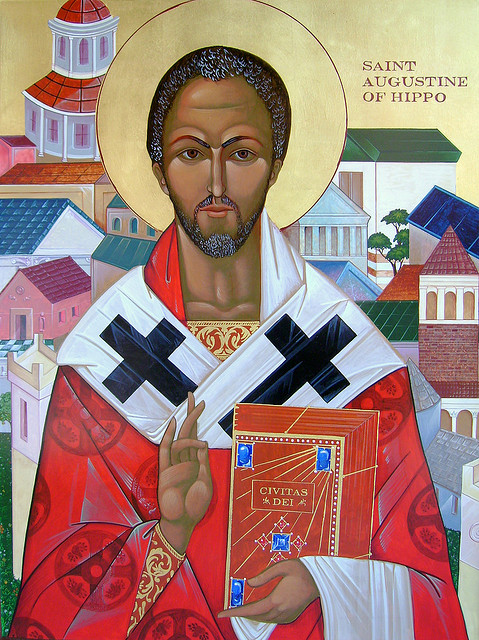
St Augustine

Saint Augustine wrote his seminal work, City of God, in about 413 C.E. The Roman empire had fallen, and pagans were blaming the Church because Christianity had become wed to the state. The people of God were unsure how to proceed.  So, Augustine sought to help Christians think about how to live in a post-Christian society.

Augustine’s work is lengthy and quite in-depth, so, the following is a brief distilling of his main arguments.  For Augustine, there are four essential institutions: two visible institutions; and, two invisible institutions:

  1. The Church – is a divinely established institution, designed to lead people to God.
  2. The State – is a political institution, adhering to political virtues to establish the peace.
  3. The City of Heaven – is made up of those predestined for salvation.
  4. The City of the World – is made up of those destined for eternal damnation.

We must pursue the City of Heaven, which for Augustine, is the pursuit of justice and righteousness. Augustine gave a clarion call for people to choose which city they will pursue, especially because many tended to blur the distinctions between the visible institutions of church and state.

Augustine’s conclusion is that the purpose of history is to show the unfolding of God’s plan. This involves fostering the City of Heaven and filling it with worthy citizens.  Therefore, the fall of Rome, a visible city so important to the people of Augustine’s day, was not near as important to the invisible God.

Maintaining an eternal perspective can help us today. The collapse of jobs, the scourge of a racialized society, the loss of life due to COVID-19, and injustice are significant events and circumstances – important enough to consider deeply how those issues will be handled. Augustine called out the people of his day for ignoring invisible spiritual solutions for the great problems among them.

Returning to the book of Genesis, a question arises: Will the Israelites become a nation through assimilation with Egypt and its institutions, or will they maintain their distinction as God’s people by relying on God’s covenant promises?  There are no easy answers to living in the world. However, it is important we struggle with how to get along in it.

God is the principal actor in the created world. God chooses to use his people as instruments of blessing to it.  Joseph’s wisdom and diplomacy, given by God, turned potentially catastrophic situations into times of prosperity. God, too, will use us as dispensers of wisdom – applying truth to concrete situations for the betterment of all involved.

Joseph handled the delicate situation of his brothers being shepherds while all shepherds were detestable to Egyptians.  Joseph brought the two worlds together through artful negotiation between the interests of both Pharaoh and the Israelites. He created a win/win scenario by setting up his brothers to help Pharaoh with his own needs in caring for livestock. In the end, all parties were satisfied because Joseph maintained a focus on needs instead of only advocating one side.

Rather than getting bogged down in promotion of methods and means, a sage approach is to maintain a focus on needs – which requires careful listening and a stance of empathy. Then, we can work toward prosperity for all instead of hardening into reified positions. A lot of problems in the church, work, society, and family can be turned to blessing if we seek the wisdom that comes from God.

May the Lord bless you and keep you; and, make his face shine on you and be gracious to you. May the Lord turn his face toward you and give you peace. Amen.

Exodus 3:1-12 – God of the Impossible

Burning Bush by Yoram Raanan
The Burning Bush by Yoram Raanan

Now Moses was tending the flock of Jethro his father-in-law, the priest of Midian, and he led the flock to the far side of the wilderness and came to Horeb, the mountain of God. There the angel of the Lord appeared to him in flames of fire from within a bush. Moses saw that though the bush was on fire it did not burn up. So, Moses thought, “I will go over and see this strange sight—why the bush does not burn up.”

When the Lord saw that he had gone over to look, God called to him from within the bush, “Moses! Moses!”

And Moses said, “Here I am.”

“Do not come any closer,” God said. “Take off your sandals, for the place where you are standing is holy ground.” Then he said, “I am the God of your father, the God of Abraham, the God of Isaac and the God of Jacob.” At this, Moses hid his face, because he was afraid to look at God.

The Lord said, “I have indeed seen the misery of my people in Egypt. I have heard them crying out because of their slave drivers, and I am concerned about their suffering. So I have come down to rescue them from the hand of the Egyptians and to bring them up out of that land into a good and spacious land, a land flowing with milk and honey—the home of the Canaanites, Hittites, Amorites, Perizzites, Hivites and Jebusites. And now the cry of the Israelites has reached me, and I have seen the way the Egyptians are oppressing them. So now, go. I am sending you to Pharaoh to bring my people the Israelites out of Egypt.”

But Moses said to God, “Who am I that I should go to Pharaoh and bring the Israelites out of Egypt?”

And God said, “I will be with you. And this will be the sign to you that it is I who have sent you: When you have brought the people out of Egypt, you will worship God on this mountain.” (NIV)

The burning bush is one of those iconic objects and stories in Holy Scripture. The experience of Moses changed both his life and the lives of all the Israelites then and now. Having spent the first forty years of his life as a darling in the Egyptian court, then the next forty years far from that life on the backside of the desert with a bunch of sheep, it is an understatement to say Moses did not expect or ever envision encountering God in a burning bush.

The impossible has no possibility. Or, does it?

That incredible encounter engaged the senses of Moses: the paradoxical sight of seeing fire in a bush that isn’t burning up; the smells of sheep, the outdoors, and perhaps, even of fire; hearing the call of God from within the bush; spiritually and emotionally tasting the attentive justice of God; and, removing the sandals to touch and feel the grounding of sacred space.

The story comments on the senses of God, as well. Even though God is Spirit and is worshiped as such, God is alive with his own sensations: seeing the approach of Moses, and the misery of the Israelites; the smell of injustice wafting into God’s nostrils with a stench that brought a strong divine reaction; hearing the cries of suffering; anticipating the savory taste of showing mercy and justice together; touching Moses in such a profound way that he and the Israelites would never be the same.

Through it all, the close identification between God and God’s people is expressed. The Lord feels the humiliation and pain of the Israelites and vows to uproot them from the Egyptian factory farm of slavery and plant them firmly into rich Promised Land soil.

And what God promises to do, God has the authority and power to make good on.

An impossible situation, Moses thinks. How can hundreds of years of backbreaking bondage to a national force so mighty that nothing can be done about it be broken? Who am I, Moses, to face such odds? Ah, but God specializes in systems of oppression and miserable people. It is the Lord’s abilities which conquer the mightiest of foes and can extend mercy to the lowest and the least powerful. The entire situation is ripe for divine intervention and supernatural wonders to occur.

God will make a way where there seems to be no way. God works in ways which transcend our senses. Where we are blind, God gives sight. Where we are deaf, God opens our ears with the sound of justice. When our taste buds are shot with the gruel of poverty, God causes our tongues to dance with the zest of mercy. When our nerve endings are raw from cruel bondage, God touches us with freedom. Where our nostrils have become accustomed to the smell of death, God’s aroma of life awakens us to new hope.

My friend, I believe with all my heart that:

You already intuitively know deep in your spirit that the impossible is possible with God.

It is never a question of God’s ability, but of God’s timing. God is able – and the Lord works the impossible in its proper time so that justice and mercy will have their full effect.

God of the impossible: I believe. Help me in my unbelief.

God of mercy: I receive. Help me in my denial.

God of justice: I accept. Help me in my rejection.

God of all time: I endure. Help me in my impatience.

God of All: I submit. Help me in my rebellion.

God of power and of might: I trust. Help me in my distrust.

God of our Lord Jesus Christ: I follow. Help me in my wandering.

God of the nations: Yes, you know that I love you. Yes, Lord, you know I love you. Lord, you know all things, and you know that I love you. So, yes, I will answer your call to go. Help me in my sending. Amen.

Click God Will Make a Way by Don Moen as we believe together.