Victory Celebration (Exodus 15:1-18)

The Songs of Moses and Miriam, by Laura James

Then Moses and the Israelites sang this song to the Lord:

“I will sing to the Lord, for he has triumphed gloriously;
    horse and rider he has thrown into the sea.
The Lord is my strength and my might,
    and he has become my salvation;
this is my God, and I will praise him;
    my father’s God, and I will exalt him.
The Lord is a warrior;
    the Lord is his name.

Pharaoh’s chariots and his army he cast into the sea;
    his elite officers were sunk in the Red Sea.
The floods covered them;
    they went down into the depths like a stone.
Your right hand, O Lord, glorious in power—
    your right hand, O Lord, shattered the enemy.
In the greatness of your majesty you overthrew your adversaries;
    you sent out your fury; it consumed them like stubble.
At the blast of your nostrils the waters piled up;
    the floods stood up in a heap;
    the deeps congealed in the heart of the sea.
The enemy said, ‘I will pursue; I will overtake;
    I will divide the spoil; my desire shall have its fill of them.
    I will draw my sword; my hand shall destroy them.’
You blew with your wind; the sea covered them;
    they sank like lead in the mighty waters.

Who is like you, O Lord, among the gods?
    Who is like you, majestic in holiness,
    awesome in splendor, doing wonders?
You stretched out your right hand;
    the earth swallowed them.

In your steadfast love you led the people whom you redeemed;
    you guided them by your strength to your holy abode.
The peoples heard; they trembled;
    pangs seized the inhabitants of Philistia.
Then the chiefs of Edom were dismayed;
    trembling seized the leaders of Moab;
    all the inhabitants of Canaan melted away.
Terror and dread fell upon them;
    by the might of your arm, they became still as a stone
until your people, O Lord, passed by,
    until the people whom you acquired passed by.
You brought them in and planted them on the mountain of your own possession,
    the place, O Lord, that you made your abode,
    the sanctuary, O Lord, that your hands have established.
The Lord will reign forever and ever.” (New Revised Standard Version)

The ancient Israelites were freed from four hundred years of Egyptian bondage through the miraculous work of God. Then, as they were leaving Egypt, Pharaoh had a change of heart and decided to take his army and pursue the Israelites.

Literally sandwiched between the army and the sea, yet another miracle happened: God parted the Red Sea, allowing the Israelites to pass through on dry ground; and then God closed the sea up on the pursuing army. Today’s Old Testament lesson is the people’s victory chant of deliverance.

Portrayed here is Yahweh’s incomparable power over the mighty Egyptians, and protective presence with the Israelites. God was fulfilling the divine promise to bring the people out from bondage and into the Promised Land. Nothing can stand in the way of the Lord’s purpose.

By Stushie Art

God Rescues

Throughout the Bible, deliverance and celebration go hand in hand. For the Christian, this time of year is full of celebrating the resurrection of Christ from death. Because our redemption is secured, we rejoice in the once for all sacrifice of Jesus.

God rescued us from dead-end alleys and dark dungeons. He’s set us up in the kingdom of the Son he loves so much; the Son who got us out of the pit we were in, got rid of the sins we were doomed to keep repeating. (Colossians 1:13-14, MSG)

God Protects

The Lord showed up and wondrously delivered the Israelites from certain annihilation. And God has also entered into humanity’s world and brought emancipation from sin, death, and hell through Christ’s redemptive events of cross and resurrection. We are shielded by God’s glorious grace and goodness.

Praise be to the God and Father of our Lord Jesus Christ! In his great mercy he has given us new birth into a living hope through the resurrection of Jesus Christ from the dead, and into an inheritance that can never perish, spoil or fade. This inheritance is kept in heaven for you, who through faith are shielded by God’s power until the coming of the salvation that is ready to be revealed in the last time. (1 Peter 1:3-5, NIV)

God Establishes

Deliverance is provided, and then the divine presence is with us throughout life. God doesn’t expect us to be on our own after we are saved from a calamitous situation. Grace is given for all things, not just some things. So, the Lord helps to establish us in faith and perseverance for a lifetime.

His divine power has given us everything needed for life and godliness, through the knowledge of him who called us by his own glory and excellence. Thus he has given us, through these things, his precious and very great promises, so that through them you may escape from the corruption that is in the world because of lust and may become participants of the divine nature…. Therefore I intend to keep on reminding you of these things, though you know them already and are established in the truth that has come to you. (2 Peter 1:3-4, 12, NRSV)

Our victory chant comes from God’s redemptive events. For the Christian, we are rescued from our precarious spiritual plight, protected and established by divine power, through the person and work of Jesus Christ.

“Victory in Jesus” by E.M. Bartlett, 1939

I heard an old, old story
How a Savior came from glory
How He gave His life on Calvary
To save a wretch like me
I heard about His groaning
Of His precious blood’s atoning
Then I repented of my sins
And won the victory

Oh, victory in Jesus, my Savior forever
He sought me and bought me with His redeeming blood
He loved me ‘ere I knew Him and all my love is due Him
He plunged me to victory beneath the cleansing flood

I heard about His healing
Of His cleansing power revealing
How He made the lame to walk again
And caused the blind to see
And then I cried, “Dear Jesus, come and heal my broken spirit”
And somehow Jesus came and brought to me the victory

Victory in Jesus, my Savior forever
He sought me, and He bought me with His redeeming blood
He loved me ‘ere I knew Him and all my love is due Him
He plunged me to victory beneath the cleansing flood
The Greatest Ever

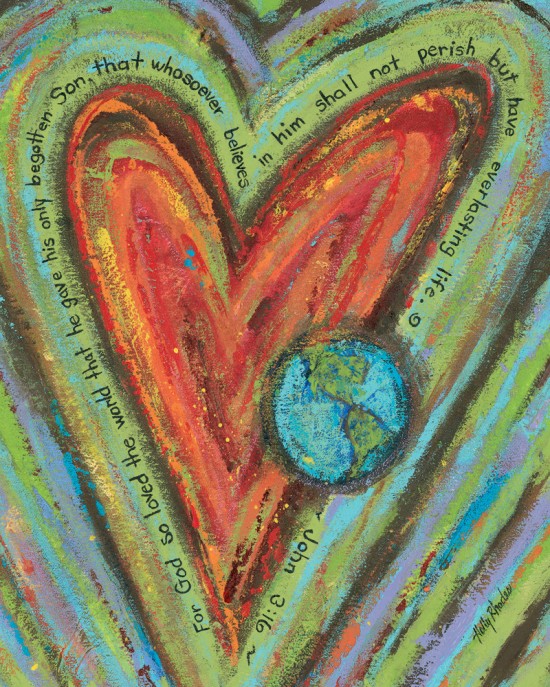
John 3:16 by Holly Rhodes

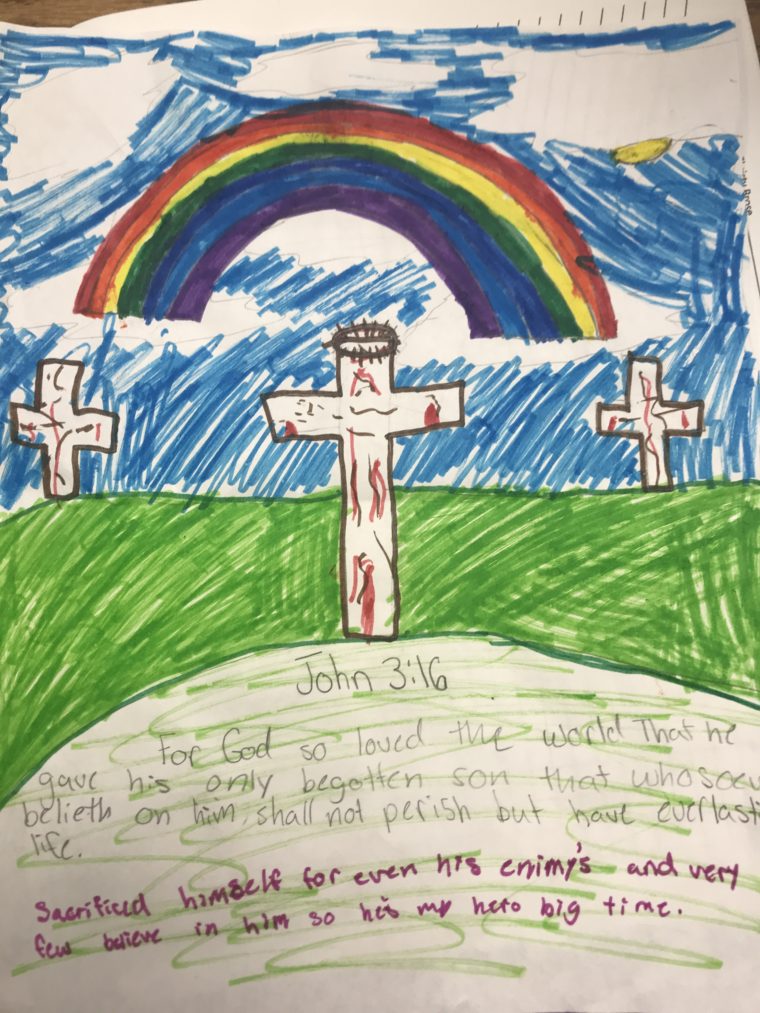
For God so loved the world that he gave his one and only Son, that whoever believes in him shall not perish but have eternal life. (John 3:16, NIV)

John 3:16 is a Bible verse so familiar as to be cliché. But when Jesus originally said these words, they were both tremendously freeing and incredibly scandalous. When something is familiar, we tend not to explore it any further. We need a closer look at the message of John 3:16 so we can not only see why some people embrace its light, but why others remain in darkness.

Perhaps another examination the gospel will dispel dullness and impel us toward praise, as well as to share its life-giving message not because we must, but because we want to. John 3:16 contains nine of the greatest spiritual realities we could ever experience.

1.“God” is the greatest subject ever.

The Bible contains lots of messages, promises, and commands. However, those are not the primary purpose for having the Holy Scriptures. The Bible has been given to us as a revelation of God to us so that we might know God. Every time the Scriptures are used, read, quoted, prayed, taught, learned, and heard – we know God a bit better. Anything short of knowing God falls short of the Bible’s intended purpose.

I constantly encourage a regular daily regimen of Bible-reading because it is the primary means of knowing God. Yes, we get to know God in creation and through experience, yet one of the best ways of experiencing God is through taking time for reading, meditating, memorizing, and praying of the Scriptures. Some of my most encouraging times are when I hear what people are learning about the Lord in God’s Word. With the Holy Spirit being our teacher, we discover more and more that God is the greatest subject we could ever learn about, talk about, and give our lives to.

2. “So” is the greatest extent ever.

There is a great wideness to God. God is a huge Being! Nothing is outside of God’s reach. So, when God decides to do something, nothing can stop it. We might be limited in our strength and abilities to accomplish things. But God’s extent is limitless. Knowing God means becoming familiar with an all-knowing and all-powerful Being. Prayer, then, becomes a response to God. God speaks to us through the Word, and we speak back with prayer so that the Word and prayer go like a hand in a glove. Our extent is temporary and small. Yet God takes our human prayers and uses them to accomplish divine purposes on this earth.

3. “Loved” is the greatest demonstration ever.

There is no greater demonstration of love than our triune God loving us with a sacrificial self-emptying love that saw our great need for deliverance and went to the greatest lengths possible to accomplish it. Our own love for God, each other, and the world is a direct result of God’s love for us.

This is how we know what love is: Jesus Christ laid down his life for us. And we ought to lay down our lives for our brothers and sisters…. This is how God showed his love among us: He sent his one and only Son into the world that we might live through him. This is love: not that we loved God, but that he loved us and sent his Son as an atoning sacrifice for our sins. Dear friends, since God so loved us, we also ought to love one another. (1 John 3:16; 4:9-11, NIV)

Where there is a lack of love there is an absence of God. Every human on planet earth needs the love of God in Christ. Without it we are lost. You are loved with sacrificial love. The greatest thing that can be said of you is that you are “loved.” Whatever has happened, is happening, and will happen that breaks you down, belittles you, hurts you, or causes you to feel like the north end of a southbound cow, is not what defines you. All may be going to hell around you, but nothing will change the unalterable reality that in Christ you are “loved!”

4. “The world” is the greatest object ever.

Up to this point you might not have sensed anything scandalous about this message of God’s grace and love. But this was the game-changing term for the original hearers of Christ’s words: God so loved the world. Many of Christ’s listeners could easily understand God loved the nation of Israel. But to say that God loved the world was going too far. It meant God loved Gentiles, specifically, Romans who occupied their land and oppressed them.

To capture the punch of this, it would be like Jesus showing up in our world today and saying that God so loved whomever we despise or hate. We often tend to assume that God hates who we hate. Right? Wrong. Yes, God hates evil and is opposed to all that destroys. Yet, God loves people for whom is placed the divine image within. For God to love the world is an incredible because there are so many unlovely people in the world.

Since God loves the world and demonstrated it in through Jesus, Christ’s Church is to reflect and embody this same love for the world. This has enormous implications for followers of Jesus. The Church is must embrace the same pejorative title as given its leader, Jesus: “Friend of Sinners.”  People come to know Jesus through the love given us in Christ. Since this is our title, Christian ministry then becomes not about my personal preferences but about what will most effectively love the world to Jesus.

5. “That he gave his one and only Son” is the greatest gift ever.


John 3:16 by an 11 year old

For God did not send his Son into the world to condemn the world, but to save the world through him. (John 3:17, NIV)

We do not get God’s leftovers or second-hand items. God gave the dearest, best, and most beloved gift he could ever give: his Son. Therefore, the greatest and dearest gift we can give to another person is Jesus. Sharing such a gift Jesus must come freely from the depths of divine love. Apart from love we are only a resounding gong or a clanging cymbal. If it takes cajoling and exhortation for us to give the gift of the gospel, then the problem lies in our hearts. It takes coming back to God’s Word and knowing the love of God in Christ through the Scriptures.

6. “That whoever” is the greatest opportunity ever.

If the greatest gift a person can receive is Jesus, then the best opportunity one could take advantage of is Jesus. We are all at differing places in our relationship with Jesus. Yet no matter the person, the opportunity for grace and love is more than anything you could hope or ask for. 

We are fortunate to have such a grace to know Jesus as Lord, Savior, teacher, healer, and friend. Those familiar with the name of Jesus all their lives but it has not gone much further than that, then the next point is vitally important….

7. “Believes in him” is the greatest commitment ever.

Jesus wants more than our acknowledgment of him; he wants us. Whenever I go home, my dog, Max Power, gets extremely excited. Honestly, I don’t really get excited about him. My typical response to him is, “Yes, Max, I acknowledge your existence.” I say it in hopes he will just kind of leave me alone and let me go about my business. But Max wants more. He wants my affection, my love, and my commitment. He wants a pet, a walk, food, and water.

God does not want to be treated like an annoying puppy. God wants our commitment. The Lord desires more than the tepid response, “I acknowledge your existence.”  The most common response I get from people when sharing the gift of Jesus is “Yes, I believe in Jesus.”  It is their way of saying they acknowledge his existence but are not much interested in giving their lives to him because they want to go about their business without God pestering them about anything. But God does demand something from us – our very souls. If we gain a view of God as gracious and loving, then we willingly desire an intimate commitment.

8. “Shall not perish” is the greatest rescue ever.

People perish not because God is unloving but because their theology is twisted – not to mention that we like our sin, and we don’t want to accommodate a holy God. The Titanic lost hundreds of people not for a lack of lifeboats. In fact, most of the lifeboats went into the water about three-fourths capacity. Many people simply did not believe they were perishing. They trusted in the ship’s reputation as being “unsinkable.” Jesus is our lifeboat.

9. “But have eternal life” is the greatest promise ever.

The promise begins now, not someday. Everlasting life means experiencing a life-saving and life-giving relationship with Jesus today.

Conclusion

If you ever had the feeling there is something more to life than what you are experiencing; if you ever wished you could start over; if you ever felt you cannot do this on your own; then, I have the greatest news ever. God has made a way to handle all your guilt, shame, and darkness. God loves you deeply in the person of Jesus Christ. There is new life in Jesus.

Genesis 22:1-19 – The Lord Will Provide

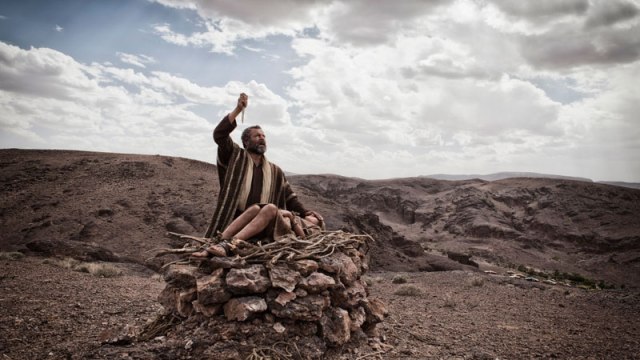
God decided to test Abraham, so he spoke to him.

Abraham answered, “Here I am, Lord.”

The Lord said, “Go get Isaac, your only son, the one you dearly love! Take him to the land of Moriah, and I will show you a mountain where you must sacrifice him to me on the fires of an altar.” So, Abraham got up early the next morning and chopped wood for the fire. He put a saddle on his donkey and left with Isaac and two servants for the place where God had told him to go.

Three days later Abraham looked off in the distance and saw the place. He told his servants, “Stay here with the donkey, while my son and I go over there to worship. We will come back.”

Abraham put the wood on Isaac’s shoulder, but he carried the hot coals and the knife. As the two of them walked along, Isaac said, “Father, we have the coals and the wood, but where is the lamb for the sacrifice?”

“My son,” Abraham answered, “God will provide the lamb.”

The two of them walked on, and when they reached the place that God had told him about, Abraham built an altar and placed the wood on it. Next, he tied up his son and put him on the wood. He then took the knife and got ready to kill his son. But the Lord’s angel shouted from heaven, “Abraham! Abraham!”

“Here I am!” he answered.

“Don’t hurt the boy or harm him in any way!” the angel said. “Now I know that you truly obey God, because you were willing to offer him your only son.”

Abraham looked up and saw a ram caught by its horns in the bushes. So, he took the ram and sacrificed it in place of his son.

Abraham named that place “The Lord Will Provide.” And even now people say, “On the mountain of the Lord it will be provided.”

The Lord’s angel called out from heaven a second time:

You were willing to offer the Lord your only son, and so he makes you this solemn promise, “I will bless you and give you such a large family, that someday your descendants will be more numerous than the stars in the sky or the grains of sand along the beach. They will defeat their enemies and take over the cities where their enemies live. You have obeyed me, and so you and your descendants will be a blessing to all nations on earth.”

Abraham and Isaac went back to the servants who had come with him, and they returned to Abraham’s home in Beersheba. (CEV)

The biblical character of Abraham is synonymous with faith. And for good reason. God had told Abraham he would have a son with his wife Sarah. This would not be unusual except for the fact the couple were well advanced in age, and Sarah was incapable of having children. Infertility is not just a modern problem; it has always existed. Yet, despite the overwhelming odds, Abraham believed God. Years later and with a mix of patience and impatience from the would-be parents, the promise from God was realized. Abraham and Sarah had a son, Isaac.

“Child of the promise.” That was Isaac’s moniker – which makes the command coming from God so incredibly perplexing: Take your son, the child of the promise, and go to the mountain and sacrifice him there. Huh? What the…!  But it only seems strange and super-weird to us. We get no reaction from Abraham, no questioning, no talk back. He simply went about the business of saddling up the donkey, chopping some wood for the sacrifice, and took his only son with him on the journey to the mountain.

We might wonder what was going through Abraham’s mind through all of this. While you and I might try and figure out if we really heard God or not, Abraham had a history of talking with God. He knew God’s voice as well as he knew his own. Abraham was well down the road of relationship with the God he served. We get an insight from the author of Hebrews into Abraham’s thought process, a line of thinking consistent with a person who has a regular habit of talking with God:

“Abraham had been promised that Isaac, his only son, would continue his family. But when Abraham was tested, he had faith and was willing to sacrifice Isaac, because he was sure that God could raise people to life. This was just like getting Isaac back from death.” (Hebrews 11:17-18, CEV)

Abraham did not try and figure out God’s mind. He didn’t get into a debate with God about the contradiction of ethics he was being asked to do. He just obeyed. Abraham reasoned that it didn’t matter if Isaac were killed because God could raise him from death. This, of course, is not what happened. It was all a test of faith. Abraham knew beyond a shadow of a doubt that God is the Lord who provides.

You and I rarely know why we are facing the unwanted and unasked for circumstances we are enduring. We don’t always know what in the world God is thinking. Yet, like Abraham, if we have a spiritual history of walking with God and hearing the Lord’s voice, we don’t hesitate to respond. We are convinced God will provide. Obedience for the follower of Christ is not a burden but a privilege, even when we are being tested beyond our seeming emotional ability to do it.

Sovereign Lord, your ways are sometimes strange and confusing. Yet, I know that everything you do is always right, just, and good. It is to your gracious and merciful character that I know you will provide. My allegiance is to you, in the Name of Jesus Christ, through the power of the Holy Spirit. Amen.

Genesis 31:1-21 – On the Move

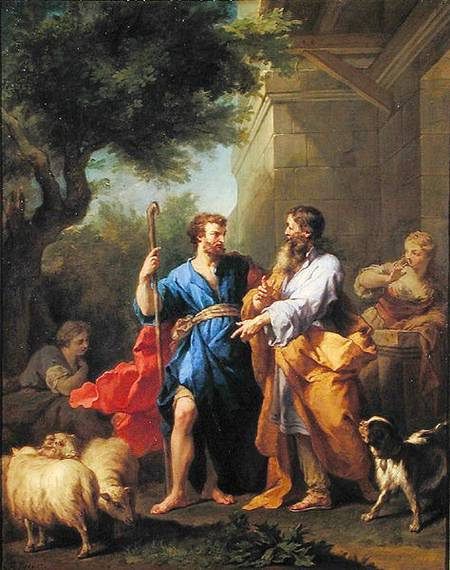
Jacob and Laban by Jean Restout
Jacob and Laban by French artist Jean Restout (1692-1768)

Jacob heard that Laban’s sons were saying, “Jacob has taken everything our father owned and has gained all this wealth from what belonged to our father.” And Jacob noticed that Laban’s attitude toward him was not what it had been.

Then the Lord said to Jacob, “Go back to the land of your fathers and to your relatives, and I will be with you.”

So, Jacob sent word to Rachel and Leah to come out to the fields where his flocks were. He said to them, “I see that your father’s attitude toward me is not what it was before, but the God of my father has been with me. You know that I have worked for your father with all my strength, yet your father has cheated me by changing my wages ten times. However, God has not allowed him to harm me. If he said, ‘The speckled ones will be your wages,’ then all the flocks gave birth to speckled young; and if he said, ‘The streaked ones will be your wages,’ then all the flocks bore streaked young. So, God has taken away your father’s livestock and has given them to me.

“In breeding season, I once had a dream in which I looked up and saw that the male goats mating with the flock were streaked, speckled or spotted. The angel of God said to me in the dream, ‘Jacob.’ I answered, ‘Here I am.’ And he said, ‘Look up and see that all the male goats mating with the flock are streaked, speckled, or spotted, for I have seen all that Laban has been doing to you. I am the God of Bethel, where you anointed a pillar and where you made a vow to me. Now leave this land at once and go back to your native land.’”

Then Rachel and Leah replied, “Do we still have any share in the inheritance of our father’s estate? Does he not regard us as foreigners? Not only has he sold us, but he has used up what was paid for us. Surely all the wealth that God took away from our father belongs to us and our children. So do whatever God has told you.”

Then Jacob put his children and his wives on camels, and he drove all his livestock ahead of him, along with all the goods he had accumulated in Paddan Aram, to go to his father Isaac in the land of Canaan.

When Laban had gone to shear his sheep, Rachel stole her father’s household gods. Moreover, Jacob deceived Laban the Aramean by not telling him he was running away. So, he fled with all he had, crossed the Euphrates River, and headed for the hill country of Gilead. (NIV)

Moving and changing are inevitable. Change and movement are built into all creation, from the seasons of the year to our physical bodies. Some changes and moves we deem as good, and others, not so much. Yet, whether good or bad, any switch or shift in life can be difficult to cope with.

Whatever the circumstance, God stands behind everything, working out his purposes. There are times and seasons in our lives in which we can get lost in our own stories. Ultimately, however, our transitions from one place to another are much more about our individual stories fitting into the larger story of God. Whenever we are unable to see how our own story and the story of God fit together, it is an opportunity to exercise our faith and trust God. Listening to God and responding to his call to move and change will at times be difficult due to the uncertainty of our future.

In today’s Old Testament lesson, Jacob has served his father-in-law Laban for twenty years. Now, he hears the call of God to move. The principal actor and center of the story is not Jacob, but God.  The primary point of the narrative is a revelation of who God is, with Jacob as the supporting actor in the story. God was watching over and protecting Jacob. The Lord was following through on his promise given to Jacob’s grandfather, Abraham, to go to the land he would show him – to make Abraham into a great nation so that all people-groups on earth would be blessed through him.  So, this story of Jacob is one piece in the unfolding drama of God’s redemption which would ultimately find its fulfillment in the person and work of Jesus.

Jacob had in-law issues. His relationship with his father-in-law was morphing into trouble. Laban’s attitude had changed toward his son-in-law, probably due to Jacob’s increasing wealth, and Laban’s decreasing assets. So, God showed up and told Jacob to return to the land of his fathers. Along with the call to make a change came a promise of God’s continued presence with Jacob. The grace given to Abraham when calling him out of Ur was renewed with more grace when calling Jacob back to the land of his father and grandfather.  It is in God’s nature to be gracious and to heap grace upon grace.

Jacob Fleeing Laban by Filippo Lauri
Jacob Fleeing Laban by Italian painter Filippo Lauri (1623-1694)

Jacob heeded call of the Lord and began laying plans to move back to Canaan. But how to tell his family about this? What are his wives going to say? After all, he is talking about moving away with kids and teenagers still in the tent. So, with some anxiety, Jacob called his wives, Rachel and Leah, out to the fields to talk.  Jacob laid out the story of himself and Laban, which he framed more as a contrasting story between God and Laban:

Laban’s attitude changed – God’s attitude does not change. God is not fickle.

Laban was unreliable, reneging on promises – God is reliable and trustworthy, keeping his promises.

Laban kept changing his mind – God stays the same, yesterday, today, and forever.

Laban saw only self-interest – God sees everyone and shows solidarity with the oppressed.

This same God is concerned for us and will not renege on his promises. God is providentially working out his agenda and concern for this earth, and we can bank on it.

The response from Jacob and Rachel to Laban was some tricky thievery. Jacob stealthily took his family and ran away from the situation. Rachel straight up stole Laban’s household gods. (Note: Old Testament narratives do not usually tell us whether something is bad or good but instead lets the story unfold and speak for itself so that we can see the ethics working itself out).  Jacob and Rachel had a less than stellar response to God’s grace. We do not know exactly what the household gods are, or why Rachel stole them. What we do know is that there was a bit of pagan practice mixed in with worship of the one, true God.

God wants to be our everything – the faithful, gracious, and present God – because God is good all the time. Our circumstances will forever be changing, and God may ask us to move and go do something somewhere else. Yet, no matter the situation and how different our surroundings may become, God does not change, and he is here with us; and, at the same time, is continually moving to accomplish his purposes.

Loving God, you have made the whole of human life in your image; each one of us shaped in love. Your goodness is ever-present within us all. Yet, there is so much evil and pain in our world; it comes at us from every direction. Teach us how to rediscover your love within us and to use that love as a force for good. Help us to turn our hearts toward the world in hope, praying for each other and regarding each other as a treasure. Join us all together in prayer so that we might be the light which darkness can never overcome, through Jesus Christ our Lord. Amen.