Exodus 5:10-23 – More Bricks, Less Straw “Why, God!?”

A brick making scene from an ancient the ancient Egyptian tomb of Rekhmire, c.1400 B.C.E.

So, the slave drivers and foremen went out and told the people: “This is what Pharaoh says: I will not provide any more straw for you. Go and get it yourselves. Find it wherever you can. But you must produce just as many bricks as before!” So, the people scattered throughout the land of Egypt in search of stubble to use as straw.

Meanwhile, the Egyptian slave drivers continued to push hard. “Meet your daily quota of bricks, just as you did when we provided you with straw!” they demanded. Then they whipped the Israelite foremen they had put in charge of the work crews. “Why haven’t you met your quotas either yesterday or today?” they demanded.

So the Israelite foremen went to Pharaoh and pleaded with him. “Please don’t treat your servants like this,” they begged. “We are given no straw, but the slave drivers still demand, ‘Make bricks!’ We are being beaten, but it isn’t our fault! Your own people are to blame!”

But Pharaoh shouted, “You’re just lazy! Lazy! That’s why you’re saying, ‘Let us go and offer sacrifices to the Lord.’ Now get back to work! No straw will be given to you, but you must still produce the full quota of bricks.”

The Israelite foremen could see that they were in serious trouble when they were told, “You must not reduce the number of bricks you make each day.” As they left Pharaoh’s court, they confronted Moses and Aaron, who were waiting outside for them. The foremen said to them, “May the Lord judge and punish you for making us stink before Pharaoh and his officials. You have put a sword into their hands, an excuse to kill us!”

Then Moses went back to the Lord and protested, “Why have you brought all this trouble on your own people, Lord? Why did you send me? Ever since I came to Pharaoh as your spokesman, he has been even more brutal to your people. And you have done nothing to rescue them!” (New Living Translation)

It was God – Yahweh, the great I AM – who called to Moses from the burning bush. It was God who told Moses to go to Egypt because of the groaning of the Israelites in their slavery. It was also God who promised Moses that Divine help would deliver the people from their awful bondage. 

But the promised vision of release and rescue from captivity ran into the harsh buzz-saw of reality. 

Moses did exactly what God told him to do. He was completely attentive and obedient to God’s revealed will. And the result? Pharaoh forced the Israelite slaves to make bricks without being supplied with the straw to do it. Now, the people’s situation is even worse than it was before Moses showed up on the scene. What’s up with that!?

Since we know the end to the story, we understand where all of this is going. However, when we put ourselves in the sandals of Moses, it’s anything but clear about what was happening.

“Confusion is a sign of intelligence; only fools are crystal clear.”

Haresh Sippy

None of us gets off this planet without facing some hard things. We may even face those difficulties when we’re just trying to do the right thing. We’re simply trying to help, do our best, obey God, and then we get in trouble. In those situations, we can empathize with Moses getting testy with God and expressing his complaint.

The God of the universe is big enough to handle our protests in the midst of trouble – even when those complaints are directly pointed toward him. God gets it.

There is an appropriate place for us to freely express our abject disbelief, our painful wonderings, and our outright anger toward God. We won’t get a lightning bolt from heaven if we ask and cry out, “Why, God? What the **** are you doing!?”

There have been many times in my life when I questioned whether I was really sent by God to be in a certain place or to do a certain thing. I seriously wondered whether I really heard God, or not. Maybe it was my own voice in my head. Perhaps it was an emotional decision. 

The incongruence between what we believe and how things are actually turning out can be maddening.

But there is something we must all realize: Just because things go from bad to worse does not necessarily mean God isn’t in the thing. 

We are not always, even usually, privy to the mind of God in the big picture of what the Lord is doing. 

In the middle of trouble, we might think God is not at work, not paying attention, or slow to act. Yet, God knows exactly what’s going on and what the plan is. Sometimes, we need to discern and know that things will get worse before they will get better – and that God has not abandoned us.

Wise God, I trust you that you know what you are doing, even though I don’t see what in the world is going on. Help me to see all things from your perspective so that I might have the wisdom to move forward in faith and patience. I’m out on a limb for you! Please don’t let it break! Amen.

Psalm 120 – Gaslighting Trouble

Ingrid Bergman and Charles Boyer in the 1944 film, “Gaslight”

I’m in trouble. I cry to God,
    desperate for an answer:
“Deliver me from the liars, God!
    They smile so sweetly but lie through their teeth.”

Do you know what’s next, can you see what’s coming,
    all you bold-faced liars?
Pointed arrows and burning coals
    will be your reward.

I’m doomed to live in Meshech,
    cursed with a home in Kedar,
My whole life lived camping
    among quarreling neighbors.
I’m all for peace, but the minute
    I tell them so, they go to war! (The Message)

I wish we lived in a world where people always speak and live the truth in love, without lying, pretense, or posturing. But we don’t. Not everyone embraces a life of encouraging others through truthful affirmation and selfless acts of service.

In reading today’s psalm, I immediately think of all the patients I’ve seen as a chaplain on my behavioral health unit who have been gaslighted.

“Gaslighting” is a recent term, yet the concept is as old as Satan’s interaction with Adam and Eve in the Garden. The word comes from the 1944 movie, “Gaslight,” starring Charles Boyer and Ingrid Bergman. In the attempt to drive his wife insane, the husband rigs the gaslights of the house so they will flicker at night. Whenever his wife comments on it, her husband flat-out lies and says the lights are not flickering at all. I’ll let you watch the film yourself to see what happens.

A person who “gaslights” uses psychological manipulation to gain and assert control over someone or some group. Gaslighters actively undermine others, using their words against them, plotting nefarious plans for them behind their backs, lying without so much of a blink of an eye, and turning family or friends against someone – all with the insidious agenda of increasing their power over that person and solidifying their dependence from the victim.

All of this gaslighting behavior is done with a smile, said with syrupy words to hook you, rather than help you. That, of course, makes it hard to spot – which is why it is so devilish. If the gaslighter can get you to doubt yourself, your abilities, or your perception of reality, then they can worm themselves into your life and plant their thoughts inside you.

Gaslighters don’t want peace. They want conflict. People at war give them an opportunity to gain more influence and power. Plus, they just plain like to watch others fight amongst themselves. It gives them a sense of control.

Today’s psalm is part of the psalms of ascent – songs used by the community as they walk their pilgrimage to Jerusalem and up the temple mount. The people collectively lament the gaslighting activity of those who oppose and hate them. And they turn to God, who abhors gaslighters, seeking solace and safety from their evil ways.

The gaslighter’s end is certain. They will have to contend with the God who will not be manipulated by anyone. Although it is not our job to punish sinners, it very much is our responsibility to see and avoid gaslighting as much as possible, as well as, God forbid, becoming a gaslighter ourselves. To that end, take note of some of the manipulative marks of gaslighters and patterns of gaslighting:

  • Pitting people against one another. This is done a variety of ways through gossip masked as trying to help, subtle slander, and carefully placed lies.
  • Avoiding responsibility. The gaslighter never owns their words and actions but are experts at blaming others for whatever goes awry.
  • Creating fights and conflicts. Gaslighters chronically avoid the dirty work. They get others riled-up at each other, then sit back and look for an opportunity to seize control over the warring parties.
  • Sucking-up to others. Flattery is a well-worn tool of gaslighters. They are masters at buttering-up people to get what they want.
  • Comparing people. This is just another way of driving a wedge between people. “Why can’t you be like ___?”
  • Mistreating the weak and powerless. The weak have no value for the gaslighter because the powerless have nothing to offer them. So, oppression becomes a means of getting the weak out of the way, like they’re some pesky insect to get rid of.
  • Bragging about accomplishments and stealing other’s. Gaslighters will always take the credit for an accomplishment and then boast about it, all the while badgering the victim.
  • Not keeping promises. Usually there’s a bait and switch where the gaslighter will promise something, then switch the rules or tell a bold-faced lie that they never promised that.

There is much more gaslighting behavior, but you get the drift. The best way to deal with a gaslighter? Get as far away from them as you can, find genuine supportive relationships, and leave them to God.

Today’s psalm can be your prayer to the Lord, offering a heartfelt plea to the Divine Being who does the opposite of gaslighting: strengthening you, giving you power, listening to your voice, and loving you with complete altruistic motives.

Eternal Father, you created us in your own image and likeness, but sin has warped the minds of humanity so that there is much injustice and much carelessness of the rights of other people in this fallen world. I pray you will right every wrong and vindicate those being treated unjustly. Keep us, your people, from trying to take matters into our own hands for vengeance. Give justice and peace to all those who have been cruelly and unfairly treated. May the injustice they have endured be the means to draw them into the saving arms of your grace, through Jesus Christ our Lord. Amen.

Psalm 138 – Humility and Hubris

I give you thanks, O Lord, with all my heart;
    I will sing your praises before the gods.
I bow before your holy Temple as I worship.
    I praise your name for your unfailing love and faithfulness;
for your promises are backed
    by all the honor of your name.
As soon as I pray, you answer me;
    you encourage me by giving me strength.

Every king in all the earth will thank you, Lord,
    for all of them will hear your words.
Yes, they will sing about the Lord’s ways,
    for the glory of the Lord is very great.
Though the Lord is great, he cares for the humble,
    but he keeps his distance from the proud.

Though I am surrounded by troubles,
    you will protect me from the anger of my enemies.
You reach out your hand,
    and the power of your right hand saves me.
The Lord will work out his plans for my life—
    for your faithful love, O Lord, endures forever.
    Don’t abandon me, for you made me. (New Living Translation)

The God of Holy Scripture is no uppity highfalutin Being. However, amongst humanity, those with established pedigree, high position, and influential power tend not to hobnob with the common person. In their hubris, they believe themselves to be above the common person.

Not so with the Lord of the universe. God consistently cares for humble folk. The Lord intentionally seeks the average commoner and draws near to them. The Creator bends down to meet lowly creatures at their level.

Conversely, the Lord stays out on the margins of proud and arrogant people. God stands straight up and looks down from afar on the haughty who believe they are above others. The privileged and powerful in the world will experience divine distance, mostly because their attitudes and actions put the stiff arm toward God.

One of the most frustrating experiences in life is to have someone in power arrogantly misjudge you. Rather than carefully listening and offering gracious attention, the proud already assume they know what’s going on and what is best for others.

So, like a bull about to enter a China shop, or a timebomb ready to explode, human hubris of the heart violates and blows up another’s life based upon misinformation and faulty egotistical assumptions.

Yet, God sees. From a lofty place, clearly observing all creaturely activity, the Lord knows what is truly happening. And God is not okay with injustice perpetrated by cocky roosters and pretentious autocrats. Everyone will experience God’s power. It’s just a matter of what type of power one receives.

The Lord’s saving and sustaining power will uphold the humble of heart. However, the power of God’s wrath is the lot of puffed up peacocks who only care about getting their way. Their own puny power will be eventually stripped away and given to those who will wield it with grace.

The difference between the proud and the lowly is evidenced by their prayers. Megalomaniacs are concerned for material acquisitions, high positions, and fame. And their prayers reflect those ambitions. The meek, however, pray for increased spiritual strength to withstand trouble; enlarged hearts to hold more of God; and acceptance of whatever the Lord wants, whether it is for personal good or ill.

The arrogant may accomplish many good things. It’s possible for them to achieve greatness through outstanding work and incredible feats. Yet, God knows the real score. Jesus said:

“Not everyone who calls me Lord will enter God’s kingdom. The only people who will enter are those who do what my Father in heaven wants.On that last Day many will call me Lord. They will say, ‘Lord, Lord, by the power of your name we spoke for God. And by your name we forced out demons and did many miracles.’ Then I will tell those people clearly, ‘Get away from me, you people who do wrong. I never knew you.’” (Matthew 7:21-23, ERV)

Self-absorbed people enjoy their own presence and narcissistically believe everyone else should, too. Yet, ordinary people, being attentive to the common good of all persons, rely on the presence and protection of God for everyone and everything.

Whereas the vainglorious person trusts in their own ability to achieve and hold power so that they can smugly boast about their superiority, on the contrary, the meek are content to labor for the Lord in relative obscurity, to try and use their skills and aptitude for the benefit of their fellow humanity. God holds them tightly and securely. But not so with the egotistical. They will fall because they were never in God’s hand to begin with.

If the humble are weak, that’s okay. Because God is strong. If they are in trouble, no problem. The Lord has their back. They can let go, knowing there is a God who doesn’t. And that is the irony to the spiritual life – that in releasing and relinquishing we gain and acquire.

The truly humble of heart shall be vindicated by God from the wicked. For the Lord’s steadfast love will have the day.

Most merciful God, we confess that we have sinned against you in thought, word, and deed, by what we have done, and by what we have left undone. We have not loved you with our whole heart; we have not loved our neighbors as ourselves. We are terribly sorry, and we humbly repent. For the sake of your Son, Jesus Christ, have mercy on us and forgive us so that we may delight in your will, and walk in your ways, to the glory of your Name. Amen.

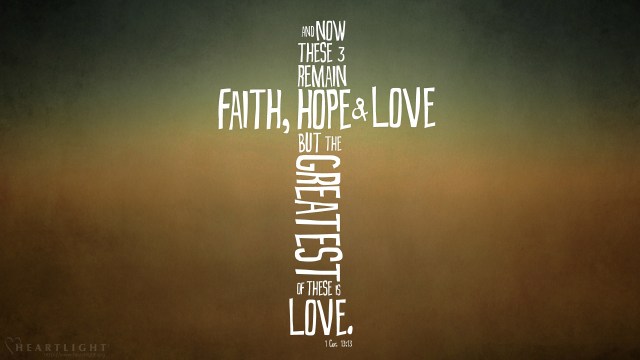
1 Corinthians 13:1-13 – Will Our Ministry Have More Love?…

Love is enduringly patient with the quirkiness of others. Love is infinitely kind and generous to everyone it encounters. Love does not envy or resent another person’s gifts or abilities; it does not place oneself on a pedestal as a braggart. Love is not puffed-up like a peacock looking for constant attention and believing that life is all about my-way-or-the-highway. Love is never snarky toward others and does not seek a selfish conniving agenda at all costs.

Love does not fly-off the handle with limited information, and it absolutely never keeps a scorecard of other people’s offenses. Love does not cheer when other people screw-up, but, instead, throws a party when someone embraces gospel truth. Love always looks out for others, always gives the other person the benefit of the doubt, always sees the potential in others, and always believes what God can do in the most stubborn of hearts. (1 Corinthians 13:4-7, My own translation)

Love Is Eternal

Love will forever endure. There is never a time when being un-loving is required or acceptable – that somehow we need to withhold love from someone so that they will get the clue they are doing something we don’t like.  In other words, love does not hate people who are different from us. Hate is temporary. Love is permanent and ageless.

As humans, we simply do not have the full picture to everything happening in the world. We don’t see all the angles or have a complete understanding of everything. Because of our limitations, we are to avoid being so quick to evaluate and judge. 

Love makes God’s interests in other people our interests. Love is to be our guiding and overarching principle for living. Love is to be our way of life. Love cannot be manufactured or synthesized. That’s because God is love, and God cannot be reproduced into our own image of how we think life ought to operate.

Many people are unloving and unkind in this often cruel and calloused world because they don’t know God loves them. If we don’t believe God loves us, then our words and our actions will reflect more of hate than love.  God really truly does love you and me. This is crucial. Do not forget this. Believe it. Live it. Enjoy it. Know it in your heart and deep in your gut. Tell it to yourselves until you are thoroughly bathed in it because it is more wonderful than any 70’s love song could ever describe it.

The Lord your God is with you.
    He is like a powerful soldier.
    He will save you.
He will show how much he loves you
    and how happy he is with you.
He will laugh and be happy about you. (Zephaniah 3:17, ERV)

Christianity does not simply happen by knowing some belief statements about God and Jesus. Christianity happens when people experience the white hot burning love of God in Jesus Christ for them. 

Jesus came not only for those who skip church and only occasionally read their Bibles, but also came for the hard-hearted thief, prostitute, adulterer, addict, terrorist, murderer, and for all those caught up in bad choices and failed relationships.

God’s love is never based on our performance, or how good we look to others; it is never conditioned by our moods. The love of God only looks longingly at you and me with the potential of what we can become in Christ, loving us as we are. This is a world-altering revolutionary reality:

God loves me as I am and not as I should be. 

Mit Tdrahrhe

But Christ died for us while we were still sinners, and by this God showed how much he loves us. (Romans 5:8, ERV)

Despite the decline of institutional religion in the Western world, the vast majority of people still believe God exists. Conversely, however, the majority of people do not believe God truly loves them. We are in a crisis of love. People need to know the God who is Love. 

Christianity never begins with what we do for God so as to make ourselves lovely and presentable to the Divine.  No! Christianity always starts with what God has done for us, the great and wonderful Love that exists for us in Christ Jesus.

God our Savior showed us
    how good and kind he is.
He saved us because
    of his mercy,
and not because
of any good things
    that we have done.

God washed us by the power
    of the Holy Spirit.
He gave us new birth
    and a fresh beginning. (Titus 3:4-5, CEV)

All the wrong turns in the past, the mistakes, the moral lapses, everything that is ugly or painful, it all melts in the light of God’s acceptance and love for us. Amen.