Be Courageous (Joshua 1:1-9)

After the death of Moses the servant of the Lord, the Lord spoke to Joshua son of Nun, Moses’s assistant, saying: 

“My servant Moses is dead. Now proceed to cross the Jordan, you and all this people, into the land that I am giving to them, to the Israelites. Every place that the sole of your foot will tread upon I have given to you, as I promised to Moses. From the wilderness and the Lebanon as far as the great river, the River Euphrates, all the land of the Hittites, to the Great Sea in the west shall be your territory. 

No one shall be able to stand against you all the days of your life. As I was with Moses, so I will be with you; I will not fail you or forsake you. 

Be strong and courageous, for you shall lead this people to possess the land that I swore to their ancestors to give them. Only be strong and very courageous, being careful to act in accordance with all the law that my servant Moses commanded you; do not turn from it to the right hand or to the left, so that you may be successful wherever you go. 

This book of the law shall not depart out of your mouth; you shall meditate on it day and night, so that you may be careful to act in accordance with all that is written in it. For then you shall make your way prosperous, and then you shall be successful. I hereby command you: Be strong and courageous; do not be frightened or dismayed, for the Lord your God is with you wherever you go.” (New Revised Standard Version)

Freedom came to the ancient Israelites; they were delivered from their cruel Egyptian bondage. Then, they wandered through the desert for forty years; and, after the death of their leader Moses, were poised to enter the Promised Land. 

However, it was going to be no cakewalk. There were pagan peoples entrenched in the land. It would be a huge feat to conquer their territory. Joshua, the young aide-de-camp of Moses, now leader of the people, would be the one to go before them in battle. Understandably, Joshua was likely nervous, maybe even downright scared. 

So, the Lord came to Joshua. God told him to be strong and courageous, to not be afraid to claim the divine promise of the land. 

The path to success for Joshua – as well as all God’s people – is not by the physical sword but by the sword of the Lord, the Word of God. 
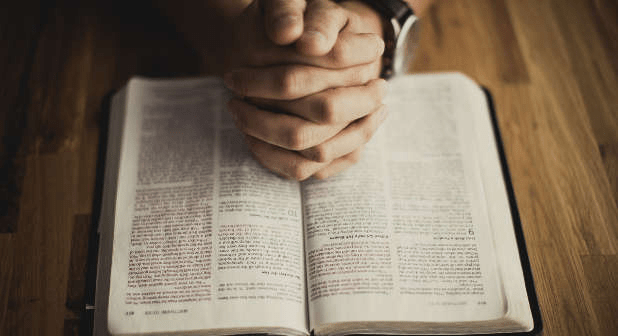
The Lord was plainspoken about the need to intimately know the Law given to the people and to continually meditate upon it. Being careful to do everything written within it, Joshua would find both the courage and the wisdom to lead the people to victory.

It still remains true for all God’s people that faithful knowledge, sage wisdom, and careful adherence to Holy Scripture comes through meditation upon its contents. 

There is a great need amongst believers to continually ruminate on God’s Word. We live on a broken planet, filled with all sorts of adversity, hardship, difficulty, and challenge to living a committed spiritual life. And so,

we may sometimes wonder how to address and deal with it all; our problems might seem as large as taking the Promised Land. 

The place to begin is by going to the Word of God – not so much in an anxious, hasty, or impatient question-and-answer sort of way which looks for a quick response; but instead, in a slow, deliberate, contemplative way. 

Lasting and genuine spirituality, as well as a sense of settled success, comes not only through acknowledging the importance and integrity of Scripture; one must know it’s contents, and allow it’s wisdom to saturate the soul through consistent and continual meditation.

Scripture memorization is a discipline worth pursuing. Having large chunks of the Holy Bible in our minds and hearts helps us in the crucible of challenging situations and adverse circumstances. 

What’s more, when doing the everyday pedantic and tedious work, we can engage our minds in the practice of contemplation on those verses we have committed to memory. Meditation on God’s Word is a necessary practice if we want to have success in living a genuinely well-rounded life.

Courage and meditation are a package deal. Bravery and contemplation are meant to be wed together. One rarely comes without the other – which means the realization of our good dreams, for both us and the world, needs the practice of Scripture meditation.

God Almighty, my delight is in your law, and on it I meditate day and night. (Psalm 1:2)

O how I love your law! It is my meditation, my food and drink, all day, every day. (Psalm 119:97)

I will meditate on your precepts and honor your ways in all I do and say. (Psalm 119:15)

I am determined to lift my hands to your commandments, which I love; and I will meditate on your statutes. (Psalm 119:48)

I look forward to the wee hours of the night because it provides me the space and the quiet to meditate on your word. (Psalm 119:148)

In fact, I meditate on all your doings through both day and night; I ponder and consider the works of your hands. (Psalm 143:5)

Amen.

Sensing the Divine (Exodus 3:1-5)

The Burning Bush by Yoram Raanan

Now Moses was tending the flock of Jethro his father-in-law, the priest of Midian, and he led the flock to the far side of the wilderness and came to Horeb, the mountain of God. There the angel of the Lord appeared to him in flames of fire from within a bush. Moses saw that though the bush was on fire it did not burn up. So Moses thought, “I will go over and see this strange sight—why the bush does not burn up.”

When the Lord saw that he had gone over to look, God called to him from within the bush, “Moses! Moses!”

And Moses said, “Here I am.”

“Do not come any closer,” God said. “Take off your sandals, for the place where you are standing is holy ground.” (New International Version)

The burning bush is one of those iconic objects and stories in Holy Scripture. Moses had an experience which changed his life, as well as the lives of all the Israelites then and now.

Having spent the first forty years of his life as a darling in the Egyptian court; and then the next forty years far from that life on the backside of the desert with a bunch of sheep; it’s an understatement to say that Moses did not expect or ever envision encountering God in a burning bush. The impossible has no possibility… Or does it?…

The experience of the burning bush fired the five senses of Moses:

  • See. There was the paradoxical sight of seeing fire in a bush that isn’t burning up.
  • Smell. All around there were the smells of sheep, the outdoors, and perhaps, even the lack of smelling burnt wood.
  • Hear. Listening to the voice and call of God from within the bush.
  • Taste. Spiritually and emotionally savoring God’s attentive justice toward the people.
  • Touch. Removing his sandals to feel the grounding of sacred space.

The story also comments on the senses of God, as well. Even though God is Spirit and is worshiped as such, God is alive with divine sensations:

  • See. Observing the approach of Moses, and the misery of the Israelites.
  • Smell. The stench of injustice wafting into God’s nostrils, bringing a strong divine reaction.
  • Hear. Listening to the cries of suffering and oppression amongst the people.
  • Taste. Anticipating the savor of showing mercy, justice, and righteousness.
  • Touch. A profound and holistic touching of Moses so that both he and the Israelites would never be the same again.

Through it all, the close identification between God and the people is expressed. The Lord feels the humiliation and pain of the Israelites – and vows to uproot them from the Egyptian factory farm of slavery and plant them firmly into rich Promised Land soil.

And what God promises to do, God has the authority and power to make good on.

Although experiencing all of this unbelievable sensory encounter, Moses knew it to be an impossible task in freeing so many Israelites from such a powerful Egyptian juggernaut.

After all, the people had their senses aflame, as well; and not in a good way:

  • See. The sight of family being worked to the bone; and cruelly treated.
  • Smell. The constant smell of bricks baking, mixed with the ever-present smell of death.
  • Hear. Listening day after day to the groans of people, just trying to survive under awful conditions.
  • Taste. Every day tasting the desert dust.
  • Touch. Overstimulated with handling tools to the point of hard callouses and dry, cracked, bloody hands.

Hundreds of years of backbreaking bondage to a national force so mighty that nothing can be done about it be broken…. Ah, but God specializes in systems of oppression and miserable people.

It is the Lord’s abilities which conquer the mightiest of foes and can extend mercy to the lowest and the least powerful. The entire Israelite situation was ripe for divine intervention and supernatural wonders to occur.

God will make a way where there seems to be no way. God works in ways which transcend our senses.

  • See. We are blind, but God gives us the gift of sight.
  • Smell. Our nostrils have become accustomed to the smell of death, but God’s aroma of life awakens us to new hope.
  • Hear. We are deaf, but God opens our ears with the sound of justice.
  • Taste. Our taste buds are shot with the gruel of poverty, but God causes our tongues to dance with the zest of mercy.
  • Touch. Our nerve endings are raw from cruel bondage, but God touches us with freedom.

You already intuitively know deep in your spirit that the impossible is possible with God. It’s never a question of God’s ability, but of God’s timing.

God is able and works the impossible in its proper time so that justice and mercy will have their full effect.

God of the impossible: I believe. Help me in my unbelief.

God of mercy: I receive. Help me in my denial.

God of justice: I accept. Help me in my rejection.

God of all time: I endure. Help me in my impatience.

God of All: I submit. Help me in my rebellion.

God of power and of might: I trust. Help me in my distrust.

God of our Lord Jesus Christ: I follow. Help me in my wandering.

God of the nations: Yes, you know that I love you. Yes, Lord, you know I love you. Lord, you know all things, and you know that I love you. So, yes, I will answer your call to go. Help me in my sending. Amen.

Jacob’s Dream (Genesis 28:10-22)

Jacob’s Ladder by Darius Gilmont

Jacob left the town of Beersheba and started out for Haran. At sunset he stopped for the night and went to sleep, resting his head on a large rock. In a dream he saw a ladder that reached from earth to heaven, and God’s angels were going up and down on it.

The Lord was standing beside the ladder and said:

I am the Lord God who was worshiped by Abraham and Isaac. I will give to you and your family the land on which you are now sleeping. Your descendants will spread over the earth in all directions and will become as numerous as the specks of dust. Your family will be a blessing to all people. Wherever you go, I will watch over you, then later I will bring you back to this land. I won’t leave you—I will do all I have promised.

Jacob woke up suddenly and thought, “The Lord is in this place, and I didn’t even know it.” Then Jacob became frightened and said, “What a frightening place! It must be the house of God and the gateway to heaven.”

When Jacob got up early the next morning, he took the rock that he had used for a pillow and stood it up as a place of worship. Then he poured olive oil on the rock to dedicate it to God, and he named the place Bethel. Before that it had been named Luz.

Jacob solemnly promised God, “If you go with me and watch over me as I travel, and if you give me food and clothesand bring me safely home again, you will be my God. This rock will be your house, and I will give back to you a tenth of everything you give me.” (Contemporary English Version)

“Dreams are impartial, spontaneous products of the unconscious psyche, outside the control of the will. They are pure nature; they show us the unvarnished, natural truth, and are therefore fitted, as nothing else is, to give us back an attitude that accords with our basic human nature when our consciousness has strayed too far from its foundations and run into an impasse.

Carl Jung, Collected Works, Vol. 10

Not all unconscious dreams are the same, any more than all conscious experiences are alike.

Some dreams are not much more than a thing which occurs while we’re sleeping; they’re akin to the tedious or pedantic things we do while awake. Yet, other dreams are loaded with symbolic significance and have complex patterns of organization and relating.

However, all dreams which we carry with us into conscious waking – no matter whether mundane or extraordinary – are telling us a similar message: “Hey! Pay attention to this!”

In other words, our unconscious brains are usually aware of what we need more than our conscious minds; and dreams become the vehicle by which our unconscious alerts our conscious selves of something we need to focus upon.

Jacob’s Ladder by Ben Avram

Jacob needed to pay attention to something that he was not consciously aware of. Before his dream, Jacob had left home at the behest of his aging father. Mom and Dad wanted Jacob to have a good wife, so they sent him off to a specific place to find one.

Now, mind you, Jacob was a mama’s boy; he stuck close to home and was attached to his mother. Off on his first outing away from familiar confines, Jacob would have been understandably anxious and fearful. Although he had the blessing of his parents, Jacob’s unconscious self knew he also needed the blessing of almighty God.

So, the Lord showed up in a dream. To Jacob’s credit, he paid attention by acknowledging the importance of the dream. Jacob also made the Lord a promise that he would give back a tenth of anything and everything he acquired because of God’s blessing.

I wonder: How many times do you and I fail to acknowledge that the Lord’s presence is in the very place we are? Maybe our dreams are trying to tell us something – that the God of all things, including dreams, is with us in our own particular place and situation.

It can be frightening to be in a new place or new situation that you’ve never been in before. Yet, there is no place any of us can go where God is not already there.

You have looked deep
into my heart, Lord,
    and you know all about me.
You know when I am resting
    or when I am working,
and from heaven
    you discover my thoughts.

You notice everything I do
    and everywhere I go.
Before I even speak a word,
    you know what I will say,
and with your powerful arm
you protect me
    from every side.
I can’t understand all of this!
Such wonderful knowledge
    is far above me.

Where could I go to escape
from your Spirit
    or from your sight?
If I were to climb up
to the highest heavens,
    you would be there.
If I were to dig down
to the world of the dead
    you would also be there.

Suppose I had wings
like the dawning day
    and flew across the ocean.
Even then your powerful arm
    would guide and protect me.
Or suppose I said, “I’ll hide
in the dark until night comes
    to cover me over.”
But you see in the dark
because daylight and dark
    are all the same to you. (Psalm 139:1-12, CEV)

The Lord is with you. Your dreams have already confirmed it.

O God, give me strength for this day, and not to turn coward in the face of difficulty or duty. Let me not lose faith in other people. Keep my heart pure and caring, free from all ingratitude or meanness. Open wide the eyes of my soul so that I may see the good in all things. Grant me today a new vision of your truth; and for tonight, may the Lord Jesus be in my dreams so that I might awake again and serve him in joy and gladness, in the power of the Holy Spirit. Amen.

Mary’s Song of Praise (Luke 1:46b-55)

The Magnificat, a woodcut by Sr. Mary Grace Thul

Mary said,

“My heart praises the Lord;
    my soul is glad because of God my Savior,
    for he has remembered me, his lowly servant!
From now on all people will call me happy,
    because of the great things the Mighty God has done for me.
His name is holy;
    from one generation to another
    he shows mercy to those who honor him.
He has stretched out his mighty arm
    and scattered the proud with all their plans.
He has brought down mighty kings from their thrones,
    and lifted up the lowly.
He has filled the hungry with good things,
    and sent the rich away with empty hands.
He has kept the promise he made to our ancestors,
    and has come to the help of his servant Israel.
He has remembered to show mercy to Abraham
    and to all his descendants forever!” (Good News Translation)

It strikes me that Mary, instead of being full of worry and afraid of the future, and as an unmarried teen with child, is full of the Spirit and faith. Mary neither complained nor fretted for the nine months of her pregnancy; she praised God and was clear-headed about the grace shown to her.

Mary’s canticle gives us insight into the mystery of the incarnation: God chooses the weak, those of low esteem, and the powerless.

Mary was rather ordinary. She had no wealth. She possessed nothing which would cause anyone to pick her out of a crowd. Yet, she is the one chosen by God. And her wonderful response to grace demonstrated that there is so much more to any person than what we can see with our eyes and perceive through our earthly glasses of high positions and strength of personalities.

The mother of Jesus had the wisdom to discern that her situation typified the Lord’s egalitarian work of leveling the field. Mary’s pregnancy normalized the needs of all people. Her son, the Deliverer, would carry this understanding into his own life and ministry – declaring good news to the poor, comforting the brokenhearted, proclaiming freedom for captives, telling those who mourn that the time of the Lord’s favor has come.

Mary’s is the kind of song that has been sung by people of faith throughout the ages. It’s not only a song of faith but a declaration of resistance, in defiance of all evil powers which ignore the poor, such as Mary.

It was not a completely new sort of song; it’s in harmony with songs that other faithful followers of the Lord have sung in past generations.

Moses and Miriam sang a song to the Lord of freedom from powerful Egyptian bondage and oppression:

“I will sing to the Lord, because he has won a glorious victory;
    he has thrown the horses and their riders into the sea.
The Lord is my strong defender;
    he is the one who has saved me.
He is my God, and I will praise him,
    my father’s God, and I will sing about his greatness.
The Lord is a warrior;
    the Lord is his name.” (Exodus 15:1-3, 21, GNT)

Hannah, unable to conceive and have children, endured a long stretch of affliction from her rival – that is, until the Lord stepped in and opened her womb:

“No one is holy like the Lord;
    there is none like him,
    no protector like our God.
Stop your loud boasting;
    silence your proud words.
For the Lord is a God who knows,
    and he judges all that people do.
The bows of strong soldiers are broken,
    but the weak grow strong.
The people who once were well fed
    now hire themselves out to get food,
    but the hungry are hungry no more.
The childless wife has borne seven children,
    but the mother of many is left with none.
The Lord kills and restores to life;
    he sends people to the world of the dead
    and brings them back again.
He makes some people poor and others rich;
    he humbles some and makes others great.
He lifts the poor from the dust
    and raises the needy from their misery.
He makes them companions of princes
    and puts them in places of honor.
The foundations of the earth belong to the Lord;
    on them he has built the world. (1 Samuel 2:2-8, GNT)

Stained glass window of Hannah offering her son Samuel to the Lord by Phil Watkins

The psalmist declares his song about the Lord who turns the tables on the unfortunate and brings them privilege:

He always keeps his promises;
    he judges in favor of the oppressed
    and gives food to the hungry.

The Lord sets prisoners free
    and gives sight to the blind.
He lifts those who have fallen;
    he loves his righteous people.
He protects the strangers who live in our land;
    he helps widows and orphans,
    but takes the wicked to their ruin. (Psalm 146:6b-9, GNT)

God’s people throughout history have faced oppression. And, when in the teeth of that adversity, they have sung God’s songs of resistance against the evil powers of this world.

Along with Holy Scripture, let us also in these days of Advent just before Christmas Day, sing our traditional songs of resistance, deliverance, and hope:

“Come, Thou Long Expected Jesus”

By Charles Wesley

Come, thou long expected Jesus,
born to set thy people free;
from our fears and sins release us,
let us find our rest in thee.
Israel’s strength and consolation,
hope of all the earth thou art;
dear desire of every nation,
joy of every longing heart.

Born thy people to deliver,
born a child and yet a King,
born to reign in us forever,
now thy gracious kingdom bring.
By thine own eternal spirit
rule in all our hearts alone;
by thine all sufficient merit,
raise us to thy glorious throne.

“It Came upon the Midnight Clear” (vs.3-4)

By Edmund Sears

And ye, beneath life’s crushing load,
whose forms are bending low,
who toil along the climbing way
with painful steps and slow,
look now! for glad and golden hours
come swiftly on the wing.
O rest beside the weary road,
and hear the angels sing!

For lo! the days are hastening on,
by prophet seen of old,
when with the ever-circling years
shall come the time foretold
when peace shall over all the earth
its ancient splendors fling,
and the whole world send back the song
which now the angels sing.

“O Come, O Come, Emmanuel” (vs.1, 4, 6)

By J.M. Neale

O come, O come, Immanuel,
and ransom captive Israel
that mourns in lonely exile here
until the Son of God appear.

O come, O Branch of Jesse’s stem,
unto your own and rescue them!
From depths of hell your people save,
and give them victory o’er the grave.

O come, O Bright and Morning Star,
and bring us comfort from afar!
Dispel the shadows of the night
and turn our darkness into light.

Christ came to stand against sin, death, and the power of the Devil.

God is full of grace, mercy, and power to the powerless and the needy. The Lord has our backs. Perhaps if we all, both individually and corporately, continually used our words to identify and declare the great things God has done we would realize the consistent blessing of the Lord. 

As we near the night of our Lord’s birth, take some time to reflect on the ways God has been good to you in this Advent season, and like Mary, offer praise for each act of mercy. Mary exhibited no helplessness but had her heart calibrated to detect the grace of God when it was present – and to resist the injustice of this world.

Soli Deo Gloria