Live under the protection of God Most High and stay in the shadow of God All-Powerful. Then you will say to the Lord, “You are my fortress, my place of safety; you are my God, and I trust you….
The Lord Most High is your fortress. Run to him for safety, and no terrible disasters will strike you or your home.
God will command his angels to protect you wherever you go. They will carry you in their arms, and you won’t hurt your feet on the stones. You will overpower the strongest lions and the most deadly snakes.
The Lord says, “If you love me and truly know who I am, I will rescue you and keep you safe. When you are in trouble, call out to me. I will answer and be there to protect and honor you. You will live a long life and see my saving power.” (Contemporary English Version)
I had a flashback in reading today’s psalm. My wife’s paternal grandmother was a godly woman. She raised five children in depression-era America, and it was not an easy life. She saw her share of hardship and difficulty. By the time I met Grandma she was elderly and in the twilight of life. Yet, none of those many difficult years she experienced had hardened her – she had an unmistakable sweet spirit.
In my first meeting with Grandma, I read her this very psalm, since I knew it was her favorite. As I carefully went through the beautiful poetic lines of the psalm – words of God’s protection and watch-care over people –the look on Grandma’s face was as if I was reading it to her for the first time. She drank in its message and savored every word.
This dear woman of God has been gone now for decades, but her legacy lives on. My wife, to put it delicately, was something of a precocious child. Grandma prayed for her, along with her other grandchildren, every day. This was no small feat, considering that she had eighteen grandchildren and then many great grandchildren late in life. Today my wife is a godly woman, just like her grandmother. And it is no surprise to me that her favorite psalm is Psalm 91.
What kind of spiritual legacy are we leaving for our kids, grandchildren, friends, and others?
The times of testing, danger, risk, and hardship are the opportunities to put a trust in God into practice. It is in such seasons that we can run to the Lord as our refuge and fortress, our shelter and our shade. In doing so, the impact is not only personal, but points to and brightly illumines the way for others, as well.
Watchful God, you are my protection and my strength. I run to you because you are able to deliver and to secure. I pray for all those who need your special help and protection today. May they know that you are able to save through Jesus Christ our Lord. Amen.
I give you thanks, O Lord, with all my heart; I will sing your praises before the gods. I bow before your holy Temple as I worship. I praise your name for your unfailing love and faithfulness; for your promises are backed by all the honor of your name. As soon as I pray, you answer me; you encourage me by giving me strength.
Every king in all the earth will thank you, Lord, for all of them will hear your words. Yes, they will sing about the Lord’s ways, for the glory of the Lord is very great. Though the Lord is great, he cares for the humble, but he keeps his distance from the proud.
Though I am surrounded by troubles, you will protect me from the anger of my enemies. You reach out your hand, and the power of your right hand saves me. The Lord will work out his plans for my life— for your faithful love, O Lord, endures forever. Don’t abandon me, for you made me. (New Living Translation)
The God of Holy Scripture is no uppity highfalutin Being. However, amongst humanity, those with established pedigree, high position, and influential power tend not to hobnob with the common person. In their hubris, they believe themselves to be above the common person.
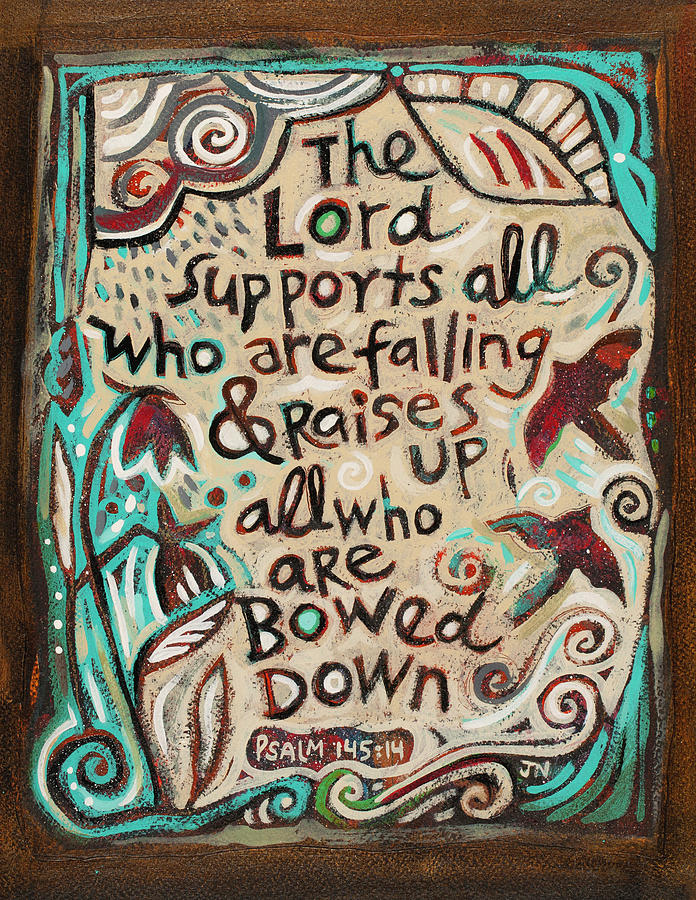
Not so with the Lord of the universe. God consistently cares for humble folk. The Lord intentionally seeks the average commoner and draws near to them. The Creator bends down to meet lowly creatures at their level.
Conversely, the Lord stays out on the margins of proud and arrogant people. God stands straight up and looks down from afar on the haughty who believe they are above others. The privileged and powerful in the world will experience divine distance, mostly because their attitudes and actions put the stiff arm toward God.
One of the most frustrating experiences in life is to have someone in power arrogantly misjudge you. Rather than carefully listening and offering gracious attention, the proud already assume they know what’s going on and what is best for others.
So, like a bull about to enter a China shop, or a timebomb ready to explode, human hubris of the heart violates and blows up another’s life based upon misinformation and faulty egotistical assumptions.
Yet, God sees. From a lofty place, clearly observing all creaturely activity, the Lord knows what is truly happening. And God is not okay with injustice perpetrated by cocky roosters and pretentious autocrats. Everyone will experience God’s power. It’s just a matter of what type of power one receives.
The Lord’s saving and sustaining power will uphold the humble of heart. However, the power of God’s wrath is the lot of puffed up peacocks who only care about getting their way. Their own puny power will be eventually stripped away and given to those who will wield it with grace.
The difference between the proud and the lowly is evidenced by their prayers. Megalomaniacs are concerned for material acquisitions, high positions, and fame. And their prayers reflect those ambitions. The meek, however, pray for increased spiritual strength to withstand trouble; enlarged hearts to hold more of God; and acceptance of whatever the Lord wants, whether it is for personal good or ill.
The arrogant may accomplish many good things. It’s possible for them to achieve greatness through outstanding work and incredible feats. Yet, God knows the real score. Jesus said:
“Not everyone who calls me Lord will enter God’s kingdom. The only people who will enter are those who do what my Father in heaven wants.On that last Day many will call me Lord. They will say, ‘Lord, Lord, by the power of your name we spoke for God. And by your name we forced out demons and did many miracles.’ Then I will tell those people clearly, ‘Get away from me, you people who do wrong. I never knew you.’” (Matthew 7:21-23, ERV)
Self-absorbed people enjoy their own presence and narcissistically believe everyone else should, too. Yet, ordinary people, being attentive to the common good of all persons, rely on the presence and protection of God for everyone and everything.
Whereas the vainglorious person trusts in their own ability to achieve and hold power so that they can smugly boast about their superiority, on the contrary, the meek are content to labor for the Lord in relative obscurity, to try and use their skills and aptitude for the benefit of their fellow humanity. God holds them tightly and securely. But not so with the egotistical. They will fall because they were never in God’s hand to begin with.
If the humble are weak, that’s okay. Because God is strong. If they are in trouble, no problem. The Lord has their back. They can let go, knowing there is a God who doesn’t. And that is the irony to the spiritual life – that in releasing and relinquishing we gain and acquire.
The truly humble of heart shall be vindicated by God from the wicked. For the Lord’s steadfast love will have the day.
Most merciful God, we confess that we have sinned against you in thought, word, and deed, by what we have done, and by what we have left undone. We have not loved you with our whole heart; we have not loved our neighbors as ourselves. We are terribly sorry, and we humbly repent. For the sake of your Son, Jesus Christ, have mercy on us and forgive us so that we may delight in your will, and walk in your ways, to the glory of your Name. Amen.
I will praise you, my God and King, and always honor your name. I will praise you each day and always honor your name. You are wonderful, Lord, and you deserve all praise, because you are much greater than anyone can understand.
Each generation will announce to the next your wonderful and powerful deeds. I will keep thinking about your marvelous glory and your mighty miracles. Everyone will talk about your fearsome deeds, and I will tell all nations how great you are. They will celebrate and sing about your matchless mercy and your power to save.
You are merciful, Lord! You are kind and patient and always loving. You are good to everyone, and you take care of all your creation.
All creation will thank you, and your loyal people will praise you. They will tell about your marvelous kingdom and your power. Then everyone will know about the mighty things you do and your glorious kingdom. Your kingdom will never end, and you will rule forever.
Our Lord, you keep your word and do everything you say. When someone stumbles or falls, you give a helping hand. Everyone depends on you, and when the time is right, you provide them with food. By your own hand you satisfy the desires of all who live.
Our Lord, everything you do is kind and thoughtful, and you are near to everyone whose prayers are sincere. You satisfy the desires of all your worshipers, and you come to save them when they ask for help. You take care of everyone who loves you, but you destroy the wicked.
I will praise you, Lord, and everyone will respect your holy name forever. (Contemporary English Version)
These days, everywhere I go there is high anxiety, even downright fear. In my city, the highest murder rate in its history marked the past year. In the hospital for which I am the chaplain, the coronavirus with all its deathly strains is bringing grief and bereavement to many families. Within many churches, their future viability is in question, and parishioners wonder about the future.
When there seems to be no light at the end of the tunnel, with apprehension and stress as the very air we breathe, there is an angle to the whole situation the psalmist wants us to consider. We are to give weight and consideration to some solid robust theology.
Everyone has a theology. All persons have some sort of understanding of a god, G-d, or no god at all. In the hard circumstances of life, it might seem as if our theology isn’t serving us well. We may feel as if G-d is aloof, distant, or just plain disinterested. So, let’s pay attention to the psalmist. Notice his theology….
The Lord saves… is merciful… powerful… kind… patient… loving… and good. G-d keeps divine promises… helps… gives… provides… protects… and is near to those who humbly seek the divine. In short, the Lord cares for all creation and all creatures, including you and me, and tackles injustice like a hefty linebacker on a string-bean running back.
Yes, G-d deserves all praise, glory, and honor because standing behind all the anxiety of the age is a very large deity who acts with good purpose.
Let this psalm (and the entire psalter) buoy you up with good solid theology because the Lord is righteous in all dealings and is present to all who call for help. G-d hears. G-d responds. Perhaps neither according to our idea of timeliness nor to our expectation. Yet, deliverance is at hand, even if it comes in a form different than we were anticipating.
I am taking time to read today’s psalm several times over, to let it awash my soul with significant doses of truth and mercy. There are simply times when all of us need to remember and be reminded that there is a G-d in heaven who is willing and able, as well as a friend close at hand.
True human satisfaction does not come through personal ingenuity or accumulation of more knowledge or more stuff. Rather, our deepest desires and needs are fulfilled in the G-d who cares.
Anxiety, stress, fear, and apprehension don’t simply melt away. We, like the psalmist, need to practice the active verbs within the text: I will praise you… I will always honor your name… I will keep thinking about your marvelous glory and miracles… I will tell all nations how great you are… because the Lord saves and satisfies.
May that be your experience today, and every day.
Mighty G-d, you are both far and near, totally above us, yet close at hand. Preserve me with your mighty power so that I might not fall into sin, nor be overcome by adversity. But in all I do direct me to the fulfilling of your purposes through Jesus Christ, my Lord. Amen.
“But you, Bethlehem Ephrathah, though you are small among the clans of Judah, out of you will come for me one who will be ruler over Israel, whose origins are from of old, from ancient times.”
Therefore, Israel will be abandoned until the time when she who is in labor bears a son, and the rest of his brothers return to join the Israelites.
He will stand and shepherd his flock in the strength of the Lord, in the majesty of the name of the Lord his God. And they will live securely, for then his greatness will reach to the ends of the earth.
And he will be our peace. (New International Version)
An Awful Situation
In the prophet Micah’s day, there was no “peace on earth, goodwill to all.” After the reign of King Solomon, Israel was divided between north and south. Samaria was the capital of the northern kingdom of Israel. Jerusalem was the capital of the southern kingdom of Judah.
In the eighth-century B.C.E. the Assyrian Empire conquered the northern kingdom of Israel. They deported many of the Israelites and re-populated the cities with their own people. This is why the Jews in Christ’s day looked down on Samaritans. They pejoratively viewed them as “half-breeds,” a mix of Jewish and Assyrian descent.
The Assyrian takeover of Israel not only left the northern kingdom in shambles; it had a huge impact on the southern kingdom of Judah. Even though Judah had not been conquered, they were still forced to pay tribute to the Assyrians.
The problem was exacerbated with the leadership of Judah seeking to maintain their power and lifestyle. They did not look to God for help and ignored the needs of the people. Judah’s leaders expected the poor common folk to shoulder the burden of the tribute to the Assyrians. In addition, thousands of refugees from Israel were flooding into Judah and Jerusalem. They had lost their homes, their land, and had nothing but their lives. So, the already scant resources in Judah were pushed to the brink.
Those in authority and power, the ones with resources to make a difference, didn’t. Instead, they took advantage of the situation by buying fields and land at a fraction of its worth because people were just trying to survive. In some cases, the leadership leveraged their power by simply pushing people off their own land and taking it over.
There Is Hope
Into this awful situation, Micah prophesied judgment to the leaders oppressing the people – and hope for the poor and the displaced. Micah said a new kind of leader will come – one with humble origins, like the common oppressed people of Judah. The refugees, the displaced farmers, and the poor will have a champion. He will feed them and shepherd them, leading them to green pastures. This leader will serve the people.
Christians discern Micah’s prophecy as speaking of Jesus – which is why we look at Scriptures like this one during the season of Advent. Just as the ancient Jews needed hope and the promise of a different ruler, so today we, too, need hope and the anticipation of security, peace, and goodwill.
Christ’s leadership and power is different than earthly politicians and officials. Over the centuries, Israel and Judah were so filled with bad kings and self-serving leadership, that Christ’s disciples could barely conceive of anything different. So, Jesus said to them:
“You know that those who are regarded as rulers of the Gentiles lord it over them, and their high officials exercise authority over them. Not so with you. Instead, whoever wants to become great among you must be your servant, and whoever wants to be first must be slave of all. For even the Son of Man did not come to be served, but to serve, and to give his life as a ransom for many.” (Mark 10:42-45, NIV)
A Shepherd Leader Is Coming
The people of Micah’s day needed to see beyond their terrible circumstances and to realize hope – better days ahead with food, peace, and protection. We, too, feel the insecurity and the anxiety of living in today’s world. We want leaders to be wise and just toward the vulnerable, the poor, and the displaced. Yet, while we look to elections and politicians for hope, the prophet Micah is jumping up and down, pointing us to a different leader – a shepherd leader.
Micah says the shepherd leader will come from Bethlehem. When Micah gave his message, King David had been dead for nearly three-hundred years. The nation had strayed far from those days when David led the people with God’s covenant love and kindness. Yet, another shepherd leader is coming and will bring restoration, renewal, revival, and hope!
“Bethlehem” is two Hebrew words put together: beth is “house,” and, lechem is “bread.” Bethlehem means “house of bread.” God communicated to the people that the coming shepherd leader will provide food and care for them.
The Bread of Life
Jesus is the Bread of Life. He generously feeds us so that we will offer both physical and spiritual bread to others. Jesus satisfies all our hungers and cravings in this life. We may not wonder where our next meal is coming from, nor struggle with going to bed hungry. Yet, we hunger for security in our world, satisfaction in our daily activities, loved ones to know Jesus, and for peace. Our spiritual stomachs growl, hungering for spiritual food. Many are spiritually starving because they are searching for peace and goodwill in everyplace but Jesus.
“I am the bread of life. Whoever comes to me will never go hungry, and whoever believes in me will never be thirsty…. All those the Father gives me will come to me, and whoever comes to me I will never drive away. For I have come down from heaven not to do my will but to do the will of him who sent me. And this is the will of him who sent me, that I shall lose none of all those he has given me but raise them up at the last day. For my Father’s will is that everyone who looks to the Son and believes in him shall have eternal life, and I will raise them up at the last day.” (John 6:35-40, NIV)
Satisfaction, contentment, and peace have come from the most unlikely sources: Bethlehem and Nazareth. Can anything good come from villages in Judea that don’t even show up on most maps in the ancient world? Peace, hope, and goodwill can and do come from the least expected places and people.
Joni Eareckson Tada and Corrie Ten Boom are two women that changed their worlds, despite being ordinary people with weakness. The two of them once met many years ago. Joni remembers the encounter:
“I relive each moment of my visit with Corrie after she was paralyzed by a stroke. Helpless, and for the most part dependent, I felt our mutual weakness. Yet I am certain neither of us had ever felt stronger. It makes me think of the Cross of Christ–a symbol of weakness and humiliation, yet at the same time, a symbol of victory and strength…. A wheelchair may confine a body that is wasting away. But no wheelchair can confine the soul that is inwardly renewed day by day. For paralyzed people can walk with the Lord. Speechless people can talk with the Almighty. Sightless people can see Jesus. Deaf people can hear the Word of God. And those like Corrie, their minds shadowy and obscure, can have the very mind of Christ.”
The Good Shepherd
Jesus Christ is our peace. He was not born in the halls of power, did not attend the best schools, or make lots of money. Nothing on his earthly resume was remarkable enough for anyone to seek him for any leadership position. And yet, Jesus stands and shepherds the flock in the strength of the Lord, providing everything we need.
“I am the good shepherd; I know my sheep and my sheep know me—just as the Father knows me and I know the Father—and I lay down my life for the sheep. I have other sheep that are not of this sheep pen. I must bring them also. They too will listen to my voice, and there shall be one flock and one shepherd. The reason my Father loves me is that I lay down my life—only to take it up again.” (John 10:14-17, NIV)
Through Jesus there is peace – financial peace, emotional peace, relational peace, social peace, and spiritual peace. Jesus is the One who brings a full-orbed wholeness and wellness to our lives, no matter the situation. Jesus is the shepherd leader who brings peace amidst any and every situation this world throws at us.
He tends his flock like a shepherd: He gathers the lambs in his arms and carries them close to his heart; he gently leads those that have young. (Isaiah 40:11, NIV)
The prophet Ezekiel prophesied in a similar situation as Micah:
For this is what the Sovereign Lord says: “I myself will search for my sheep and look after them. As a shepherd looks after his scattered flock when he is with them, so will I look after my sheep. I will rescue them from all the places where they were scattered…. They will lie down in good grazing land, and there they will feed in a rich pasture on the mountains of Israel. I myself will tend my sheep and have them lie down. I will search for the lost and bring back the strays. I will bind up the injured and strengthen the weak, but the sleek and the strong I will destroy. I will shepherd the flock with justice.” (Ezekiel 34:11-16, NIV)
Conclusion
There is something yet we must do. Jesus said:
“The work of God is this: to believe in the one he has sent…. I am the living bread that came down from heaven. If anyone eats of this bread, he will live forever. This bread is my flesh, which I will give for the life of the world…. Unless you eat the flesh of the Son of Man and drink his blood, you have no life in you…. Whoever eats my flesh and drinks my blood remains in me, and I in him…. The person who feeds on this bread will live forever.” (John 6:29, 51-59, NIV)
We are to ingest Jesus. We must be filled with him. Jesus comes into the very depths of our lives to nourish us. Jesus is our food and drink, our peace, our shepherd, and our king. Believing in Jesus is not simply a matter of agreeing with him or being his fan. Faith in Christ means to give our lives to him. The greatest Christmas gift we can give this season is the gift of our lives to Jesus Christ, the promised Messiah.
Blessed Lord Jesus, many have strayed far from your flock – taking matters into their own hands and doing things their own way. Many have let their love grow cold and have chosen to feed in pastures that will never satiate their hunger. May they believe that you died on the cross for all the messed up things done, and good things left undone without you. You rose from death to give them life. Please forgive us all, change our lives, and show us how to know you. Amen.







 Rev. Tim Ehrhardt