
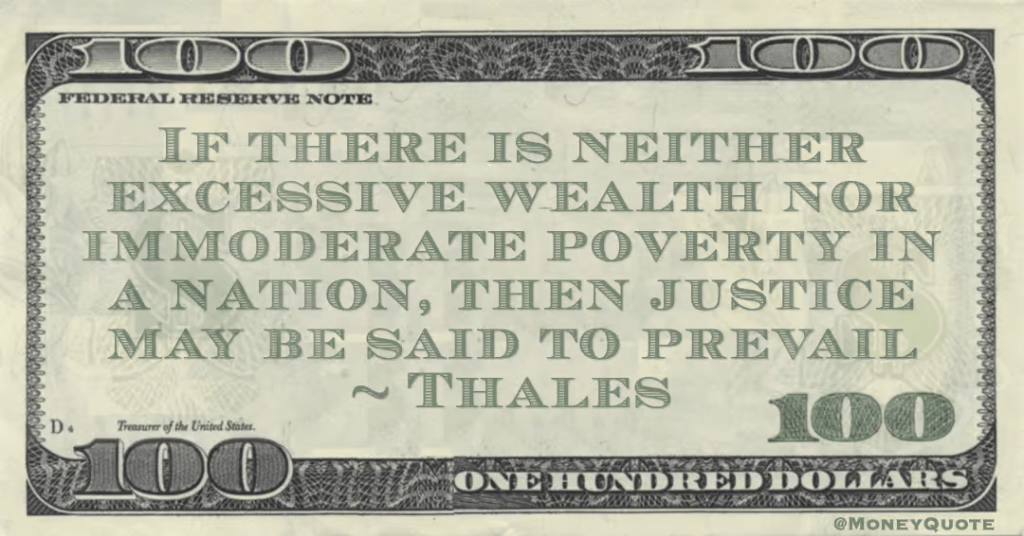
Against Exorbitant Wealth (Amos 3:9-4:5)

Proclaim to the strongholds in Ashdod
    and to the strongholds in the land of Egypt,
and say, “Assemble yourselves on Mount Samaria,
    and see what great tumults are within it
    and what oppressions are in its midst.”
They do not know how to do right, says the Lord,
    those who store up violence and robbery in their strongholds.
Therefore thus says the Lord God:
An adversary shall surround the land
    and strip you of your defense,
    and your strongholds shall be plundered.

Thus says the Lord: As the shepherd rescues from the mouth of the lion two legs or a piece of an ear, so shall the people of Israel who live in Samaria be rescued, with the corner of a couch and part of a bed.

Hear and testify against the house of Jacob,
    says the Lord God, the God of hosts:
On the day I punish Israel for its transgressions,
    I will punish the altars of Bethel,
and the horns of the altar shall be cut off
    and fall to the ground.
I will tear down the winter house as well as the summer house,
    and the houses of ivory shall perish,
and the great houses shall come to an end,
            says the Lord.

Hear this word, you cows of Bashan
    who are on Mount Samaria,
who oppress the poor, who crush the needy,
    who say to their husbands, “Bring something to drink!”
The Lord God has sworn by his holiness:
    The time is surely coming upon you
when they shall take you away with hooks,
    even the last of you with fishhooks.
Through breaches in the wall you shall leave,
    each one straight ahead,
    and you shall be flung out into Harmon,
            says the Lord.
Come to Bethel—and transgress;
    to Gilgal—and multiply transgression;
bring your sacrifices every morning,
    your tithes every three days;
bring a thank offering of leavened bread
    and proclaim freewill offerings, publish them;
    for so you love to do, O people of Israel!
            says the Lord God. (New Revised Standard Version)
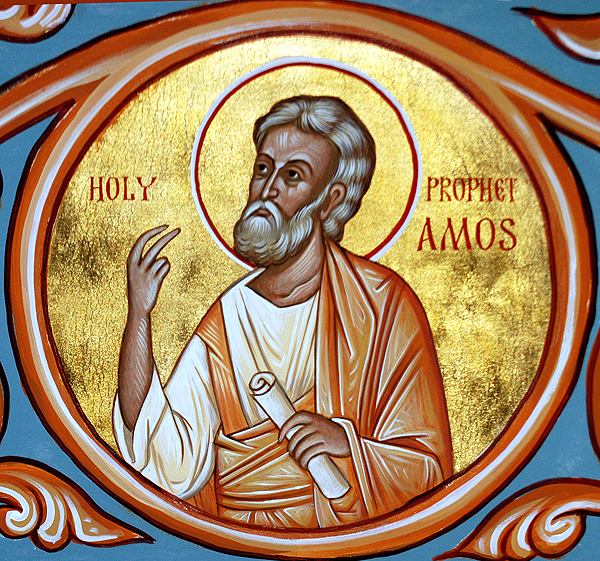
Orthodox icon of the prophet Amos

The prophet Amos sought to leave no stone unturned in exposing the transgressions of God’s wayward people. He went after social injustice; personal sins; religious idolatry; and all aspects of life in which the nation practiced self-indulgent hoarding of wealth and power.

Whenever people become focused on earthly power and control, they fall out of the realm of living in God’s power. If there is ever a personal or corporate sense of losing spiritual power, the problem is never with the Lord. The more one amasses worldly power and authority, the less effective they are with spiritual power.

It is possible for a nation or a church to have great political strength, yet in reality be powerless. Impressive constructed human strongholds are totally defenseless before the all-powerful God of the universe.

It’s always been curious to me why folks who claim the name of Christ, or who make grand confessions of faith, can then turn around and be enamored with obtaining wealth, real estate, resources of all sorts, and high-level positions. Such persons don’t deserve worldly power. It’s like putting a gold ring in a pig’s snout.

Persons with lots of worldly wealth and power will eventually find that their acquisitions fail them. And if their religion is powerless, everything in their life will lack power – no matter how it looks, or what spin they put on their situation.

Ignoring grace and mercy, compassion and kindness, to the poor and needy is a surefire way of experiencing divine condemnation. Treating one’s society and social relationships as mere pawns to get what I want is a prescription for alienation from God.

Whether someone believes in an almighty God, or not, oppressing and gaslighting others breaks down a society, and compromises basic law and order. Being concerned only with one’s constituents, and turning away from the common good of all, brings about injustice for the many.

But the ones in charge simply don’t care – which is why it raises the ire of a holy God. Any person who demeans meekness and gentleness, and clearly evidences a profound lack of humility, you can be sure that person is up to no good – despite any “good” words they might say.

Violence and robbery are the tools of those who care nothing for what their actions do to others. Justifying the rounding up of people into detention centers and robbing them of their lives and livelihood doesn’t fool God.

Those who go after unjust gain through any means possible will find that there is a boomerang effect to their actions. Their violent and unjust ways will turn back on them. They themselves shall be destroyed, and not the powerless and vulnerable.

In ancient Israel at the time of Amos, it was the Gentile nations who would rise up and be their judge. Pagan nations who thought nothing of despising and abusing others were the very ones to stand up and judge Israel. That’s how bad it was, even though there was wild prosperity, exorbitant wealth, and loads of power, that is, only among the upper class.

Living below the level of grace means showing no dignity or respect to one’s fellow humanity. It is unthinkable that such persons could or would ever exercise power in a democratic form of government. Just because they were elected and appointed to office, doesn’t mean they’ll act as civil servants.

Those in power who act only in self-interest will find themselves on the bad side of a holy God:

“Why would God withdraw from such a people? Because there was nothing in their lives corresponding to a heart concern for spiritual things; their character-reference could be written without mentioning God, or prayer, or holiness; their legacy to the future was wholly a testimony to a life lived for the body. And these claimed to be the people of God!” J.A. Motyer

Unchecked covetousness is actually a form of war against the poor. And any worship disconnected from righteousness and justice is an affront to both the needy among us, and God.

Wealth and power, in and of themselves, are neither good nor bad; they just are. But what we do with them is of vital concern. However, exorbitant riches and a lust for power, in and of themselves, are egregious sins.

In Holy Scripture, the poor are never chastised for their poverty and neediness. But the rich are continually exhorted and warned against for any sort of failing to care for the lower classes of people. (Matthew 25:14-30; Luke 12:13-21; 16:19-31)

The psalmist has a reality check for us:

Don’t be overly impressed when someone becomes rich,
    their house swelling to fantastic proportions,
    because when they die, they won’t take any of it with them.
    Their fantastic things won’t accompany them down under.
Though they consider themselves blessed during their lives,
    and even thank you when you deal well with them,
    they too will join the ancestors who’ve gone ahead;
    they too will never see the light again.
Wealthy people? They just don’t understand;
    they’re just like the animals
    that pass away. (Psalm 49:16-20, CEB)

The Teacher gives us some practical wisdom:

If you love money and wealth, you will never be satisfied with what you have. This doesn’t make a bit of sense. (Ecclesiastes 5:10, CEV)

Whoever becomes wealthy through unfair loans and interest collects them for the one who is kind to the poor. (Proverbs 28:8, GW)

And the Lord Jesus said:

“No one can serve two masters. Either you will hate the one and love the other, or you will be devoted to the one and despise the other. You cannot serve both God and money.” (Matthew 6:24, NIV)

“God blesses you who are poor,
    for the Kingdom of God is yours.” (Luke 6:20, NLT)

As for me, I’ll choose to take my cues from Jesus and the prophets, and not from those with earthly influence, riches, and power. How about you?

Almighty God, everything we possess – our time, abilities, resources, money, and material possessions – are gifts from You, and belong to You. Enable me to be a good steward of all that you have provided for me, so that I may be a blessing to the poor and needy; through Jesus Christ my Lord, in the strength of the Holy Spirit. Amen.

The Healing of the Demoniac (Luke 8:26-39)

Mosaic of the exorcism of the Gerasene demoniac from the Basilica of Sant’Apollinare Nuovo, 6th century C.E.

Then they arrived at the region of the Gerasenes, which is opposite Galilee. As he stepped out on shore, a man from the city who had demons met him. For a long time he had not worn any clothes, and he did not live in a house but in the tombs. 

When he saw Jesus, he cried out and fell down before him, shouting, “What have you to do with me, Jesus, Son of the Most High God? I beg you, do not torment me,” for Jesus had commanded the unclean spirit to come out of the man. (For many times it had seized him; he was kept under guard and bound with chains and shackles, but he would break the bonds and be driven by the demon into the wilds.) 

Jesus then asked him, “What is your name?” He said, “Legion,” for many demons had entered him. They begged him not to order them to go back into the abyss.

Now there on the hillside a large herd of swine was feeding, and the demons begged Jesus to let them enter these. So he gave them permission. Then the demons came out of the man and entered the swine, and the herd stampeded down the steep bank into the lake and was drowned.

When the swineherds saw what had happened, they ran off and told it in the city and in the country. Then people came out to see what had happened, and when they came to Jesus, they found the man from whom the demons had gone sitting at the feet of Jesus, clothed and in his right mind. And they became frightened. Those who had seen it told them how the one who had been possessed by demons had been healed. Then the whole throng of people of the surrounding region of the Gerasenes asked Jesus to leave them, for they were seized with great fear. So he got into the boat and returned. 

The man from whom the demons had gone out begged that he might be with him, but Jesus sent him away, saying, “Return to your home, and declare how much God has done for you.” So he went away, proclaiming throughout the city how much Jesus had done for him. (New Revised Standard Version)

Jesus exorcising the Gerasene demoniac, from the Hitda Codex

Jesus came to this earth to deliver people from all obstacles that gets in the way between us and God, so that humanity may freely connect with the divine, each other, and creation.

Whether it was in the synagogue, in public, in private, in a Jewish community, or in Gentile territory, Christ’s ministry was marked by healing people. He did this so that people could (re)attach themselves to the neighborhood, to God, and even to themselves.

Today’s Gospel story has Jesus take an unexpected trip across the Sea of Galilee to a foreign place full of non-Jewish persons. It was a place marked by all sorts of ritual impurity, and sorts of Gentile practices which a good Jew would have nothing to do with.

So, it’s no surprise, in a heathen setting, that Christ encountered the demonic in the form of a man riddled with demons to the point of being named “Legion.” This confrontation became a type of wild west shootout between the superhuman tortured man and the divinely filled Son of God.

The confrontation was intense. The atmosphere was charged with anticipation that someone wasn’t going to walk away from this shootout. But Jesus knew what he was doing: Christ was about to breakout a man from a demonic prison; and it would not go well for the demons.

In this remote western town, Jesus ended up performing a most extraordinary miracle. It would take a miracle to free this demonized person from his satanic jailcell. The legion of demons, however, were no match for the singular Son of God. Christ had no problem using his authority to exorcise the demons from the victimized man.

The demons exited the man and entered an entire herd of pigs. The herd then proceeded to destroy themselves in a powerful scene of what the demonic is all about. Yet, rather than acknowledging a divine miracle, those who were tending the pigs went and told the people in the area of how this interloper came along and upset the status quo. Instead of seeing a delivered man, the pig herders could only see dead swine.

As a result of the pig herders report, the folks in nearby towns wanted nothing to do with Jesus. The people begged him to get out of town. Christ purged the region of a significant presence of bad guys, and all the townspeople could do was fear for what might happen.

But despite the townspeople’s and pig herders’ disturbing lack of faith, there was one man who became a committed disciple of Jesus on the spot. The demoniac, now turned new citizen of God’s kingdom, saw Christ for who he was, and immediately discerned to whom he belonged – not the demonic world but the kingdom of heaven.

Although the newly delivered man begged to remain with Jesus, the Lord had another plan for the new disciple. Christ sent him back to his home to proclaim what God had done for him. In doing so, the man would become a powerful witness to God’s power. And, important for the man, old broken familial and community relations could be renewed and restored. The healing would come full circle.

If we bear witness to the works of God, where we are, it will bear fruit – even if it is among folks who may be in opposition to it.

Not even a legion of demons could keep Christ from restoring a tortured person to himself, his family, and his community. And it all happened on the demons’ turf. Nothing can stop the kingdom of God from expanding it’s good reach over all that is evil.

The good news of Christianity is that Jesus has the power to bring life from death. Christ has the ability to put us in a position where we can reconnect with both the human community and the divine realm.

The satanic in this world is not nearly as powerful as God; and the demons are under Christ’s authority. In fact, there is no power on earth (or under the earth) that can overcome the strength of the almighty God. This can be a comforting thought for every Christian.

Anyone afraid of Jesus has not yet discerned that he is inherently good. Ultimate power needs to be seen in the light of ultimate good. Otherwise, a person will walk around much like the demoniac, oppressed in their soul.

Instead, deliverance from the evil which vexes us is possible. For nothing is impossible with God. Whenever and wherever the healed person becomes a healer to others, then we know that the kingdom of heaven is among us.

Hear our prayers, God of power and might. Through the ministry of your Son, free us from the grip of the tomb, so that we may desire you as the fullness of life, and proclaim your saving deeds to all the world in the strength of the Holy Spirit. Amen.

Our Help Is In the Name of the Lord (Psalm 124)

If it had not been the Lord who was on our side
    —let Israel now say—
if it had not been the Lord who was on our side,
    when our enemies attacked us,
then they would have swallowed us up alive,
    when their anger was kindled against us;
then the flood would have swept us away;
    the torrent would have gone over us;
then over us would have gone
    the raging waters.

Blessed be the Lord,
    who has not given us
    as prey to their teeth.
We have escaped like a bird
    from the snare of the hunters;
the snare is broken,
    and we have escaped.

Our help is in the name of the Lord,
    who made heaven and earth. (New Revised Standard Version)

Today’s Psalm reminds believers of God’s deliverance in the past, so that we will not forget it in the present. If it were not for God, we would be toast. If not for God, none of us would be here; we’d be swallowed up by injustice and death.

Left on our own, and to our own devices, we don’t stand a chance against the oppressive flood of sinful sewage. But with God, there is hope; with God there is deliverance.

The ancient Israelites – and all the Jewish people throughout history – know a great deal of what it feels like to be overwhelmed by their enemies. Antisemitism is nothing new. Unfortunately, it has been around as long as Jews have existed. If some groups had their way, Israel would be wiped off the map.

The psalmist reminds Israel, as well as all of God’s people, of what the Lord has done in the past. Exhibit A of divine deliverance is the Exodus event and passing through the Red Sea to safety. The mighty Egyptians were no match for the God of Israel.

Each year, ever since that seminal deliverance from Israel’s enemies, Jews celebrate Passover, remembering and rehearsing this event of deliverance from the hand of Pharaoh. As pilgrims made their way to Jerusalem for the great Passover feast, they would sing Psalm 124, along with the other Songs of Ascent, giving praise to God for being attentive to their plight of slavery and oppression.

It is more than appropriate to give thanks and bless the Lord for the divine work of deliverance from enemies. God’s people are freed. For the Christian, God in Christ has delivered us from sin, death, and hell; and has made us joint heirs with Jesus.

When this perishable body puts on imperishability and this mortal body puts on immortality, then the saying that is written will be fulfilled:

“Death has been swallowed up in victory.”
“Where, O death, is your victory?
    Where, O death, is your sting?”

The sting of death is sin, and the power of sin is the law. But thanks be to God, who gives us the victory through our Lord Jesus Christ.

Therefore, my beloved brothers and sisters, be steadfast, immovable, always excelling in the work of the Lord because you know that in the Lord your labor is not in vain. (1 Corinthians 15:54-58, NRSV)

Recalling what God has done for us is a powerful part of the believer’s identity. The very Maker of heaven and earth, the Lord God almighty, is our help. It is God who prevails against those who seek to destroy and do harm. The Lord is the One who conquers enemies and makes things right.

The believer puts no trust in the power of weapons or in being the strongest. God is acknowledged as the true Deliverer from even the most formidable of foes, despite any power of the unjust.

In Christianity, Christ’s redemptive events of cross and resurrection has triumphed and won the victory over the powerful enemies of death, destruction, and the devil. Praising and singing to God is helpful and needed.

We all need help – not just sometimes but all the time. If we feel as if things are going pretty well for us, that only means we have just come out of a difficult time, or that we are about to undergo some enemy vitriol.

I wish we didn’t have to contend with selfish boneheads who only think of themselves all the time. But we do. And I wish we never needed to go through such hard times that grind us into the ground. Yet it happens.

However, we are not alone. We have a Champion, an Advocate, and One who has gone before us as the Pioneer of our salvation.

He has raised up a mighty savior for us
    in the house of his child David,
as he spoke through the mouth of his holy prophets from of old,
    that we would be saved from our enemies and from the hand of all who hate us. (Luke 1:69-71, NRSV)

Jesus did for us what we could do for ourselves. He willingly and deliberately let all evil exhaust itself on him, so that there is no enemy left to condemn us.

Enemies may still be around, but they are toothless. We may yet be like birds vulnerable to a trap, but the snare has been broken. All our enemies are powerless. We are free. Thanks be to God!

Our help is in the name of the Lord who made heaven and earth. Amen.

God (Psalm 147:12-20)

Extol the Lord, O Jerusalem!
    Praise your God, O Zion!
For he strengthens the bars of your gates;
    he blesses your children within you.
He grants peace within your borders;
    he fills you with the finest of wheat.
He sends out his command to the earth;
    his word runs swiftly.
He gives snow like wool;
    he scatters frost like ashes.
He hurls down hail like crumbs—
    who can stand before his cold?
He sends out his word and melts them;
    he makes his wind blow, and the waters flow.
He declares his word to Jacob,
    his statutes and ordinances to Israel.
He has not dealt thus with any other nation;
    they do not know his ordinances.
Praise the Lord! (New Revised Standard Version)

The psalmist portrays a God who is clearly in control of all things. This is the Lord God almighty, who is the Creator, and is sovereign over the entire world.

God has no need for bluster, or to leverage knowledge in order to get things done. With only a word, the weather changes completely, and people are invited to participate in the divine will for this earth.

There is no creature, and no human on this earth, who has such power and authority, sovereignty and control, over everything and everyone as God.

Because of God’s great power, the Lord is able to extend gracious and providential care for those who put their hope in God’s steadfast love. Such grace and love of divine blessing is the means for Israel’s praise of Yahweh in the psalm.

The grandest blessing of them all is the gift of the “word.” God’s word of command is what sets in motion all of the natural processes of this earth. It is the divine word that gives and sustains life on this planet.

The same divine word which has been gifted in order for the waters to abundantly flow and the wind to continually blow, is the word given to Israel in the laws and commands for the people.

This gift of word is a wonderful privilege, given to the nation of Israel in the Old Testament. It is what makes them a peculiar people, recipients of the divine will. It is a word of guidance for the covenant people of God.

And that divine word is the primary reason for the human word to respond in praise by extoling the awesome might and mercy of God.

Please understand that today’s psalm is profoundly theological. In other words, it is all about God. We humans and the creation are mentioned and talked about within the psalm, yet all of it is in the context of God’s activity in the world, of God’s actions in history.

The things which God does among us and in this world is a theological reflection, in and of itself. Let me say it another way: God does what God is.

God didn’t simply do some wondrous act in the past. The Lord didn’t merely console and heal someone at some time. Rather, God is constantly binding up the brokenhearted; continually casting down the wicked; and consistently demonstrating steadfast love through right, good, and just actions, all the time.

There is a never a time when God is not God, being holy, loving, and good; and therefore, God’s eternal actions are a non-stop working of justice and righteousness in this old fallen world.

Evil, of course, is continually at work, as well. But we are not talking about opposing powers which are equal to each other. Justice and love will eventually swallow up wickedness and evil.

This is the hope that undergirds the psalmist, and it is the reason that the faithful keep persevering and offering their praise, adoration, and thanksgiving to the God who never slumbers nor sleeps, but is always watching over the righteous.

God’s wisdom and power is matchless. It is impossible for any one of us, or even all of us collectively, to count and number all the stars in the universe. But God can. And God even has them all named, because they all belong to God.

Neither you nor I could ever number the raindrops that fall on our roof in just a few minutes. Yet, God can. And the Lord can count the grains of sand on a beach and the hairs on every head (or in some cases, every hair on a guy’s back).

We humans number in the billions on this earth. Yet, God knows us all by name. And God’s perfection is near and intimate, not distant and remote.

I don’t know about you, my friend, but my encounters with God are nothing like a virtual Zoom meeting. My interactions with the God of the universe are close, intimate, and caring, just as a mother with her newborn baby.

Therefore, matters of renewal, restoration, and even resurrection are not problems for the God of the psalmist. Widows are comforted and rejoice. The poor are lifted up, and not ruined by their poverty.

The confused, the disordered and disoriented, the discouraged and discombobulated, are all held in the hands of the God who knows their confusion and will take care of them.

I might not understand; and, in fact, the older I become, I’ve discovered that the less I actually know. But I believe. I trust God. I do this, daily, because the Lord has demonstrated to me over and over again that God is trustworthy and has the ability to bend everything in this world for redemptive purposes.

That is the sort of God I serve – that the psalmist serves. And this faith, hope, and love is what I want for you, as well, my friend.

Life is too short and precious to squander it, and to flounder in disbelief. So, just listen; and take as much time as you need to hear the word, and experience the presence of life that is around you, and right in front of your face.

Dearest and most gracious Lord:

I thank you for the gift of life, the rising sun, and the promise of the seasons.

I give you thanks for my family and friends and the gifts they share; for my home and all its comforts within; for the abundance you give me and my willingness to share it with others.

I offer my gratitude to you for granting me wisdom, and the ability to listen; for acceptance of the challenges that I face every day; for strength and courage to act for justice and peace.

Most of all, I thank you for the knowledge that, without you, I have nothing; and with you, I possess all things, and have everything I need. Amen.