Hebrews 10:26-31 – On Rejecting Divine Love

 If we deliberately keep on sinning after we have received the knowledge of the truth, no sacrifice for sins is left, but only a fearful expectation of judgment and of raging fire that will consume the enemies of God.Anyone who rejected the law of Moses died without mercy on the testimony of two or three witnesses. How much more severely do you think someone deserves to be punished who has trampled the Son of God underfoot, who has treated as an unholy thing the blood of the covenant that sanctified them, and who has insulted the Spirit of grace? For we know him who said, “It is mine to avenge; I will repay,” and again, “The Lord will judge his people.”It is a dreadful thing to fall into the hands of the living God. (New International Version)

Love isn’t all rainbows and unicorns. Sometimes it’s downright tough, unabashedly truthful, and concerned for appropriate justice.

Love is compassionate, kind, and full of good deeds. Love is also subversive. Love takes a breach in relations seriously. Love announces that the hurt which has happened is not to be accepted as normal. Love is a refusal to settle for what is.

So, whenever God’s people drift away and slide into unhealthy or damaging ways of living, God’s love is not okay with it.

There’s a reason why we feel emotional pain. That’s because God feels pain. We don’t have to go very far into that thick book, the Bible, to find the hurt:

The Lord saw that the human beings on the earth were very wicked and that everything they thought about was evil. He was sorry he had made human beings on the earth, and his heart was filled with pain. (Genesis 6:5-6, NCV)

There is perhaps no more awful pain than being brokenhearted. A thousand kidney stones are not as painful as becoming heartsick over a relationship gone awry. Love can be an affliction – a deep ache which longs for wholeness, integrity, connection, and unity.

Perhaps we have neglected how much God hurts and longs for prodigal people to return in love to a divine relationship of grace. Just because God is always content, happy, and celebrating within perfect Trinitarian Love does not mean that God isn’t also profoundly sad, full of grief, and gazing from heaven, watching and waiting for sinful humanity to come to their senses.

God’s wrath exists because of God’s love.

God doesn’t paper over humanity’s guilt and shame and pretend it isn’t there. Instead, God has gone to the ultimate length to realize a restored relationship with fallen people. God got down in the trenches with us, in the person of Jesus, and dwelt among us – willing to suffer and die for us. Grace is most certainly free; however, it is anything but cheap.

Therefore, to know this great Love, then spurn it, is much more than agonizingly painful – it isn’t right. The preacher in the New Testament book of Hebrews captures the pathos of God against all that separates people from such perfect Love.

To renege on a commitment to Jesus is tantamount to crucifying him all over again.

This is an emotional and spiritual pain which transcends any human disappointment or failed friendship. Because God’s heart is so large, so God’s agony over defiant persons who turn from Love is immense beyond what we can even imagine.

Yes, it is a dreadful thing to fall into the hands of the Living God. Those who hate ought to beware. The ones trampling God’s moral law and ethical will into the ground, like some animal dung, ought not to think they are outside the reach of Divine Love, complete with Divine Wrath purging the resentment and rancor from Earth.

The warning of the preacher is of rejecting the spirit of Love and replacing it with the ancient evil spirt of hubris, animosity, and fear. Perfect Love drives out fear, restores comity, and embraces humility.

We are responsible for our own transgressions against others; our own failures to love as we ought; and our own neglect of God. Therefore, we must forsake willful and deliberate treatment of God and others by denigrating the work of the Spirit and attributing evil intentions to them.

If we focus on loving God and neighbor, then there is no room for apostasy, for lashing out and being an evangelist of wickedness. By clarifying and focusing on what matters most; being non-retaliatory; and reminding oneself of divine Love, we can cultivate a spirit of grace and forsake the hateful spirit.

Whenever we are wounded by another, or even by God, holding onto the hurt only causes gangrene of the soul. Yet, through forsaking all forms of violent and destructive language and behavior, and embracing the wounds of Christ, we can experience healing – even if our present adverse circumstance does not change.

So, be kind to yourself and others. Allow God’s kindness to penetrate the deep portions of your heart. Live a life of grace. Why be punished for acting like a foolish person? If you must suffer, suffer for doing good, not evil.

O Lord God, I confess and acknowledge your infinite mercy and goodness to me, and my ingratitude for such grace shown. You have saved me and made me your own child, and an heir of heaven. And I end up ignoring your gracious blessings, giving into temptation, and treating faith like a paper plate to be trashed when I’m done with it. I am truly sorry for my offenses toward you and admit my failure to observe your goodness. Accept my imperfect repentance, forgive my wickedness, purify my uncleanness, strengthen my weakness, heal my unstable spirit, and let your divine Love rule in my heart, through the love of Jesus Christ. Amen.

1 Samuel 2:1-10 – A Hope Fulfilled

Then Hannah prayed:

“My heart rejoices in the Lord!
    The Lord has made me strong.
Now I have an answer for my enemies;
    I rejoice because you rescued me.
No one is holy like the Lord!
    There is no one besides you;
    there is no Rock like our God.

“Stop acting so proud and haughty!
    Don’t speak with such arrogance!
For the Lord is a God who knows what you have done;
    he will judge your actions.
The bow of the mighty is now broken,
    and those who stumbled are now strong.
Those who were well fed are now starving,
    and those who were starving are now full.
The childless woman now has seven children,
    and the woman with many children wastes away.
The Lord gives both death and life;
    he brings some down to the grave but raises others up.
The Lord makes some poor and others rich;
    he brings some down and lifts others up.
He lifts the poor from the dust
    and the needy from the garbage dump.
He sets them among princes,
    placing them in seats of honor.
For all the earth is the Lord’s,
    and he has set the world in order.

“He will protect his faithful ones,
    but the wicked will disappear in darkness.
No one will succeed by strength alone.
    Those who fight against the Lord will be shattered.
He thunders against them from heaven;
    the Lord judges throughout the earth.
He gives power to his king;
    he increases the strength of his anointed one.” (New Living Translation)

This is the song of Hannah, a woman unable to conceive children. She offered a heartfelt petition to God for a child. Hannah’s prayer was answered. A thousand years later, Mary, the mother of Jesus, took this same song, reworked it, and personalized it, to voice and sing her own praise to God. (Luke 1:46-55)

Hannah dared to hope. It might seem from the perspective of one who has never struggled with being childless that offering a prayer for children is easy. However, when hope has been dashed and all seems impossible, putting oneself out there to ask, even to beg, is downright hard. In the fear of having what little hope remains be crushed, it is far easier to stay away from God and keep the prayers to oneself.

Hannah actively sought divine help and risked praying and emoting. The Lord heard. Hannah’s weeping turned to singing. And, like Mary’s Magnificat, Hannah quickly moved from her own experience to the experiences of people everywhere. Hannah focused on the God of the impossible and the divine accessibility which exists when we become vulnerable and put ourselves out there in risky hope.

“Hope is to our spirits what oxygen is to our lungs. Lose hope and you die. They may not bury you for awhile, but without hope you are dead inside. The only way to face the future is to fly straight into it on the wings of hope….hope is the energy of the soul. Hope is the power of tomorrow.”

Lewis Smedes (1921-2002)

The great reversal of Hannah’s condition from barren to fertile gives hope for the weak to become strong, the hungry to be filled, and the lost person to be found. In a world where God is the Sovereign, nothing needs to stay the same – nothing is carved in stone. Since no part of our existence as humans is outside the purview of God, there is always the possibility of change, of a reversal of fortunes.

The underdog has a champion with God. The misfits, the exploited, and the downtrodden – those who cannot lift themselves or pull themselves up by their bootstraps – are precisely the persons whom the Lord raises up. God’s providential care shall oversee them, and justice will be dispensed with perfect equity.

It is one thing to hope; it is another thing altogether in daring to hope against all odds and while others poo-poo your dreams. Godly hope is not wishful thinking; it is a confident expectation that God will show up and be gracious, merciful, and kind.

The place of crying and weeping is important because it is our tears which find a better way.

Anyone can offer cheap praise. Yet, the person who sits with their sadness and feels the heart-wrenching agony of a hope unfulfilled is the one who is able to give genuine praise and to sing with authenticity. Since their hope was planted and watered with tears, their joy in the harvest is abundant and plenteous.

As Christians anticipate the season of Advent, allow the daring hope of Mary and Hannah to conceive a fresh hope in your own life so that you will give birth to new life.

God of hope, in these times of change, helplessness, and uncertainty give us courage to overcome our fears, and help us to build a future in which all may prosper and share together, through Jesus Christ our Lord. Amen.

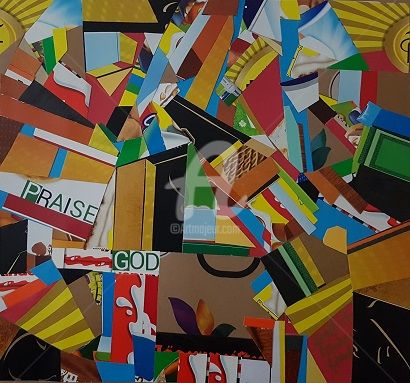
Psalm 113 – Shout Praises

“From Sunrise to Sunset Praise God” by Muha Rukab

Shout praises to the Lord!
Everyone who serves him,
    come and praise his name.

Let the name of the Lord
    be praised now and forever.
From dawn until sunset
    the name of the Lord
    deserves to be praised.
The Lord is far above
    all of the nations;
    he is more glorious
    than the heavens.

No one can compare
    with the Lord our God.
His throne is high above,
    and he looks down to see
    the heavens and the earth.
God lifts the poor and needy
    from dust and ashes,
    and he lets them take part
    in ruling his people.
When a wife has no children,
    he blesses her with some,
and she is happy.
    Shout praises to the Lord! (Contemporary English Version)

When my firstborn daughter was an infant, I was a busy seminarian as well as working a job. I had very little discretionary time on my hands. Yet, I could stand over the crib of my beautiful little bundle of a girl for long stretches of time without ever thinking about all my responsibilities. Whenever she awoke I spoke to her in that kind of baby talk that only a doting father can do. 

I imagine God looks at us in much the same way, as well as speaking and acting toward us in ways we can understand. Just as parents (hopefully) communicate on a level their kids can understand, so G-d condescends and stoops to our level in order to help us. 

The Lord is seated on high, looking down on the heavens and the earth. G-d looks at us with lovingkindness and seeks our best interests. The Lord notices the poor and acts justly on their behalf. G-d observes the needy and lifts them from their want to a place where they can thrive. The divine condescension of God is a beautiful thing because without it we would be like a helpless baby.

G-d, while being unknowable and unreachable in so many ways, has nevertheless communicated with humanity in a way people can understand and to which they can respond. The Lord has accommodated, or made allowance for, our language and general level of understanding.

The Lord, sovereign and high above us all, has chosen to stoop and coo over us here on earth. G-d’s love affectionately delights in us. The psalmist’s portrayal of G-d is not of some aloof Being who is bothered with humanity’s pestering. Rather, G-d sees, notices, and cares. We don’t need to do some sort of spiritual back flips to gain G-d’s attention. We already have it.

This psalm of praise to G-d celebrates how the Sovereign of the universe notices and acts. We are meant to remember the great deeds of G-d – both those things done in history, and the things done for us, personally. 

“Despite our earnest efforts, we couldn’t climb all the way up to God. So what did God do? In an amazing act of condescension, God climbed down to us and became one with us.”

Will Willimon

In Christianity, the concept of divine condescension and accommodation is given its supreme form in the person and work of Jesus Christ. By becoming human, Jesus accommodates himself to the human condition. Through his life, teaching, and ministry, Christ speaks as G-d, communicating sufficiently and effectively to humanity.

The redemptive events of Christ – his incarnation, holy life, death, resurrection, ascension, and glorification – are divine acts of grace, mercy, and love to all humanity. Praise and thanksgiving are the appropriate responses to such events done on our behalf.

This is one reason why the spiritual practice of journaling is such a good personal discipline because we then have a record of the ways in which G-d has acted on our behalf. When we look back and remember, we can praise the Lord all over again for lifting us from the ash heap. And this will fortify our spiritual mettle for the times when we need encouragement.

Keeping a gratitude journal and writing each day about at least one way the Lord has acted on your behalf, can bring encouragement, transformation, and joy to your life. I suggest you write for your own eyes only. This is between you and G-d. Therefore, you need not be concerned for correct spelling and grammar. It doesn’t even need to be legible, as long as you can read your own writing!

“Praise is the rehearsal of our eternal song. By grace we learn to sing, and in glory we continue to sing. What will some of you do when you get to heaven, if you go on grumbling all the way? Do not hope to get to heaven in that style. But now begin to bless the name of the Lord.”

Charles Spurgeon

What’s more, shouting our praises is not only appropriate but encouraged – even commanded. Shouting is both cathartic and fun. It builds emotional resilience and spiritual strength. Coupled with writing, shouting our praises has the effect of bringing spiritual growth and maturity to our lives.

We, of course, want to avoid shouting at others. Yet, we can take advantage of shouting while driving alone, out in the woods by ourselves, or even into a pillow. This isn’t weird. Shouting goes appropriately with praise and celebration.

In fact, it would be weird if there were no shouting. Try telling a sports fan watching their favorite team that they aren’t supposed to shout. Or just see what happens when a woman longing for children becomes pregnant for the first time.

Emotional expressions are expected whenever G-d shows up and accomplishes great deeds for us. To not do so is a sign of having spiders in your heart and garlic in your soul. It’s not right.

What are you thankful for today? Is there something in this day for which to praise the Lord, whether big or small? Will you give yourself permission to shout?

Accept, O Lord, our thanks and praise for all you have done for us. We thank you for the splendor of the whole creation, the beauty of this world, the wonder of life, and the mystery of love. We thank you for the blessing of family and friends, and the loving care which surrounds us on every side. We thank you for setting us at tasks which demand our best efforts and leading us to accomplishments which satisfy and delight us. We thank you also for those disappointments and failures that lead us to acknowledge our dependence on your mercy and grace.

Above all, we thank you for your Son, our Lord, Jesus Christ, the truth of his Word, the example of his life; his steadfast obedience, by which he overcame temptation; his dying, through which he overcame death; and his rising to life again, in which we are raised to new life. Grant us the gift of your Spirit so that we may know Christ and make him known; and through him, at all times and in all places, we may give thanks to you in and for all things. Amen.

Luke 10:25-37 – The Parable of the Good Samaritan

Good Samaritan by He Qi

A legal expert stood up to test Jesus. “Teacher,” he said, “what must I do to gain eternal life?”

Jesus replied, “What is written in the Law? How do you interpret it?”

He responded, “You must love the Lord your God with all your heart, with all your being, with all your strength, and with all your mind, and love your neighbor as yourself.”

Jesus said to him, “You have answered correctly. Do this and you will live.”

But the legal expert wanted to prove that he was right, so he said to Jesus, “And who is my neighbor?”

Jesus replied, “A man went down from Jerusalem to Jericho. He encountered thieves, who stripped him naked, beat him up, and left him near death. Now it just so happened that a priest was also going down the same road. When he saw the injured man, he crossed over to the other side of the road and went on his way. Likewise, a Levite came by that spot, saw the injured man, and crossed over to the other side of the road and went on his way. A Samaritan, who was on a journey, came to where the man was. But when he saw him, he was moved with compassion. The Samaritan went to him and bandaged his wounds, tending them with oil and wine. Then he placed the wounded man on his own donkey, took him to an inn, and took care of him. The next day, he took two full days’ worth of wages and gave them to the innkeeper. He said, ‘Take care of him, and when I return, I will pay you back for any additional costs.’ What do you think? Which one of these three was a neighbor to the man who encountered thieves?”

Then the legal expert said, “The one who demonstrated mercy toward him.”

Jesus told him, “Go and do likewise.” (Common English Bible)

In Christianity, no one justifies themselves. The kingdom of God turns on grace, and not with us working more or harder. As we anticipate Reformation Day, Christians remember the famous posting of the 95 Theses by Martin Luther on the Castle Church door in Wittenberg, Germany in 1517. 

Justification by grace through faith, apart from human effort, is the great theological emphasis and legacy of the Reformers. I suppose one would expect to look at the New Testament books of Romans and Galatians when it comes to dealing with justification. However, there might just be a better place to go….

Christ’s parable of the Good Samaritan is a famous and familiar story to many people, even for those outside of the Christian faith tradition. The parable is likely not the place one thinks to go when considering the Reformation. Yet, this parable is just the right place for considering the grand Reformation doctrine of justification.

“Every week I preach justification by faith to my people, because every week they forget it.”

Martin Luther (1483-1546)

The Gospel writer, Luke, gives us insight into the thought process of the person for whom Jesus told the parable to. That man sought to justify himself. 

When we view the parable from the angle of justification, we see the perspective of the wounded and hapless man, the victim of robbers. He was left for dead, and, indeed, in the story we know that he would die apart from help – the kind of help the man could not do for himself. He was completely dependent on someone to rescue him from his plight.

The Samaritan, the Christ figure in the story, comes and shows the man mercy. This grace was free, lacked any sort of favoritism, and was full of sheer kindness. Without the Samaritan’s actions of binding up the man’s wounds and getting him to a safe place, the victim would have died.  

Reformation Day, and every day, is a good day to celebrate the wonderful and glorious reality that Jesus Christ saves people from their terrible plight. 

Christ’s mercy is not dependent on what kind of people we are but is simply based on need. God graciously gives us the gift of faith and the mercy of deliverance. By Christ’s wounds we are healed. 

Take some time today to reflect on this most gracious of biblical truths: We do not need to justify ourselves. As Christians, we already possess justification by grace alone apart from human effort. 

Read the parable of the Good Samaritan carefully and slowly, absorbing it from this angle of the inability to justify ourselves and the incredible mercy of Christ. Let this wonderful truth sink deep in your soul to bring increased awareness, emotional wholeness, and spiritual healing.

Lord God, heavenly Father, you did not spare your only Son, but gave him up for us all to be our Savior, and along with him you have graciously given us all things. We thank you for your precious, saving gospel, and we pray that you would help us to believe in the name of our Savior faithfully and steadfastly, for he alone is our righteousness and wisdom, our comfort and peace, so that we may stand on the day of his appearing, through Jesus Christ, your dear Son, our Lord. Amen. – A Lutheran Collect of Thanksgiving