Welcome, friends! We are to honor the past, without getting stuck in it. God is presently working now, today, to accomplish good purposes in the church and the world through change. Click the videos below to explore further!…
Pastor Tim Ehrhardt, Isaiah 43:16-21
May today there be peace within. May you trust God that you are exactly where you are meant to be. May you not forget the infinite possibilities that are born of faith. May you use those gifts that you have received, and pass on the love that has been given to you. May you be confident knowing you are a child of God. Let this presence settle into your bones, and allow your soul the freedom to sing, dance, praise and love. It is there for each and every one of us. Amen.
This is what the Lord says— he who made a way through the sea, a path through the mighty waters, who drew out the chariots and horses, the army and reinforcements together, and they lay there, never to rise again, extinguished, snuffed out like a wick: “Forget the former things; do not dwell on the past. See, I am doing a new thing! Now it springs up; do you not perceive it? I am making a way in the wilderness and streams in the wasteland. The wild animals honor me, the jackals and the owls, because I provide water in the wilderness and streams in the wasteland, to give drink to my people, my chosen, the people I formed for myself that they may proclaim my praise. (New International Version)
Judgment and Ruin
The prophecy of Isaiah spans sixty-six chapters; it is a large book portraying a large God who is in control of the nations and holds them accountable for their decisions and actions. Chapters 1-39 of Isaiah contain a lot of scathing judgments. God is pictured as the one true Judge who is not only grieved over the sins of the pagan nations, but especially over the sin of God’s people, Israel.
As a result of Israel’s refusal to recognize their errant ways and turn to the Lord, God sent the Babylonians to Jerusalem. King Nebuchadnezzar tore down the city wall, took all the implements from the temple, and carried off the youngest and brightest people into exile to Babylon.
Grace and Mercy
Israel was ruined. But that is not the end of the story. In chapters 40-66 of Isaiah, rather than judgment dominating the prophecy, grace and mercy are liberally spoken. Although Israel deserved their exile, God would step in and return them back to the land.
The Lord will bring them back to Jerusalem, yet it will not be easy. The long journey home will be full of obstacles to overcome and deserts to cross. They will need to walk in a caravan stretching over five-hundred miles (like walking from Milwaukee, Wisconsin to Lincoln, Nebraska). That’s about four months of walking over harsh terrain, desert, and dangers from thieves and wild animals.
Yet, God will care for them, making a way through the desert, providing water, commanding animals to keep away, and causing growth to spring up from the desert for their pack animals to eat.
God Was Doing Something New
No longer could Israel only rely on looking back to the exodus out of Egypt. They had been doing that for a thousand years. Now, they have to deal with God in the present moment and take a walk of faith filled with uncertainty and hazards.
The Israelites would be vulnerable in their walk to Jerusalem. It was a scary prospect for them. God was telling his people to forget the “good old days” of the exodus because he is doing a work right now in the present that requires their faith and action.
Isaiah insisted that the people must commit their ways to the God who is calling them to a new journey. They are to be present and mindful to what God is doing now. God is doing a new thing, so forget clinging to the familiar past and strive to live in the here and now.
If we believe there is a better tomorrow, we can bear a hardship today.
It’s easy for people to get stuck in the past. One of the reasons we get stuck is that we do not lament our losses. Being present to God does not mean refusing to deal with what happened in the past; it means lamenting our losses in the present so that the past does not control us.
You and I are not the same people we were twenty years ago. The institutions we care about are not the same. Some of the people we have cared the most about in our lives are not here anymore. Only you and I are here, now, in this present moment. There is no alternate reality or some multiverse in which things are different. That means we must deal with today.
The Good Old Days
The Israelites did not grieve well. They kept looking back to a golden age when they came out of Egypt and entered the Promised Land. And when things began to break down in Israel and in Judah, they kept looking back instead of dealing with God in the present.
Rather than lamenting their losses, they just wished things were different. Whenever anyone or any group fails to grieve a significant loss or change, then the ghosts of the past roam everywhere. No one can effectively move into the future unless they confront the stark reality that things have changed; we cannot turn the clock back to halcyon days.
Things can be better. But that will not happen apart from doing the hard work of identifying denial of the way things presently are, confronting the anger, stopping the bargaining with God, addressing the depression, and coming out the other side coping in a healthy way with the new reality.
The Israelites were in exile. It was not their new normal. It was their present station of history. God was ready to take them back to Jerusalem. Yet, they were stuck in depression. Jerusalem would never be the same city again. The people had to resolve their inner spiritual tension in order to accept it. Acceptance is not cheap; it takes a difficult journey to get to that point.
A healthy way of viewing the past is to see ancient miracles, like the exodus, re-enacted in fresh ways for the present. I know a guy who asked his newlywed wife a question after they got married, “What are we going to talk about for the rest of our lives?” The thought of living together for decades had him curious and a bit scared.
The man’s wife wisely replied, “I think we will talk about whatever happens each day.” Ah, there is the truth about relationships: They happen in the present. Good relationships are built on daily experiences. The newness of each day keeps the relationship alive and exciting. Couples that don’t continue to experience each other in fresh new ways lose the joy and enthusiasm of their relationship.
When folk no longer experience God in creative, new, and fresh ways in the present, they are limited by their memories of what God once did, back there, in the past.
God Is Alive Today
A God who is hermetically sealed in the past becomes an interesting person to be theologically studied and learned about, like any character from history. However, today, God is alive! Now, in the present, God wants to do a new thing! We need present-tense stories of God so that others know the relevance of the Lord in the here and now.
God is most definitely changeless in character and attributes. Yet, that does not mean God is averse to change and new things. In fact, God’s work is to effect transformation in the lives of people who need redemption and new life. The God I serve is anything but boring, lifeless, careless, or uninteresting.
The proof that something is alive is that it grows, develops, changes, and matures. The new plants in our gardens and fields are undergoing astonishing growth and development. What they are like now is quite different than what they will look like in August and even different than October.
New, different, creative, and exciting things need to happen in the church and in the world today, in the present. Whenever those things do not happen, people will believe that God is dead, does not care, or does not exist. Because God is alive and works in the present, the Church is to be alive with spiritual momentum, biblical drive, and Christian proactive love.
Showing Others What God Is Like
People everywhere need an accurate picture of God portrayed for them. That is why the church exists – to show people what God is really like, what he looks like here in the present. Here is a question I often ask people, both Christian and non-Christian: “What is your picture of God? What is God like?”
I have gotten all kinds of answers to those questions. And I have discovered that many people picture God as a harsh Judge who is stern and always unhappy about something. I have found that many picture God as distant, boring, and unsympathetic with the problems of this world.
Many people generally disdain any organized religion, viewing the church as distorting God, and caring more about buildings, budgets, and butts in the pew, rather than the poor, the disadvantaged, and the pressing issues of our day.
Jesus As the Picture of God
If people are continually underwhelmed by Church, they will not be overwhelmed by God. Looking at Jesus, we get a picture of God. We see a Savior who walks on water, raises the dead, and amazes the crowds. Christ’s unpredictability led many to have a new and more accurate picture of God.
Philip said, “Lord, show us the Father and that will be enough for us.”
Jesus answered: “Don’t you know me, Philip, even after I have been among you such a long time? Anyone who has seen me has seen the Father…. Believe me when I say that I am in the Father and the Father is in me; or at least believe on the evidence of the works themselves. Very truly I tell you, whoever believes in me will do the works I have been doing, and they will do even greater things than these, because I am going to the Father. And I will do whatever you ask in my name, so that the Father may be glorified in the Son. You may ask me for anything in my name, and I will do it.” (John 14:8-14, NIV)
Jesus revealed to us a God who is compelling, powerful, relevant, passionate, unpredictable, exciting, personal and present to people right now, this very day. The Church everywhere has been given the assignment to reveal God to the world.
The Church is supposed to be a place of change and reform that wakes the dead and raises them to new life, right now, in the mighty Name of Jesus.
God is the Creator of the universe. God is creative. We are in his image. We are creative. God is fresh, does new things, and wants people to do the same without always getting stuck.
A problem which happens over and over again is called a pattern. Avoidance of conflict, or being impulsive, or allergic to risk, or distracted and bored, or overcommitted, or afraid of authority, or a people-pleaser, or resistant to making hard decisions, or a fear of failure, are not just problems, but patterns that prevent us from allowing God to be present to us today.
And today, we need to embrace the new life God is trying to accomplish in us. God will make a way where there seems to be no way.
Help us, Lord, to have hope for the future. In the face of change, help us to set fear aside and recognize our potential for problem-solving. Help us develop a reasonable optimism when confronted by new things and to guard against our own defensiveness. Be with us as we remember and celebrate former times and keep us from unreasonable yearning for them. Work your will in us, through Jesus Christ our Lord. Amen.
Now all the tax collectors and sinners were coming to hear him. But the Pharisees and the experts in the law were complaining, “This man welcomes sinners and eats with them.”
So, Jesustold them this parable….
“A man had two sons. The younger of them said to his father, ‘Father, give me the share of the estate that will belong to me.’ So, he divided his assets between them. After a few days, the younger son gathered together all he had and left on a journey to a distant country, and there he squandered his wealth with a wild lifestyle. Then after he had spent everything, a severe famine took place in that country, and he began to be in need. So, he went and worked for one of the citizens of that country, who sent him to his fields to feed pigs. He was longing to eat the carob pods the pigs were eating, but no one gave him anything. But when he came to his senses he said, ‘How many of my father’s hired workers have food enough to spare, but here I am dying from hunger! I will get up and go to my father and say to him, “Father, I have sinned against heaven and against you.I am no longer worthy to be called your son; treat me like one of your hired workers.”’ So, he got up and went to his father. But while he was still a long way from home his father saw him, and his heart went out to him; he ran and hugged his son and kissed him. Then his son said to him, ‘Father, I have sinned against heaven and against you; I am no longer worthy to be called your son. ’But the father said to his slaves, ‘Hurry! Bring the best robe and put it on him! Put a ring on his finger and sandals on his feet! Bring the fattened calf and kill it! Let us eat and celebrate,because this son of mine was dead, and is alive again—he was lost and is found!’ So, they began to celebrate.
“Now his older son was in the field. As he came and approached the house, he heard music and dancing. So, he called one of the slaves and asked what was happening. The slave replied, ‘Your brother has returned, and your father has killed the fattened calf because he got his son back safe and sound.’ But the older son became angry and refused to go in. His father came out and appealed to him, but he answered his father, ‘Look! These many years I have worked like a slave for you, and I never disobeyed your commands. Yet you never gave me even a goat so that I could celebrate with my friends! But when this son of yours came back, who has devoured your assets with prostitutes, you killed the fattened calf for him!’ Then the father said to him, ‘Son, you are always with me, and everything that belongs to me is yours. It was appropriate to celebrate and be glad, for your brother was dead, and is alive; he was lost and is found.’” (New English Translation)
Lost people matter to God.
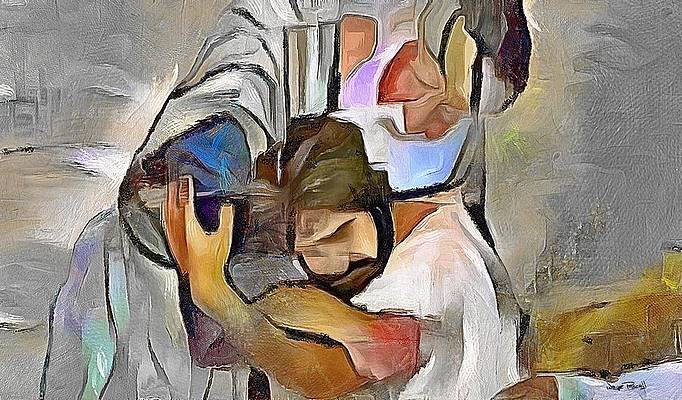
In the story of the lost prodigal son, that son hit rock bottom and rehearsed a speech he would give to his father when he came back. He never got to finish it, because the father interrupted his confession of sin and got the celebration going!
We celebrate the things that are important to us. Lost people matter to God so much that it is a cause for a great celebration. God’s grace steps in and takes over, erasing past guilt and bringing radical forgiveness and reconciliation.
The Prodigal Son by Kaye Redman
Today there are literally tens of thousands of children who have walked away from their upbringing in faith, and even many times, literally walked away from their family of origin. Their parents know the feeling of standing at the window, wondering how their prodigal daughter really is, and longing for their prodigal son to come home.
So, what do you do when you are the parent of a prodigal? How do you deal with the pain and the estrangement of a wayward son or daughter?
Don’t expect a prodigal to be Christ-like. If the son or daughter is not a Christian, they aren’t going to act like one. Exhortations to stop drinking cheap wine, cease partying, not get a tattoo, or even go to church is not only useless, but it can also be harmful. Behind all the speech or behavior of a prodigal that might make a parent cringe, there is a world of hurt. The heart is sick or broken. Prodigals need to be treated as fellow humans and equals.
He was pierced because of our rebellions and crushed because of our crimes. He bore the punishment that made us whole; by his wounds we are healed. Like sheep we had all wandered away, each going its own way, but the Lord let fall on him all our crimes. (Isaiah 53:5-6, CEB)
Welcome a prodigal home. It is possible (and necessary!) to remain connected in relationship, even if there are differing values or practices between parents and prodigals. In other words, don’t make it hard for a son or daughter to come home. Yes, there are instances when parents need to clarify and maintain boundaries, but those instances are actually rare.
In most cases, if a daughter smells like weed or an ashtray, just spray her jacket with Febreze and change the sheets when she leaves – but let her come home. If you find out she’s pregnant, then be with her and take her to her twenty-week ultrasound.
If a son is broke because he spent all the money you lent him on women and liquor, then forgive his debt as you’ve been forgiven; don’t give him any more money—and let him come home. If in doubt, always go with grace.
For God has revealed his grace for the salvation of all people. That grace instructs us to give up ungodly living and worldly passions, and to live self-controlled, upright, and godly lives in this world. (Titus 2:11-12, GNT)
Point a prodigal to Christ. A prodigal’s real problem is not sex or addiction, laziness or crime, cussing or ill manners. It is very possible that they simply don’t see Jesus for who he really is. So much Christian dogma or traditional practice might be encrusted on them that they simply cannot experience Jesus Christ’s love. God’s grace is what draws us all to faith – not hellfire preaching or parental badgering.
At one time you were separated from God. You were his enemies in your minds, and the evil things you did were against God. But now God has made you his friends again. He did this through Christ’s death in the body so that he might bring you into God’s presence as people who are holy, with no wrong, and with nothing of which God can judge you guilty. (Colossians 1:21-22, NCV)
We are to all share the same heart of the father in the parable of the lost son – a heart of hospitable love, abundant grace, and open celebration.
Loving heavenly Father, thank you that Jesus showed us your heart of love for the children of this world. Help us to do everything we can so that they will know how much you love them and want them to know your blessing. Thank you for your compassion for those who have strayed from you. Thank you that you are always ready to welcome us back with mercy and acceptance. Amen.
Parable of the Lost Sheep by Sieger Köder (1925-2015)
Now all the tax collectors and sinners were coming to hear him. But the Pharisees and the experts in the law were complaining, “This man welcomes sinners and eats with them.”
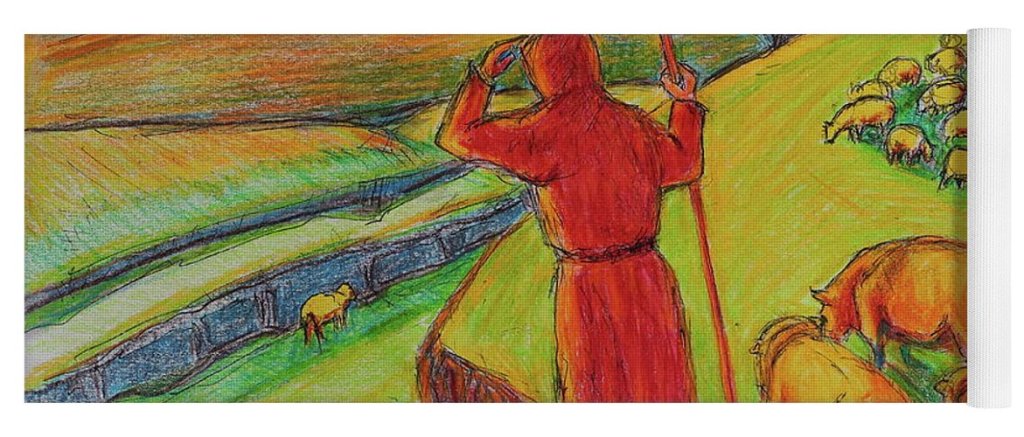
So, Jesus told them this parable: “Which one of you, if he has a hundred sheep and loses one of them, would not leave the ninety-nine in the open pasture and go look for the one that is lost until he finds it? Then when he has found it, he places it on his shoulders, rejoicing. Returning home, he calls together his friends and neighbors, telling them, ‘Rejoice with me, because I have found my sheep that was lost.’ I tell you, in the same way there will be more joy in heaven over one sinner who repents than over ninety-nine righteous people who have no need to repent.
“Or what woman, if she has ten silver coins and loses one of them, does not light a lamp, sweep the house, and search thoroughly until she finds it? Then when she has found it, she calls together her friends and neighbors, saying, ‘Rejoice with me, for I have found the coin that I had lost.’ In the same way, I tell you, there is joy in the presence of God’s angels over one sinner who repents.” (New English Translation)
Lost people matter to God… a lot. They matter so much to the Lord that one lost soul who is found is the grounds for a big celestial party.
Please note this simple observation of today’s Gospel lesson: If there is rejoicing in the presence of angels over one sinner who repents, then it is God who is doing the rejoicing. The Lord is absolutely giddy with joy over a lost person being found.
Jesus told two short stories, each teaching the same thing, so that we will be absolutely sure to get it: A loving God has unbounded joy over lost people being found. These parables of Jesus give us a glimpse of God’s own heart. The Lord would do anything to find a lost person, to restore and reconcile that person to right relationships.
God would go dumpster diving and wade through stinky nasty garbage to find just one lost valuable person.
Restoring lost people is such a high priority to God that the Father sent the Son to this earth. Jesus paid the ultimate price of a cruel death on a cross to reconcile a broken lost relationship between people and God.
I have not always been a devoted follower of Christ. I still remember what it felt like to be separated from God and estranged from the church – it was lonely and awful, like being in a deep black hole with no way of getting out and no one around to help.
But God mercifully sent people into my life to share good news with me and help me out of my prodigal way of life. I once was lost. But now I am found. When I turned from my path of destruction and embraced Jesus Christ, there was a big party in heaven.
Lost Sheep Parable by Thomas Bertram Poole
God gathering wayward and lost persons is a gracious activity, seemingly free from criticism. But there was. And because there were complaints leveled at Jesus for purposely going after the lost, it therefore needs to be asked:
Where do we locate ourselves in these parables?
The two stories were downright offensive to many of Christ’s original hearers. Those upset with Jesus were so inwardly focused that they believed ministry ought to revolve around them and their needs.
And, what’s more, the religious leaders were offended because they thought all the fuss about sinners would only highlight their sin. In other words, there ought to be no party and no rejoicing for people who have lived an ethically and morally dubious life.
Preaching grace is always offensive to people who work for their salvation. It is scandalous to such persons to hear that Jesus did not come to call the righteous, but sinners to repentance.
If we hear Christ’s parables and the concern for lost sinners who don’t know Jesus and say, “Well, all this talk about outreach is well and good, but what about us? What about me? After all, I never went down a path of immorality or hurt anyone. I’m a good person. Where’s my party?” Then, we must locate ourselves as the lost persons in need of being found by God’s grace.
Consider for a moment the worst sinner you can think of – a person for whom you would label as being akin to the devil…. Now picture that person being found by God and becoming a follower of Christ….
Would you attend the party to celebrate that person’s repentance, reconciliation, and recovery?
If any of us feels justified in our hate, then we are the lost one in need of turning from our sin.
In leaving the ninety-nine sheep in the flock and going after the one sheep, God gave preferential attention to the lost…. Can you live with that?
These parables of Jesus have significant meaning for church programs, budgets, and committees. By most estimations, only one-in-five lost people in America even knows one Christian. Statistics like that are what keep me up at night; it deeply saddens me. It drives me to prayer.
God’s unconditional mercy and amazing grace is what makes all the difference.
If we lose the sense of awe and appreciation for what God has done for us in Christ, then there will be no outreach. Finding lost people is not dependent on completing a class on evangelism or getting training in how to answer every question.
Outreach is fueled by passion and desire. Healthy Christians reproduce themselves. I assume you didn’t take a class on how to procreate – you just had the desire and the willingness; and then, you celebrated nine-months later, the birth of new life.
New life always needs to be celebrated because that’s what God does. Yet, the party cannot commence until the lost are found….
O God – blessed Father, Son, and Spirit – sanctify all believers everywhere with your abiding presence. Enlighten the minds of your people more and more with the light of the Gospel. Bring lost people to the knowledge of our Savior Jesus Christ; and those who are walking in the way of life, keep steadfast to the end. Guard those who are strong and prosperous from forgetting you and straying from the flock. Increase in us your grace and love so that we may participate with you in finding the lost. Amen.











 Rev. Tim Ehrhardt