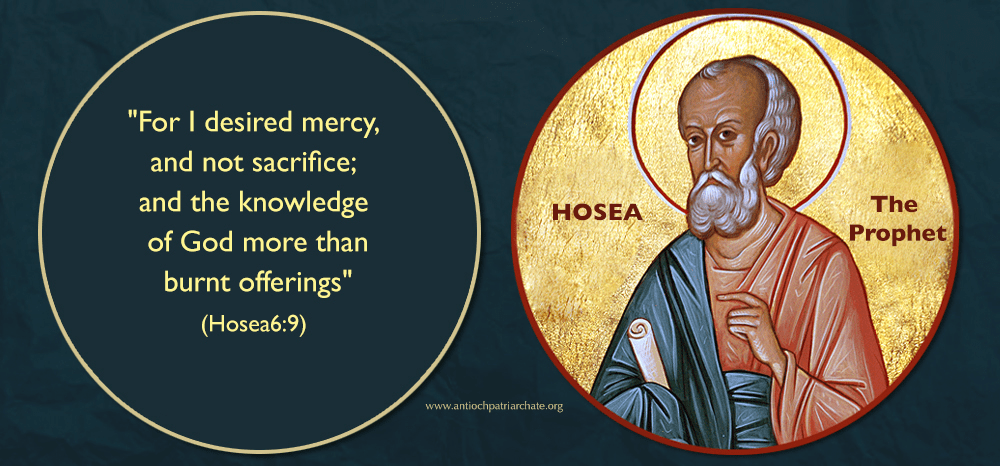
Isaiah 9:18-10:4 – The Reality in Front of Us

Surely wickedness burns like a fire;
    it consumes briers and thorns,
it sets the forest thickets ablaze,
    so that it rolls upward in a column of smoke.
By the wrath of the Lord Almighty
    the land will be scorched
and the people will be fuel for the fire;
    they will not spare one another.
On the right they will devour,
    but still be hungry;
on the left they will eat,
    but not be satisfied.
Each will feed on the flesh of their own offspring:
    Manasseh will feed on Ephraim, and Ephraim on Manasseh;
    together they will turn against Judah.

Yet for all this, his anger is not turned away,
    his hand is still upraised.

Woe to those who make unjust laws,
    to those who issue oppressive decrees,
to deprive the poor of their rights
    and withhold justice from the oppressed of my people,
making widows their prey
    and robbing the fatherless.
What will you do on the day of reckoning,
    when disaster comes from afar?
To whom will you run for help?
    Where will you leave your riches?
Nothing will remain but to cringe among the captives
    or fall among the slain.

Yet for all this, his anger is not turned away,
    his hand is still upraised. (New International Version)

There are times when God has some very hard things to say.

The Lord does get angry. And that’s a good thing.

The Love/Anger Reality of God

God’s anger and wrath are a form of God’s love. A heartless unloving god is fickle and unconcerned for much of the evil which happens in the world. Conversely, a loving God is not okay with wicked persons having their way. A loving God’s anger is kindled against injustice. A loving God doesn’t long put up with people oppressing other people, and taking advantage of them.

So, this is what the Old Testament prophets are all about – communicating and calling people to change their ways because they are harming others. And when the harming and the hurting is done purposefully and callously, then the ire of a holy God is raised. The Lord will not contend with this sort of attitude and action.

The language of judgment, in today’s Old Testament prophetic lesson, is an invitation for us to take a very hard look at the reality which was responsible for such an angry response from God.

The Social/Economic Reality of Both the Prophet’s World and Today’s World

God expects justice, to have people helping one another thrive and flourish in this life, to be concerned for the common good of all persons, not just some. In Isaiah’s day, all that God saw was greed and selfishness, injustice and corruption. And God was not okay with it. The unjust systems and practices were a failure of the people to live up to the Lord’s expectations for righteous living.

Sadly, issues of justice and righteousness are still relevant in our world today. Throughout the earth, this very day, the powerless are being exploited; the rich get wealthier at the cost of the poor; greed, corruption, outsourcing, and unjust legal systems are the norm and not the exception.

Much of the world gloomily faces racism, poverty, gender injustice, violence, famine, health disparities and inequities. And so called “religious” folk are at the forefront of ensuring that these evils continue to persist. So, why would not a holy God become infuriated at such a situation!?

A 12th century German depiction of Isaiah the prophet

The Religious Reality of Isaiah’s Day and Our Day

The religious reality of Isaiah’s day is not so far off from our own today. People were, and are, engaging in forms of spiritual and/or religious activity while being completely devoid of justice. Folks attend religious gatherings and believe in God – and treat others unjustly. They talk of faith in the Lord, while trusting in wealth and assets.

It was, and is, a world where people bow before their own works and ingenuity, focusing their attention on money and power. It’s a world with no room for the God of the Bible and true divine justice.

Far too many “believers” espouse unethical leaders and turn a blind eye to morally bankrupt leadership. Far too many religious folk want what they want, with no regard for the needs of others.

The Divine Reality of God’s Pathos

We as people need to contend with a God who is a profoundly emotional Being.

God is moved and affected by what happens in the world. The Lord’s anger and judgment is aroused because of God’s love and compassion.

God both binds up the injuries of people, as well as inflicts wounds. This ought not be surprising. After all, we readily understand, through our extensive healthcare systems, that medical interventions and surgeries are needed, and that they hurt.

A God of justice is, of course, angered by ethical violations. The Lord is rightly upset that the world often falls so woefully short of instituting a just social, economic, and political order for all citizens to enjoy.

Everyone must deal with the God who is not a brain-on-a-stick but has a deep heart for people everywhere to experience truth, justice, righteousness, salvation, and love.

Conclusion

Yes, there is a coming reality in which a new world will emerge. For the Christian, this occurs when Christ returns to judge the living and the dead. Complete deliverance from sin, death, and hell shall be realized.

But we aren’t there yet. We still need to cope with the world as it is today, and deal with it’s failures, shortcomings, and sins.

There is currently a massive need to be attentive to the needy, to proclaim the gospel to all nations, and to be involved in reforming unjust systems in our cities, communities, and countries. Salvation is meant for the whole person, not just the spiritual part.

Therefore, we have a choice as to how we will approach the world.

Will we withdraw from it? Will we engage it, only to take advantage of others within it? Or will we participate with God in transforming it?

  • Will we hear the cries of the oppressed?
  • Will we live out God’s commitment to the poor, the weak, and the sick?
  • Will we work for economic and social equity?
  • Will we break the bonds of injustice?
  • Will we help people to reach their full potential?
  • Will we preach good news?
  • Will we suffer with those who suffer and show solidarity with the weak?
  • Will we be truly spiritual folk who invest in the concerns of humanity?
  • Will we take up our cross and follow the Lord in being suffering servants for a lost world in need of God and God’s justice?

The reality in front of us is one which demands confrontation, participation, and reformation. Will you do it?

Blessed and holy God and Father of all, it is your will that all people be gathered together as one family in yourself. Fill the hearts of humanity with the fire of your love and with the desire to ensure justice for all. By sharing the good gifts that you give us, may we secure an equality for all our brothers and sisters throughout the world. May there be an end to division, strife and war. May there be a dawning of a just society built on love and peace. We ask this in the name of Jesus, our Lord. Amen.

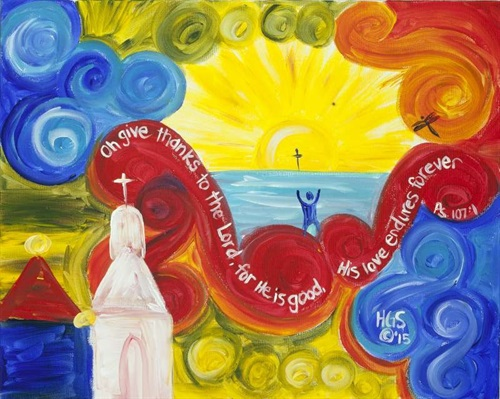
Psalm 107:1-9, 43 – Let the Redeemed Say So

Psalm 107 by Hope Smith

O give thanks to the Lord, for he is good,
    for his steadfast love endures forever.
Let the redeemed of the Lord say so,
    those he redeemed from trouble
and gathered in from the lands,
    from the east and from the west,
    from the north and from the south.

Some wandered in desert wastes,
    finding no way to an inhabited town;
hungry and thirsty,
    their soul fainted within them.
Then they cried to the Lord in their trouble,
    and he delivered them from their distress;
he led them by a straight way,
    until they reached an inhabited town.
Let them thank the Lord for his steadfast love,
    for his wonderful works to humankind.
For he satisfies the thirsty,
    and the hungry he fills with good things….

Let those who are wise pay attention to these things
    and consider the steadfast love of the Lord. (New Revised Standard Version)

The psalmist encourages and invites us to consider God’s steadfast love (Hebrew “chesed”). In all truth, an eternity of pondering and discovering such love will never plumb the depths of the Lord’s faithful love.

Maybe there is so much hate, bitterness, and vitriol in this old fallen world because people don’t consider the God who is Love. After all, there isn’t much room for malicious anger whenever people are expressing gratitude.

We are divinely hard-wired to give and receive affirmation, gratitude, encouragement, and love. Doing the opposite of that throws a huge monkey wrench into our daily living. It’s not sustainable to live by criticism, ingratitude, judgmentalism, and hate. It goes against who we are as humans.

Instead, it is sage to acknowledge, appreciate, ponder, and express the great love of God for humanity. The Lord’s love never runs out – it is inexhaustible.

Many people have stories of wandering far from Love, stumbling in the darkness, and finding themselves in desperate straits. Like the prodigal son, they are found by the God who is Love. And instead of being chided for their herky-jerky life, they are given a prominent place in God’s kingdom.

Some of you wandered for years in the desert,
    looking but not finding a good place to live,
Half-starved and parched with thirst,
    staggering and stumbling, on the brink of exhaustion.
Then, in your desperate condition, you called out to God.
    He got you out in the nick of time. (Psalm 107:4-6, MSG)

Praise and thanksgiving become the reflexive practices of the folk who have returned home to God. And the psalmist calls us to speak out those stories of hope and deliverance.

Telling our spiritual stories to others is important – both for the storyteller, and also for those who listen. Together, the spiritual community of the redeemed becomes strengthened in their bonds of faith; and everyone is emboldened to share with others. 

Far too many Christians are reticent to talk about what God has done or is doing in their lives. Shame, embarrassment, or a host of other reasons might prevent us from being vulnerable enough to let others in on God’s deep work within.

We all likely have had the privilege of hearing another person share their heart and experience of hardship and God’s deliverance. It was uplifting, encouraging, and helpful. So, let’s not keep our stories to ourselves. Stories are meant to be told, not hidden. Bringing to light our faith journey is healing for all, as well as declaring that Jesus is the light of the world.

Author Frederick Buechner wrote a book several years ago entitled, “Telling Secrets.” Buechner tells of his own experience of keeping some stories inside and never letting them see the light of day. One of those stories was growing up with an alcoholic father and all the other stories that went along with that singular story.

It was only in finally telling the family secret of alcoholism that he discovered a better path forward to healing and blessing. He writes:

“What we hunger for perhaps more than anything else is to be known in our full humanness, and yet that is often just what we also fear more than anything else. It is important to tell at least from time to time the secret of who we truly and fully are because otherwise we run the risk of losing track of who we truly and fully are and little by little come to accept instead the highly edited version which we put forth in hope that the world will find it more acceptable than the real thing. It is important to tell our secrets, too, because it makes it easier for other people to tell us a secret or two of their own.”

Frederick Buechner, “Telling Secrets”

Buechner went on to say:

“My story is important not because it is mine, God knows, but because if I tell it, the chances are you will recognize that, in many ways, it is also your story. It is precisely through these stories in all their particularity, as I have long believed and often said, that God makes himself known to each of us more powerfully and personally. If this is true, it means that to lose track of our stories is to be profoundly impoverished not only humanly but also spiritually.”

Shame is like a vampire. It lives in the shadows, feeding upon secrets. But when our stories are told and see the light of day, the vampire of shame is destroyed by the bright rays of truth and vulnerability.

We then become open to genuine relationships without propping up a false self to pose for others. We place ourselves in a position to receive and give love. In other words, we can meaningfully connect with both God and others because we found our voice and told our story.

Great God of deliverance, I praise you that I have a story to tell of your grace and faithfulness. Help me to tell of your mercy in my life so that the name of Jesus will be exalted, and that your people might be built up in the faith.  Amen.

Hosea 6:1-10 – “I Want Mercy, Not Sacrifice”

“Come, let us return to the Lord.
He has torn us to pieces
    but he will heal us;
he has injured us
    but he will bind up our wounds.
After two days he will revive us;
    on the third day he will restore us,
    that we may live in his presence.
Let us acknowledge the Lord;
    let us press on to acknowledge him.
As surely as the sun rises,
    he will appear;
he will come to us like the winter rains,
    like the spring rains that water the earth.”

“What can I do with you, Ephraim?
    What can I do with you, Judah?
Your love is like the morning mist,
    like the early dew that disappears.
Therefore I cut you in pieces with my prophets,
    I killed you with the words of my mouth—
    then my judgments go forth like the sun.
For I desire mercy, not sacrifice,
    and acknowledgment of God rather than burnt offerings.
As at Adam, they have broken the covenant;
    they were unfaithful to me there.
Gilead is a city of evildoers,
    stained with footprints of blood.
As marauders lie in ambush for a victim,
    so do bands of priests;
they murder on the road to Shechem,
    carrying out their wicked schemes.
I have seen a horrible thing in Israel:
    There Ephraim is given to prostitution,
    Israel is defiled. (New International Version)

My favorite word in all of Holy Scripture is the Hebrew word חסד (“chesed” pronounced in English “kes-ed).  It is such a rich word that no one English word can capture its depth and import. 

So, chesed is translated in various ways across English translations of the Bible as:

  • Goodness (American Standard Version)
  • Faithful love (Common English Bible)
  • Loyalty (God’s Word Translation)
  • Constant love (Good News Translation)
  • Mercy (King James Version)
  • Love that lasts (The Message)
  • Faithfulness (New English Translation)
  • Loving-kindness (New Life Version)
  • Steadfast love (New Revised Standard Version)

Chesed is God’s committed, gracious, and loving covenant loyalty to people. The Lord’s very attributes are sheer Love.

Since chesed marks the character and activity of God, the Lord very much desires people to reflect this same stance toward one another. In other words, because God is merciful and kind, we, as people created in God’s image, are to be marked with this same character in all we do. 

In today’s Old Testament lesson, God is calling and wooing wayward people to return to a life of closeness with the Lord. God demonstrated chesed by not sending the people away, like a spouse outright divorcing an unfaithful partner. Instead, the Lord is committed to loving the Israelites even when they were unlovely.

At all times, the response God wants from people is not simply to go through the motions of outward worship. Ritual practices mean little if there is no heart behind them. The Lord longs for people to demonstrate both fidelity and fealty through mercy and a steadfast love to God and neighbor.

Both our work and our worship are to be infused with divine mercy. 

God deeply desires a close relationship with humanity. The Lord is deeply grieved when people whore after other gods to meet their needs for love and belonging. Hosea’s prophecy is an impassioned plea for all persons to find their true fulfillment and enjoyment in a committed loving divine/human union, like a marriage.

In Christian readings of Hosea’s prophecy, repentance means accepting God’s chesed through Jesus Christ.

The believer is to allow the character of God to rule and reign in their heart so that love and commitment come flowing out in words, actions, thoughts, and dispositions.

Mercy, in Christianity, finds its highest expression in the person and work of Jesus.

It is no wonder, then, that Jesus lifted Hosea’s prophecy as a treasured principle of operation when asked why he deliberately made connections with “questionable” people:

As Jesus continued on from there, he saw a man named Matthew sitting at a kiosk for collecting taxes. He said to him, “Follow me,” and he got up and followed him. As Jesus sat down to eat in Matthew’s house, many tax collectors and sinners joined Jesus and his disciples at the table.

But when the Pharisees saw this, they said to his disciples, “Why does your teacher eat with tax collectors and sinners?”

When Jesus heard it, he said, “Healthy people don’t need a doctor, but sick people do. Go and learn what this means: I want mercy and not sacrifice. I didn’t come to call righteous people, but sinners.” (Matthew 9:9-13, CEB)

And when confronted about “questionable” activities, Jesus appealed to the same source of Hosea’s prophecy:

“Look! Your disciples are doing something that is not right to do on the day of rest—a holy day.”

Jesus asked them, “Haven’t you read what David did when he and his men were hungry? Haven’t you read how he went into the house of God and ate  the bread of the presence? He and his men had no right to eat those loaves. Only the priests have that right. Or haven’t you read in Moses’ Teachings that on the day of rest—a holy day, the priests in the temple do things they shouldn’t on the day of rest yet remain innocent? I can guarantee that something  greater than the temple is here. If you had known what ‘I want mercy, not sacrifices’ means, you would not have condemned innocent people. (Matthew 12:2-7, GW)

One can never go wrong with mercy and grace. If in doubt between whether to judge another or show mercy, the Christian’s choice is clear.

Grace and love reconnects the disconnected. The heart of true Christian spirituality is a deep kinship with the divine. Whenever that relation is broken or severed, it is vital to restore it. The means of doing so is not judgment; it’s mercy.

Chesed is more than a word; it is a way of life.

God wants mercy. Grace is the Lord’s divine will. So, let us today receive the forgiveness of Jesus and devote ourselves to prayer and works of love which come from a heart profoundly touched by grace. 

May the result of our return to the Lord be healing of that which has been broken, and reconciled relationships with others.

Merciful and loving God, the One who shows amazing grace, forgive us for our wanderings away from the divine life. Return us, again, to the grace of Jesus Christ our Savior so that our hearts will be renewed and aflame with love for others. In the Name of the Father, Son, and Spirit, the Great Three in One. Amen.

Luke 11:1-13 – Ask. Seek. Knock.

One day Jesus was praying in a certain place. When he finished, one of his disciples said to him, “Lord, teach us to pray, just as John taught his disciples.”

He said to them, “When you pray, say:

“‘Father,
hallowed be your name,
your kingdom come.
Give us each day our daily bread.
Forgive us our sins,
    for we also forgive everyone who sins against us.
And lead us not into temptation.’”

Then Jesus said to them, “Suppose you have a friend, and you go to him at midnight and say, ‘Friend, lend me three loaves of bread; a friend of mine on a journey has come to me, and I have no food to offer him.’ And suppose the one inside answers, ‘Don’t bother me. The door is already locked, and my children and I are in bed. I can’t get up and give you anything.’I tell you, even though he will not get up and give you the bread because of friendship, yet because of your shameless audacity he will surely get up and give you as much as you need.

“So, I say to you: Ask and it will be given to you; seek and you will find; knock and the door will be opened to you. For everyone who asks receives; the one who seeks finds; and to the one who knocks, the door will be opened.

“Which of you fathers, if your son asks for a fish, will give him a snake instead? Or if he asks for an egg, will give him a scorpion? If you then, though you are evil, know how to give good gifts to your children, how much more will your Father in heaven give the Holy Spirit to those who ask him!” (New International Version)

Jesus, in his teaching ministry on earth, often used the “lesser-to-greater” argument in getting his point across. And that is precisely what he was doing with his disciples in today’s Gospel lesson, instructing them about the nature and motivation of prayer.

The lesser-to-greater argument implies a comparison of values. It’s grounded on a common sense and logical convention that if this lesser thing is true, then, of course, how much more is this greater thing!

If something less likely to happen is true, then something more likely to happen will probably be true as well. The technical phrase for this is the a fortiori argument. It’s a Latin term meaning, “for a still stronger reason.”

So, then, Jesus wanted his followers to understand that prayer has value because God is a loving Father, not a begrudging friend. Whereas the friend in the story was badgered just so the person could get some real necessities, God needs no badgering to generously give good gifts that may or may not be considered as necessities by us.

Prayer has veracity and potency because of whom those prayers are directed to.

In the ancient world, it was common understanding that you needed to get the local gods attention if you wanted something. Which is why, for example, in the prophet Elijah’s showdown with the prophets of Baal, that Baal’s worshipers were yelling, gesticulating, and even cutting themselves for hours. They fully expected to put a lot of work into getting Baal’s attention, to convince him of intervening in their ancient version of a wild West shootout. (1 Kings 18:16-29)

In contrast to the four-hundred prophets of Baal, a single prophet of the Lord utters one simple prayer, then fire comes rushing down from heaven. (1 Kings 18:30-39) Much like the person who badgered the friend for bread, the prophets pestered Baal for hours.

It all comes down to who really cares. The friend? Not enough to jump out of bed right away and meet a need. Baal? Not so much. God? Now we’re talking.

We typically don’t ask, seek, or knock, if we believe we won’t get a response – or if it will take a lot of energy, time, and effort we don’t have.

Yet, if we are confident of being with care, then we are likely to have a habit of asking, seeking, and knocking.

If a friend begrudgingly gives to you because of persistent knocking, how much more will God graciously, generously, and with gaiety give you goodness when you ask? Because God is good, God gives good gifts. The largess of the Lord is willing and ready to dispense grace from an infinite storehouse of mercy.

This is why Jesus encouraged people to not pray like those who don’t know God, babbling on because they think they’ll be heard because of the sheer volume of words. (Matthew 6:7-8)

There are two misconceptions of prayer which existed in Christ’s day, and today. They come from non-Christian sources:

  1. There must be a lot of prayer before prayer “works.” Although I believe repetition is important for forming good habits, praying the same prayers over and over again so as to be heard betrays an ignorance of God, not to mention an actual lack of faith. Many ancient religions were based in learning how to manipulate the spiritual forces out there to get what we need. It’s kind of like a divine version of hustling for love in all the wrong places. Christians need to know they don’t need to have thousands of people praying in order to get God’s attention to answer prayer.
  2. I must convince God of the need to answer my prayer. God is not a reluctant listener. The reason the Lord already knows what we need before we ask is because God has been paying close attention to us well before we got around to asking, seeking, and knocking on the divine door. God’s ear is already inclined to hear us – expectantly awaiting our petitions. This is a tremendously freeing idea, that I can come to God openly and honestly, without wondering if I am heard, or not.

We might too often neglect to ask, seek, and knock because we rely on our own determination, abilities, education, or observations. Life can be hard. So, we keep on asking, seeking, and knocking.

No one enters God’s realm because of sheer determination. God’s kingdom is only accessed through humble prayer. God is the One with the supernatural resources to help us live the Christian life.

And God is pleased to provide what we need to live that life. God delights in hearing our asking’s, responding to our seeking’s, and answering our knocking’s. With God, there is no daydreaming while we ask, no avoiding us when we seek, and no pulling the shades on the windows as the door is being knocked.

In love, God looks forward to our asking, seeking, and knocking.

Repetition is important – not vain repetition which believes that the more prayer is repeated, the greater possibility of the answer we want – but a routine lifestyle of persistently and consistently praying.

Ask

You want something you don’t have, and you will do anything to get it. You will even kill! But you still cannot get what you want, and you won’t get it by fighting and arguing. You should pray for it. Yet even when you do pray, your prayers are not answered, because you pray just for selfish reasons. (James 4:2-3, CEV)

The Apostle James, learning from his brother, Jesus, gets behind the asking to the heart of why we ask and why we do not ask. This, in no way, is to discourage us from asking or to be doubtful whether God cares about our asking, or not. James also said:

Anyone who needs wisdom should ask God, whose very nature is to give to everyone without a second thought, without keeping score. Wisdom will certainly be given to those who ask. Whoever asks shouldn’t hesitate. They should ask in faith, without doubting. (James 1:5-6, CEB)

Seek

If you seek the Lord your God, you will find him if you seek him with all your heart and with all your soul. (Deuteronomy 4:29, NIV)

Seek the Lord while he may be found, call upon him while he is near. (Isaiah 55:6, NRSV)

Prayer is much like a wrestling match. It requires a great deal of effort. In fact, every good thing in life demands blood, sweat, and tears. We are to keep on seeking, to continue searching and looking for God amid our life circumstances. The Lord will be found.

Knock

God has said:

“When you pray, I will answer you. When you call to me, I will respond.” (Isaiah 58:9, GNT)

Prayer isn’t all continual searching and diligently seeking. Sometimes, there is an immediate answer to our knocking on heaven’s door.

God has also said:

“I will answer their prayers before they finish praying.” (Isaiah 65:24, CEV)

It is to God’s glory whether our prayers are answered quickly, or not. It is to our glory that we exercise our ability to enter God’s throne room and ask, seek, and knock. We have the assurance that whatever the answer is from God, it will always be a merciful response.

For God mercifully gives us what we ask for, and also mercifully does not give us what we ask for.

We do not know what tomorrow may hold for us. All we know for certain is that we are known by a God who hears when we ask, is worth seeking, and answers when we knock.

May you be encouraged to pray, to truly connect with God, because the Lord is available without appointment, and is waiting for us to ask with bended ear.

Eternal God, by whose power we are created and by whose love we are redeemed: Guide and strengthen us by your Spirit so that we may give ourselves to your service and live today and every day in love to one another and to you, through Jesus Christ our Lord, in the strength of the Holy Spirit. Amen.