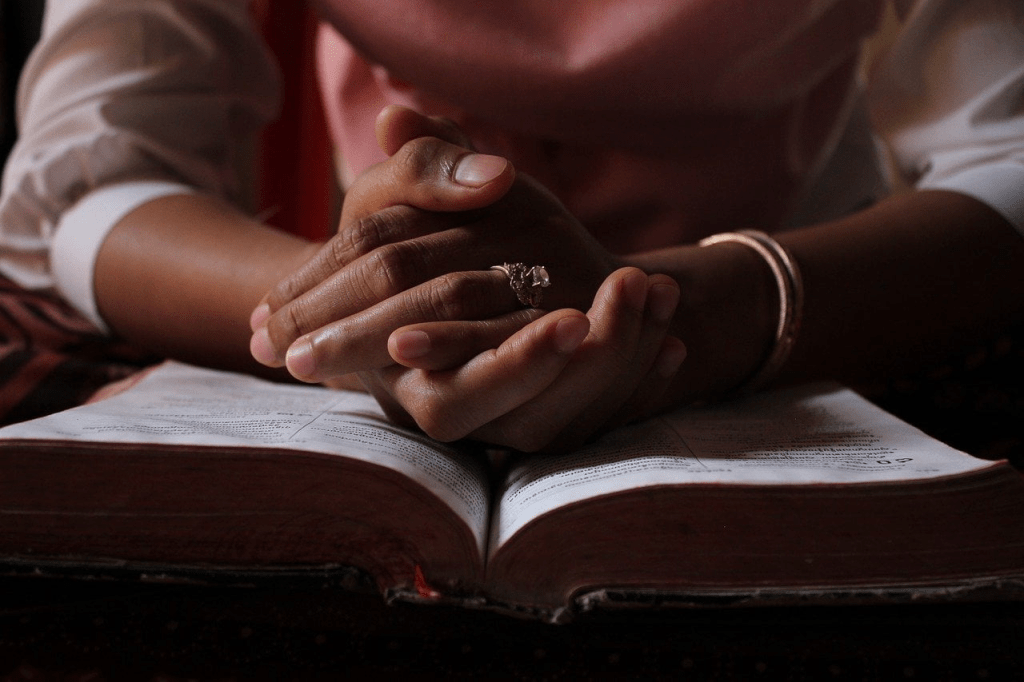
Perfect Peace (Isaiah 26:1-9)

In that day, everyone in the land of Judah will sing this song:

Our city is strong!
    We are surrounded by the walls of God’s salvation.
Open the gates to all who are righteous;
    allow the faithful to enter.
You will keep in perfect peace
    all who trust in you,
    all whose thoughts are fixed on you!
Trust in the Lord always,
    for the Lord God is the eternal Rock.
He humbles the proud
    and brings down the arrogant city.
    He brings it down to the dust.
The poor and oppressed trample it underfoot,
    and the needy walk all over it.

But for those who are righteous,
    the way is not steep and rough.
You are a God who does what is right,
    and you smooth out the path ahead of them.
Lord, we show our trust in you by obeying your laws;
    our heart’s desire is to glorify your name.
In the night I search for you;
    in the morning I earnestly seek you.
For only when you come to judge the earth
    will people learn what is right. (New Living Translation)

Peace comes through trust; faith is the smooth path to settled rest and wholeness of being.

We all, of course, want peace. Personal peace. Family peace. National peace. World peace. And yet, so many of us lack peace to the degree that we have to medicate ourselves to get any sleep.

Avoiding family seems normal, just to keep the peace. National peace almost sounds oxymoronic. World peace is merely wishful thinking for far too many people. Perhaps we are in such a befuddled conundrum because of this reason:

We already possess what we so desperately want. The search for peace is really the search within.

“I am leaving you with a gift—peace of mind and heart. And the peace I give is a gift the world cannot give. So don’t be troubled or afraid.”

Jesus (John 14:27, NLT)

The Christian needs to understand that Jesus has left us his peace. He gave it to us. We have it. Perhaps we have misplaced it? Maybe its lost in that huge stack on the desk?  Most likely, we plain old forgot about it.

God’s peace is here with us. Right now. This very minute. We have exactly what we want.

This peace is about far more than the absence of war, conflict, and/or infighting. Perfect peace is the settled and restful calm and confidence of being with God, of an intimate union with the divine.

Peace neither occurs by happenstance nor magically appears. Peace was achieved for us; it’s a gift which needs to be unpacked, used, and enjoyed. Practices of peace and peacemaking must be acknowledged and engrafted into our lives if we are going to experience it on the daily practical level (Romans 14:13-15:7).  

Like the delivery guy who leaves a package in an odd place, we could be searching for the ongoing gift of peace somewhere on our property. It’s there – it just seems so darned elusive. Yet, peace, the perfect peace that is harmony and unity, can neither be found in perfect circumstances nor in idyllic families and faith communities. Divine peace is the security of relationship with God, smack in the middle of life’s crud.

As the divine life takes root and grows within us, our hearts are healed with that presence, and we experience peace. It’s the kind of peace which drives fear and anxiety away; the kind of peace which only comes through trusting God.

Therefore, there’s no need to try and miraculously conjure up peace with positive thoughts.

It is the glorious, gracious, and mystical union between the divine and the human which creates peace. All obstacles have been surmounted and tossed into the trash for the garbage guy to haul away. And, no, you did not accidentally throw your peace in the dumpster. There really is no need for any dumpster diving. God’s already done that work for you and me.

In such topsy-turvy times as these, I come back again and again to deep spiritual convictions which inform what I do each day. One of those underlying creeds is this:

The Lord is trustworthy, no matter whether my faith or the faith of others is small or great. It isn’t faith itself that heals, saves, or grants peace – it is God.

It isn’t about the level of faith, but about where the faith is placed.

For the Christian, faith itself doesn’t mean much if it isn’t in Jesus. If I place a large and sincere faith in an inanimate object such as money; in a position of power; or, even in my own independence, my faith isn’t worth much. 

If I have a huge faith in a doctor or a psychiatrist to heal my body or my mind, I will quickly discover there are limits to their abilities. 

If I have a confident faith that my family will meet all my needs, my faith will eventually run into failure when they let me down. 

If all my faith eggs are in the church basket, my faith will eventually face a crisis because it is a misplaced faith.  Furthermore, the answer I provide for others is not simply getting them to attend church or to adopt my moral code.

God’s love remains continually steadfast, even if my trust is fickle and inconsistent.

We know with certainty that circumstances change; everyday seems to bring new levels and permutations of unprecedented alterations to our lives – and through it all, the Lord remains as the ever-present Sovereign, responding to even the slightest mustard seed of faith.

A woman in the crowd had suffered for twelve years with constant bleeding. She had suffered a great deal from many doctors, and over the years she had spent everything she had to pay them, but she had gotten no better. In fact, she had gotten worse. She had heard about Jesus, so she came up behind him through the crowd and touched his robe. For she thought to herself, “If I can just touch his robe, I will be healed.” Immediately the bleeding stopped, and she could feel in her body that she had been healed of her terrible condition.

Jesus realized at once that healing power had gone out from him, so he turned around in the crowd and asked, “Who touched my robe?”

His disciples said to him, “Look at this crowd pressing around you. How can you ask, ‘Who touched me?’”

But he kept on looking around to see who had done it. Then the frightened woman, trembling at the realization of what had happened to her, came and fell to her knees in front of him and told him what she had done. And he said to her: 

“Daughter, your faith has made you well. Go in peace. Your suffering is over.”

(Mark 5:24-34, NLT)

May your trust in the Lord open the way of perfect peace for you, now and always. Amen.

Believe, Love, and Obey (1 John 5:1-12)

Everyone who believes that Jesus is the Christ is born of God, and everyone who loves the father loves his child as well. This is how we know that we love the children of God: by loving God and carrying out his commands. In fact, this is love for God: to keep his commands. And his commands are not burdensome, for everyone born of God overcomes the world. This is the victory that has overcome the world, even our faith. Who is it that overcomes the world? Only the one who believes that Jesus is the Son of God.

This is the one who came by water and blood—Jesus Christ. He did not come by water only, but by water and blood. And it is the Spirit who testifies because the Spirit is the truth. For there are three that testify: the Spirit, the water and the blood; and the three agree. We accept human testimony, but God’s testimony is greater because it is the testimony of God, which he has given about his Son. 

Whoever believes in the Son of God accepts this testimony. Whoever does not believe God has made him out to be a liar, because they have not believed the testimony God has given about his Son. And this is the testimony: God has given us eternal life, and this life is in his Son. Whoever has the Son has life; whoever does not have the Son of God does not have life. (New International Version)

Faith, love, and obedience are words so tightly woven together, that to pull one of them out, is to unravel the whole bunch. 

To believe, love, and obey are the true marks of a Christian; and they are vital to living the Christian life and overcoming the dark forces of the world.

Let’s talk some grammar – because it will help us better understand the Apostle John’s message….

The main verb is the main thing

One of the dominant main verbs throughout these verses: “is.” And the verb tense is key, grammatically describing a past action of God which people need to receive. In other words, the grammar dictates that God has given us new birth. 

We do not give ourselves spiritual birth any more than we can tell our mothers that it was us who gave birth to ourselves.

The participles describe the main thing

God saves us from sin and grants us forgiveness. The action is from God to us; we are recipients of God’s good grace toward us.

There are three participles connected to the main verb, “is:”

  1. Believe
  2. Love
  3. Obey

A participle is a word which is connected to the verb’s action. 

Our actions are a result of God’s action toward us.

Simply put, a person born from God will believe, love, and obey.

Just as a newborn baby first breathes, then learns to eat, sleeps, grows-up, learns to walk, and over time develops into an adult just like their mother and father, so the Christian who is born again from God exhibits faith, learns to love, and grows up developing the skills of obeying Jesus and following him, learning to walk in his ways, becoming just like him.

Overcoming the world

In the same way a child must grow and mature to have the necessary skills for facing the world in all its trials and temptations, so the Christian must develop the requisite abilities of faith, love, and obedience, to overcome the world.

To “overcome” is to experience the victory the Lord Jesus has achieved on the cross. 

Through being spiritually born again by God, it sets us on a course requiring faith, love, and obedience in overcoming the world. As we learn to apply these three spiritual characteristics to our lives, we experience practical victory over the world.

The term “world” is used by the Apostle John as the patterns, systems, and operations of the world, which are in direct contrast to how God operates. For example:

  • The world engages in revenge and payback when wronged, whereas the Christian learns to believe God will be the Judge, loves the person who has offended them through prayer for their enemy, and obeys God through good works that seeks the welfare of the other. 
  • The world uses other people as either objects of their pleasure or to get ahead in life, whereas the Christian believes God will take care of their needs, will seek to love the other person instead of use them, and would rather obey God by cutting off their right hand off than being selfish. 
  • The world thinks nothing of lying, cheating, and stealing, if they can get away with it, whereas the Christian believes Jesus is the way, the truth, and the life, loves being a person of integrity, and obeys God even when it hurts.

This in no way suggests we avoid or belittle the world. In overcoming the world, we must have principled civility. Using faith, love, and obedience, we respect another’s viewpoint through allowing our spirits to grow in faith, expanding our hearts in love, and learning obedience through interaction with others for whom we disagree.

Faith, love, and obedience

We need faith in God:

Trust in the Lord with all your heart,
    and do not rely on your own insight.
In all your ways acknowledge him,
    and he will make straight your paths. (Proverbs 3:5-6, NRSV)

We need love for God and others:

Don’t love the world’s ways. Don’t love the world’s goods. Love of the world squeezes out love for the Father. Practically everything that goes on in the world—wanting your own way, wanting everything for yourself, wanting to appear important—has nothing to do with the Father. It just isolates you from him. The world and all its wanting, wanting, wanting is on the way out—but whoever does what God wants is set for eternity. (1 John 2:15-17, MSG)

We need obedience to the call of God:

The commandment that God has given us is: “Love God and love each other!” (1 John 4:21, CEV)

When faith, love, and obedience are working together, as intended, we overcome the world and all its crud; and keep ourselves from being polluted and stained by it.

Overcoming the world is a high calling from God. 

Faith means putting aside fear and taking the kind of risk God wants you to take.

Love means putting aside hate and serving others, even when it hurts.

Obedience means putting aside selfishness and choosing to do what is best for another person’s welfare.

Being characterized by these three Christian virtues will have the effect of overcoming the world. It is not a burdensome or heavy way to live. It’s the way of Jesus.

Blessed God – Father, Son, and Spirit – the Lord whom we serve: Sometimes our hearts and minds are flooded with fears. Sometimes we are paralyzed and overwhelmed and feel unable to go on. Yet, we hold onto the victory you have accomplished through the cross of Jesus Christ. You have told us not to fear, for you have overcome the world. In moments of crippling fear, we choose to hold your hand and believe; to love as we have been loved; and, to obey even in the most fearful places because we know that you have risen again.

Holy Spirit, we invite you and all your ministry within us. Holy God of all, we offer you our heart, mind, body, soul, spirit, hopes, plans and dreams. We surrender to you our past, present and future problems, habits, character defects, attitudes, livelihood, resources, finances, medical coverage, occupation and all relationships. We give you our health, physical appearance, disabilities, disorders, family, marriage, children, grandchildren, and friendships.

Loving Lord Jesus, we surrender to you all our hurt, pain, worry, doubt, fear and anxiety, and ask you to wash us clean. We release everything into your compassionate care. Open our ears to hear your voice. Open our hearts to commune with you more deeply. Open the doors that need to be opened and close the doors that need to be closed. Set our feet upon the straight and narrow road that leads to everlasting life. Amen.

A Testimony of Faith (John 3:31-36)

The one who comes from above is above all; the one who is of the earth belongs to the earth and speaks about earthly things. The one who comes from heaven is above all. He testifies to what he has seen and heard, yet no one accepts his testimony. Whoever has accepted his testimony has certified this, that God is true. He whom God has sent speaks the words of God, for he gives the Spirit without measure. The Father loves the Son and has placed all things in his hands. Whoever believes in the Son has eternal life; whoever disobeys the Son will not see life but must endure God’s wrath. (New Revised Standard Version)

I, personally, have found Jesus to be precisely whom he claims to be. 

I was raised in the church. But it didn’t stick. The most boring hour of every week for me was having to endure the Sunday morning worship service. It seemed like a major waste of my time. I could be reading the funnies (the comic strips in the Sunday morning newspaper), watching TV, or playing outside. I get a weekend off from school and I have to do this! Sheesh.

There is, I eventually discovered, often a difference between what we humans do in our lives and our institutions, and Jesus. That’s not necessarily a knock on the church. It’s just the observation that we sinful folk very often fall short of the glory of God – which is why we need Jesus in the first place.

We as people know how to love, yet we love imperfectly. We understand that kindness and compassion are needed, but we tend to withhold it from so many of our fellow humans. Jesus, on the other hand, as the divine/human figure who straddles between both heaven and earth, always loves consistently and perfectly; and demonstrates compassionate kindness in ways which connect deeply with us.

It took me a while to see this, but by God’s grace, I mercifully came to experience the love of God in Christ and the powerful enablement of God’s Spirit.

I have come to accept Christ’s enduring testimony as gracious, truthful, and life-giving. I have wholeheartedly embraced the New Testament Gospel accounts of his birth, life, teaching, death, resurrection, and ascension. This belief came neither quickly nor easily for me – it resulted from an honest straightforward reading of the Bible; and the patient wooing of the Holy Spirit.

Oh, I certainly could get quite cerebral and offer a Christian apologetic of the faith that gets down to the nitty gritty of theology, both historical and contemporary. But the older I get, the more I experience that when I get down, I can’t get back up again. There’s much more to Christianity than ideas and philosophical arguments.

Truth is, it really isn’t my job to convince you of Jesus Christ’s authenticity and trustworthiness. That’s the work of the Holy Spirit. Instead, it is my task to bear witness of the things I have seen and heard concerning Jesus. 

My life has been thoroughly turned upside-down because of Jesus. With Jesus, I have been invited into the very life of God. By the wounds of Jesus, I have experienced healing of damaged emotions and recovery from spiritual hurts inflicted by others. Through union with Christ, I have grace and forgiveness of things I have done and left undone. With Jesus as my Friend, I enjoy loving attention and am never dismissed by him, nor do I ever have my experiences and feelings invalidated by him.

For those who have not read the Gospel accounts and refuse Christ, then, for honesty’s sake, please have the integrity to give Jesus a hearing before you dismiss him with a slight of hand. It’s one thing to genuinely not know much about Jesus, and it is quite another thing to ignore him when you have knowledge about how to find out about him.

For those of us who have read the New Testament Gospels and accept the testimony of Jesus, we come back again and again to his life-giving words and seek continually to follow him in his way of mercy, purity, and peace. We bear witness to how Jesus has changed our lives and offers a life worth living.

Everyone with faith in Jesus has a life-giving connection with God. Those who don’t, don’t. If you disagree with this, then contend with Jesus himself. Give him a hearing. Watch him in action. Observe how he deals with people. See if he lives up to his words. Then, bear witness to what you have seen and heard.

In the power of the Spirit and in union with Christ, I pray to you, the God and Father of all:

For empowerment by the Spirit, that I may be a faithful witness

For those who wait on You, that they may find renewal

For all people, that they may acknowledge the kingdom of the ascended Christ

For all who are struggling with broken relationships

I commend myself and all for whom I pray, to Your mercy and protection through Jesus Christ, my Lord and Savior. Amen.

Covenant Promises (2 Samuel 7:1-17)

Jerusalem. Photo by Anton Petrus

After the king was settled in his palace and the Lord had given him rest from all his enemies around him, he said to Nathan the prophet, “Here I am, living in a house of cedar, while the ark of God remains in a tent.”

Nathan replied to the king, “Whatever you have in mind, go ahead and do it, for the Lord is with you.”

But that night the word of the Lord came to Nathan, saying:

“Go and tell my servant David, ‘This is what the Lord says: Are you the one to build me a house to dwell in? I have not dwelt in a house from the day I brought the Israelites up out of Egypt to this day. I have been moving from place to place with a tent as my dwelling. Wherever I have moved with all the Israelites, did I ever say to any of their rulers whom I commanded to shepherd my people Israel, “Why have you not built me a house of cedar?”’

“Now then, tell my servant David, ‘This is what the Lord Almighty says: I took you from the pasture, from tending the flock, and appointed you ruler over my people Israel. I have been with you wherever you have gone, and I have cut off all your enemies from before you. Now I will make your name great, like the names of the greatest men on earth. And I will provide a place for my people Israel and will plant them so that they can have a home of their own and no longer be disturbed. Wicked people will not oppress them anymore, as they did at the beginning and have done ever since the time I appointed leaders over my people Israel. I will also give you rest from all your enemies.

“‘The Lord declares to you that the Lord himself will establish a house for you: When your days are over and you rest with your ancestors, I will raise up your offspring to succeed you, your own flesh and blood, and I will establish his kingdom. He is the one who will build a house for my Name, and I will establish the throne of his kingdom forever. I will be his father, and he will be my son. When he does wrong, I will punish him with a rod wielded by men, with floggings inflicted by human hands. But my love will never be taken away from him, as I took it away from Saul, whom I removed from before you. Your house and your kingdom will endure forever before me; your throne will be established forever.’”

Nathan reported to David all the words of this entire revelation. (New International Version)

What is a covenant?

A covenant is simply a contract or agreement between two or more parties. The Bible is a covenant document. The Old and New Testaments are really Old and New Covenants. The word “testament” is Latin for “covenant.” When God makes a covenant with people, it means they receive divine promises of what God will do; and, in response, the people have moral expectations or ethical responsibilities to follow. 

The ancient world operated on a covenant system. A nation or empire would conquer a city or territory and set up a covenant in which the conqueror promised protection, certain provisions, and left a military presence among them. In response, the conquered people were required to offer their allegiance and some of the goods and services of the land. 

God made a covenant with Abraham and promised that all the nations of the earth would be blessed through him. The only stipulation that God gave to Abraham was to leave and begin a new life in the land he would show him. (Genesis 12:1-3)

The Lord continued to work through Abraham’s descendants, the Israelites. They would be a kingdom of priests, testifying to the nations through a lifestyle of having God at the center of all they do. The people were expected to embody the Ten Commandments and be holy, thus reflecting the holiness of God.

The difference between earthly covenants and God’s covenant is that God saturates the divine covenant in love and grace – because the Lord cares about the divine/human relationship.

What do we learn about God through a covenant?

First and foremost: God never forgets nor reneges on divine promises. God was faithful to David by establishing a covenant, yet also spoke to him about his descendants. The Lord promised David a dynasty, a kingdom that would never end, a temple, and a father/son relationship with his progeny. 

Furthermore, God promised that divine love would never be taken away. The Lord shows continuous love to people, even when they go astray. Unlike the nations of the earth, the fickle nature of people, and the inconsistent commitment of others, God is a Being whose very nature is love.

In a world of broken families and severed relationships; of selfishness and trying to impose one’s will on another; of taking advantage of others; and in a world that is messed up and depraved because of sin and unfaithfulness, God stands as the consistent, never-changing Sovereign of Love who graciously blesses people. 

What sort of covenant is this?

Short answer: a covenant of grace. It’s demonstrated in how the tables are turned on David with grace. David intended on doing something for God. But the Lord completely turned it around and blessed him abundantly beyond what David could even ask or think. David had it in his heart to build a house for God, but God comes back and says that an enduring house (household and dynasty) will be built for David.

How does this covenant apply to Christians?

All the good and gracious promises given to Abraham, Moses, and David are all fulfilled in the person of Jesus Christ.  

The New Testament Gospels are steeped in the language and explanation that Jesus is the Son of David, the Promised One, Savior, Lord, Teacher, and Healer. He will save the people from their sins and bring them to a spacious kingdom full of the grace and love. 

Through the cross and resurrection of Jesus Christ we are brought into union with God and participate fully in all the promises of the New Covenant of love. Love the Lord your God with all your heart, soul, mind, and strength. Love your neighbor as yourself. All this love is personified in Christ.

Where is the covenant?

The Davidic Covenant is not limited to a specific place or a building. God is present with people wherever they go. 

A common understanding in the ancient world was that there were local gods, not a universal God over all the earth. The Jews were unique in the belief that there is not one square inch of this entire earth where God is not present. The Lord does not need a permanent structure because God is everywhere. 

We, as New Covenant people, are God’s temple. The Lord takes up residence within our lives. We possess covenant loyalty and faithfulness, continually, in the person of the Holy Spirit.

What do we learn about ourselves?

Timing is important. David had a good idea and good motives for wanting to house the Ark of the Covenant in a temple. Yet, God let David know that the timing was off. So, David would need to be patient and let his vision of a temple come to fruition with his son. 

However, that didn’t mean David was idle. By the time he died, his son Solomon had most of the building materials already stockpiled and ready for the temple construction. Waiting does not necessarily mean passivity. 

A vision for life or for ministry rarely is implemented quickly. It needs to grow and mature before it will bear fruit. Two sage questions to ask, therefore, are:

  1. Is the future I am imagining, a future that God desires, or do I have my ladder leaning on the wrong building?
  2. If I am imagining a good and gracious future, is it the right time for it to happen? 

We also learn about ourselves that we must bank on the promises of God – and trust in the person and work of Jesus because all of God’s promises are fulfilled in Christ. In Christ we are taught how to live, and by his wounds we are healed. Jesus is the hope of the world. 

There is grace to be found; forgiveness to be had; and dreams to be realized, if we are attentive to the promises given to us in Holy Scripture. Do not let your sanctified dreams die, because they might not yet have come to full term.

God’s direction for our lives is needed. We have responsibilities as God’s covenant people to be faithful and uphold the ethics of the kingdom, as expressed by Jesus in his Sermon on the Mount. (Matthew 5-7)

Perhaps what we learn most about ourselves is to surrender our plans to God. My life is not all about me. Most of the Christian life is about weaning ourselves away from our own thoughts and ingenuity, learning to submit to God’s plans for our lives. We must pray and not make assumptions, because after a night of prayer, the prophet Nathan withdrew his building permit for David.

Unless the Lord builds the house, those who build it labor in vain.

Psalm 127:1, NIV

The Lord is gracious, loving, and loyal to covenant promises. We are to live into what God is building on this earth: an ethical kingdom with people characterized by mercy, purity, and peace-making. 

Soli Deo Gloria.