Be careful to obey all these words that I command you today, so that it may go well with you and with your children after you forever, because you will be doing what is good and right in the sight of the Lord your God.
When the Lord your God has cut off before you the nations whom you are about to enter to dispossess them, when you have dispossessed them and live in their land, take care that you are not snared into imitating them, after they have been destroyed before you: do not inquire concerning their gods, saying, “How did these nations worship their gods? I also want to do the same.” You must not do the same for the Lord your God, because every abhorrent thing that the Lord hates they have done for their gods. They would even burn their sons and their daughters in the fire to their gods. You must diligently observe everything that I command you; do not add to it or take anything from it. (NRSV)
The old phrase “curiosity kills the cat” certainly applies to the ancient Israelites concerning the pagan nations that surrounded them. The book of Deuteronomy is a re-statement of the law for a new generation of God’s people poised to enter the Promised Land. The previous generation had experienced a failure of faith and completely died out over the course of a forty-year sojourn in the desert. But now their children were ready to enter the land and receive the promises of God.
There is the healthy curiosity of seeking to understand, and then there is a bad curiosity borne from discontentment. God knew the people would be curious, in all the negative sense of that word. Today’s Old Testament lesson is a clear warning to keep away from the practices of the nations which God was about to dispossess from the land.
Now, thousands of years removed from the Old Testament, we know the end of the story. The Israelites, although possessing a remnant of people faithful and devoted to God’s law, allowed their curiosity to get the best of them and ended up not following the Lord as they were commanded.
“Curiosity is not a sin. But we should exercise caution with our curiosity yes, indeed.”
albus dumbledore to harry potter
Before becoming a Christian over forty years ago, I did not live according to God’s commands or the way of Jesus Christ. Because of that reality, I have always found it “curious” that there are believers who wonder if they are missing out on something, having always been in the church. They may even adopt some cultural practices, like offering their children on the altar of wealth or sports, serving the idols of security, or getting ahead.
Spiritual F.O.M.O. (Fear of Missing Out) is likely to lead one down a damaging path. We must all have the wisdom to identify the healthy practices of our culture consistent with God’s Word, and the unhealthy curiosity to pursue endeavors uncritically without making sound godly decisions.
Ever-present God, you have given us your gracious and holy Word to know and live by. Strengthen our knowledge and faith so that we may serve you faithfully today and always through Jesus Christ our Lord. Amen.
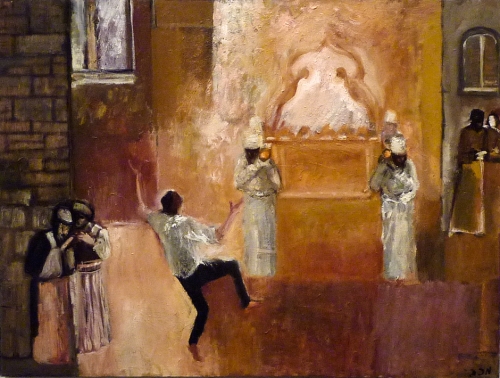
Now King David was told, “The Lord has blessed the household of Obed-Edom and everything he has, because of the ark of God.” So, David went to bring up the ark of God from the house of Obed-Edom to the City of David with rejoicing. When those who were carrying the ark of the Lord had taken six steps, he sacrificed a bull and a fattened calf. Wearing a linen ephod, David was dancing before the Lord with all his might, while he and all Israel were bringing up the ark of the Lord with shouts and the sound of trumpets.
As the ark of the Lord was entering the City of David, Michal daughter of Saul watched from a window. And when she saw King David leaping and dancing before the Lord, she despised him in her heart.
They brought the ark of the Lord and set it in its place inside the tent that David had pitched for it, and David sacrificed burnt offerings and fellowship offerings before the Lord. After he had finished sacrificing the burnt offerings and fellowship offerings, he blessed the people in the name of the Lord Almighty. Then he gave a loaf of bread, a cake of dates and a cake of raisins to each person in the whole crowd of Israelites, both men and women. And all the people went to their homes. (NIV)
After the worship debacle earlier in which two of the Levites attending the ark of the Lord were struck down by God, King David took time to refocus and go about bringing the ark back to Jerusalem in a proper way. A true celebration was underway that enjoyed the blessing of God upon it. The sacrifices before God were sweet smelling because they were done in a spirit of obedience and humility.
However, David’s wife, Michal, the daughter of Saul, did not worship. She critically observed David and the others and evaluated the worship service by how it appeared to her. Michal was not with everyone else giving herself to the true worship of God. She did not like how David went about worship. The acceptable worship of God was unacceptable to her and she let David know it. Yet, David was undaunted and had his focus where it needed to be. We get a cryptic last note on Michal, describing that she was barren to the day of her death – a note meant to convey both a physical reality of her body, and a spiritual reality of her soul.
So, how are we to worship God? Jesus commented about worship:
“The hour is coming, and is now here, when the true worshipers will worship the Father in spirit and truth, for the Father seeks such as these to worship him. God is spirit, and those who worship him must worship in spirit and truth.” (John 4:23-24, NRSV)
Neither good intentions alone (in spirit) nor appropriate actions alone (in truth) constitute acceptable worship. Both are necessary. The worship Jesus mentioned is literally “to prostrate oneself before God.” In other words, it is to have a disposition and attitude of submission and humility toward God, seeking to obey him as king rather than superimpose our desires on him.
Furthermore, God is near to us and far away from us, at the same time. God is close to us through the person and work of Jesus Christ, and now in the person of the Holy Spirit. God is also sovereign and far above us, orchestrating the universe. In worship, we appreciate both God’s transcendence and immanence.
The presence of God is both comforting and dangerous. Divine holiness is like a fire, giving us light and warmth; but get too close to the flame and you will get burned, even destroyed. We have collective promises and blessings given to us as God’s people; and at the same time, we have individual responsibilities to know the will of God and do it in the way prescribed for us.
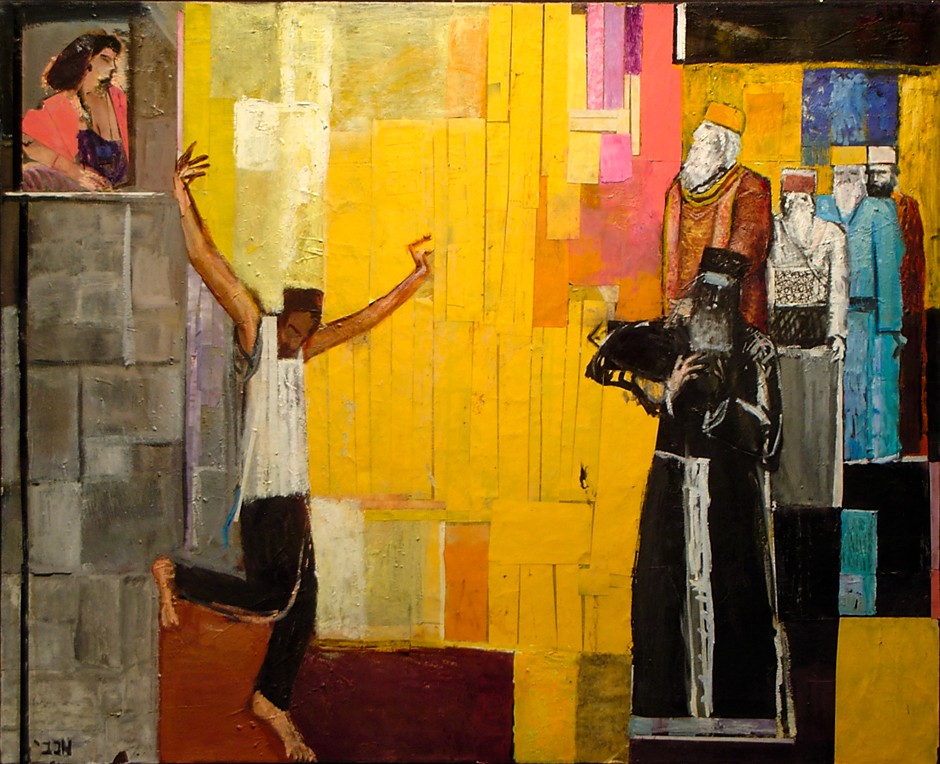
David Dancing by Richard McBee, 1986
The book of 1 Chronicles gives an additional account of David’s worship service in bringing the ark to Jerusalem, which includes a psalm of thanksgiving to God that he wrote himself to be sung by Asaph and his associates, the worship leaders. Here is part of that psalm:
Sing to the Lord, all the earth! Share the news of his saving work every single day! Declare God’s glory among the nations; declare his wondrous works among all people because the Lord is great and so worthy of praise. He is awesome beyond all other gods because all the gods of the nations are just idols, but it is the Lord who created heaven! Greatness and grandeur are in front of him; strength and joy are in his place. Give to the Lord, all families of the nations— give to the Lord glory and power! Give to the Lord the glory due his name! Bring gifts! Enter his presence! Bow down to the Lord in his holy splendor! (1 Chronicles 16:23-29, CEB)
After the worship service, after the psalm had been sung by Asaph and the singers, the text goes on to say:
Then David placed Asaph and his relatives, together with Obed-edom and sixty-eight of his relatives, to minister there continually before the chest containing the Lord’s covenant, following the routines required on each day…. With them were Heman and Jeduthun and the rest of those chosen by name to give thanks to the Lord, because his faithful love lasts forever. With them were also the trumpets and the cymbals for the musicians and the instruments for God’s songs. (1 Chronicles 16:37, 41-42, CEB)
In Israel, King David instituted that the worship of God was to take place every day – not just one day a week. What is more, David hired hundreds of musicians, singers, and worship leaders to minister before the Lord every single day, twice a day. Every conceivable instrument and voice were used to praise God in worship. New songs were written continually by David, and arranged by Asaph, the lead worship person.
God longs for our worship each day: to remember who we are and who God is; to sing; to confess sin; to claim forgiveness; to read the Holy Scriptures; and to pray. If we all devoted ourselves to worship in such a way, then we can begin to imagine God opening to us blessing upon blessing.
Blessed Lord, who caused all Holy Scripture to be written for our learning: Grant that we may hear it, read it, mark it, learn it, and inwardly digest it, so that we may embrace worship in body, mind, and spirit through our Savior Jesus Christ in the strength of the Holy Spirit. Amen.
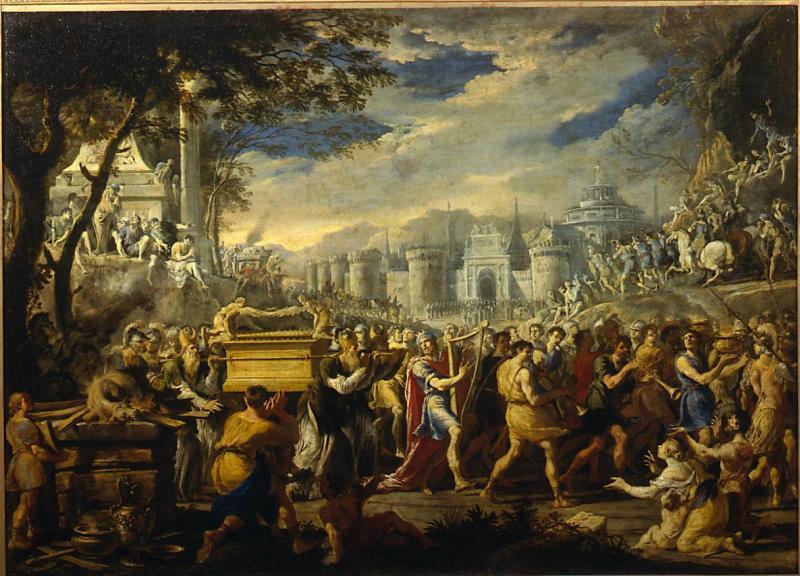
Transferring the ark of the Lord to Jerusalem by Domenico Gorgiolo (1609-1675)
David again brought together all the able young men of Israel—thirty thousand. He and all his men went to Baalah in Judah to bring up from there the ark of God, which is called by the Name, the name of the Lord Almighty, who is enthroned between the cherubim on the ark. They set the ark of God on a new cart and brought it from the house of Abinadab, which was on the hill. Uzzah and Ahio, sons of Abinadab, were guiding the new cart with the ark of God on it, and Ahio was walking in front of it. David and all Israel were celebrating with all their might before the Lord, with castanets, harps, lyres, timbrels, sistrums and cymbals.
When they came to the threshing floor of Nakon, Uzzah reached out and took hold of the ark of God, because the oxen stumbled. The Lord’s anger burned against Uzzah because of his irreverent act; therefore, God struck him down, and he died there beside the ark of God.
Then David was angry because the Lord’s wrath had broken out against Uzzah, and to this day that place is called Perez Uzzah.
David was afraid of the Lord that day and said, “How can the ark of the Lord ever come to me?” He was not willing to take the ark of the Lord to be with him in the City of David. Instead, he took it to the house of Obed-Edom the Gittite. The ark of the Lord remained in the house of Obed-Edom the Gittite for three months, and the Lord blessed him and his entire household. (NIV)
The narrator who originally compiled, told, and wrote this story wanted to communicate something significant about God and how to relate to the Lord. God put the big kibosh on David’s hoedown. At that time in the history of Israel, the ark was the foremost symbol God was present with the people. Within the ark contained the tablets of the Ten Commandments (the symbol of God’s Word); the staff of the first priest, Aaron, (the symbol of God’s choice); and, a pot of manna (the symbol of God’s provision).
The ark was a holy object, pointing to a holy God.
The ark of the Lord was built during the time of Moses, when the ritual laws were established concerning offerings and how to approach God in worship. There were detailed prescriptions for how to construct all the sacred articles for worship. (Exodus 35:30-40:33)
The ark was at the center of worship, representing the presence of God among the people. For nearly five-hundred years before David, the ark had become a familiar object in the life of Israel, always there, continually being the symbol of God to the people.
We have all likely had the experience of something becoming so familiar to us that we begin to lose sight of how important and valuable it really is. Not until we lose it, or something traumatic happens, do we wake up and take stock of its true significance.
The Israelites had become lethargic and apathetic toward the worship of God, and it led to some disheartening and tragic circumstances. The people of God throughout the ages have always needed to be vigilant against the opiate of familiarity, dulling the senses to the importance of worship.
Moving the ark of the Lord to Jerusalem was one of the first acts David did as the king of Israel and Judah. God was with David and brought him success against his enemies. David enjoyed a close relationship with God. Yet even though David’s heart was in the right place, he made a huge miscalculation which ended up offending God.
David had the best of intentions in bringing the ark to Jerusalem and giving it a prominent place in the center of Jewish life. This was an exceptionally good plan. The problem, however, came in the manner the ark was carried from one place to another.
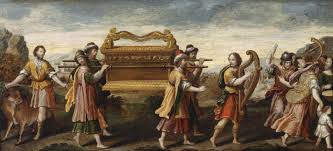
King David bringing the ark to Jerusalem by Unknown Italian artist, c.1500
God’s law laid out in careful detail how the ark was to be transported. Uzzah and Ahio were Levites charged with the ark’s care. Only the Levites could handle the ark and the holy objects of worship that went along with it. Since it was the job of the Levites for hundreds of years, they knew better than to carry the ark of the Lord on a cart. God clearly told Moses that the ark was to have two long poles of acacia wood overlaid with gold inserted into four gold rings of the ark.
The ark was to always be carried on the shoulders of the Levites with the two poles.
We are not told why Uzzah and Ahio were pulling the ark on a cart with oxen instead of carrying it in the prescribed way. Perhaps it was because the ark was incredibly heavy and no easy task to carry. Maybe they decided it would be easier and more expedient to have the much stronger oxen pull the ark on a nice new cart; it would save a lot of energy transporting it over a long distance.
As pragmatic people, Uzzah and Ahio’s approach makes a lot of sense. However, God was not okay with this arrangement. When the oxen stumbled and the ark was in danger of falling off the cart, Uzzah reflexively reached out to steady it. That was the last act Uzzah ever did on this earth. God immediately put him down for his “irreverent act.”
So, here is the not so good idea: Evaluating the worship of God by common sense pragmatism, what we think will work best, and how we feel it ought to be done. Everything about worship is to pay attention to the holiness of God through our obedience. Whenever we avoid the prescriptions of Holy Scripture, however best the intentions might be, is not a good thing and people will get hurt. One can never justify an action that goes against God’s Word because people are praising God.
Just because the heart is in the right place does not mean what is being done is okay.
David’s first response was anger, then fear. He gave his best effort, and it resulted in God’s disfavor. Perhaps David realized that maybe he took for granted that the ark could be moved any old way he wanted to move it.
Trouble with God happens whenever we value efficiency and expediency over obedience and submission.
The great error of Uzzah which resulted in his death was trying to manage God. We do not take care of God; God takes care of us. God does not bow to us and allow himself to be managed by creatures. The Lord wants pure unadulterated obedient worship from people in the way God wants it to be done, period. It is not up for negotiation.
So, David took some time to re-evaluate the whole approach to worship he was doing and left the ark with a Philistine. Then, he went back and did it right….
Holy God, we confess that we have too often forgotten we are yours. Sometimes we carry on our lives as if there was no God and we fall short of being a credible witness to you. For these things we ask your forgiveness and for your strength. Give us clear minds and open hearts so we may bear witness to you in our world. Remind us to be who you would have us to be regardless of what we are doing or who we are with. Hold us close and build our relationship with you and with those you have given us on earth, through Jesus Christ our Lord. Amen.
“The day is coming,” says the Lord, “when I will make a new covenant with the people of Israel and Judah. This covenant will not be like the one I made with their ancestors when I took them by the hand and brought them out of the land of Egypt. They broke that covenant, though I loved them as a husband loves his wife,” says the Lord.
“But this is the new covenant I will make with the people of Israel after those days,” says the Lord. “I will put my instructions deep within them, and I will write them on their hearts. I will be their God, and they will be my people. And they will not need to teach their neighbors, nor will they need to teach their relatives, saying, ‘You should know the Lord.’ For everyone, from the least to the greatest, will know me already,” says the Lord. “And I will forgive their wickedness, and I will never again remember their sins.” (NLT)
For the past few weeks, the Daily Lectionary readings brought us steady admonitions of passing faith onto future generations, with obedience as the key to it all. However, God’s ancient people kept going through significant times of unfaithfulness, infidelity, and disobedience. As if they had some sort of spiritual A.D.D., the people could not seem to keep their eyes off the glittering gods from the surrounding nations.
For certain, God has always possessed a faithful remnant of people devoted to observing the covenant. Yet, the nation in the prophet Jeremiah’s day floundered and broke faith with the teaching given to them.
Since God’s grace has the last word, the sins and shortcomings of the backslidden people who failed to pass on the covenant teachings to their progeny would have a better ending than judgment.
God’s answer to repeated human failings was to establish a new covenant, unprecedented in its audacious mercy.
Rather than rewriting commands on stone tablets (as with Moses on Mount Sinai) and having a remedial class on covenant, God would instead do the extraordinary by writing the law on human hearts – that way they would know the Lord in a direct and immediate way. What is more, it would be for everybody, neither only for the remnant nor for the spiritual elite.
From the least to the greatest, from young to old, even from Jew to Gentile, God would forgive once and for all.
If that is not the most gracious act ever decreed, I do not know what is. This was a radical move of spiritual amnesty which was completely undeserved and most definitely not something any other god from any other nation would ever do. It was unthinkable – completely off everyone’s radar. Yet, that is exactly what grace does.
From a New Testament (New Covenant) perspective, Jesus is the fulfillment of all God’s good covenant promises to the people. Furthermore, God’s Holy Spirit serves as the continuing presence of Jesus within us, teaching us and guiding us in the ways of God. Our only task, then, is to live into those promises – to know them, claim them, and bank on them.
We are most obedient when we believe the promises of God and throw all our hope in them.
The implications of this divine decree are enormous. It means:
I cannot do a dang thing to earn God’s acceptance because I already have it! (John 6:37; Colossians 1:21-22; Romans 8:33-39, 15:7-12)
I need not fear judgment because Jesus has already taken care of the sin issue, once for all! (Romans 6:5-10; Hebrews 7:27-28, 10:5-10; 1 John 4:17-18)
I lack nothing because God has already given me everything I need for life and godliness in this present evil age! (Philippians 4:19; 2 Peter 1:3-4)
I can know God, right now, without jumping through spiritual hoops or over imposed hurdles because Jesus leveled the way and made it clear! (John 14:6; Ephesians 2:8-9; Hebrews 2:9-18)
I can enjoy forgiveness and a clean heart because God has decreed it to be so! (Psalm 103:8-12; Ezekiel 36:25-27; Luke 22:20; Hebrews 8:7-13, 10:14-18)
If this were not enough, Jesus has sent the Spirit to be with us forever, to guide us and lead us into realizing the law written on our hearts. We are never alone. God is with us.
Jesus said, “The Companion, the Holy Spirit, whom the Father sends, will teach you everything and will remind you of everything I told you. Peace I leave with you. My peace I give you. I give to you not as the world gives. Do not be troubled or afraid.” (John 14:26-27, CEB)
In this world of trepidation, fear, uncertainty, and unrest, there is peace, grace, and love because of Father, Son, and Spirit, the one true God, the Blessed Holy Trinity, the Divine Warrior who fights our battles, the Lord of Hosts who has our backs. Yes, this God, and no other god, has the chutzpah to make promises to us and the power to back them up.
Our Father in heaven, Reveal who you are. Set the world right; Do what’s best—as above, so below. Keep us alive with three square meals. Keep us forgiven with you and forgiving others. Keep us safe from ourselves and the Devil. You’re in charge! You can do anything you want! You’re ablaze in beauty! Yes! Yes! Amen!