2 Samuel 6:12-19 – Acceptable Worship

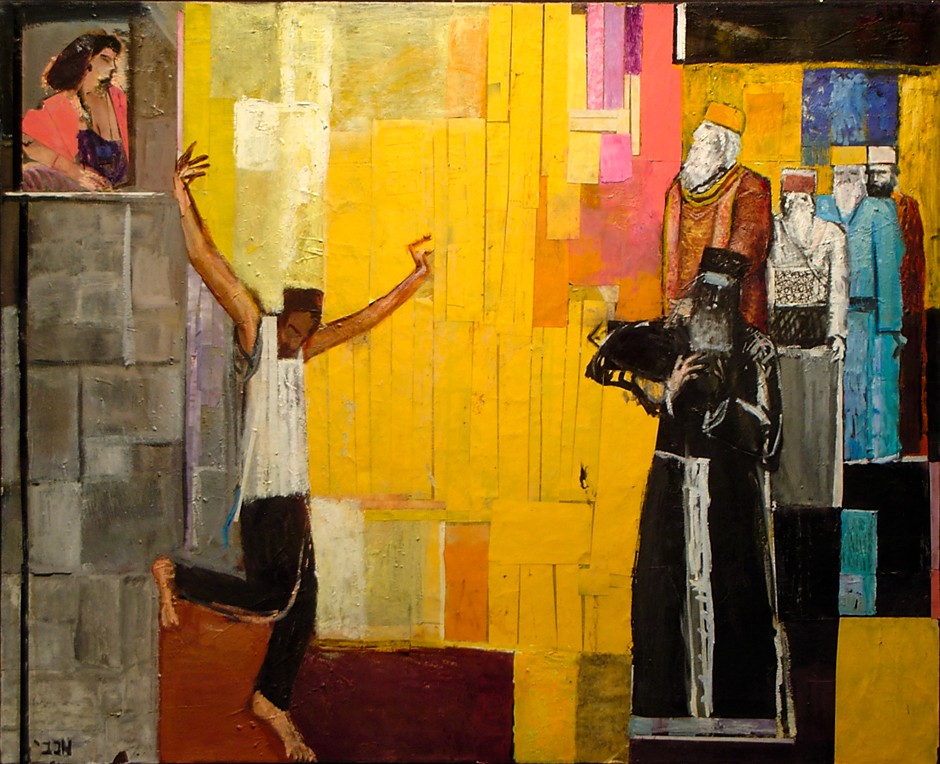
David Dancing by Richard McBee, 1998

Now King David was told, “The Lord has blessed the household of Obed-Edom and everything he has, because of the ark of God.” So, David went to bring up the ark of God from the house of Obed-Edom to the City of David with rejoicing. When those who were carrying the ark of the Lord had taken six steps, he sacrificed a bull and a fattened calf. Wearing a linen ephod, David was dancing before the Lord with all his might, while he and all Israel were bringing up the ark of the Lord with shouts and the sound of trumpets.

As the ark of the Lord was entering the City of David, Michal daughter of Saul watched from a window. And when she saw King David leaping and dancing before the Lord, she despised him in her heart.

They brought the ark of the Lord and set it in its place inside the tent that David had pitched for it, and David sacrificed burnt offerings and fellowship offerings before the Lord. After he had finished sacrificing the burnt offerings and fellowship offerings, he blessed the people in the name of the Lord Almighty. Then he gave a loaf of bread, a cake of dates and a cake of raisins to each person in the whole crowd of Israelites, both men and women. And all the people went to their homes. (NIV)

After the worship debacle earlier in which two of the Levites attending the ark of the Lord were struck down by God, King David took time to refocus and go about bringing the ark back to Jerusalem in a proper way. A true celebration was underway that enjoyed the blessing of God upon it.  The sacrifices before God were sweet smelling because they were done in a spirit of obedience and humility. 

However, David’s wife, Michal, the daughter of Saul, did not worship. She critically observed David and the others and evaluated the worship service by how it appeared to her. Michal was not with everyone else giving herself to the true worship of God. She did not like how David went about worship. The acceptable worship of God was unacceptable to her and she let David know it. Yet, David was undaunted and had his focus where it needed to be. We get a cryptic last note on Michal, describing that she was barren to the day of her death – a note meant to convey both a physical reality of her body, and a spiritual reality of her soul.

So, how are we to worship God?  Jesus commented about worship: 

“The hour is coming, and is now here, when the true worshipers will worship the Father in spirit and truth, for the Father seeks such as these to worship him. God is spirit, and those who worship him must worship in spirit and truth.” (John 4:23-24, NRSV)

Neither good intentions alone (in spirit) nor appropriate actions alone (in truth) constitute acceptable worship.  Both are necessary.  The worship Jesus mentioned is literally “to prostrate oneself before God.”  In other words, it is to have a disposition and attitude of submission and humility toward God, seeking to obey him as king rather than superimpose our desires on him. 

Furthermore, God is near to us and far away from us, at the same time.  God is close to us through the person and work of Jesus Christ, and now in the person of the Holy Spirit. God is also sovereign and far above us, orchestrating the universe. In worship, we appreciate both God’s transcendence and immanence.

The presence of God is both comforting and dangerous. Divine holiness is like a fire, giving us light and warmth; but get too close to the flame and you will get burned, even destroyed. We have collective promises and blessings given to us as God’s people; and at the same time, we have individual responsibilities to know the will of God and do it in the way prescribed for us.
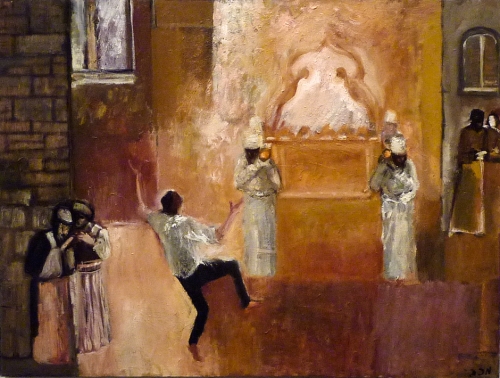
David Dancing by Richard McBee, 1986

The book of 1 Chronicles gives an additional account of David’s worship service in bringing the ark to Jerusalem, which includes a psalm of thanksgiving to God that he wrote himself to be sung by Asaph and his associates, the worship leaders.  Here is part of that psalm:

Sing to the Lord, all the earth!
    Share the news of his saving work every single day!
Declare God’s glory among the nations;
    declare his wondrous works among all people
        because the Lord is great and so worthy of praise.
He is awesome beyond all other gods
    because all the gods of the nations are just idols,
        but it is the Lord who created heaven!
Greatness and grandeur are in front of him;
    strength and joy are in his place.
Give to the Lord, all families of the nations—
    give to the Lord glory and power!
    Give to the Lord the glory due his name!
        Bring gifts! Enter his presence!
        Bow down to the Lord
        in his holy splendor! (1 Chronicles 16:23-29, CEB)

After the worship service, after the psalm had been sung by Asaph and the singers, the text goes on to say:

Then David placed Asaph and his relatives, together with Obed-edom and sixty-eight of his relatives, to minister there continually before the chest containing the Lord’s covenant, following the routines required on each day…. With them were Heman and Jeduthun and the rest of those chosen by name to give thanks to the Lord, because his faithful love lasts forever. With them were also the trumpets and the cymbals for the musicians and the instruments for God’s songs. (1 Chronicles 16:37, 41-42, CEB)

In Israel, King David instituted that the worship of God was to take place every day – not just one day a week.  What is more, David hired hundreds of musicians, singers, and worship leaders to minister before the Lord every single day, twice a day. Every conceivable instrument and voice were used to praise God in worship.  New songs were written continually by David, and arranged by Asaph, the lead worship person. 

God longs for our worship each day: to remember who we are and who God is; to sing; to confess sin; to claim forgiveness; to read the Holy Scriptures; and to pray. If we all devoted ourselves to worship in such a way, then we can begin to imagine God opening to us blessing upon blessing.

Blessed Lord, who caused all Holy Scripture to be written for our learning: Grant that we may hear it, read it, mark it, learn it, and inwardly digest it, so that we may embrace worship in body, mind, and spirit through our Savior Jesus Christ in the strength of the Holy Spirit. Amen.

2 Samuel 6:1-11 – Unacceptable Worship

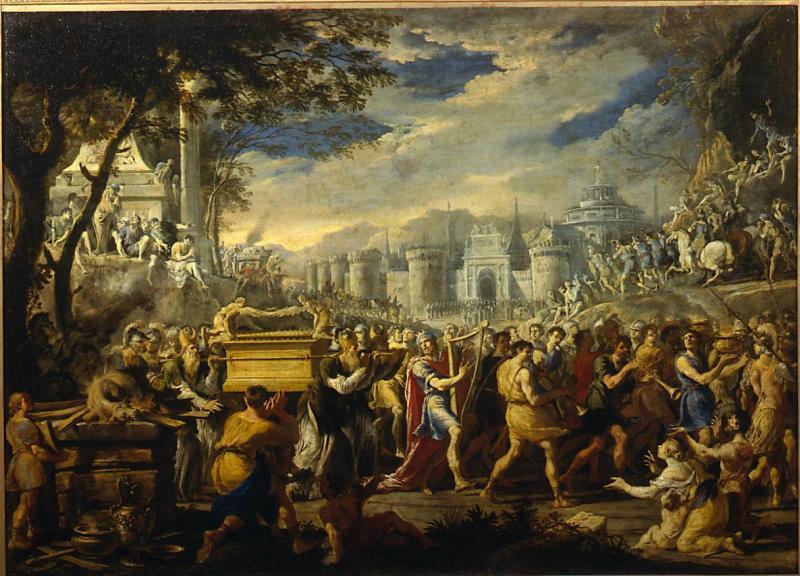
Transferring the ark of the Lord to Jerusalem by Domenico Gorgiolo (1609-1675)

David again brought together all the able young men of Israel—thirty thousand. He and all his men went to Baalah in Judah to bring up from there the ark of God, which is called by the Name, the name of the Lord Almighty, who is enthroned between the cherubim on the ark. They set the ark of God on a new cart and brought it from the house of Abinadab, which was on the hill. Uzzah and Ahio, sons of Abinadab, were guiding the new cart with the ark of God on it, and Ahio was walking in front of it. David and all Israel were celebrating with all their might before the Lord, with castanets, harps, lyres, timbrels, sistrums and cymbals.

When they came to the threshing floor of Nakon, Uzzah reached out and took hold of the ark of God, because the oxen stumbled. The Lord’s anger burned against Uzzah because of his irreverent act; therefore, God struck him down, and he died there beside the ark of God.

Then David was angry because the Lord’s wrath had broken out against Uzzah, and to this day that place is called Perez Uzzah.

David was afraid of the Lord that day and said, “How can the ark of the Lord ever come to me?” He was not willing to take the ark of the Lord to be with him in the City of David. Instead, he took it to the house of Obed-Edom the Gittite. The ark of the Lord remained in the house of Obed-Edom the Gittite for three months, and the Lord blessed him and his entire household. (NIV)

The narrator who originally compiled, told, and wrote this story wanted to communicate something significant about God and how to relate to the Lord.  God put the big kibosh on David’s hoedown. At that time in the history of Israel, the ark was the foremost symbol God was present with the people. Within the ark contained the tablets of the Ten Commandments (the symbol of God’s Word); the staff of the first priest, Aaron, (the symbol of God’s choice); and, a pot of manna (the symbol of God’s provision). 

The ark was a holy object, pointing to a holy God.

The ark of the Lord was built during the time of Moses, when the ritual laws were established concerning offerings and how to approach God in worship. There were detailed prescriptions for how to construct all the sacred articles for worship. (Exodus 35:30-40:33) 

The ark was at the center of worship, representing the presence of God among the people. For nearly five-hundred years before David, the ark had become a familiar object in the life of Israel, always there, continually being the symbol of God to the people.

We have all likely had the experience of something becoming so familiar to us that we begin to lose sight of how important and valuable it really is. Not until we lose it, or something traumatic happens, do we wake up and take stock of its true significance. 

The Israelites had become lethargic and apathetic toward the worship of God, and it led to some disheartening and tragic circumstances. The people of God throughout the ages have always needed to be vigilant against the opiate of familiarity, dulling the senses to the importance of worship.

Moving the ark of the Lord to Jerusalem was one of the first acts David did as the king of Israel and Judah.  God was with David and brought him success against his enemies. David enjoyed a close relationship with God.  Yet even though David’s heart was in the right place, he made a huge miscalculation which ended up offending God. 

David had the best of intentions in bringing the ark to Jerusalem and giving it a prominent place in the center of Jewish life. This was an exceptionally good plan. The problem, however, came in the manner the ark was carried from one place to another. 

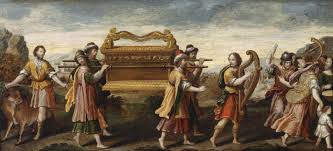
King David bringing the ark to Jerusalem by Unknown Italian artist, c.1500

God’s law laid out in careful detail how the ark was to be transported. Uzzah and Ahio were Levites charged with the ark’s care. Only the Levites could handle the ark and the holy objects of worship that went along with it. Since it was the job of the Levites for hundreds of years, they knew better than to carry the ark of the Lord on a cart. God clearly told Moses that the ark was to have two long poles of acacia wood overlaid with gold inserted into four gold rings of the ark.

The ark was to always be carried on the shoulders of the Levites with the two poles.

We are not told why Uzzah and Ahio were pulling the ark on a cart with oxen instead of carrying it in the prescribed way. Perhaps it was because the ark was incredibly heavy and no easy task to carry.  Maybe they decided it would be easier and more expedient to have the much stronger oxen pull the ark on a nice new cart; it would save a lot of energy transporting it over a long distance. 

As pragmatic people, Uzzah and Ahio’s approach makes a lot of sense. However, God was not okay with this arrangement.  When the oxen stumbled and the ark was in danger of falling off the cart, Uzzah reflexively reached out to steady it.  That was the last act Uzzah ever did on this earth. God immediately put him down for his “irreverent act.”

So, here is the not so good idea: Evaluating the worship of God by common sense pragmatism, what we think will work best, and how we feel it ought to be done.  Everything about worship is to pay attention to the holiness of God through our obedience.  Whenever we avoid the prescriptions of Holy Scripture, however best the intentions might be, is not a good thing and people will get hurt.  One can never justify an action that goes against God’s Word because people are praising God. 

Just because the heart is in the right place does not mean what is being done is okay.

David’s first response was anger, then fear.  He gave his best effort, and it resulted in God’s disfavor. Perhaps David realized that maybe he took for granted that the ark could be moved any old way he wanted to move it. 

Trouble with God happens whenever we value efficiency and expediency over obedience and submission.

The great error of Uzzah which resulted in his death was trying to manage God. We do not take care of God; God takes care of us. God does not bow to us and allow himself to be managed by creatures. The Lord wants pure unadulterated obedient worship from people in the way God wants it to be done, period. It is not up for negotiation.

So, David took some time to re-evaluate the whole approach to worship he was doing and left the ark with a Philistine. Then, he went back and did it right….

Holy God, we confess that we have too often forgotten we are yours. Sometimes we carry on our lives as if there was no God and we fall short of being a credible witness to you. For these things we ask your forgiveness and for your strength. Give us clear minds and open hearts so we may bear witness to you in our world. Remind us to be who you would have us to be regardless of what we are doing or who we are with. Hold us close and build our relationship with you and with those you have given us on earth, through Jesus Christ our Lord. Amen.

Jeremiah 31:31-34 – A New Covenant

The Last Supper by Francis Newton Souza, 1990

“The day is coming,” says the Lord, “when I will make a new covenant with the people of Israel and Judah. This covenant will not be like the one I made with their ancestors when I took them by the hand and brought them out of the land of Egypt. They broke that covenant, though I loved them as a husband loves his wife,” says the Lord.

“But this is the new covenant I will make with the people of Israel after those days,” says the Lord. “I will put my instructions deep within them, and I will write them on their hearts. I will be their God, and they will be my people. And they will not need to teach their neighbors, nor will they need to teach their relatives, saying, ‘You should know the Lord.’ For everyone, from the least to the greatest, will know me already,” says the Lord. “And I will forgive their wickedness, and I will never again remember their sins.” (NLT)

For the past few weeks, the Daily Lectionary readings brought us steady admonitions of passing faith onto future generations, with obedience as the key to it all. However, God’s ancient people kept going through significant times of unfaithfulness, infidelity, and disobedience. As if they had some sort of spiritual A.D.D., the people could not seem to keep their eyes off the glittering gods from the surrounding nations.

For certain, God has always possessed a faithful remnant of people devoted to observing the covenant. Yet, the nation in the prophet Jeremiah’s day floundered and broke faith with the teaching given to them.

Since God’s grace has the last word, the sins and shortcomings of the backslidden people who failed to pass on the covenant teachings to their progeny would have a better ending than judgment.

God’s answer to repeated human failings was to establish a new covenant, unprecedented in its audacious mercy.

Rather than rewriting commands on stone tablets (as with Moses on Mount Sinai) and having a remedial class on covenant, God would instead do the extraordinary by writing the law on human hearts – that way they would know the Lord in a direct and immediate way. What is more, it would be for everybody, neither only for the remnant nor for the spiritual elite.

From the least to the greatest, from young to old, even from Jew to Gentile, God would forgive once and for all.

If that is not the most gracious act ever decreed, I do not know what is. This was a radical move of spiritual amnesty which was completely undeserved and most definitely not something any other god from any other nation would ever do. It was unthinkable – completely off everyone’s radar. Yet, that is exactly what grace does.

From a New Testament (New Covenant) perspective, Jesus is the fulfillment of all God’s good covenant promises to the people. Furthermore, God’s Holy Spirit serves as the continuing presence of Jesus within us, teaching us and guiding us in the ways of God. Our only task, then, is to live into those promises – to know them, claim them, and bank on them. 

We are most obedient when we believe the promises of God and throw all our hope in them.

The implications of this divine decree are enormous. It means:

  • I cannot do a dang thing to earn God’s acceptance because I already have it! (John 6:37; Colossians 1:21-22; Romans 8:33-39, 15:7-12)
  • I need not fear judgment because Jesus has already taken care of the sin issue, once for all! (Romans 6:5-10; Hebrews 7:27-28, 10:5-10; 1 John 4:17-18)
  • I lack nothing because God has already given me everything I need for life and godliness in this present evil age! (Philippians 4:19; 2 Peter 1:3-4)
  • I can know God, right now, without jumping through spiritual hoops or over imposed hurdles because Jesus leveled the way and made it clear! (John 14:6; Ephesians 2:8-9; Hebrews 2:9-18)
  • I can enjoy forgiveness and a clean heart because God has decreed it to be so! (Psalm 103:8-12; Ezekiel 36:25-27; Luke 22:20; Hebrews 8:7-13, 10:14-18)

If this were not enough, Jesus has sent the Spirit to be with us forever, to guide us and lead us into realizing the law written on our hearts. We are never alone. God is with us.

Jesus said, “The Companion, the Holy Spirit, whom the Father sends, will teach you everything and will remind you of everything I told you. Peace I leave with you. My peace I give you. I give to you not as the world gives. Do not be troubled or afraid.” (John 14:26-27, CEB)

In this world of trepidation, fear, uncertainty, and unrest, there is peace, grace, and love because of Father, Son, and Spirit, the one true God, the Blessed Holy Trinity, the Divine Warrior who fights our battles, the Lord of Hosts who has our backs. Yes, this God, and no other god, has the chutzpah to make promises to us and the power to back them up.

Our Father in heaven,
Reveal who you are.
Set the world right;
Do what’s best—as above, so below.
Keep us alive with three square meals.
Keep us forgiven with you and forgiving others.
Keep us safe from ourselves and the Devil.
You’re in charge!
You can do anything you want!
You’re ablaze in beauty!
Yes! Yes! Amen!

Nehemiah 8:1-12 – Word and Worship

Ezra Reads the Law to the People by Bernadette Lopez

All the people came together as one in the square before the Water Gate. They told Ezra the teacher of the Law to bring out the Book of the Law of Moses, which the Lord had commanded for Israel.

So, on the first day of the seventh month Ezra the priest brought the Law before the assembly, which was made up of men and women and all who were able to understand. He read it aloud from daybreak till noon as he faced the square before the Water Gate in the presence of the men, women and others who could understand. And all the people listened attentively to the Book of the Law.

Ezra the teacher of the Law stood on a high wooden platform built for the occasion. Beside him on his right stood Mattithiah, Shema, Anaiah, Uriah, Hilkiah and Maaseiah; and on his left were Pedaiah, Mishael, Malkijah, Hashum, Hashbaddanah, Zechariah and Meshullam.

Ezra opened the book. All the people could see him because he was standing above them; and as he opened it, the people all stood up. Ezra praised the Lord, the great God; and all the people lifted their hands and responded, “Amen! Amen!” Then they bowed down and worshiped the Lord with their faces to the ground.

The Levites—Jeshua, Bani, Sherebiah, Jamin, Akkub, Shabbethai, Hodiah, Maaseiah, Kelita, Azariah, Jozabad, Hanan and Pelaiah—instructed the people in the Law while the people were standing there. They read from the Book of the Law of God, making it clear and giving the meaning so that the people understood what was being read.

Then Nehemiah the governor, Ezra the priest and teacher of the Law, and the Levites who were instructing the people said to them all, “This day is holy to the Lord your God. Do not mourn or weep.” For all the people had been weeping as they listened to the words of the Law.

Nehemiah said, “Go and enjoy choice food and sweet drinks, and send some to those who have nothing prepared. This day is holy to our Lord. Do not grieve, for the joy of the Lord is your strength.”

The Levites calmed all the people, saying, “Be still, for this is a holy day. Do not grieve.”

Then all the people went away to eat and drink, to send portions of food and to celebrate with great joy, because they now understood the words that had been made known to them. (NIV)

God’s Holy Word is central to worship. Since the Bible is God’s self-revelation, it makes sense to gather in worship which is saturated with Scripture. The proclamation of God’s Word is important because it is a means of knowing God and teaches us how to live.

The ancient Israelites were taken into captivity from their home in Jerusalem to Babylon. Nehemiah became the king’s cupbearer (a servant who fills wine cups for royalty). Years later, Nehemiah heard about the condition of Jerusalem and determined to do something about it. The walls were broken down and the people were without leadership. Because of his relationship to the king and God’s sovereign working on the king’s heart, Nehemiah returned from exile in Babylon to Jerusalem to rebuild the wall. 

Ezra was a scribe (a copier of the Scriptures), a priest, and a teacher of the Law of Moses (the first five books of the Old Testament). Together, Ezra and Nehemiah were like God’s dynamic duo, renewing the worship of God. It was a time of revival, in which the Israelites found new life around God’s Word.

Renewal, revival, and reformation happen when God’s revelation is carefully and faithfully read, listened to, and acted upon. Life change occurs through Holy Scripture, as we come to understand and apply it to all our circumstances and relationships.

Ezra arrived in Jerusalem first, fourteen years before Nehemiah. At that time, morality was low, and the spiritual condition of the people was unhealthy. Yet, as Ezra prayerfully taught them God’s Word, over time they began to respond.

The rebuilding of the wall under Nehemiah’s leadership was a direct result of the spiritual foundation Ezra had built through the Word of God. After the wall was finished, it was time to hear the entire Book of the Law read aloud. 

Imagine and picture your entire community gathering early in the morning in a park or large space, staying till noon doing nothing but listening to Scripture being read, with various local pastors taking their turn reading and making the meaning clear. All the while the people are responding in worship, tears, and celebration…. If this seems far-fetched for today, it also seemed that way to most people in Nehemiah’s day.

Holy Scripture is a powerful unifying force within the life of God’s people. We may not explain every Bible verse the same way; and the riffraff might attempt to magnify differences and minimize a common confession of faith around Scripture. However, a universal desire to honor, apply, and obey God’s Word draws us closer together rather than separates us.

A first century Jewish teacher, Rabbi Akiva, once noticed a tiny stream trickling down a hillside, dripping over a ledge on its way toward the river below. Below was a massive boulder. The rock bore a deep impression. The drip, drip, drip of water over the centuries had hollowed away the stone. Rabbi Akiva commented, “If mere water can do this to hard rock, how much more can God’s Word carve a way into my heart of flesh?” He realized that if the water had flowed over the rock all at once, the rock would have been unchanged. It was the slow steady impact of each droplet, year after year, that completely reformed the stone.

We oftentimes want quick answers to our questions without taking the time to prayerfully listen and reflect on the Word of God. Yet, God tends to reveal truth over days, months, and years, as we read and discuss Scripture. Through the slow drip of study, prayer, and reflection, day after day, year after year, God shapes and spiritually forms us.

The people in today’s story were responsive, both vocally and physically. They shouted “Amen!” (literally, “yes, may it be so!”)  and raised their hands. Word and worship always go together. 

The people were submissive, bowing in worship (literally, “to prostrate oneself”). True worship listens attentively to God’s Word and surrenders to the Lord. It is an act of humility, pledging to act upon what is heard.

The people were teachable, attentively listening to the Levite priests explain Scripture. Sometimes the Bible is not apparently relevant. We need others to help us, and the patience to stick with it, even when we are not sure about what it is saying. Interpreting Scripture (hermeneutics) typically happens in community, not isolation, which is why small groups of people interacting on the Bible’s message is significant.

The people mourned and wept. Hearing the Word illumined their failures and disobedience. When we look intently into Scripture, we see divine faithfulness and human disloyalty; God’s compassion and our selfishness; the Lord’s holiness and people’s fickle nature.

Awareness of truth causes grief and distress over personal sin and the sin of the world. Yet, there is mercy and forgiveness. Grace washes away guilt and shame and brings restoration. God’s Word both slays us and gives us new life.

In ancient Israel, every Jewish boy had the first five books of the Old Testament memorized by age twelve. The goal was to have Torah internalized and known so that it influenced every situation and every relationship of their lives.

Ezra and Nehemiah were only reinstituting what their ancestors had done:

Moses said, “Gather the people together—men, women, children, and the foreigners living among you—so they can listen well, so they may learn to live in holy awe before God, your God, and diligently keep everything in this Revelation. And do this so that their children, who do not yet know all this, will also listen and learn to live in holy awe before God.” (Deuteronomy 31:12-13, MSG)

Joshua said, “Never stop reading The Book of the Law. Day and night, you must think about what it says.” (Joshua 1:8, CEV) 

David said, “I have hidden your Word in my heart, that I might not sin against you.” (Psalm 119:11, NLT)

The practice of personal and public worship through God’s Holy Word continued with the New Testament writers:

Paul said, “All Scripture is inspired by God and is useful for teaching, for reproof, for correction, and for training in righteousness so that everyone who belongs to God may be proficient, equipped for every good work.” (2 Timothy 3:16-17, NRSV)

“God means what he says. What he says goes. His powerful Word is sharp as a surgeon’s scalpel, cutting through everything, whether doubt or defense, laying us open to listen and obey. Nothing and no one are impervious to God’s Word. We can’t get away from it—no matter what.” (Hebrews 4:12-13, MSG)

Jesus, quoting the Law, said, “It is not just bread that keeps people alive. Their lives depend on what God says.” (Matthew 4:4, ERV, Deuteronomy 8:3)

We need God’s Word because we need God. It is a delight and a duty to learn the Scriptures so that we can know God and know God’s will.

God Almighty, your statutes are wonderful; therefore, I obey them. The unfolding of your words gives light; it gives understanding to the simple. I open my mouth and pant, longing for your commands. Turn to me and have mercy, as you always do to those who love your name. Direct my footsteps according to your word; let no sin rule over me. Redeem me from the oppression of men, that I may obey your precepts. Make your face shine upon your servant and teach me your decrees. Amen. (Psalm 119:129-135)